
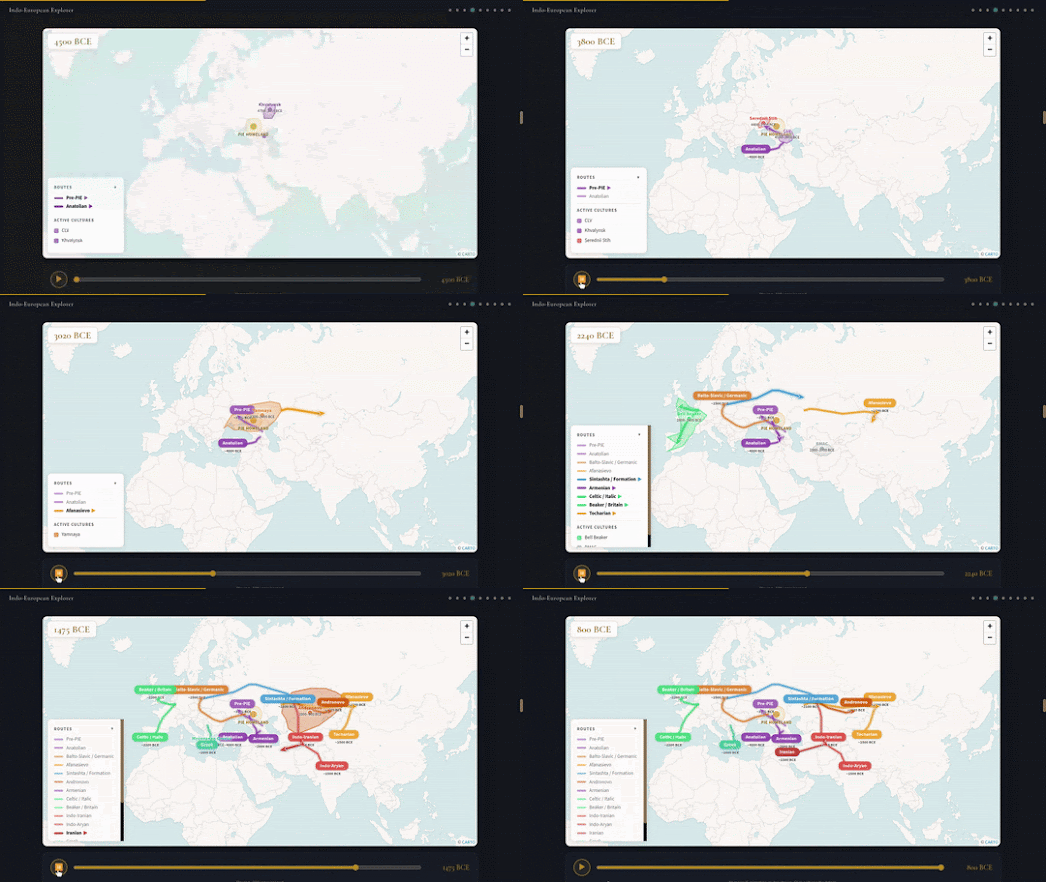
Many millennia ago, a nomadic groups of humans began to spread across extensive areas of Eurasia, bringing their language with them. About 8,000 years ago, from a homeland likely located on the Pontic–Caspian steppe north of the Black and Caspian Seas, these pioneers moved west into Europe, east toward Central Asia, and south toward the Indian subcontinent.
These migrants spoke Proto-Indo-European (PIE), a sophisticated, structured language with a rich system of grammar. The legacy of PIE surrounds us to this day. German, Italian, Farsi Hindi, Russian, Greek, and hundreds of other languages all descend from this single linguistic ancestor.
The Indo-European Explorer helps bring this story to life. Using thousands of ancient DNA samples, archaeological records, and extensive linguistic data, it turns this linguistic journey into an interactive experience – inviting you to trace the movements, connections, and transformations that shaped the languages that many of us speak today.
The Indo-European Explorer interactive map is only one part of this wide-ranging exploration of Proto-Indo-European, but it captures the project’s scope and precision. Presented as a chronological flow map, it charts the spread of Proto-Indo-European languages across Eurasia over thousands of years, offering a clear visual framework for its expansion


 Travel Between The Pages
wow, this is absolutely brilliant!
where/how do you find these gems??
Too much time scrolling when I should be working.