Bookstore Tourism: Il mio tipo di posto

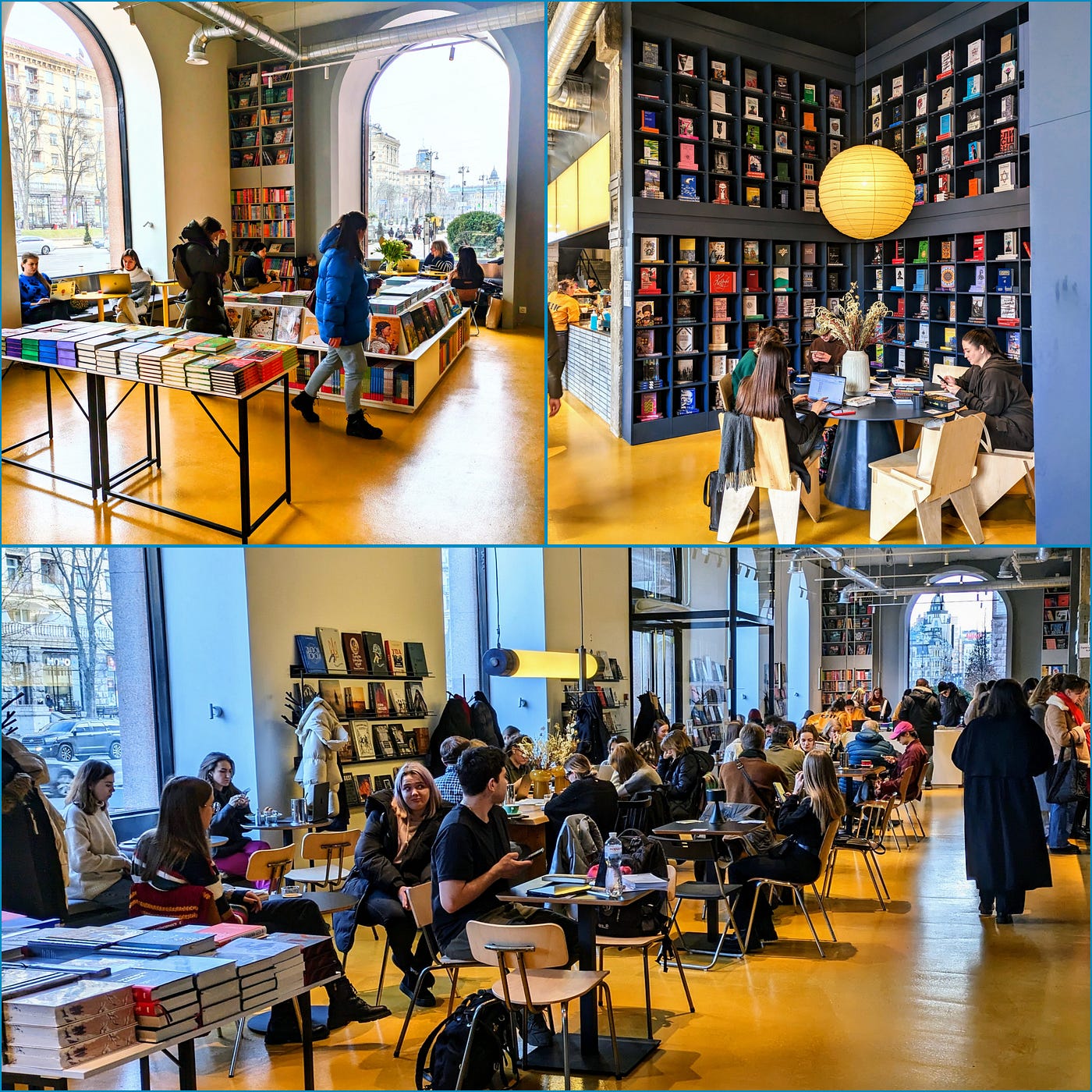
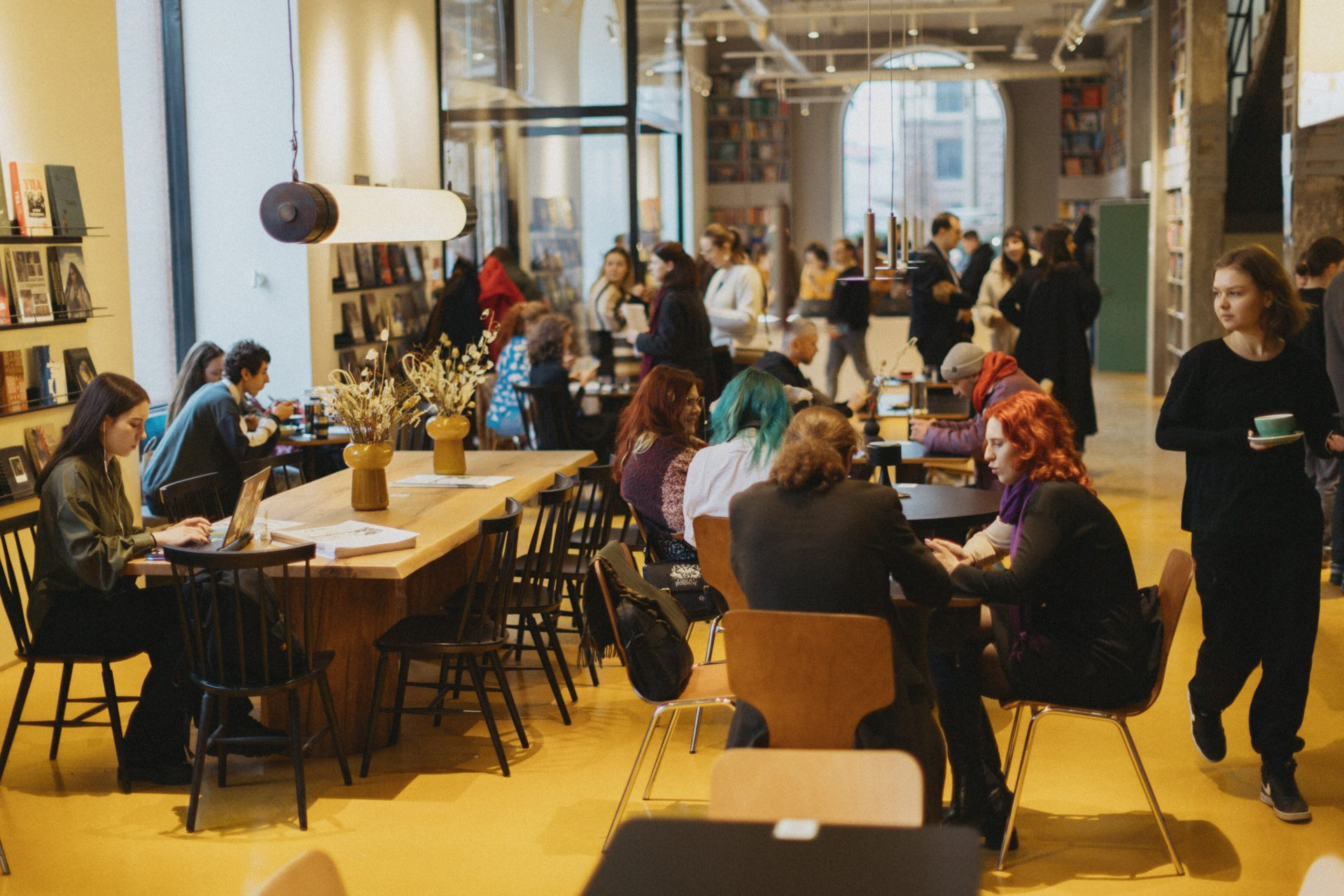
It’s been more than a decade since I’ve visited Florence, so you will have to forgive that I missed the grand opening to the amazing Libreria Giunti Odeon. This fabulous mash-up of a cinema, bookstore and cafe premiered in November 2023 after years of renovation. The restore 1922 Art Nouveau movie theater/bookshop is housed in the historic Palazzo dello Strozzino. Built around 1457, and designed by Filippo Brunelleschi, the palazzo was owned by the Strozzino family until the 19th century. In 1904, it was bought by the Chiari family who eventually decided to build an elegant cinema.

After alternating periods as theatre and then cinema, in 2023 the Odeon, which still retained splendid Art Nouveau style, was renovated and reopened as the Giunti Odeon. Bookshop and Cinema. 

Open seven days a week, from 8.30 in the morning to the end of each night’s film, Giunti Odeon, or GO, as it is known to the locals, maintains its mission as a cinema. One screen guarantees nightly film screenings in their original languages, while a LED wall projects daytime entertainment in Italian and English. Throughout the theater are the bookshelves lined with 25,000-plus titles occupying the entire ground floor, including the foyer.


Posted in Architecture, Books, Bookstore Tourism, Europe, Film, History, movies, Restaurants, Tourism | Tagged , , | 1 Comment

London For Free

Some of the vintage oldtimers who have been following Travel Between The Pages for many eons may recall that during the last century I made a dubious living writing travel guidebooks and newsletters. One of my better selling books was titled London For Free. It was also my most plagiarized books. In fact, knock-off versions were published in more than one country that simply lifted the text word for word and republished with a different cover. Que sera sera.

Any way, I am always on the look out for similar titles now that London For Free is long out of print. I recently ran across the guide Free London from Hoxton Mini Press of London and was happy to discover that they have issued a very extensive catalog of London travel guidebooks including the aforementioned title on no cost sites.

The range of titles is impressive and I will certainly pick up a few the next time that I visit London. Have any of you purchased or read books from the series ? What did you think ?


Posted in Books, Europe, Tourism, Travel Writing, Writing | Tagged , , , | 1 Comment

I know what you did last summer

Happy Solstice to all. Stay chill . And please ditch the socks and sandals look.


Posted in Art | Tagged | Leave a comment

Eating your way through NYC

57 Sandwiches That Define New York City. I challenge you to read this New York Times article all the way through and not crave one of these amazing sandwiches. NYC is home to ~23,000 restaurants, so choosing where to eat out can be a pretty overwhelming decision. Even if you narrow your culinary choices down to the humble sandwich, you could eat at a new restaurant for years in NYC  without repeating yourself.

Growing up in and around the city I never stopped to appreciate the amazing range of food options available. Still, in my day the choices were much less elaborate than in the 21st century New York.  Buon appetito !


Posted in Restaurants, Tourism, USA | Tagged , , | Leave a comment

Rules for Writing

Kurt Vonnegut’s eight rules of writing:

  1. Use the time of a total stranger in such a way that he or she will not feel the time was wasted.
  2. Give the reader at least one character he or she can root for.
  3. Every character should want something, even if it is only a glass of water.
  4. Every sentence must do one of two things — reveal character or advance the action.
  5. Start as close to the end as possible.
  6. Be a sadist. No matter how sweet and innocent your leading characters, make awful things happen to them — in order that the reader may see what they are made of.
  7. Write to please just one person. If you open a window and make love to the world, so to speak, your story will get pneumonia.
  8. Give your readers as much information as possible as soon as possible. To heck with suspense. Readers should have such complete understanding of what is going on, where and why, that they could finish the story themselves, should cockroaches eat the last few pages.
Posted in Books, USA, Writing | Tagged , | 1 Comment

An Alternate Alice Versery

I am continually amazed by the seemingly endless variations and spinoffs of Lewis Carroll’s classic Alice in Wonderland.  But even I was surprised to discover that beginning in the 1930s, Guinness beer began using Alice in Wonderland and the cast of characters from Carroll’s books in their advertising. These campaigns continued until 1959, and in addition to many ads, Guinness also published five booklets, beginning with “The Guinness Alice” in 1933, and ending with “Alice Versary: The Guinness Birthday Book,” which was published to coincide with the brewer’s 200th anniversary in 1959. All of the booklets and advertising were created by their advertising agency, S.H. Benson Ltd., with illustrations by John Gilroy and later Ronald Ferns.


Posted in Books, Europe, Writing | Tagged , , , | 3 Comments

“To walk alone in London is the greatest rest.”

It’s surprising to learn that London wasn’t well mapped until the 1500s, but the cartographers, topographers, and historians of the Historical Towns Trust have the decided to remedy the problem by looking back in time to create period maps.. Their detailed atlases of 13th-century and Tudor London drill down to individual dwellings, parish boundaries and walls.

The team have put together two exceptionally detailed maps of the capital. The first, Tudor London, zooms in on the year 1520, showing the city shortly before the Reformation swept away the religious houses. The second map goes back as far as the late 13th century, more than 250 years before the dawn of London cartography.

“It’s about the earliest date we can really map the city in detail,” explains Professor Vanessa Harding, who contributed to the research and is the Chair of HTT. “From the mid-13th century we have a proliferation of written sources for houses, streets and landmarks; all the parish churches were in place, and most of the religious houses, though the guilds had yet to make their mark physically.”

You can buy paper maps here—also those of various other places including Oxford and Canterbury—or explore the digital ones online (e.g. medieval LondonTudor London, but there are all sorts of overlays to view).


Posted in Architecture, Europe, History, Maps, Tourism | Tagged , , | Leave a comment

Everything is like something else

NO LONGER VERY CLEAR

John Ashbery

It is true that I can no longer remember very well
the time when we first began to know each other.
However, I do remember very well
the time we first met. You walked in sunlight,
holding a daisy. You said, “Children make unreliable witnesses.”

Now, so long after that time,
I keep the spirit of it throbbing still.
The ideas are still the same, and they expand
to fill vast, antique cubes.
My daughter was reading one just the other day.
She said, “How like the pellucid statues, Daddy. Or like a…
an engine”

In this house of blues the cold creeps stealthily upon us.
I do not do what I fantasize doing.
With time the blue congeals into roomlike purple
that takes the shape of alcoves, landings…
Everything is like something else.
I should have waited before I learned this.


Posted in Books, Writing | Tagged , | Leave a comment

Anthropodermic bibliopegy is not cool

Harvard University Library has reported that it has removed a volume bound in human skin from its collection.  A copy of the 19th-century book Des Destinées de l’Ame — or Destinies of the Soul, a meditation on life after death — was found in 2014 to be bound in the skin of a deceased woman. The book apparently was in the library for 90 years without being questioned.

The University said it had removed the book and noted “past failures in its stewardship of the book that further objectified and compromised the dignity of the human being whose remains were used for its binding”. Harvard also reported that it was consulting with French authorities “to determine a final respectful disposition of these human remains”.

Previously, Harvard seemed to relish the notoriety garnered by the wide interest in the morbid story of the book, calling the 2014 discovery “good news for fans of anthropodermic bibliopegy, bibliomaniacs and cannibals alike”.

The university said at the time that Ludovic Bouland, the first owner of the book written by French author Arsene Houssaye, had taken skin from the body of a mentally ill woman, who died of a heart attack, at a hospital where he worked. Dr Bouland was said to have told Mr Houssaye in a note: “A book about the human soul deserved to have a human covering.”

Anthropodermic bibliopegy, the practice of binding books in human skin, was once a relatively common practice.


Posted in Books, History, Libraries, USA | Tagged , | Leave a comment

Lucifer’s Big Book

The Codex Gigas (or Devil’s Bible) is a large 13th-century manuscript from Bohemia, one of the historical Czech lands. Renowned for its size and its striking full-page rendition of the devil (found on page 577), it contains a number of parts: the Old and New Testaments, two works of Josephus Flavius, Isidore of Seville’s Etymologies, the standard textbook for teaching medicine in the Middle Ages known as Ars medicinae (The art of medicine), the 12th-century Chronica Boëmorum (Chronicle of the Bohemians) of Cosmas of Prague, and a calendar. Of special interest are the sections that testify to the Bohemian origin of the manuscript and its eventful history. At the end of the 16th century, the Codex was incorporated into the collections of Habsburg ruler Rudolph II. During the Swedish siege of Prague at the end of the Thirty Years’ War (1648), the manuscript was taken as war booty and transferred to Stockholm.

The video below offers an over-the-top description of the creation and history of the Devil’s Bible, but it’s quite amusing and entertaining.


Posted in Art, Books, Europe, History, Libraries, Museums | Tagged , , , | 1 Comment