
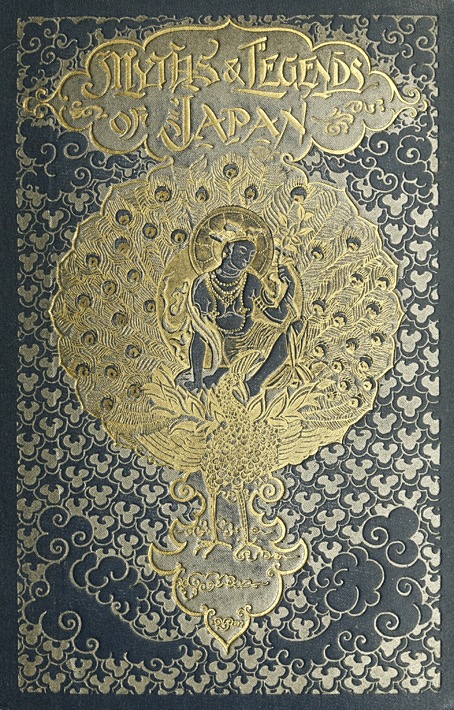
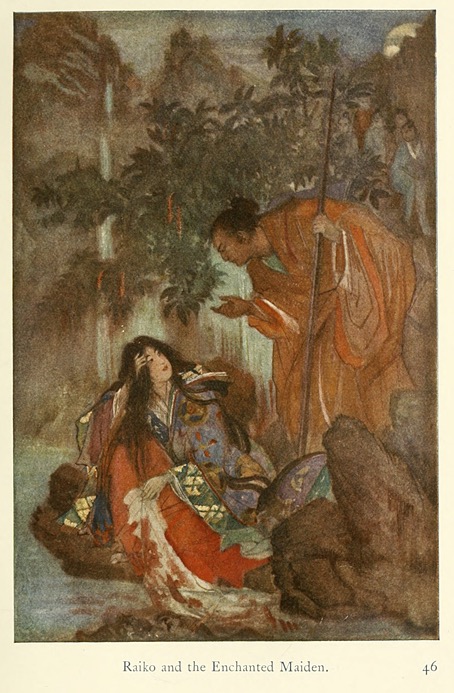
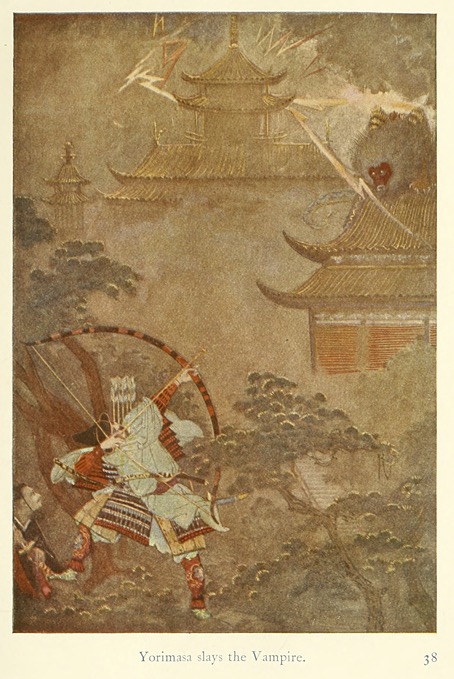
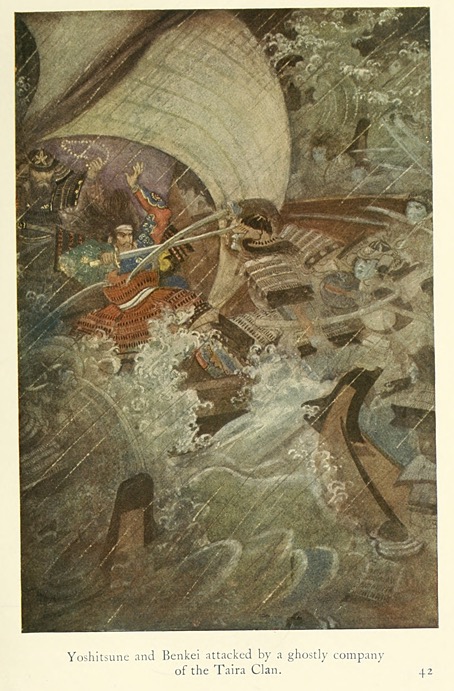
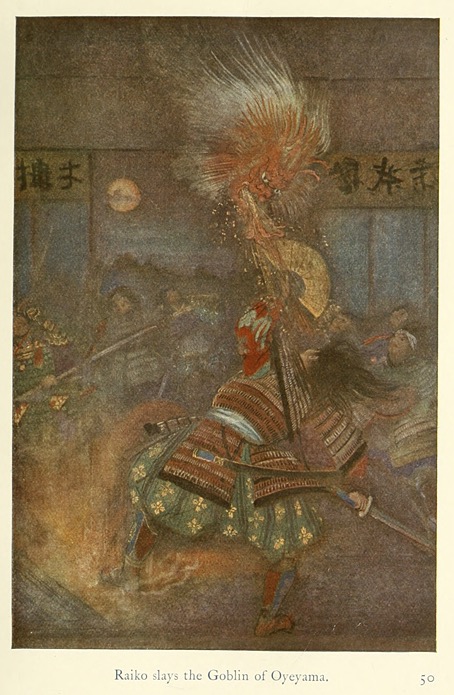
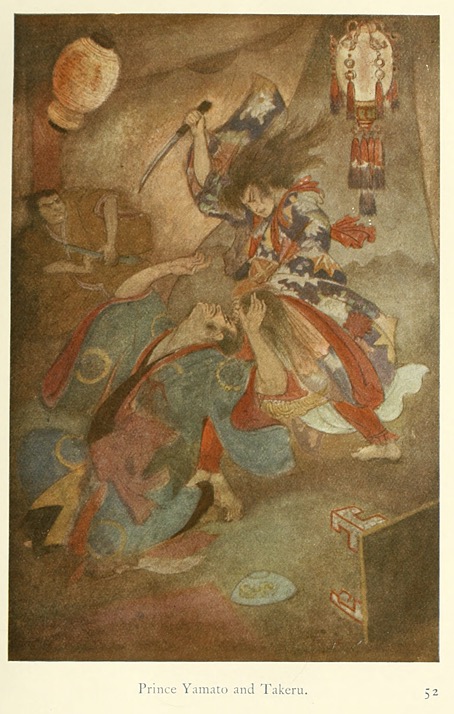
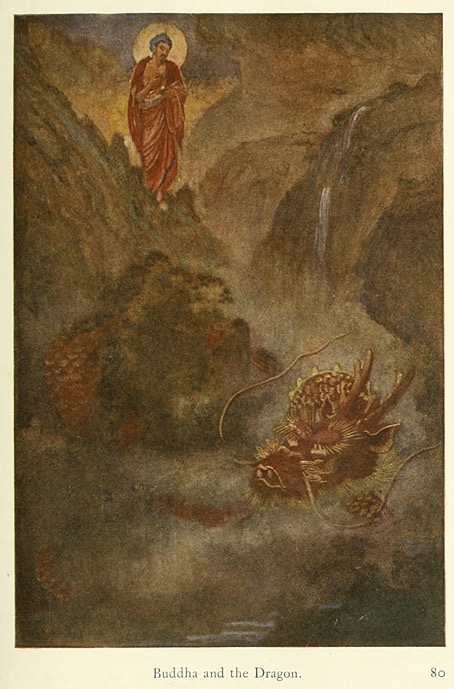
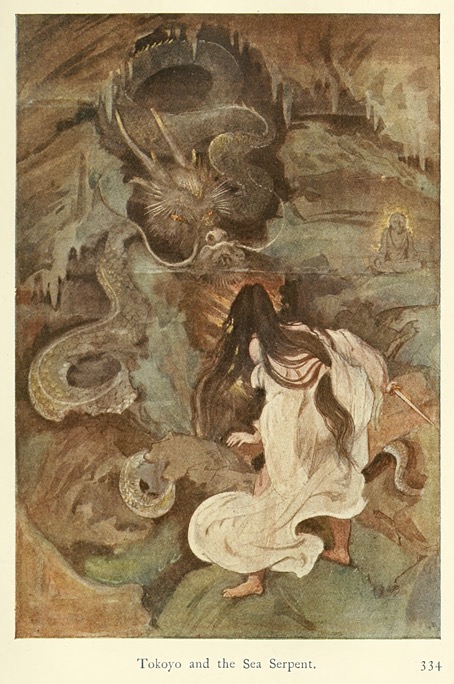
Here he goes again blathering on about Japan. Anyway, I ran across this marvelous title that is resplendent with a series of wonderful illustrations by the British artist Evelyn Paul . The impressive Myths & Legends of Japan, a guide to Japanese folklore was written by F. Hadland Davis and published in London by George G. Harrap.
The hard to find book is available online at the Internet Archive for free. It’s worth a peek even if you are only mildly interested in Japan or Japanese culture. You can also find the title at the Project Gutenberg website where it is described as:
“Myths & Legends of Japan” by F. Hadland Davis is a collection of folk tales and mythical stories, likely written in the early 20th century. The work explores the rich tapestry of Japanese mythology, featuring various deities, legendary figures, and transformative narratives that reflect the culture and beliefs of Japan. Readers will find themselves immersed in fascinating tales that celebrate the gods, spirits, and heroes unique to this enchanting land. At the start of the book, the reader is introduced to the foundational cosmogony of Japanese mythology, describing the primordial state of Heaven and Earth and the creation of the deities like Izanagi and Izanami. This cosmic narrative is followed by a deeper exploration of key figures such as the sun goddess Ama-terasu and her siblings. The opening portion sets the stage for subsequent stories about various legends, including the deeds of heroic figures intertwined with the struggles between good and evil, all while emphasizing the importance of nature and divine influence in Japan’s tradition. Through these tales, Davis brings to life the uniqueness of Japanese cultural heritage and mythos. “
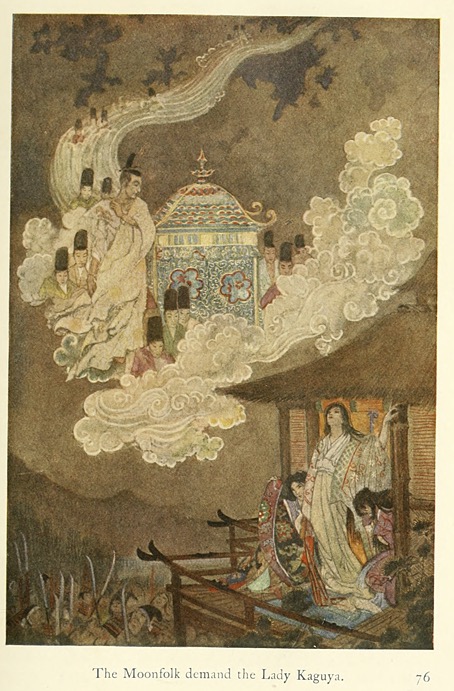
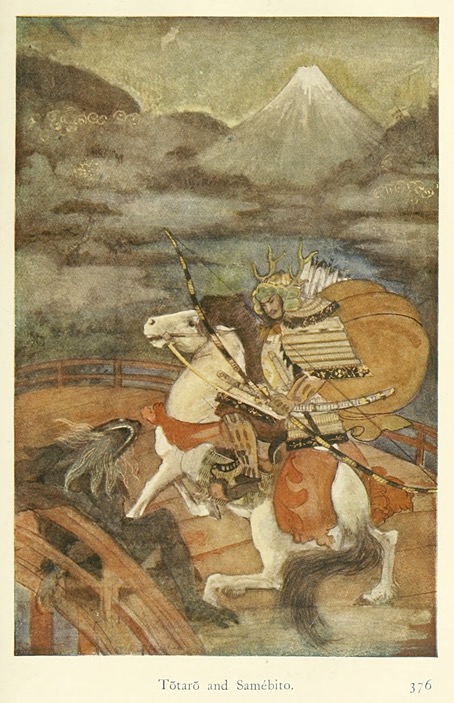
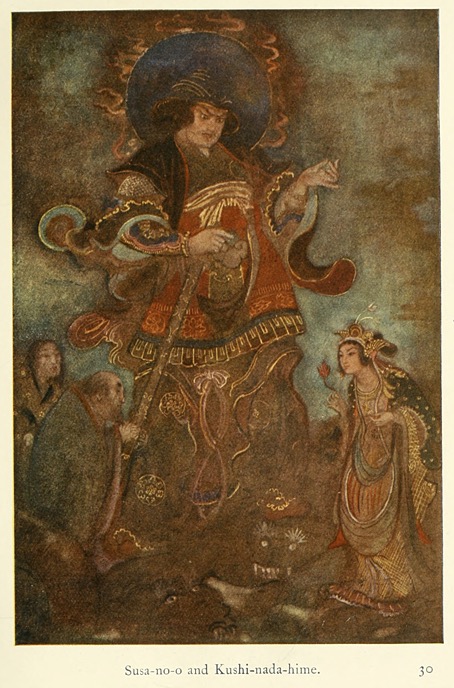
Evelyn Paul’s illustrations strive to balance the traditional elements of ukiyo-e print-making with the watercolor style that was a common feature of illustrated books at this time. The combination doesn’t always work as well as it might—the nebulosity of watercolor painting runs counter to the definition and flatness of woodcut prints—but her illustrations still look more Japanese than European.


 Travel Between The Pages