Book lovers and bibliophiles who are heading to New York City this year will have an embarrassment of choices when it comes to special exhibitions at some of the city’s premier institutions.
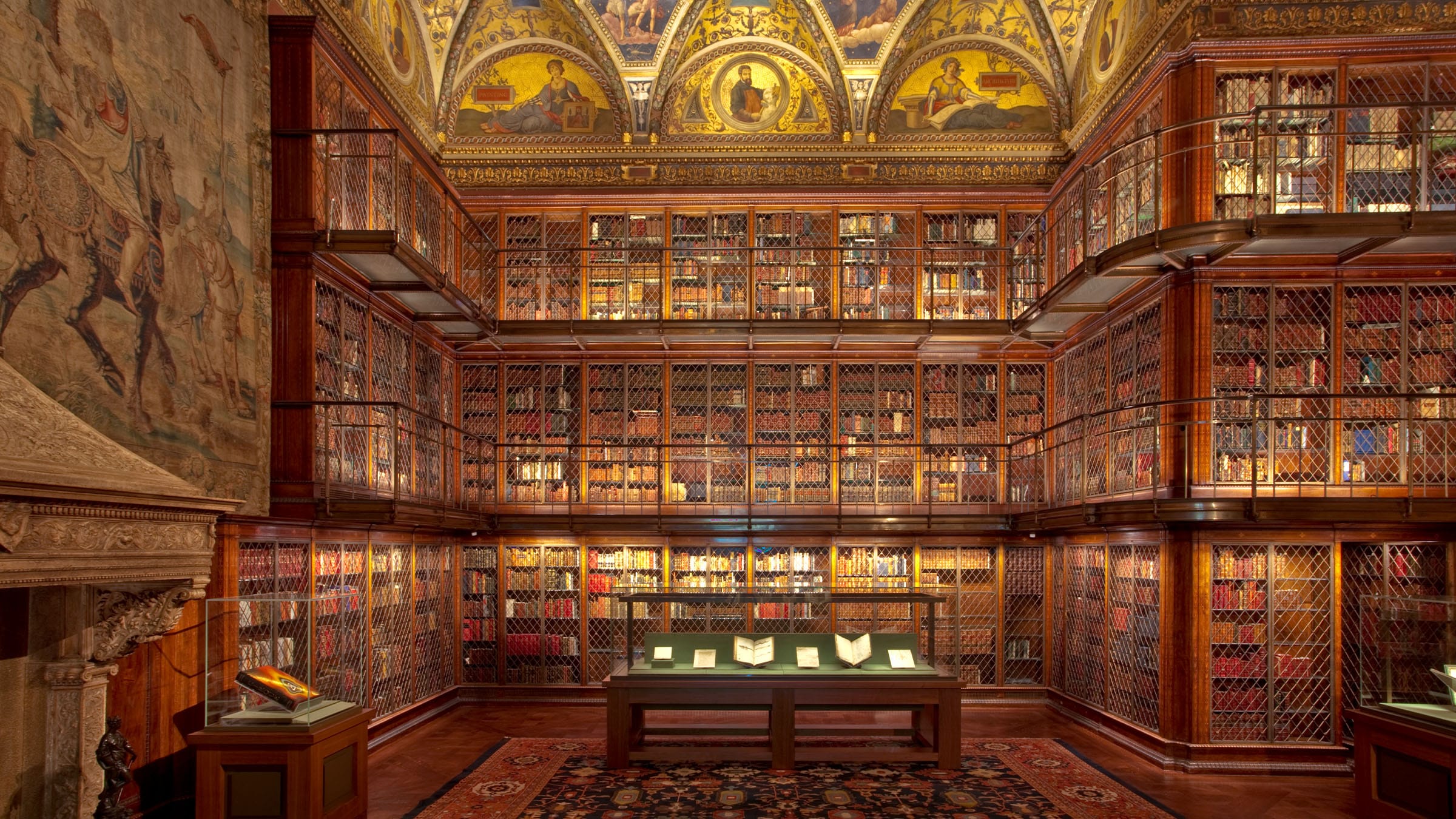
The Morgan Library & Museum‘s Come Together: 3,000 Years of Stories and Storytelling will explore the history of storytelling running January 30 through May 3, 2026.
It highlights a variety of narratives from the Babylonian Epic of Atrahasis which is among the earliest literary works preserved in written to works by writers inspired by New York City, featuring printed books, manuscripts, comics, photographs, drawings, paintings, films, and artifacts.
Come Together will be divided into five sections:
- ‘Belief and Belonging’ will consider origin stories, epics, legends, and myths, giving primacy to the Indigenous storytellers of North America
- ‘Shaping Stories’ sheds light on the roles of editors, publishers, illustrators, and translators to the development of literary works
and are often less visible than the authors, featuring a heavily annotated page of James Joyce’s Ulysses, Jean de Brunhoff’s earliest drawings of Babar, and a woodcut-illustrated edition of Chaucer’s Canterbury Tales printed around 1483 by William Caxton - ‘Picture This’ showcases diverse approaches to visual storytelling including devices such as the speech bubble and a leaf from an English medieval manuscript which uses sequences of pictures to signal movement through time
- ‘Life Stories’ includes texts and artworks centered on personal experience such as Henry David Thoreau’s journals and Édouard Manet’s only surviving notebook
- ‘New York Stories’ reflects the multicultural metropolis as seen through the lens of visitors, immigrants, and native New Yorkers, among them Walt Whitman and Langston Hughes.
The exhibition is accompanied by a series of programs, including; a lecture on storytelling through poetry with Pádraig Ó Tuama on February 19; an online short course on the importance of narrative with Morgan curators in February; and James Baldwin’s Go Tell It on the Mountain with Rhonda Evans on April 9.
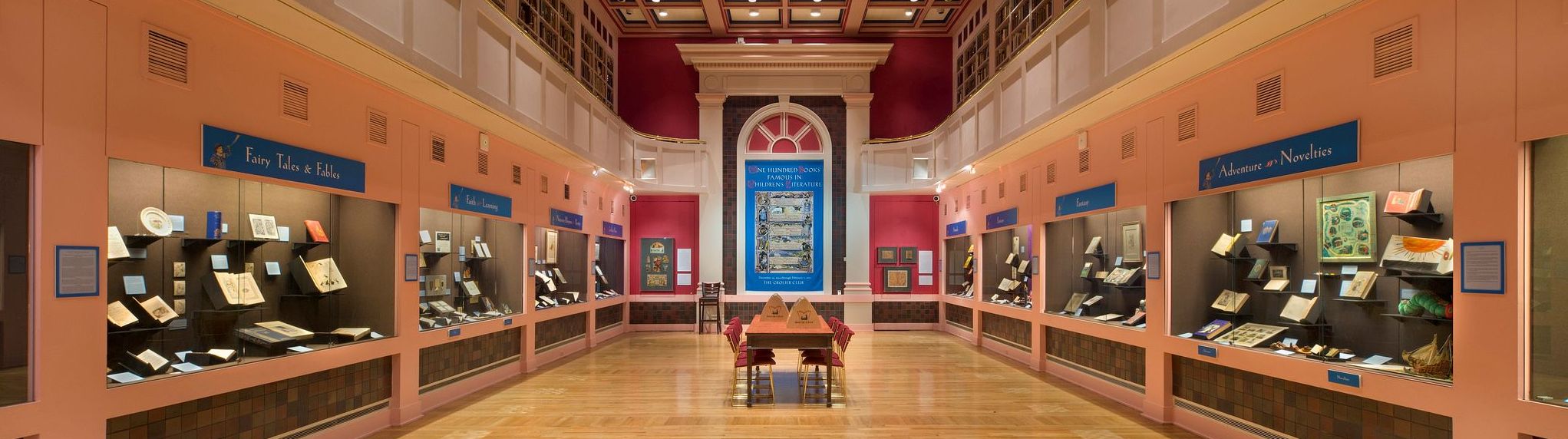
A new exhibition at The Grolier Club explores the evolution of technology and its impact on labor through a close look at the history of printing.
The Second Printing Revolution: Invention of Mass Media will be on view in the Club’s ground floor gallery from January 14 through April 11, 2026, examining the transition from handcrafted book production to mechanized papermaking, printing, illustration, typesetting, and bookbinding. Curated by Grolier Club member Jeremy Norman from his personal collection, the exhibition features 150 books, prints, and artifacts from 1800 to 1904, with many rarities from England, France, Germany, and the United States. An accompanying catalogue will be available in January 2026.
The exhibition is organized into four main sections, Innovation (detailing steam-powered presses and papermaking), Diffusion (exploring the spread of early magazines and typesetting), Design (highlighting bookbinding and color imagery), and Scale (focusing on mass printing in America). Other elements include a spotlight on the railroad and mass market reading, women’s labor, and Charles Dickens.
Highlights include:
- a copy of the first issue of the daily London newspaper from November 29, 1814, printed on a double-cylinder steam-powered printing machine
- the educational reform group Society of the Diffusion of Useful Knowledge The Menageries (1829), the first extensively illustrated machine-printed book, featuring highly detailed woodcuts of animals
- Robert Seymour’s The March of Intellect (London, 1828), a satirical illustration about the social impact of groups like SDUK, featuring an automaton made of printing machine parts
- a 1794 French petition for a women’s typographic school, promoting an apprenticeship program
- Baxter’s Gems of The Great Exhibition (London, 1851) with brilliantly color-printed images that recorded the event printed on iron handpresses via an elaborate patented process
- an 1847 letter from Charles Dickens to his publisher Edward Chapman expressing hope that sales of a “Cheap Edition” of his works might reach a record breaking 100,000 copies
- an 1826 bible printed in Boston that was the first edition of the Old and New Testaments ever printed on a printing machine
“At the beginning of the 19th century, the Industrial Revolution had been underway in England for nearly a century, yet book production had hardly changed since Gutenberg’s invention of printing by movable type in the mid-15th century,” said Jeremy Norman. “This exhibition tells the story of the second printing revolution that took place during the 19th century as key inventions led to some of the first developments in mass production and the factory system, and ushered in a period of profound change in the socio-economic relationship between workers and employers.”
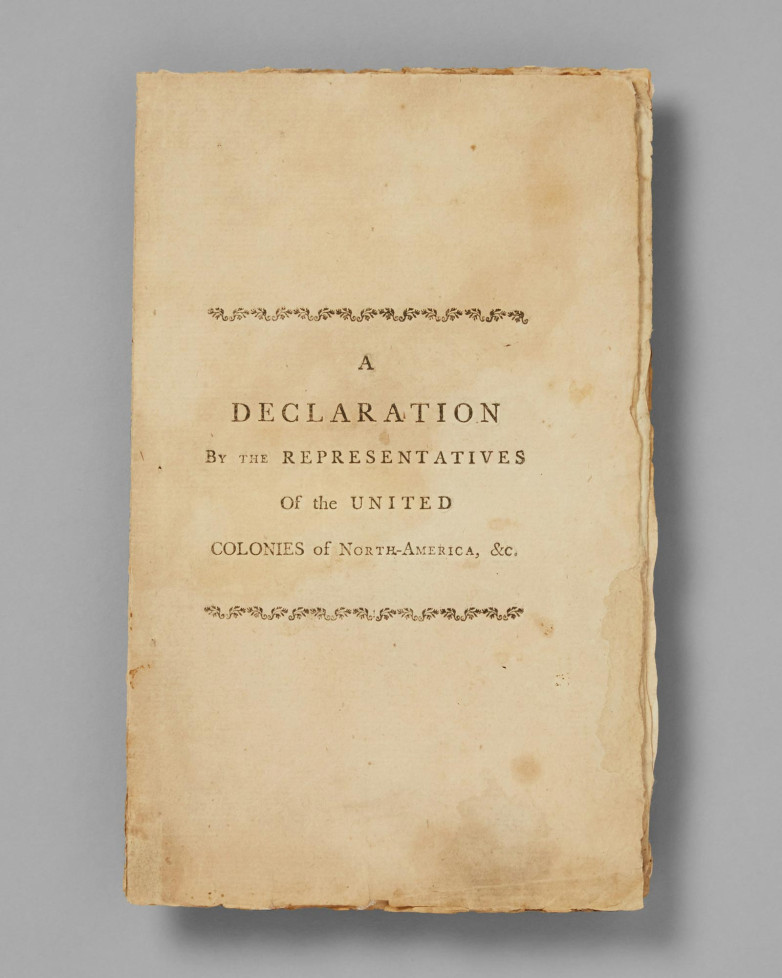
The current exhibition at The New York Historical focuses on the development of the ideas of the American Revolution through original printings and explores how their dissemination strengthened the push for American independence.
Running through April 12, 2026, Declaring the Revolution: America’s Printed Path to Independence; Historical Works from the David M. Rubenstein Americana Collection is among the many celebrations of the 250th anniversary of the Declaration of Independence.
A collection of 18th-century pamphlets, broadsides, engravings, proclamations, and books, reveal different aspects of how the colonies achieved independence. The highlights are two especially important printings of the Declaration, the very rare first newspaper appearance in the Pennsylvania Evening Post and the State Department engraving of the original engrossed copy.
Also on show are:
- Thomas Paine’s 1776 pamphlet Common Sense which called for independence from Great Britain
- John Hancock’s 1774 oration honoring the Boston Massacre confrontation between British soldiers and American colonists on March 5, 1770
- key texts which provided the intellectual foundation for the revolution such as printings of the Magna Carta, books by John Locke and Jean-Jacques Rousseau
“Declaring the Revolution traces the emergence of our nation through a shared belief in the power of the people and the promise of democracy,” said Dr. Louise Mirrer, president and CEO of The New York Historical. “Through historical printings, the origins of the ‘American experiment’ are on display, allowing us to reflect on how we live and fulfill the ideals of our nation today.”
Declaring the Revolution shows that America’s goal of independence was not only a military conflict, but also a battle of ideas. The Virginia Declaration of Rights, drafted by George Mason in 1776, and shown in its uncommon earliest printing, outlines the requirement of natural rights that influenced subsequent documents like the Declaration of Independence. An exceptionally rare 1773 handbill printed by enslaved people in Boston asks that the language of freedom apply to them and points out the incongruousness of a land with bondage desiring to be liberated.
The exhibition is curated by Mazy Boroujerdi, special advisor to the David M. Rubenstein Americana Collection which mounts non-partisan exhibitions of historically important printings to foster civic engagement and historical understanding.
“The items on view bring new context to one of the most important documents ever written,” said David M. Rubenstein. giving insight into the minds of our Founding Fathers as they changed the course of history. My reason for collecting these original printings is to show them to the public to give Americans an opportunity to encounter our country’s impressive history and the accomplishments of those who came before us. To not remember these origins of our democracy is to risk losing our democracy.”


 Travel Between The Pages