End of an Era

If you have traveled in Italy during this century, it’s likely that you have enjoyed an invigorating little cup of espresso at the bargain price of €1. Sadly, Italy’s beloved inexpensive espresso, a cultural icon served at bars across the country for as little as €1, is poised to undergo a radical change. Coffee prices in Italy are expected to rise significantly, according to industry reports. This unprecedented increase threatens to end the tradition that has long placed affordability at the heart of Italian coffee culture.

Italians enjoy some of the cheapest coffee in Western Europe, with espresso averaging €1.20 and cappuccinos €1.50 in the country’s coffee bars and cafés. This affordability fuels a massive coffee culture, with 6 billion cups consumed annually, generating €7 billion in revenue.

Climate-related disruptions to global coffee supply could push espresso prices up by 66% – up to €2 . The basis for this price hike lies in rising global coffee costs, driven by climate-induced production challenges in major coffee-growing regions such as Brazil and Vietnam.

This is a significant moment for Italy, where regulations and social norms have historically kept espresso prices artificially low. Baristas, keenly aware of the espresso’s cultural significance, have long resisted price hikes to maintain accessibility for all. But as input costs spiral out of control, even the most stoic defenders of the €1 espresso are finding the model unsustainable.

Espresso is more than just a drink in Italy; it is a ritual that defines daily life. Italians visit coffee bars multiple times a day, enjoying the social interaction and the momentary respite provided by a quick shot of coffee. The €1 espresso has been a cornerstone of this practice, offering an affordable luxury even during tough economic times.


Posted in Europe, Restaurants, Tourism | Tagged , , | 2 Comments

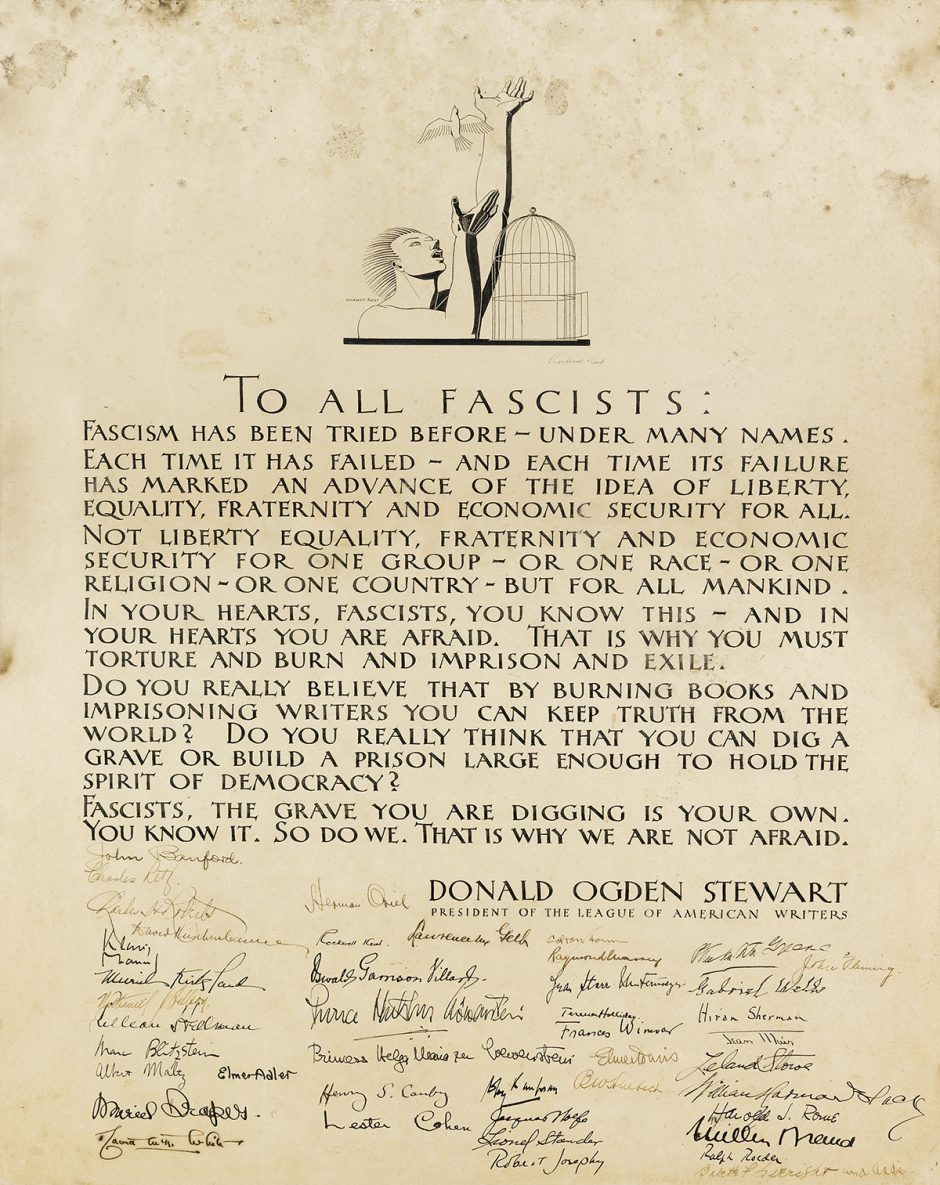
“For every five people who read this book four will go insane.”

Charles Fort’s Book of the Damned: “For every five people who read this book“, wrote novelist/playwright Ben Hecht, “four will go insane”. If you are feeling courageous, the book is available for free right here.

In 2020, Stéphanie Colaux discovered an album of photos of Nazi-occupied Paris at a French flea market.

“As I flipped through the pages I realized, my God, it’s all scenes of [Nazi] occupied Paris. And I knew I’d found a treasure,” she says. “And then I read the little note in the front. ‘If you find this album,’ it said, ‘take care of it and have the courage to look at it.’ I thought, someone sent a message in a bottle and I just found it.”

The discovery set off a hunt for the unknown photographer, who took the photos at the risk of their own life — the unauthorized taking of such photos was “punishable by imprisonment or death”. The story of the search is very much worth reading. via NPR

A life-sized Lego tram has been created to celebrate 137 years of public transportation in Budapest. The brick-built tram has an actual tram undercarriage and can be pulled on a fixed track. Human-sized Lego minifigures peer out from the windows.

Built using 1.8 million LEGO bricks, the six-ton, 11.5-meter-long tram was constructed by 90 builders in over 6,800 hours. Designed by master builder Balázs Dóczi, the tram is a remarkable feat of craftsmanship. Although the tramway will not carry passengers, it was towed by two shunting engines to its place of exhibition where visitors can admire it and even place their own LEGO cubes on the base plates beneath the tram.

Hungary Today

Oxford’s  Ashmolean Museum of Art and Archaeology has an advent calendar. On Day 1 behind the first door you’ll discover Yūhi Hill and Drum Bridge at Meguro 1857 by Utagawa Hiroshige.


Posted in Art, Books, ebooks, Europe, Museums, Public Transport, Restaurants, USA, Writing | Tagged , , , , | Leave a comment

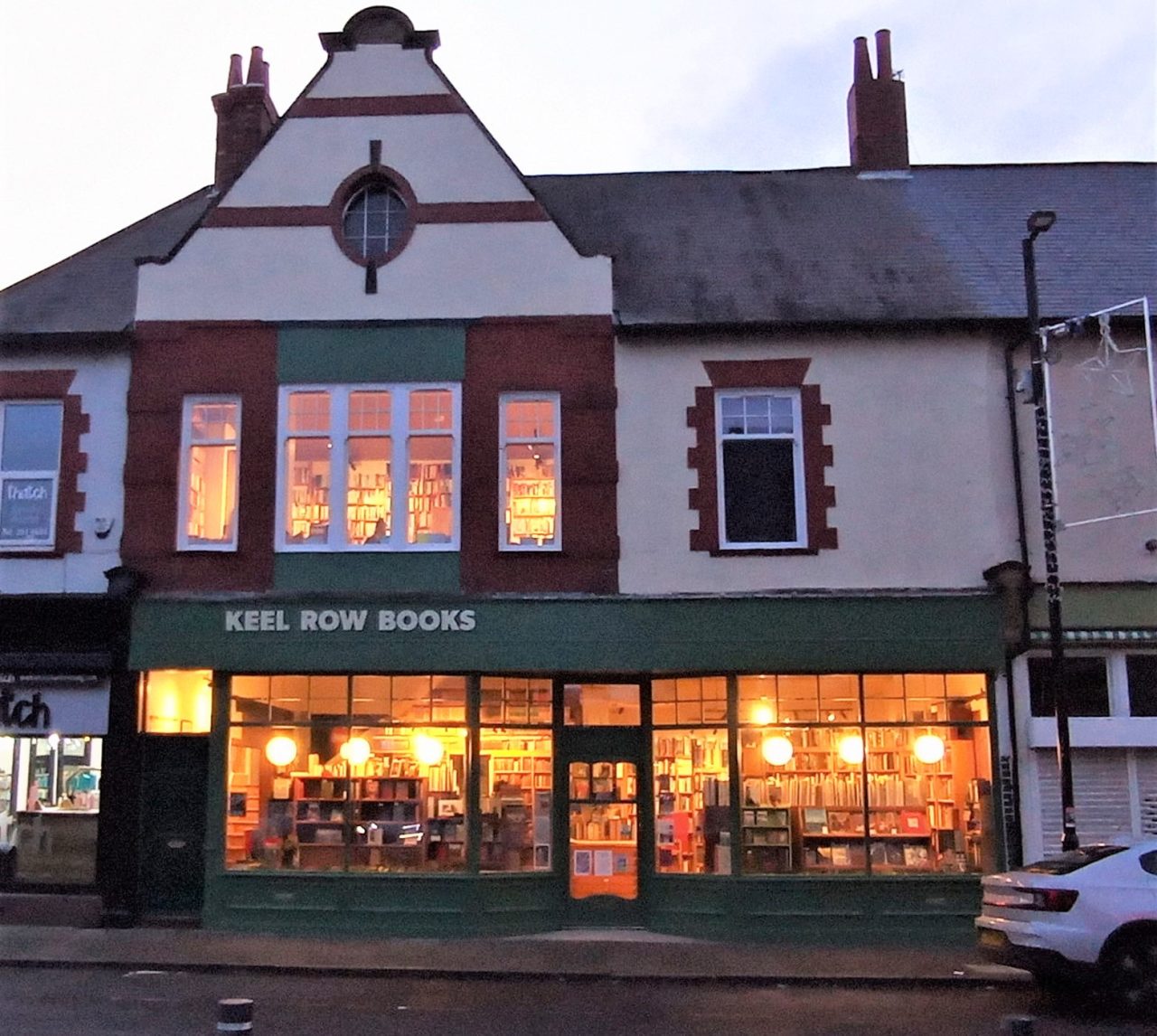
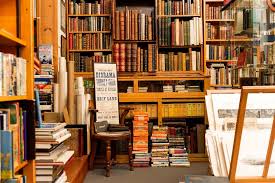
Buy More Books


Posted in Art, Books, Bookstore Tourism | Tagged , | Leave a comment

Never Have to Leave the Airport

Situated near Amsterdam’s New West ,  Corendon Amsterdam New-West, a Tribute Portfolio Hotel has 680 guest rooms and two decommissioned Boeing passenger planes. One is available for special events, while the other is attached to the one-of-a-kind 737 Suite .

An aviation lover’s dream, the 1291-square-foot suite has a king-sized bed, kitchen, living room, and a bathroom plus two half-baths. Overnighters can access the jet’s cockpit and first two rows to snoop inside compartments, push buttons, ignore “fasten your seatbelts” signs, and eat tasty room service food.

The hotel’s other stationary plane is a Boeing 747-400 — the former KLM aircraft called “City of Bangkok” — which first flew in 1989 and retired after 30 years of service. During daily tours at 10 a.m., visitors can sit in the cockpit and passenger seats and see where flight crews used to sleep.


Posted in Air Travel, Europe, Hotels | Tagged , , | Leave a comment

Books break the shackles of time.

The video below is an excerpt from the 11th episode of Carl Sagan’s iconic 1980s Cosmos series, titled “The Persistence of Memory.”

What an astonishing thing a book is. It’s a flat object made from a tree with flexible parts on which are imprinted lots of funny dark squiggles. But one glance at it and you’re inside the mind of another person, maybe somebody dead for thousands of years. Across the millennia, an author is speaking clearly and silently inside your head, directly to you. Writing is perhaps the greatest of human inventions, binding together people who never knew each other, citizens of distant epochs. Books break the shackles of time. A book is proof that humans are capable of working magic.


Posted in Books, History, Libraries, Restaurants, Writing | Tagged , | 1 Comment

Not your usual guidebook for NYC

Filmmaker and social media maven Nicolas Heller, also known as New York Nico, boasts more than a million people followers on his eponymous Instagram account where he chronicles the characters of New York City. Heller platforms ordinary New Yorkers along with a wild mix of the city’s wonderful eccentrics.

After years of handing out free advice about what to do and where to go in NYC, Heller has written a 226-page book to answer those questions. New York Nico’s Guide to NYC explores the five boroughs with recommendations from the Manhattan-born and raised expert himself.

The guidebook’s pages are packed with maps, illustrations, photos, tips, and a checklist called “The Nico 100.” For his new book, Heller worked with Jeremy Cohen on the photography; Chris Wilson for illustration; and collaborated with Jason Diamond for writing.

“A lot of people have been asking me, what sets this guide apart from other guides? And the best answer I can give them is: It’s my guidebook. It’s not like the spots you need to go to, these are my favorite spots. … If you enjoy my POV on New York, then you’ll enjoy this book.”

New York Nico’s Guide to New York City. is a guidebook, but not in the traditional sense of the word – you won’t find fancy restaurants within its pages or tourist traps, the book centers more on the people and the places that make NYC hum.


Posted in Architecture, Art, Books, Maps, Public Transport, Restaurants, Tourism, Uncategorized, USA | Tagged , , , | Leave a comment

Not creepy at all

Young, blonde and available to chat in 20 languages “Emma”  is the new brand ambassador “Emma” for the travel in Germany — and she is AI-generated. On Instagram and in a chat function, she is designed to offer the international target audience on a journey around​​ the country for the German National Tourist Board and answer potential travelers’ questions.

The goal of the new campaign by the German National Tourist Board (DZT) is to make tourism seem more accessible for a young, foreign target market. The virtual influencer “Emma” represents a “modern, cosmopolitan Berliner,” according to the press release . She shares her travel experiences on the Instagram channel @EmmaTravelsGermany  . In the future, she will also “act as a personal travel companion and create personalized travel routes tailored to the individual interests of users.” In chat format, she can already answer questions in over 20 languages ​​by accessing the information on germany.travel and real-time data from the DZT Knowledge Graph.

Personally, I find it all a bit creepy, but check it out for yourself:


Posted in Europe, Tech, Tourism | Tagged , , | Leave a comment

“Now a narrative is a story, not logic, nor ethics, nor philosophy.”

“Now a narrative is a story, not logic, nor ethics, nor philosophy. It is a dream you keep having, whether you realize it or not. Just as surely as you breathe, you go on ceaselessly dreaming your story. And in these stories you wear two faces. You are simultaneously subject and object. You are the whole and you are a part. You are real and you are shadow. ‘Storyteller’ and at the same time ‘character.’ It is through such multilayering of roles in our stories that we heal the loneliness of being an isolated individual in the world.” (translated by Alfred Birnbaum)

If like me you are a Murakami cultist, check out this excellent Esquire article about the author.


Posted in Asia, Books, Restaurants, Writing | Tagged , | 2 Comments

Just another marbled Monday

The wavy patterns on the edges, covers, and endpapers on this tooled and blind-stamped, half-bound book are from Carew’s Survey of Cornwall printed in London by Thomas Bensley for J. Faulder and Rees and Curtis in 1811. The marbled-paper pattern is what the University of Washington’s site on Patterned Papers identifies as Serpentine.

The pattern begins with a Turkish base. “A comb with one set of teeth is drawn through the bath twice vertically, once in either direction with the second pass halving the first. This step is repeated horizontally. Then the final step is to draw a comb, with one set of teeth set at slightly wider intervals, through the bath once vertically in wavy lines reminiscent of the way in which a snake moves.“ As we’ve noted before, when marbling the edges of a book, the text block is clamped tightly shut, and once dipped, the excess fluid is blown or shaken off quickly to prevent it from running into the book. Once dry, the marbled edges are burnished.

The Cornish antiquary Richard Carew (1555–1620) first published his survey of Cornwall in 1602. This 1811 edition includes Carew’s Survey with additional notes by the Cornish historian Thomas Tonkin (1678–1742), published here from Tonkin’s original manuscripts by Francis Basset, 1st Baron de Dunstanville (1757-1835), who dedicates the publication to Carew’s descendant, the British politician Reginald Pole Carew (1753-1835).

The frontispiece is a portrait of Richard Carew from 1586, rendered here as a stipple engraving by English engraver William Evans (active 1797-1856). Carew is depicted holding a book with the Latin inscription Invita Morte Vita (In spite of life and death), and in the background there is an allegorical hammer and anvil with the Italian inscription Chi’verace durerà (Who is true will last).


Posted in Art, Asia, Europe, History, Travel Writing | Tagged , , , | 1 Comment

Book Club

Posted in Books | Tagged , | Leave a comment