Sunday, Why So Random (again)


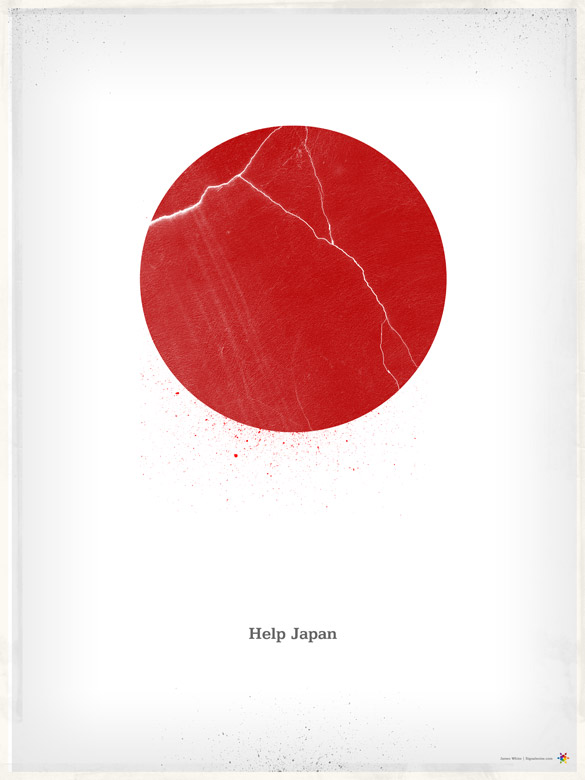
"Rising Sun" by Shepard Fairey for Japan Relief

Posted in Art, Asia, Europe, Libraries, Maps, Photography, Uncategorized | Tagged , , | 1 Comment

Where’s the Next Pop-up Restaurant ?

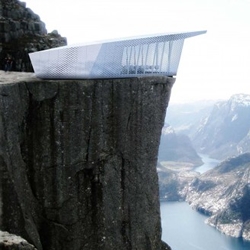
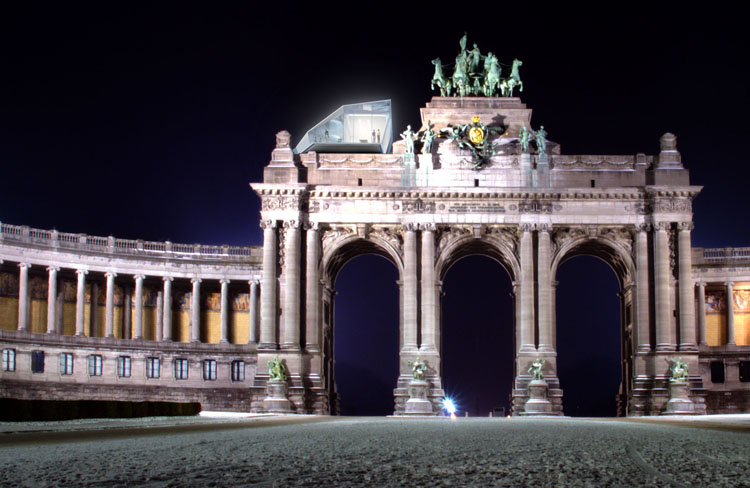
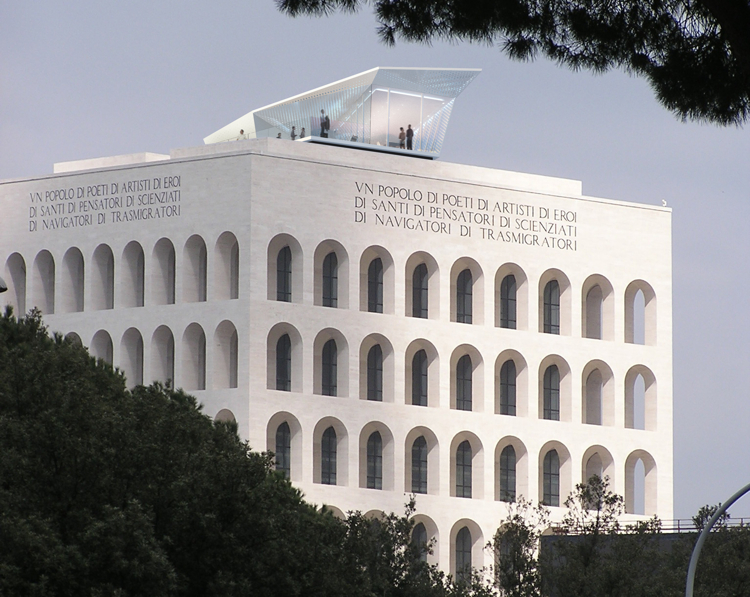
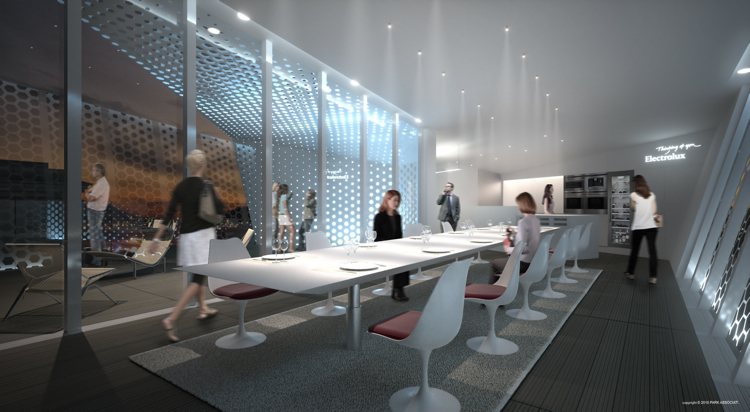
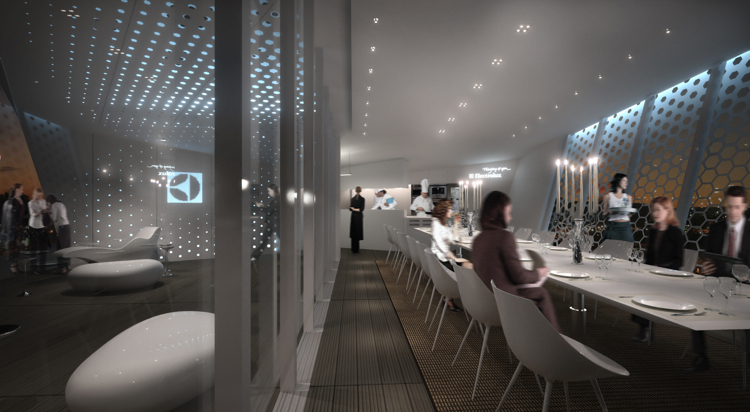
Beginning this April 1st, a clever pair of pop-up restaurants  commissioned by Electrolux, the Swedish appliance company, will appear around Europe briefly perching on iconic monuments, buildings and mountains.

The restaurant “Cubes”, designed by Italian architects Park Associati, feature laser-cut aluminum walls, dining spots for 18 and a viewing terrace for the fortunate diners.

The first Cube will appear on the arch of the Parc du Cinquantenaire, Brussels. It then moves, along with its twin, to Italy, Switzerland, Russia and Sweden.

images courtesy of Park Associati

Posted in Architecture, Europe, Tourism | Tagged , , , | 1 Comment

Reading Group Guides : Top 25 Picks

From December 2010 through mid-February 2011, the Reading Group Guides, an online community for book clubs, surveyed reading groups on their month to month picks for 2010. Based on thousands of responses they came up with a “Top 25 Most Popular reading Group Picks of 2010”.

1. The Help by Kathryn Stockett

2. The Girl with the Dragon Tattoo by Stieg Larsson

2. The Guernsey Literary and Potato Peel Society by Mary Ann Shaffer and Annie Barrows

4. Sarah’s Key by Tatiana de Rosnay

5. Hotel on the Corner of Bitter and Sweet by Jamie Ford

6. Olive Kitteridge by Elizabeth Strout

7. Little Bee by Chris Cleave

8. A Reliable Wife by Robert Goolrick

9. The Art of Racing in the Rain by Garth Stein

10. Cutting for Stone by Abraham Verghese

11. The Book Thief by Markus Zusak

12. Half Broke Horses by Jeannette Walls

13. Still Alice by Lisa Genova

14. Shanghai Girls by Lisa See

14. The Elegance of the Hedgehog by Muriel Barbery

16. Three Cups of Tea: One Man’s Mission to Promote Peace… One School at a Time by Greg Mortensen and David Oliver Relin

17. Loving Frank by Nancy Horan

18. Let the Great World Spin by Colum McCann

19. People of the Book by Geraldine Brooks

19. The Glass Castle by Jeannette Walls

21. To Kill a Mockingbird by Harper Lee

22. South of Broad by Pat Conroy

23. The Story of Edgar Sawtelle by David Wroblewski

24. Water for Elephants by Sara Gruen

25. The Postmistress by Sarah Blake


Posted in Books, USA, Writing | Tagged , , , | Leave a comment

Aakash Nihalani is not Banksy

hat-tip to Seth Carmichael, publisher of tasj magazine for this post:

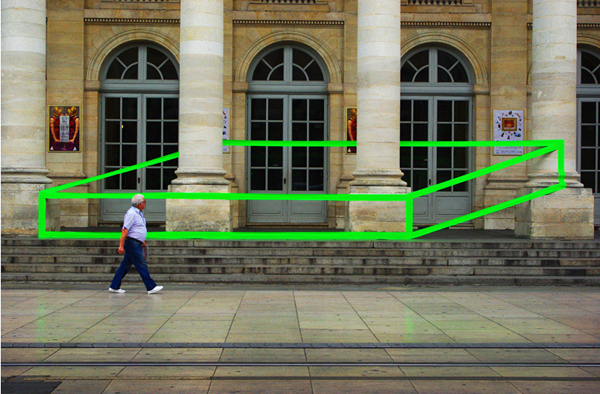
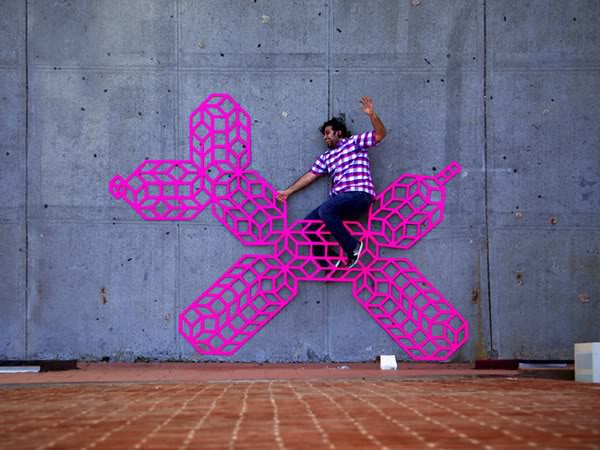
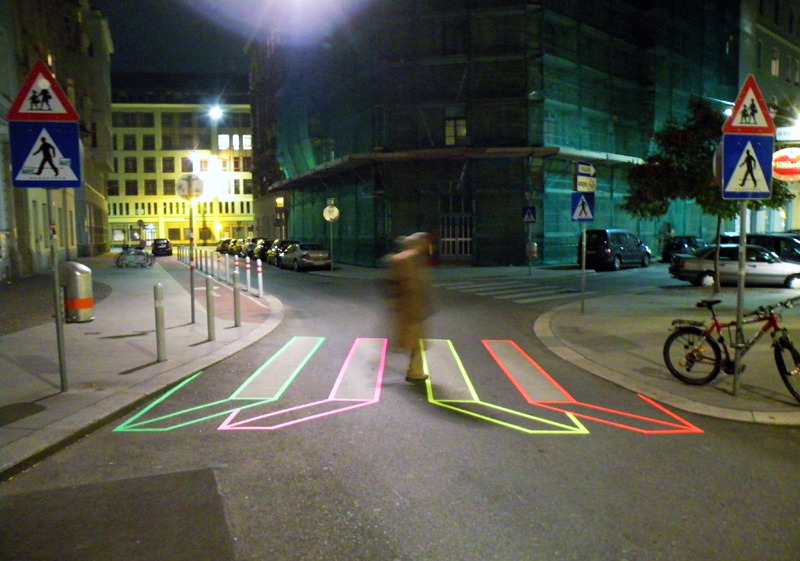
Aakash Nihalani is fast becoming recognized as one of the US’s most striking emerging installation artists. Celebrated for his ephemeral modifications of the urban landscape throughout the US and in India, Austria and France, the young Brooklyn-based tape specialist wields an abstract narrative of isometric shapes and flamboyant hues grounded in quiet irony and idiosyncratic precision. The fluidity of his minimalist, neon patterns, which employ familiar shapes to produce unexpected visuals, initiates an inviting, living dialogue with viewers that readily adapts into sculpture and works on canvas, thereby escaping its customarily fleeting existence whilst continuing to fuse his aesthetic and conceptual objectives.

Posted in Art, Uncategorized, USA | Tagged | 1 Comment

New Zealand Is Not Erewhon

Today’s guest post is by New Zealand travel writer Pam Neville. The article is in support of Blog4NZ, which is a grassroots blogging and social media effort to support New Zealand travel in the wake of the horrific earthquake in Christchurch on February 22, 2011. It’s going to take a lot of support and cash to recover completely. Tourism makes up approximately 10% of New Zealand’s GDP.


“Following Footsteps: hiking with history in New Zealand’s South Island high country”

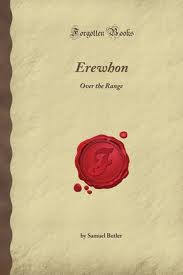
The book’s name is one of Butler’s many jokes in a novel which is a satire on Victorian morals rather than a story of the New Zealand high country. Erewhon is ‘nowhere’ spelt backwards, though a canny walker spots that the ‘w’ and the ‘h’ are transposed. To add to our musings, we find a high country station named Erewhon directly across the Rangitata River from Mesopotamia. But this one was named more recently, in the 20th century, in honour of the book. In Butler’s time, this station – now a fine Clydesdale horse stud – was called Stronechrubie, which is today the name of a fine restaurant and motel in Mt Somers a couple of hours drive away towards Christchurch.
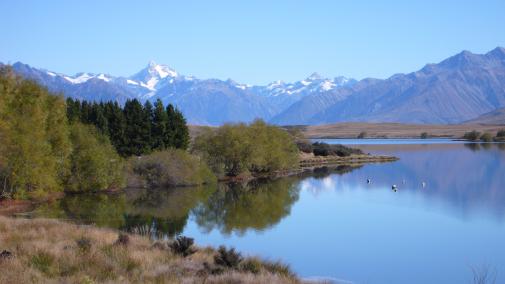
Enough of the history. Our hardy group of walkers is heading uphill from pretty Lake Clearwater at the foot of the alps in search of Mystery Lake. The jaunt will take about four hours, provided we can find the lake. It is so-named because early explorers often could not locate it, and came back down disgruntled and doubting its existence.
Discreetly tucked in between hillocks on the side of Dogs Range, we discover Mystery Lake (our guide, I admit, has been here before. I doubt we would have found it alone). Its soft tussocked banks are sofas from which to spot enormous brown trout. Then it’s another four hours down towards ‘home’, as we learn to call our shearers’ quarters and shepherds’ cottages, along the edges of a startling ravine above the Potts River.

On the flats of the valley, near where the Potts meets the enormous, braided Rangitata River, history buffs can head off in search of ‘Dr Sinclair’s Grave’. A friend of Samuel Butler, Dr Andrew Sinclair was travelling with fellow botanist, Julius von Haast, when he drowned while crossing the Rangitata on horseback in 1861.

He had been “not sufficiently aware of the treacherous nature of alpine currents”, according to von Haast at the time. Both Sinclair and Haast are immortalised in the names of mountains and rivers of the region they explored together, and their botanical comradeship is marked in the naming of a mountain daisy Haastia Sinclairii.
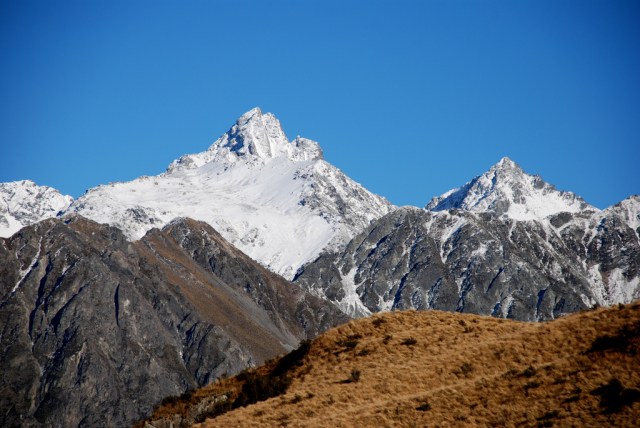
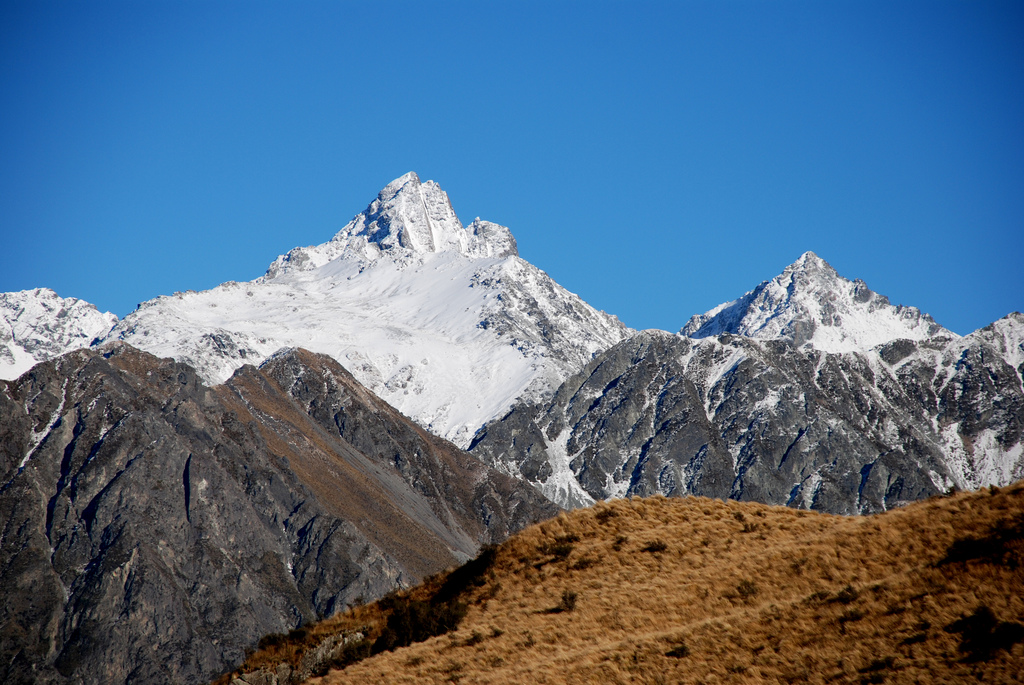
We mere walkers become sharply aware of the nature of alpine currents as we cross, twice, strands of the multi-streamed Rangitata on our way to climb Mt Sunday. To be fair, they are cold but hardly treacherous on the day we splash through, although surprisingly powerful for water less than knee-deep.

Mt Sunday is the modern-movie-making part of our walk. This strange stand-alone hill of rock between braids of the Rangitata became the village Edoras in the movie Lord of the Rings. Mt Sunday got its name from shepherds who would come down from their mountain huts and high country stations and meet there for Sunday picnics. Today it’s an easy walk, with no trace of either shepherd or movie set, although it continues to attract mini-busloads of tourists partaking in the strange activity of searching out Lord of the Rings filming sites.

Tired limbs are definitely eased by our diversions, and Mesopotamia has plenty to offer dreamers. Tonight we check out the site of Samuel Butler’s cottage, visit the old and disused schoolhouse, and sample the merino clothing designed by the present-day owner of Mesopotamia Station. And our walk is only half-done. Tomorrow, the itinerary promises we will Cross the Brabazon – apparently a ridge below Mt Brabazon, named for John Brabazon who arrived at Mesopotamia with Samuel Butler back in 1860. Now there’s a name to walk to.

Posted in Tourism, Travel Writing | Tagged , | 1 Comment

Barcelona’s Inventive Museum

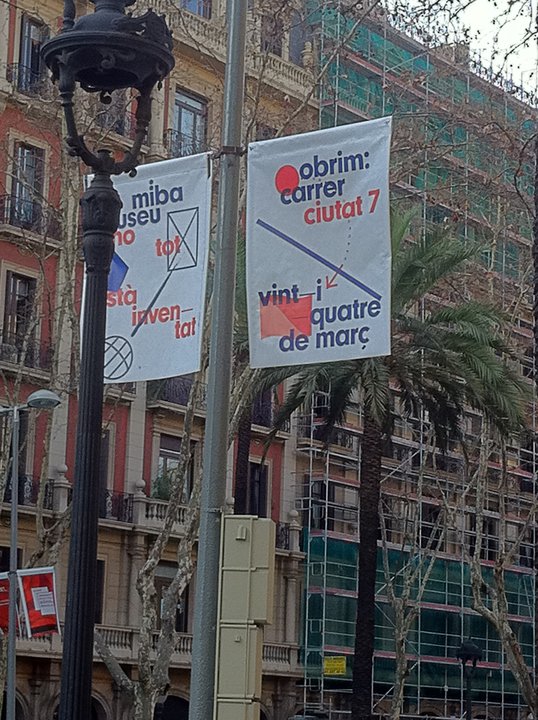
The Museu d’Idees i Invents de Barcelona (Museum of Ideas and Invention), or miBa to its close friends, opens its doors to the general public tomorrow, March 23rd. Brainchild of Catalan inventor, entrepreneur and motivational speaker Pepe Torres, the miBa is spread over two floors of a lovely 19th century building. Located behind the Barcelona city hall, the new museum focuses on the creative process and inventions.

According to Pepe Torres, the museum is about much more than displays and exhibitions. “The miBa is above all a hands-on project to awaken latent creativity and get visitors thinking…The intention is that everyone who steps through the doors will leave wanting to turn their ideas into reality.”

Highlights of miBa include the “Cause & Effect Machine” that visitors can personally operate, and “Funventions”, displays of absurd and useless inventions and gadgets. Best of all, the two floors are connected by a giant slide for all to use.

Posted in Europe, Museums | Tagged | 1 Comment

A Bridge Too Far

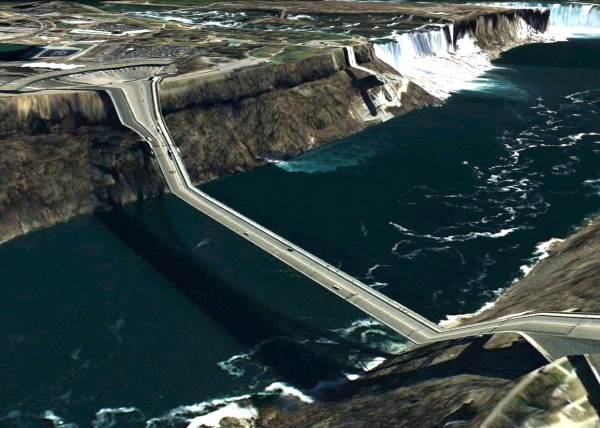
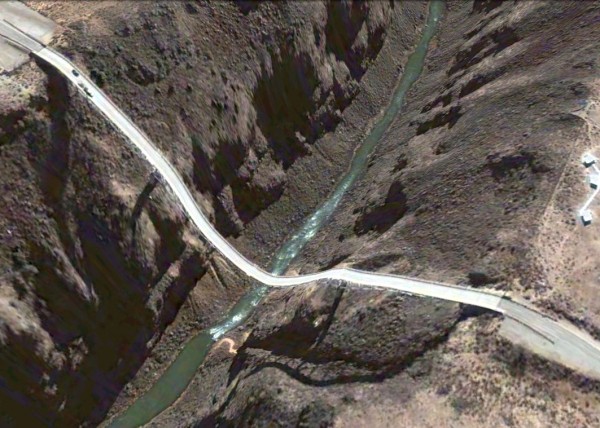
Brooklyn-based artist and programmer Clement Valla, whose work is featured over at the French website Fubiz, got his start working as architect; you can see his personal artistic evolution in his series Bridges, which takes cropped images from Google Earth to transform iconic landmarks such as the Golden Gate Bridge into distorted, surreal structures that are almost impossible to recognize. “When my programs run their course, inherent contradictions and absurd situations result from the very structure of the system itself, producing unfamiliar artifacts and juxtapositions,” he explains. “Like an anamorphic projection, my programs produce distortions that reveal their own underlying logic, but also point to the system as it functions when we fail to notice it — when it works conventionally.”

Posted in Architecture, Photography | Tagged | Leave a comment

Anne Frank and Dutch Book Week

thanks to Marthe Dijkstra for this suggestion:

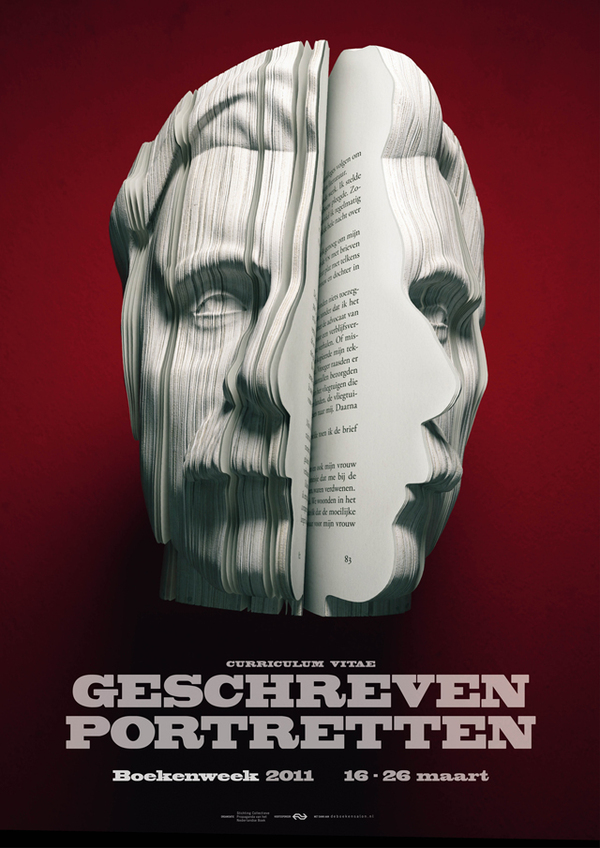
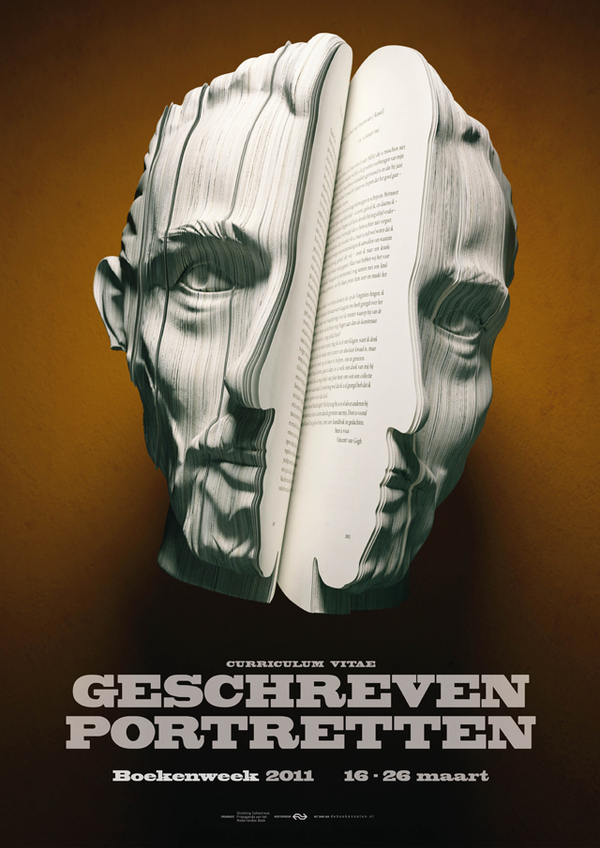
Each year the CPNB, or Collectieve Propaganda van het Nederlandse Boek, organizes the Dutch Book Week (Boekenweek ) to promote Dutch literature and reading. And every year a specific genre is profiled. This year, for the 76th Book Week, autobiography is featured, with the theme Geschreven Portretten or “Written Portraits”. The marvelous poster campaign artwork for the event was created by Souverein.

Posted in Art, Books, Europe | Tagged , , , , | Leave a comment

Help Japan

To support the relief effort in Japan simply text “REDCROSS” to 90999 to donate $10 or donate more at the American Red Cross website.

You can also make donations via the Japan Society which pledges to use 100% of all funds for the relief effort.

Posted in Asia | Tagged , | Leave a comment

Italy’s Art In Easter Eggs

Today’s guest post is from Scott McLay of Edinburgh, Scotland.

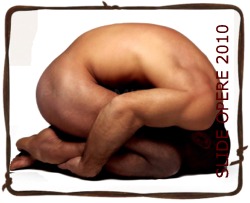
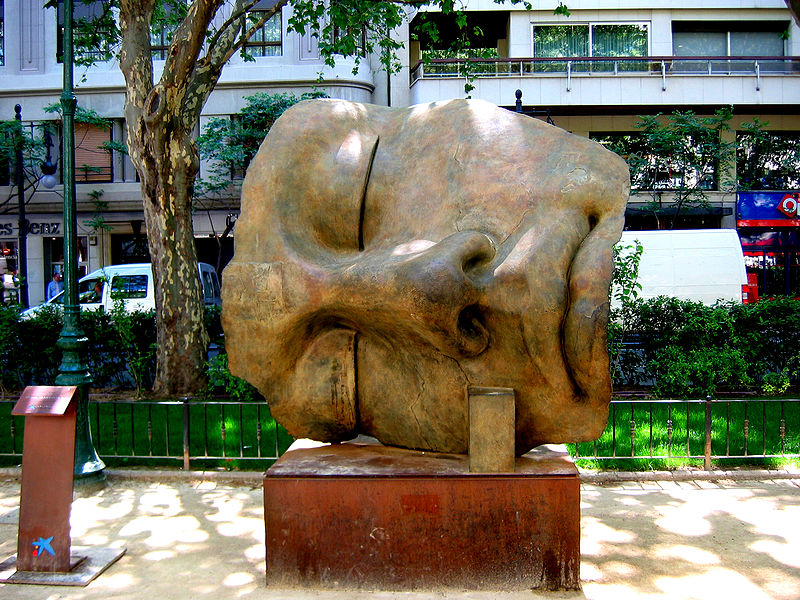
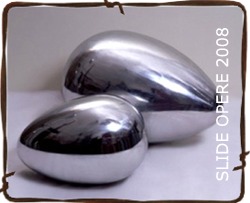
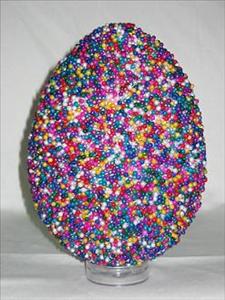
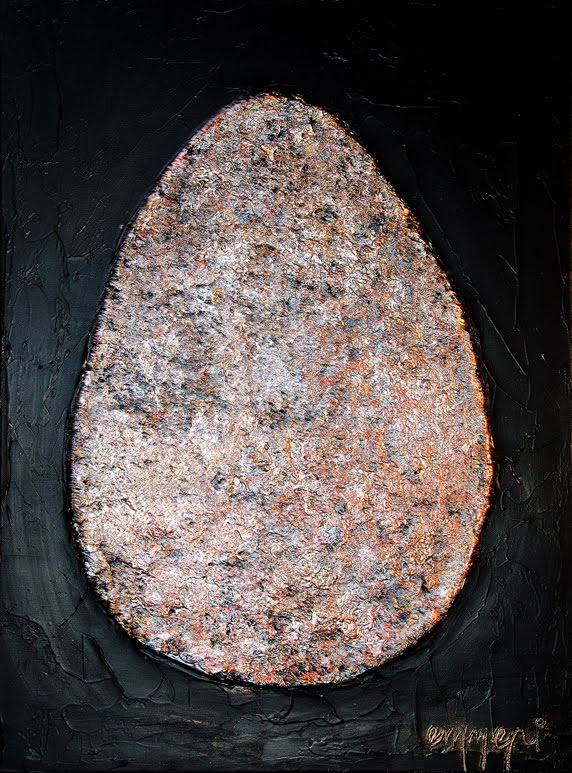
Now in its tenth year, Rome’s L’Arte nell’ Uovo di Pasqua, or ‘Art in Easter Eggs’ is a unique celebration that combines art, Italian tradition, design and skill with charity in the prestigious lifestyle and arts store, the White Gallery in Rome. Created and organised by Sergio Valente, this event takes place over one evening, with the proceeds going towards a number of charitable projects, such as HIV research and Water for Ethiopia. Taking place in March every year, Art in Easter Eggs has attracted some very high profile artists, including the Italian architect Massimiliano Fuksas and the Polish artist Igor Mitoraj.


Unlike more consumer based Easter celebrations, Art in Easter Eggs doesn’t produce the colourful and recognisable Easter eggs that we’re all used to. Instead the shape of the egg, and the nature of the egg as a symbol of birth, life and humanity, with the artists taking part asked to take inspiration from the shape and meaning of the egg in order to create their work. They are allowed to use any art medium or materials that they’d prefer to use, such as paint, charcoal, or even stone for sculpting.
 

Beginning in 2002, Art in Easter Eggs quickly became a popular arts and culture event in the heart of Rome that attracted locals and tourists alike. After each piece has been created, they are then exhibited to the public, journalists and artists alike, for no fee, After they have been exhibited, they are then sold, with all the proceeds going to a chosen charity or cause, previous recipients have included the Atena Onlus, an association that researched neurosurgery, and the money from the sales of the work was used to finance their research and the building of specialist laboratories to help find the cure for serious neurological injuries and illnesses.


The exhibition continues Italy’s tradition of decorating eggs, which became popular around the world in the Middle Ages, when real hen eggs were substituted for artificial eggs, which were then decorated with precious stones and metals, such as gold, silver and even platinum. This then led to the creation of the infamous Faberge eggs, which were created especially for the tsars in the 19th century.


As the event is free, all are welcome to attend, and tourists visiting Rome during the months of March and April will find that Art in Easter Eggs will attract a lot of attention, with the media, celebrities and some of the most well-known names in the art world arriving in the city of the event. http://www.inghams.co.uk/lakes-mountains-holidays/country/item16/italy/  Usually very popular during the summer months, but March and April can be much quieter, and events like Art in Easter Eggs prove that there is so much more to do on holiday in Italy, so try not to miss out on this highlight of the Italian cultural calendar.

Posted in Art, Europe, Tourism | Tagged , | Leave a comment