One Minute Park: I really, really enjoy this pure dead simple website. One Minute Park couldn’t be more basic – click the link and you get transported to a full-screen video, in landscape, which lasts for exactly 60 seconds and which presents a delightfully, perfectly chill scene filmed in a local park somewhere in the world. That’s it – after 60 seconds, the scene shifts to another park somewhere else on the planet. No more, no less, just small, evanescent windows into slices of quiet humanity. The first time that I tried it, I was instantly whisked away to Vondel Park in the heart of Amsterdam. Another time, I found myself back in Prospect Park, Brooklyn where I spent many joyful hours as a small child. Give it a spin.
On April 15, 1874, thirty artists, including Edgar Degas, Paul Cezanne, Claude Monet, Berthe Morisot, Camille Pissarro, Pierre Auguste Renoir, and Alfred Sisley, held an exhibition of their works in Paris, at the Boulevard des Capucines, the vacant studio of the photographer Nadar (Gaspard-Félix Tournachon). Having been rejected by the artistic establishment’s Salon, these artists chartered a joint stock company, called the Société Anonyme des Artistes, Peintres, Sculpteurs, Graveurs, etc. The members of the Société Anonyme organized an exhibition of their avant garde works in order to reach a wider audience. The first Impressionist exhibition featured innovations, breaking from the Salon’s method of displaying artworks: instead of crowding several rows of paintings, and relegating the works of new artists near the ceiling, far away from patrons’ eye-level (known as “skying”), the Société Anonyme organizers displayed only two rows of paintings on each wall and gave equal placement to new artists’ works.
The first Impressionist exhibition received mostly negative reviews from contemporary critics. During the mid-19th century, the Western European art establishment preferred strictly representational paintings that depicted historical and religious subjects. The Impressionists broke from the tradition of idealizing their subjects, instead depicting the fleeting moments of everyday life. Unlike establishment painters, who typically painted in their studios, the Impressionists painted outdoors, employing quick, broad brushstrokes, that emphasized the various qualities of sunlight. Notable artworks displayed at the exhibition included Degas’ Dance Class, Cezanne’s Modern Olympia, Monet’s Impression, Sunrise, Renoir’s The Loge and Dancer, Morisot’s Hide-and-Seek, and Pissarro’s Hoarfrost, among others.
For more information on the birth of Impressionism click here.
The Literacy Pen by The World Literacy Foundation and the Dutch firm Media.Monks is an amazing educational device designed to enable illiterate individuals to start writing and learning to read, instantly. Open source and compatible with all standard pens on the market, it utilizes an innovative method that combines technology with the essential elements of traditional processes. Users only need to connect the device to their pen and speak their desired words into the built-in microphone. The voice dictation technology then accurately transcribes these words onto the digital screen, letter by letter, facilitating direct copying onto paper and enhancing the learning process for all. The device further ensures an effective learning experience by focusing on key aspects of literacy development, such as written and visual repetition. Its compact size, light weight, and ergonomic shape additionally make it accessible and comfortable for users of all ages and abilities, further promoting inclusivity in education.
Nearly 800 million people around the world struggle due to illiteracy. This creates enormous obstacles in daily living and keeps people trapped in poverty. Illiteracy limits participation in communities and the exercise of their rights. Socially, it fosters exclusion and marginalization, hindering full integration into society and equal access to opportunities. These consequences resonate beyond individuals, impacting families, communities, and nations alike, underscoring the urgent need for a new, effective literacy method.
The very clever guys behind the websiteBrilliant Maps have utilized artificial intelligence programming to conjure up some quite interesting maps based on the painting styles of some great artists. You can see the results on their website and on YouTube in the neat little video below.
Mt.Etna‘s Southeast Crater has begun emitting countless graceful vapor rings (“volcanic vortex rings”), a phenomenon never seen like this before. Someone said “maybe because we receive so much bad news lately, Etna has decided to do something simply beautiful”.
The Abandoned/Ghost station project captures those mysterious stations throughout London which are long closed and disused. Many remain fairly intact and some even feature time capsule-like qualities, such as WWII propaganda posters hanging from the platform walls.
The Museum of Portable Sound (est. London, UK, November 2015 by Dr John Kannenberg) is a portable museum dedicated to the culture and history of sound. Its headquarters is now located in Southsea, Portsmouth, and operates throughout the southern UK and anywhere its Director travels.
Since May of 2020, the museum has conducted online visits via video chat, and has now been visited by people all across Europe, North America, South America, Australia, India, Japan, and China.
“Anyone whose goal is ‘something higher’ must expect someday to suffer vertigo. What is vertigo? Fear of falling? No, Vertigo is something other than fear of falling. It is the voice of the emptiness below us which tempts and lures us, it is the desire to fall, against which, terrified, we defend ourselves.”
— Milan Kundera, The Unbearable Lightness of Being
I recently stumbled upon a story about the creation of a gorgeous version of THE HOBBIT by J.R.R. Tolkien with an art binding by Dmitri Koutsipetsidis in collaboration with Mia Heath. Check out the story of the book and Dmitri’s path to becoming a skilled bookbinder in Athens.
from Whiskers & Rhymes by Arnold Lobel (1985)
During the Fascist regime, the power of media was already well-known. To bring the propaganda all over Italy, a series of trucks were set up with a projector system and a structure to fix a screen right in front of the vehicle. A simple and practical way to have a moving cinema — called “cinemobile” — able to travel to around small towns and villages.
This unit, one of the very few existing, was built on an old Fiat 521 chassis by Carrozzeria Fissore, and was even brought to Eritrea, in the Italian colonies of that time, were it was found many years later. Its original movie projector is still in place and still works after a careful restoration.
A CANTICLE FOR LEIBOWITZ by Walter M. Miller. (New York: Lippincot, 1959) Cover art by M. Glasser. First edition was issued with a paper banner from publisher.
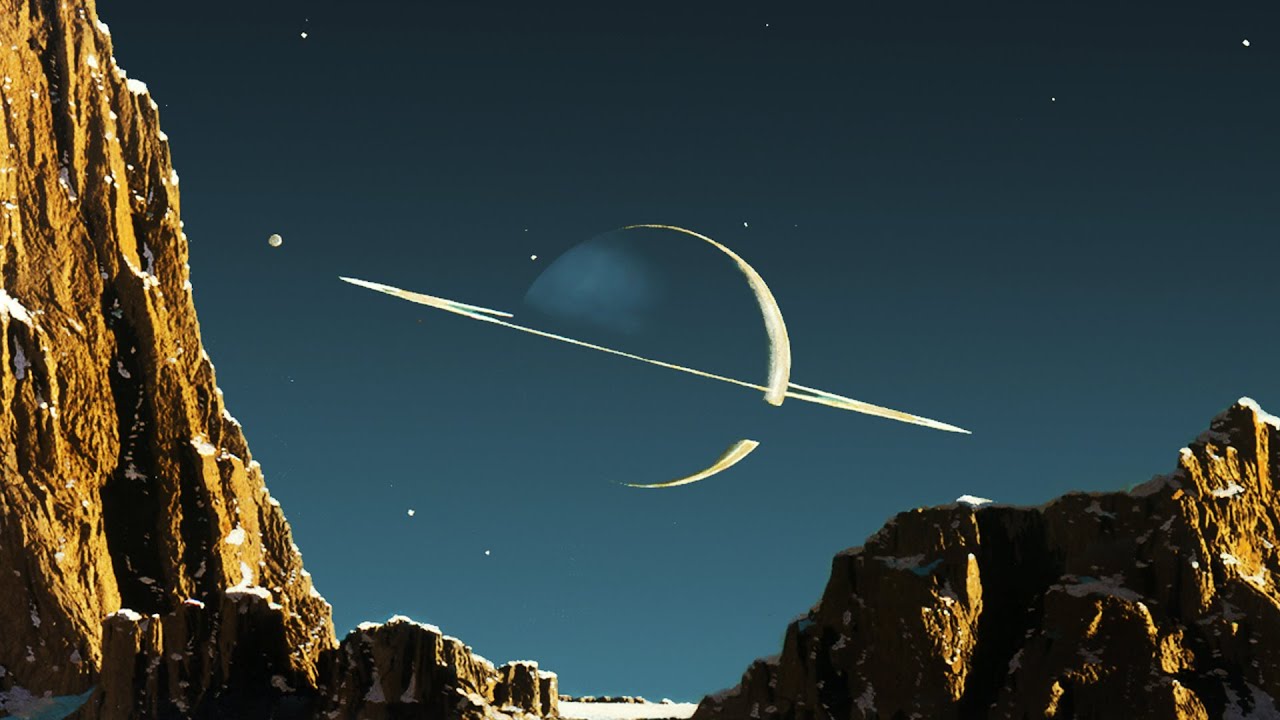
‘A Canticle for Leibowitz is a post-apocalyptic social science fiction novel by American writer Walter M. Miller Jr., first published in 1959. Set in a Catholic monastery in the desert of the southwestern United States after a devastating nuclear war, the book spans thousands of years as civilization rebuilds itself. The monks of the Albertian Order of Leibowitz preserve the surviving remnants of man’s scientific knowledge until the world is again ready for it.
The novel is an amalgamation of three short stories Miller had originally published in The Magazine of Fantasy & Science Fiction [April 1955-February 1957], inspired by the author’s participation in the bombing of a monastery at the Battle of Monte Cassino during World War II. The book is considered one of the classics of science fiction and has never been out of print. Appealing to mainstream and genre critics and readers alike, it won the 1961 Hugo Award for best science fiction novel, and often appears on “best of” lists. It has been recognized three times with Locus Poll Awards for best all-time science fiction novel. Its themes of religion, recurrence, and church versus state have generated a significant body of scholarly research.’
Imagine a planet in a system with six suns where total darkness, in the form of a solar eclipse, comes only once every 2,049 years. This is the setting of “Nightfall,” a short story that appeared in the September 1941 issue of Astounding Science Fiction. An immediate sensation, it sealed the reputation of its author, a little-known 21-year-old graduate student at Columbia University named Isaac Asimov.
NASA commissioned gifted artists among their ranks to create an exciting series of posters commemorating the total solar eclipse that will cut a wide swath across Mexico, the United States and Canada today.
On April 8, 2024, a total solar eclipse will cross the continental United States, providing an exciting and breathtaking opportunity for observation and science. A total solar eclipse happens when the Moon passes between the Sun and Earth, completely blocking the face of the Sun. People located in the center of the Moon’s shadow when it hits Earth will experience a total eclipse.
Each of the four artists were inspired by different aspects. Krystopher Kim said that he was inspired by past space exploration, Tyler Norgen looked to travel pamphlets of the 1930s, Kristen Perrin‘s poster highlighted the universality of the eclipse, and Genna Duberstein created hers from a fond memory of her parents with their dog.
La Joie de Vivre, a bookstore and café selling titles in French and English, has opened in Manhattan’s Chelsea neighborhood. Forbes reported that the shop, located at 145 W. 27th St., “offers a quick getaway to France. 50% of books sold in the store are in French, offering French language literature, art, cooking, graphic novels and children’s books categories to New York’s French speakers. Of course, plenty of English language books are sold as well, for Francophiles who haven’t quite mastered their temps composés.”
Posters, games, stationery, accessories and merchandise are also available. An in-store cafe features beverages and French pastries sourced from local bakeries. An events calendar is in the works, along with regular photography and painting exhibitions on the shop’s walls.
La Joie de Vivre is the passion project of Cyril Dewavrin, who has opened three bookstores in France.
“La Joie de Vivre is first and foremost a place of rendez-vous for all to celebrate all kind of arts, literature and reading,” said Dewavrin. “By combining books, bakery and art exhibitions in a friendly Paris-inspired atmosphere, we are offering busy New Yorkers an opportunity to put down their phones, stimulate the senses, read and relax.”