Whitey’s on the Moon (almost)

The possibly legit startup Galactic Resource Utilization Space (GRU), which may or may not have any relationship to the Russian intelligence agency GRU,  has launched a website to take reservations for a hotel on the moon. Take a beat though because the hotel is not on the moon yet, but the plan is to have it in place by 2032. Availability dates will be subject to transportation, and of course, whether the hotel is ever built. Or we should say, installed, because it’s going to be an inflatable structure. It will hold up to four people for multi-day vacations, which may include sightseeing, driving, and golf.

GRU is the brainchild of Skyler Chan, a 21-year-old Berkeley graduate, who has enlisted tech investors such as SpaceX and Nvidia. A big chunk of money is expected from the guests, though. Reservations range from $250,000 to $1 million, depending on the vacation package. A $1000 non-refundable deposit on the GRU website will supposedly claim your initial spot.


Posted in Air Travel, Tech, Tourism | Tagged , , | Leave a comment

Sounds like Japan

The Sound of Japan transported me directly to my happy place. Captured in the mountains and cities of Japan, this film blends immersive visuals with an original soundtrack, composed of sounds recorded on location by musician Jackson Fester. An audio-visual exploration of pace, memory and creativity, each train station announcement and temple bell enhances the rhythm of snowboarding and emphasizes the cultural soundscape of this country.

If the award winning video fails to open in your browser, please click on the link.


Posted in Asia, Film, Photography, Tourism | Tagged , , | Leave a comment

A little airline drama

Here at TBTP Global HQ we are always on the lookout for entertaining airline safety videos to share. While most flyers ignore safety videos  because they are generally boring and repetitive, the new Philippine Airlines’  safety video utilizes a clever telenovela approach to grab attention.

NB: if the video fails to launch in your browser, please CLICK HERE.


Posted in Uncategorized | Tagged , , | Leave a comment

not to have entirely wasted one’s life seems to be a worthy accomplishment

Like many writers from working-class backgrounds, Charles Bukowski suffered through numerous mind-numbing jobs before he found success as a full-time author. In his thirties, he took a position as a fill-in mailman for the U.S. Postal Service. By his late forties, he was still a postal worker by day, writing a column for LA’s underground magazine Open City in his spare time and collaborating on a short-lived literary magazine with another poet.

In 1969, the year before Bukowski’s fiftieth birthday, he caught the attention of Black Sparrow Press publisher John Martin, who offered him a monthly stipend of $100 to quit his day job and dedicate himself fully to writing. Bukowski leaped at the opportunity. Less than two years later, Black Sparrow Press published his first novel, appropriately titled Post Office.

Seventeen years later, in August of 1986, Bukowski sent Martin a wonderful letter of gratitude. Found in Reach for the Sun: Selected Letters 1978–1994 .

August 12, 1986

Hello John:

Thanks for the good letter. I don’t think it hurts, sometimes, to remember where you came from. You know the places where I came from. Even the people who try to write about that or make films about it, they don’t get it right. They call it “9 to 5.” It’s never 9 to 5, there’s no free lunch break at those places, in fact, at many of them in order to keep your job you don’t take lunch. Then there’s overtime and the books never seem to get the overtime right and if you complain about that, there’s another sucker to take your place.

You know my old saying, “Slavery was never abolished, it was only extended to include all the colors.”

And what hurts is the steadily diminishing humanity of those fighting to hold jobs they don’t want but fear the alternative worse. People simply empty out. They are bodies with fearful and obedient minds. The color leaves the eye. The voice becomes ugly. And the body. The hair. The fingernails. The shoes. Everything does.

As a young man I could not believe that people could give their lives over to those conditions. As an old man, I still can’t believe it. What do they do it for? Sex? TV? An automobile on monthly payments? Or children? Children who are just going to do the same things that they did?

Early on, when I was quite young and going from job to job I was foolish enough to sometimes speak to my fellow workers: “Hey, the boss can come in here at any moment and lay all of us off, just like that, don’t you realize that?”

They would just look at me. I was posing something that they didn’t want to enter their minds.

Now in industry, there are vast layoffs (steel mills dead, technical changes in other factors of the work place). They are layed off by the hundreds of thousands and their faces are stunned:

“I put in 35 years…”

“It ain’t right…”

“I don’t know what to do…”

They never pay the slaves enough so they can get free, just enough so they can stay alive and come back to work. I could see all this. Why couldn’t they? I figured the park bench was just as good or being a barfly was just as good. Why not get there first before they put me there? Why wait?

I just wrote in disgust against it all, it was a relief to get the shit out of my system. And now that I’m here, a so-called professional writer, after giving the first 50 years away, I’ve found out that there are other disgusts beyond the system.

I remember once, working as a packer in this lighting fixture company, one of the packers suddenly said: “I’ll never be free!”

One of the bosses was walking by (his name was Morrie) and he let out this delicious cackle of a laugh, enjoying the fact that this fellow was trapped for life.

So, the luck I finally had in getting out of those places, no matter how long it took, has given me a kind of joy, the jolly joy of the miracle. I now write from an old mind and an old body, long beyond the time when most men would ever think of continuing such a thing, but since I started so late I owe it to myself to continue, and when the words begin to falter and I must be helped up stairways and I can no longer tell a bluebird from a paperclip, I still feel that something in me is going to remember (no matter how far I’m gone) how I’ve come through the murder and the mess and the moil, to at least a generous way to die.

To not to have entirely wasted one’s life seems to be a worthy accomplishment, if only for myself.

yr boy,

Hank

Posted in Uncategorized | Tagged , , , | Leave a comment

None dare call it travel hacking

I am relieved that actual travel writers and bloggers have stopped the tiresome use of the term “travel hacking” and just get on with the business of helpful suggestions. Here are a few of those that I’ve recently spotted.

If you don’t fly business class or have another way into specific airline lounges, Priority Pass is a great alternative in most international airports. For years, I had a credit card that offered a limited version of the Priority Pass, but alas that’s disappeared. However, recently I found another way to finagle lounge access. The Altitude Connect card from US Bank only gets you four included lounge visits a year, but it has no annual fee, no foreign transaction fees, and you get 20K travel portal points after a $1,000 minimum spend. Yes, I know that it’s bougie and elitist, but I’m old and need some peace and quiet when I fly.

I haven’t used  Welcome Pickups car service yet, but I’ve been told that it’s a good alternative to Uber and various local options.  You book online before your flight, see the exact price upfront (usually comparable to Uber), and most importantly, a driver will be waiting for you right after luggage pickup with your name on a sign. They speak English and can help with your bags. They operate in over 350 destinations worldwide. It’s the small dose of certainty that makes arriving in a new city less stressful.

You can now add a U.S. passport as your digital ID to your wallet app on an iPhone running iOS 26.1 or later. You still need to carry your passport overseas, but you can pull out this ID for TSA clearance at 250 airports in the U.S., including SFO, LAX, JFK and LGA. To do this go to your wallet, hit the + in the upper right, then choose “Driver’s License and ID Cards,” then “Digital ID.” You’ll be prompted to hold your phone’s camera over the photo page of your passport and then you need to touch your phone to the chip embedded in the back of the passport. Then you’ll be asked to take a selfie and do some prescribed head movements to verify you are real. Finally, your application will await verification. Once verified your passport ID will appear in your wallet.

The best bargain flights to Japan are through a Japan Airlines subsidiary called Zip Air. All routes begin or terminate in Tokyo, flying from hub cities in Asia, such as Singapore, Hong Kong, and from select cities in the US. Prices vary widely during the year, but on some weeks this coming spring an economy round trip flight from San Francisco to Tokyo is only $283. Of course, they charge for everything from meals, water, blankets, and luggage. And their “lie full flat” seats (business class) are less than $2,000, but also without blankets, pillows, or service.

Traveling? Be aware that US Customs might demand to see what’s on your phone upon entry. Here’s some advice on how to handle the problem. GIFT ARTICLE


Posted in Uncategorized | Tagged , , , | Leave a comment

Blue (Rider) Winter

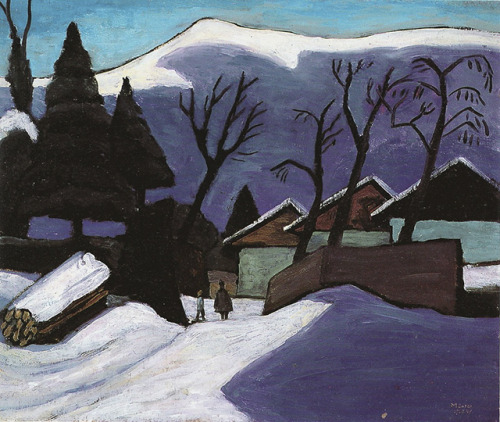
Despite being surrounded by artists, I know so little about art. However, as they say, I know what I like. Many years ago, I was fortunate to stumble on a wonderful exhibition on the Blue Rider (Der Blaue Reiter) movement of German Expressionists at the long defunct Pinacothèque de Paris private art museum. I was enthralled by the show, but the standout for me was a group of paintings by Gabriele Münter . These chilly scenes of winter are some of my favorites.


Posted in Uncategorized | Tagged , , , | Leave a comment

sentimental souvenirs of the past

“I remembered once, in Japan, having been to see the Gold Pavilion Temple in Kyoto and being mildly surprised at quite how well it had weathered the passage of time since it was first built in the fourteenth century. I was told it hadn’t weathered well at all, and had in fact been burnt to the ground twice in this century.
“So it isn’t the original building?” I had asked my Japanese guide.
“But yes, of course it is,” he insisted, rather surprised at my question.
“But it’s been burnt down?”
“Yes.”
“Twice?”
“Many times.”
“And rebuilt.”
“Of course. It is an important and historic building.”
“With completely new materials.”
“But of course. It was burnt down.”
“So how can it be the same building?”
“It is always the same building.”
I had to admit to myself that this was in fact a perfectly rational point of view, it merely started from an unexpected premise. The idea of the building, the intention of it, its design, are all immutable and are the essence of the building. The intention of the original builders is what survived. The wood of which the design is constructed decays and is replaced when necessary. To be overly concerned with the original materials, which are merely sentimental souvenirs of the past, is to fail to see the living building itself.”

Douglas Adams 
As the global poster child for Kyoto’s many World Heritage Sites, Kinkaku-ji Temple (Golden Pavilion) runs the real risk of being disappointing in real life. But despite the crowds all jostling for the same selfie, and the fact that you can’t actually go inside the temple building, Kinkaku-ji is sublime to see.
The temple’s brilliant exterior gives the impression of fire on the water but Kinkaku-ji has actually been on fire more than once. The first blaze occurred back in the Onin War (1467-77) while the second happened in 1950 when a distraught novice monk attempted to die among the golden flames.
Posted in Architecture, Asia, Tourism, Travel Writing | Tagged , , | Leave a comment

Why Are Americans Afraid of Dragons?

“In wondering why Americans are afraid of dragons, I began to realize that a great many Americans are not only anti-fantasy, but altogether anti-fiction. We tend, as a people, to look upon all works of the imagination either as suspect or as contemptible. ‘My wife reads novels. I haven’t got the time.’ ‘I used to read that science fiction stuff when I was a teenager, but of course I don’t now.’ ‘Fairy stories are for kids. I live in the real world.’ Who speaks so? Who is it that dismisses ‘War and Peace,’ ‘The Time Machine,’ and ‘A Midsummer Night’s Dream’ with this perfect self-assurance? It is, I fear, the man in the street – the men who run this country.
Such a rejection of the entire art of fiction is related to several American characteristics: our Puritanism, our work ethic, our profit-mindedness, and even our sexual mores. To read ‘War and Peace’ or ‘The Lord of the Rings’ plainly is not ‘work’ – you do it for pleasure. And if it cannot be justified as ‘educational’ or as ‘self-improvement,’ then, in the Puritan value system, it can only be self-indulgence or escapism. For pleasure is not a value, to the Puritan; on the contrary, it is a sin.
Equally, in the businessman’s value system, if an act does not bring in an immediate, tangible profit, it has no justification at all. Thus the only person who has an excuse to read Tolstoy or Tolkien is the English teacher, who gets paid for it. But our businessman might allow himself to read a best-seller now and then: not because it is a good book, but because it is a best-seller – it is a success, it has made money. To the strangely mystical mind of the money-changer, this justifies its existence; and by reading it he may participate, a little, in the power and mana of its success.

If this is not magic, by the way, I don’t know what it is. The last element, the sexual one, is more complex. I hope I will not be understood as being sexist if I say that, within our culture, I believe that this anti-fiction attitude is basically a male one. The American boy and man is very commonly forced to define his maleness by rejecting certain traits, certain human gifts and potentialities, which our culture defines as ‘womanish’ or ‘childish.’ And one of these traits or potentialities is, in cold sober fact, the absolutely essential human faculty of imagination…

But I must narrow the definition to fit our present subject. By ‘imagination,’ then, I personally mean the free play of the mind, both intellectual and sensory. By ‘play’ I mean recreation, re-creation, the recombination of what is known into what is new. By ‘free’ I mean that the action is done without an immediate object of profit – spontaneously. That does not mean, however, that there may not be a purpose behind the free play of the mind, a goal; and the goal may be a very serious object indeed. Children’s imaginative play is clearly a practicing at the acts and emotions of adulthood; a child who did not play would not become mature. As for the free play of an adult mind, its result may be ‘War and Peace,’ or the theory of relativity.

To be free, after all, is not to be undisciplined. I should say that the discipline of the imagination may in fact be the essential method or technique of both art and science. It is our Puritanism, insisting that discipline means repression or punishment, which confuses the subject. To discipline something, in the proper sense of the word, does not mean to repress it, but to train it – to encourage it to grow, and act, and be fruitful, whether it is a peach tree or a human mind. I think that a great many American men have been taught just the opposite. They have learned to repress their imagination, to reject it as something childish or effeminate, unprofitable, and probably sinful. They have learned to fear it. But they have never learned to discipline it at all.”

— Ursula K. Le Guin, from Why Are Americans Afraid of Dragons? (1974)

Posted in USA, Writing | Tagged , | Leave a comment

Free Books For Kids

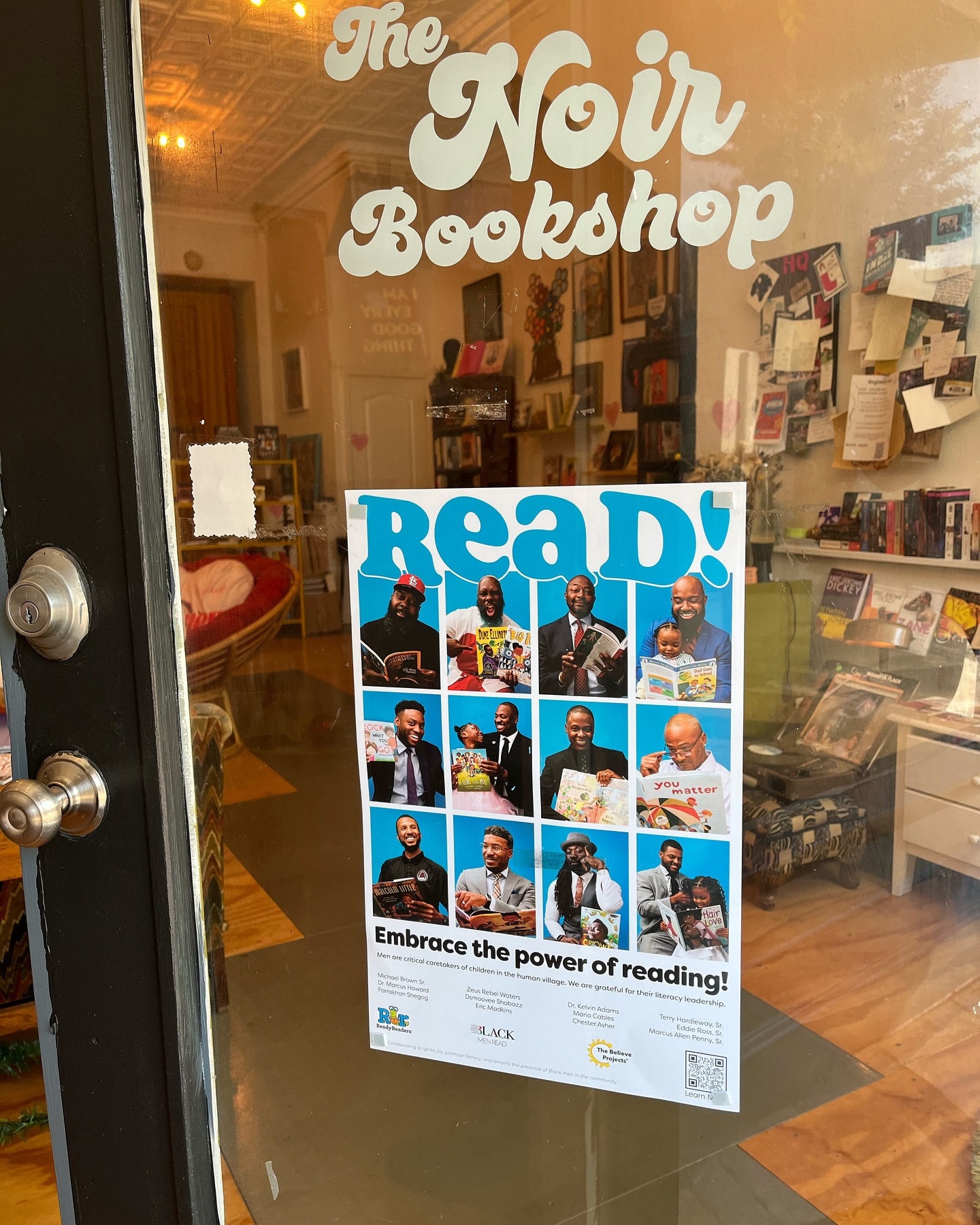
I’m a sucker for feelgood stories about folks who are promoting literacy programs for children in their communities, but when you add book vending machines with free books for kids I’m sold.

Ymani Wince isn’t just the owner of a local bookstore; she’s a community leader with a major soft spot for books, kids, and breaking down barriers. Her shop, The Noir Bookshop, sits on Cherokee Street in St. Louis, and it’s exactly the kind of cozy, inclusive place you might find yourself lingering in for longer than you planned. It’s not just a bookstore; it’s a hub for education, artistry, and a celebration of Black literature and culture.

Enter ONYX, a free book vending machine aimed at putting books directly into the hands of kids. And the best part? They don’t pay money; they pay with curiosity, tokens, and excitement.

Here’s how it works: community centers, clubs, and other local spaces house these vending stations. Kids get a special token from the staff or center, and boom: they choose a book they want. It’s as simple as that: token goes in, book comes out. No money changing hands, just pure opportunity.

In St. Louis, Black students are more than twice as likely to struggle with grade-level reading proficiency compared with white students. That’s the kind of statistic that makes people stop and think. So having initiatives like ONYX isn’t just nice, it’s necessary. The vending  machine isn’t a gimmick; it’s a practical, innovative response to a real, measurable need.


Posted in Uncategorized | Tagged , , , | Leave a comment

Paris 1970

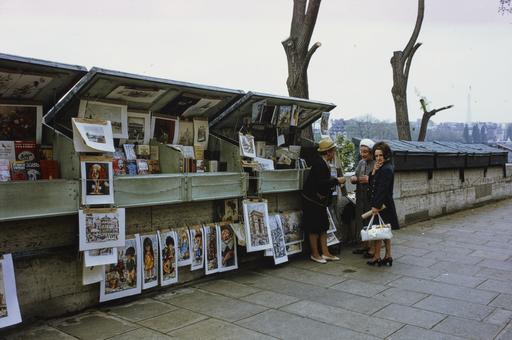
I recently learned about an amateur photography contest called ‘C’était Paris en 1970’ (‘This Was Paris in 1970’), whose roughly fourteen thousand participants produced seventy thousand black-and-white prints and thirty thousand color slides of the capital in the midst of enormous changes.

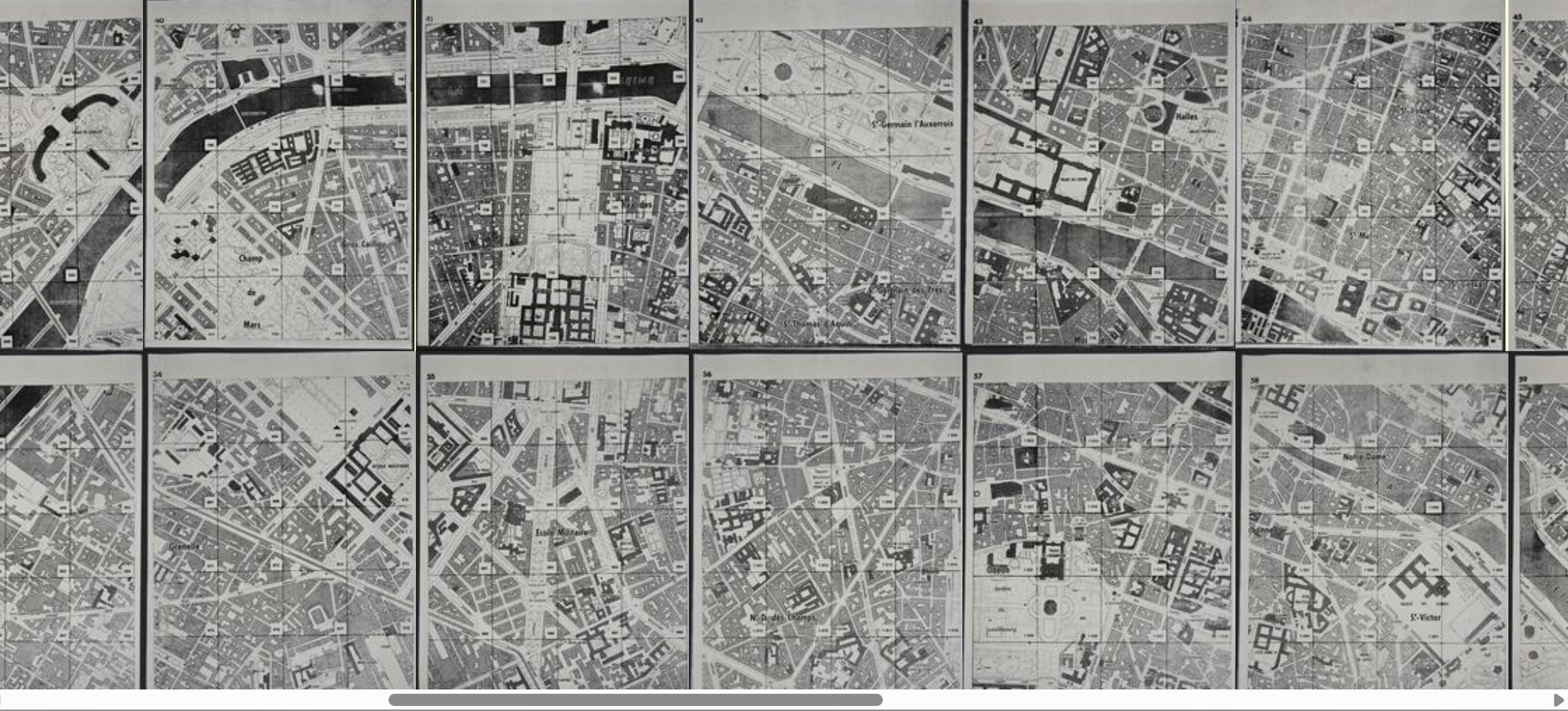
“The city of Paris … organized in the spring of 1970 an amateur photography competition aiming to produce exhaustive photographic coverage of [the city], divided into a grid of 1755 squares.” Click the map of Paris and at the top of each page click a link corresponding to a numbered square / carré on the map. The link will also show how many contest participants / candidats captured how many photographs / photographies for the square. As Catherine E. Clark explained in “‘C’était Paris en 1970’: Amateur Photography, Urbanism and Photographic History,” “the contest supplied a very uneven portrait of Paris in May of 1970.” But this newer website provides an interface for quickly browsing 30225 photographs from the event.


Posted in Europe, Photography, Tourism | Tagged , , | 2 Comments