
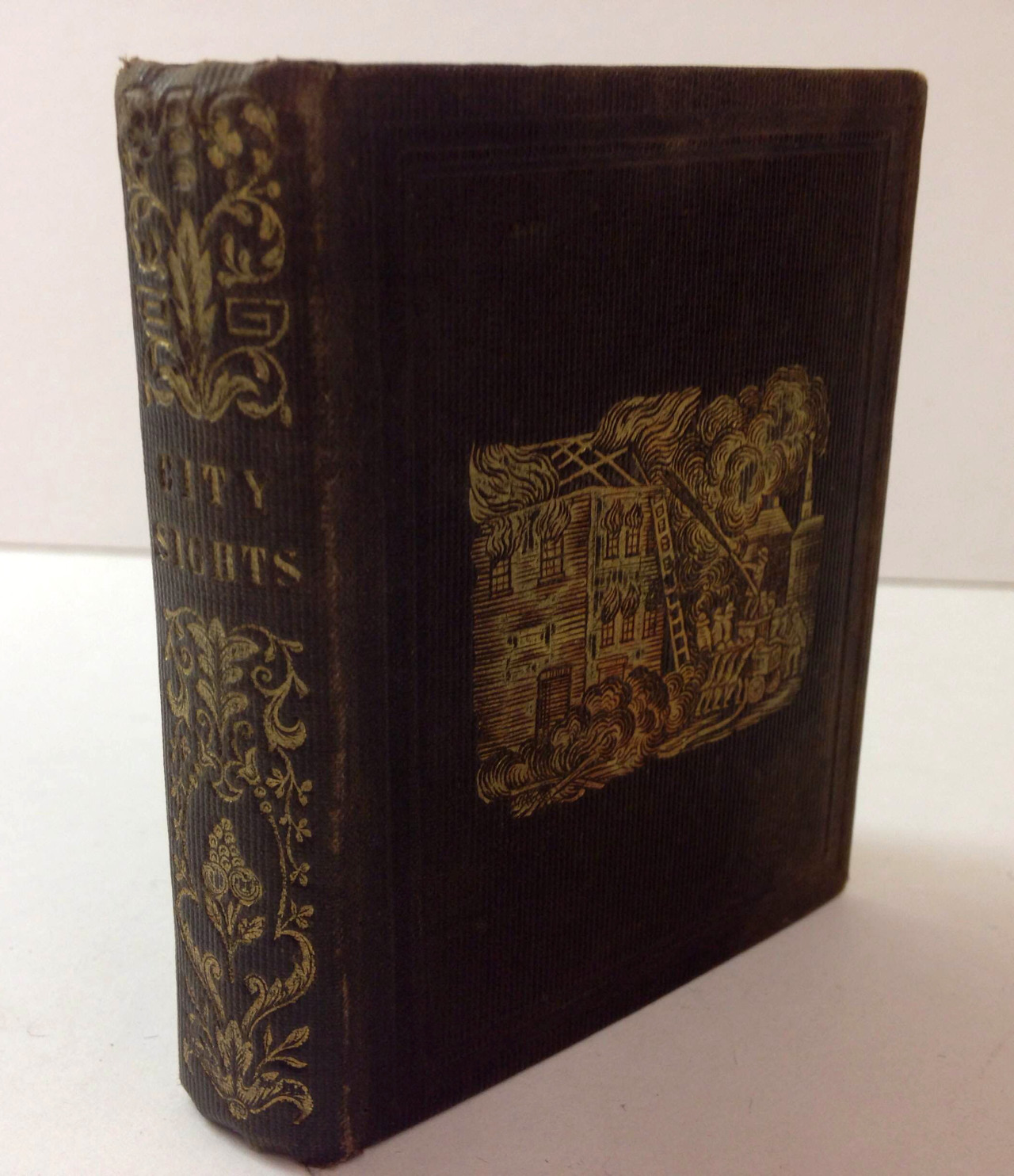
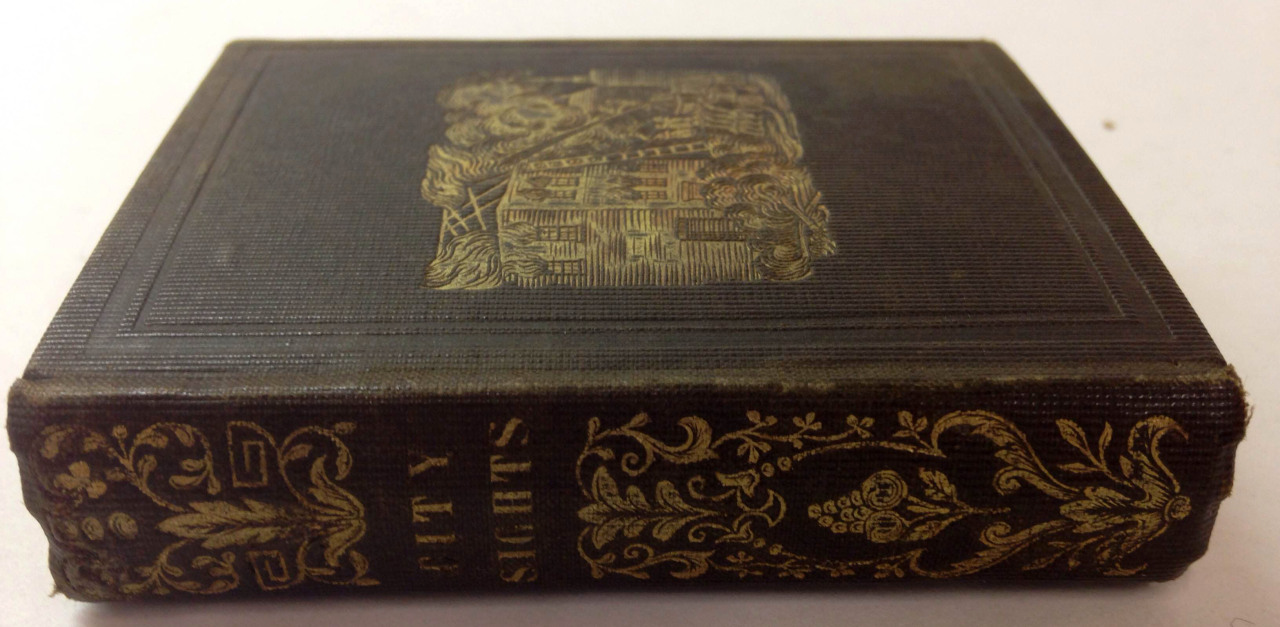
 Philadelphia: City Sights for Little Folks features illustrations of things you could expect to see on a journey through town in 1845. The title, which offers brief descriptions and occasional rhymes, was surprisingly written for children. The book was printed via stereotype, a method of printing developed in the 18th century to keep up with the rapidly rising demand for books. With traditional handset type, printers ran into issues when numerous copies of the same text were needed in quick succession. With movable, hand-set type the compositor had to arrange each word letter-by-letter on the press bed; when dealing with multiple machines running the same text, this method leaves room for lots of errors, and also requires huge volumes of standing type. A stereotype is a metal cast of multiple forms of type, which can then be used on a press instead of a hand-assembled form. That way, printers could use several stereotypes to print the same text quickly, without a huge need for more inventory or staff. Thus, this book is an interesting window into history. It provides a child’s-eye view of Philadelphia in the mid-19th century, and also embodies a printing technology that was very popular and significant at the time.


 Travel Between The Pages
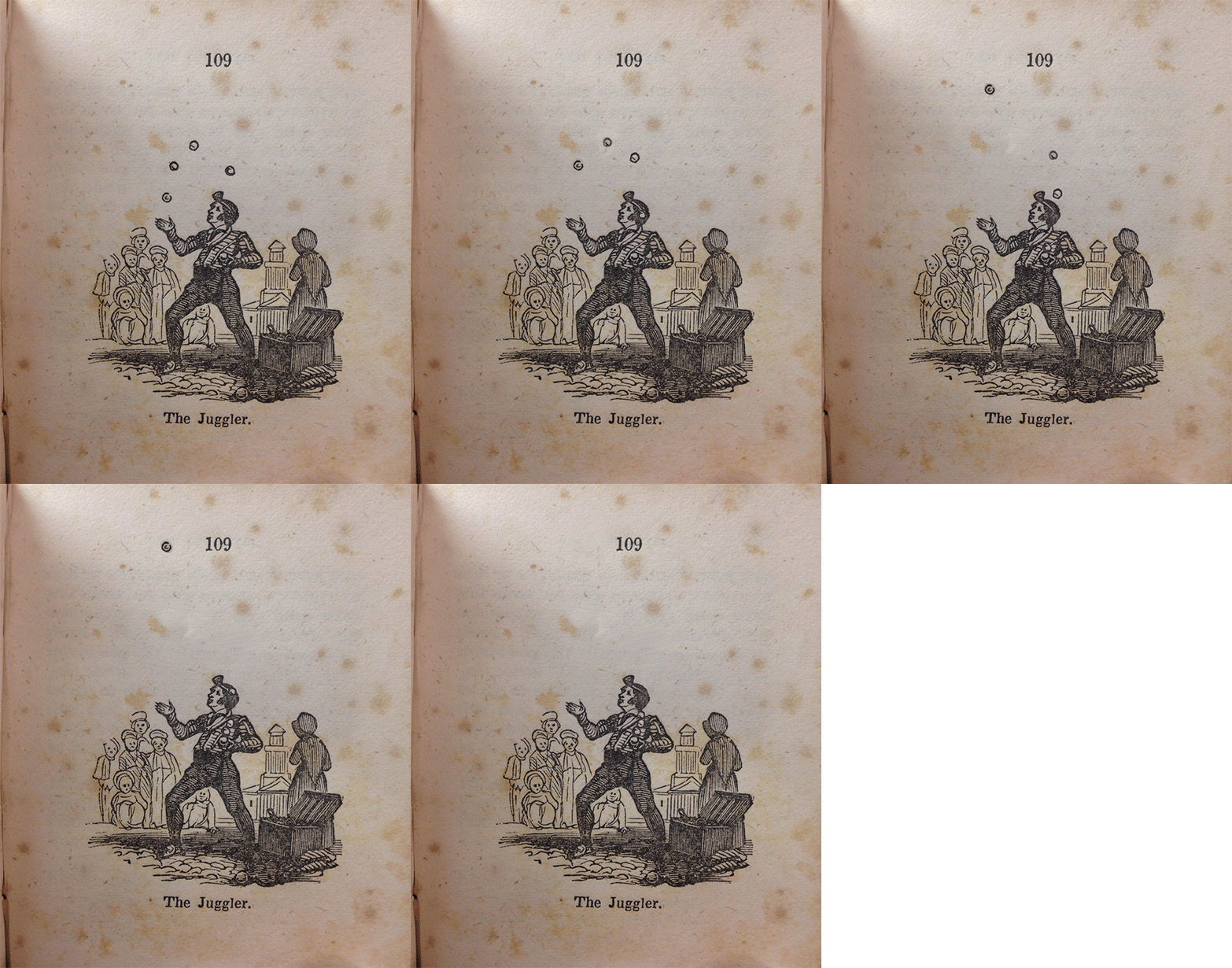
Clever graphics!