 The free new research tool from Yale University called Lux is a fascinating opportunity to be led down a rabbit hole of infinite connections for any subject of interest. The digital tool works by building relationships between objects users look up, uncovering how it relates to other items within the university’s storied collection no matter how distant it may seem. Lux users are able to dive into the Yale Center for British Art (YCBA), the Yale University Art Gallery, the Yale Peabody Museum, and Yale University Library, which includes the Beinecke Rare Book and Manuscript Library and the Lewis Walpole Library.

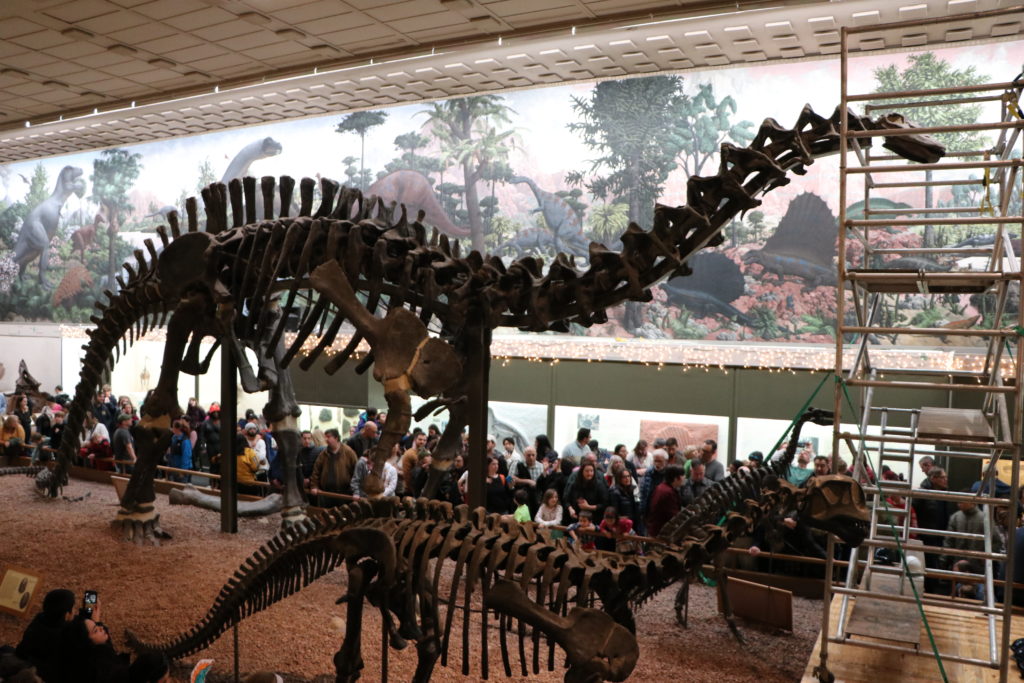
Lux works in some ways like a search engine. However, search engines tend to return hits that then offer you links to travel onwards to a new site. LUX builds relationships between the object you’re searching for and other related objects in the collection. It goes beyond the objects themselves and finds obscure connections. For example, if you were searching for a piece of writing, it would identify other works from the same author, as well as other art created around the same time or in the same location. Or, if you were to search for dinosaus, it would pull up images of actual dinosaurs from the university’s museums, as well as art and books about dinosaurs. Previously you would have to go to different places—a natural history museum for the dinosaurs, and a library for books—or Google separate entries and piece together these different resources.

“Lux is designed to open the breadth of Yale’s cultural and natural history collections, connecting our wide range of extraordinary objects, specimens, and works,” said Susan Gibbons, Vice Provost for Collections and Scholarly Communications.
The core of LUX is a backend data model called a knowledge graph. They are composed of datasets from different sources and are a way of organizing that information into a network of relationships. It’s like the evidence pin-up-board used to visualize the connections between people, objects, places, and events.


 Travel Between The Pages