

Reading Rhythms is not a book club. It’s a reading party. Read with friends to curated music. “It’s my party and I’ll read if I want to. What a super concept; I hope that it spreads.

Ernest Hemingway only used 59 exclamation points across his entire collection of works.
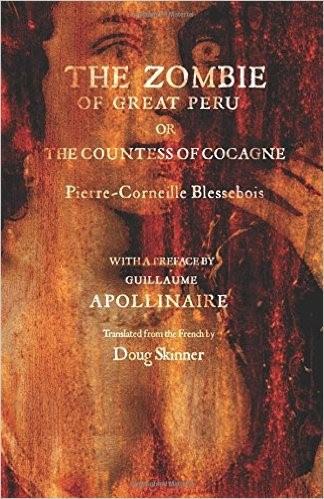
Oh the horror. “The Zombie of Great Peru is a transgressive novel written in 1697 by Pierre–Corneille Blessebois…a memoir of occultism, seduction, slapstick, and humiliation, set in the racial and sexual hothouse of colonial Guadeloupe. It contains the first appearance of the word ‘zombie’ in literature.”

I have long been a fan of the late, great Britsh author Terry Pratchett. So, I thoroughly enjoyed this heartwarming story about two devoted fans who uncovered long lost Pratchett stories.
The clever short,supercut video below may bring back your nostalgia for the clack-clack-clack of typewriters for you oldsters. Referencing dozens of classic films, the expertly edited short has a great pacing set to the perfect piece of music. It was edited by Ariel Avissar, and was set to Leroy Anderson’s “The Typewriter” .

Leonard Cohen // “May you be surrounded by friends and family, and if this is not your lot, may the blessings find you in your solitude.”
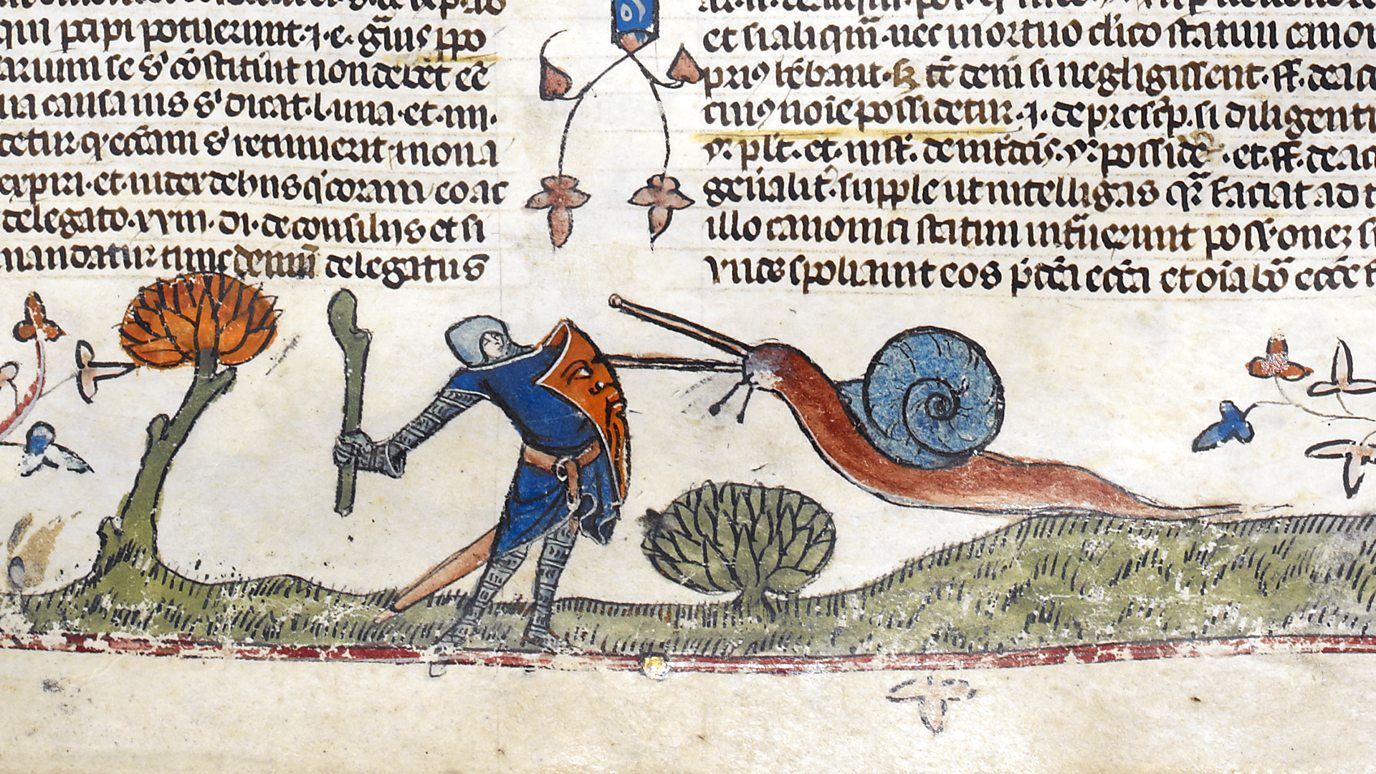
Sometimes the creatures appear to be hovering, attacking knights in mid-air. Occasionally there is more than one. This is the uniquely medieval phenomenon of the fighting snail – and to this day, why they were depicted remains utterly mysterious…But for a brief period in the late 13th Century, illuminators – those who decorated books – across Europe embraced a new obsession: fighting snails. For a comprehensive study of these warring gastropods, the art historian Lilian Randall counted 70 examples, in 29 different books – most of which were printed in the two decades between 1290 and 1310. The illustrations are found across Europe, but particularly in France, where there was a thriving manuscript-production industry at the time, says Clarke.The specific scenarios that warring snails found themselves in varied, but broadly followed the same format of a snail-assailant standing off against a knight. Often, the molluscs have their antenna – technically their upper tentacles, or ommatophores – pointed aggressively forwards, as though they were swords. In one, a snail is shown fighting a nude woman. In a few they’re not depicted as regular molluscs at all, but hybrids between snails and men – who are being ridden by rabbits, naturally.




 Travel Between The Pages
Thanks for yet another year of entertaining and often thought-provoking posts. Happy New Year.
Here’s hoping for a Happy and peaceful New Year.
With your elections on the horizon? Not a chance!