
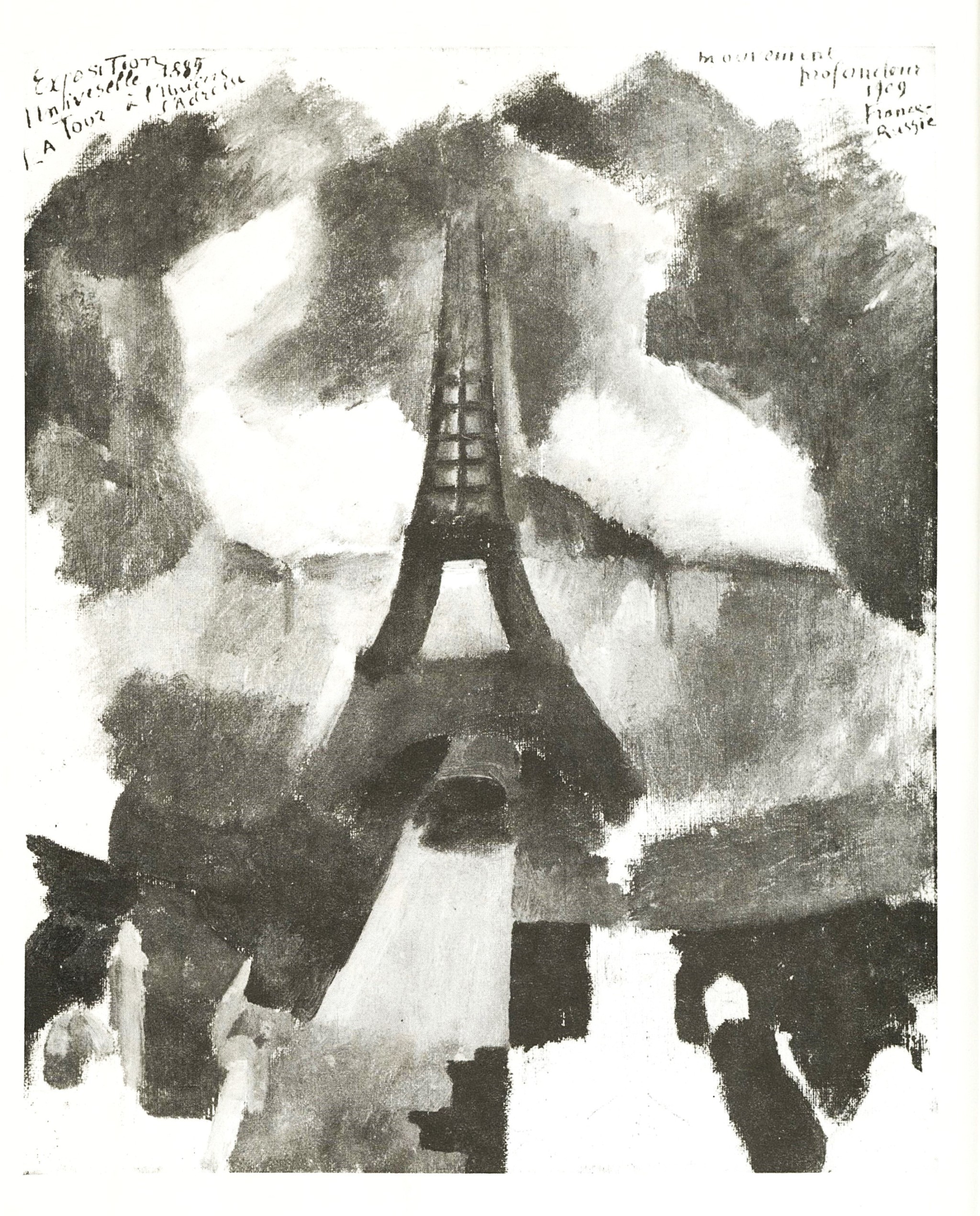
I’m always chuffed to run across a copy book that I sold many years ago in a random blog post. in this case, the book in question is Les Tours Eiffel de Robert Delaunay : poèmes inédits / [Guillaume] Apollinaire. It was originally printed in an edition of 1,150 in Brussels in 1974.

This work features artwork created by Robert Delaunay (1885-1941), along with previously unpublished poems by renowned and influential poets of the early 20th century. It includes a preface by Jean Cassou (1897-1986), the first director of the National Museum of Modern Art in Paris, who was also a French art critic and poet.
Some of the poets in this collection are notable for their ties to surrealism. French writers and poets André Breton (1896-1966) and Philippe Soupault (1897-1990) co-founded the Surrealist movement, aiming to explore the unconscious mind and challenge the conventional boundaries of art and literature. Guillaume Apollinaire (1880-1918) is regarded as one of the leading poets of the 20th century and is credited with coining the terms “Surrealism,” “Cubism,” and “Orphism,” showcasing the intersection of visual art and poetry in contemporary movements. Louis Aragon (1897-1982), a French novelist, editor, and poet, was one of France’s prominent voices in the Surrealist movement and was deeply involved in both literature and political activism, often reflecting these themes in his works.

Other notable poets included in this collection are Jean Arp, known for his contributions to both Dada and Surrealism; Blaise Cendrars, whose adventurous spirit and modernist style reshaped poetry; Tristan Tzara, a founder of Dada who sought to disrupt traditional artistic norms; Joseph Delteil, whose work often focused on the themes of nature and humanity; and René Crevel, whose works often depicted existential themes.

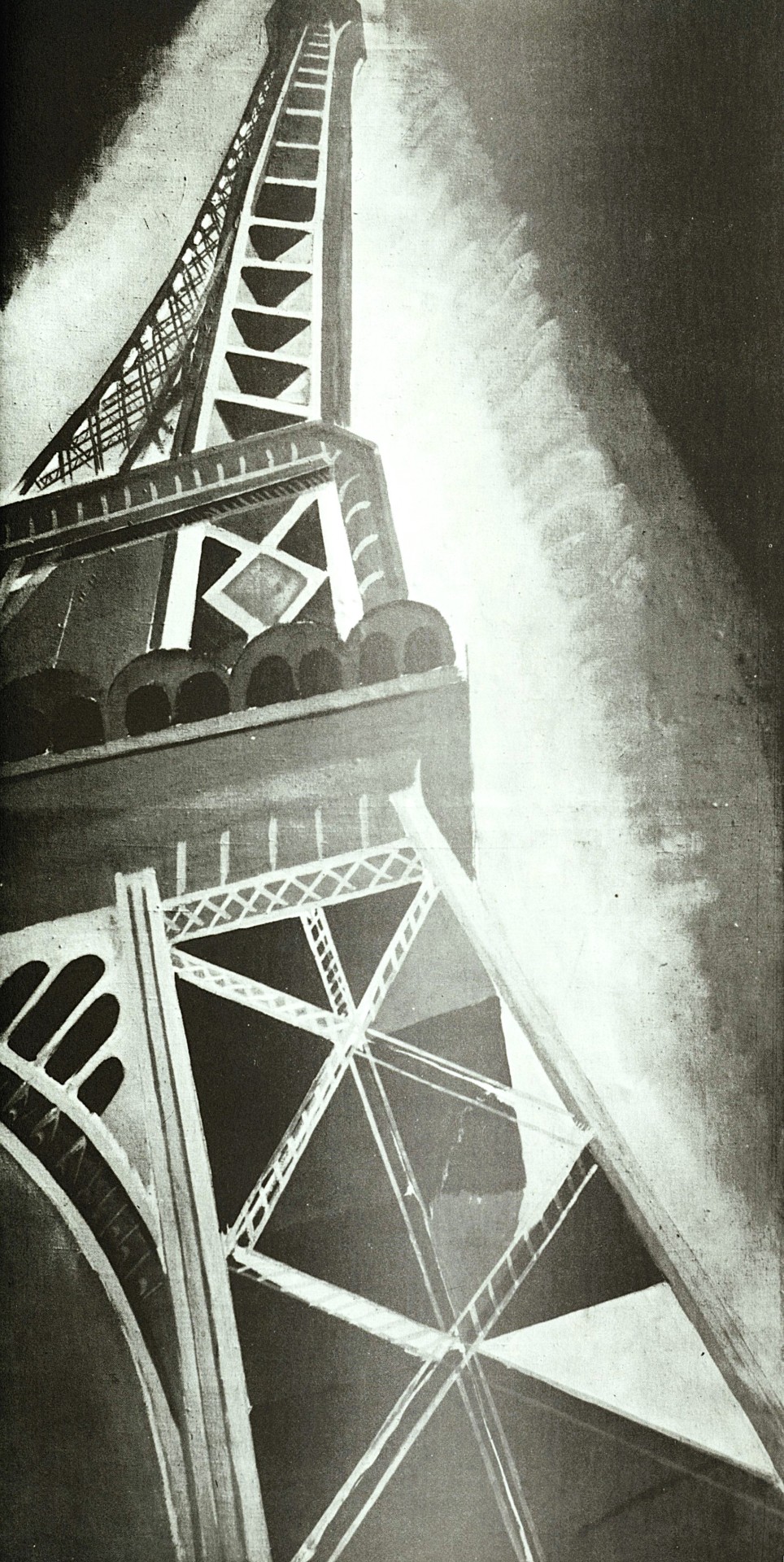
Robert Delaunay (1885-1941) was a French artist who co-founded the Orphism art movement, which emphasized the use of color and light to evoke emotion and create a sense of movement. Guillaume Apollinaire noted the musical quality in Delaunay’s work, coining “Orphic Cubism” or “Orphism.” This name draws inspiration from the Greek god Orpheus, renowned for his ability to captivate animals with enchanting music played on the lyre. Delaunay saw the Eiffel as a symbol of modernity and masculinity. He was among the first artists to focus his work on this iconic landmark, portraying it numerous times in his work, including his famous series of paintings that capture its dynamic forms and colors.

via


 Travel Between The Pages
An interesting and inspiring read. Thanks for sharing.