

Mathematician Jordan Ellenberg created an imaginative means of quantifying a metric that book publishers and writers had long suspected: most people don’t finish the books they buy. He called it the Hawking Index, named after Stephen Hawking’s “A Brief History of Time,” famously dubbed “the most unread book of all time.”
Ellenberg’s method exploited Amazon Kindle’s “popular highlights” feature, which showed the five most-highlighted passages in any book. If those highlights were spread throughout the text, readers were actually finishing. If they clustered at the beginning, people were giving up early. The resulting percentage indicates roughly how far the average reader gets.
The results were brutal. Hillary Clinton’s “Hard Choices” scored 1.9%—meaning most readers bailed almost immediately. Thomas Piketty’s economics tome “Capital in the Twenty-First Century” managed only 2.4%. David Foster Wallace’s “Infinite Jest” hit 6.4%, and Hawking’s own “Brief History of Time” came in at 6.6%.
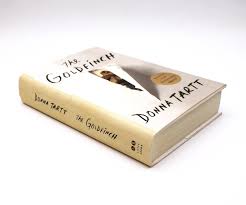
Some books fared better. “Fifty Shades of Grey” reached 25.9%, “The Great Gatsby” hit 28.3%, and “Catching Fire” scored 43.4%. The winner? Donna Tartt’s “The Goldfinch” at 98.5%—people who started it actually finished.
Amazon has since restricted popular highlights data to people who actually buy the books, making the index harder to calculate. But Ellenberg proved his point. Those impressive-looking hardcovers on your shelf? Statistically, you probably stopped reading them around chapter two.
via substack


 Travel Between The Pages