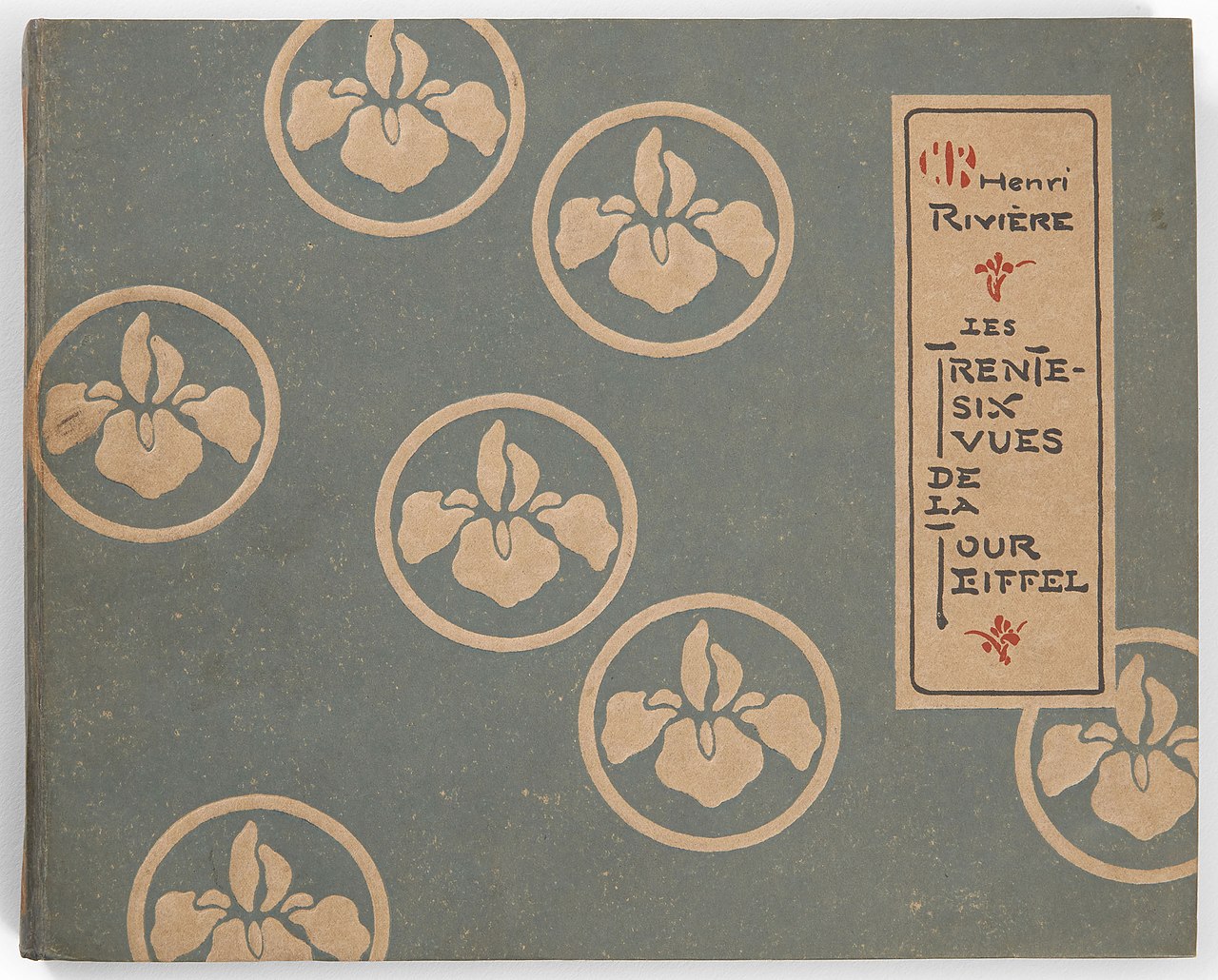
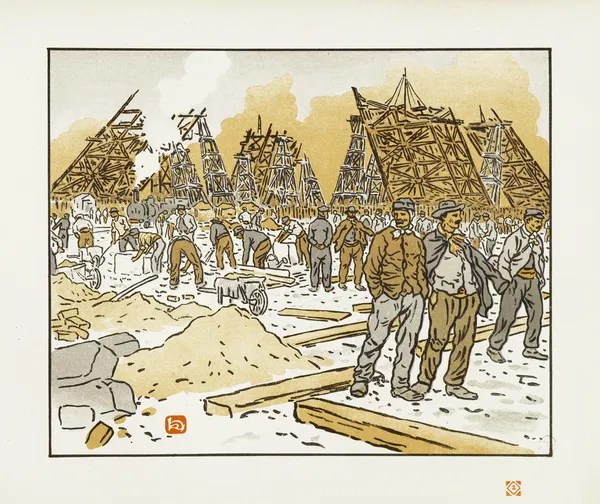
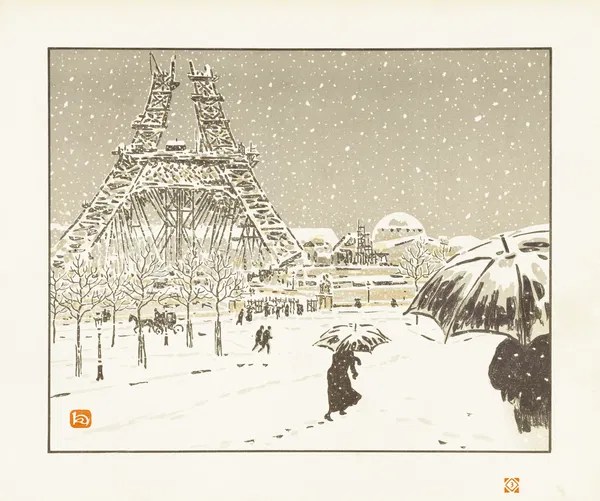
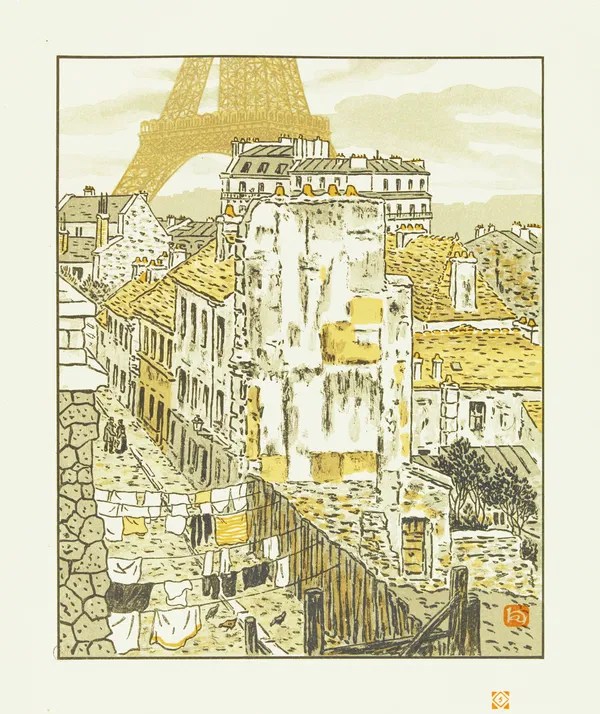
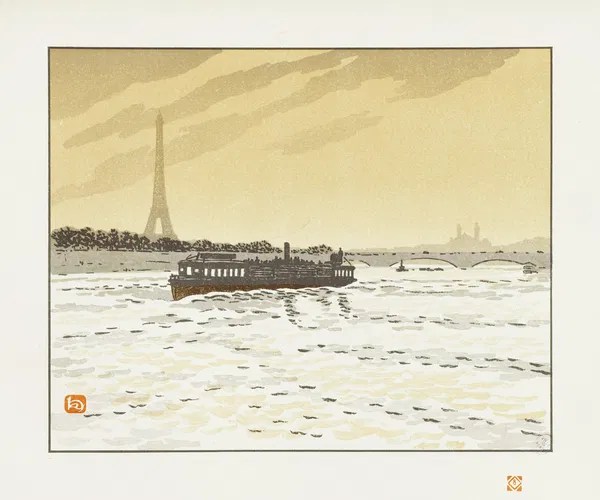
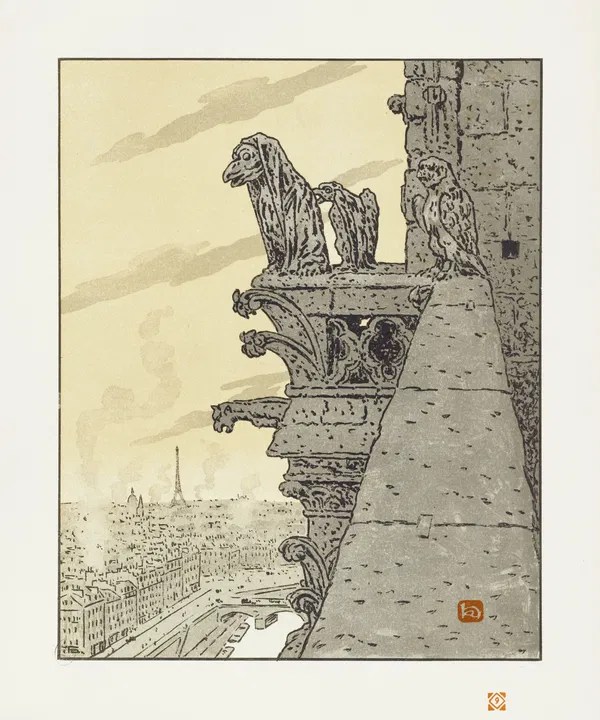
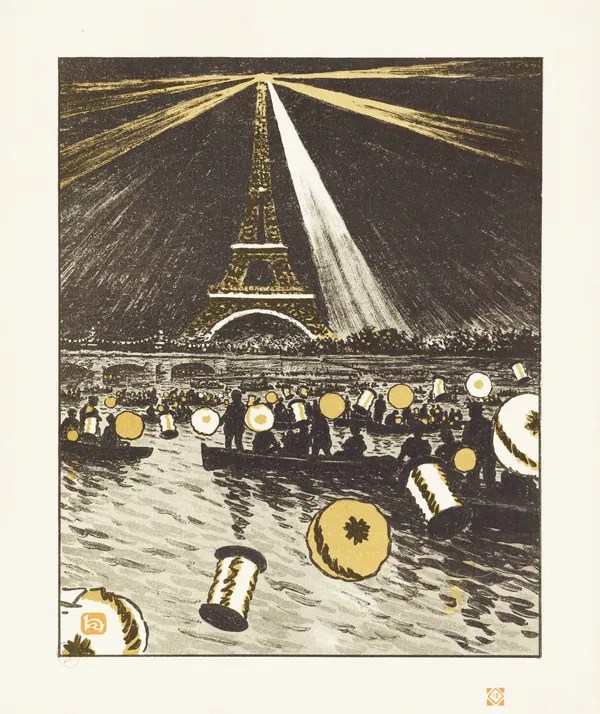
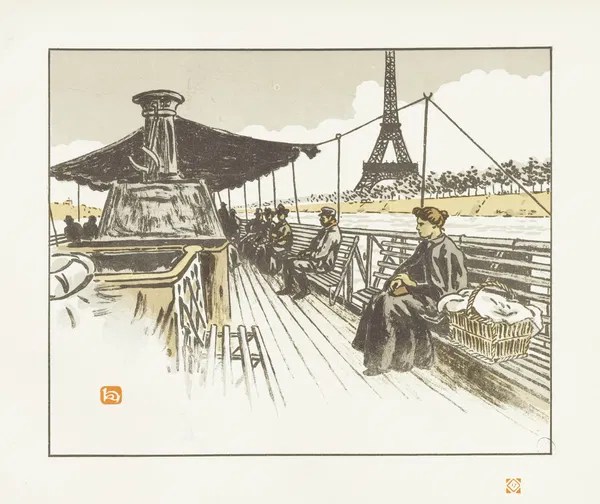
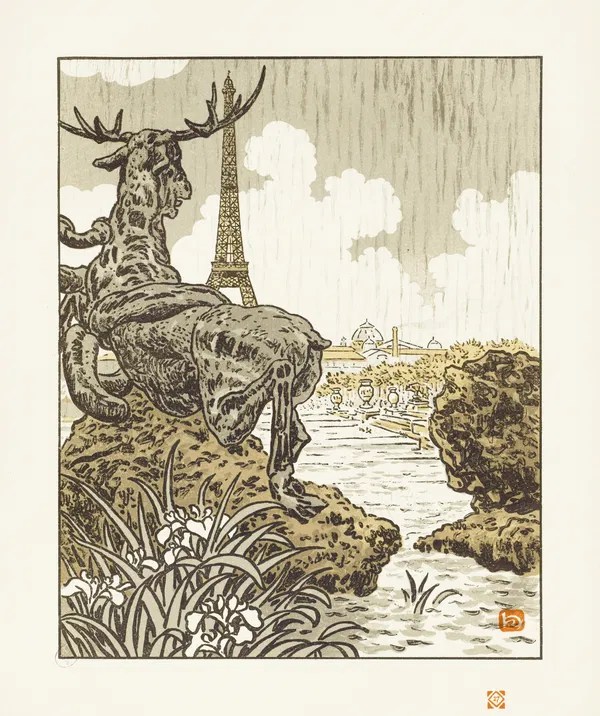
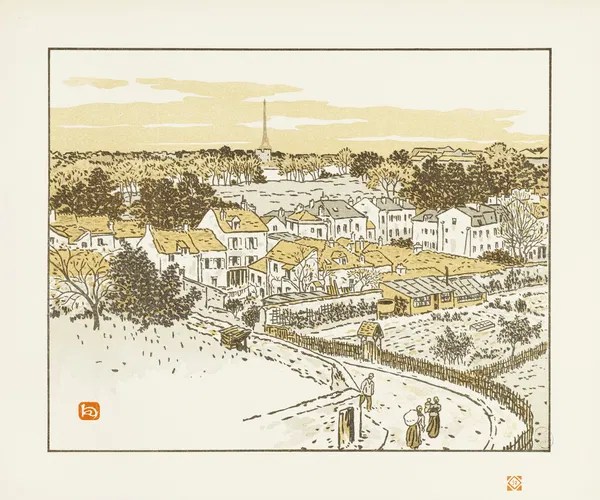
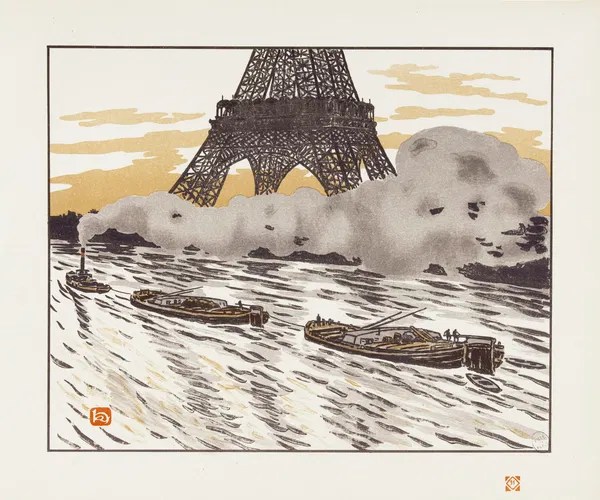
Les Trente-Six Vues de la Tour Eiffel is a book that contains 36 lithographs by Henri Rivière printed in 1902. These lithographs reflect the social, political, and artistic changes that had occurred in Paris by the end of the nineteenth century. The lithographs also reflect the powerful influence of Japonisme, the study of Japanese art and design by European artists, in the latter half of the nineteenth century.
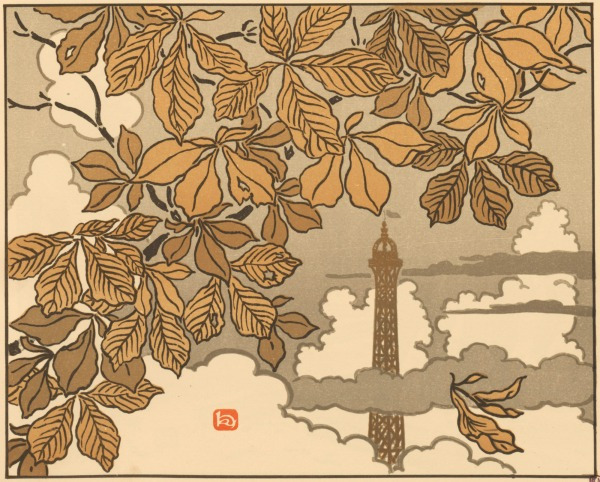
Rivière was particularly inspired by Japanese artist Katsushika Hokusai and his book Thirty-six Views of Mt. Fuji, printed between 1830 and 1832. Hokusai, in this series, used Mt. Fuji as the common element that oriented and unified his landscape prints. Similarly, Rivière chose the Eiffel Tower to orient and unify his lithograph series of Paris, Les Trente-Six Vues de la Tour Eiffel.
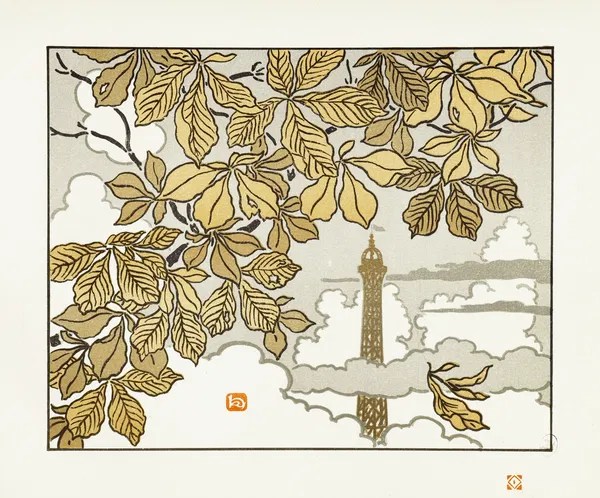
Although there are many similarities in subject and composition between individual plates in Les Trente-Six Vues de la Tour Eiffel and Japanese woodblock prints, Rivière did not produce a slavish, European replication of Hokusai’s masterpiece. Rivière particularly differed from Hokusai by depicting themes of individual isolation and alienation in an urban environment in his lithographs that reflected the anxiety over modernization felt by many Parisians at the fin-du-siècle. In the end, Rivière produced one of the purest examples of Japonisme in Western art and a remarkable portrait of Paris at the beginning of the twentieth century.



 Travel Between The Pages
Beautiful! xx
I love these little booklets, I have a couple from Italy with early photographs of the forum.
Yes, I love these, I actually printed my favorite and framed it and put it on my wall.
You dind’t feature it, it’s this one: https://cdn.sanity.io/images/m2obzhc2/production/783b469cbd77abaf2aa7476485d854c61aa04602-570×465.jpg?w=320&h=261&q=90&fit=max
I love this series and have considered blogging about it as well. You beat me to it. 🙂