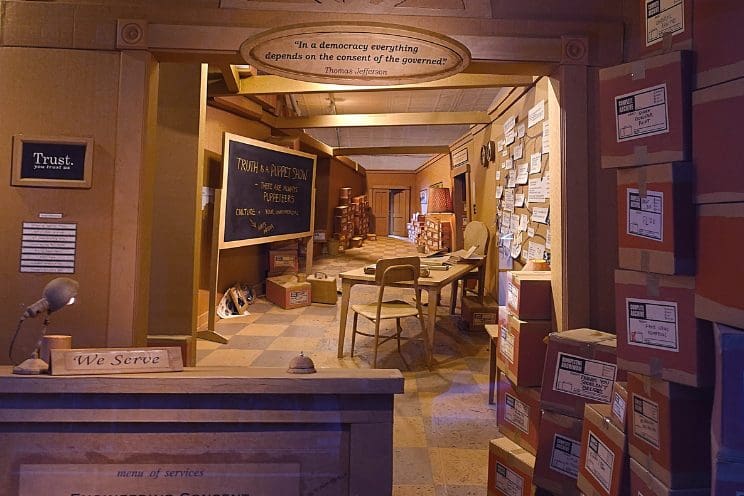
I recently stumbled across an intriguing new exhibition at the St. Petersburg Fine Art Museum in St. Pete Florida. The task of creating thousands of crazy, fake dust jackets and cultural maps must have been Herculean. It’s political, philosophical, and funny .Here is the museum’s blog post about the clever show:
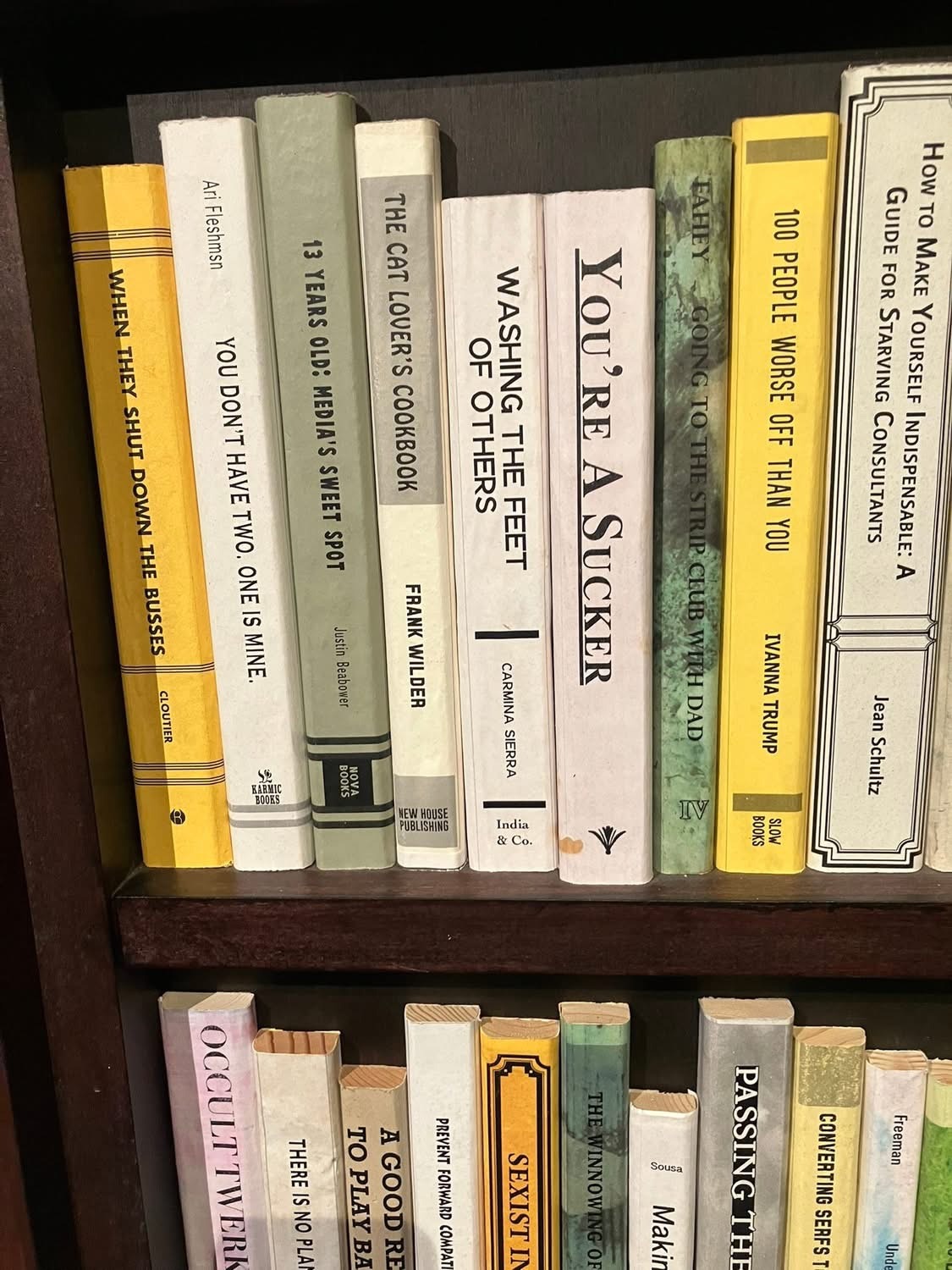
The Last Library IV: Written in Water is an installation by artists Ward Shelley (American, b. 1950) and Douglas Paulson (American, b. 1980). It invites us to think about how we understand truth, evidence, responsibility, and the uncertain state of the world. The installation features dangerously tilted shelves filled with banned books, controversial publications, made-up files, state documents, secret plans, and lost records. This clever fake library honors the written word, a tool that has helped drive many of history’s great advances, such as the rise of representative government and the importance of human rights. At the same time, The Last Library IV examines how the reliability of the written word is fading in a world of alternative facts, censored documents, and language shaped by artificial intelligence.
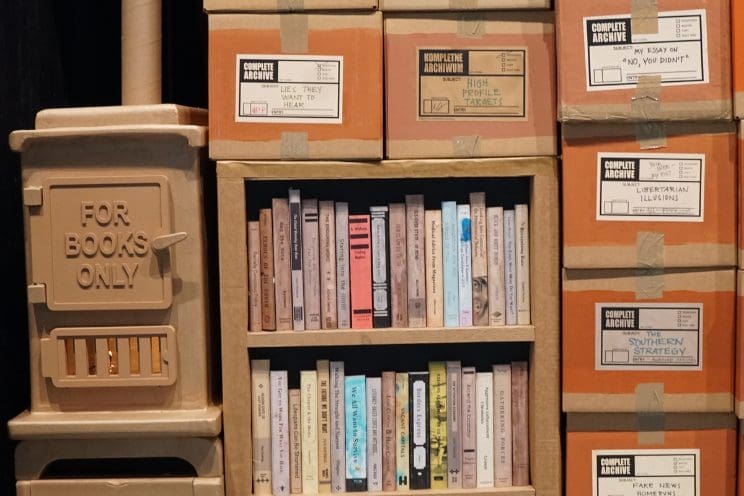
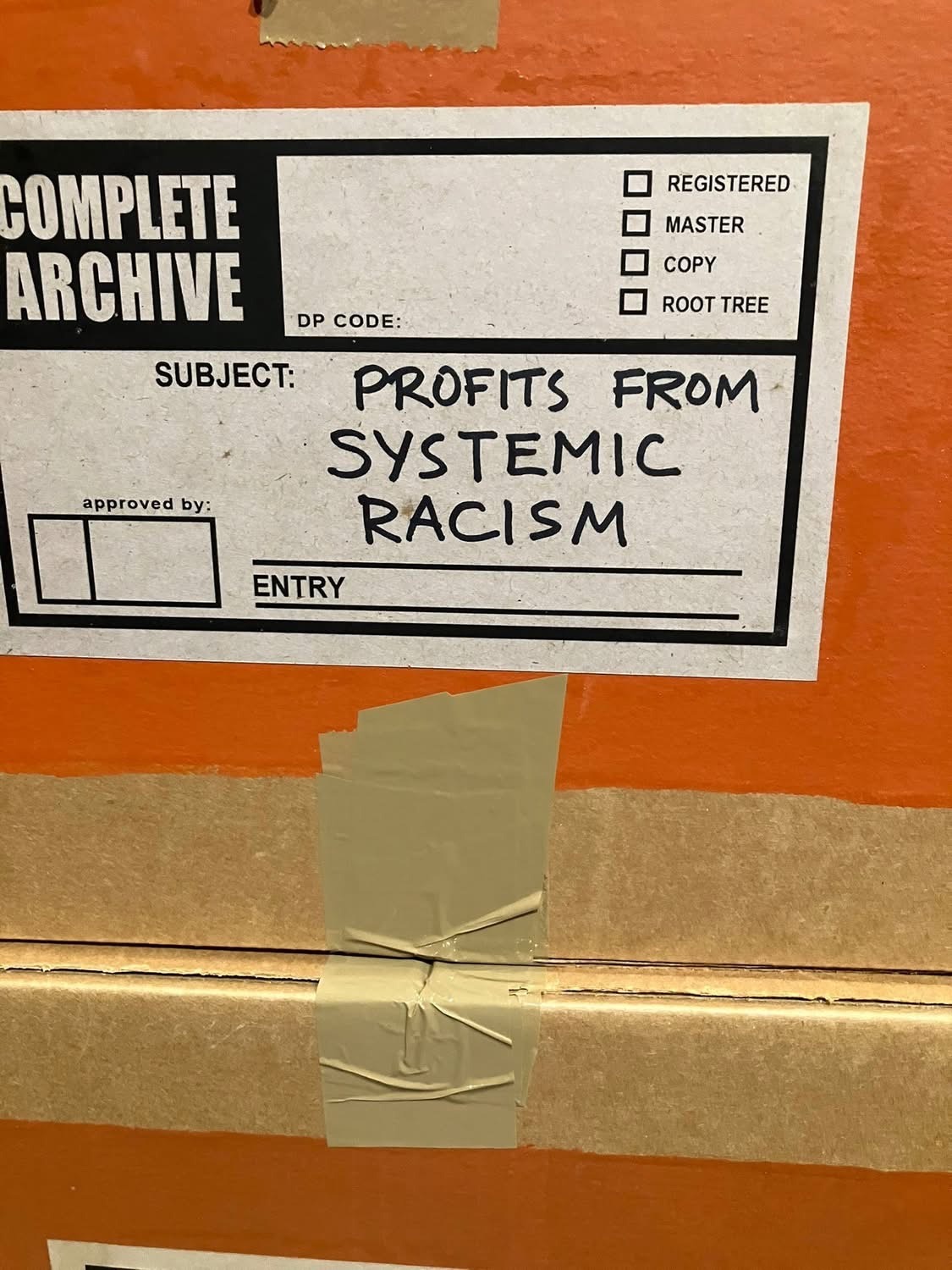
For more than five thousand years, the written word has helped build fairer societies. As the modern era began, writing became a key part of democracy, creating shared understanding, common laws, and the ideas that support strong institutions. Without writing, words like evidence, authority, and the rule of law lose their meaning, even though written documents shape our beliefs, hopes, and expectations. For centuries, people trusted words to establish facts. But in today’s post-Truth Era, it is harder to tell fact from deception or fiction from fantasy, especially when words appear on both paper and screens. The Last Library IV’s crowded shelves, hidden documents, twisted viewpoints, and slanted floors challenge us to find the truth among many confusing and often controversial sources. In this installation, Shelley and Paulson place political propaganda, misleading ads, fake archives, and corporate interests alongside the Magna Carta and the Declaration of Human Rights.
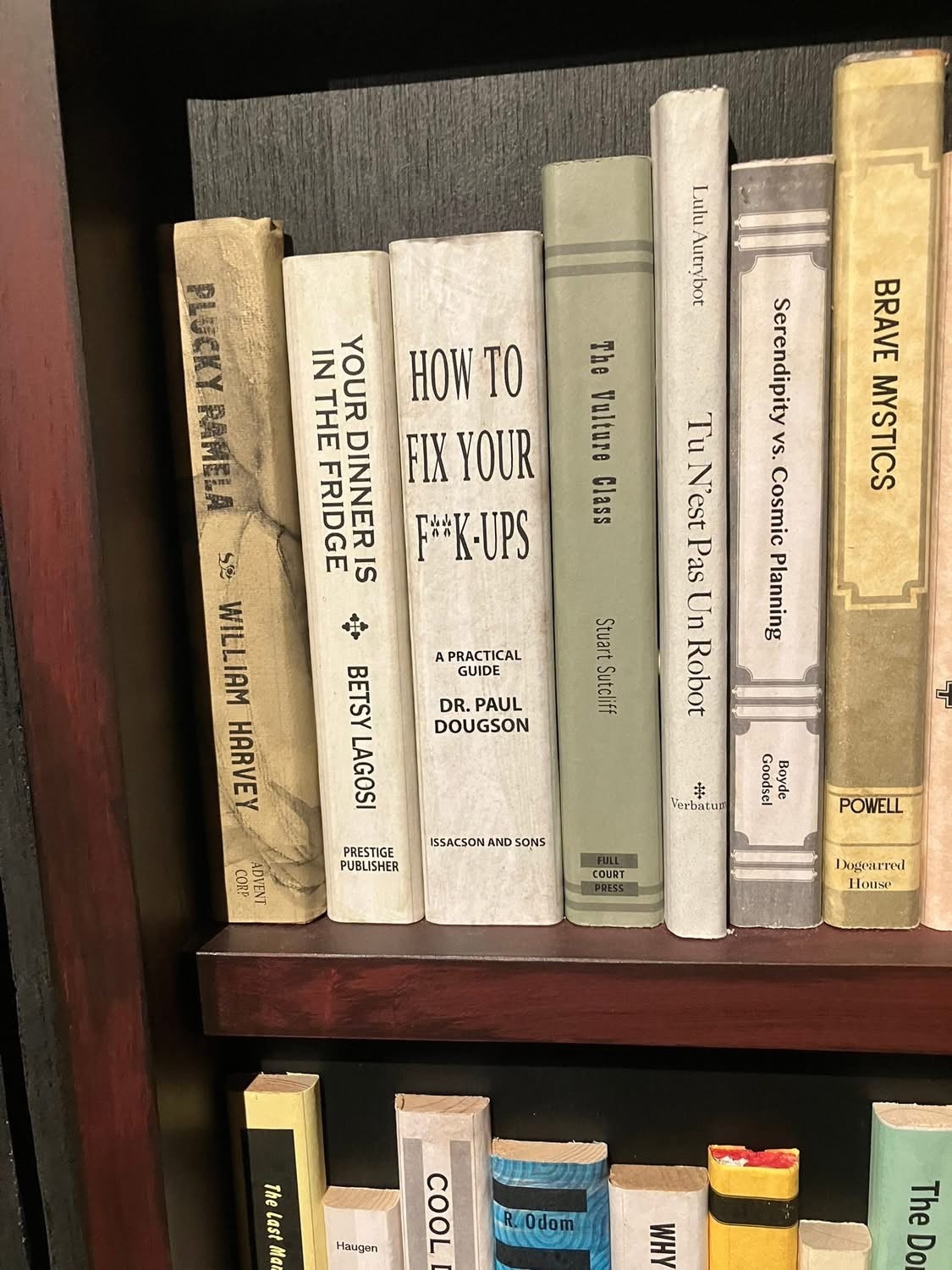
The Last Library IV is mostly made from plain corrugated cardboard, a material that is strong but doesn’t last, symbolizing how our world can seem solid but is actually fragile. Shelley and Paulson’s detailed mix of fake books, real titles, confusing diagrams, and questionable documents encourages us to think about how much we can trust the written word, and even makes us wonder about the future of democracy.


This sounds properly intriguing. Required viewing?
Oh what a scary world we are now living in.