
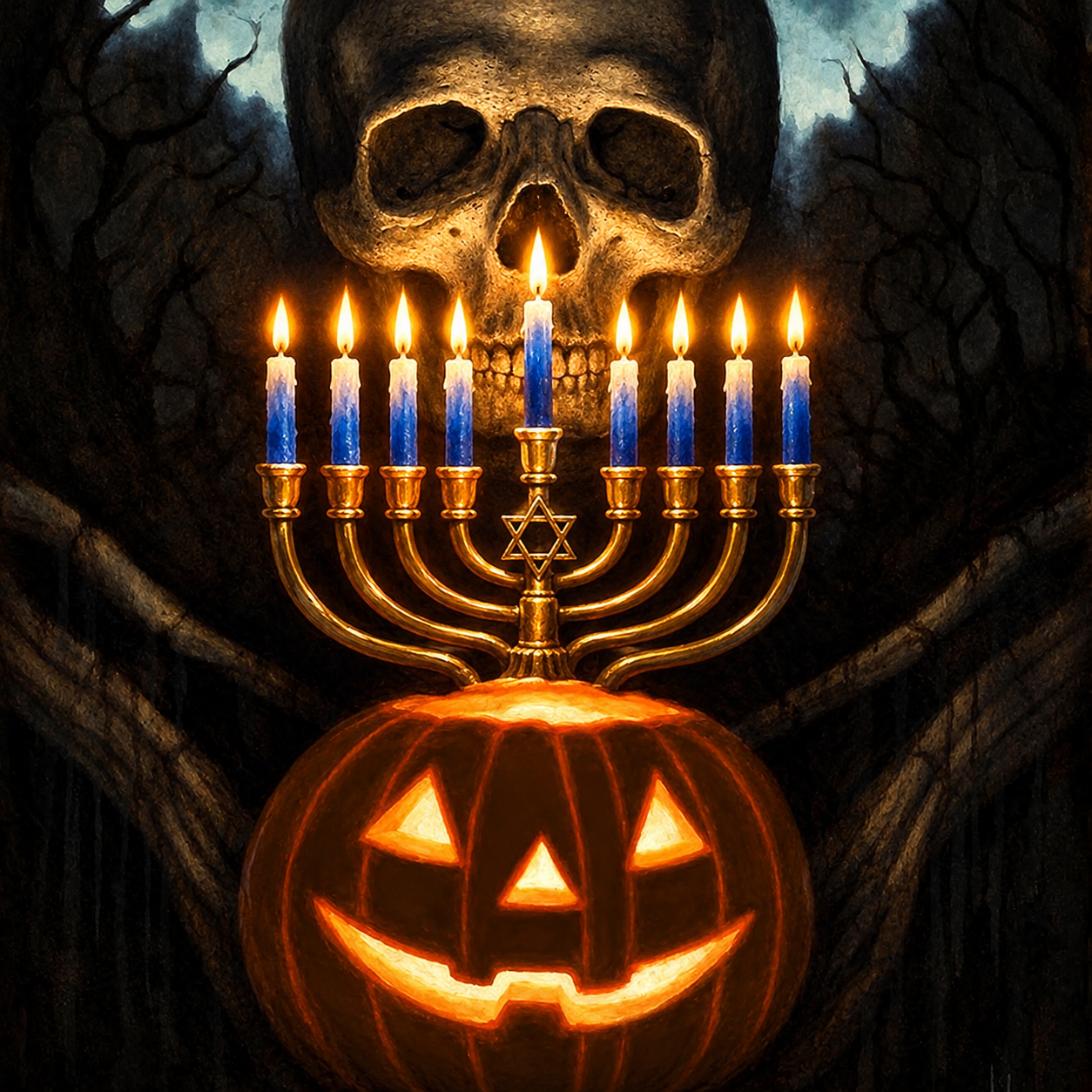
You will probably be surprised to discover an unlikely connection between the popular Pagan holiday celebration of Halloween and the ancient Jewish Festival of Hanukah. The improbable link connecting the two holidays stems from a word often associated with Halloween that has linguistic etymology stretching across millennia and continents.
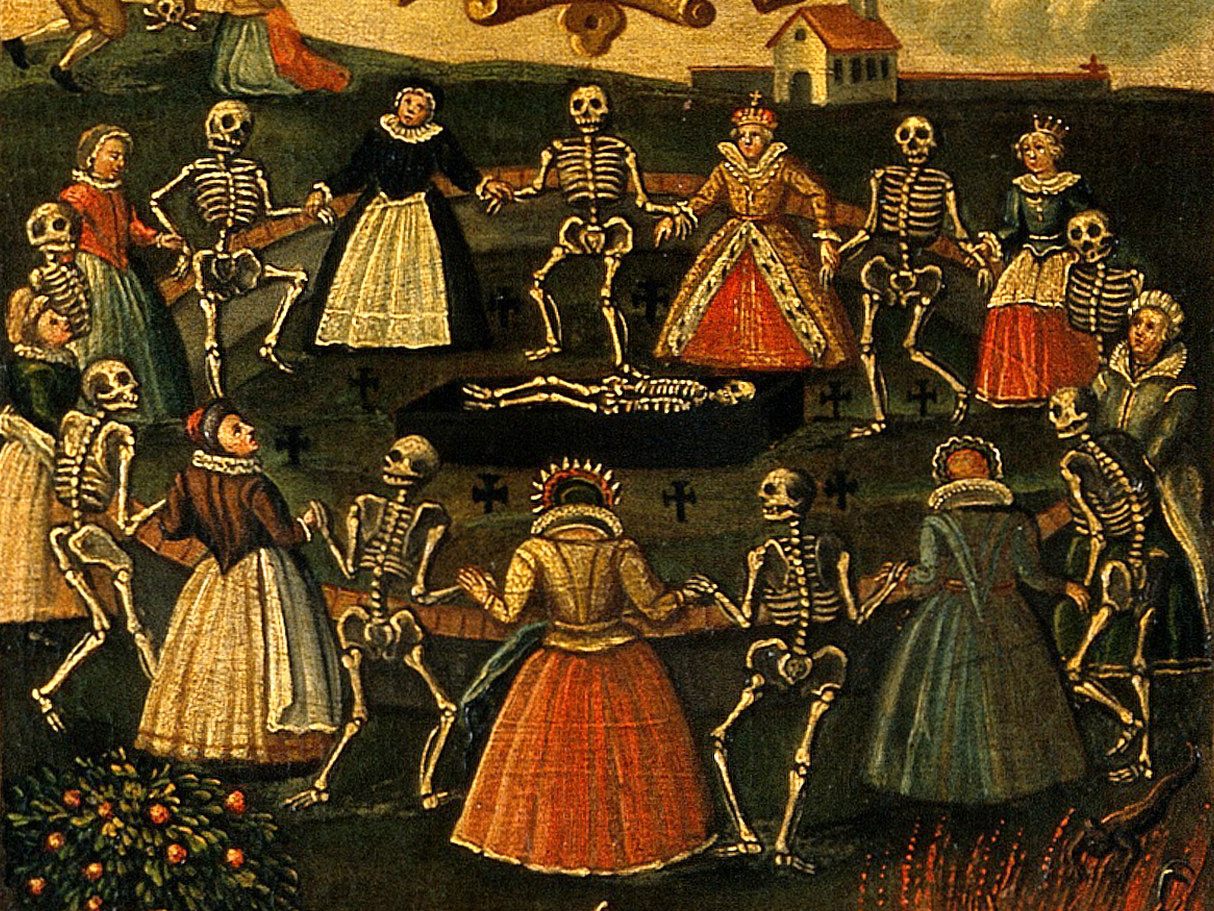
Throughout the Halloween season one frequently encounters stories that incorporate the term macabre which can mean “focused on death”, “evoking horror”, “gruesome,” or “ghoulish”. But macabre, a loanword from French, is not related to any word, French or otherwise, that means “death” or “horror” or “gruesomeness.”
Before macabre was macabre, it was Macabré, a Middle French word that, according to the OED, first appeared in Jean le Fèvre’s Respit de la Mort (1376), where the author says “Je fis de Macabré la dance” — apparently his claim to have written a work called la danse Macabré. There is some dispute about the origin of Macabré, but Merriam-Webster considers it settled:
We trace the origins of macabre to the name of the Book of Maccabees, which is included in the Roman Catholic and Eastern Orthodox canons of the Old Testament and in the Protestant Apocrypha. Sections of this biblical text address both the deaths of faithful people asked to renounce their religion, and the manner in which the dead should be properly commemorated. In medieval France, representations of these passages were performed as a procession or dance which became known as the “dance of death” or “dance Maccabee”; the latter was spelled in several different ways, including danse de Macabré. In English, macabre was originally used in reference to this “dance of death” but then gradually broadened in use to describe anything grim or horrific.
|


