Making me nostalgic for Autumn in Switzerland

Regular visitors to TBTP know that I am a sucker for well produced tourist bureau travel ads. This one is a bit cringy, but hit home for me. Way back in the 20th century I spent most of a glorious Autumn in Switzerland and still wax nostalgic about that trip whenever I get the chance.

“It all seemed perfect, maybe too perfect? Hollywood icon Halle Berry, tennis star Roger Federer and Swiss director Marc Forster set out to capture the beauty of Swiss autumn. But the shoot in the breathtaking landscape turned out trickier than expected – thanks to one particular Oscar-winning actress… Take a look behind the scenes of an unfinished film that made everyone love autumn in Switzerland a little longer.”

Switzerland. https://Switzerland.com/autumn

Posted in Uncategorized | Tagged , , | Leave a comment

Navigating a city without an address

I have been in some places that have confusing address systems, but nothing as baffling as Costa Rica. Direcciones is a short documentary about how giving directions works in Costa Rica, where “a centralized system for street addresses does not exist”. Instead, people use landmarks as reference points when giving directions. Here’s a postal worker talking about how some senders use outdated location markers to send letters:

Pretty bad, addresses here are pretty bad. For example, there is a letter I get, like, once a month. It says, “From the old Cristal Hotel…” and then some other reference points. So, yeah, it’s hard because people don’t update the addresses, they just write “from the old…” and it stays “from the old…” The Cristal Hotel had already closed when I was born.

NB: If the video link fails to open in your browser, please click here for our home page.


Posted in Uncategorized | Tagged , | 2 Comments

Peek at Peak Color

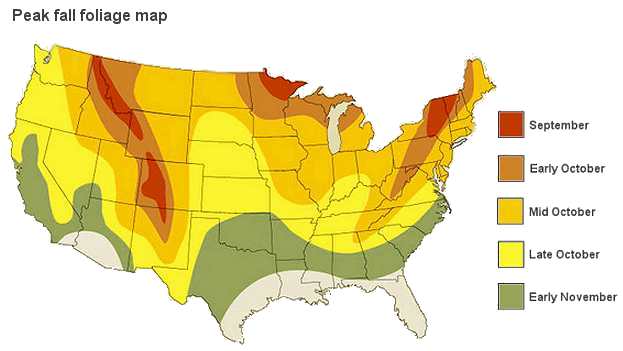
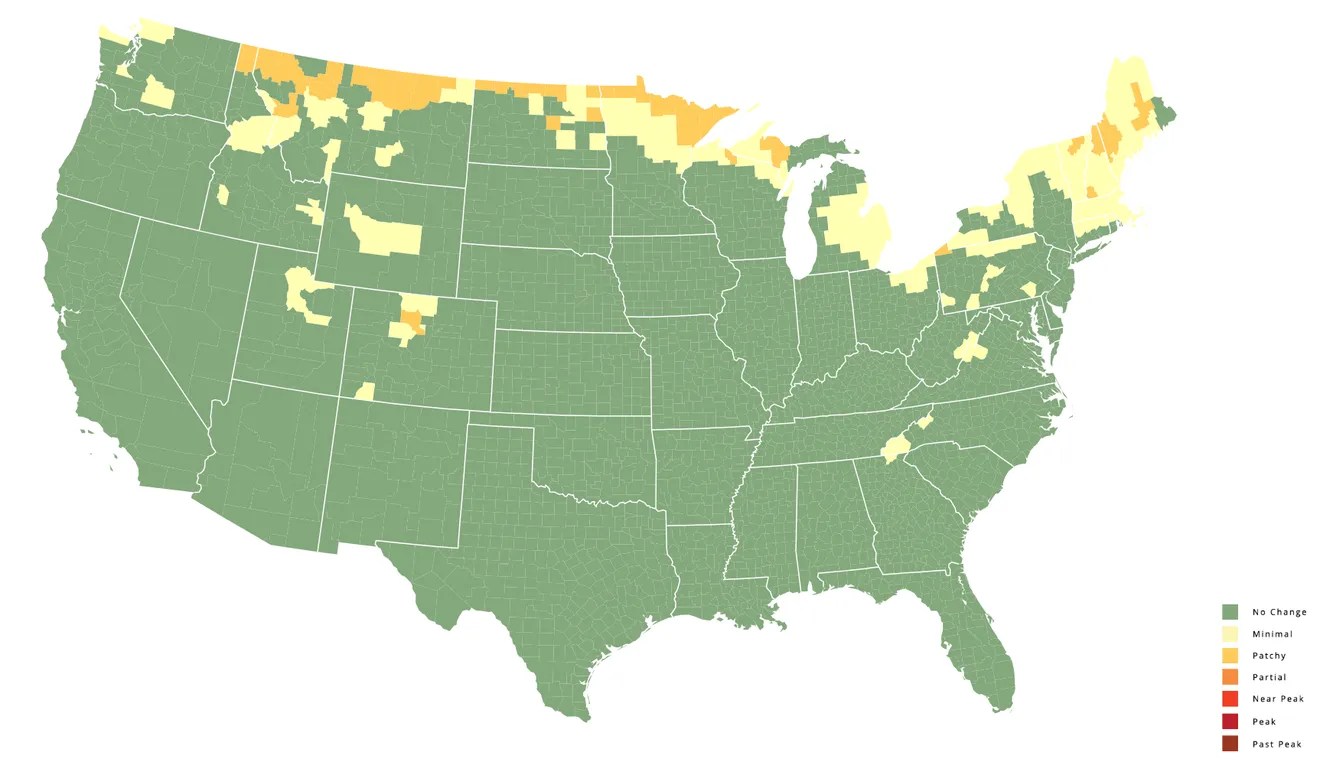
While it may feel as though there is nothing positive to look forward to these days, at least we have the potential for another spectacular show of color this Autumn from Mother Nature. If you are planning any travel in North America over the coming months, it’s always good to know where the best leaf peeping can be found.

It’s that time again for: The 2025 Fall Foliage Prediction Map.


Posted in Uncategorized | Tagged , , | Leave a comment

Sometimes in a pickle is where to be

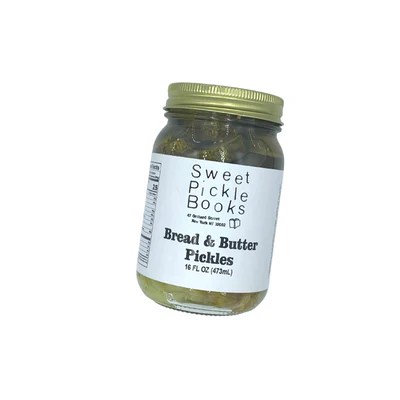
Over the years, I’ve discovered hundreds of used, secondhand and antiquarian bookshops, but none as unique as New York City’s Sweet Pickle Books.  The founder and owner Leigh Altshuler had always dreamed of opening her own bookstore, but the time never seemed to be quite right. Then, in 2020, everything changed.

During the dark days of the Pandemic she found herself jobless and at loose ends. Growing up in a Eastern European household, books and pickles were a constant.  So Altshuler decided to combine the two passions in a shop that featured both artisan pickles and secondhand books.

The combination of the two makes Sweet Pickles Books so unique. Customers can bring a few books of their own and trade them for some of Leigh’s delicious pickles.

Located at 47 Orchard Street, on Manhattan’s Lower East Side, Sweet Pickles is situated in an historic district that once was home to immigrants from Eastern Europe and dozens of pickle makers.

Altshuler is planning on opening another store for antiquarian, rare and collectible books. The new shop will be called ‘Sweet Pickle Books: Rare, Fine and Fancy’.

Posted in Books, Bookstore Tourism, Europe, USA | Tagged , , , | Leave a comment

One of These Days

“One of These Days”

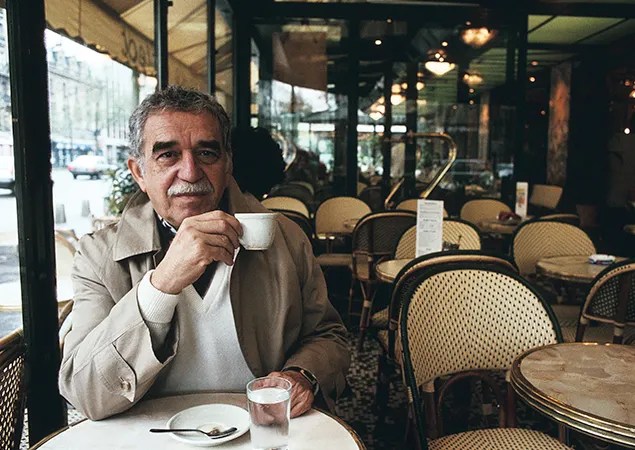
by Gabriel García Márquez

translated by J.S. Bernstein


Monday dawned warm and rainless. Aurelio Escovar, a dentist without a degree, and a very early riser, opened his office at six. He took some false teeth, still mounted in their plaster mold, out of the glass ease and put on the table a fistful of instruments which he arranged in size order, as if they were on display. He wore a collarless striped shirt, closed at the neck with a golden stud, and pants held up by suspenders. He was erect and skinny, with a look that rarely corresponded to the situation, the way deaf people have of looking.

When he had things arranged on the table, he pulled the drill toward the dental chair and sat down to polish the false teeth. He seemed not to be thinking about what he was doing, but worked steadily, pumping the drill with his feet, even when he didn’t need it.

After eight he stopped for a while to look at the sky through the window, and he saw two pensive buzzards who were drying themselves in the sun on the ridgepole of the house next door. He went on working with the idea that before lunch it would rain again. The shrill voice of his eleven-year-old son interrupted his concentration.

“Papá”

“What?”

“The Mayor wants to know if you’ll pull his tooth.”

“Tell him I’m not here.”

He was polishing a gold tooth. He held it at arm’s length, and examined it with his eyes half closed. His son shouted again from the little waiting room.

“He says you are, too, because he can hear you.”

The dentist kept examining the tooth. Only when he had put it on the table with the finished work did he say:

“So much the better.”

He operated the drill again. He took several pieces of a bridge out of a cardboard box where he kept the things he still had to do and began to polish the gold.

“Papá.”

“What?”

He still hadn’t changed his expression.

“He says if you don’t take out his tooth, he’ll shoot you.”

Without hurrying, with an extremely tranquil movement, he stopped pedaling the drill, pushed it away from the chair, and pulled the lower drawer of the table all the way out. There was a revolver. “O.K.,” he said. “Tell him to come and shoot me.”

He rolled the chair over opposite the door, his hand resting on the edge of the drawer. The Mayor appeared at the door. He had shaved the left side of his face, but the other side, swollen and in pain, had a five-day-old beard. The dentist saw many nights of desperation in his dull eyes. He closed the drawer with his fingertips and said softly:

“Sit down.”

“Good morning,” said the Mayor.

“Morning,” said the dentist.

While the instruments were boiling, the Mayor leaned his skull on the headrest of the chair and felt better. His breath was icy. It was a poor office: an old wooden chair, the pedal drill, a glass case with ceramic bottles. Opposite the chair was a window with a shoulder-high cloth curtain. When he felt the dentist approach, the Mayor braced his heels and opened his mouth.

Aurelio Escovar turned his head toward the light. After inspecting the infected tooth, he closed the Mayor’s jaw with a cautious pressure of his fingers.

“It has to be without anesthesia,” he said.

“Why?”

“Because you have an abscess.”

The Mayor looked him in the eye. “All right,” he said, and tried to smile. The dentist did not return the smile. He brought the basin of sterilized instruments to the worktable and took them out of the water with a pair of cold tweezers, still without hurrying. Then he pushed the spittoon with the tip of his shoe, and went to wash his hands in the washbasin. He did all this without looking at the Mayor. But the Mayor didn’t take his eyes off him.

It was a lower wisdom tooth. The dentist spread his feet and grasped the tooth with the hot forceps. The Mayor seized the arms of the chair, braced his feet with all his strength, and felt an icy void in his kidneys, but didn’t make a sound. The dentist moved only his wrist. Without rancor, rather with a bitter tenderness, he said:

“Now you’ll pay for our twenty dead men.”

The Mayor felt the crunch of bones in his jaw, and his eyes filled with tears. But he didn’t breathe until he felt the tooth come out. Then he saw it through his tears. It seemed so foreign to his pain that he failed to understand his torture of the five previous nights.

Bent over the spittoon, sweating, panting, he unbuttoned his tunic and reached for the handkerchief in his pants pocket. The dentist gave him a clean cloth.

“Dry your tears,” he said.

The Mayor did. He was trembling. While the dentist washed his hands, he saw the crumbling ceiling and a dusty spider web with spider’s eggs and dead insects. The dentist returned, drying his hands. “Go to bed,” he said, “and gargle with salt water.” The Mayor stood up, said goodbye with a casual military salute, and walked toward the door, stretching his legs, without buttoning up his tunic.

“Send the bill,” he said.

“To you or the town?”

The Mayor didn’t look at him. He closed the door and said through the screen:

“It’s the same damn thing
Posted in Uncategorized | Tagged , | Leave a comment

Clearance, or why did I save these in the first place

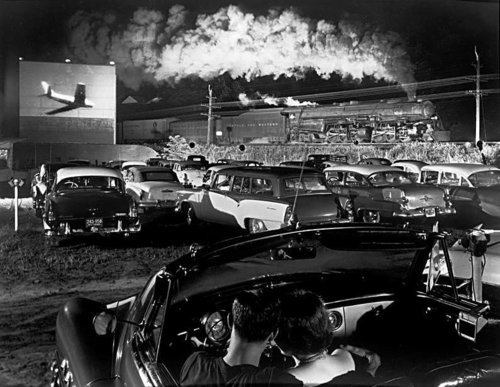
trains, planes, and automobiles :: photo by O. Winston Link

Posted in Art, Asia | Tagged , , | 1 Comment

History of the Book

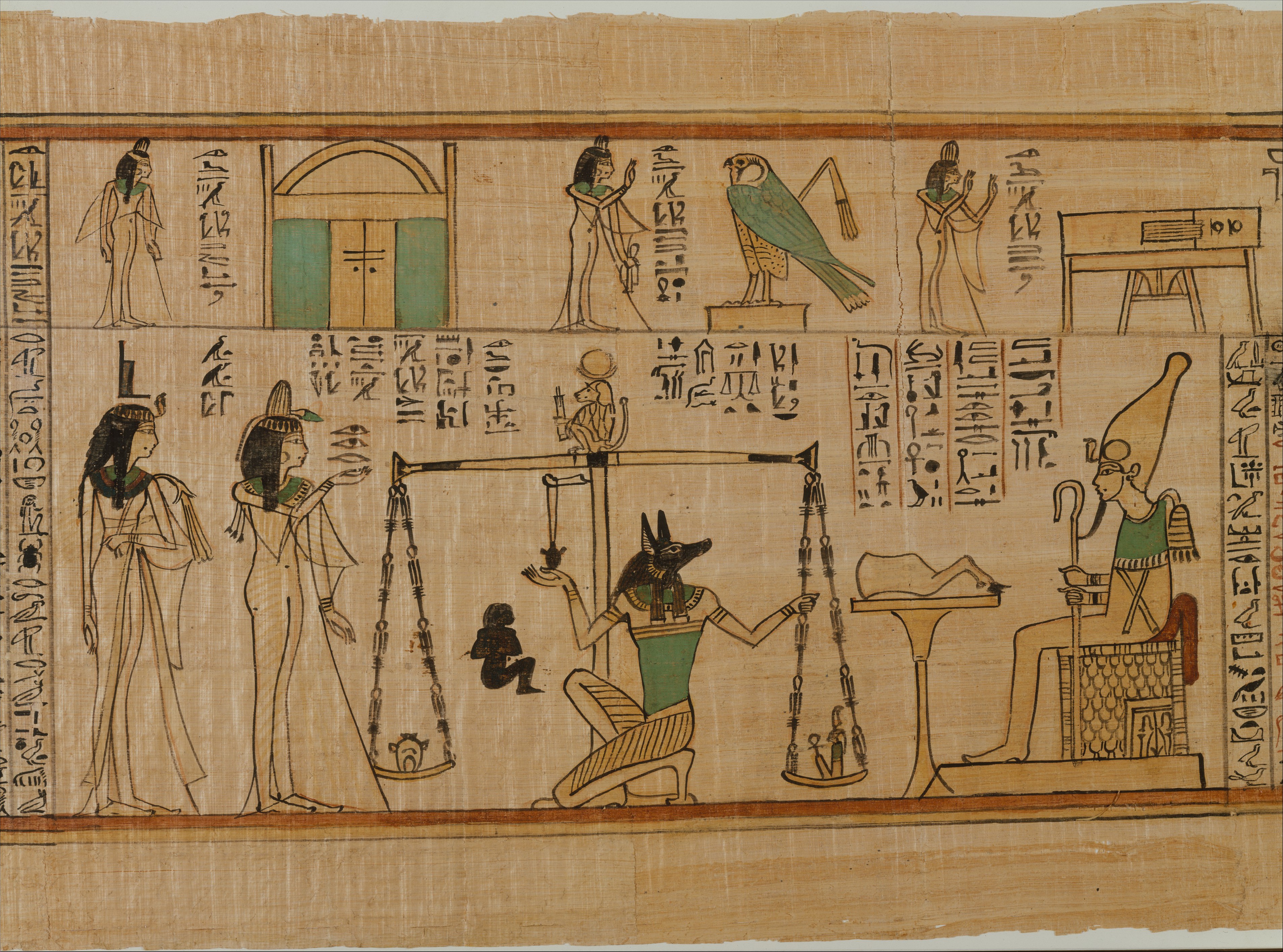
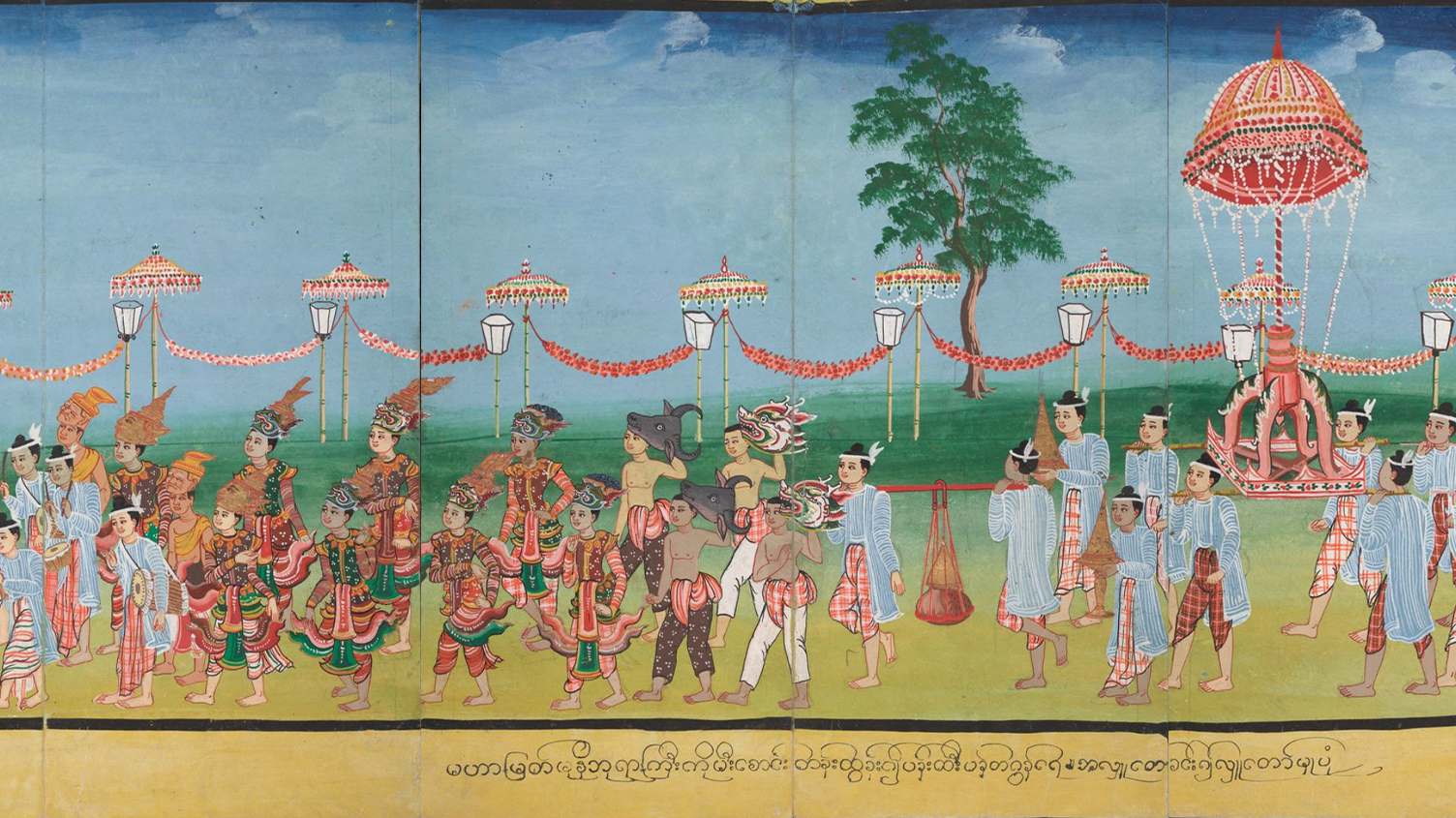
The Singer of Amun Nany’s Funerary Papyrus, ca. 1050 B.C.

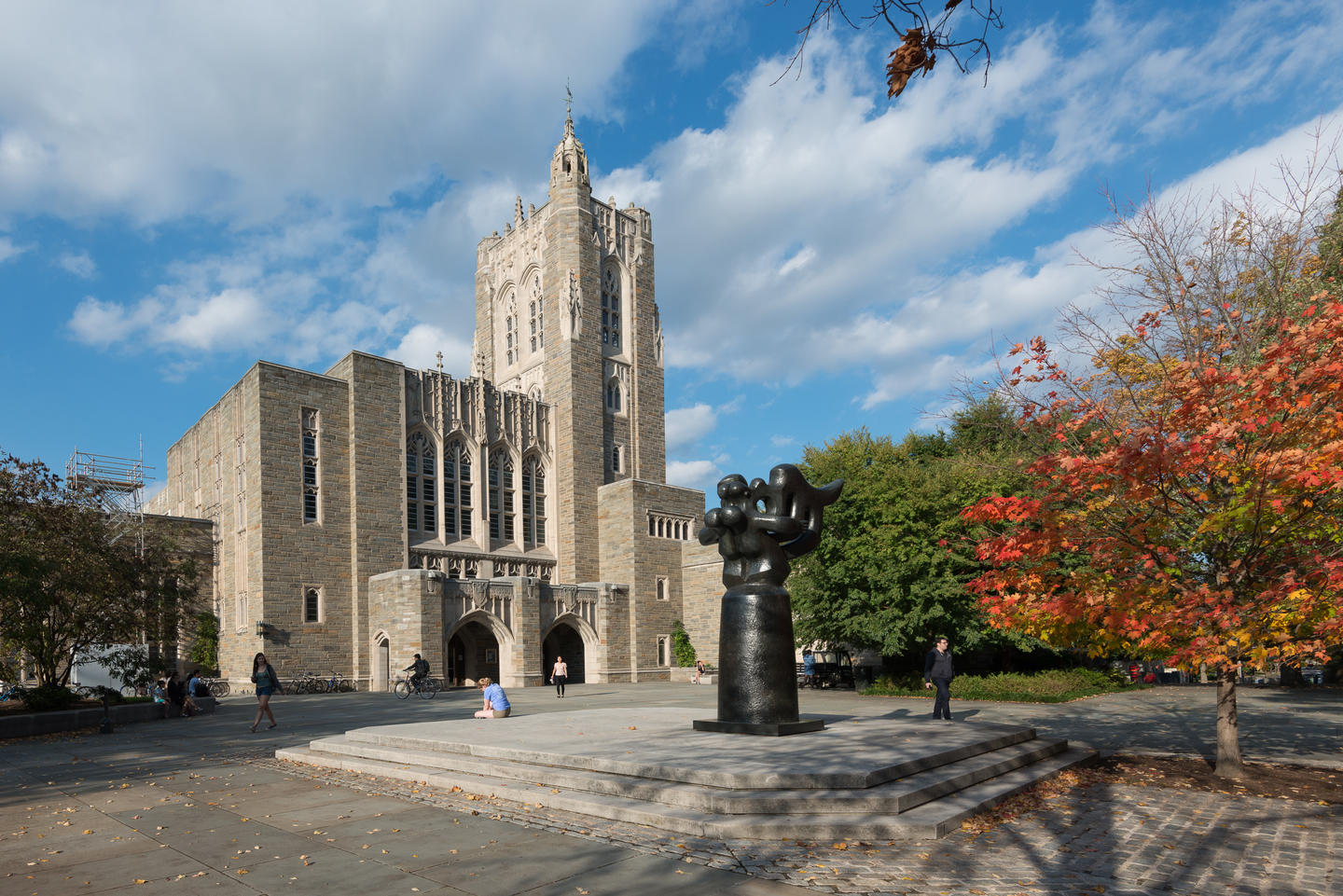
I had the good fortune to live near Princeton University during much of my adolescence and spent many hours lost in the treasures of the University’s Firestone Library. Over the years, the University began to limit access to students and faculty, but always opened up special exhibitions to the community.  Princeton University Library‘s upcoming exhibition will focus on the diversity and beauty of global book making, concentrating on three major traditions of the book form, codex, East Asian, and pothī.

Forms and Function: The Splendors of Global Book Making opens tomorrow and runs though December 7 in the Ellen and Leonard Milberg Gallery at the Firestone Library lobby.

It will feature 73 items from Princeton’s collections of Western, Islamic, East Asian, and Mesoamerican manuscripts and printed books, as well as works by modern artists completed in the style of these global traditions.

Highlights include:

  • an early Egyptian papyrus scroll displaying parts from the work usually called the Book of the Dead dating from 3rd-1st century BCE
  • stele discovered in 1625 outside Xi’an, China that revealed that Christianity had been in China as early as 635
  • examples of texts written on dried and treated leaves from Bali and Myanmar
  • examples of works on materials like bark, textiles, shell, lacquer, and copper

“The exhibition will allow visitors to view such a wide variety of book forms from these different traditions,” said the exhibition’s curator Martin Heijdra, Director of PUL’s East Asian Library who received a Ph.D. in Ming History from Princeton in 1995. “They range from the humble to the spectacular, but they all share the purpose of carrying forward knowledge through time.”

A half-day symposium on October 3 at Princeton University organized by Heijdra will feature experts on some of the more unique aspects of book making. It will be held. The symposium is free and open to the public, but registration is required.

The companion digital exhibition will open concurrently on the Digital PUL website.


Posted in Uncategorized | Tagged , , , , | 2 Comments

September Song (hot, hot, hot)

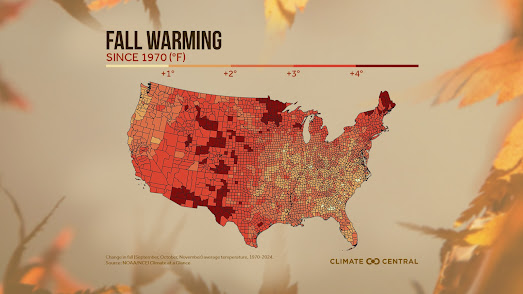
Here in North America meteorological Fall started on September 1st. But if you live here and have been paying attention, you may have noticed that the usual cooling after the Summer season has been arriving late. That’s because the Autumn season has been steadily warming for decades. Since 1970, average Fall temperatures have risen in every single county in the United States.

On average, Fall temperatures are now a remarkable 2.8°F warmer than they were in the early 1970s. This might seem like a small number, but it has significant impacts on our environment, from delayed leaf changes to extended allergy seasons. It’s a clear signal of our changing climate, right in the middle of a season we often associate with cooling down.

You can explore how much warmer autumnal temperatures are in the U.S. on Climate Central’s Fall Warming. The map reveals that the Southwest is experiencing some of the fastest-rising fall temperatures, with many counties in New Mexico and Arizona seeing rises of over 4°F.

You can click on individual counties on the interactive map to see the change in average fall temperature (°F) since 1970. For a deeper dive, you can download a static image of the map and line charts showing the average rise in fall temperatures from Climate Central’s 2025 2025 Fall Package.

Posted in Cartography, Maps, Tech, USA | Tagged , , | 1 Comment

Short Story


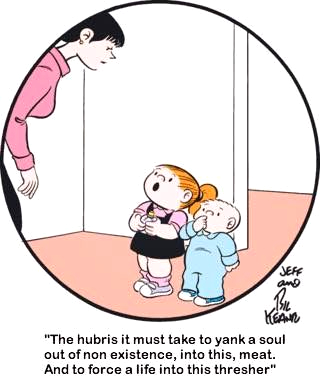
Posted in Animation, Art, Writing | Tagged , , | 1 Comment

The world is no better than its places.

A Poem on Hope
by Wendell Berry

It is hard to have hope. It is harder as you grow old, for hope must not depend on feeling good
and there is the dream of loneliness at absolute midnight. You also have withdrawn belief in the present reality of the future, which surely will surprise us, and hope is harder when it cannot come by prediction any more than by wishing. But stop dithering. The young ask the old to hope. What will you tell them? Tell them at least what you say to yourself.

Because we have not made our lives to fit
our places, the forests are ruined, the fields eroded, the streams polluted, the mountains overturned. Hope then to belong to your place by your own knowledge of what it is that no other place is, and by your caring for it as you care for no other place, this place that you belong to though it is not yours, for it was from the beginning and will be to the end.

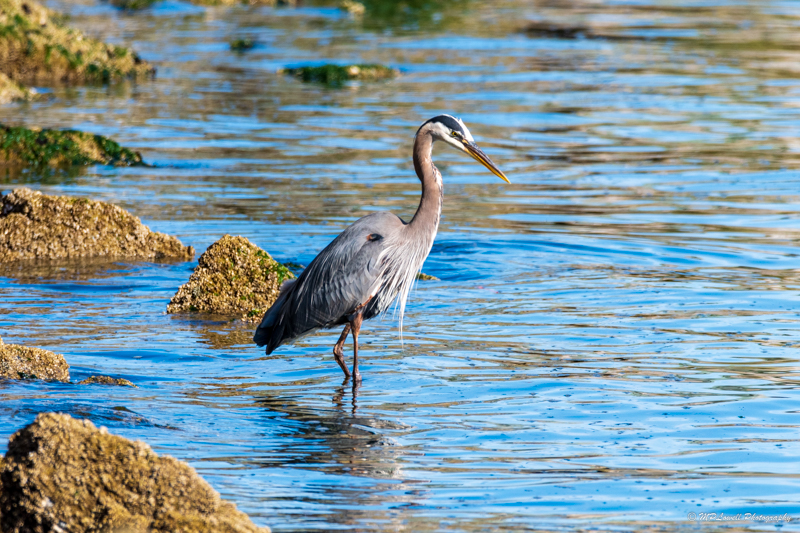
Belong to your place by knowledge of the others who are your neighbors in it: the old man, sick and poor, who comes like a heron to fish in the creek, and the fish in the creek, and the heron who manlike fishes for the fish in the creek, and the birds who sing in the trees in the silence of the fisherman and the heron, and the trees that keep the land they stand upon as we too must keep it, or die.

This knowledge cannot be taken from you by power or by wealth. It will stop your ears to the powerful when they ask for your faith, and to the wealthy when they ask for your land and your work. Answer with knowledge of the others who are here and how to be here with them. By this knowledge make the sense you need to make. By it stand in the dignity of good sense, whatever may follow.

Speak to your fellow humans as your place
has taught you to speak, as it has spoken to you.
Speak its dialect as your old compatriots spoke it
before they had heard a radio. Speak publicly what cannot be taught or learned in public.

Listen privately, silently to the voices that rise up
from the pages of books and from your own heart. Be still and listen to the voices that belong
to the streambanks and the trees and the open fields. There are songs and sayings that belong to this place, by which it speaks for itself and no other.

Found your hope, then, on the ground under your feet. Your hope of Heaven, let it rest on the ground underfoot. Be it lighted by the light that falls freely upon it after the darkness of the nights and the darkness of our ignorance and madness. Let it be lighted also by the light that is within you, which is the light of imagination. By it you see the likeness of people in other places to yourself in your place. It lights invariably the need for care toward other people, other creatures, in other places as you would ask them for care toward your place and you.

No place at last is better than the world. The world is no better than its places. Its places at last are no better than their people while their people continue in them. When the people make
dark the light within them, the world darkens.


Posted in Uncategorized | Tagged , | Leave a comment