Beyond Gravity’s Rainbow

Last week, Penguin Random House announced a new novel from Thomas Pynchon. The novel, his first in a decade, is called Shadow Ticket and is set to publish on 7 Oct. 2025. PRH’s copy:


Milwaukee 1932, the Great Depression going full blast, repeal of Prohibition just around the corner, Al Capone in the federal pen, the private investigation business shifting from labor-management relations to the more domestic kind. Hicks McTaggart, a one-time strikebreaker turned private eye, thinks he’s found job security until he gets sent out on what should be a routine case, locating and bringing back the heiress of a Wisconsin cheese fortune who’s taken a mind to go wandering. Before he knows it, he’s been shanghaied onto a transoceanic liner, ending up eventually in Hungary where there’s no shoreline, a language from some other planet, and enough pastry to see any cop well into retirement—and of course no sign of the runaway heiress he’s supposed to be chasing. By the time Hicks catches up with her he will find himself also entangled with Nazis, Soviet agents, British counterspies, swing musicians, practitioners of the paranormal, outlaw motorcyclists, and the troubles that come with each of them, none of which Hicks is qualified, forget about being paid, to deal with. Surrounded by history he has no grasp on and can’t see his way around in or out of, the only bright side for Hicks is it’s the dawn of the Big Band Era and as it happens he’s a pretty good dancer. Whether this will be enough to allow him somehow to lindy-hop his way back again to Milwaukee and the normal world, which may no longer exist, is another question.

Posted in Books, USA, Writing | Tagged , | 2 Comments

“Trimalchio in West Egg.”

It seems a bit incredible that F. Scott Fitzgerald originally titled the great American novel “Trimalchio in West Egg.”But in the end he called it “The Great Gatsby” and it remains one of the 20th century’s most read and beloved works of fiction.

Today marks a century since the book’s first edition, F. Scott Fitzgerald’s slender novel about a mysterious, lovelorn millionaire living and dying in a Long Island mansion is still among the most widely read American fictions. Like many, I first read Gatsby in high school and have since returned to re-read it many times.

In January 2021, The Great Gatsby finally entered the public domain, allowing any hack to raid the original iconic novel for second rate, rip-off content. Personally, I’m only interested in the genuine article. We can read the Project Gutenberg’s e‑book of the original text, or listen to the free audio book versions of The Great Gatsby. This five hour recording comes courtesy of Nolan Hennelly, and you can stream it below.


Posted in Books, Film, History, USA, Writing | Tagged , , | Leave a comment

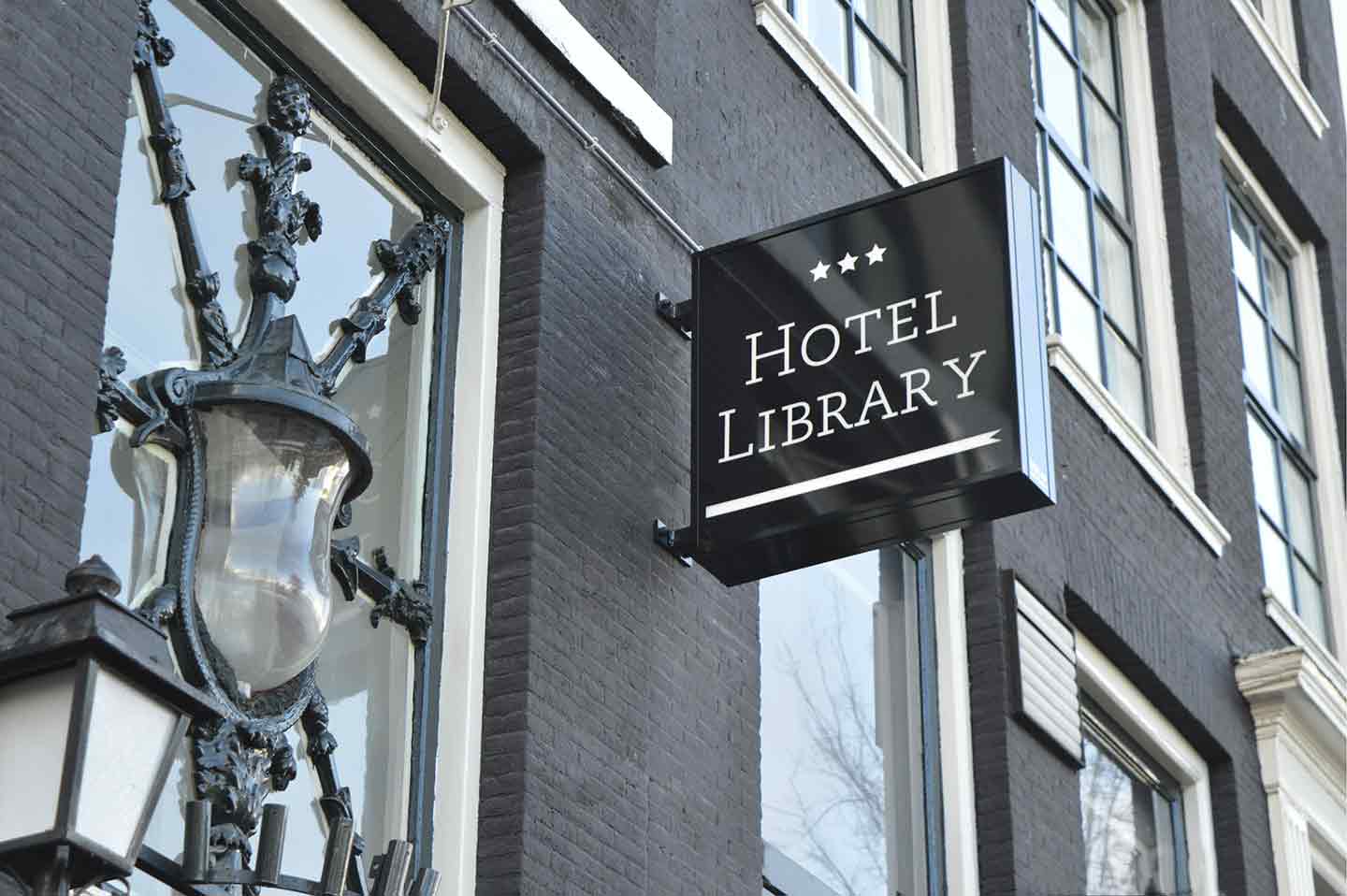
What could be better than a hotel/library

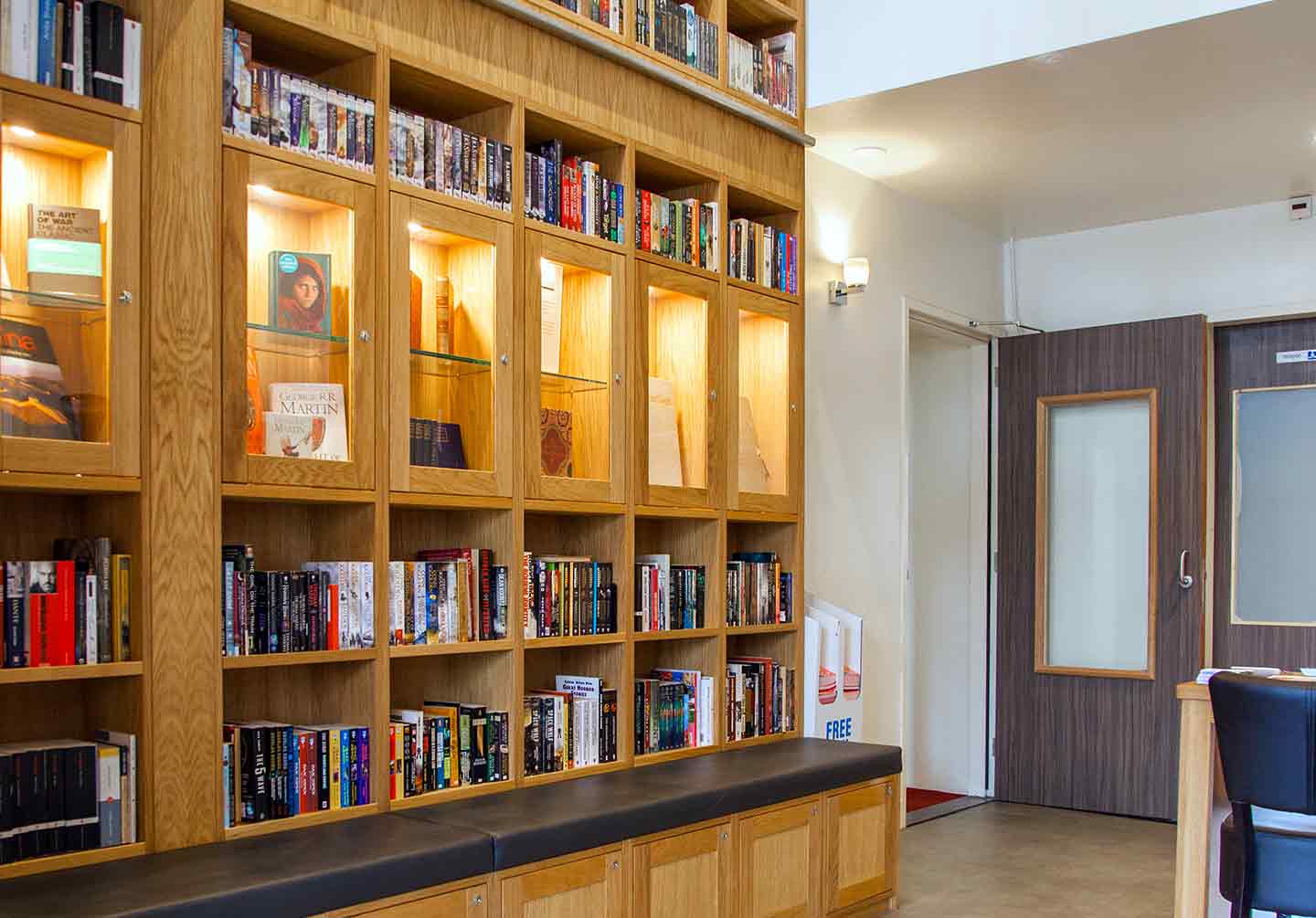
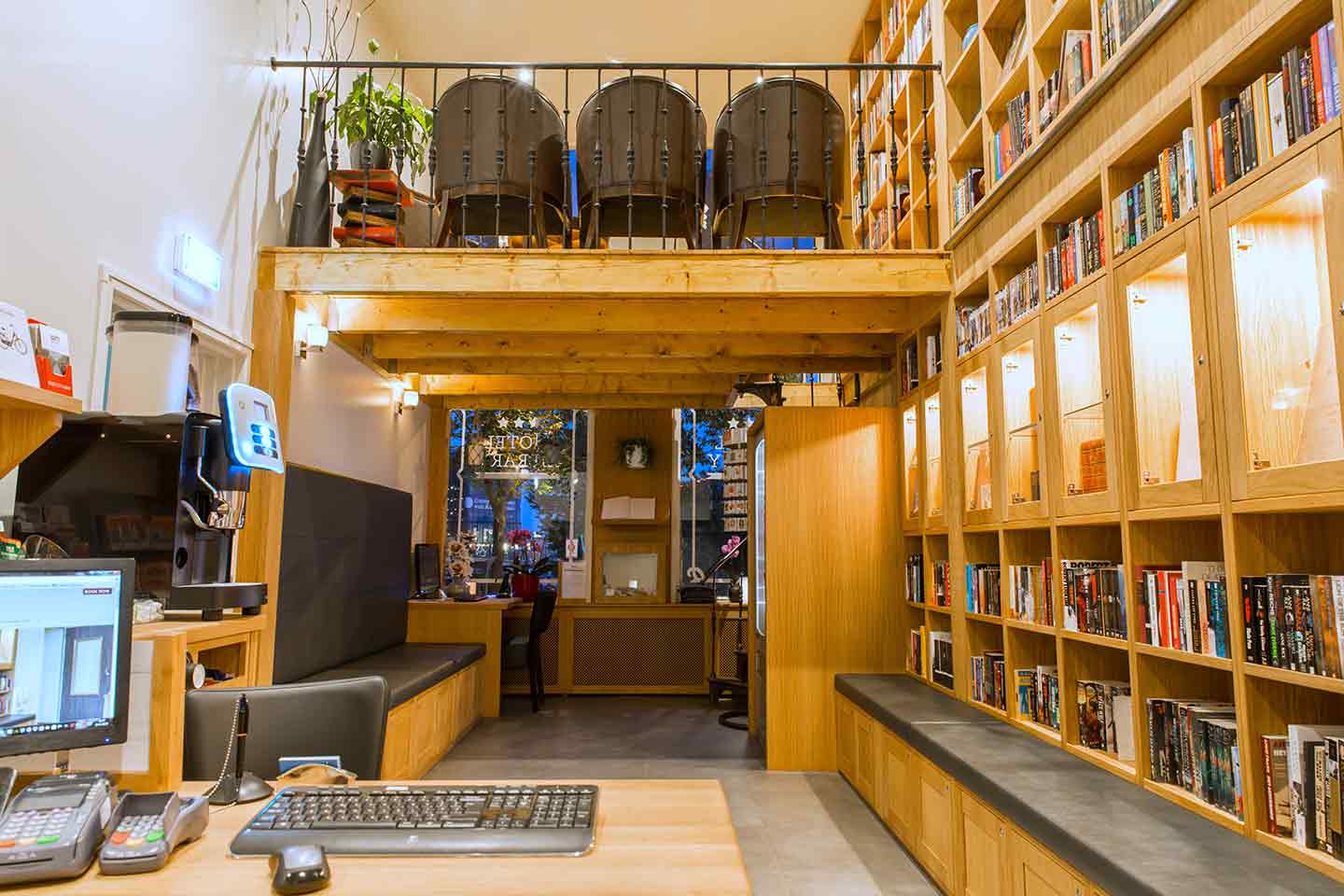
I’ve visited Amsterdam more often than any other city outside of North America and I only just discovered the Hotel Library. Situated in a beautiful 18th century canal house in the heart of the city on Prins Hendrikkade, the hotel offers great waterfront views and easy access to Amsterdam’s tourist attractions.

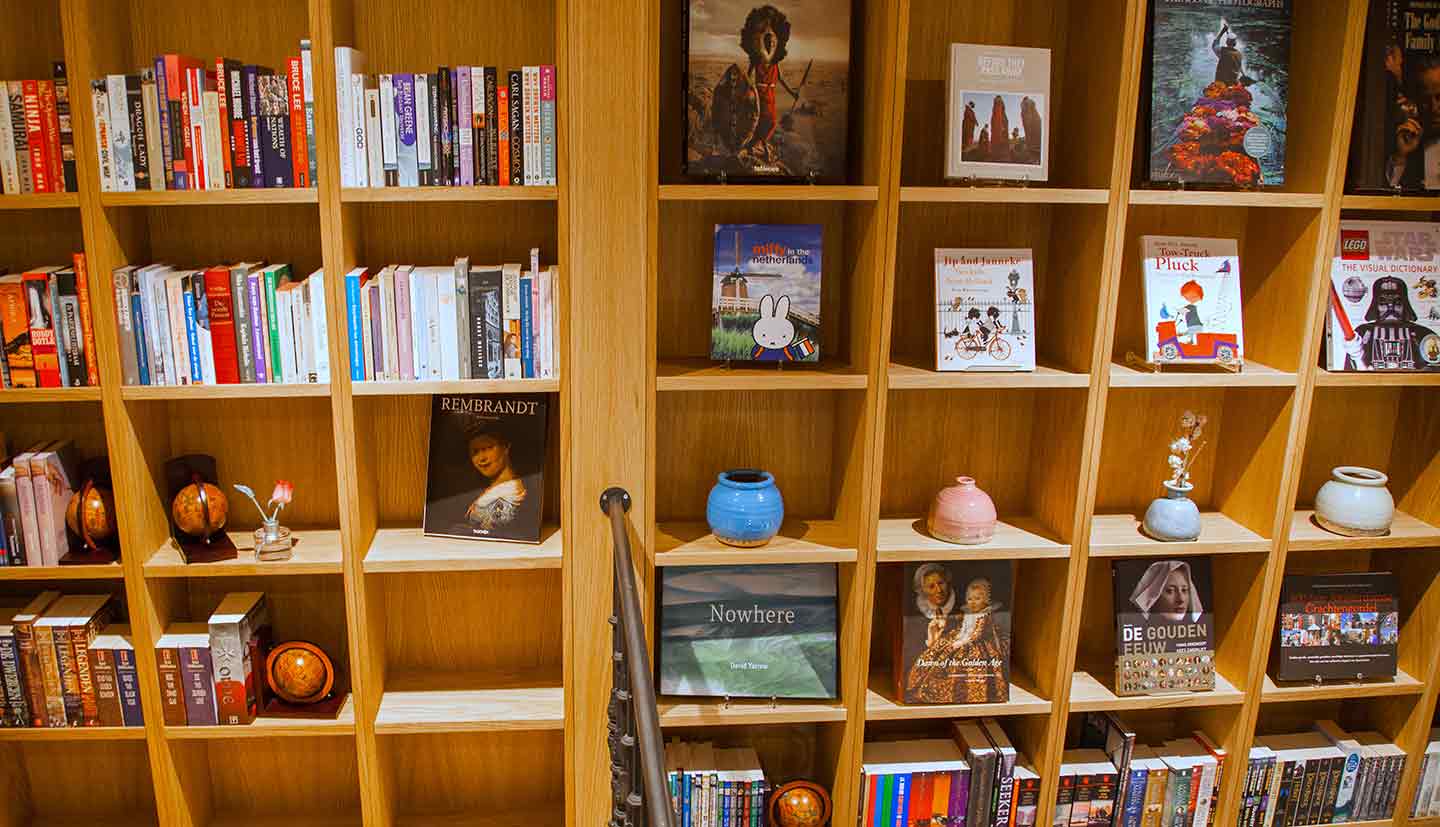
The highlight of this three star establishment is a constantly growing lending library. The proprietors cleverly ask guests to leave books at the end of their stay. And, it’s even possible to purchase reading materials from the hotel’s collection.

I almost always stay in the Jordaan, but the Hotel Library is awfully tempting.


Posted in Books, Europe, Hotels, Libraries, Tourism | Tagged , | Leave a comment

A NYC Culinary Mystery

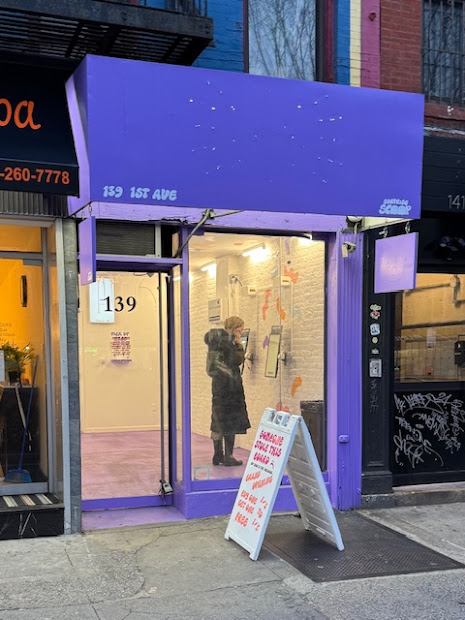
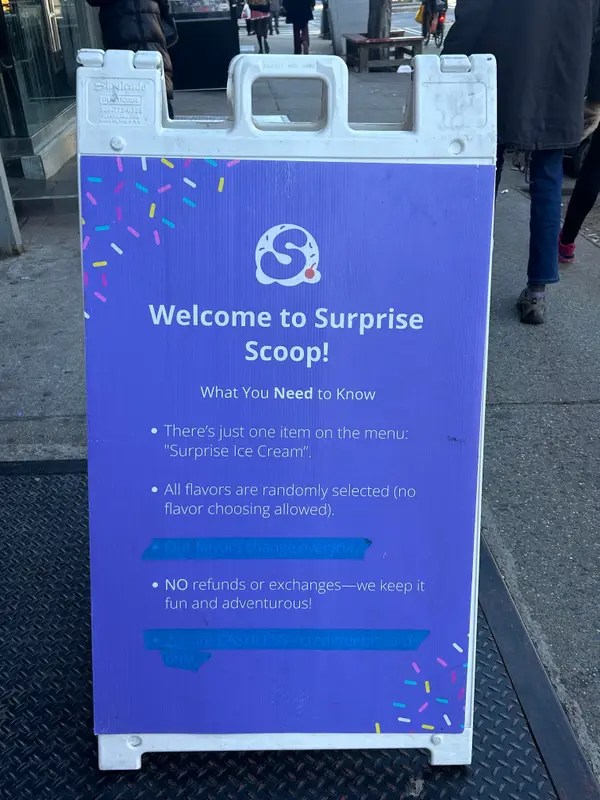
I recently discovered a tasty mystery in New York City’s East Village neighborhood. When you enter Surprise Scoop  it’s quickly obvious that this ice cream shop isn’t like the others. There are no employees in sight and no ice cream is visible in the store, which consists of just a room with two electronic kiosks and a pickup window.

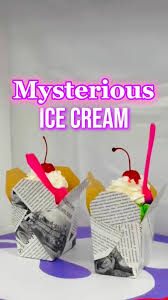
Shoppers have just one choice on the menu: a $10 double scoop of ice cream. Customers order at the kiosk and don’t know what flavor they’re getting, or what the available options are.

When the ice cream is ready, a computerized voice on a speaker calls out the name on the order, the small window opens, and a barely visible employee places the order on a small ledge before shutting the window again.

The experience is the brainchild of Jackie Luu, a Brooklynite who has been in the ice cream business for nearly a decade. His first shop, Stuffed Ice Cream, sells doughnut ice cream sandwiches and used to occupy Surprise Scoop’s current space before moving to Bensonhurst.


Posted in Restaurants, Tourism, USA | Tagged , , | Leave a comment

“A Grief Observed”

No one ever told me that grief felt so like fear. I am not afraid, but the sensation is like being afraid. The same fluttering in the stomach, the same restlessness, the yawning. I keep on swallowing.

At other times it feels like being mildly drunk, or concussed. There is a sort of invisible blanket between the world and me. I find it hard to take in what anyone says. Or perhaps, hard to want to take it in. It is so uninteresting. Yet I want the others to be about me. I dread the moments when the house is empty. If only they would talk to one another and not to me.

~ C.S. Lewis, “A Grief Observed”


Posted in Books, Europe, Writing | Tagged , | Leave a comment

Live from around the globe

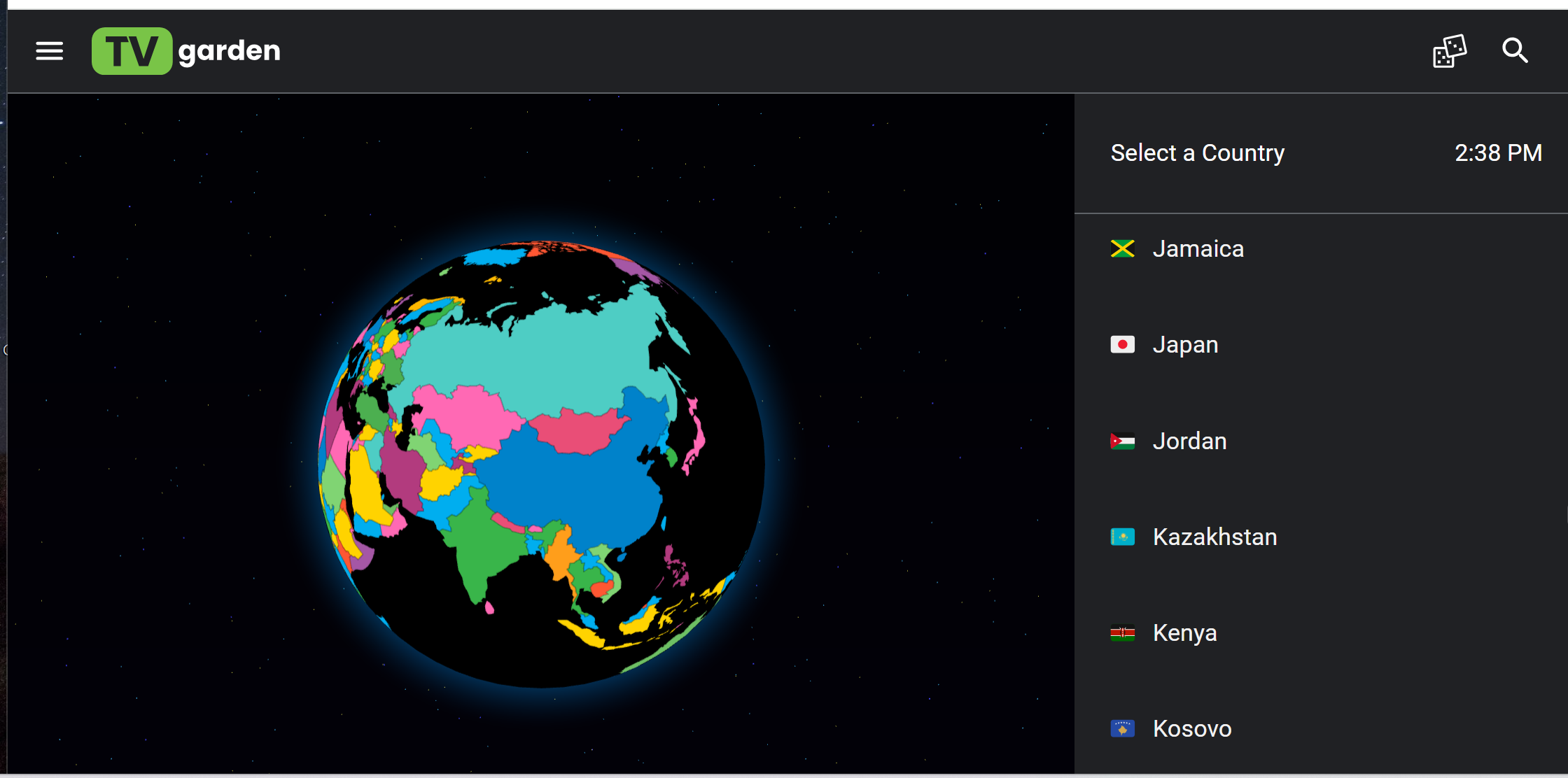
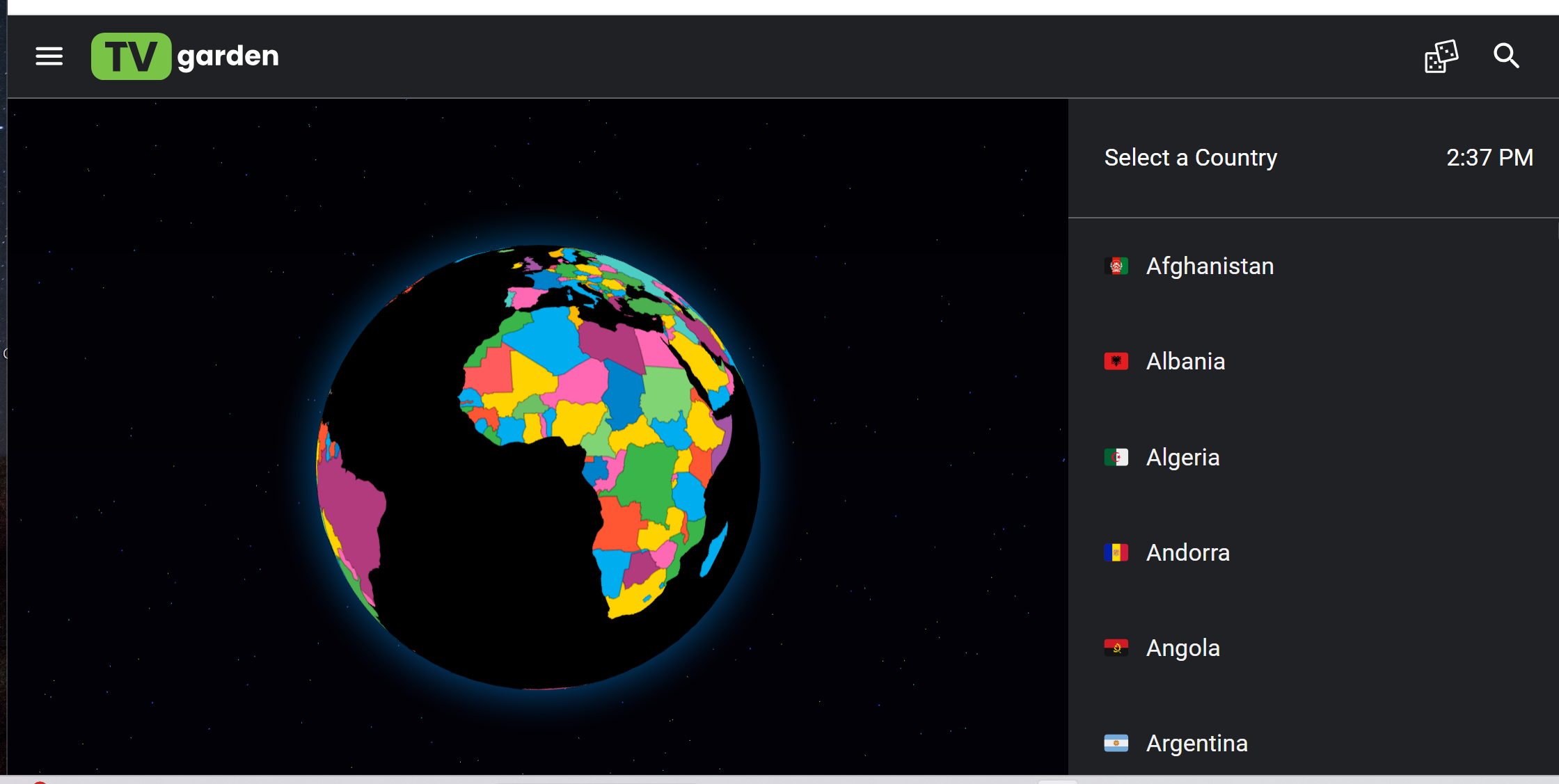
TVgarden is an amazing website that allows you to tune in to live television broadcasts from around the world. There have been similar sites, but this one really works. However, be prepared to loose an afternoon or evening to fascinating shows and news coverage.


Posted in Africa, Asia, Canada, Europe, South America, Tech, USA | Tagged | 1 Comment

Book Day, 1932

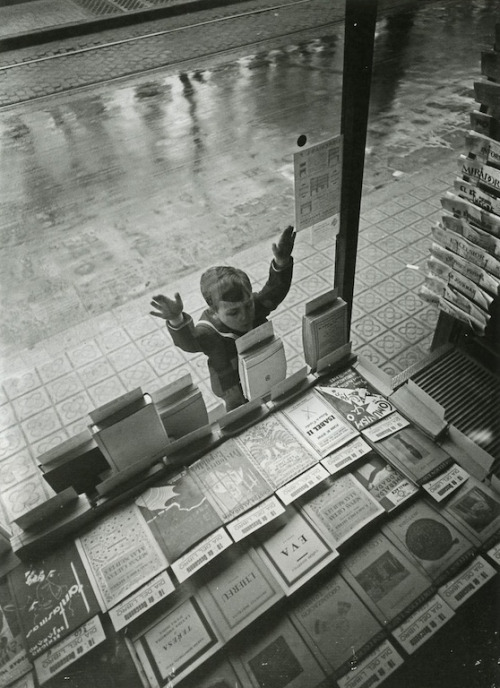
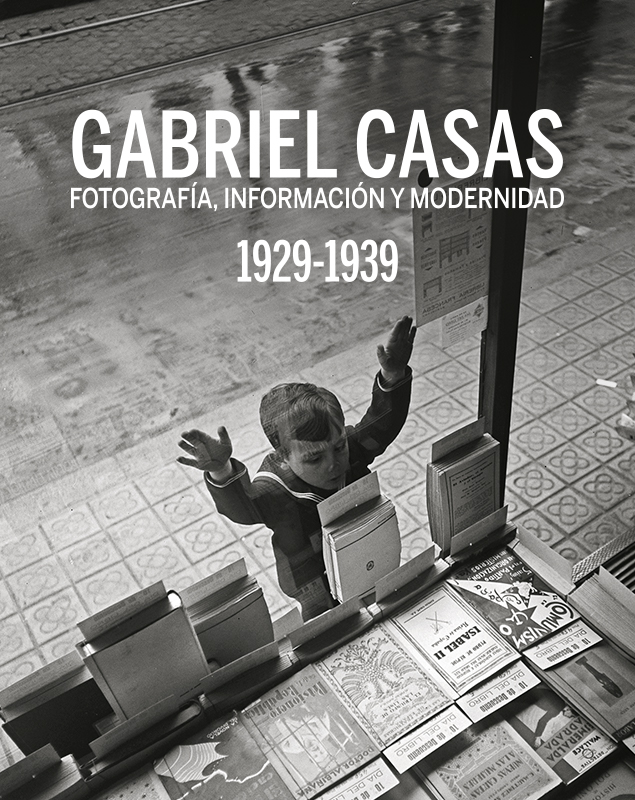
I have been intrigued by this photograph for many years and finally made the effort to find out about the image and the photographer who captured it. Titled Día del libro or  Book Day, 1932, the picture was created by Gabriel Casas.

Working mainly in Barcelona during the 1920s and 30s, Casas was one of the most influential Spanish photographers of the interwar period. He was an early adopter of the pictorial language that became known as New Vision, a movement started in Germany which stirred up the photography field with the use of surprising framing, low angle and high angle shots, light and shape contrasts, and photomontage.

Gabriel Casas managed to add a psychological component to his photographs beyond simple formal aesthetics. His photographs had a huge impact, illustrating magazines, advertisements, books, and even propaganda posters.

Did he wait for someone to fill the empty frame of the window?  Or maybe he took other photos of passers-by pausing to look at the display of books before this perfect moment occurred. Or possibly he staged the picture by asking the boy, who might have been someone he knew, to press his face and hands against the glass?  But none of that matters in the slightest. It’s a great image.

I think that it resonates so much for me because when I was that age, and already a budding bibliophile, I could only long for new books in a real bookstore. All of my reading material came from the library or the flea market.


Posted in Books, Bookstore Tourism, Europe, Photography | Tagged , | 1 Comment

It was a bright cold day in April, and the clocks were striking thirteen.

It was a bright cold day in April, and the clocks were striking thirteen. Winston Smith, his chin nuzzled into his breast in an effort to escape the vile wind, slipped quickly through the glass doors of Victory Mansions, though not quickly enough to prevent a swirl of gritty dust from entering along with him.

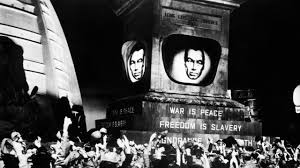
The hallway smelt of boiled cabbage and old rag mats. At one end of it a coloured poster, too large for indoor display, had been tacked to the wall. It depicted simply an enormous face, more than a metre wide: the face of a man of about forty-five, with a heavy black moustache and ruggedly handsome features. Winston made for the stairs. It was no use trying the lift. Even at the best of times it was seldom working, and at present the electric current was cut off during daylight hours. It was part of the economy drive in preparation for HateWeek. The flat was seven flights up, and Winston, who was thirty-nine and had a varicose ulcer above his right ankle, went slowly, resting several times on the way. On each landing, opposite the lift shaft, the poster with the enormous face gazed from the wall. It was one of those pictures which are so contrived that the eyes follow you about when you move. BIG BROTHER IS WATCHING YOU, the caption beneath it ran.

Inside the flat a fruity voice was reading out a list of figures which had something to do with the production of pig-iron. The voice came from an oblong metal plaque like a dulled mirror which formed part of the surface of the right-hand wall. Winston turned a switch and the voice sank somewhat, though the words were still distinguishable. The instrument (the telescreen, it was called) could be dimmed, but there was no way of shutting it off completely. He moved over to the window: a smallish, frail figure, the meagreness of his body merely emphasized by the blue overalls which were the uniform of the Party. His hair was very fair, his face naturally sanguine, his skin roughened by coarse soap and blunt razor blades and the cold of the winter that had just ended.

Outside, even through the shut window-pane, the world looked cold. Down in the street little eddies of wind were whirling dust and torn paper into spirals, and though the sun was shining and the sky a harsh blue, there seemed to be no colour in anything, except the posters that were plastered everywhere. The black-moustachio’d face gazed down from every commanding corner. There was one on the house-front immediately opposite. BIG BROTHER IS WATCHING YOU, the caption said, while the dark eyes looked deep into Winston’s own.

Down at street level another poster, torn at one corner, flapped fitfully in the wind, alternately covering and uncovering the single word INGSOC. In the far distance a helicopter skimmed down between the roofs, hovered for an instant like a bluebottle, and darted away again with a curving flight. It was the police patrol, snooping into people’s windows. The patrols did not matter, however. Only the Thought Police mattered.


Posted in Books, Europe, Writing | Tagged , | Leave a comment

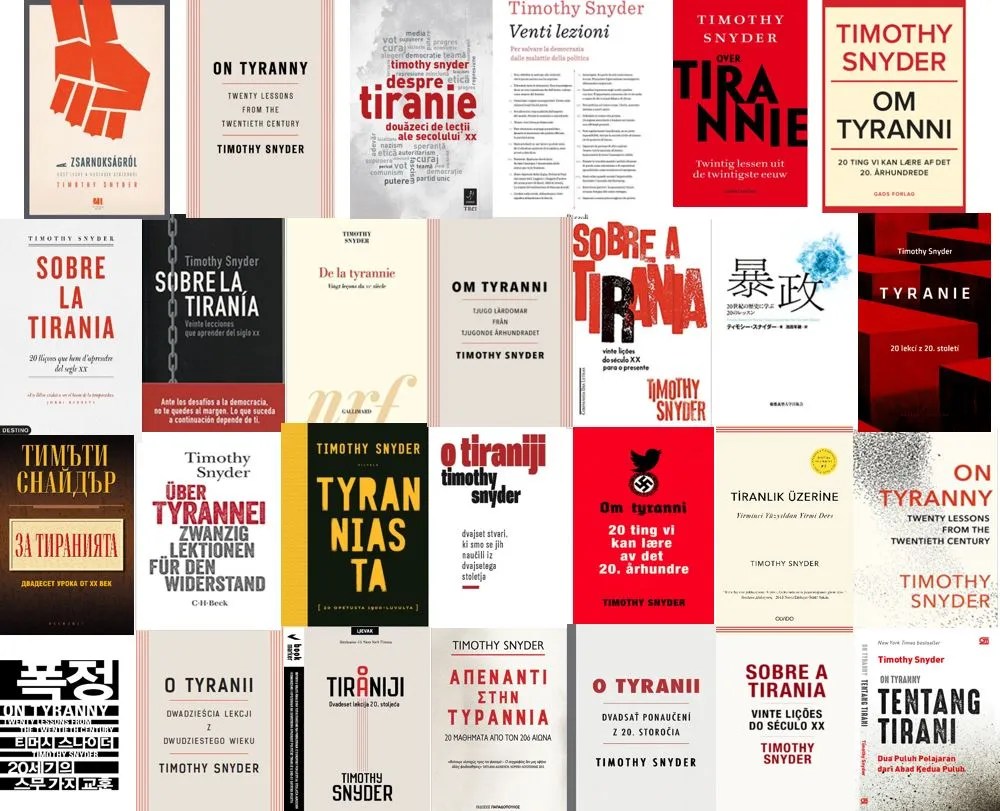
on tyranny

I know that I’ve posted about Timothy Snyder’s Twenty Lessons on Tyranny a number of times, but we are staring at the abyss in the United States and Democracy is on the verge of ruination.

In this 10-minute video, John Lithgow reads each of the lessons from Timothy Snyder’s On Tyranny: Twenty Lessons from the Twentieth Century.

Snyder himself made a series of 20 videos a few years ago in which he reads each lesson and then provides more context on what it means. Here’s the first episode on anticipatory obedience (he starts reading after a short intro, at about the 2:40 mark)


Posted in Books, Freedom of Speech, History, USA, Writing | Tagged , , , | 2 Comments

Tokyo High Line

Tokyo is planning to follow New York City’s lead and create its own version of the hugely popular High Line. The city will be shutting down a two kilometer stretch of expressway in the heart of Tokyo later this week to begin construction on the long awaited project.

The project is set to partially open in 2029, with full completion aimed for the 2030s or 2040s.

The city government said that the project draws inspiration from New York’s High Line, with some major differences. Parts of it will be much wider, and allow space for small shops, sitting areas, greenery and other activities.


Posted in Architecture, Asia, Public Transport, Tech, Tourism | Tagged , , , | Leave a comment