Below down under

I’ve been pondering a trip to Antarctica ever since I sat by a beach near the bottom of New Zealand’s South Island and saw a sign that pointed south reading “South Pole 4897 km”. Now, 4897 km is no short hop, but there was nothing between me and Antarctica but ocean. While it’s easier than ever to visit Antarctica, the cost is astronomical and there’s the issue of over-tourism there already. So for now I’ll have to be satisfied with seeing the continent on video.

The 8-minute video of a drone’s eye tour of the coast of Antarctica below is simply amazing.

The video was shot by Swedish adventurer Kalle Ljung with  with a GoPro HERO3+ Black Edition and DJI Phantom 2, edited with Final Cut Pro X.


Posted in Film, Photography, Tourism | Tagged , , | 3 Comments

“Amargura Para Tres Sonámbulos”

“Bitterness for Three Sleepwalkers” is a 1949 short story by the Colombian writer Gabriel García Márquez. Published when he was just twenty-two years old, it is one of his earliest stories.

“Bitterness for Three Sleepwalkers”

by

Gabriel García Márquez

translated by Gregory Rabassa


Now we had her there, abandoned in a corner of the house. Someone told us, before we brought her things – her clothes which smelled of newly cut wood, her weightless shoes for the mud – that she would be unable to get used to that slow life, with no sweet tastes, no attraction except that harsh, wattled solitude, always pressing on her back. Someone told us – and a lot of time had passed before we remembered it – that she had also had a childhood. Maybe we didn’t believe it then. But now, seeing her sitting in the corner with her frightened eyes and a finger placed on her lips, maybe we accepted the fact that she’d had a childhood once, that once she’d had a touch that was sensitive to the anticipatory coolness of the rain, and that she always carried an unexpected shadow in profile to her body.

All this – and much more – we believed that afternoon when we realized that above her fearsome subworld she was completely human. We found it out suddenly, as if a glass had been broken inside, when she began to give off anguished shouts; she began to call each one of us by name, speaking amidst tears until we sat down beside her; we began to sing and clap hands as if our shouting could put the scattered pieces of glass back together. Only then were we able to believe that at one time she had had a childhood. It was as if her shouts were like a revelation somehow; as if they had a lot of remembered tree and deep river about them. When she got up, she leaned over a little and, still without covering her face with her apron, still without blowing her nose, and still with tears, she told us:

‘I’ll never smile again.’

We went out into the courtyard, the three of us, not talking: maybe we thought we carried common thoughts. Maybe we thought it would be best not to turn on the lights in the house. She wanted to be alone – maybe – sitting in the dark corner, weaving the final braid which seemed to be the only thing that would survive her passage toward the beast.

Outside, in the courtyard, sunk in the deep vapor of the insects, we sat down to think about her. We’d done it so many times before. We might have said that we were doing what we’d been doing every day of our lives.

Yet it was different that night: she’d said that she would never smile again, and we, who knew her so well, were certain that the nightmare had become the truth. Sitting in a triangle, we imagined her there inside, abstract, incapacitated, unable even to hear the innumerable clocks that measured the marked and minute rhythm with which she was changing into dust. ‘If we only had the courage at least to wish for her death,’ we thought in a chorus. But we wanted her like that: ugly and glacial, like a mean contribution to our hidden defects.

We’d been adults since before, since a long time back. She, however, was the oldest in the house. That same night she had been able to be there, sitting with us, feeling the measured throbbing of the stars, surrounded by healthy sons. She would have been the respectable lady of the house if she had been the wife of a solid citizen or the concubine of a punctual man. But she became accustomed to living in only one dimension, like a straight line, perhaps because her vices or her virtues could not be seen in profile. We’d known that for many years now. We weren’t even surprised one morning, after getting up, when we found her face down in the courtyard, biting the earth in a hard, ecstatic way. Then she smiled, looked at us again; she had fallen out of the second-story window onto the hard clay of the courtyard and had remained there, stiff and concrete, face down on the damp clay. But later we learned that the only thing she had kept intact was her fear of distances, a natural fright upon facing space. We lifted her up by the shoulders. She wasn’t as hard as she had seemed to us at first. On the contrary, her organs were loose, detached from her will, like a lukewarm corpse that hadn’t begun to stiffen.

Her eyes were open, her mouth was dirty with that earth that already must have had a taste of sepulchral sediment for her when we turned her face up to the sun, and it was as if we had placed her in front of a mirror. She looked at us all with a dull, sexless expression that gave us – holding her in my arms now – the measure of her absence. Someone told us she was dead; and afterward she remained smiling with that cold and quiet smile that she wore at night when she moved about the house awake. She said she didn’t know how she got to the courtyard. She said that she’d felt quite warm, that she’d been listening to a cricket, penetrating, sharp, which seemed – so she said – about to knock down the wall of her room, and that she had set herself to remembering Sunday’s prayers, with her cheek tight against the cement floor.

We knew, however, that she couldn’t remember any prayer, for we discovered later that she’d lost the notion of time when she said she’d fallen asleep holding up the inside of the wall that the cricket was pushing on from outside and that she was fast asleep when someone, taking her by the shoulders, moved the wall aside and laid her down with her face to the sun.

That night we knew, sitting in the courtyard, that she would never smile again. Perhaps her inexpressive seriousness pained us in anticipation, her dark and willful living in a corner. It pained us deeply, as we were pained the day we saw her sit down in the corner where she was now; and we heard her say that she wasn’t going to wander through the house any more. At first we couldn’t believe her. We’d seen her for months on end going through the rooms at all hours, her head hard and her shoulders drooping, never stopping, never growing tired. At night we would hear her thick body noise moving between two darknesses, and we would lie awake in bed many times hearing her stealthy walking, following her all through the house with our ears. Once she told us that she had seen the cricket inside the mirror glass, sunken, submerged in the solid transparency, and that it had crossed through the glass surface to reach her. We really didn’t know what she was trying to tell us, but we could all see that her clothes were wet, sticking to her body, as if she had just come out of a cistern. Without trying to explain the phenomenon, we decided to do away with the insects in the house: destroy the objects that obsessed her.

We had the walls cleaned; we ordered them to chop down the plants in the courtyard and it was as if we had cleansed the silence of the night of bits of trash. But we no longer heard her walking, nor did we hear her talking about crickets any more, until the day when, after the last meal, she remained looking at us, she sat down on the cement floor, still looking at us, and said: ‘I’m going to stay here, sitting down,’ and we shuddered, because we could see that she had begun to look like something already almost completely like death.

That had been a long time ago and we had even grown used to seeing her there, sitting, her braid always half wound, as if she had become dissolved in her solitude and, even though she was there to be seen, had lost her natural faculty of being present. That’s why we now knew that she would never smile again; because she had said so in the same convinced and certain way in which she had told us once that she would never walk again. It was as if we were certain that she would tell us later: ‘I’ll never see again,’ or maybe ‘I’ll never hear again,’ and we knew that she was sufficiently human to go along willing the elimination of her vital functions and that spontaneously she would go about ending herself, sense by sense, until one day we would find her leaning against the wall, as if she had fallen asleep for the first time in her life. Perhaps there was still a lot of time left for that, but the three of us, sitting in the courtyard, would have liked to hear her sharp and sudden broken-glass weeping that night, at least to give us the illusion that a baby … a girl baby had been born in the house. In order to believe that she had been born renewed.

Posted in Books, South America, Writing | Tagged , , | Leave a comment

It’s really all about mutual aid

It may seem to be a big leap from U.S. Presidential politics to a book published in 1902 by a Russian scientist and anarchist, but this week watching the electioneering I have been thinking about Peter Kropokin’s seminal work Mutual Aid : A factor of evolution. Our existential test in this moment is really rooted in the need for cooperation and solidarity, not the struggle for power. One faction is working towards a country where we lift each other up, while the other is all about authoritarian control and suppression.

In his still very relevant book Kropotkin considers the deepest driving force beneath the harmony and coherence of nature:

To reduce animal sociability to love and sympathy means to reduce its generality and its importance, just as human ethics based upon love and personal sympathy only have contributed to narrow the comprehension of the moral feeling as a whole. It is not love to my neighbor — whom I often do not know at all — which induces me to seize a pail of water and to rush towards his house when I see it on fire; it is a far wider, even though more vague feeling or instinct of human solidarity and sociability which moves me. So it is also with animals. It is not love, and not even sympathy (understood in its proper sense) which induces a herd of ruminants or of horses to form a ring in order to resist an attack of wolves; not love which induces wolves to form a pack for hunting; not love which induces kittens or lambs to play, or a dozen of species of young birds to spend their days together in the autumn; and it is neither love nor personal sympathy which induces many thousand fallow-deer scattered over a territory as large as France to form into a score of separate herds, all marching towards a given spot, in order to cross there a river. It is a feeling infinitely wider than love or personal sympathy — an instinct that has been slowly developed among animals and humans in the course of an extremely long evolution, and which has taught animals and humans alike the force they can borrow from the practice of mutual aid and support, and the joys they can find in social life.

Kropotkin’s message is one that resonates with true Progressives in this critical election :

Love, sympathy and self-sacrifice certainly play an immense part in the progressive development of our moral feelings. But it is not love and not even sympathy upon which Society is based in mankind. It is the conscience — be it only at the stage of an instinct — of human solidarity. It is the unconscious recognition of the force that is borrowed by each person from the practice of mutual aid; of the close dependency of every one’s happiness upon the happiness of all; and of the sense of justice, or equity, which brings the individual to consider the rights of every other individual as equal to his own.

After examining the evidence of cooperation in nonhuman animals, pre-feudal societies, in medieval cities, and in modern times, he concludes that cooperation and mutual aid are the most important factors in the evolution of the species and the ability to survive. For the United States to survive as a free nation, we must embrace mutual aid and cooperation and reject the perverted messages that seek to divide us.

If you’re interested, the full text is available here:

Posted in Books, Europe, History, USA, Writing | Tagged , , | Leave a comment

Puffling

Regular visitors to TBTP will be aware that I am enamored with all things Iceland. Of course that includes the unofficial symbol of the country the puffin. In coastal cities in Iceland, including on the Vestmannaeyjar islands, it’s common to see people out at night, hunting for baby puffins (called pufflings). Once they’re caught, they’re chucked off of cliffs the next day and fly out to sea.

Many residents of Vestmannaeyjar spend a few weeks in August and September collecting wayward pufflings that have crashed into town after mistaking human lights for the moon. Releasing the fledglings at the cliffs the following day sets them on the correct path.

I love the bittersweet short film below about puffins and Icelanders relationship with the creatures. Jessica Bishopp’s meditative short film follows a pair of teen girls and their friends as they drive around in the middle of the night collecting pufflings.


Posted in Europe, Film, Tourism | Tagged , , , | 1 Comment

I met a traveller from an antique land

Ozymandias, 2017 by Alasdair Gray (1934-2019)


Posted in Art, Books, Europe, Writing | Tagged , , | Leave a comment

Banned Book Wagon

For the second year in a row, the Banned Wagon–powered by Penguin Random House and in partnership with Unite Against Book Bans (UUAB), Little Free Library, and First Book–is visiting bookstores and libraries during Banned Books Week–and beyond–in areas in the South and Midwest where books have been banned and censored. This year the Banned Wagon is visiting new cities and more than doubling the number of stops to nine from four last year. The tour began on September 22 and runs until October 15.

During the tour, the Banned Wagon will feature a selection of 20 books that are currently being banned and challenged across the country and will distribute free copies (while supplies last) to event attendees in each city. Attendees will also receive resources from UABB about how to take action to protect the right to read in their communities.

For those not on the tour route, the Banned Wagon is expanding its reach through its Save Our Stories donation initiative. With each scan of the QR code featured on the outside of the wagon and within related materials, a book will be donated to a community in need through a partnership with First Book. Hundreds of bookstores and libraries across the country will also receive Save Our Stories fliers and resources from UABB via Banned Book Action Boxes. In addition, the Banned Wagon has again partnered with Little Free Library to drop banned books at more than 50 Little Free Libraries along the tour route. In these ways, the Banned Wagon will make an estimated 20,000 book donations to communities across the country.

Alyssa Taylor, director of brand marketing at PRH, said, “We’re excited to hit the road again with the Banned Wagon and team up with Unite Against Book Bans, Little Free Library, First Book and our bookstore and library partners to reach some of the communities most impacted by this critical issue and get more books into the hands of readers of all ages. Books help us understand ourselves and the world around us. We all deserve the opportunity to read, think, and learn freely.”

The Banned Wagon started at Beaverdale Books in Des Moines, Iowa. Then it stops at the Milwaukee Central Library; moves on to the Woodson Regional branch of the Chicago Public Library on Friday; and to 4 Kids Books & Toys, Zionsville, Ind., on Sunday. Next week, the Banned Wagon visits the Lakewood Public Library in Cleveland, Ohio, on Wednesday, and Fountain Bookstore, Richmond, Va., on Saturday, October 5. The following weeks, it will visit the Country Bookshop, Southern Pines, N.C., on Tuesday, October 8; the Lynx Books, in Gainesville, Fla., on Friday, October 11; and Black Pearl Books, Austin, Tex., on Tuesday, October 15.

via https://www.bookweb.org/news/abfe-launches-banned-books-week-2024-campaign-1630968


Posted in Books, Freedom of Speech, USA | Tagged | 2 Comments

Making of an Icon

Kafka: Making of an Icon is an exhibition marking the 100th anniversary of Franz Kafka’s death and celebrating not only Kafka’s achievements and creativity, but also his continuing inspiration for new literary, theatrical and artistic creations around the world.

After the exhibition’s run at the Weston Library, Bodleian Libraries, Oxford, from May 30 until October 27, it will move to the Morgan Library in New York running November 22 through April 13, 2025.

Kafka: Making of an Icon will feature materials from the archives of the Bodleian Libraries alongside international loans. The Bodleian Libraries hold the majority of Franz Kafka’s papers, notably the original manuscripts of The Metamorphosis, two of his unfinished novels, Das Schloss (The Castle) and Der Verschollene (America), as well as personal correspondence.

The exhibition shows how his experiences nourished his imagination, taking visitors on a journey through Kafka’s life and influences, from his relationship with his family and friends, to the places where he lived and worked, through to his last years of illness and his death on June 3, 1924, at only 40.

Items on show include literary notebooks, drawings, diaries, letters, postcards, glossaries, architectural models, videographic materials and photographs. Among them is a postcard to his brother-in-law in which Kafka jokes about his exceptional skiing skills, despite being severely ill at the time. His Hebrew notebook and his letter (in Hebrew) to his teacher demonstrate his dedication to learning the language that connected him to his family roots, but there are also snippets of Czech, French and Italian, a reminder of Kafka’s keen multilingualism and interest in languages beyond German and Hebrew.


Posted in Art, Books, Europe, History, Libraries, Museums, Writing | Tagged , , | 1 Comment

Magic Lantern

These days Prague is another victim of European over-tourism, but 30 years ago it still was a place of history and mystery. I recently saw the marvelous 1993 documentary below that has had me waxing nostalgic for the Prague that I first visited around the time the documentary was filmed.  Prague Magic Lantern was  written and presented by playwright Michael Frayn. Produced for BBC television, it is a personal view of the city’s political and cultural history which takes in the usual names and subjects: Rabbi Loew and his Golem, Emperor Rudolf II, Rudolf’s alchemists, artists and scholars, photographer Josef Sudek,  Franz Kafka, puppets, and pivo.


Posted in Architecture, Art, Books, Europe, Film, History, Libraries, Museums, Theater, Tourism | Tagged , , , | 3 Comments

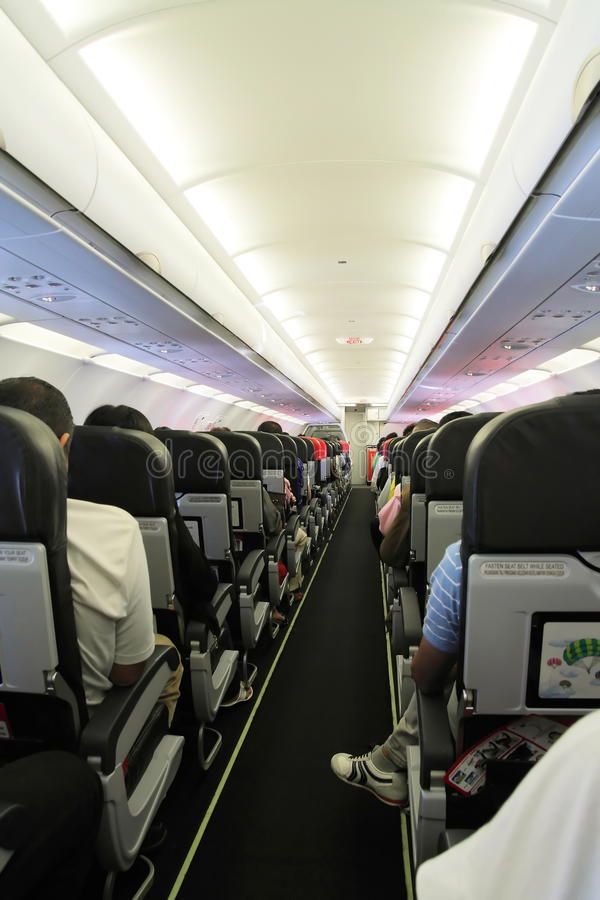
Crying on airplanes

Hanif Abdurraqib’s contribution to Sad Happens, an anthology exploring sadness & tears, edited by Brandon Stosuy

Posted in Books, Public Transport | Tagged | Leave a comment

Autumn is a second spring…

Autumn is a second spring when every leaf is a flower.– ALBERT CAMUS


Whether one calls it Autumn or Fall, the Autumn Equinox is nearly here. Americans can’t agree on much, but most love the seasonal changing of the leaves. Every year when the end of September approaches the 2024 Smoky Mountain Fall Foliage Map launches to show the most northern counties of the United States that will already have begun to notice the colors of the leaves changing.

Every year the website Smoky Mountain releases an interactive Fall Foliage Map, which plots the annual progress of when and where leaves change their colors across the United States. According to the map some northern states will already have begun to notice a change in the colors of leaves.

The Fall Foliage Map uses historical weather records from all 48 continental states to predict the arrival of Fall at the county level across the contiguous United States. The map includes a date control which allows you to view the leaf color you can expect for any date from the beginning of September through to the end of November.

Posted in Maps, Tourism, USA | Tagged , , | Leave a comment