Where in the World is Maardam ?

This post is the first in a series suggested by reader Laura Courier. 

Hakan Nesser

Now that Stieg Larsson’s “Millennium Trilogy” has taken the world by storm, English-speaking readers are finally taking notice of some of Scandinavia’s other stellar authors. Most booklovers are familar with Sweden’s media darling, Henning Mankell, but the world is just warming to the other Nordic bestsellers. 

Håkan Nesser has published twenty wildly successful books in Sweden over the past twenty-two years, but only four have been translated into English so far. These titles are from a ten book series based on Chief Inspector Van Veeteren and his detective squad. The series takes place in an unnamed northern European country that at various times resembles Sweden, Germany, Norway and even the Netherlands. The characters, places and locations switch between Swedish, Dutch and German names.

The action in Nesser’s novels generally centers on the fictitious city of Maardam; a town rife with contemporary European angst that could be just about anywhere north of Brussels. The recurring central character, Chief Inspector Van Veeteren, a lugubrious, philosophical cop, is a cross between Mankell’s unsentimental, depressive Kurt Wallender and Fred Vargas’ quirky, sardonic Commissaire Adamsberg.  

Nesser’s complex characters, economical writing and Hitchcock-ian plots make for intriguing, disconcerting and riveting novels from start to finish. Nesser is a controlled stylist, who manages to unsettle, frustrate, challenge, but still amuse his audience. Fortunately, we will finally see more of his books in translation. Nesser’s latest novel to be published in English, The Inspector and Silence, will be released on July 2nd.

The Inspector and Silence


Posted in Books, Europe | 12 Comments

Why Not Armenia ?

This post was sent to us by Nellie Malkhassyan of Yerevan, Armenia. Nellie is a travel guide, consultant and specialist on Armenian travel and culture. 
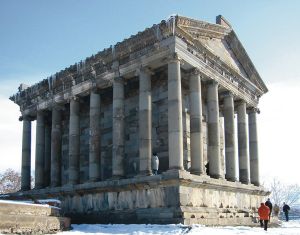
 

Garni

I am pleased to invite you to visit Armenia and discover fully the hidden treasures of my homeland. Armenia has attracted travelers since ancient times. Caravans would travel across the territory of historical Armenia as it was an important part of the Great Silk Route. Many famous travelers, such as Jean Baptist Tavernier, Marco Polo, and others, have portrayed this country in their books depicting its picturesque landscape and the richness of its numerous cultural monuments, covering a wide range of the history of human civilization from Cyclopean fortresses to the times of Urartu and the Pagan era, with its towns built in Hellenistic style to early Christian churches and ecclesiastic universities homed by monasteries. Pages could be written on the long-aged history of Armenia!   

  
Generally, tourists visiting Armenia are excited by its nature and amazed by the results of its “creative work” (pictorial landforms, rock sculptures, waterfalls, etc.) and wish to learn more about the roots of their formation. As a matter of fact, Armenia is one of those few countries that, though small in territory, is notable for its complexity and rich diversity of its geological structures. In a small area, one can observe various signs of active geological processes ever taking place on the Earth and continuing today.    

Among all this diverse Armenian geology are objects that could be assigned to the rank of rarity, and often, unique natural geological monuments are to be found. The agro-biological diversity of wild relatives of plants – cultivated, medicinal, edible, wood, coloring, aromatic, fodder, and many others – including many endemic, relict, and rare species is surprising.    

The people and races that have populated the Armenian highland, whose origin stretches into the unknown millennia of prehistory, have provided the human substance for its culture. Being at the crossroads of Asia and Europe, the country served as a bridge joining both, geographically as well as culturally, Iran and Indo-China with European civilization. Armenia synthesized the best traditions of the arts, music, and architecture from its neighbors and gave them a new interpretation that not only enriched its own cultural heritage but also influenced that of its neighbors. A visit to Armenia will help one to define a new interpretation of east-west cultural interactions.    

Throughout Yerevan alone, there are more than 40 museums and galleries presenting fine arts. Yet the country as a whole is often referred to as an outdoor museum. It has over 4,000 historical monuments, which cover various periods of the country’s development from prehistoric to the Hellenistic era and from the early to medieval Christian era. The stone-carved crosses and cathedrals recall the European Renaissance. Comparisons and discoveries of the arts are a continual delight in this magical country.    

Though distinctive national styles are clear, an Armenian national song can sound to a westerner as hauntingly oriental. In order to understand Armenian musical arts, please visit the House-Museum of the world-reknowned contemporary composer Aram Khachatouryan or go to the Philharmonic Hall, the Chamber Music Hall, or to the Opera and Ballet House while in Yerevan.    

Armenia’s literary and artistic history is studied and exhibited in Matenadaran – the Institute of Ancient Manuscripts in Yerevan, which preserves a unique collection of 14,000 complete manuscripts, fragments, and miniatures (UNESCO World Heritage Site). The oldest parchment manuscript dates back to early 5th c. The majority of manuscripts are research works of ancient scholars on astrology, alchemy, geography, history, medicine, poetry, and the musical arts.    

Looking forward to hearing from you. For more information, email  nellie@seearmenia.net .
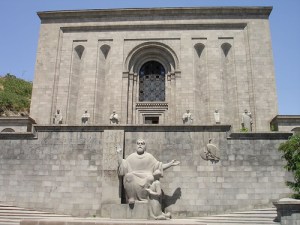
Matenadaran (photo by TigranMets)
Posted in Art, Books, Europe | Tagged , , | 2 Comments

The Mysterious Stieg Larsson


Stieg Larsson only granted one interview about the “Millennium Trilogy” before his untimely death in 2004. Lasse Winkler, editor-in-chief of the of the Swedish book trade magazine Svensk Bokhandel recently reminisced about his singular encounter with the mysterious author and some of the surprises that Larsson revealed.   

Until The Girl With The Dragon Tattoo was published Larsson was widely known as the publisher of the progressive, leftist magazine Expo and as an anti-skinhead campaigner, but few people knew that he had reviewed crime fiction for the Swedish TT News Agency for years. Larsson also collaborated on articles about detective fiction for TT.  

The seeds for the “Millennium Trilogy” were planted at that time, but the real inspiration came when Larsson tried to imagine what the fictional character Pippi Longstocking would be like in the 1990s. He re-imagined Astrid Lungren’s renowned children’s book heroine as a 25 year-old social outcast, stumbling upon the spark that would bring Lisbeth Salander to life. He turned to another Lungren character, Kalle Blomkvist boy detective, as inspiration for Salander’s partner journalist Mikael Blomkvist.

Larsson also revealed that the trilogy was actually intended as a five book series, and that the fourth book was about thirty percent complete at the time of the Winkler interview. He also indicated that he’d keep writing the Salander books as long as people wanted to read them.  

Probably the biggest surprise from the Winkler interview is that the trilogy was initially submitted to the Piratförlaget publishing house, which didn’t even bother to read the manuscripts before rejecting the series. Fortunately for us, a friend of Larsson took the books to Norstedts publishing and the rest is history.

Millennium Trilogy

Posted in Books, Europe, Writing | Tagged | 1 Comment

Joyeaux Anniversaire Rick Steves

Rick in Europe 1973

Original Edition 1980

This month marks the thirtieth anniversary of the first edition of Rick Steves’ budget travel bible, Europe Through the Backdoor. Based on his early backpacking trips through Europe during the 1970s, Rick wrote the first version in 1980 on a rented IBM Selectric and cajoled his roommate into doing the book’s simple illustrations in ballpoint pen. Today, ETBD has become mainstream and has grown to more than 800 pages in the 28th edition. And it has more than fifty companion titles that are perennial bestsellers.

When Rick first wrote ETBD, his “backdoor” style of low budget travel was seen as youthful counter- culture stuff and anathema to the travel industry establishment. Now Rick’s independent, frugal travel style is mainstream and Rick is a beloved American media icon. But Rick still measures each trip by his first European adventure in 1973, when he spent all of $111 on food and $114 on accommodations over a seventy day visit.

I first met Rick twenty years ago in the little Italian village of Varenna. I was on vacation and Rick was diligently updating his Italy guidebook and making sure that standards hadn’t slipped at his recommended hotels and restaurants. We spent the morning hanging-out at a lakeside café sharing travel tips, road stories and espressos. At that time I was still writing my travel guide series and publishing the old-fashioned paper newsletter The European Traveler. Rick graciously plugged the publication in his next newsletter.

Over the years, the hipper-than-thou crowd has often parodied Rick’s PBS shows and his ingenuous style. But Rick is the real deal, who has opened the minds of millions of Americans and encouraged them to get out of their comforts zone and get out and meet the world. So, thanks Rick, and Happy Anniversary.

Posted in Europe, Travel Writing, Writing | Leave a comment

Alone In Berlin (Every Man Dies Alone)

UK Penguin edition

Fear permeates Hans Fallada’s gripping novel Alone In Berlin ( Every Man Dies Alone, US title). Visceral, soul-numbing paranoia and fear suffuses everyday life for the ordinary people who populate this sweeping saga of Nazi Germany during World War II. Rescued from the graveyard of forgotten books, and translated into English for the first time since its publication in 1947, Alone In Berlin is a compelling, unsentimental and authentic depiction of daily life under Nazi rule.

Until quite recently, I purposely put off reading this ambitious literary resurrection. While the reviews have been consistently positive, and even Alan Furst called it “one of the most extraordinary and compelling novels ever written about World War II”, I didn’t think that I had the emotional space for another WW II book. Then I saw the cover quote from Primo Levi: “The greatest book ever written about the German resistance to the Nazis” and, of course, I had to read it.

Without a doubt, Fallada’s epic is a morally powerful, literary triumph and worth the emotional commitment, however, I have some reservations. With apologies to the late Primo Levi and the great Alan Furst, do the ridiculously small acts of defiance (if they even qualify as defiance) portrayed in the novel really have profound meaning in the context of the horror of Nazi atrocities? It’s cold-comfort to consider that the ineffectual, anonymous postcard writing campaign that inspired the book was viewed as a significant anti-Nazi action. Clearly, any resistance to the Nazi regime was heroic, and the personal campaign by Elise and Otto Hampel that inspired Fallada’s book was extraordinary, but the reality is that very few Germans actively opposed the Nazis.

Is all of the attention that has been focused on Alone In Berlin based on the merits of the book as literature? Is it the novelty of its literary resurrection after six decades? Or is it rooted in the disturbing historical revisionism that seems to be clouding the ugly realities of World War II memories?

US edition Melville House

Posted in Books, Europe, History | Tagged | 2 Comments

Listen Up

 The following post was contributed by London based writer Evan Smythe.

A new initiative from a writers’ collective encourages UK writers to pen stories, flash fiction and poetry based on overheard conversations, with the best to be published in an anthology. The Bugged organisers want to stimulate discussion on privacy and creativity in contemporary culture.

Operation Eavesdropping

“Welcome to BUGGED, a fantastic new writing project for summer 2010. This is how it works:

1    On July 1st 2010, go forth and…. eavesdrop! Wherever you are – in the British Museum or Bradford bus station, in your office, the pub, on the train – listen in to conversations and fragments of speech around you. Be discreet. Try not to get punched.

2    Write a new piece of work based on what you hear. We want poems of up to 60 lines, stories up to 1000 words, flash fiction up to 150 words, scripts up to 5 minutes long. Our favourite recent overhearing is ‘I think it was the turtles that did for her eventually.’ Yours may be tragical, farcical, touching or mundane. You don’t have to quote your overhearing directly – it might just be a starting point for your piece.

3 Submit it to us by email after July 1st, and before August 15th. The sooner the better because….

4    …the best incoming work will be posted on this blog. The earlier it arrives, the better chance you have of beating the crowd. Some very fine writers are already sharpening their pencils – see 5, below.

5 The very best of the work submitted will be published in a printed anthology, alongside well-known names like Jenn Ashworth, Ian Marchant and Daljit Nagra. The book will be launched in October at Manchester Literature Festival and Birmingham Book Festival, and you’ll be able to buy it online.

People talk in public….

So clean out your ears and get ready for July 1st. Spread the word so that we have the best pool of writers to draw from. Some of you will write lighter stuff, some will write life-changing material. Some of you have been writing for years; some just started. We are ready for it all.

Join our Facebook Page (Bugged), or follow us on Twitter (as BuggedProject). Get talking to each other. Where are you planning to listen in? What have you heard lately on the bus or in the queue for a coffee? Send us a picture of a good place to eavesdrop – tell us about your funniest or most tragic overhearing – let us know that you’re taking part – and pass on the news to your writing contacts. And keep those overhearings real please. Why make them up when there is so much real-life material?

….and in private!

This is a new kind of writing project. We want to showcase the very best writing, so that established writers can enjoy a new challenge, and new writers can get into print alongside well-known names. But we also want to have fun, and to create a thriving community of writers. Come on in…. and bring your notebook.”

Visit BUGGED for examples from the Bugged Initiative.

Posted in Europe, Writing | Tagged | 2 Comments

Printer’s Row Literary Festival

Many thanks to our Chicago friends for this post.

This week Chicago celebrates the Midwest’s largest literary event of the year. The Chicago Tribune Printer’s Row Literary Festival features author readings, signings, book launches, panel discussions,live music, poetry readings, plays, wine tastings and children’s events all in the heart of America’s second city.

The annual festival, which draws over 125,000 booklovers each June, also has a terrific booksale. More than 200 booksellers from around North America offer antiquarian, secondhand, new and specialty books.

This year’s author line-up includes such luminaries as Sebastian Junger, Audrey Niffenegger, Jennifer Egan, Colson Whitehead,Michael Harvey, Sara Paretsky and the irrepressible Christopher Hitchens.

The festival runs for 2 days from June 12 to 13 and centers on Dearborn and Polk Streets.

Posted in Books, USA | Tagged , , | Leave a comment

Keeping History Alive : D-Day

The following post was provided by photographer Valerie Jardin. It’s an excerpt from her moving photo essay, Keeping History Alive.

It was in July 2009, in the town of St Lô in Normandy, that I met the Carentan Liberty’s Group.  The group was created by local WWII history buffs and collectors. The participants spend several weekends each year reenacting daily scenes of the liberation, mostly concentrating their efforts in the Carentan area. The most unusual characteristic of this group is that it casts entire families. Many young children and their mothers take part in the activities and help keep history alive by sharing stories told by their grandparents and great grandparents who experienced D-Day first-hand in Normandy. The president of the group, Jean-Marie Caillard, indicated to me that, since that part of history is so prevalent in his region, it is of the utmost importance to keep it alive and teach the young generation about the sacrifice of so many who helped liberate France in 1944. The blend of members dressed in US military uniforms and French civilian clothes makes the experience unique and more realistic for the visitor. The Carentan Liberty’s Group is also very eager to show the military equipment used during the reenactments. Its members are very knowledgeable about WWII facts related to the region and beyond. I am particularly sensitive to the work and passion of this group as I am originally from Normandy. My parents, although very young during D-Day on June 6, 1944, still remember the events vividly to this day.

Normandy

June 6

GI

June 6

Fin

For more great photos, please visit Valerie’s website .

Posted in Europe, History, Photography | Tagged , , | Leave a comment

Tunnel Vision

Paris

 The following post was provided by artist Laura Davidson. Her brilliant books can be found in private collections throughout the United States and the world. This year she was invited to participate in the International Biennale for Artist’s Books and as a result her work, 9 cities one artist, will become part of the permanent collection of the Bibliotheca Alexandrina, Alexandria, Egypt.

Santa Croce

On my first trip abroad as a young artist, I fell in love with the idea of traveling from place to place, seeing the art and architecture that I had only experienced in slide form in art history classes and books.  I was dependent on travel guides, not having the Internet at that time to help me choose my destinations. Wandering through flea markets in Paris and Florence, I began to collect old travel guides.  By design, these Baedeker and Blue Guide books were not meant as collectables, but as something to put in your pocket and wander with. I found tattered books with notations, a hand written train schedule and hotel receipt from 1893, dried flowers and various other travel mementos.

Back home in the studio, I wanted to combine my love of travel with the passion I had developed for these books. This led to an ongoing project of creating tunnel books based on my favorite views. For the second and third books in the series, Florence and Paris, I drew directly on guidebook pages. The pages were then scanned, printed and die cut in editions of 500 copies, and each book was assembled by hand.

There are five in my series of tunnel books views so far. The first (sold out) was the view outside my window of Boston’s Big Dig project, called Tunnel Vision. Then I followed with Florence, Paris, Fenway Park, and the newest tunnel book in 2010 is Venice, with a view of Piazza San Marco.

The books can be purchased from me directly by phone or e-mail. Information can be found on my website

Venice

Posted in Art, Books, Europe, Travel Writing, USA | Tagged | 1 Comment

A World Mapped By Stories

Photo by Mariusz Kubik

Controversial author Salman Rushdie spent a decade in hiding after his novel The Satanic Verses resulted in a deadly fatwa from Iranian dictator Khomeini. Now the Indian born novelist is the focus of an extraordinary public multi-media exhibition entitled “A World Mapped by Stories: the Salman Rushdie Archive” at Emory University.

The Atlanta university scored a literary coup in 2006 when it secured Rushdie’s personal archives. The collection includes his journals, manuscripts, first editions, letters, photos and drawings. but what’s truly special about the archive is the inclusion of the author’s digital patrimony: computers (including an early Mac), external hard drives, e-mails and eighteen gigabytes of data.

Emory is presenting a special hybrid exhibition mixing Rushdie’s traditional paper materials and digital archive. This revolutionary show offers a unique view of the writing process through the electronic life of a major figure in world literature. Rushdie’s work weaves together politics, pop culture, mythology, celebrity,religion and old-fashioned story telling.

Visitors to the exhibition have the unique opportunity to emulate the author’s writing process by logging onto his computers and tinkering with his digital manuscripts. But not to worry, this literary graffiti will disappear when you log off.

The show runs through September 26, 2010 at Emory’s Woodruff Library Schatten Gallery. For more information on the exhibition and the Rushdie Archive go to the library’s website .

Courtesy of the Rushdie Archives


Thanks to Atlanta Buzz for the story suggestion.

Posted in Asia, Books, Middle East, USA | Tagged | Leave a comment