Waiting to Work

I was recently surprised to discover a glass enclosure about the size of a large shipping container with mummy-like figures peering out. The installation is situated in Philadelphia’s  Independence Historic National Park, at Market Street between 5th and 6th, near the National Constitution Center and outside the Visitor’s Center.
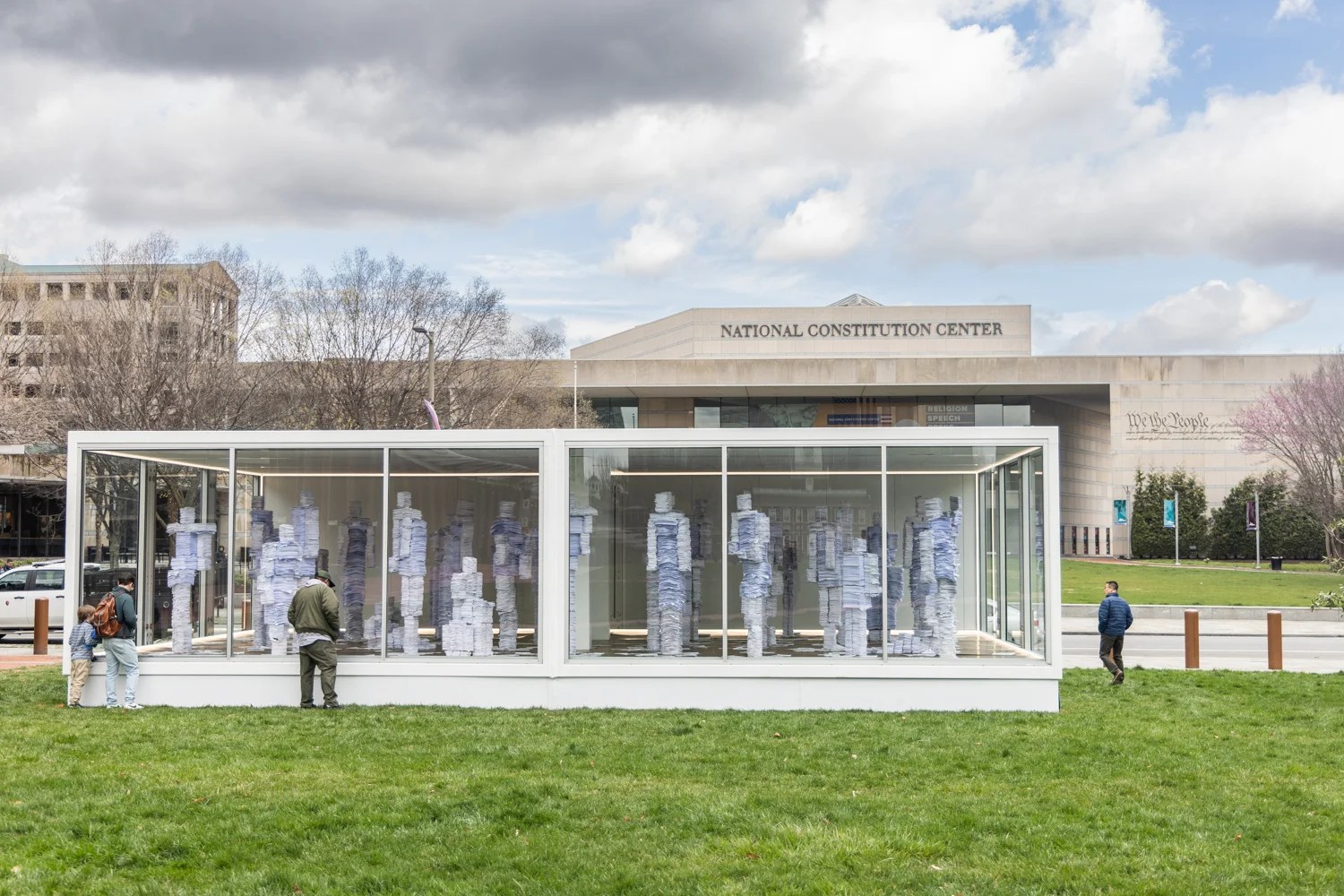
The 38 human-size figures made of stacked paper represent the number of states that do not have legislative policies expediting the expungement of criminal records, or clean slate laws. The stacks of paper symbolize the paperwork needed to get a criminal history erased.
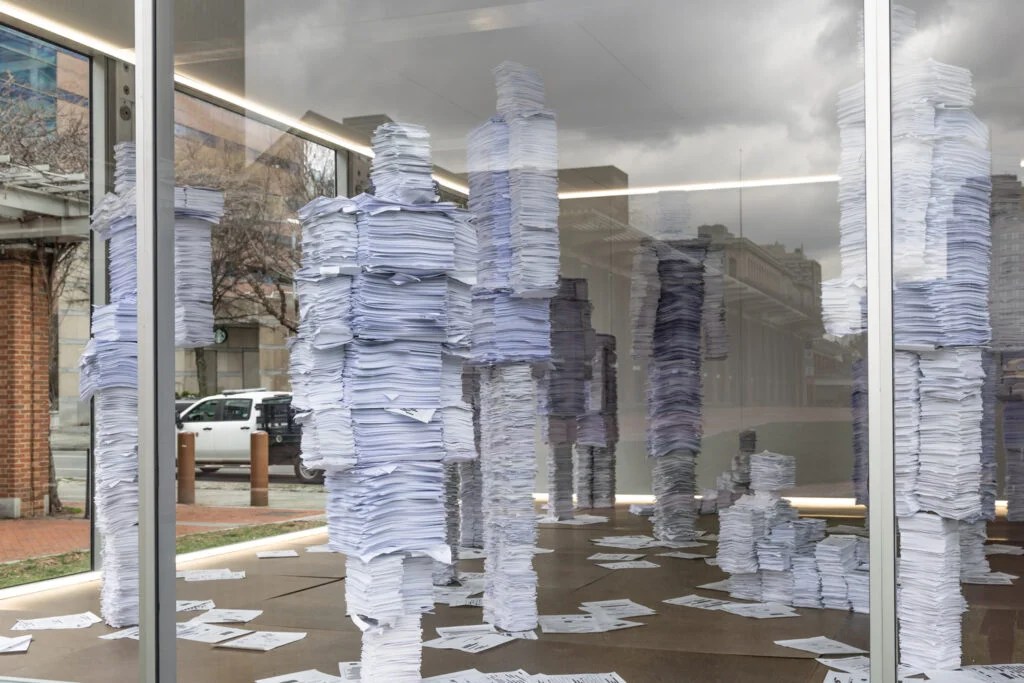
Titled Waiting Workforce, the artwork, which will be up for the next few weeks, was commissioned by JPMorgan Chase and created by Australia-based arts collective The Glue Society. Its goal: to inspire people to fight for Clean Slate laws in their home state.
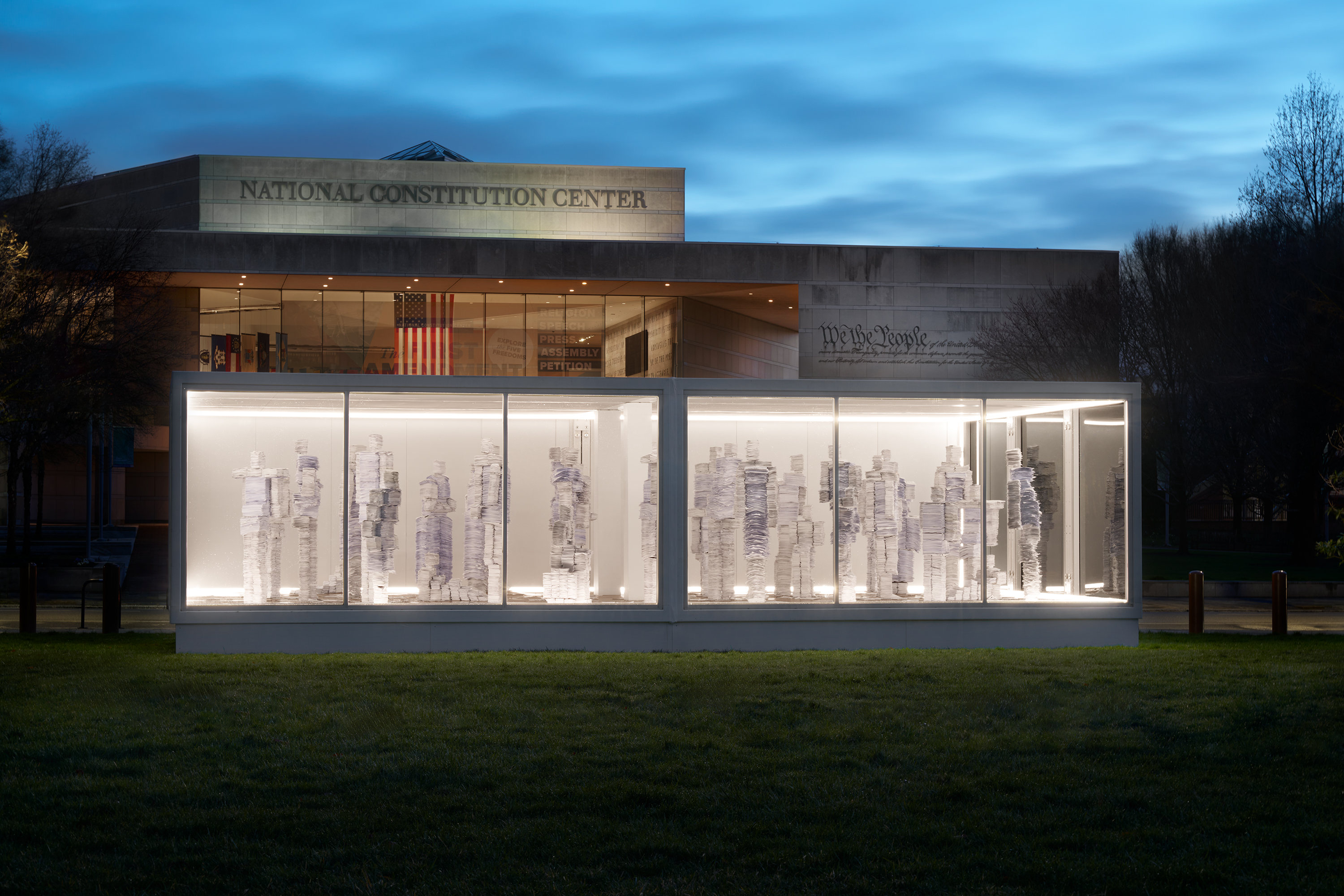
“This represents the mounds and mounds of paper that individuals have to go through in order to get those records expunged,” said Nan Gibson, executive director of the JPMorgan Chase PolicyCenter. “The figures are hunched over. It’s a graphic representation of the weight of those records.

“Waiting Workforce” made its debut in Philadelphia in part because Pennsylvania was the first of 12 states to pass clean slate laws. The laws make record expungement easier, in some cases even automatic, and require no paperwork at all. Recently, Pennsylvania Gov. Josh Shapiro signed a third iteration of that policy into law.

Posted in Architecture, Art, Museums, Tourism, USA | Tagged , , , | 1 Comment

my hope is vertical

TODAY, MY HOPE IS VERTICAL

Jane Hirshfield

Today, my hope is vertical.
Tomorrow it will be horizontal.
The next day, cloudy.
My hope is like a Greek myth:
exchanging skin for bark,
bark for scales,
scales for the hollow bones of a bird.
In these ways my hope
attempts to escape its fate.
In myth, hope surely knows,
escape is useless.
Still, hope will try.
I, who will someday leave behind
this three-dimensioned puzzle,
pity my hope.
Poorling, I say to my hope,
even I cannot spare you,
even I cannot make you mortal.
Winged, rooted, finned,
roofed or roofless,
of all my shapes, only you, hope,
know nothing of irony,
only you cannot be cynical
or cloak yourself
in the objectivity of grammar.
Only you
cannot suffer suffering.
You exempt, you deny,
you protest with speech and with silence.
You forgive—helpless to not—
in speech and in silence.
I, citizen of perspective,
born into the tribe of time,
will vanish into its blurring distance.
But you—most intransigent,
most stubborn of all my parts—
will be forced to continue.
How tenderly, with two open hands,
you reach again today for hunger’s apple

Posted in Books, Writing | Tagged | Leave a comment

Conflict Cartography

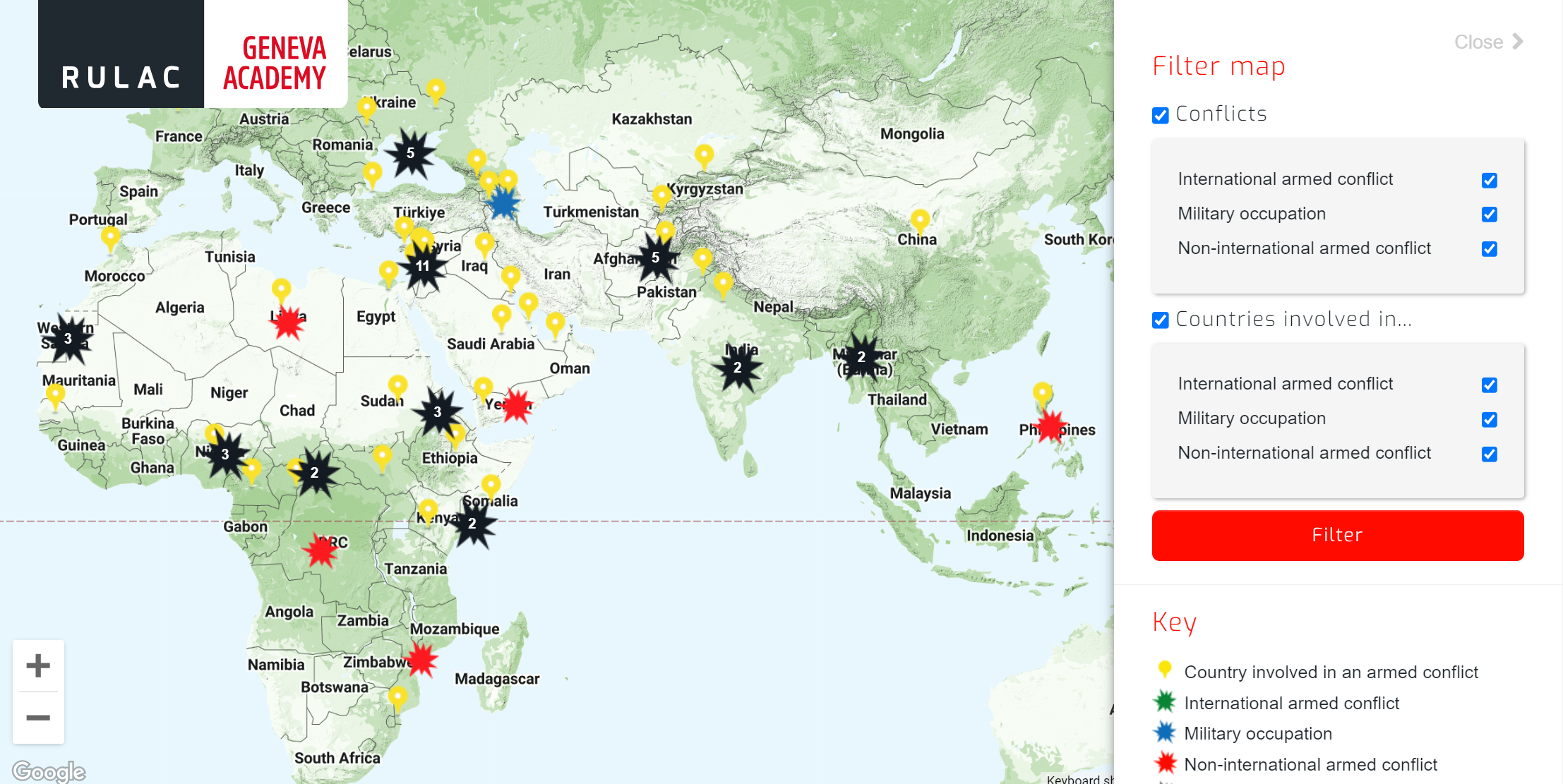
I was recently bemoaning the fact that the main stream media in the United States can’t seem to focus on more than two serious conflicts at the same time, and even then, the coverage is sorely lacking. But I just discovered the excellent website from the Geneva Academy The Rule of Law in Armed Conflict Map that monitors and plots armed conflicts around the globe. The map currently shows the locations of  more than 110 armed conflicts, including the war between Israel and the Palestinian terrorist government in Gaza and the invasion and occupation of parts of Ukraine by Russia.

The Rule of Law in Armed Conflicts (RULAC) online portal has been mapped armed conflicts around the world since 2007. The map currently shows that at least “55 states and more than 70 armed non-State actors” are presently involved in armed conflicts.

If you click on the yellow country markers on the map you can discover which conflicts the selected country is currently involved in. For example if you click on the United States the map reveals that the US is presently involved in “airstrikes in Iraq and Syria” and is “also undertaking strikes against Islamist militants in Somalia, Pakistan, Libya and Yemen.”

Posted in Africa, Europe, History, Maps, Middle East, Tech, USA | Tagged , , , | Leave a comment

New York City is the best movie set in the world

Texas-born filmmaker Jordan Studdard grew up with dreams of living in New York City. Now that he’s been there for seven years, he created an homage to his adopted hometown with a wall-sized map of the city, dotted with tiny lights to mark locations made famous by the movies and TV shows that inspired him. It’s a sweet story.


Posted in Architecture, Art, Film, Maps, movies, Tourism, USA | Tagged , , | Leave a comment

Go To A Happy Place

One Minute Park: I really, really enjoy this pure dead simple website.  One Minute Park couldn’t be more basic – click the link and you get transported to a  full-screen video, in landscape, which lasts for exactly 60 seconds and which presents a delightfully, perfectly chill scene filmed in a local park somewhere in the world. That’s it – after 60 seconds, the scene shifts to another park somewhere else on the planet. No more, no less, just small, evanescent windows into slices of quiet humanity. The first time that I tried it, I was instantly whisked away to Vondel Park in the heart of Amsterdam. Another time, I found myself back in Prospect Park, Brooklyn where I spent many joyful hours as a small child. Give it a spin.


Posted in Architecture, Europe, Film, Tourism, USA | Tagged , , , | 3 Comments

First Impressions

On April 15, 1874, thirty artists, including Edgar Degas, Paul Cezanne, Claude Monet, Berthe Morisot, Camille Pissarro, Pierre Auguste Renoir, and Alfred Sisley, held an exhibition of their works in Paris, at the Boulevard des Capucines, the vacant studio of the photographer Nadar (Gaspard-Félix Tournachon). Having been rejected by the artistic establishment’s Salon, these artists chartered a joint stock company, called the Société Anonyme des Artistes, Peintres, Sculpteurs, Graveurs, etc. The members of the Société Anonyme organized an exhibition of their avant garde works in order to reach a wider audience. The first Impressionist exhibition featured innovations, breaking from the Salon’s method of displaying artworks: instead of crowding several rows of paintings, and relegating the works of new artists near the ceiling, far away from patrons’ eye-level (known as “skying”), the Société Anonyme organizers displayed only two rows of paintings on each wall and gave equal placement to new artists’ works.

The first Impressionist exhibition received mostly negative reviews from contemporary critics. During the mid-19th century, the Western European art establishment preferred strictly representational paintings that depicted historical and religious subjects. The Impressionists broke from the tradition of idealizing their subjects, instead depicting the fleeting moments of everyday life. Unlike establishment painters, who typically painted in their studios, the Impressionists painted outdoors, employing quick, broad brushstrokes, that emphasized the various qualities of sunlight. Notable artworks displayed at the exhibition included Degas’ Dance Class, Cezanne’s Modern Olympia, Monet’s Impression, Sunrise, Renoir’s The Loge and Dancer, Morisot’s Hide-and-Seek, and Pissarro’s Hoarfrost, among others.

For more information on the birth of Impressionism click here.


Posted in Art, Europe, History | Tagged , , , , | 1 Comment

Literacy for Life

The Literacy Pen by The World Literacy Foundation and the Dutch firm Media.Monks is an amazing educational device designed to enable illiterate individuals to start writing and learning to read, instantly. Open source and compatible with all standard pens on the market, it utilizes an innovative method that combines technology with the essential elements of traditional processes. Users only need to connect the device to their pen and speak their desired words into the built-in microphone. The voice dictation technology then accurately transcribes these words onto the digital screen, letter by letter, facilitating direct copying onto paper and enhancing the learning process for all. The device further ensures an effective learning experience by focusing on key aspects of literacy development, such as written and visual repetition. Its compact size, light weight, and ergonomic shape additionally make it accessible and comfortable for users of all ages and abilities, further promoting inclusivity in education.

Nearly 800 million people around the world struggle due to illiteracy. This creates enormous obstacles in daily living and keeps people trapped in poverty. Illiteracy limits participation in communities and the exercise of their rights. Socially, it fosters exclusion and marginalization, hindering full integration into society and equal access to opportunities. These consequences resonate beyond individuals, impacting families, communities, and nations alike, underscoring the urgent need for a new, effective literacy method.


Posted in apps, Books, Tech, Writing | Tagged , , | 2 Comments

Maps, Art and AI

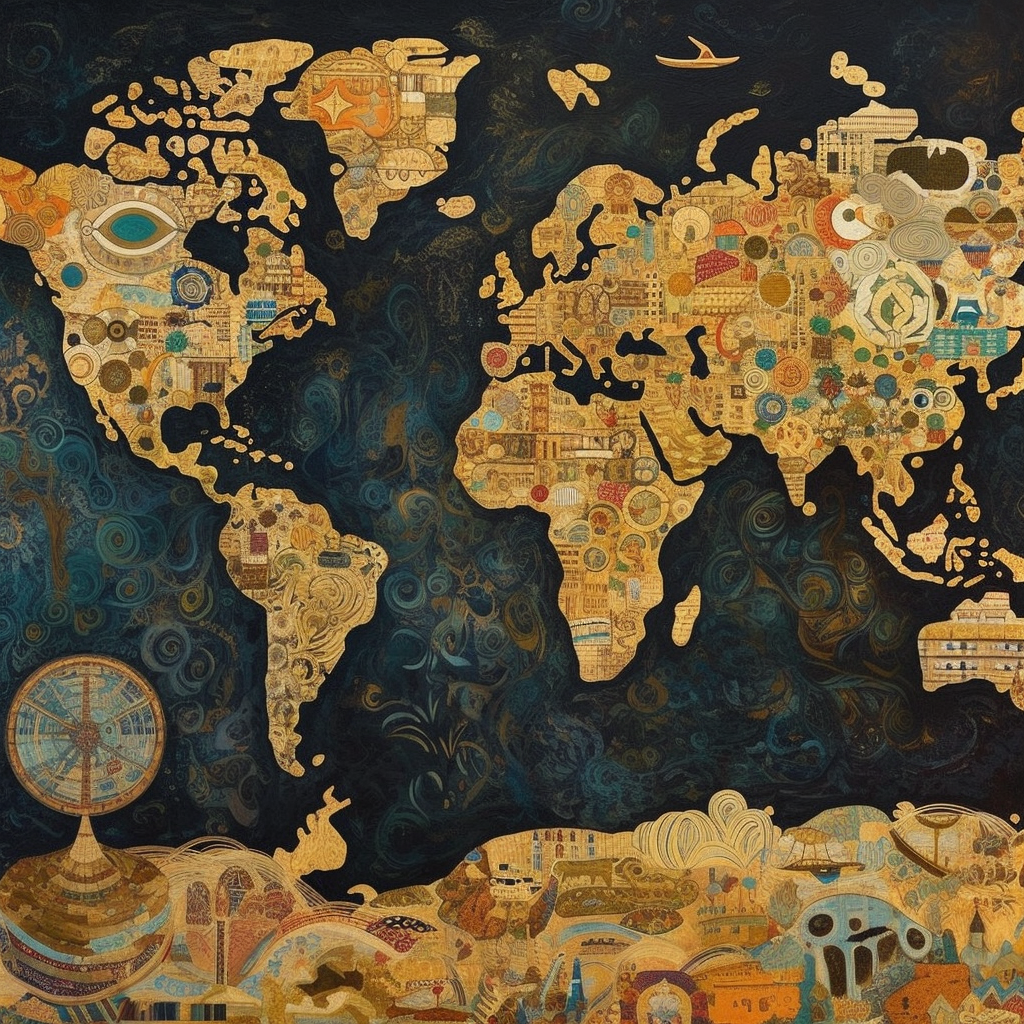
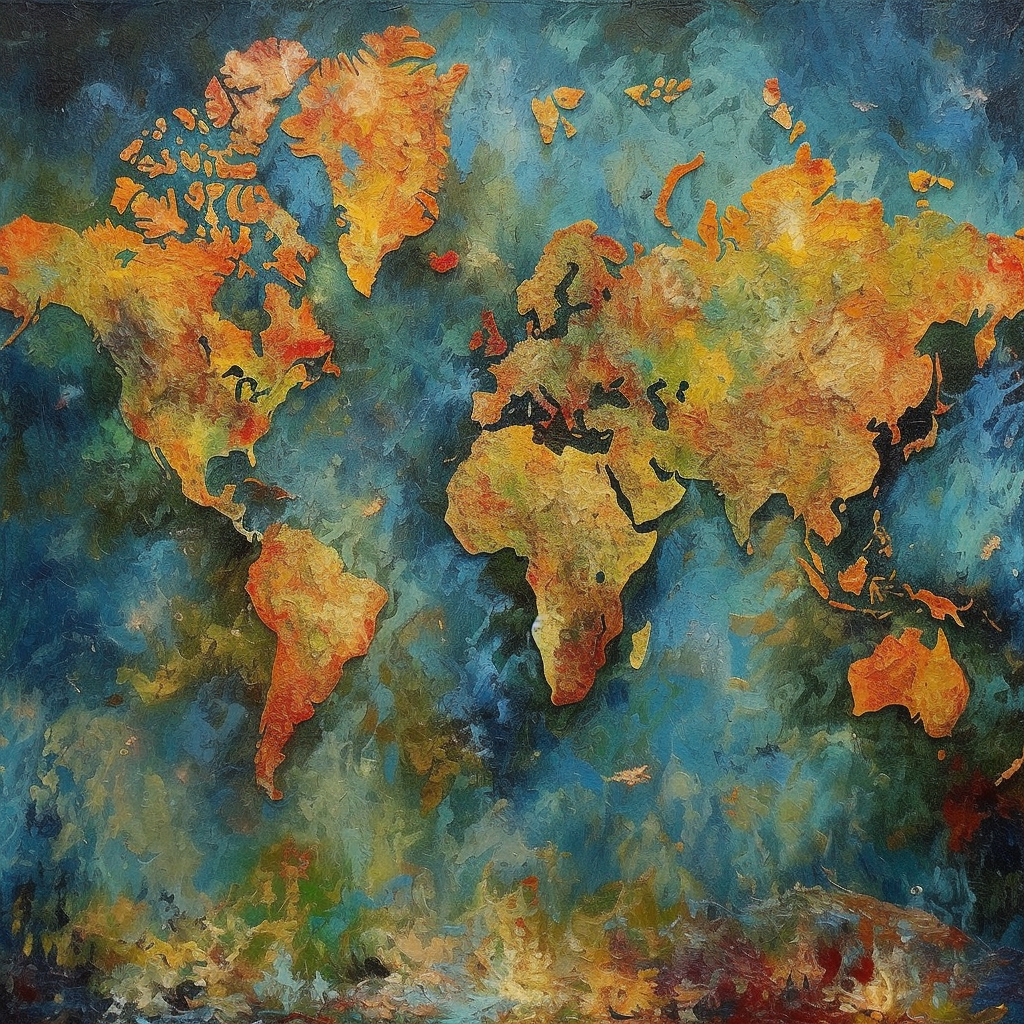
The very clever guys behind the website Brilliant Maps have utilized artificial intelligence programming to conjure up some quite interesting maps based on the painting styles of some great artists. You can see the results on their website and on YouTube in the neat little video below.


Posted in Animation, Art, Film, Maps | Tagged , , , , | 1 Comment

Speaking Of


Posted in Asia, Europe, USA, Writing | Tagged , , , | 3 Comments

Smoke Signals

 Mt.Etna‘s Southeast Crater has begun emitting countless graceful vapor rings (“volcanic vortex rings”), a phenomenon never seen like this before. Someone said “maybe because we receive so much bad news lately, Etna has decided to do something simply beautiful”.


Posted in Europe, Film, Tourism | Tagged , , | 3 Comments