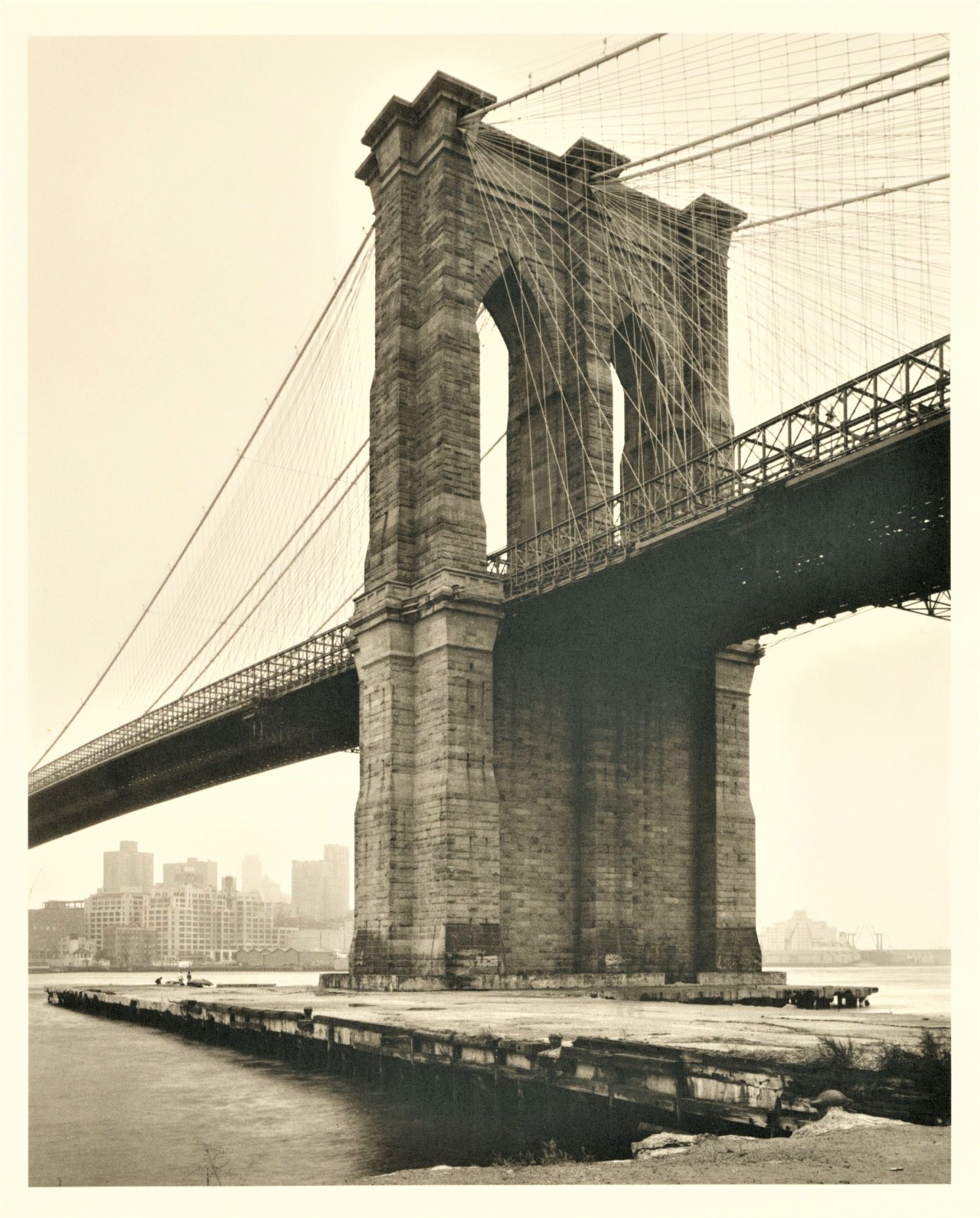
Would you like to buy a bridge

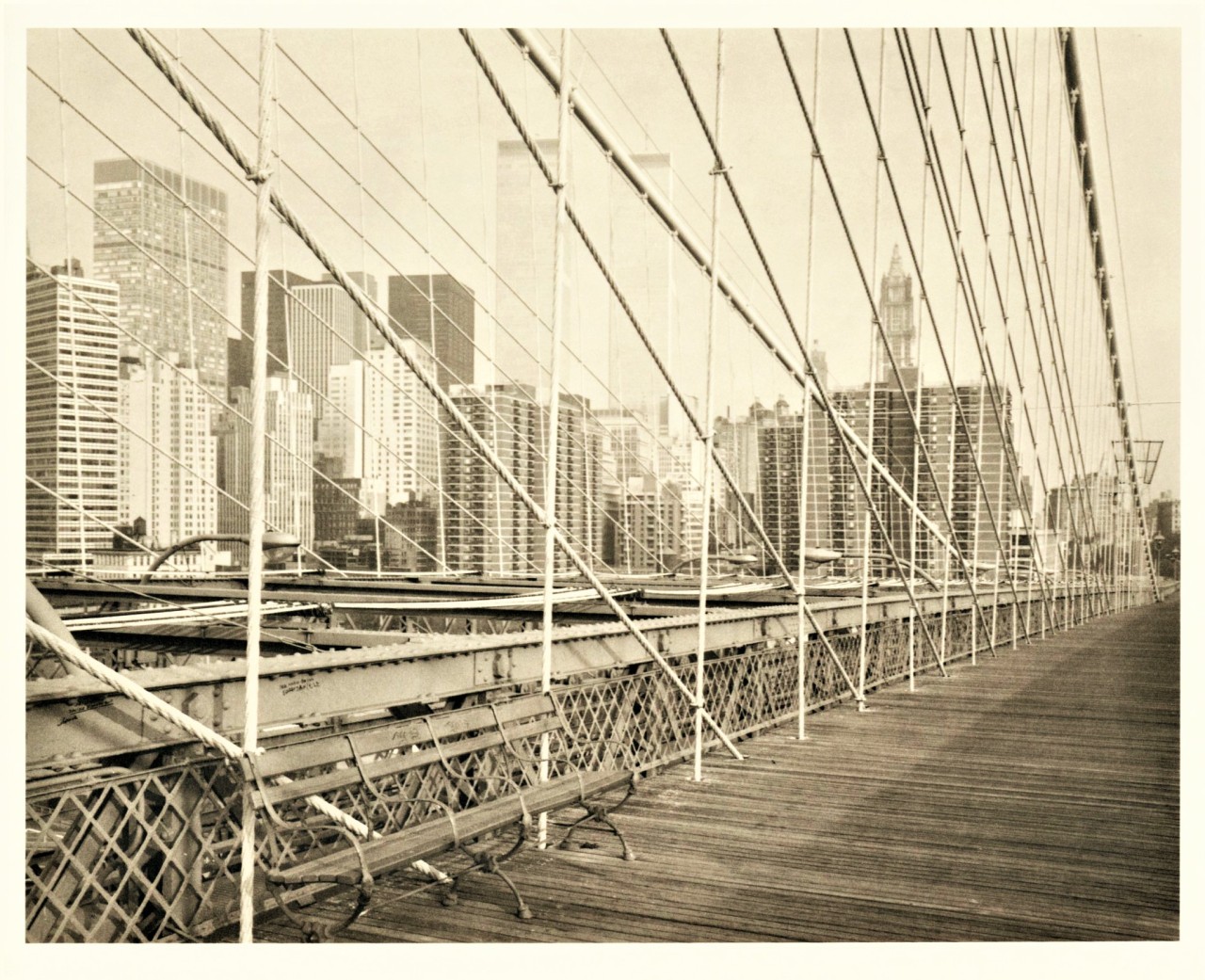
I’ve recently been watching a period drama series set in New York City during the early 1880s. A number of episodes feature story lines about the building of the world famous Brooklyn Bridge which officially opened on May 24, 1883. At the time of the bridge’s construction, it spanned the East River linking the separate cities of New York and Brooklyn.

The show reminded me of a wonderful book that I sold many years ago titled The Bridge A Poem by Hart Crane. Illustrated with photographs by Richard Benson, it was printed in 1981 for the members of The Limited Editions Club in New York in an edition of 2000 copies signed by the photographer.

This book featured bright blue paste papers wrapping the box and making up the end sheets in the book. The papers are reproductions of the originals made by Carol Blinn. Paste papers are made by mixing pigment with a starch to create a paste that can be painted on a paper to decorate it, the paste mixture allows the pigment to be manipulated, moving it with different tools until the desired effect is created. The artwork suggests a body of rolling waves under blue sky.
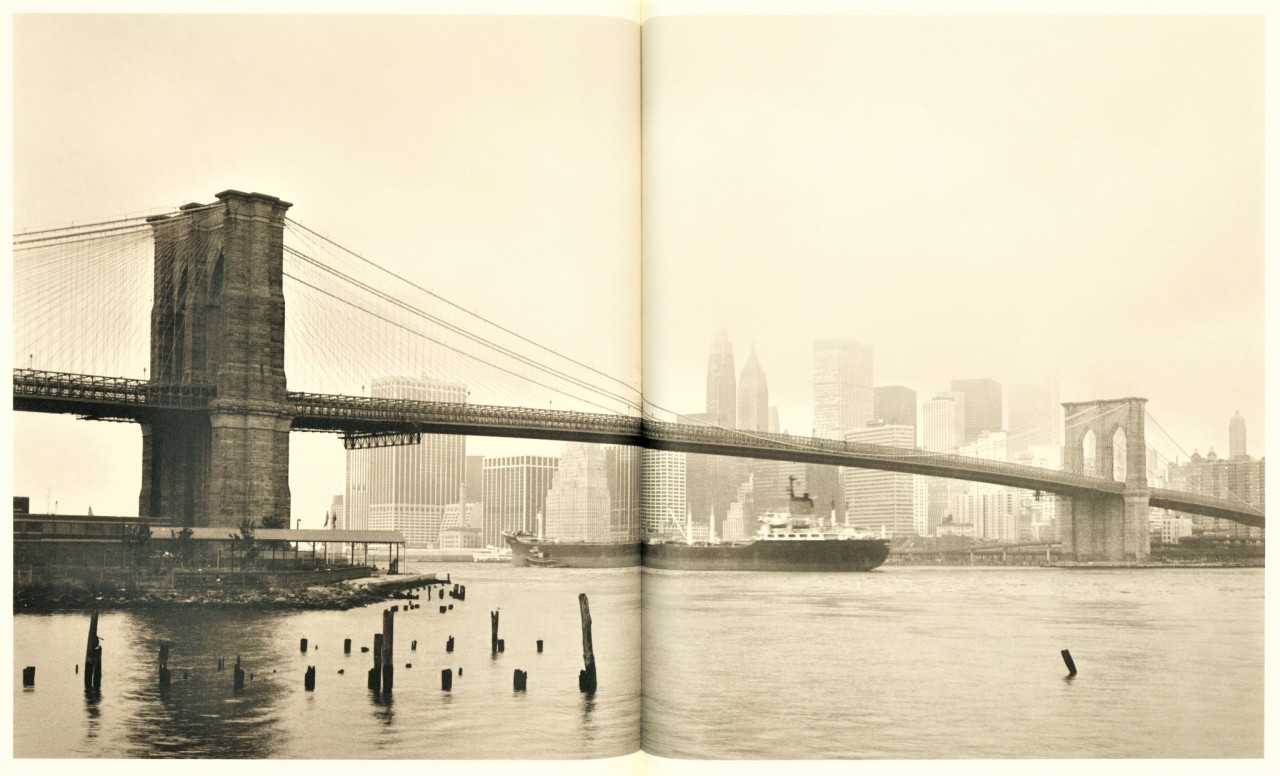
This edition maintains many of the visual themes of the first edition of The Bridge, first published in 1930 by the Black Sun Press, which is wrapped in a blue paper cover and features photos of the bridge by Crane’s friend Walker Evans.


Posted in Architecture, Art, Books, History, Photography, Public Transport, USA, Writing | Tagged , , , , | Leave a comment

I think I could turn and live with animals

Song of Myself, 32

Walt Whitman

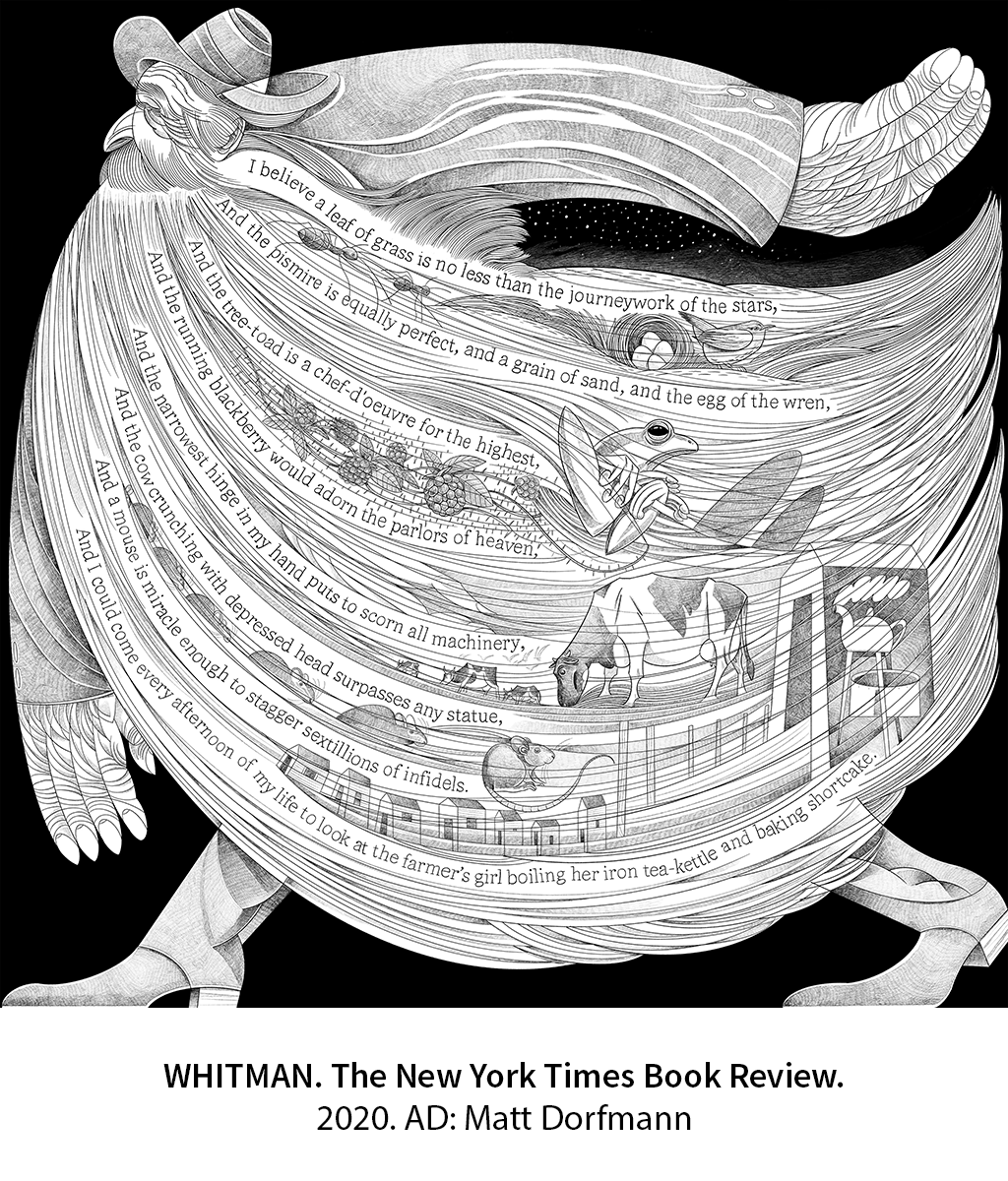
I think I could turn and live with animals, they are so placid and self-contain'd,
I stand and look at them long and long.

They do not sweat and whine about their condition,
They do not lie awake in the dark and weep for their sins,
They do not make me sick discussing their duty to God,
Not one is dissatisfied, not one is demented with the mania of owning things,
Not one kneels to another, nor to his kind that lived thousands of years ago,
Not one is respectable or unhappy over the whole earth.

So they show their relations to me and I accept them,
They bring me tokens of myself, they evince them plainly in their possession.

I wonder where they get those tokens,
Did I pass that way huge times ago and negligently drop them?
Myself moving forward then and now and forever,
Gathering and showing more always and with velocity,
Infinite and omnigenous, and the like of these among them,
Not too exclusive toward the reachers of my remembrancers,
Picking out here one that I love, and now go with him on brotherly terms.

A gigantic beauty of a stallion, fresh and responsive to my caresses,
Head high in the forehead, wide between the ears,
Limbs glossy and supple, tail dusting the ground,
Eyes full of sparkling wickedness, ears finely cut, flexibly moving.

His nostrils dilate as my heels embrace him,
His well-built limbs tremble with pleasure as we race around and return.

I but use you a minute, then I resign you, stallion,
Why do I need your paces when I myself out-gallop them?
Even as I stand or sit passing faster than you.
Posted in Books, USA, Writing | Tagged , , | Leave a comment

How Random Is That

In 1927, the publisher of Paris-Soir  newspaper hired the prolific novelist Georges Simenon to become an advertising attraction. They had a glass booth constructed in the lobby of the newspaper where Simenon, under eyes of the public, was to write a novel over the course of three days and nights. But on the eve of the event, the newspaper went bankrupt.

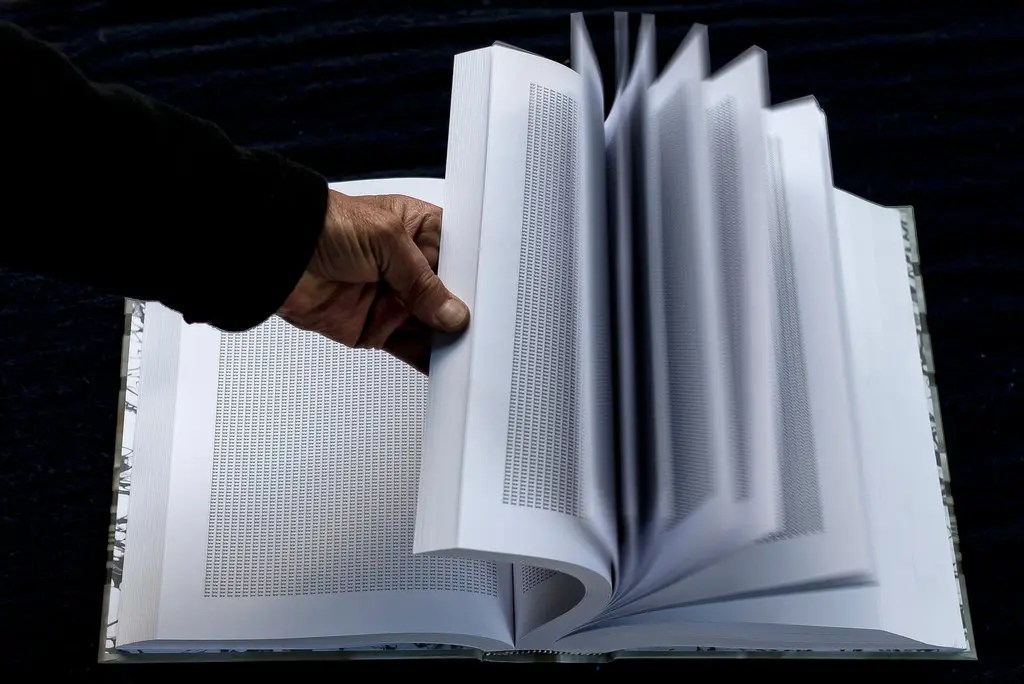
More art than literature, the book “And Every Single One Was Someone” consists of the single word “Jew,” in tiny type, printed six million times to signify the number of Jews killed during the Holocaust. | NY Times | Continue reading

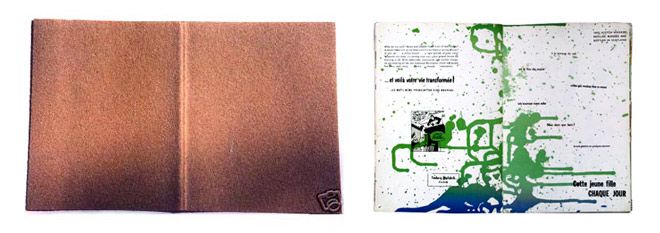
French philosopher, critic, and filmmaker Guy Debord’s first book, Mémoires, was bound with a sandpaper cover so that it would destroy other books placed next to it. Mémoires was written by Guy Debord and Asger Jorn in 1957. Debord himself often referred to Mémoires as an anti-book. The text is entirely composed of fragments taken from other texts: photographs, advertisements, comic strips, poetry, novels, philosophy, pornography, architectural diagrams, newspapers, military histories, wood block engravings, travel books, etc. Each page presents a collage of such materials connected or effaced by Jorn’s structures portantes, lines or amorphous painted shapes that mediate the relationships between the fragments.

Edgar Allan Poe lived at 35 different addresses in his 40 years. The orphaned son of itinerant actors, he never truly belonged anywhere. Taken in but not adopted by foster parents in Richmond, Poe lived in England, Charlottesville, Old Point Comfort, Sullivan’s Island, West Point, and then Baltimore, Richmond again, Philadelphia, New York City, Richmond again, and then finally in Baltimore, where he died on his way to New York. He searched for ways to make a living with his pen and to protect the health of his fragile young wife, purposes often at odds with one another.

EVERYBODY KNOWS STOCKHOLM SYNDROME, WHEN hostages develop an attachment to their captors. But who knows its two opposites? Lima Syndrome is when the hostage takers start sympathizing with the hostages. And London Syndrome is when hostages become argumentative toward their captors—often with deadly results.” 10 Cities With Their Own Psychological Disorders


Posted in Art, Books, Europe, History, Tourism, USA, Writing | Tagged , , , | Leave a comment

“Hope”

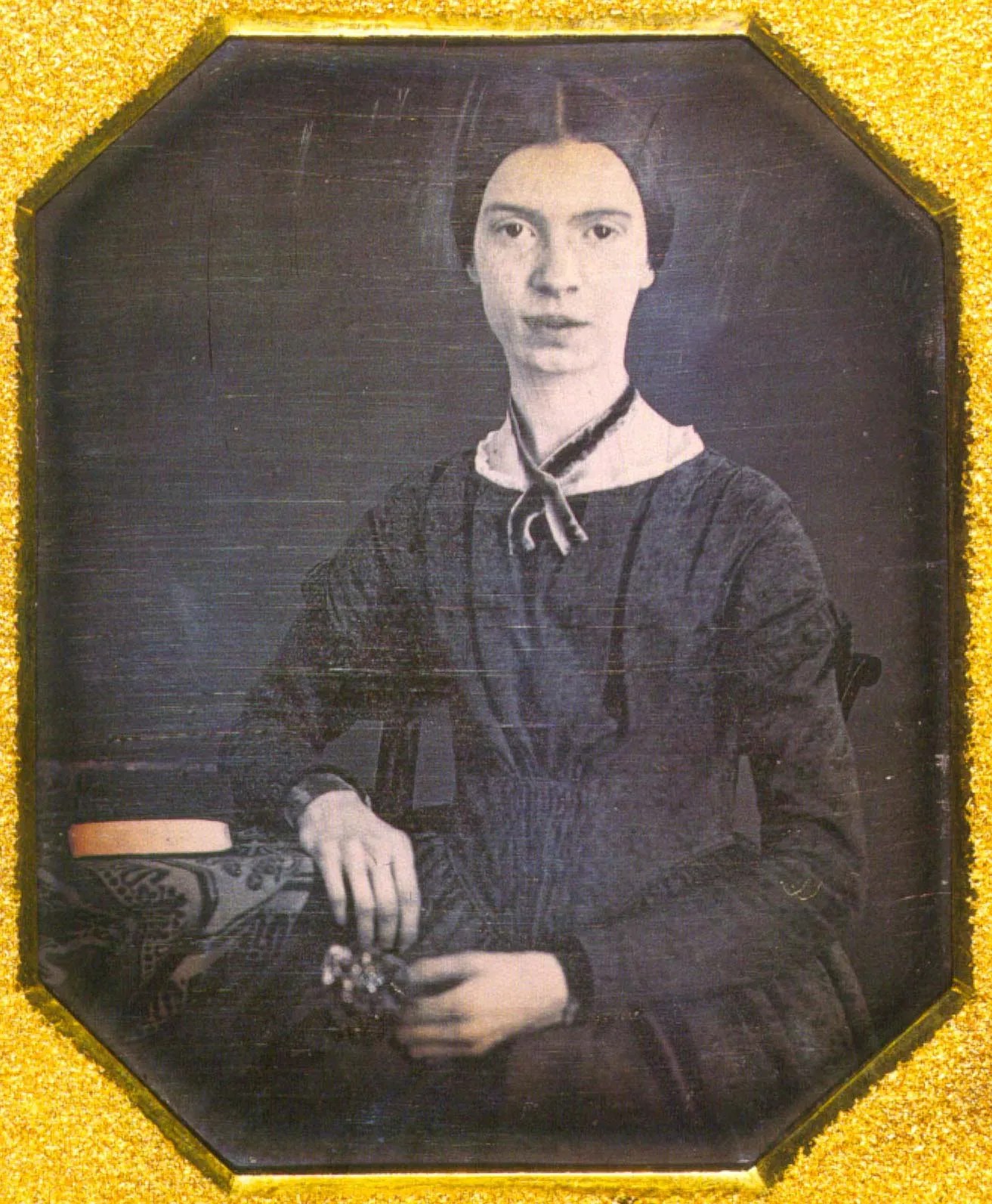
 Happy Birthday Emily Dickinson


“Hope” is the thing with feathers

BY EMILY DICKINSON
“Hope” is the thing with feathers –
That perches in the soul –
And sings the tune without the words –
And never stops – at all –
And sweetest – in the Gale – is heard –
And sore must be the storm –
That could abash the little Bird
That kept so many warm –
I’ve heard it in the chillest land –
And on the strangest Sea –
Yet – never – in Extremity,
It asked a crumb – of me.
Posted in Books, USA, Writing | Tagged , , | Leave a comment

Last Lines

He loved Big Brother. –George Orwell, 1984 (1949)
Before reaching the final line, however, he had already understood that he would never leave that room, for it was foreseen that the city of mirrors (or mirages) would be wiped out by the wind and exiled from the memory of men at the precise moment when Aureliano Babilonia would finish deciphering the parchments, and that everything written on them was unrepeatable since time immemorial and forever more, because races condemned to one hundred years of solitude did not have a second opportunity on earth. –Gabriel García Márquez, One Hundred Years of Solitude (1967; trans. Gregory Rabassa)
He was soon borne away by the waves and lost in darkness and distance. –Mary Shelley, Frankenstein (1818)
But I reckon I got to light out for the Territory ahead of the rest, because Aunt Sally she’s going to adopt me and sivilize me and I can’t stand it. I been there before. –Mark Twain, The Adventures of Huckleberry Finn (1885)
The old man was dreaming about the lions. –Ernest Hemingway, The Old Man and the Sea (1952)
He knew what those jubilant crowds did not know but could have learned from books: that the plague bacillus never dies or disappears for good; that it can lie dormant for years and years in furniture and linen-chests; that it bides its time in bedrooms, cellars, trunks, and bookshelves; and that perhaps the day would come when, for the bane and the enlightening of men, it would rouse up its rats again and send them forth to die in a happy city. –Albert Camus, The Plague (1947; trans. Stuart Gilbert)
‘It is a far, far better thing that I do, than I have ever done; it is a far, far better rest that I go to than I have ever known.’ –Charles Dickens, A Tale of Two Cities (1859)
The creatures outside looked from pig to man, and from man to pig, and from pig to man again; but already it was impossible to say which was which. –George Orwell, Animal Farm (1945)
“Tomorrow, I’ll think of some way to get him back. After all, tomorrow is another day.” –Margaret Mitchell, Gone with the Wind (1936)
Posted in Books, Writing | Tagged , , , | 1 Comment

Huxley feared that what we love will ruin us.


“What Orwell feared were those who would ban books. What Huxley feared was that there would be no reason to ban a book, for there would be no one who wanted to read one. Orwell feared those who would deprive us of information. Huxley feared those who would give us so much that we would be reduced to passivity and egoism. Orwell feared that the truth would be concealed from us. Huxley feared the truth would be drowned in a sea of irrelevance. Orwell feared we would become a captive culture. Huxley feared we would become a trivial culture, preoccupied with some equivalent of the feelies, the orgy porgy, and the centrifugal bumblepuppy. As Huxley remarked in Brave New World Revisited, the civil libertarians and rationalists who are ever on the alert to oppose tyranny “failed to take into account man’s almost infinite appetite for distractions.” “In 1984”, Huxley added, “people are controlled by inflicting pain. In Brave New World, they are controlled by inflicting pleasure.” In short, Orwell feared that what we hate will ruin us. Huxley feared that what we love will ruin us.”

Neil Postman


Posted in Books, Writing | Tagged , , , | Leave a comment

Bookshops come in all sizes

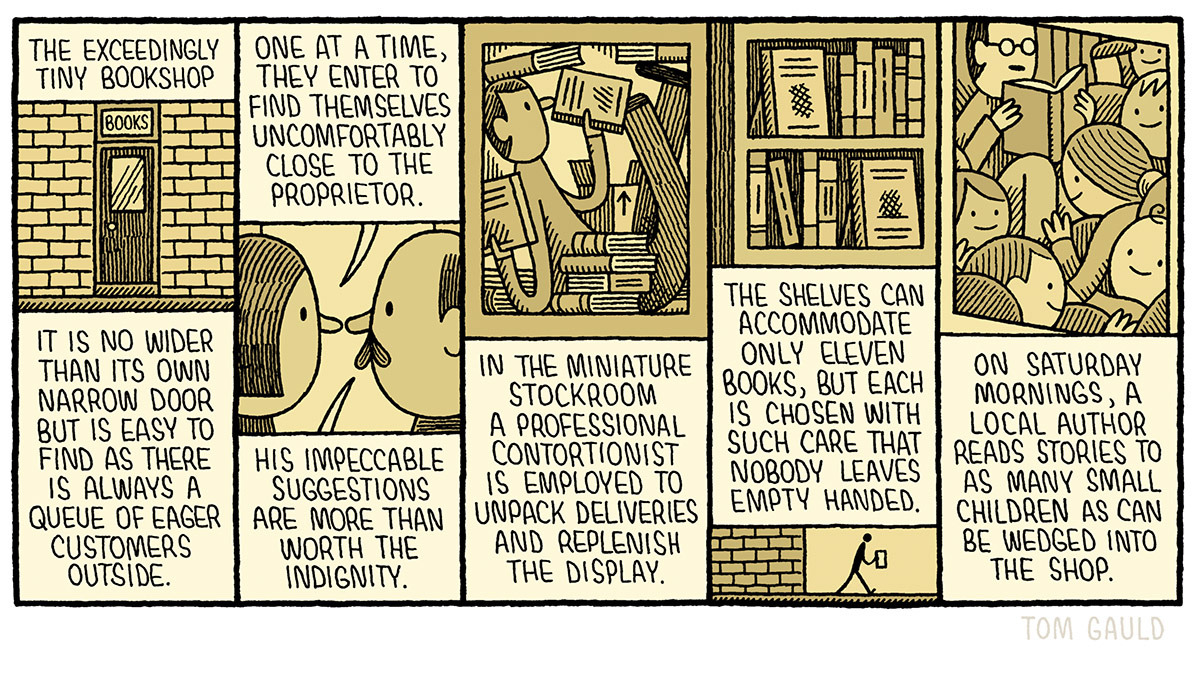
A few years ago I posted a story about the smallest indie bookshop in New Zealand, which is most definitely the littlest bookstore that I’ve ever found. You can revisit The Twizel Bookshop right here. But ‘The Exceedingly Tiny Bookshop’ featured in Tom Gauld’s cartoon for Guardian Books occupies record territory for small bookstores anywhere.


Posted in Art, Books, Bookstore Tourism | Tagged , , , , | Leave a comment

Atop NYC

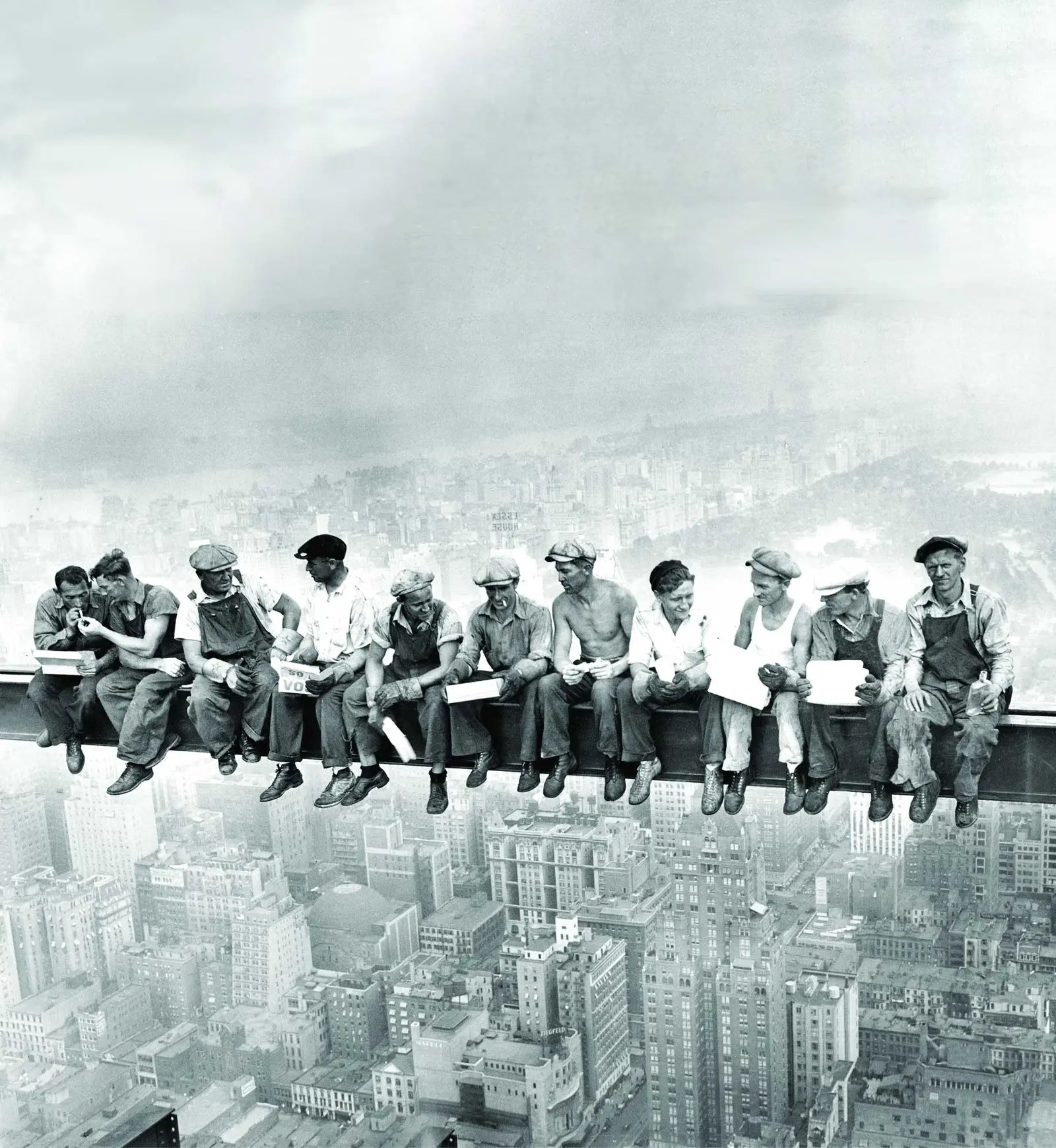
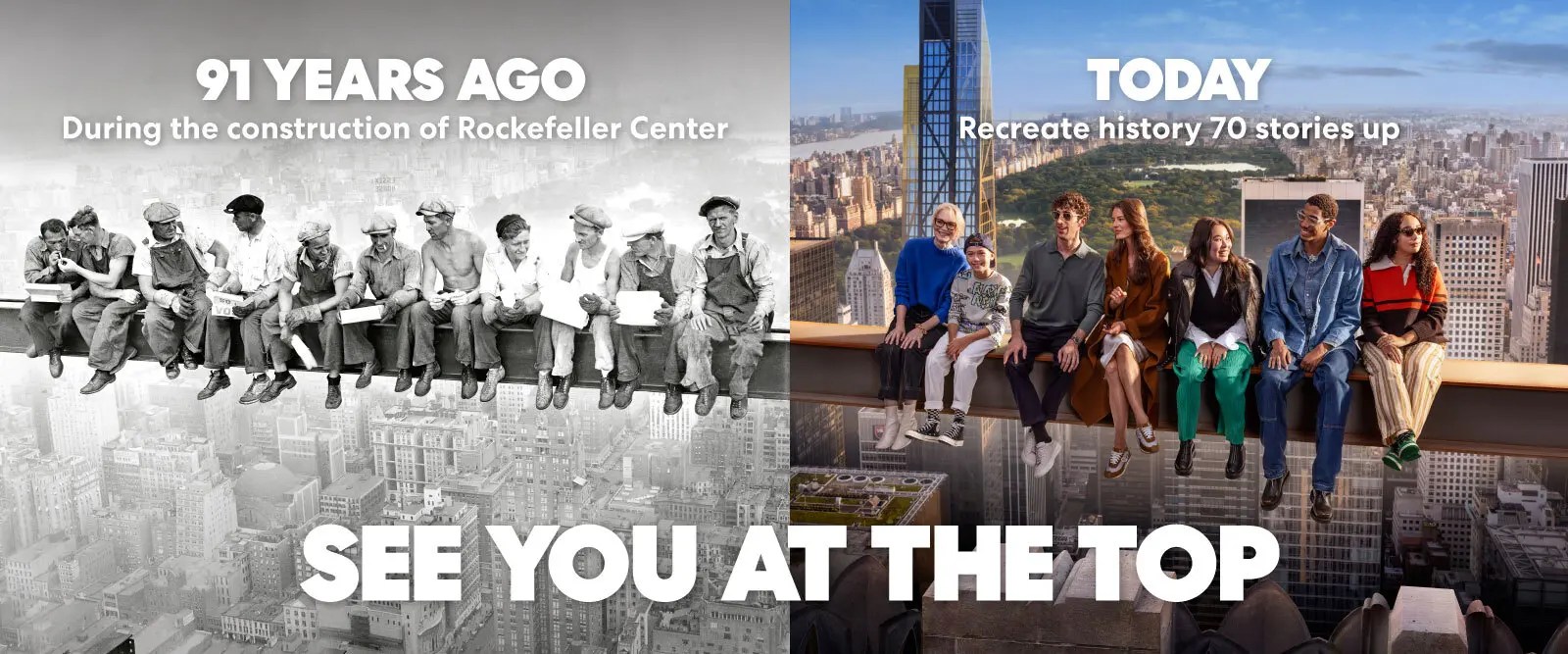
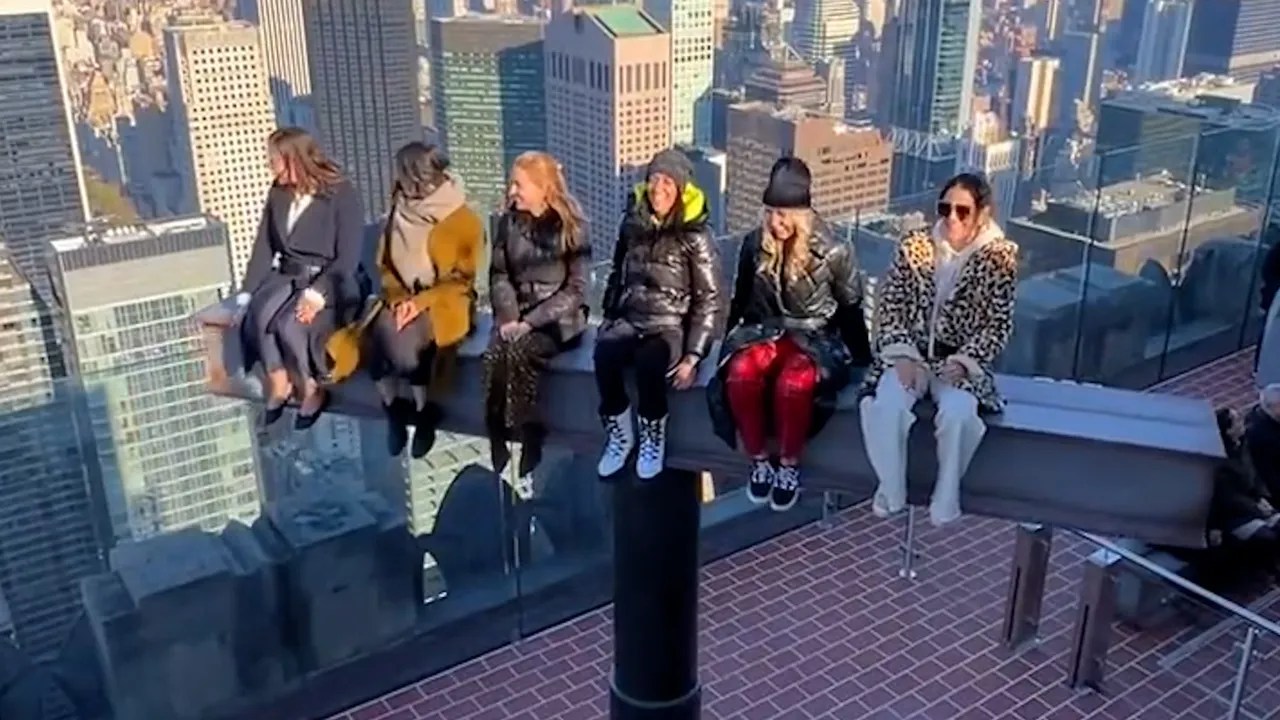
New York City’s famous Rockefeller Center is taking tourism to new heights. They’ve just launched a new, immersive experience called “The Beam” which offers  visitors the chance to recreate the iconic “Lunch atop a Skyscraper” picture that was taken in 1932.

The original photo featured eleven ironworkers eating their lunch on a steel beam hundreds of feet above the ground, during construction of what is now 30 Rockefeller Plaza.While many people assume the photo was a candid shot, it was actually a publicity stunt.

Set outdoors, on the 69th floor of 30 Rock. The Beam lifts people 12 feet above the observation deck and spins 180 degrees to give an unobstructed view of Central Park and the New York City skyline.

The ride lasts less than two minutes, and unlike the workers in the iconic photograph, visitors to The Beam are secured down with seatbelts.

“The idea of creating The Beam so that people could feel directly connected to that iconic photo really appealed to us,” said EB Kelly, the head of Rockefeller Center.

Tickets to the Top of the Rock start at $40 for adults; admission to The Beam is an additional $25. For more information visit here.


Posted in Architecture, Photography, Tourism | Tagged , , | 2 Comments

Where comedy meets geography

It’s always a treat when two of one’s interests intersect. In my case, I’m a huge comedy fan and a big old geography nerd. So I was happy to recently discover that Geographical magazine has a profile of the Map Men—that is, Jay Foreman and Mark Cooper-Jones, who’ve been posting funny videos on YouTube that explain some cartographical or geographical silliness since 2016, on and off.

‘As little as ten years ago, maps were something that you just had to live with and everybody had an A-to-Z in the car,’ says Jay, who is the main comedic influence behind the channel, having already found success with a series on London’s architecture called Unfinished London. ‘But now that everyone has a sat nav, I think maps have become, for want of a better word, more geeky. You get people who didn’t realise that they were interested in maps or geography until they see an episode of Map Men and they’ll say: “Oh, yeah, maps are my guilty pleasure.” And I don’t think people would have necessarily talked like that about maps ten years ago, because they used to be something that we depended on. And now they have become something that we enjoy.’


Posted in Maps, Public Transport, Tech, Travel Writing | Tagged , , | Leave a comment

Thank a pirate for guacamole

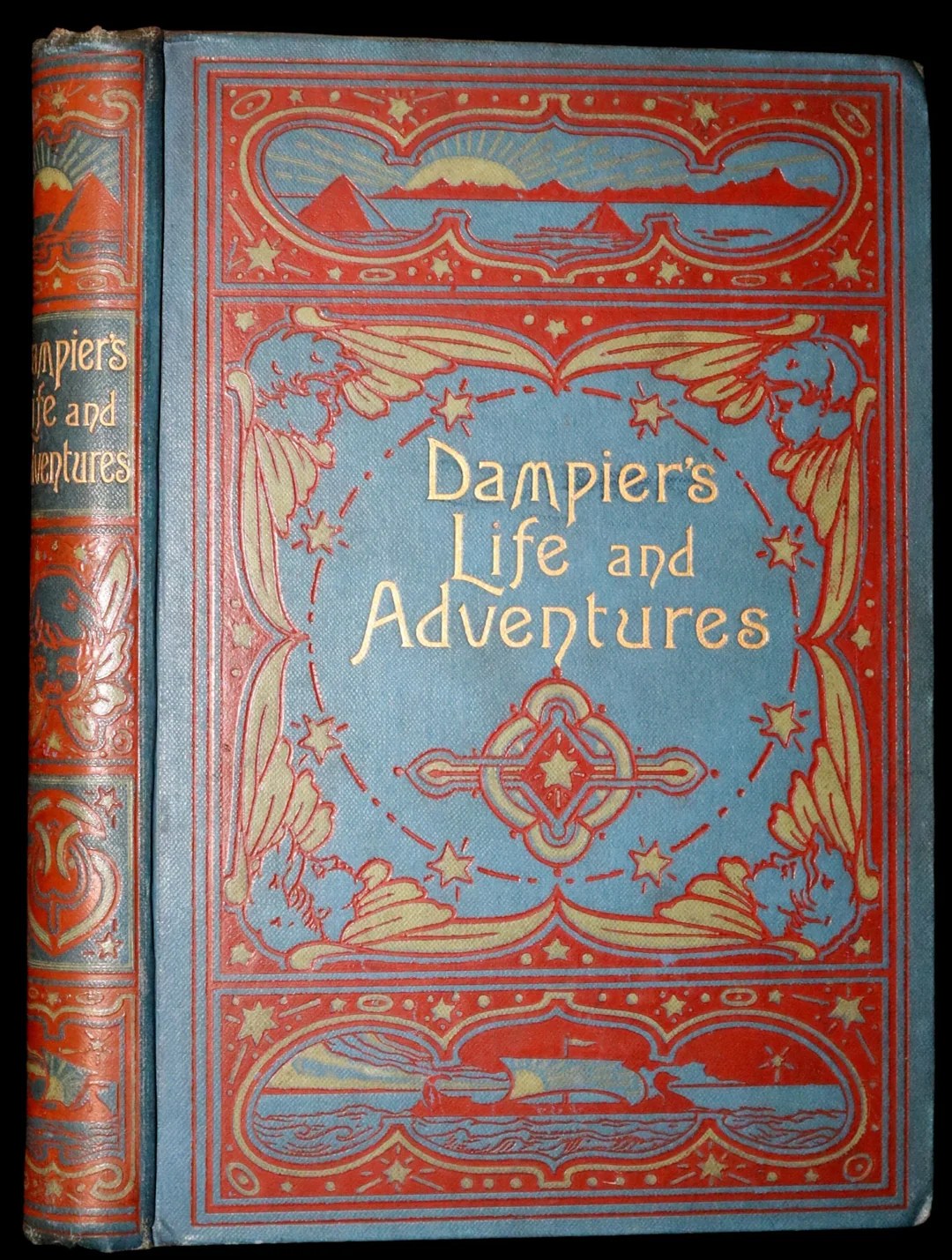
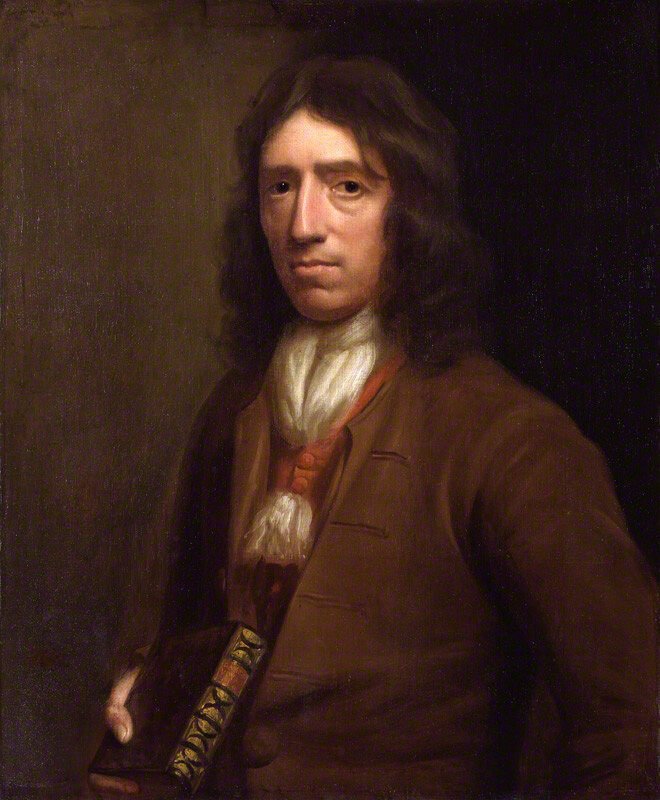
Born in England in 1651, William Dampier embarked on a life of piracy in 1679 in Mexico’s Bay of Campeche after a number of unsuccessful early jobs. He changed his fortunes by joining the rapidly growing field of high seas raiding and pillaging. But along with his busy career in piracy, Dampier was also an avid diarist. He kept a journal wrapped in a wax-sealed bamboo tube throughout his journeys. During a prison stay in Spain during 1694, Dampier turned his journal into a novel that became a bestseller and an early travelogue.

A New Voyage Around the World reads like an episode of No Reservations, with Dampier playing a 17th century Anthony Bourdain. Along with his writing about piracy, he also ventured into meteorology, maritime navigation, and zoology. Food was also an important focus of Dampier’s attention. He frequently documented the eating habits of locals he observed on his voyages around the world.

The English speaking world can thank Dampier for the words “tortilla,” “soy sauce,” “barbecue” and “breadfruit,” and the first ever recipe for guacamole. In A New Voyage Around the World Damier wrote of a fruit “as big as a large lemon … [with] skin [like] black bark, and pretty smooth.” Lacking distinct flavor, he wrote, the ripened fruit was “mixed with sugar and lime juice and beaten together [on] a plate.” This was likely the English language’s very first recipe for guacamole.

In the years after its its publication, A New Voyage became an international bestseller, earning Dampier wealth and fame. The book created a renewed interest among European audiences for travel writing. It also inspired Defoe’s Robinson Crusoe and Swift’s Gulliver’s Travels. Charles Darwin brought a copy of A New Voyage with him aboard the Beagle’s voyage to South America, having cited the book as a “mine of information.”

Sadly, Dampier died in debt due to legal problems. But the next time you enjoy some guacamole and chips, pause to remember Dampier’s contributions to our eclectic menus.


Posted in Books, Europe, History, Maps, Restaurants, South America, Tourism, Travel Writing | Tagged , , , , | 1 Comment