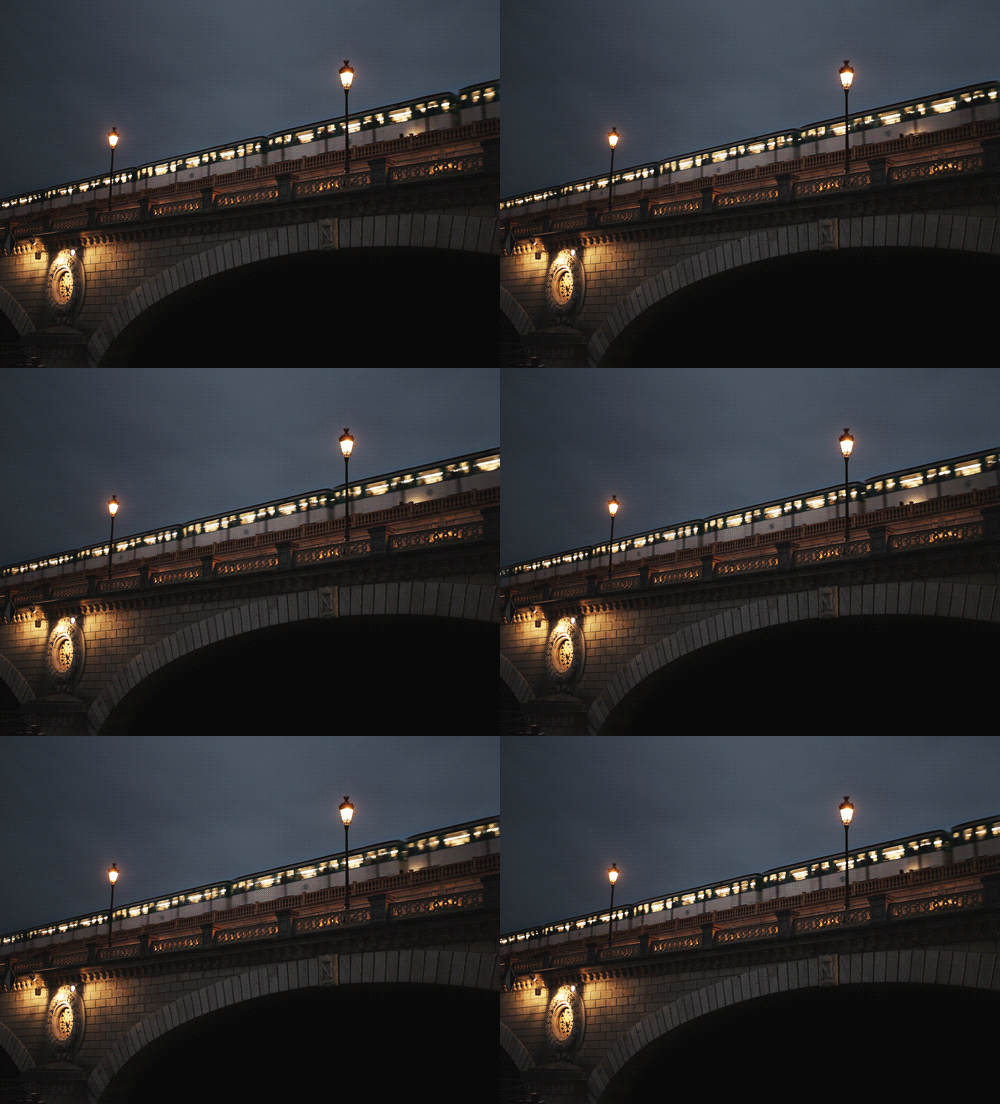
And so much satisfaction when a train goes by.

Living at the End of Time
–Robert Bly
There is so much sweetness in children’s voices,
And so much discontent at the end of day,
And so much satisfaction when a train goes by.
I don’t know why the rooster keeps crying,
Nor why elephants keep raising their trunks,
Nor why Hawthorne kept hearing trains at night.
A handsome child is a gift from God,
And a friend is a vein in the back of the hand,
And a wound is an inheritance from the wind.
Some say we are living at the end of time,
But I believe a thousand pagan ministers
Will arrive tomorrow to baptize the wind.
There’s nothing we need to do about John. The Baptist
Has been laying his hands on earth for so long
That the well water is sweet for a hundred miles.
It’s all right if we don’t know what the rooster
Is saying in the middle of the night, nor why we feel
So much satisfaction when a train goes by.
Posted in Books, USA, Writing | Tagged | Leave a comment

Who reads what where

I’m a sucker for a clever infographic, especially if it pertains to books or reading. The graphic above shows which reading genres are most popular in 36 countries around the world.

To collect the data, the folks at Study In Switzerland blog used the Google web search volume for each book genre in different countries.

Here are some of the significant discoveries :

▸ In Dutch-speaking countries, the thriller novel genre dominates, whereas in Norway, crime fiction dominates.

▸ Romance, classic, and poetry books are among the most popular books among readers worldwide.

▸ Fantasy books are the most popular in Europe, while horror books are most read in Latin countries.

▸ You are more likely to find classic books in the homes of people who speak English as their first language.

▸ In Asia poetry is more popular than any other reading genre.

Studying in Switzerland is a guide that tries to give international students a full idea of what it’s like to study, live, and pay for their new academic Swiss lives.


Posted in Africa, Asia, Books, ebooks, Europe, USA, Writing | Tagged , , | 2 Comments

Historic Peregrinations

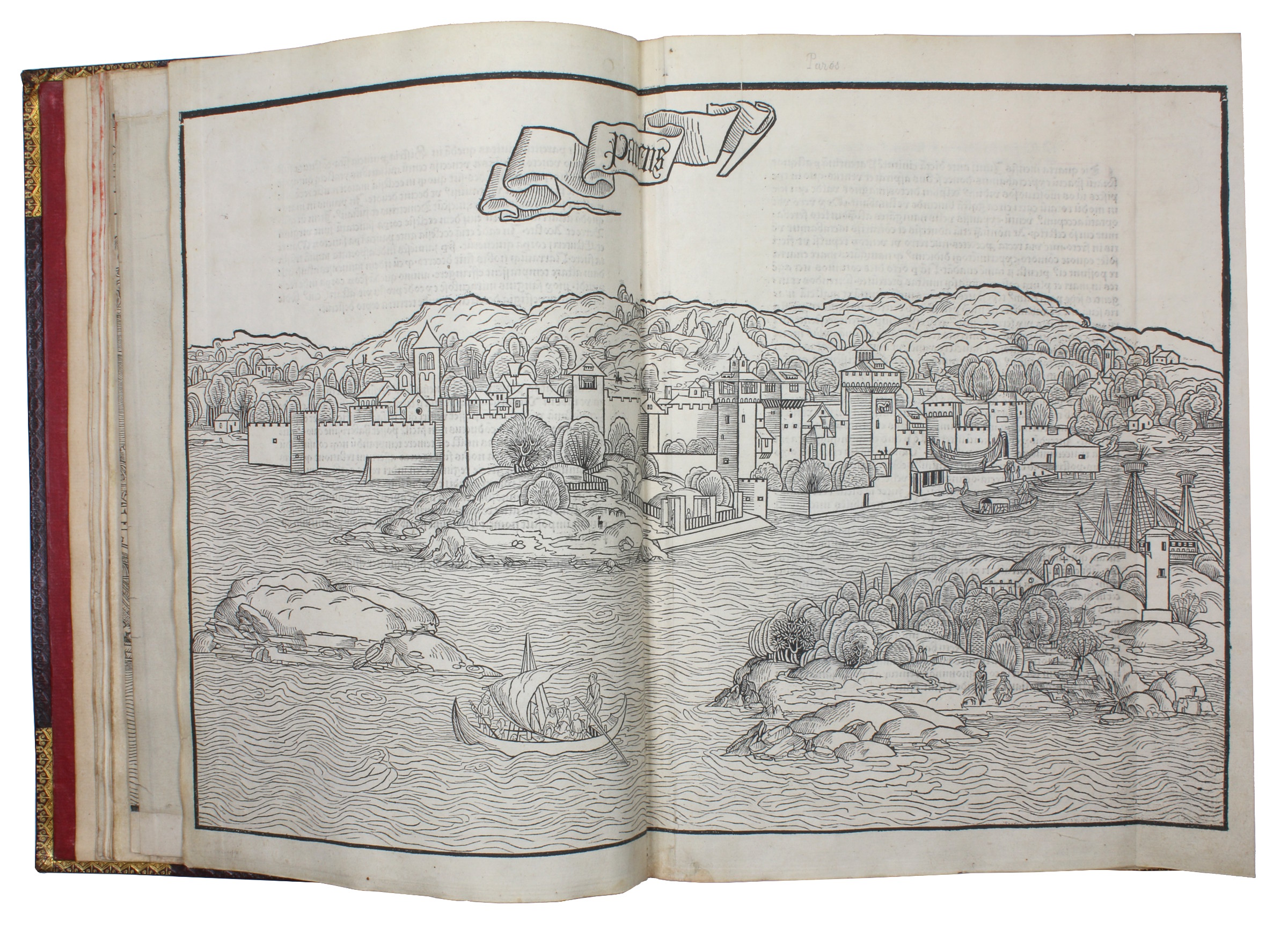
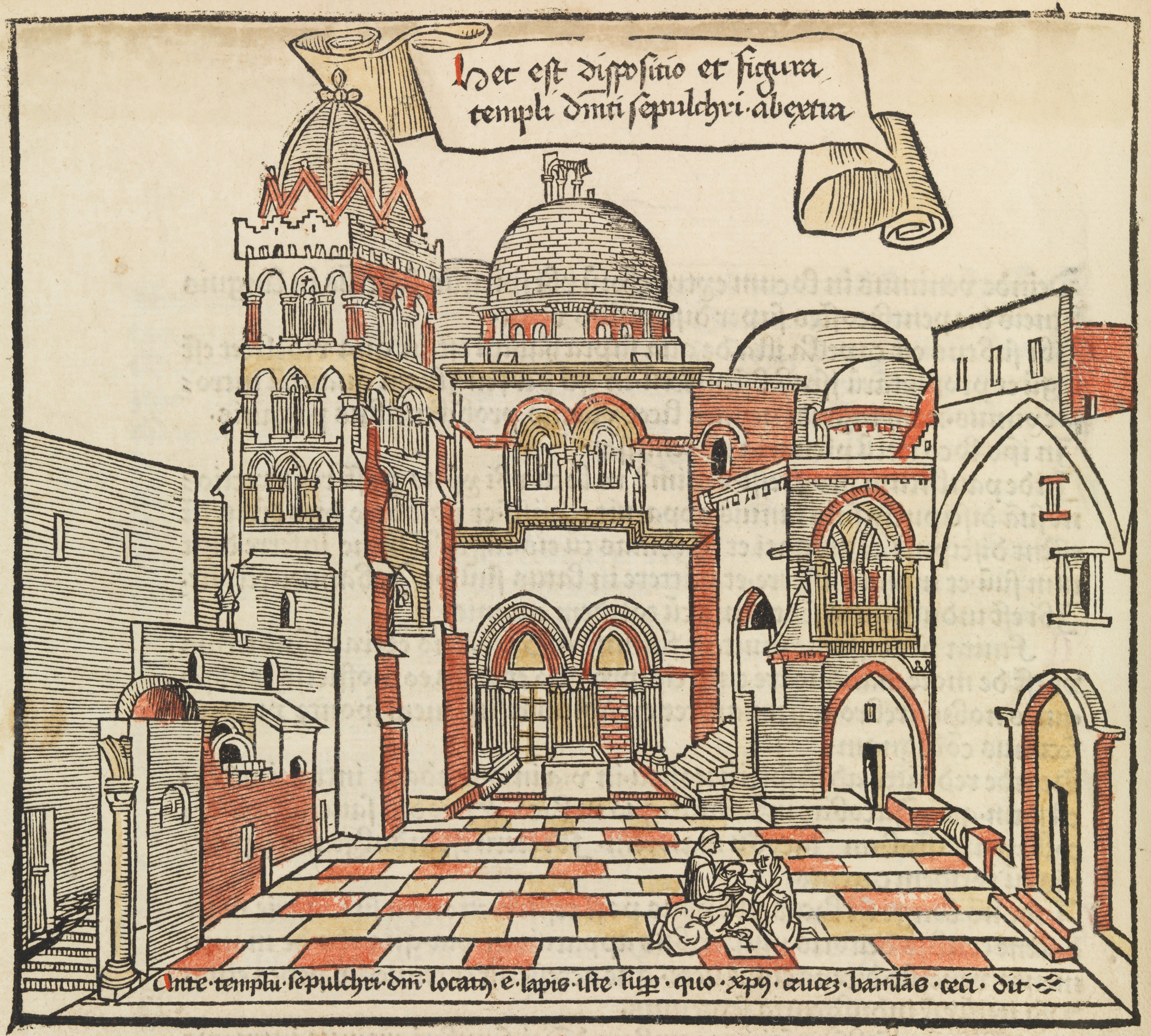
Shifting Borders: A Journey to the Centre of our World(s) at the Treasures of the Brotherton Gallery in Leeds, England, focuses on the world of travel, guidebooks, and historic maps as well as contemporary artists’ books. For my money the highlight of this exhibition is Bernhard von Breydenbach’s Peregrinatio in terram sanctam (Mainz, 1486).

Published in 1486 by Peter Schlöffer the Elder, the groundbreaking volume was the first known printed and illustrated travel guide. Von Breydenbach made the pilgrimage in 1483-4, taking with him Erhard Reuwich of Utrecht, a “skillful artist”, to make drawings of the sights.

Leaving in April 1483 and arriving back in January 1484, they went first to Venice, where they stayed for three weeks. They then traveled by ship to Greece before heading to Israel. Following visits to sights in the Holy Land, they traveled to Egypt and Ethiopia.

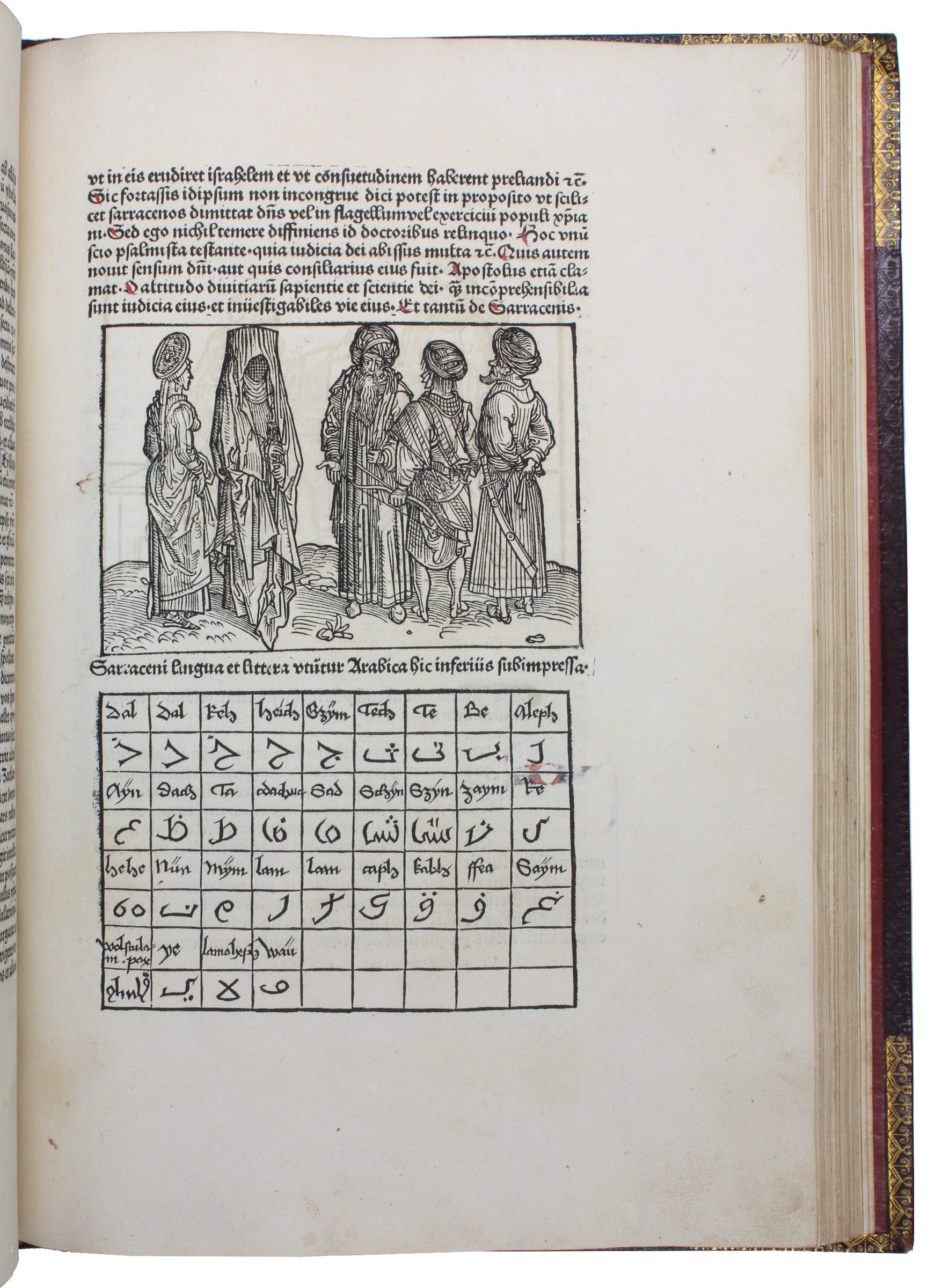
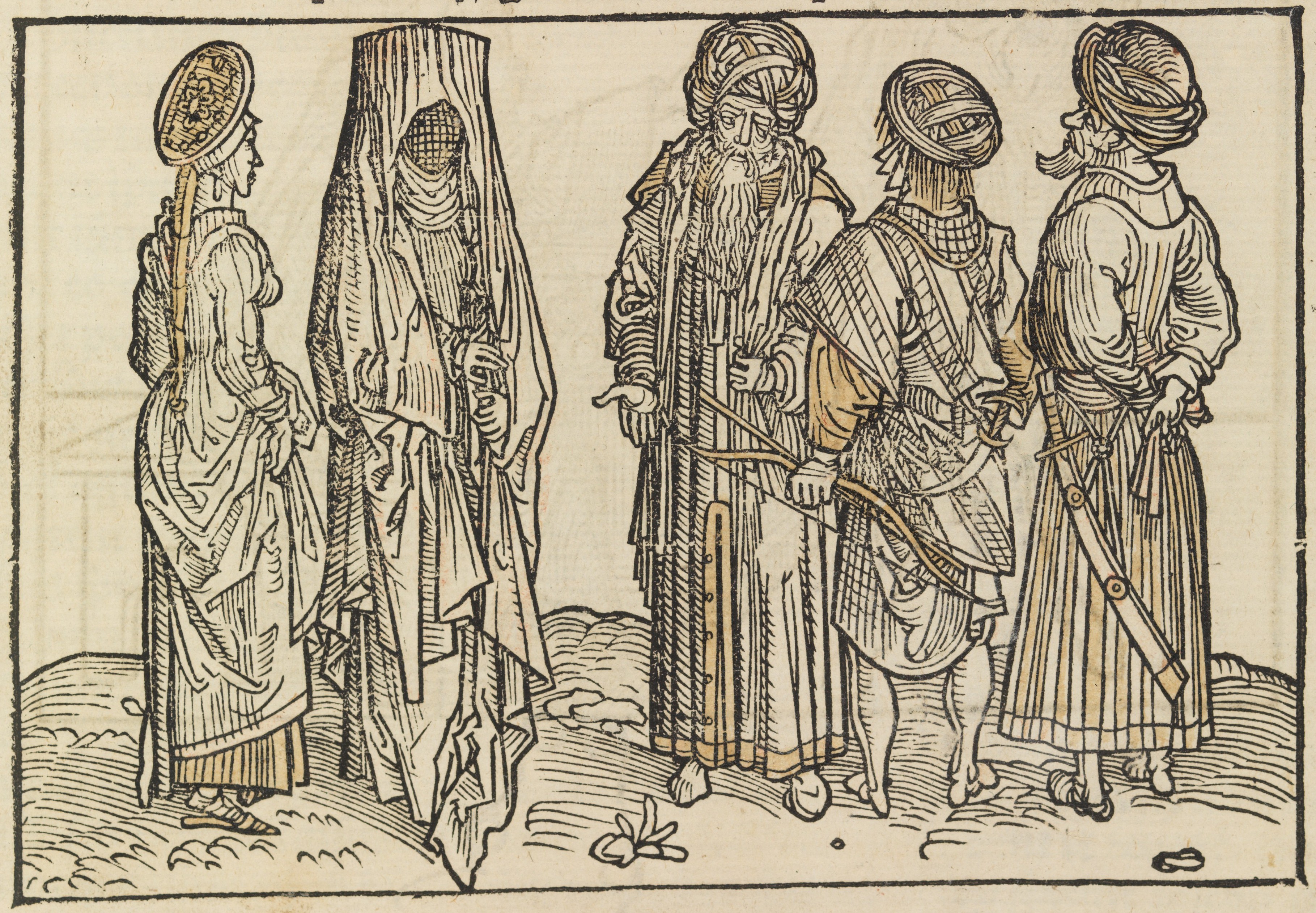
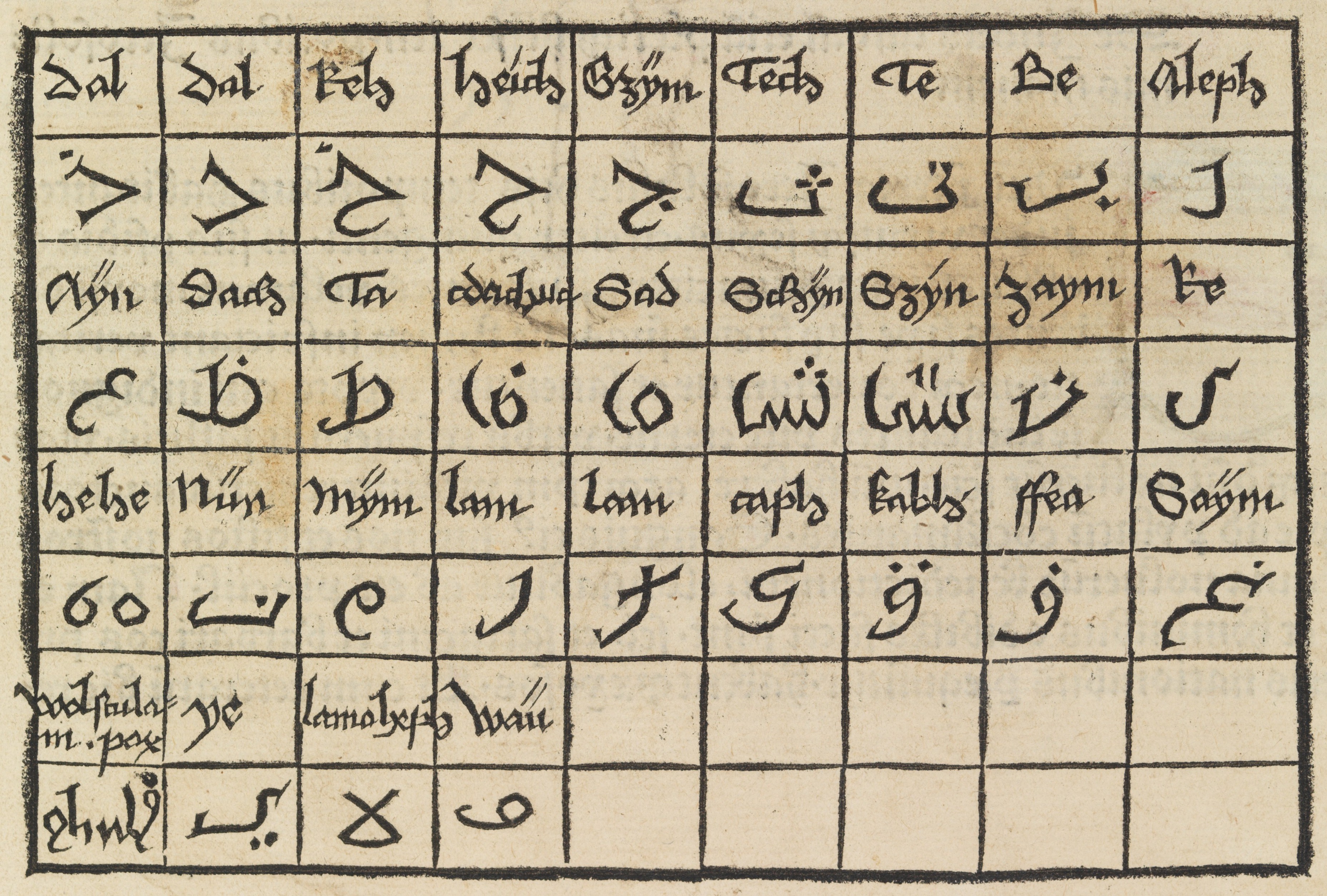
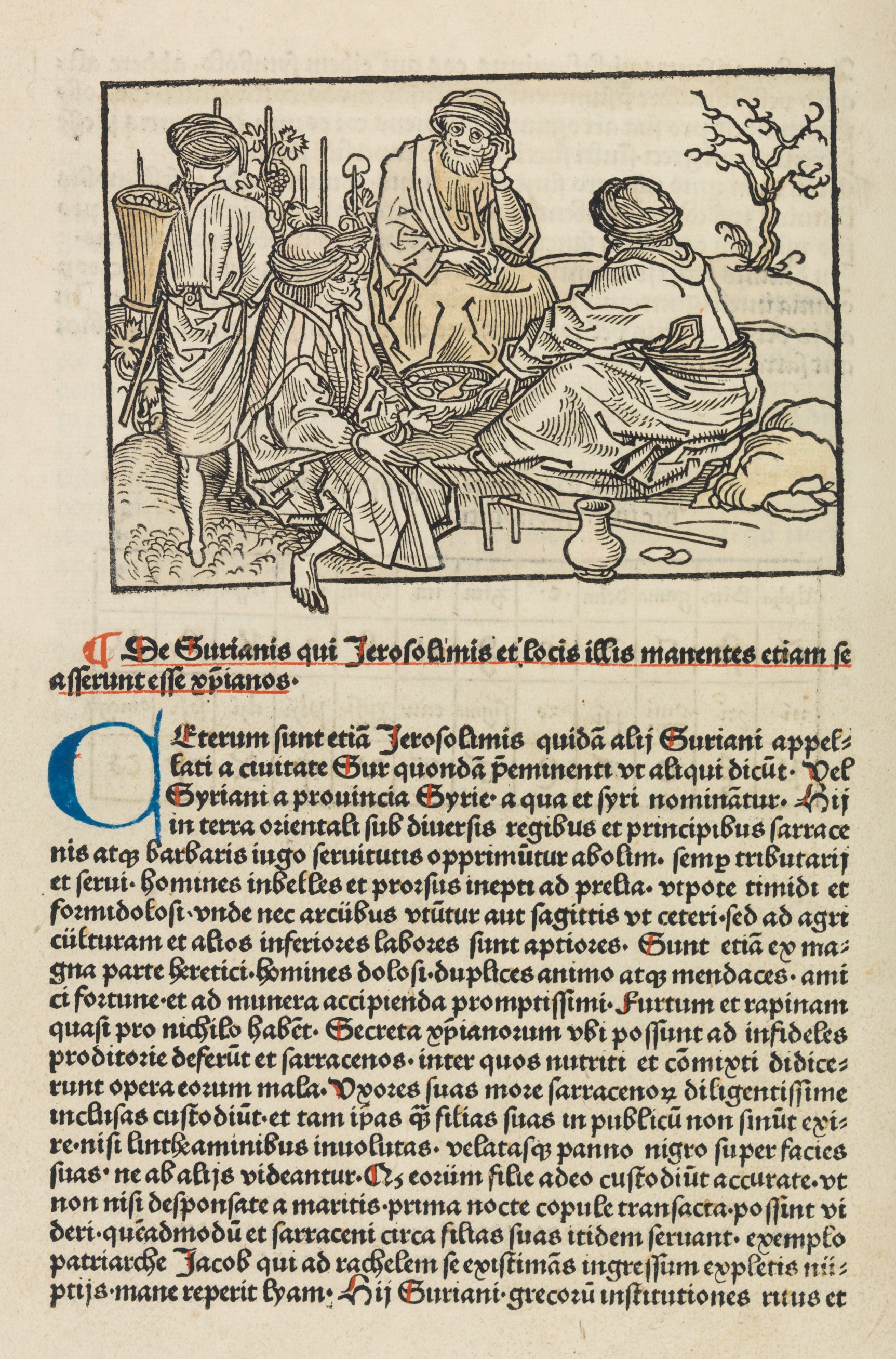
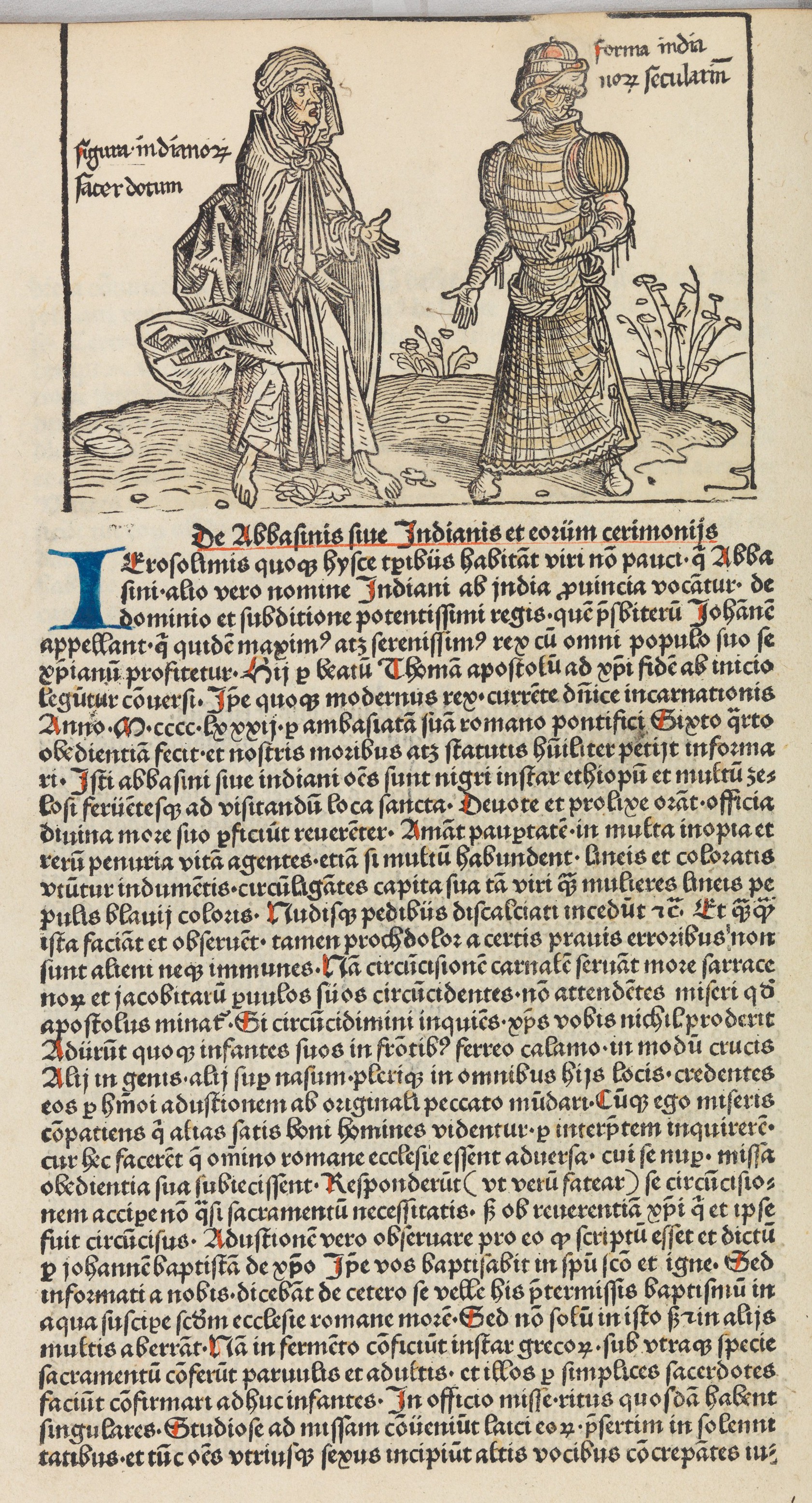
The Peregrinatio in terram sanctam featured five large fold-out woodcuts, including a spectacular panoramic view of Venice, where they had stayed for three weeks. The book also contained a three-block map of Israel and Egypt, centered on a view of Jerusalem, and panoramas of five other cities: Corfu, Rhodes, Modon, Iraklion, and Parenzo. The book also featured studies of Middle Eastern costumes and alphabets. Images of exotic animals seen on the trip were also included.

The book became a bestseller and was reprinted at least thirteen times over the next three decades, including printings in France and Spain, for which the illustration blocks were shipped out to the local printers. The first German language edition was published within a year of the Latin one, and it was also translated into French, Dutch and Spanish before 1500. Additional text-only editions and various abridged editions were also published over the following three centuries. In November 2013 a digital facsimile was available from Universitäts und Landesbibliothek Darmstadt at this linkOffsite Link.

If you would like to have your very own copy of a First Edition, I can get you one for less than $500,000 (including shipping).


Posted in Art, Asia, Books, Europe, History, Maps, Middle East | Tagged , , , | 1 Comment

Not That Orient Express

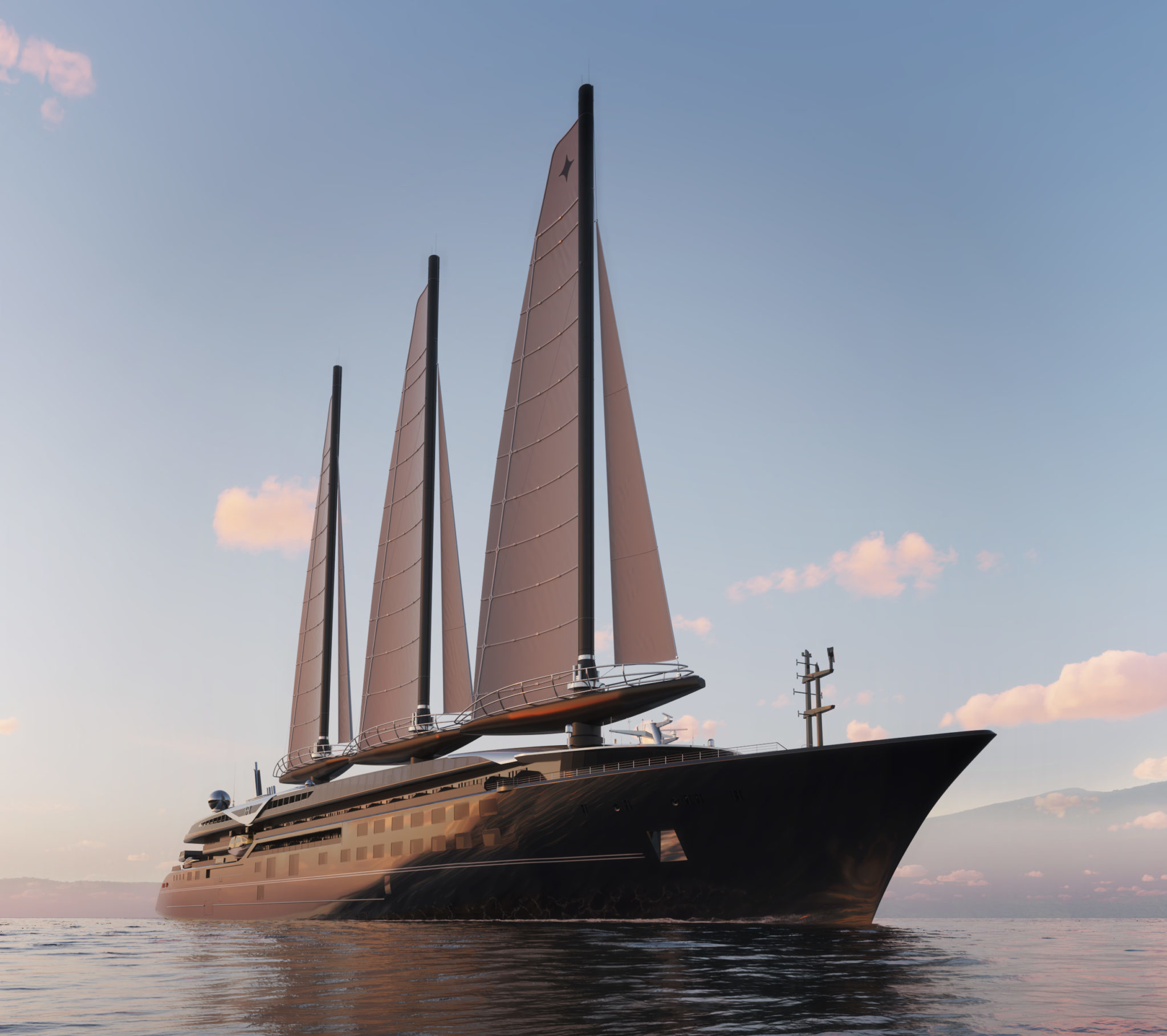
I am not a cruiseship kind of traveler, but I might make an exception for the sleek new vessel from the Orient Express train people. The new cruiseship, Silenseas, is a luxury ship modeled after historic 19th century vessels. Renowned for highend trains, the Orient Express partnered with Chantiers de l’Atlantique to develop the cruiser, which is both luxurious and technologically cutting-edge.

The Silenseas is 721 feet long with 54 suites on board, with two swimming pools, two restaurants, a speakeasy, an Amphitheatre-Cabaret, a recording studio, a spa, and much more. The luxury hospitality company promises to deliver the same opulence to future sea-faring travelers as its train passengers.

The ship has an over 16,000 square feet ‘SolidSail’ mast system that will aid it in getting to and from its destinations. This is boosted by a secondary hybrid propulsion system that runs on liquified gas.

The Orient Express expects Silenseas to hit the open waters sometime in 2026.


Posted in Europe, Public Transport, Tech, Tourism | Tagged , , | 2 Comments

What’s That Smell: Europe’s Olfactory Heritage

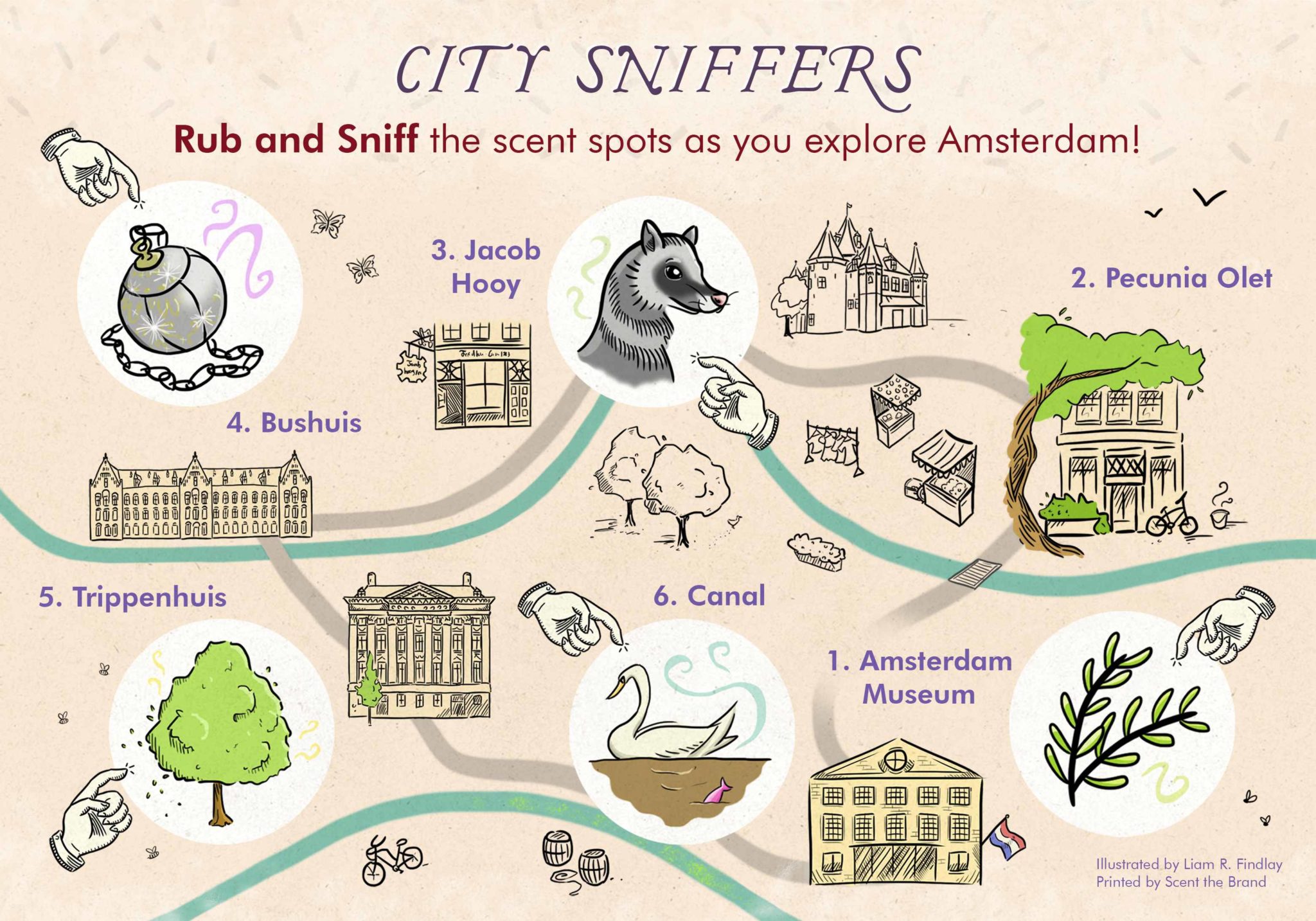
It is commonly accepted that our sense of smell is linked directly to our emotions and our memories. The year-old project Odeuropa is applying state-of-the-art AI techniques to historical texts and image datasets that span four centuries of European history, to identify and trace how smell was expressed in different languages, with what places it was associated, what kinds of events and practices it characterised, and to what emotions it was linked.

The curated research is being used to create novel ways of exploring European cultural heritage. These new storylines are being developed for varied formats for different audiences: as an online ‘Encyclopaedia of European Smell Heritage’, as ‘interactive notebook’ demonstrators, and in the form of toolkits and training documentation describing best-practices in olfactory museology.

The goal of the Odeuropa project is to show that critically engaging our sense of smell and our scent heritage is an important and a viable means for connecting and promoting Europe’s tangible and intangible cultural heritage.

Check out the Smell Explorer for a olfactory European tour. Or Launch of City Sniffers: A smell tour of Amsterdam’s ecohistory cpmplete with scratch and sniff maps.


Posted in Europe, History, Maps, Museums, Tech, Tourism | Tagged , , , , | 1 Comment

Edgar Allan Poe Philadelphia Travel Guide

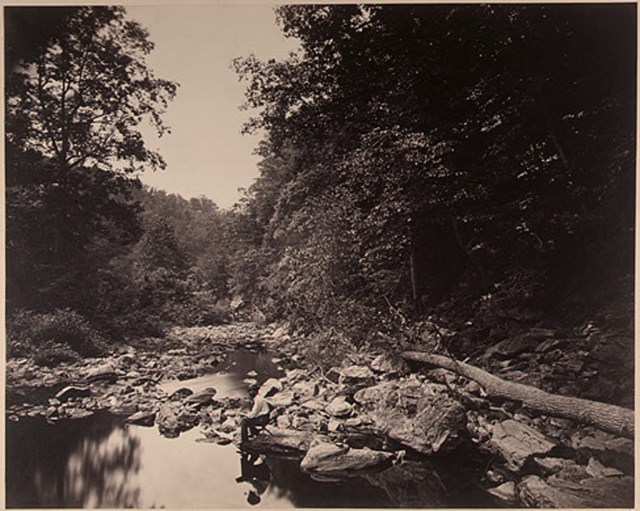
              Morning on the Wissahiccon

                                                 by Edgar Allan Poe

The natural scenery of America has often been contrasted, in its general features as well as in detail, with the landscape of the Old World—more especially of Europe—and not deeper has been the enthusiasm, than wide the dissension, of the supporters of each region. The discussion is one not likely to be soon closed, for, although much has been said on both sides, a word more yet remains to be said.

The most conspicuous of the British tourists who have attempted a comparison, seem to regard our northern and eastern seaboard, comparatively speaking, as all of America, at least, as all of the United States, worthy consideration. They say little, because they have seen less, of the gorgeous interior scenery of some of our western and southern districts—of the vast valley of Louisiana, for example,—a realization of the wildest dreams of paradise. For the most part, these travellers content themselves with a hasty inspection of the natural lions of the land—the Hudson, Niagara, the Catskills, Harper’s Ferry, the lakes of New York, the Ohio, the prairies, and the Mississippi. These, indeed, are objects well worthy the contemplation even of him who has just clambered by the castellated Rhine, or roamed

By the blue rushing of the arrowy Rhone;

but these are not all of which we can boast; and, indeed, I will be so hardy as to assert that there are innumerable quiet, obscure, and scarcely explored nooks, within the limits of the United States, that, by the true artist, or cultivated lover of the grand and beautiful amid the works of God, will be preferred to each and to all of the chronicled and better accredited scenes to which I have referred.

In fact, the real Edens of the land lie far away from the track of our own most deliberate tourists—how very far, then, beyond the reach of the foreigner, who, having made with his publisher at home arrangements for a certain amount of comment upon America, to be furnished in a stipulated period, can hope to fulfil his agreement in no other manner than by steaming it, memorandum—book in hand, through only the most beaten thoroughfares of the country!

I mentioned, just above, the valley of Louisiana. Of all extensive areas of natural loveliness, this is perhaps the most lovely. No fiction has approached it. The most gorgeous imagination might derive suggestions from its exuberant beauty. And beauty is, indeed, its sole character. It has little, or rather nothing, of the sublime. Gentle undulations of soil, interwreathed with fantastic crystallic streams, banked by flowery slopes, and backed by a forest vegetation, gigantic, glossy, multicoloured, sparkling with gay birds and burthened with perfume—these features make up, in the vale of Louisiana, the most voluptuous natural scenery upon earth.

But, even of this delicious region, the sweeter portions are reached only by the bypaths. Indeed, in America generally, the traveller who would behold the finest landscapes, must seek them not by the railroad, nor by the steamboat, not by the stage-coach, nor in his private carriage, not yet even on horseback—but on foot. He must walk, he must leap ravines, he must risk his neck among precipices, or he must leave unseen the truest, the richest, and most unspeakable glories of the land.

Now in the greater portion of Europe no such necessity exists. In England it exists not at all. The merest dandy of a tourist may there visit every nook worth visiting without detriment to his silk stockings; so thoroughly known are all points of interest, and so well-arranged are the means of attaining them. This consideration has never been allowed its due weight, in comparisons of the natural scenery of the Old and New Worlds. The entire loveliness of the former is collated with only the most noted, and with by no means the most eminent items in the general loveliness of the latter.

River scenery has, unquestionably, within itself, all the main elements of beauty, and, time out of mind, has been the favourite theme of the poet. But much of this fame is attributable to the predominance of travel in fluvial over that in mountainous districts. In the same way, large rivers, because usually highways, have, in all countries, absorbed an undue share of admiration. They are more observed, and, consequently, made more the subject of discourse, than less important, but often more interesting streams.

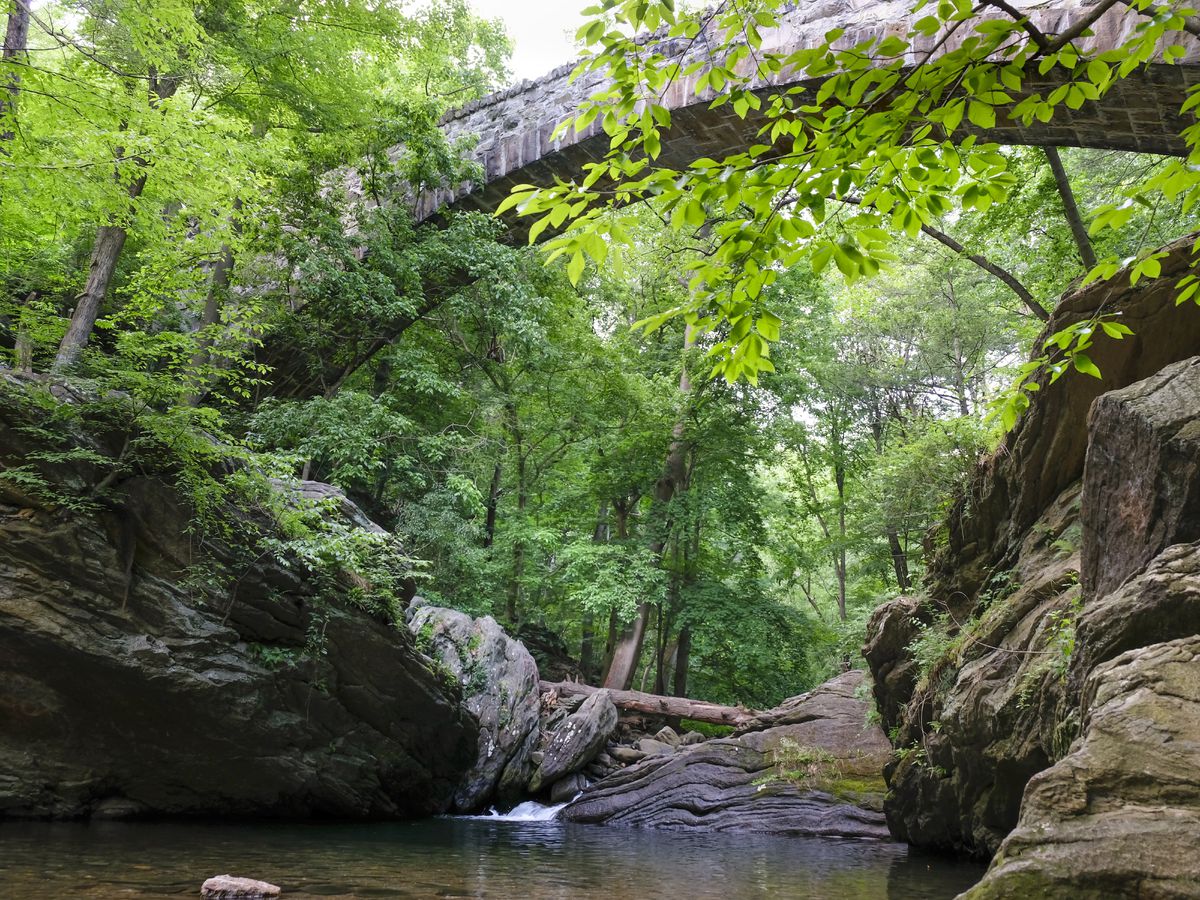
A singular exemplification of my remarks upon this head may be found in the Wissahiccon, a brook, (for more it can scarcely be called,) which empties itself into the Schuylkill, about six miles westward of Philadelphia. Now the Wissahiccon is of so remarkable a loveliness that, were it flowing in England, it would be the theme of every bard, and the common topic of every tongue, if, indeed, its banks were not parcelled off in lots, at an exorbitant price, as building-sites for the villas of the opulent. Yet it is only within a very few years that any one has more than heard of the Wissahiccon, while the broader and more navigable water into which it flows, has been long celebrated as one of the finest specimens of American river scenery. The Schuylkill, whose beauties have been much exaggerated, and whose banks, at least in the neighborhood of Philadelphia, are marshy like those of the Delaware, is not at all comparable, as an object of picturesque interest, with the more humble and less notorious rivulet of which we speak.

It was not until Fanny Kemble, in her droll book about the United States, pointed out to the Philadelphians the rare loveliness of a stream which lay at their own doors, that this loveliness was more than suspected by a few adventurous pedestrians of the vicinity. But, the “Journal” having opened all eyes, the Wissahiccon, to a certain extent, rolled at once into notoriety. I say “to a certain extent,” for, in fact, the true beauty of the stream lies far above the route of the Philadelphian picturesque-hunters, who rarely proceed farther than a mile or two above the mouth of the rivulet—for the very excellent reason that here the carriage-road stops. I would advise the adventurer who would behold its finest points to take the Ridge Road, running westwardly from the city, and, having reached the second lane beyond the sixth mile-stone, to follow this lane to its termination. He will thus strike the Wissahiccon, at one of its best reaches, and, in a skiff, or by clambering along its banks, he can go up or down the stream, as best suits his fancy, and in either direction will meet his reward.

I have already said, or should have said, that the brook is narrow. Its banks are generally, indeed almost universally, precipitous, and consist of high hills, clothed with noble shrubbery near the water, and crowned at a greater elevation, with some of the most magnificent forest trees of America, among which stands conspicuous the liriodendron tulipiferum. The immediate shores, however, are of granite, sharply defined or moss-covered, against which the pellucid water lolls in its gentle flow, as the blue waves of the Mediterranean upon the steps of her palaces of marble. Occasionally in front of the cliffs, extends a small definite plateau of richly herbaged land, affording the most picturesque position for a cottage and garden which the richest imagination could conceive. The windings of the stream are many and abrupt, as is usually the case where banks are precipitous, and thus the impression conveyed to the voyager’s eye, as he proceeds, is that of an endless succession of infinitely varied small lakes, or, more properly speaking, tarns. The Wissahiccon, however, should be visited, not like “fair Melrose,” by moonlight, or even in cloudy weather, but amid the brightest glare of a noonday sun; for the narrowness of the gorge through which it flows, the height of the hills on either hand, and the density of the foliage, conspire to produce a gloominess, if not an absolute dreariness of effect, which, unless relieved by a bright general light, detracts from the mere beauty of the scene.

Not long ago I visited the stream by the route described, and spent the better part of a sultry day in floating in a skiff upon its bosom. The heat gradually overcame me, and, resigning myself to the influence of the scenes and of the weather, and of the gentle moving current, I sank into a half slumber, during which my imagination revelled in visions of the Wissahiccon of ancient days—of the “good old days” when the Demon of the Engine was not, when picnics were undreamed of, when “water privileges” were neither bought nor sold, and when the red man trod alone, with the elk, upon the ridges that now towered above. And, while gradually these conceits took possession of my mind, the lazy brook had borne me, inch by inch, around one promontory and within full view of another that bounded the prospect at the distance of forty or fifty yards. It was a steep rocky cliff, abutting far into the stream, and presenting much more of the Salvator character than any portion of the shore hitherto passed. What I saw upon this cliff, although surely an object of very extraordinary nature, the place and season considered, at first neither startled nor amazed me—so thoroughly and appropriately did it chime in with the half-slumberous fancies that enwrapped me. I saw, or dreamed that I saw, standing upon the extreme verge of the precipice, with neck outstretched, with ears erect, and the whole attitude indicative of profound and melancholy inquisitiveness, one of the oldest and boldest of those identical elks which had been coupled with the red men of my vision.

I say that, for a few moments, this apparition neither startled nor amazed me. During this interval my whole soul was bound up in intense sympathy alone. I fancied the elk repining, not less than wondering, at the manifest alterations for the worse, wrought upon the brook and its vicinage, even within the last few years, by the stern hand of the utilitarian. But a slight movement of the animal’s head at once dispelled the dreaminess which invested me, and aroused me to a full sense of novelty of the adventure. I arose upon one knee within the skiff, and, while I hesitated whether to stop my career, or let myself float nearer to the object of my wonder, I heard the words “hist!” “hist!” ejaculated quickly but cautiously, from the shrubbery overhead. In an instant afterwards, a negro emerged from the thicket, putting aside the bushes with care, and treading stealthily. He bore in one hand a quantity of salt, and, holding it towards the elk, gently yet steadily approached. The noble animal, although a little fluttered, made no attempt at escape. The negro advanced; offered the salt; and spoke a few words of encouragement or conciliation. Presently, the elk bowed and stamped, and then lay quietly down and was secured with a halter.

Thus ended my romance of the elk. It was a pet of great age and very domestic habits, and belonged to an English family occupying a villa in the vicinity.

Essay first published in 1843.

Happy Birthday Edgar, born on this day in 1809.


Posted in Books, Travel Writing, USA, Writing | Tagged , , | Leave a comment

Winter mornings are made of steel

Winter mornings are made of steel; they have a metallic taste and sharp edges. On a Wednesday in January, at seven in the morning, it’s plain to see that the world was not made for Man, and definitely not for his comfort or pleasure.

– Olga TokarczukDrive Your Plow Over the Bones of the Dead

“Small delights – a clear winter sunset through the natural iron grillwork of black trees, a street lamp shining through ice-encased branches, blue sky glittering, and sun on ice-crusted snow. Loveliness, loveliness.”

— Sylvia Plath, from a journal entry featured in “The Unabridged Journals”

“In winter all the singing is in the tops of the trees”

— Mary Oliver, from “White-Eyes”

“What good is the warmth of summer, without the cold of winter to give it sweetness.”
― John Steinbeck, Travels with Charley: In Search of America

“The heart can get really cold if all you’ve known is winter.”
― Benjamin Alire Sáenz, Last Night I Sang to the Monster

“I love to watch the fine mist of the night come on,
The windows and the stars illumined, one by one,
The rivers of dark smoke pour upward lazily,
And the moon rise and turn them silver. I shall see
The springs, the summers, and the autumns slowly pass;
And when old Winter puts his blank face to the glass,
I shall close all my shutters, pull the curtains tight,
And build me stately palaces by candlelight.”
― Charles Baudelaire, Les Fleurs du Mal

Posted in Books, Writing | Tagged , , , , | Leave a comment

Archives of the Planet

Selimiye Camii (Mosquée du Sultan-Selim-II ou Grande Mosquée) au soleil couchant , Edirne, Turquie, 7 novembre 1922, (Autochrome, 12 x 9 cm),
Frédéric Gadmer, Département des Hauts-de-Seine, musée Albert-Kahn, Archives de la Planète, A 36 543

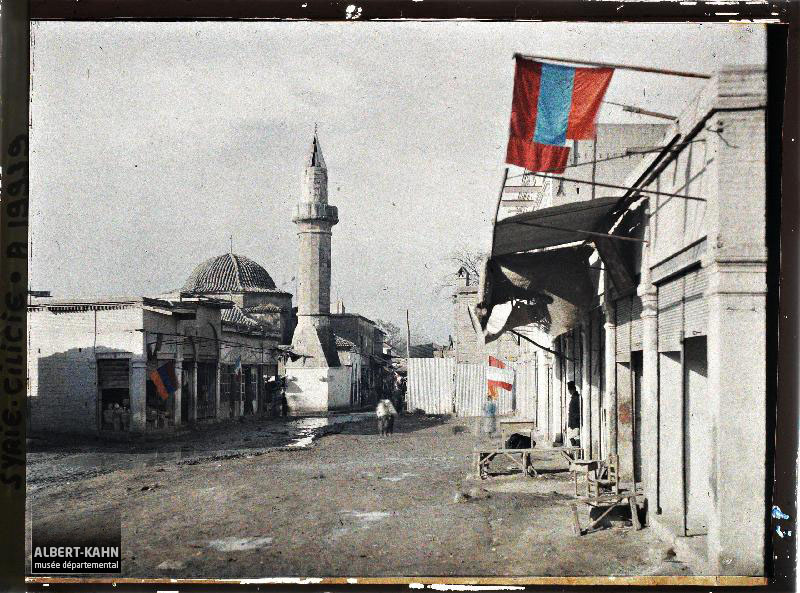
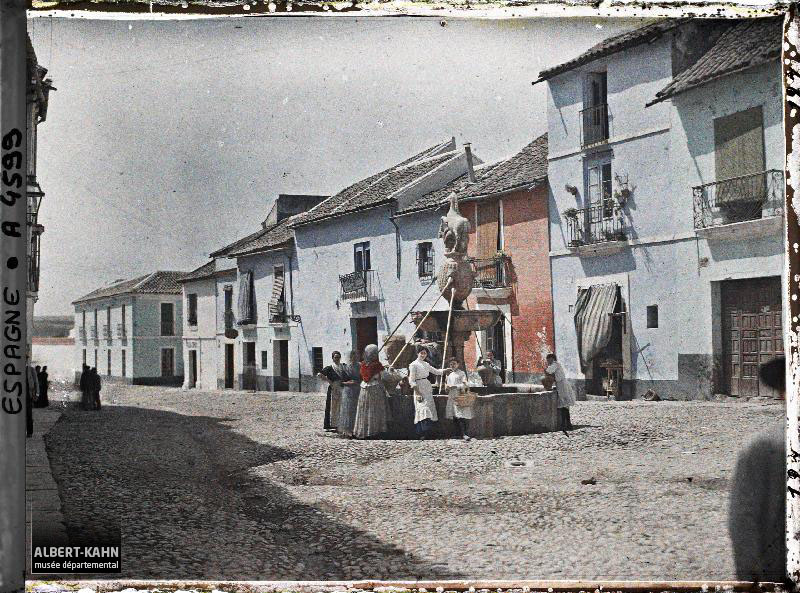
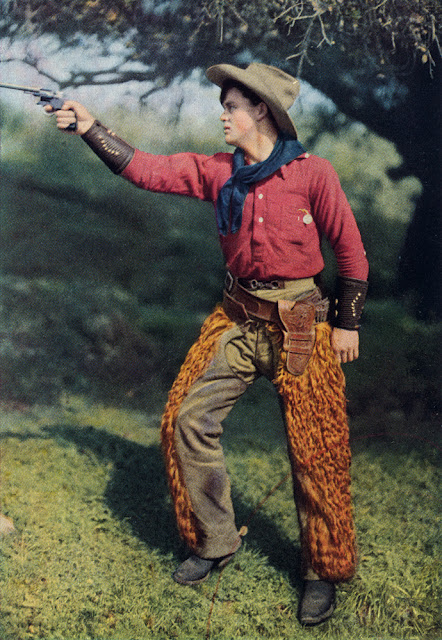
In 1908, French financier Albert Kahn created a project that aimed to photograph the diversity of humanity across the planet. He hired 12 photographers to capture images of everyday life and culture around the globe. His staff traveled to 50 nations to document humanity. Sadly, his project, Archives of the Planet, ended in 1931 after he went bankrupt due to the stock market crash.

Over the course of the project, the photographers took more more than 72,000 photos of people and cultural sites, and also chronicled major events such as the First World War and the Turkish War of Independence.

TheArchives of the Planet project still survives and is currently managed by the Albert-Kahn Museum, which has now made about 69,000 high-resolution color photos free for download or perusal. Almost 25,000 of them are in the public domain, giving anyone free license to use and build upon them as they wish, no strings attached. The other 34,000 images, also high-res, come with varying guidelines for usage.

Une rue pavoisée aux couleurs arméniennes (rouge, bleu, orange) et françaises, Adana, Cilicie, Syrie (actuellement en Turquie), 11 décembre 1919,

Although the photographs have long been viewable on the site, they were previously low in quality and displayed on a janky interface that was difficult to use. The museum now has launched a digital revamp for its Image Portal, and is now allowing users to download the photos in full resolution.

Fontaine del Potro, Cordoue, Espagne, 19 juin-22 juin 1914, (Autochrome, ),
Auguste Léon, Département des Hauts-de-Seine, musée Albert-Kahn, Archives de la Planète, A 4 599


Posted in Architecture, Art, Asia, Europe, History, Middle East, Museums, Photography, USA | Tagged , , , | 1 Comment

The Promised Land


Posted in Art, Books, History, USA, Writing | Tagged , , | Leave a comment

Lost At Sea

On its maiden voyage en route from Southampton to New York, the RMS Titanic sank after colliding with an iceberg. Among those who died at sea were American book collector and Grolier Club member Harry Elkins Widener who at 27 had already amassed an impressive personal library of 2,500 rare books. In a letter from March 10 to a friend, he said he was about to embark on the Titanic and had recently bought the complete set of original drawings for The Mystery of Edwin Drood from book dealer Bernard Quaritch in London. Another of his purchases, this one from J Pearson and Co, which went down with the ship was Heavy News of a Horrible Earthquake which was in the city of Scarbaria in this present year, a small pamphlet about a terrible disaster from 1542…

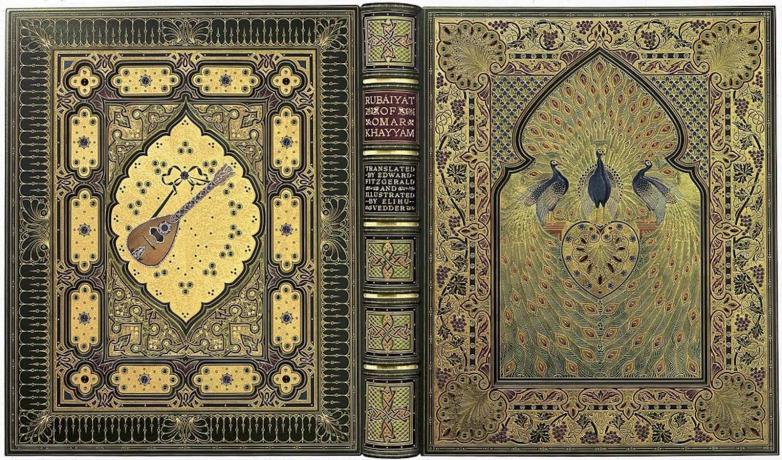
Books lost to the waters included the fabled The Great Omar, a sumptuous 1911 Rubaiyat of Omar Khayyam in a gold leaf and multi-jewelled binding by Sangorski & Sutcliffe, and a 1598 2nd edition of Sir Francis Bacon’s ‘Essays’ which Widener had just bought in London. Seven parcels of parchment of the Torah owned by Hersh L. Siebald were also among the Titanic cargo claimed as lost.


Posted in Art, Books, Europe, History, Tourism | Tagged , , , | 2 Comments