On a quiet day…

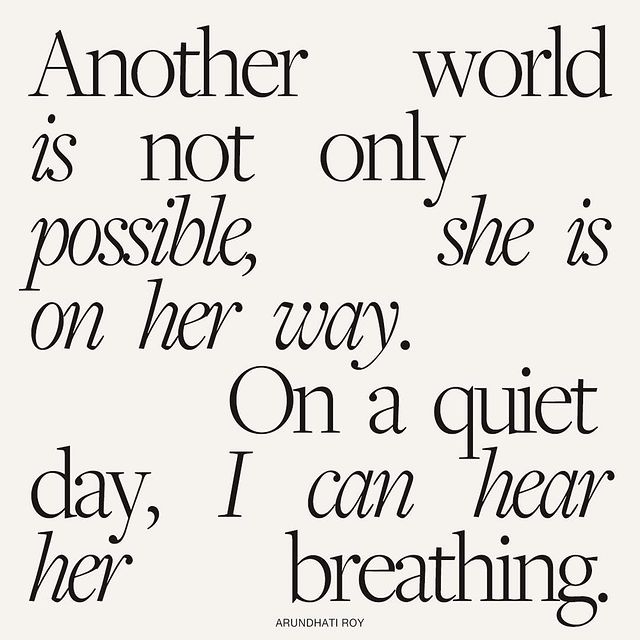
“The system will collapse if we refuse to buy what they are selling…their ideas, their version of history, their wars…their notion of inevitability. Remember this: We may be many and they be few… Another world is not only possible, she is on her way. On a quiet day, I can hear her breathing.”
Arundhati Roy


Posted in Asia, Books, Writing | Tagged , , | Leave a comment

Psychedelic Santa

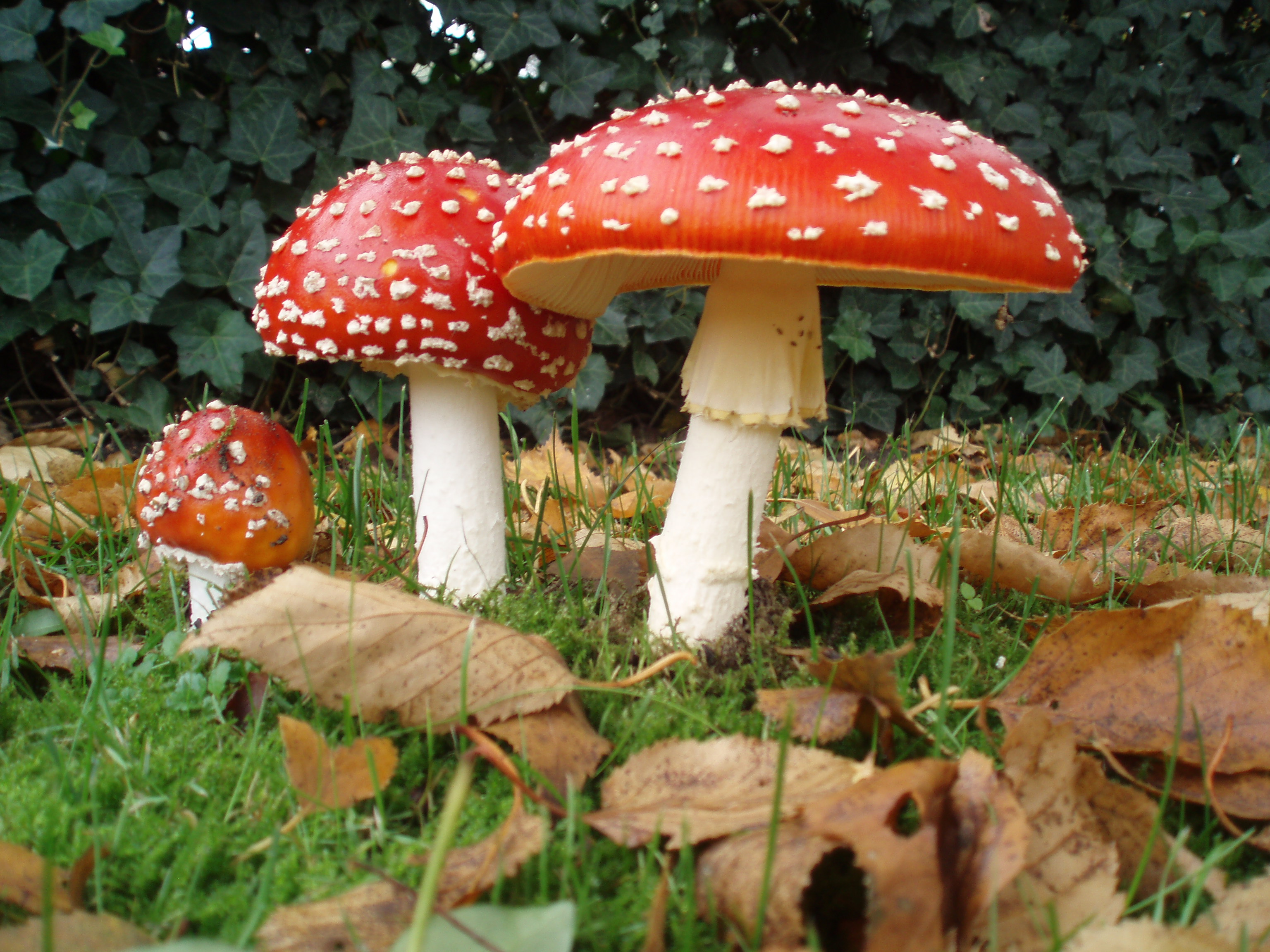
I have long held suspicions that all of this Santa stuff was somehow rooted in mindaltering substance use. This short animated video below explores how the Psychedelic Amanita Muscaria Mushroom may have inspired the Santa Legend of Lapland.

NB: if the video fails to open, please visit our homepage .


Posted in Europe, History | Tagged , , , , , | Leave a comment

Not another Book of the Year List

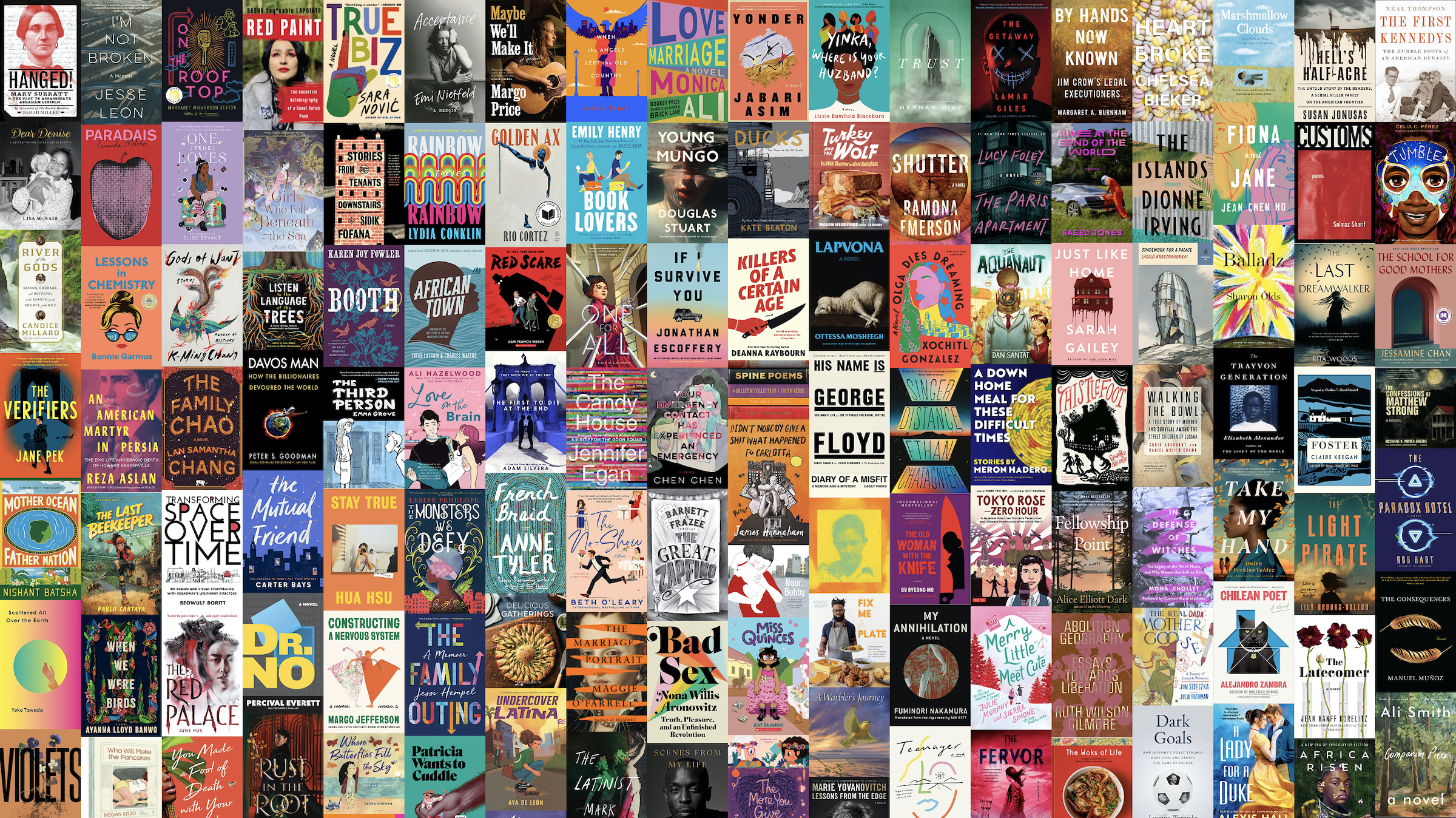
It’s that time of the year when the “Best Books of the Year” lists come out. While I mine the lists for reading recommendations, I hesitate to generate my own list. Reading tastes are so subjective. In fact, I frequently note books on the “best books” lists that I found disappointing. However dear TBTP readers, here is a useful compendium of lists for English language books of the year.


Posted in Books, ebooks, USA, Writing | Tagged , , , | 1 Comment

Library of Mistakes

The new Library of Mistakes opened in Edinburgh, Scotland in April of this year, moving to larger and more felicitous premises from its previous location. Like many barely financially literate folks, I would value access to a library that could potentially help to make sense of the economic gibberish in the media.

From its website:

Opened in March 2014, the library was established in the wake of the 2008 financial crisis to promote the study of the history of financial markets, and to “improve financial understanding one mistake at a time.”

The collection is focused on “decision-making under conditions of uncertainty” in the financial markets, following the work of the Nobel Laureate for Economics Daniel Kahneman.

The library therefore collects works on business cycles, the operation of financial markets, corporate history (including financial institutions and other businesses), economic theory and analysis, as well as relevant works on accounting practices, corporate governance and fraud.

The collection is print-based: there is free guest Wi-Fi.

The Library of Mistakes contains over 2,000 books, all relating to economics and finance. The library features books by writers like Karl Marx, Milton Friedman, Paul Krugman, and Michael Lewis.The Library of Mistakes was inspired by the 2008 Great Recession, which served as a perfect example of how, according to the library’s curators, “smart people keep doing stupid things.”

The library promotes the belief that quantitative economic algorithms provide a false sense of objectivity, and that trusting these imperfect models is a recipe for disaster. The books offer readers a chance to turn to financial history as a way to learn from past mistakes instead of relying on how economics should theoretically function under unrealistic assumptions.

Its mission is to provide university students with a more accurate economic education, a holistic understanding of financial history, and a grasp of how to use books as a resource to prevent another recession.


Posted in Books, Europe, Libraries | Tagged , , | Leave a comment

Map of Stories

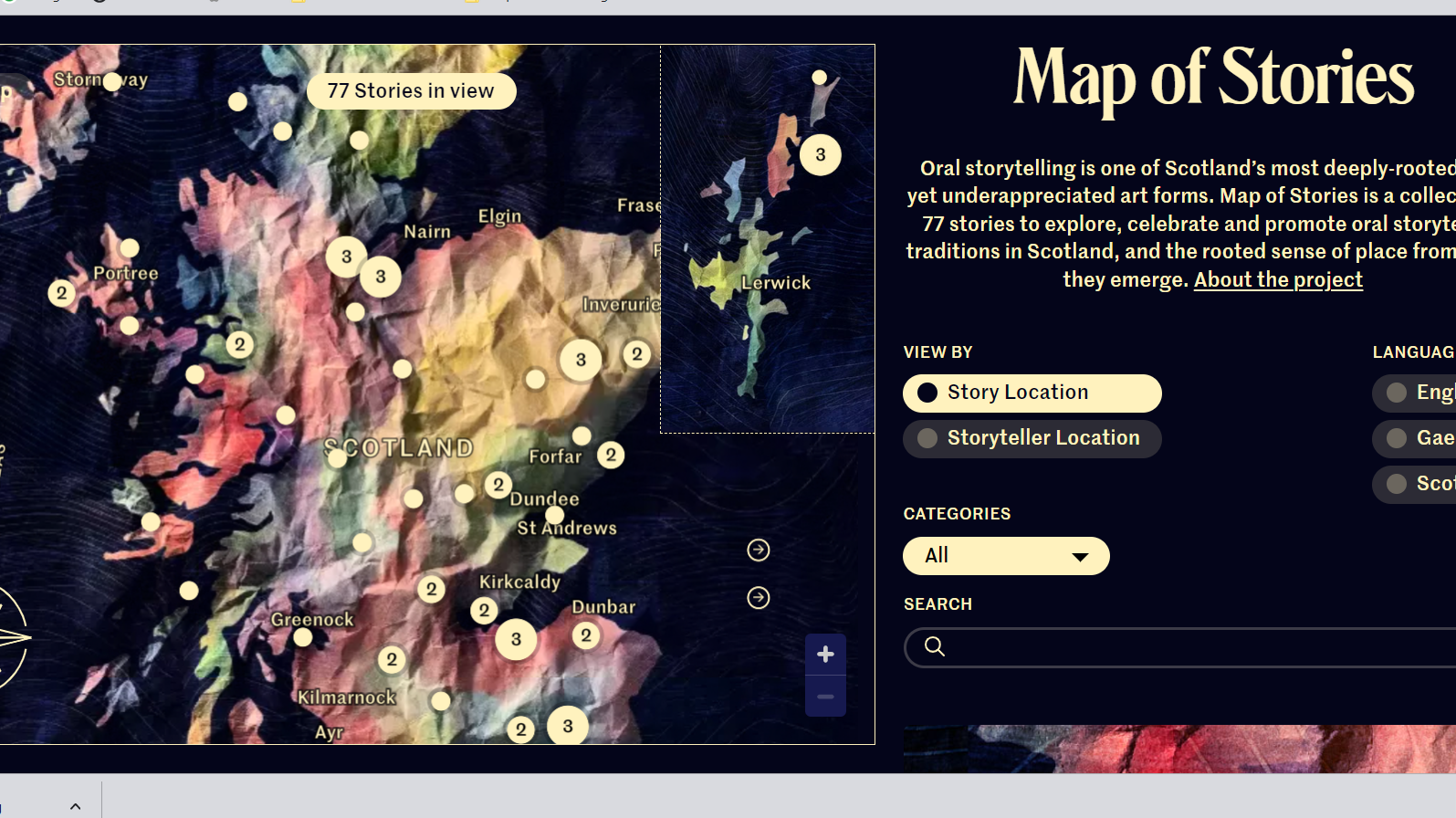
The Map of Stories is a wonderful interactive map that provides the opportunity to explore tales from throughout Scotland. The site allows visitors to discover the oral storytelling traditions of Scotland and listen to folktales from the ancient land.

The map allows users to browse more than 70 stories by geographic place or by storyteller location. The map also includes controls which allow you to filter the stories shown by language (English, Gaelic or Scots) and by category.

Some arise from Scotland’s indigenous languages—from Gaelic or Scots—and from particular communities, whether those be Scottish traveller communities, or those amongst the many islands of Shetland. Others, equally rich and provocative, come from the growing number of migrant and mixed-heritage traditions—from Iran, India, Kenya, Ireland, Wales—that comprise Scotland as a complex 21st nation.

“The stories found on the map come in many forms. Many of the stories emerge from indigenous  communities, traveller communities and from the Shetland Islands. Others come from Scotland’s migrant communities, from countries as far away as India and Iran. However, no matter their origin, all the stories can be listened to simply by clicking on its marker on the map.”


Posted in apps, Europe, History, Maps | Tagged , , | 1 Comment

The Answer is Still 42

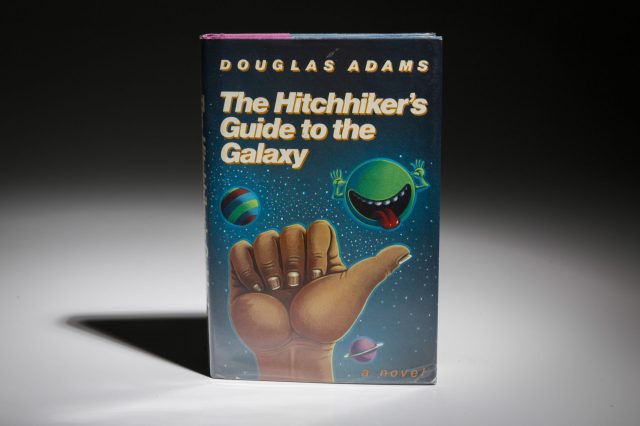
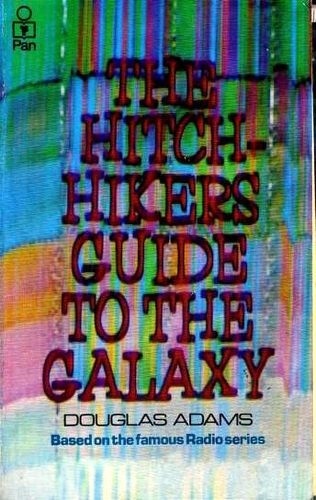
Although the wildely popular comic sci-fi novel The Hitchhiker’s Guide to the Galaxy was published in the UK in 1979, it wasn’t released in the colonies until 1980. This year, legions of fans in North America are celebrating the 42nd anniversary of the book that offered the answer to “Ultimate Question of Life, the Universe, and Everything”, which, after eons of calculations, was given simply as “42”.

For the few folks who haven’t read the book, the story follows the adventures of Arthur Dent, a hapless Briton who escapes the destruction of the Earth by the Vogons (a race of unpleasant and bureaucratic aliens) to make way for an intergalactic bypass. Dent’s adventures intersect with several other characters: Ford Prefect (a humanoid alien and researcher for the eponymous guidebook who rescues Dent from Earth’s destruction), Zaphod Beeblebrox (Ford’s wacky semi-cousin and the Galactic President who has stolen the Heart of Gold — a spacecraft equipped with Infinite Improbability Drive), the depressed robot Marvin the Paranoid Android, and Trillian (formerly known as Tricia McMillan) who is a woman Arthur once met at a party in Islington and who — thanks to Beeblebrox’s intervention — is the only other human survivor of Earth’s destruction.

In their travels, Arthur comes to learn that the Earth was actually a giant supercomputer, created by another supercomputer, Deep Thought. Deep Thought had been built by its creators to give the answer to the “Ultimate Question of Life, the Universe, and Everything”, which, after eons of calculations, was given simply as “42”. Deep Thought was then instructed to design the Earth supercomputer to determine what the Question actually is. The Earth was subsequently destroyed by the Vogons moments before its calculations were completed, and Arthur becomes the target of the descendants of the Deep Thought creators, believing his mind must hold the Question. With his friends’ help, Arthur escapes and they decide to have lunch at The Restaurant at the End of the Universe, before embarking on further adventures.

To document the broader cultural impact of Hitchhiker’s, the website 3 Quarks daily asked a number of public figures in science, the arts, the humanities, and government to reflect on how the book changed their own understanding of life, the universe, and everything. If you are a fan, or just curious about this 42 thing, check out the post here.



Posted in Books, Europe, History, Uncategorized, Writing | Tagged , , | 1 Comment

Book of the Year


Posted in Books, Writing | Tagged , , , | Leave a comment

Alice in Wonderland

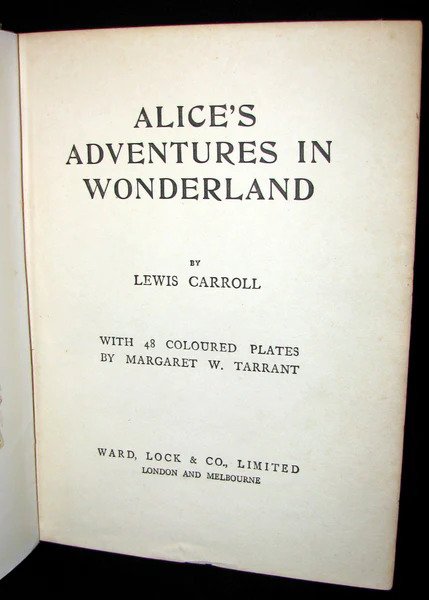
It’s been a while since I shared another example from the seemingly endless versions of Lewis Carroll’s classic Alice’s Adventure in Wonderland. This version from the 1920s features 48 full-color illustrations by Margaret W. Tarrant. The illustrator: Margaret Winifred Tarrant (1888 – 29 July 1959) was an English illustrator, and children’s author, specializing in depictions of fairy-like children and religious subjects. She began her career at the age of 20, and painted and published into the early 1950s. She was known for her children’s books, postcards, calendars, and print reproductions.


Posted in Art, Books, Europe, Libraries, Writing | Tagged , , | 2 Comments

We shall by morning Inherit the earth

MUSHROOMS
by Sylvia Plath

Overnight, very
Whitely, discreetly,
Very quietly

Our toes, our noses
Take hold on the loam,
Acquire the air.

Nobody sees us,
Stops us, betrays us;
The small grains make room.

Soft fists insist on
Heaving the needles,
The leafy bedding,

Even the paving.
Our hammers, our rams,
Earless and eyeless,

Perfectly voiceless,
Widen the crannies,
Shoulder through holes. We

Diet on water,
On crumbs of shadow,
Bland-mannered, asking

Little or nothing.
So many of us!
So many of us!

We are shelves, we are
Tables, we are meek,
We are edible,

Nudgers and shovers
In spite of ourselves.
Our kind multiplies:

We shall by morning
Inherit the earth.
Our foot’s in the door.

https://vimeo.com/33107001


Posted in Books, USA, Writing | Tagged , , | Leave a comment

First Around The World Trip

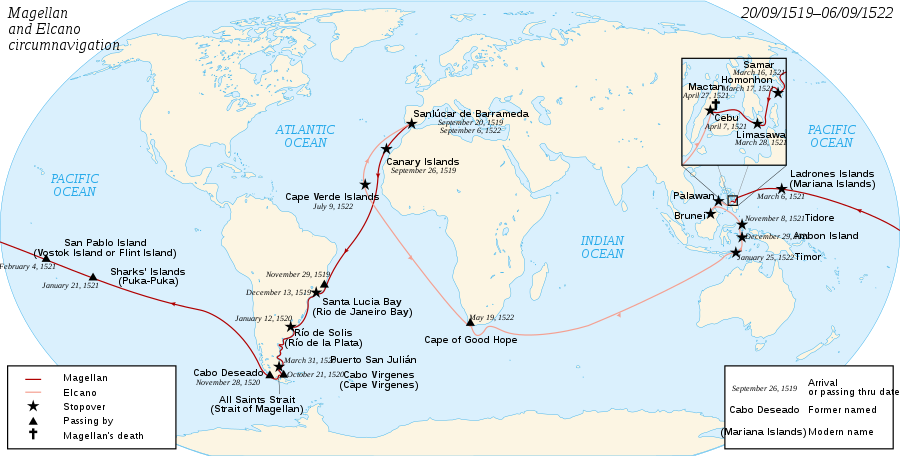
Ever since I was indoctrinated as a young child with filiopietistic reverence for Columbus and the entire panoply of European explorers, I’ve been fascinated by their extraordinary journeys. Recently, I discovered a wonderful website that traces the route of Ferdinand Magellan’s voyage around the globe.

On September 20, 1519, five ships with 239 men (the De Armada de Moluccas) set sail from Sanlúcar de Barrameda in Spain. The goal of the Armada de Moluccas was to establish a new route to the Moluccan Islands, in  presentday Indonesia. On September 6, 1522, only one of those ships, the Victoria, returned to Spain. It was the first ship to circumnavigate the world. Only 18 men returned to Spain on the Victoria. Many of the others died on the voyage, including Captain Ferdinand Magellan, who was killed in the Philippines in April 1521. The First Around the Worldis an interactive site showing the route of the Armada de Moluccas. The map also shows signifigant events of the trip, such as the kidnapping and chaining of two Indians from the Tehuelches tribe, the burning of a village in Guam, and an attack on Mactan Island that killed Captain Magellan.


Posted in Asia, Europe, History, Maps, Tech | Tagged , , , | Leave a comment