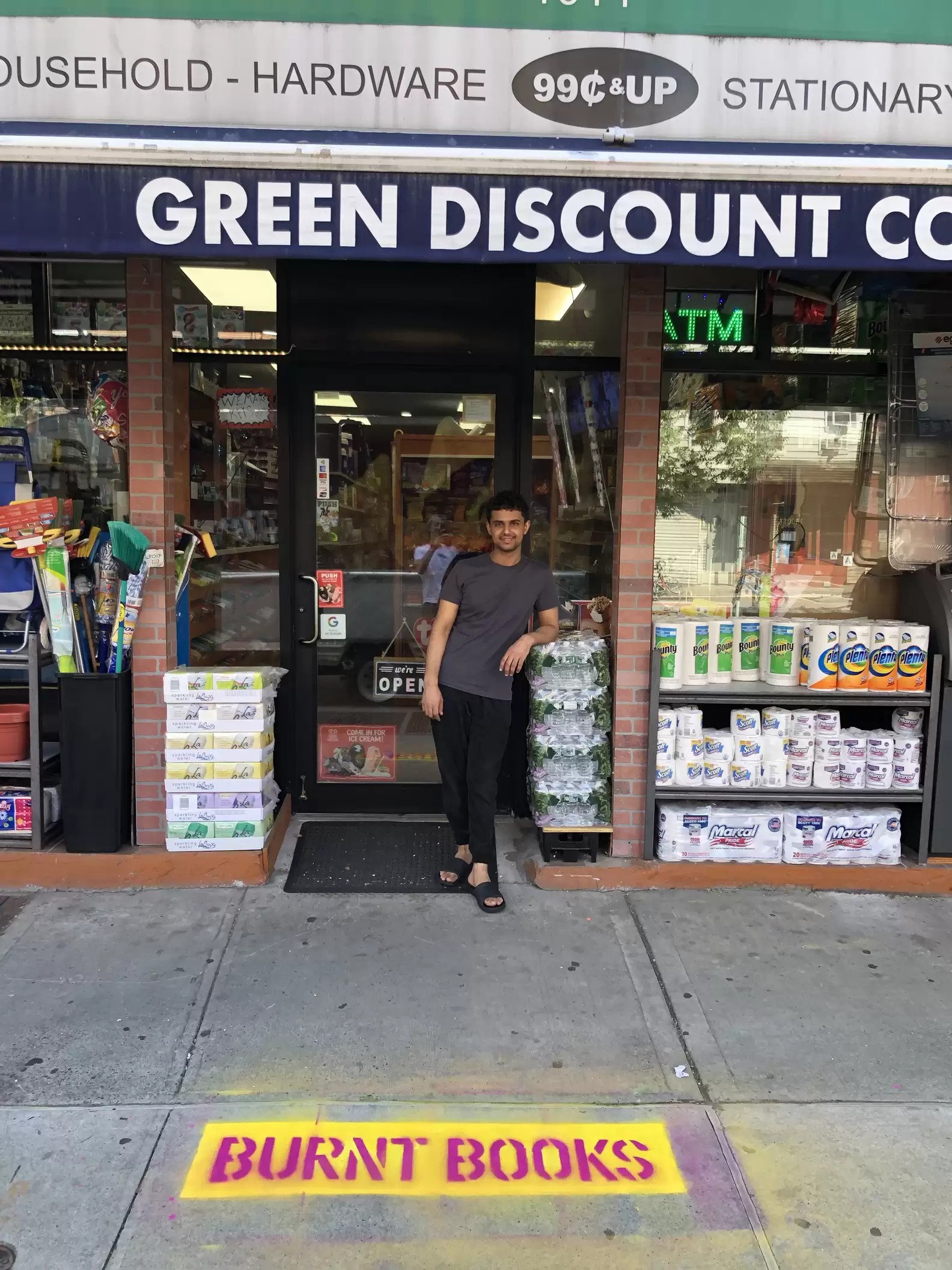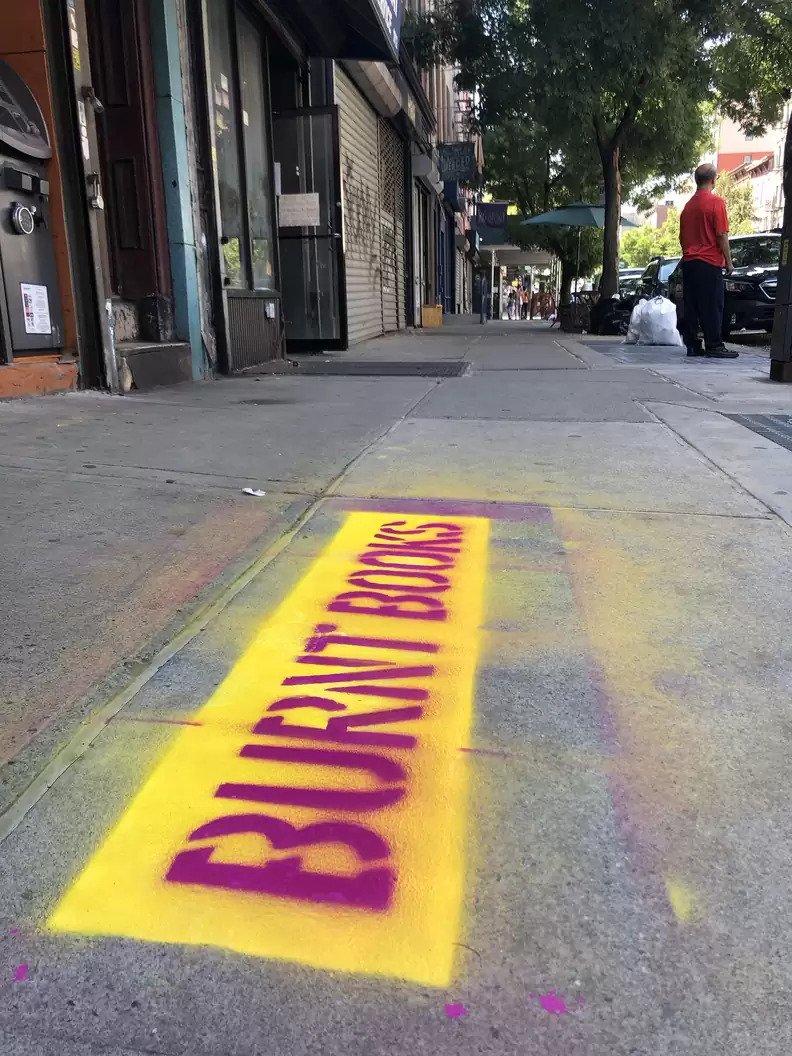
Sadly, book banning and even book burning continues to be in the news here in the USA. Just this week, I saw a video of members of a State legislature demanding the books that they found objectionable be removed from community libraries and actually be publically burned. This insanity always brings to mind the famous and prescient quote from the German poet Heinrich Heine, “Where they burn books, they will ultimately burn people.” It also reminds me of the story of Kurt Vonnegut’s response to the burning of his novel Slaughterhouse -Five by a school board in North Dakota in 1973.
Ever since first being published in 1967, Kurt Vonnegut’s semi-autobiographical, antiwar classic, Slaughterhouse-Five, has been and continues to be banned from classrooms and libraries. In 1973, Bruce Severy, a teacher at Drake High School, North Dakota, attempted to assign the novel to his English class. However, the head of the school board, Charles McCarthy, had other ideas. He demanded that all thirty-two copies be burned in the school’s furnace. On November 16, 1973, an angry and disappointed Vonnegut wrote to McCarthy to make his feelings known.
November 16, 1973 Dear Mr. McCarthy:
I am writing to you in your capacity as chairman of the Drake School Board. I am among those American writers whose books have been destroyed in the now famous furnace of your school.
Certain members of your community have suggested that my work is evil. This is extraordinarily insulting to me. The news from Drake indicates to me that books and writers are very unreal to you people. I am writing this letter to let you know how real I am.
I want you to know, too, that my publisher and I have done absolutely nothing to exploit the disgusting news from Drake. We are not clapping each other on the back, crowing about all the books we will sell because of the news. We have declined to go on television, have written no fiery letters to editorial pages, have granted no lengthy interviews. We are angered and sickened and saddened. And no copies of this letter have been sent to anybody else. You now hold the only copy in your hands. It is a strictly private letter from me to the people of Drake, who have done so much to damage my reputation in the eyes of their children and then in the eyes of the world. Do you have the courage and ordinary decency to show this letter to the people, or will it, too, be consigned to the fires of your furnace?
I gather from what I read in the papers and hear on television that you imagine me, and some other writers, too, as being sort of ratlike people who enjoy making money from poisoning the minds of young people. I am in fact a large, strong person, fifty-one years old, who did a lot of farm work as a boy, who is good with tools. I have raised six children, three my own and three adopted. They have all turned out well. Two of them are farmers. I am a combat infantry veteran from World War II, and hold a Purple Heart. I have earned whatever I own by hard work. I have never been arrested or sued for anything. I am so much trusted with young people and by young people that I have served on the faculties of the University of Iowa, Harvard, and the City College of New York. Every year I receive at least a dozen invitations to be commencement speaker at colleges and high schools. My books are probably more widely used in schools than those of any other living American fiction writer.
If you were to bother to read my books, to behave as educated persons would, you would learn that they are not sexy, and do not argue in favor of wildness of any kind. They beg that people be kinder and more responsible than they often are. It is true that some of the characters speak coarsely. That is because people speak coarsely in real life. Especially soldiers and hardworking men speak coarsely, and even our most sheltered children know that. And we all know, too, that those words really don’t damage children much. They didn’t damage us when we were young. It was evil deeds and lying that hurt us.
After I have said all this, I am sure you are still ready to respond, in effect, “Yes, yes— but it still remains our right and our responsibility to decide what books our children are going to be made to read in our community.” This is surely so. But it is also true that if you exercise that right and fulfill that responsibility in an ignorant, harsh, un-American manner, then people are entitled to call you bad citizens and fools. Even your own children are entitled to call you that.
I read in the newspaper that your community is mystified by the outcry from all over the country about what you have done. Well, you have discovered that Drake is a part of American civilization, and your fellow Americans can’t stand it that you have behaved in such an uncivilized way. Perhaps you will learn from this that books are sacred to free men for very good reasons, and that wars have been fought against nations which hate books and burn them. If you are an American, you must allow all ideas to circulate freely in your community, not merely your own.
If you and your board are now determined to show that you in fact have wisdom and maturity when you exercise your powers over the education of your young, then you should acknowledge that it was a rotten lesson you taught young people in a free society when you denounced and then burned books— books you hadn’t even read. You should also resolve to expose your children to all sorts of opinions and information, in order that they will be better equipped to make decisions and to survive.
Again: you have insulted me, and I am a good citizen, and I am very real.
Kurt Vonnegut
In 2014, Benedict Cumberbatch read Vonnegut’s powerful letter at the annual Hay Literary Festival.
Last month, I found a very interesting piece in Smithsonian Magazine titled “How Much Medieval Literature Has Been Lost Over the Centuries,” which linked to six-minute video from the American Association for the Advancement of Science and the journal Science about how much medieval literature has been lost over the past 500+ years. The video describes how group of European scholars has applied an ecological theory — the “unseen species model” — to try to determine the survival rate of medieval manuscripts. The estimate is about 9 percent overall; English literature is even lower. The topic sounds dry, but even non-bibliophiles will find it fascinating.
NB: If the video does not appear in your email. please check it out directly on the blog website.
The brutal and unprovoked Russian invasion of Ukraine has led to serious discussions about expanding NATO and frequent examinations of existing European borders. Russia has land borders with fourteen countries, but just five of them are currently NATO members. Ironically, the longest unchanged border is between Norway and Russia.
Norway’s land border with Russia is just 123 miles (198 km) long and is the northernmost portion of the NATO-Russia land border. Over the years, Norway has maintained a careful attitude toward their neighbor. In the fact, the Russo-Norwegian border hasn’t changed since 1826 and that Norway is the only neighbor with which Russia has never been at war.
In 1950, Norway passed the so-called riksgrenseloven, a law designed to manage its border with the Soviet Union. The law, which is still on the books, specifically prohibits:
“offensive behavior directed at the neighboring state or its authorities”;
photographing the neighbor’s territory at a distance of up to 1,000 meters from the border; and
conversation or other communication across the border between persons who do not have permission from the relevant authority.
Who doesn’t love an old fashioned haunted library. I recently learned about the library at Felbrigg Hall, a 17th-century country house in Norfolk, England that is home to a genuine bibliophile ghost. Set in a grand National Trust country home, the library was designed in the 1750s by architect James Paine. It houses about 5,000 books, terrestrial and celestial globes and a secret door. The elegant librsry is also reputed to be haunted by former owner William Windham III(1750-1810), a lover of books who died of injuries sustained while attempting to rescue a friend’s library collection from a fire. According to local legend, his spirit is known to appear if the correct combination of his favourite books are laid out on the library table. Visitors to the house claim to have seen the apparition sitting at the library table or in his favorite library chair book in hand.
Bergen Norway is a stunningly beautiful small city with lots to offer any visitor. One morning last year the town was treated to a unique musical event that was created by the Native American composer Raven Chacon. Four ships in the harbor collaborated on “Chorale” which as performed on the ships’ fog horns. It’s worth checking out the video below just for a glimpse of Bergen.
Starting tomorrow you can participate in a brilliant web project featuring the iconic vampire novel by Bram Stoker. Dracula Daily: “Bram Stoker’s Dracula is an epistolary novel – it’s made up of letters, diaries, telegrams, newspaper clippings – and every part of it has a date. The whole story happens between May 3 and November 10. So: Dracula Daily will post a newsletter each day that something happens to the characters, in the same timeline that it happens to them. Now you can read the book via email, in small digestible chunks – as it happens to the characters.”
If you visit TBTP regularly, you are probably aware that I have a bit of a museum obsession. In fact, it’s been said that I never miss the opportunity to visit a museum no matter how small or obscure. Now, I’ve discovered a website that does nothing but explore unusual museums.
Niche Museums is the passion project of Simon Willison. Each week he adds another odd, but interesting attraction to explore. Here’s what he has to say about the project:
Why niche museums? So many reasons:
Once you start looking, there are museums about everything. And they are everywhere!
If someone cared enough about something to create a museum, that thing is interesting.
The smaller the museum is, the more likely you are to meet the person who founded it. These are people you definitely want to meet.
My aim is to add a new museum to this website every week. The most recently added museum is always the first item on the homepage.
A random sample of the website uncovered some great museums that I wouldn’t pass up. For example, the Beat Museum in San Fransico (photo above), which collects memorabilia of the Beat Generation. And the New Orleans Historic Voodoo Museum with a collection that includes antique voodoo dolls, talismans, taxidermy and multiple altars, some of which are used by Voodoo practitioners today.
Every coffeeshop in the world these days seems to be populated by folks busily working on writing projects of some kind. Now a café located in the Koenji district of Tokyo has opened to help writers meet their project goals. The Manuscript Writing Cafe, is designed to operate as supportive space for writers who need to get work done when up against a deadline. It’s not just a gimmick—those are the actual rules in order to use the café, you need to be a writer trying to clear a deadline.
There are several rules that patrons must obey when visiting the Manuscript Writing Cafe. First, you must notify staff of the number of words you need to write, and by when. Every hour, a staff member will come and check in on you. You can choose what tone of voice you would like to have the check-ins: “mild, normal or hard.”
Rates begin at 150 yen for the first 30 minutes and are 300 yen for every hour. If you’re there for 6 hours, that would be 1800 yen. However, if you haven’t finished the work you declared upon entering, the staff will not let you pay. And if you can’t pay, you can’t leave.
The café is equipped for writing with USB ports, Wi-Fi, and computer stands. The cafe also allows customers to bring in food and drink and even have it delivered.
There is fairly wide latitude in what the management considers appropriate writing work. The “manuscript writing” at the coffeeshop includes translation work, proposal writing, layout work, image processing, editing, journalism, fiction and non-fiction writing, etc.. In an English subtitled video below, the manager explains the concept of the cafe:
NB: If the video link doesn’t show please visit the TBTP website directly.