
I’m seriously considering building one of these book igloos and moving in for the duration of the pandemic. These book sculptures are the work of the brilliant Columbian artist Miler Lagos.


I’m seriously considering building one of these book igloos and moving in for the duration of the pandemic. These book sculptures are the work of the brilliant Columbian artist Miler Lagos.

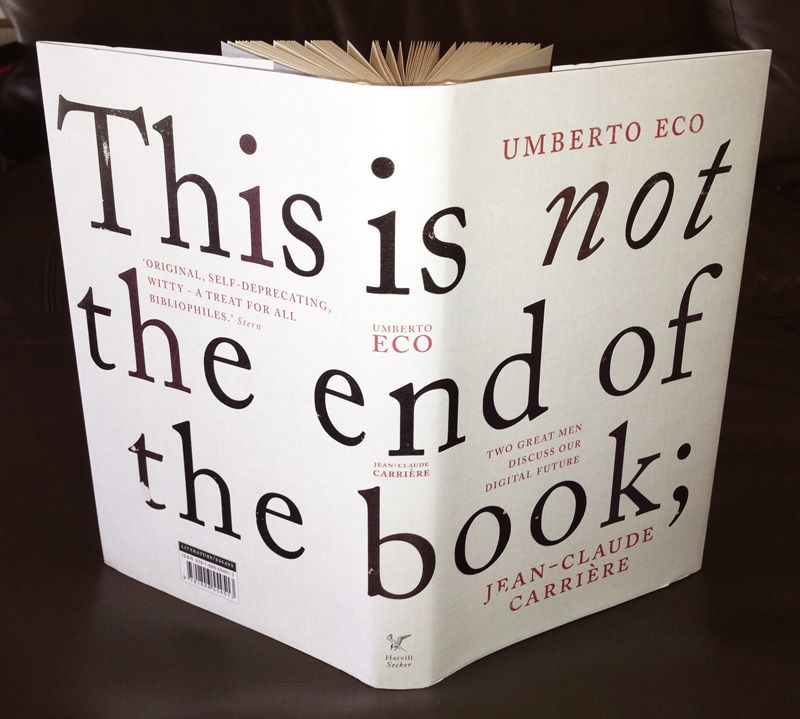
I was recently asked by a TBTP subscriber why I never posted any stories about e-books or e-readers. My flippant response was to share the quote (above) from the late, great author/philosopher/bibliophile Umberto Eco from his book This Is Not the End of the Book.
“The book is like the spoon, scissors, the hammer, the wheel. Once invented, it cannot be improved. You cannot make a spoon that is better than a spoon.”
In retrospect, I think that the original query deserves a more nuanced response. As a bookseller, book collector, erstwhile author, sometime editor, life-long reader, and blogger, I am an unwavering book lover who believes that no digital alternative comes close to the printed paper page. Still, that does not mean that I am a Luddite against electronic publishing. I read books and periodicals on my iPad and iPhone, and I’ve owned a Kindle for years. No more carrying multiple paperbacks with me when I travel and no more scrounging English language books when I run out of reading material on long trips.
The traditional printed book is not perfect. Books have become expensive to produce, too often limiting ownership and access. It still is a time-consuming, labor intensive process to publish and distribute print books. Once a book is printed, it is not easily updated. But until electronic publishing finds a way to rival the multisensory experience of reading even a modestly produced physical book, it will continue to provide only a second rate reading experience, and the death of the book will be postponed once more.
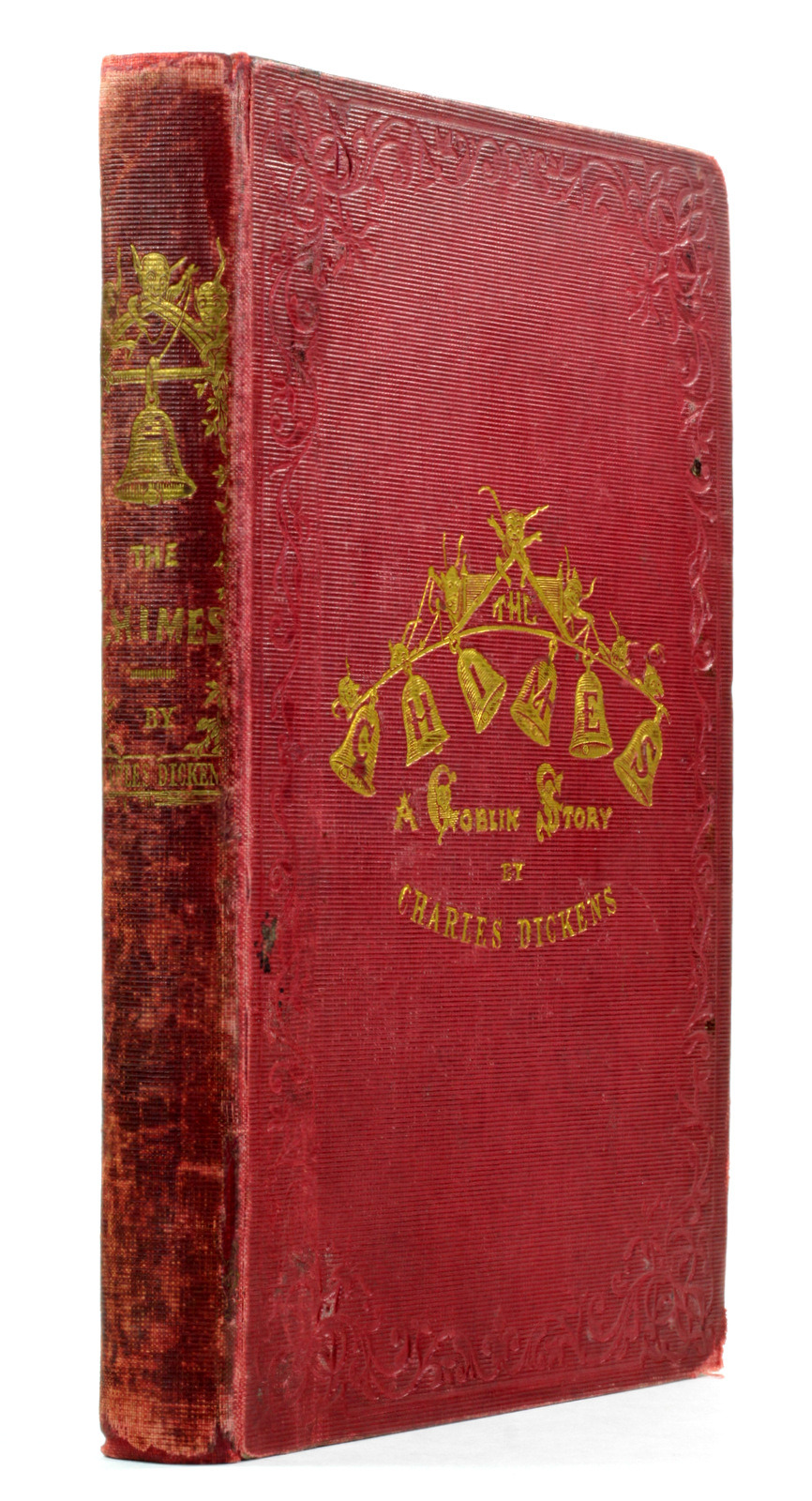
The Chimes: A Goblin Story of Some Bells that Rang an Old Year Out and a New Year In, commonly referred to as The Chimes, is a novella written by Charles Dickens and first published in 1844, one year after A Christmas Carol. It is the second in his series of “Christmas books,” five novellas with strong social and moral messages that he published during the 1840s. In addition to A Christmas Carol and The Chimes, the Christmas books include The Cricket on the Hearth (1845), The Battle of Life (1846), and The Haunted Man and the Ghost’s Bargain (1848).
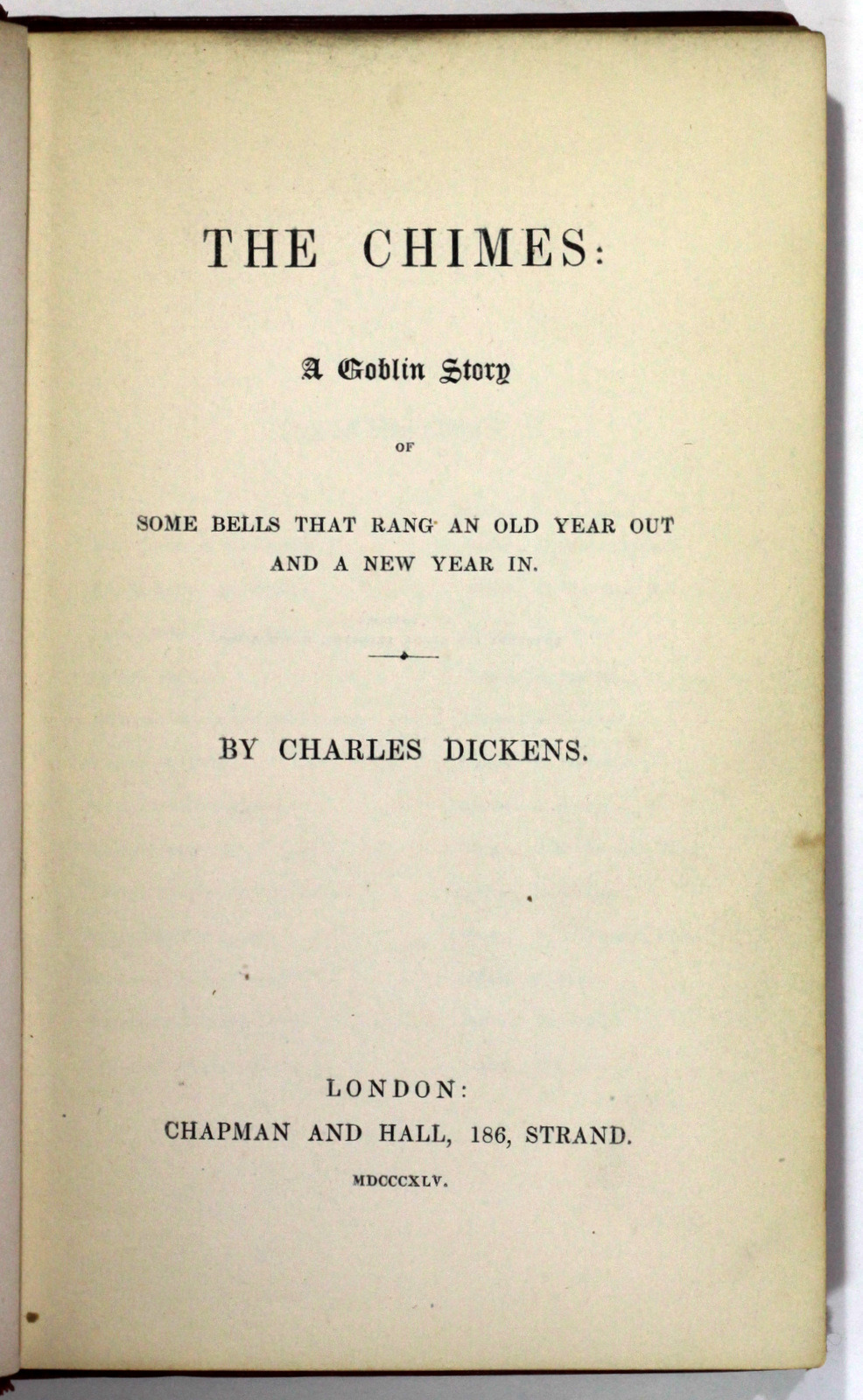
The book was written in late 1844, during Dickens’ year-long visit to Italy. John Forster, his first biographer, records that Dickens, hunting for a title and structure for his next contracted Christmas story, was struck one day by the clamour of the Genoese bells audible from the villa where they were staying. Two days later Forster received a letter from Dickens which read simply: “”We have heard THE CHIMES at midnight” and the writing of the book began. Forster describes Dickens’ intentions in writing The Chimes as striking “a blow for the poor”.

The novella is a political story like its predecessor A Christmas Carol, written with the intention of swaying readers towards Dickens’ moral message. The chimes represent time, and the main themes of the story are summarised in the three wrongs they accuse the character Trotty of committing:
• Harking back to a golden age that never was, instead of striving to improve conditions here and now.
• Believing that individual human joys and sorrows do not matter to a higher power.
• Condemning those who are fallen and unfortunate, and offering them neither help nor pity.
‘Who turns his back upon the fallen and disfigured of his kind; abandons them as vile; and does not trace and track with pitying eyes the unfenced precipice by which they fell from good—grasping in their fall some tufts and shreds of that lost soil, and clinging to them still when bruised and dying in the gulf below; does wrong to Heaven and man, to time and to eternity. And you have done that wrong!’
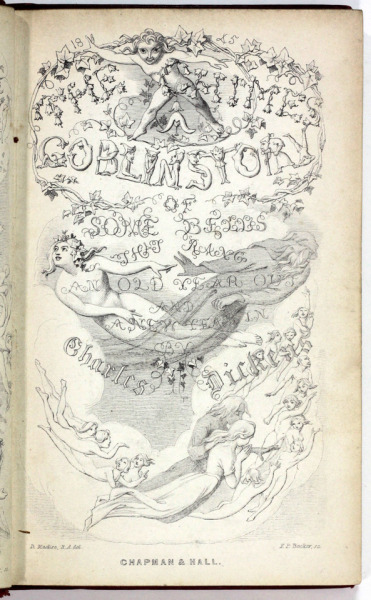
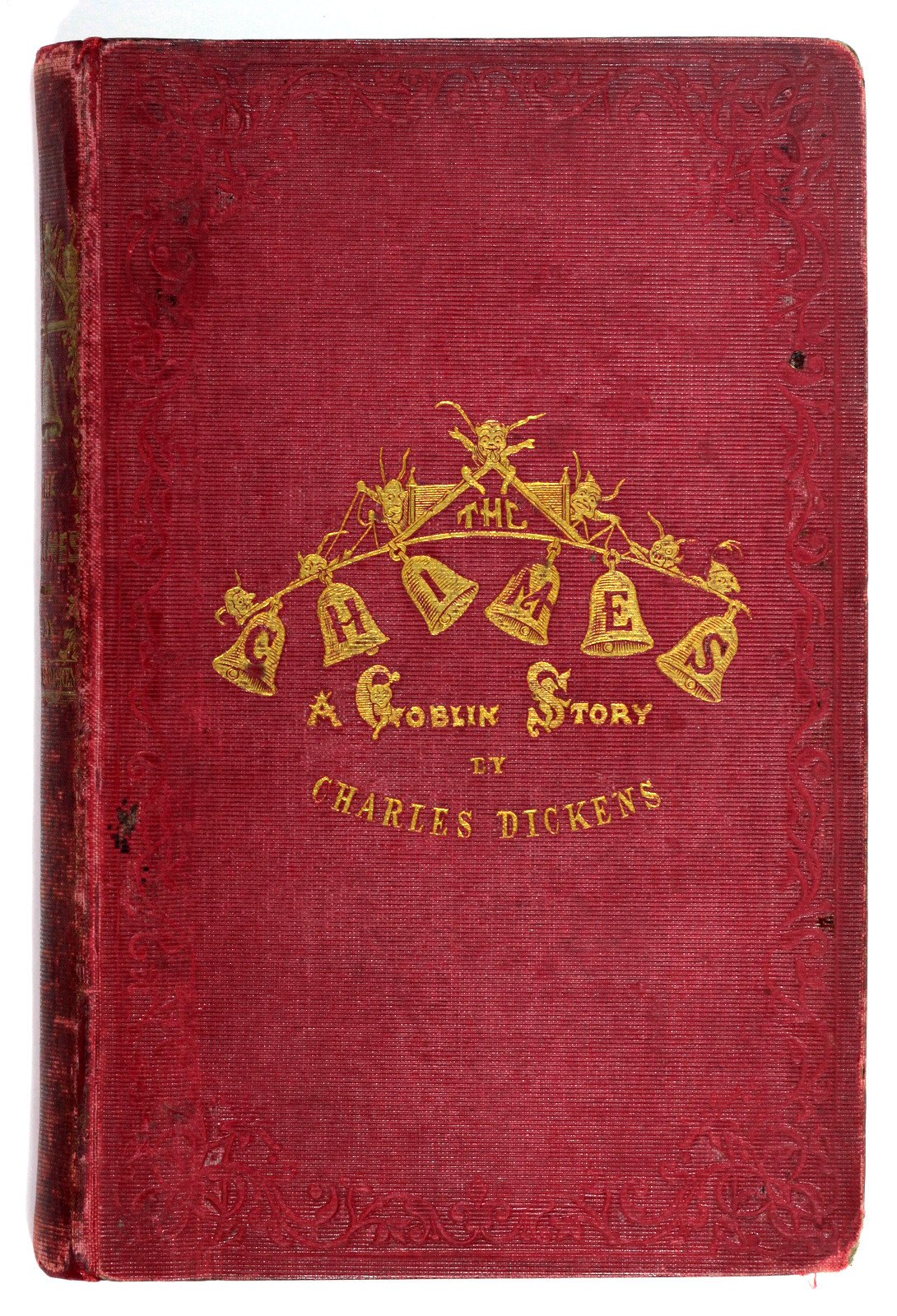
If you’re interested, the ebook is available for free on Gutenberg here.
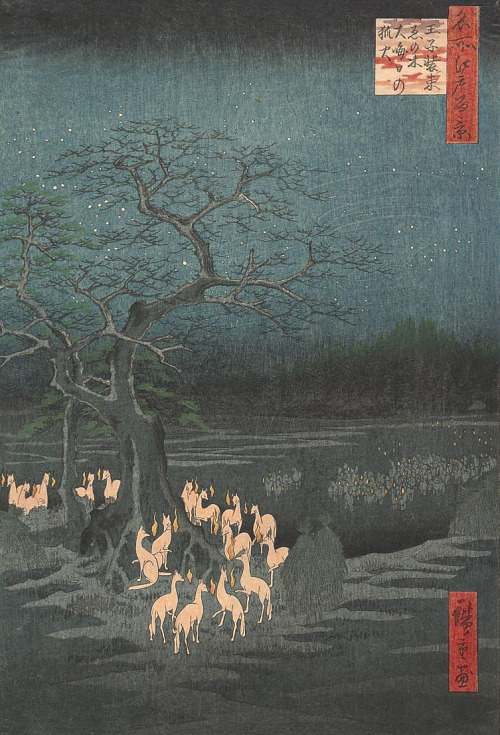
Foxes gather at the large, old enoki (hackberry) tree on New Year’s Eve to prepare to pay homage at the Ōji Inari shrine, the headquarters of the Inari cult in eastern Japan (Kantō). The cult centers on the god of the rice field, for whom the fox serves as messenger. On the way to Ōji, the foxes have set a number of kitsunebi (foxfires), which farmers count to predict the upcoming rice harvest. Hiroshige’s print successfully conveys the mysterious atmosphere of the rite as the procession of foxes bearing fires approaches from the distant, dark forest under a starry sky.
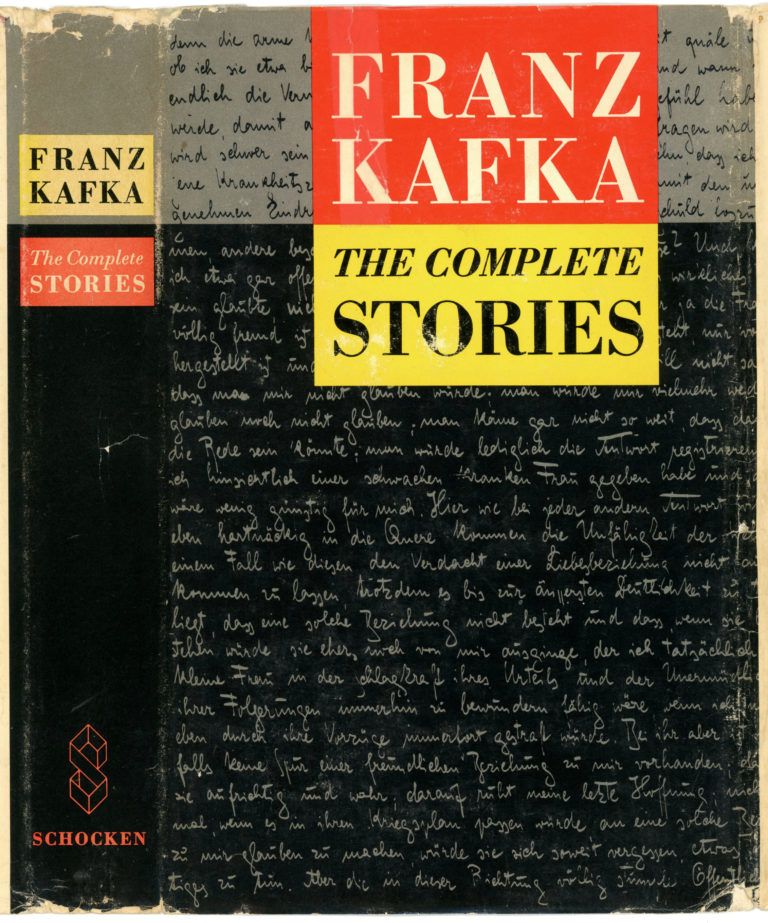
Before the Law stands a doorkeeper.
To this doorkeeper there comes a man from the country and prays for admittance to the Law.
But the doorkeeper says that he cannot grant admittance at the moment.
The man thinks it over and then asks if he will be allowed in later.
“It is possible,” says the doorkeeper, “but not at the moment.”
Since the gate stands open, as usual, and the doorkeeper steps to one side,
the man stoops to peer through the gateway into the interior.
Observing that, the doorkeeper laughs and says:
“If you are so drawn to it, just try to go in despite of my veto.
But take note: I am powerful.
And I am only the least of the doorkeepers.
From hall to hall there is one doorkeeper after another, each more powerful than the last.
The third doorkeeper is already so terrible that even I cannot bear to look at him.”
These are difficulties the man from the country has not expected;
the Law, he thinks, should surely be accessible at all times and to everyone,
but as he now takes a closer look at the doorkeeper in the far corner,
with his big sharp nose and long, thin, black Tartar beard,
he decides that it is better to wait until he gains permission to enter.
The doorkeeper gives him a stool and lets him sit down at one side of the door.
There he sits for days and years.
He makes many attempts to be admitted, and wearies the doorkeeper by his importunity.
He doorkeeper frequently has little interviews with him,
asking him questions about his home and many other things,
but the questions are put indifferently,
as great lords put them, and always finish with the statement that he cannot be let in yet.
The man, who has furnished himself with many things for his journey,
sacrifices all he has, however valuable, to bribe the doorkeeper.
The doorkeeper accepts everything, but always with the remark:
“I am only taking it to keep you from thinking you have omitted anything.”
During these many years the man fixes his attention almost continuously on the doorkeeper.
He forgets the other doorkeepers,
and this first one seems to him the sole obstacle preventing access to the Law.
He curses his bad luck;
in his early years boldly and loudly;
later, as he grows old, he only grumbles to himself.
He becomes childish,
and since in his yearlong contemplation of the doorkeeper
he has come to know even the fleas in his fur collar,
he begs the fleas as well to help him and to change to doorkeeper’s mind.
At length his eyesight begins to fail,
and he does not know whether the world is really darker or whether his eyes are only deceiving him.
Yet in his darkness he is now aware of a radiance
that streams inextinguishably from the gateway of the Law.
Now he has not very long to live.
Before he dies, all his experiences in these long years gather themselves in his head to one point,
a question he has not yet asked the doorkeeper.
He waves him nearer, since he can no longer raise his stiffening body.
The doorkeeper has to bend low toward him,
for the difference in height between them has altered much to the man’s disadvantage.
“What do you want to know now?” asks the doorkeeper; “you are insatiable.”
“Everyone strives to reach the Law,” says the man,
“so how does it happen that for all these many years no one buy myself has ever begged for admittance?”
The doorkeeper recognizes that the man has reached his end,
and, to let his failing senses catch the words, roars in his ear:
“No one else could ever be admitted here, since this gate was made only for you.
I am now going to shut it.”
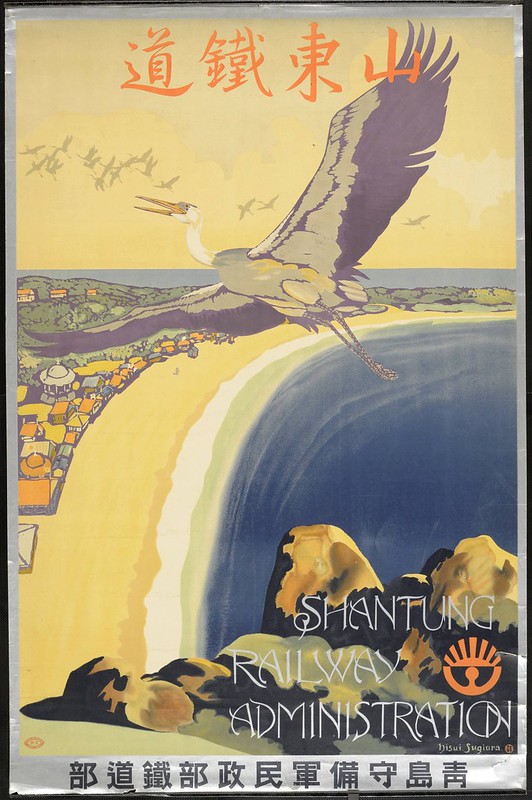
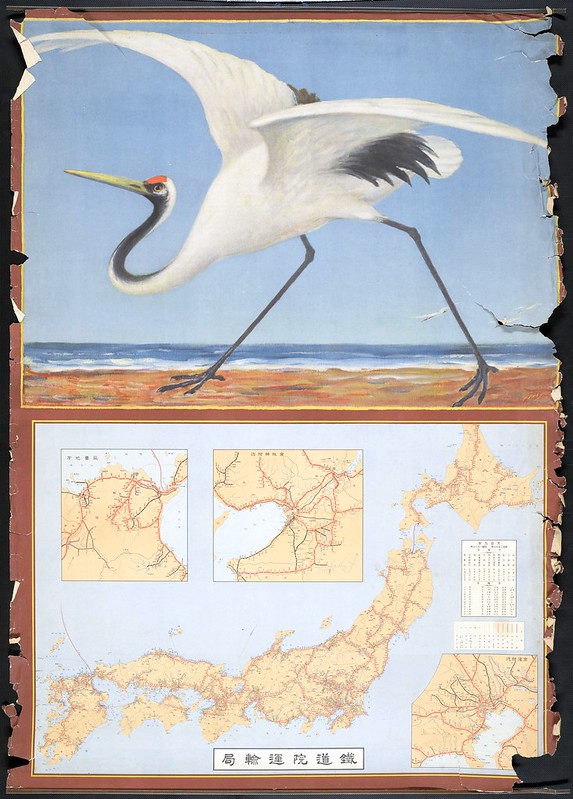
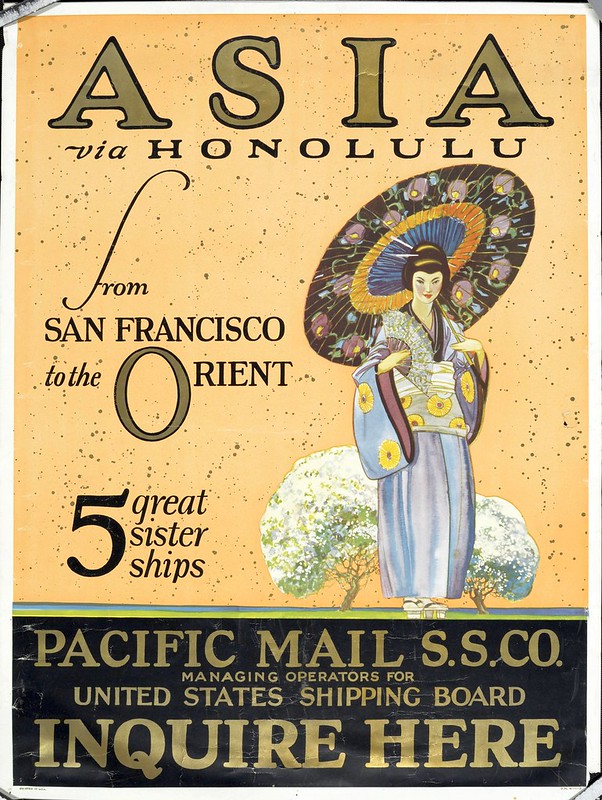
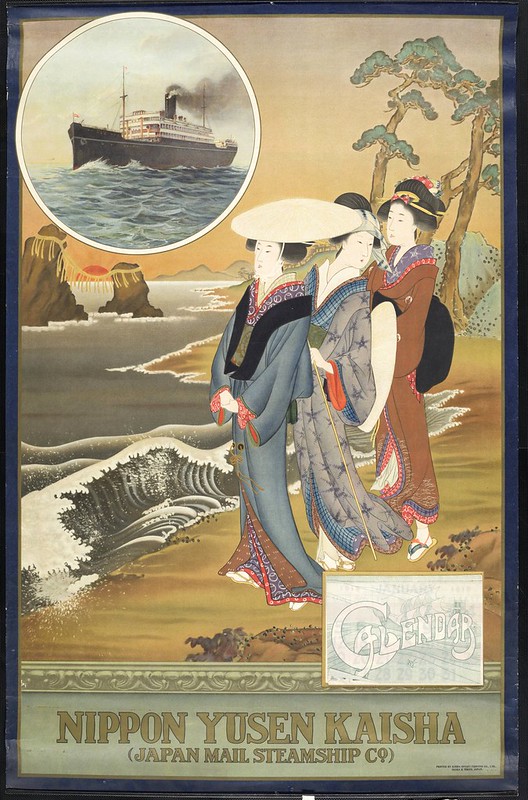
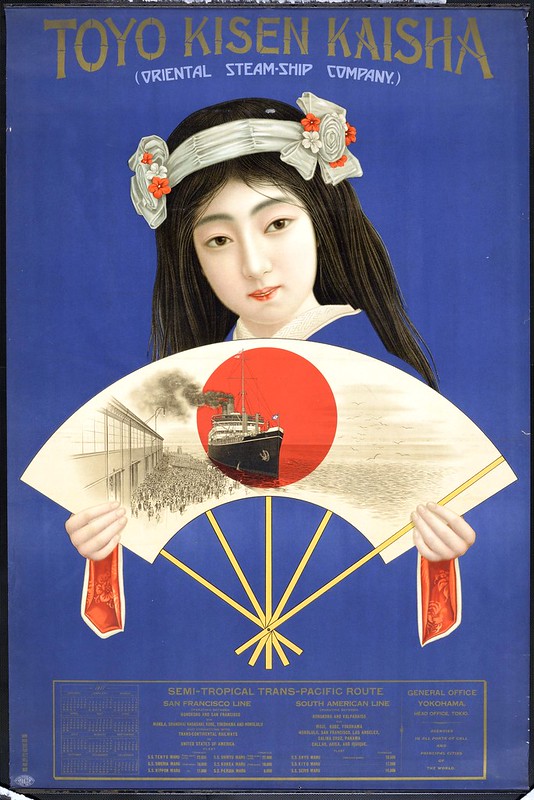
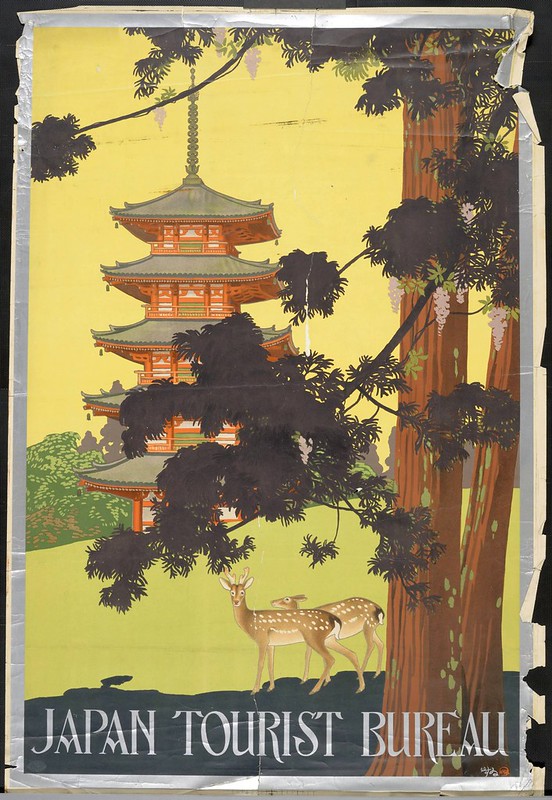
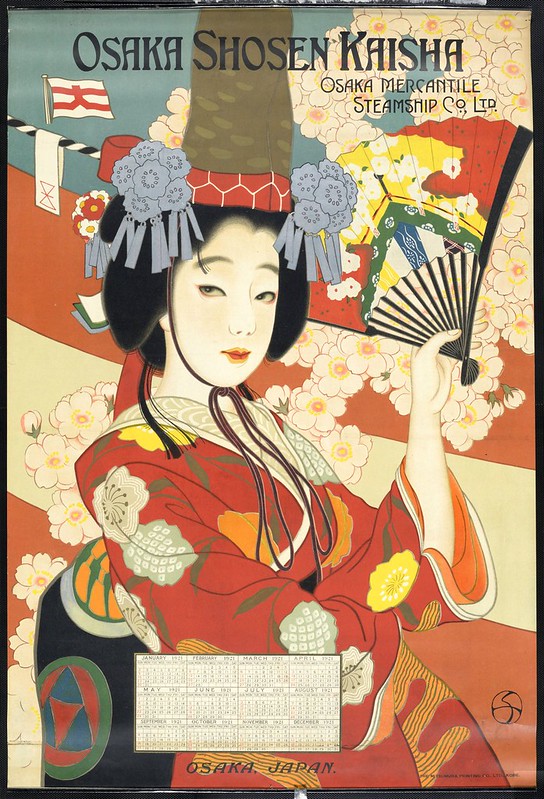
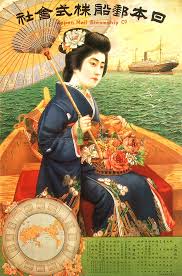
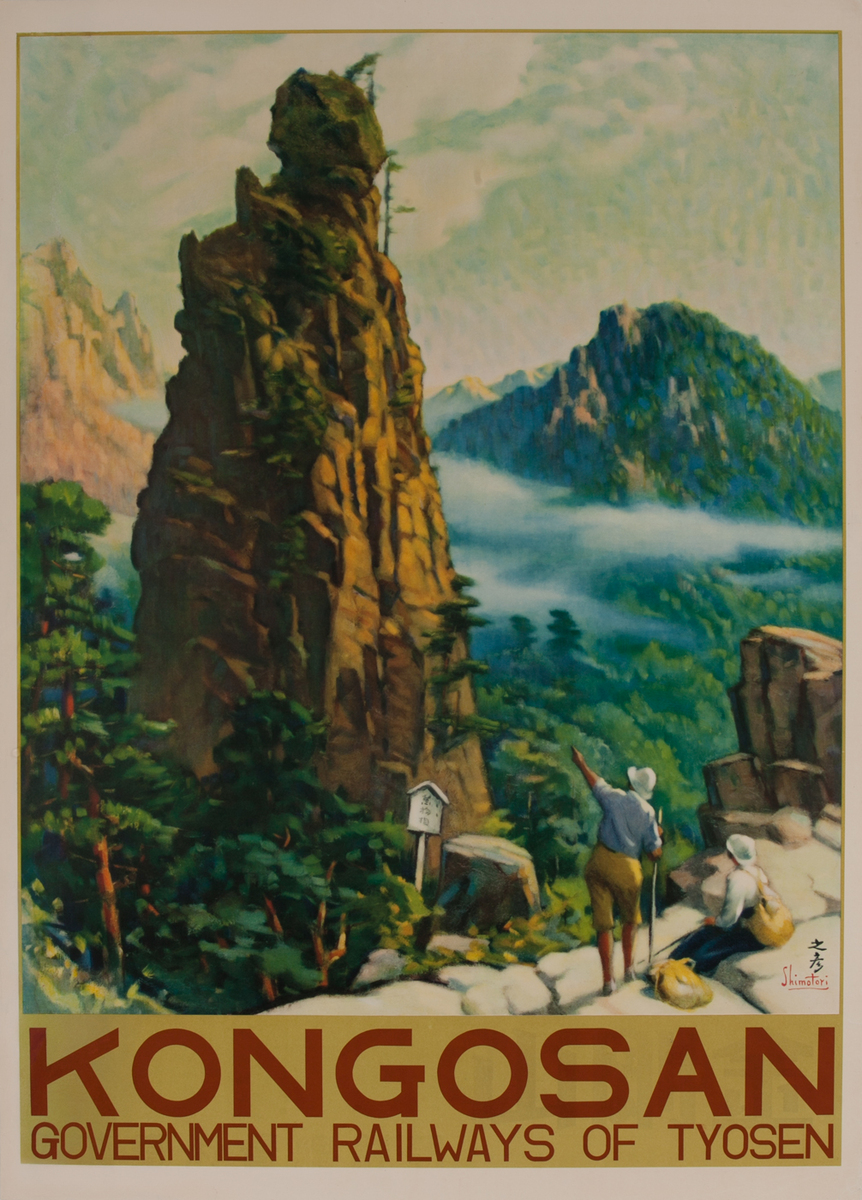
The end of the year always seems like the appropriate time to clear out my overwhelming cache of saved images. Of course there are lots of travel posters. This time I found a small collection of Japanese travel related posters. Most are from the Taishō period (大正時代 Taishō jidai?), or Taishō era, which is a period in the history of Japan dating from July 30, 1912, to December 25, 1926, coinciding with the reign of the Emperor Taishō”. Some of the posters carry over to the early Shōwa era: Emperor Shōwa (Hirohito) reigned from 1926 to 1989.
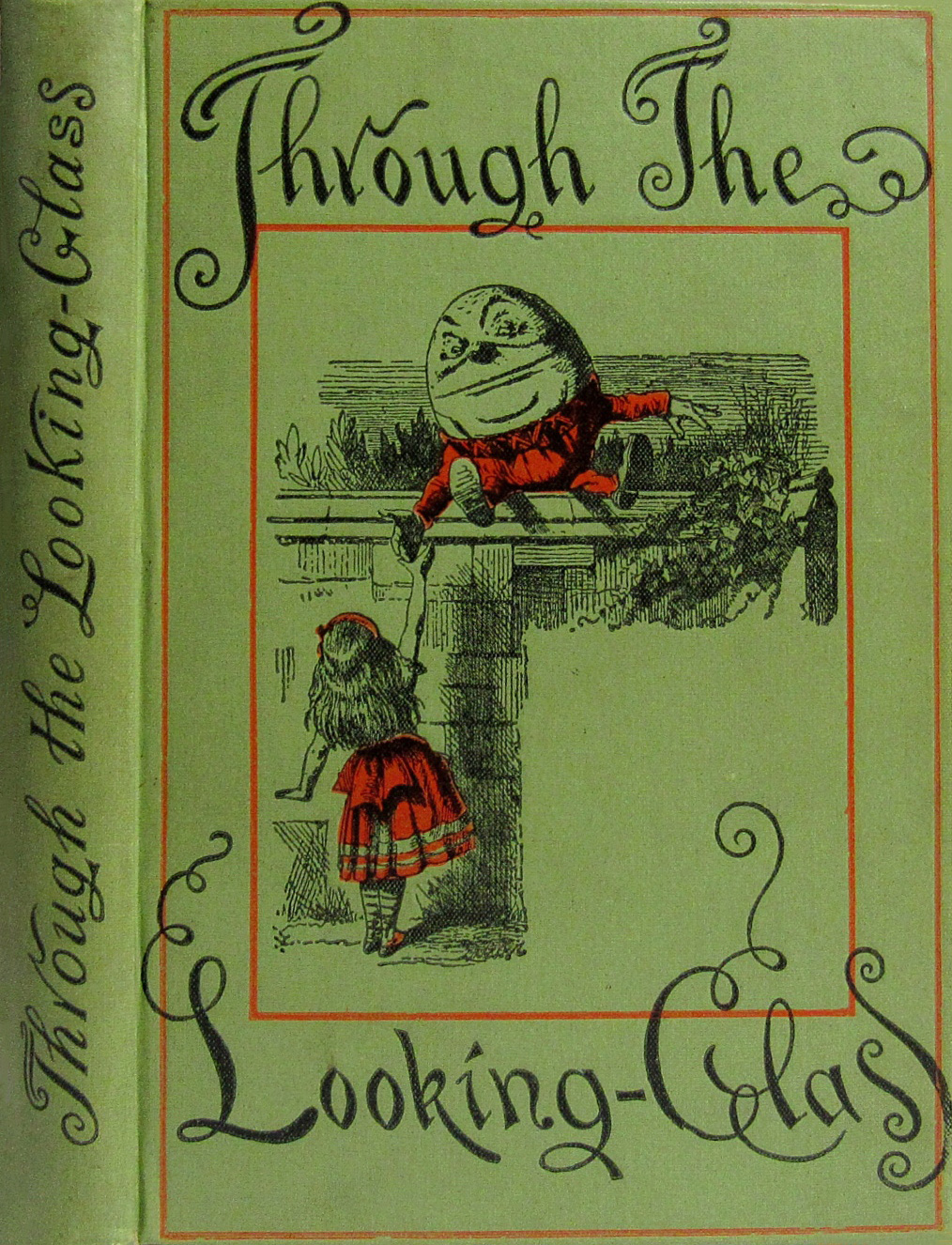
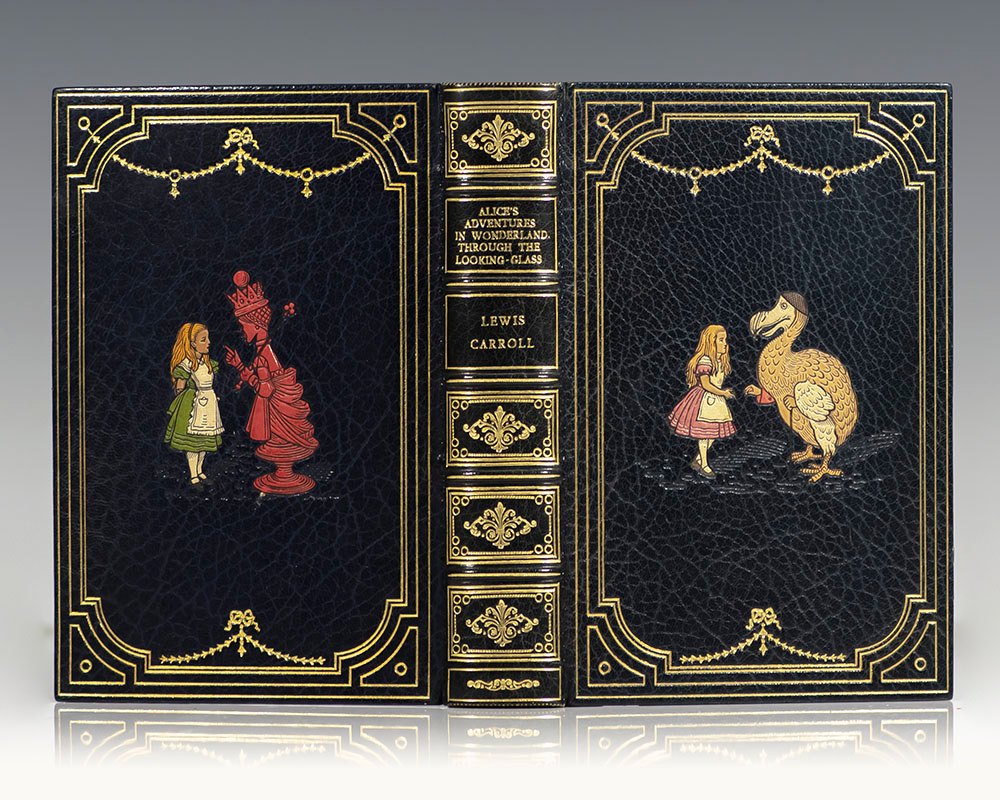
This week marks the 150th anniversary of the first publication of Through the Looking-Glass, and What Alice Found There (also known as Alice Through the Looking-Glass or simply Through the Looking-Glass). Although First edition copies may indicate 1872 as the publication date, the book was actual released during the last week of 1871. Lewis Carroll’s sequel to Alice’s Adventures in Wonderland (1865). Was a magical trip to an alternate world. The sequel has Alice enterning the fantasy realm by climbing through a mirror into the world that she can see beyond it. There she discovers that, just like a reflection, everything is reversed, including logic.
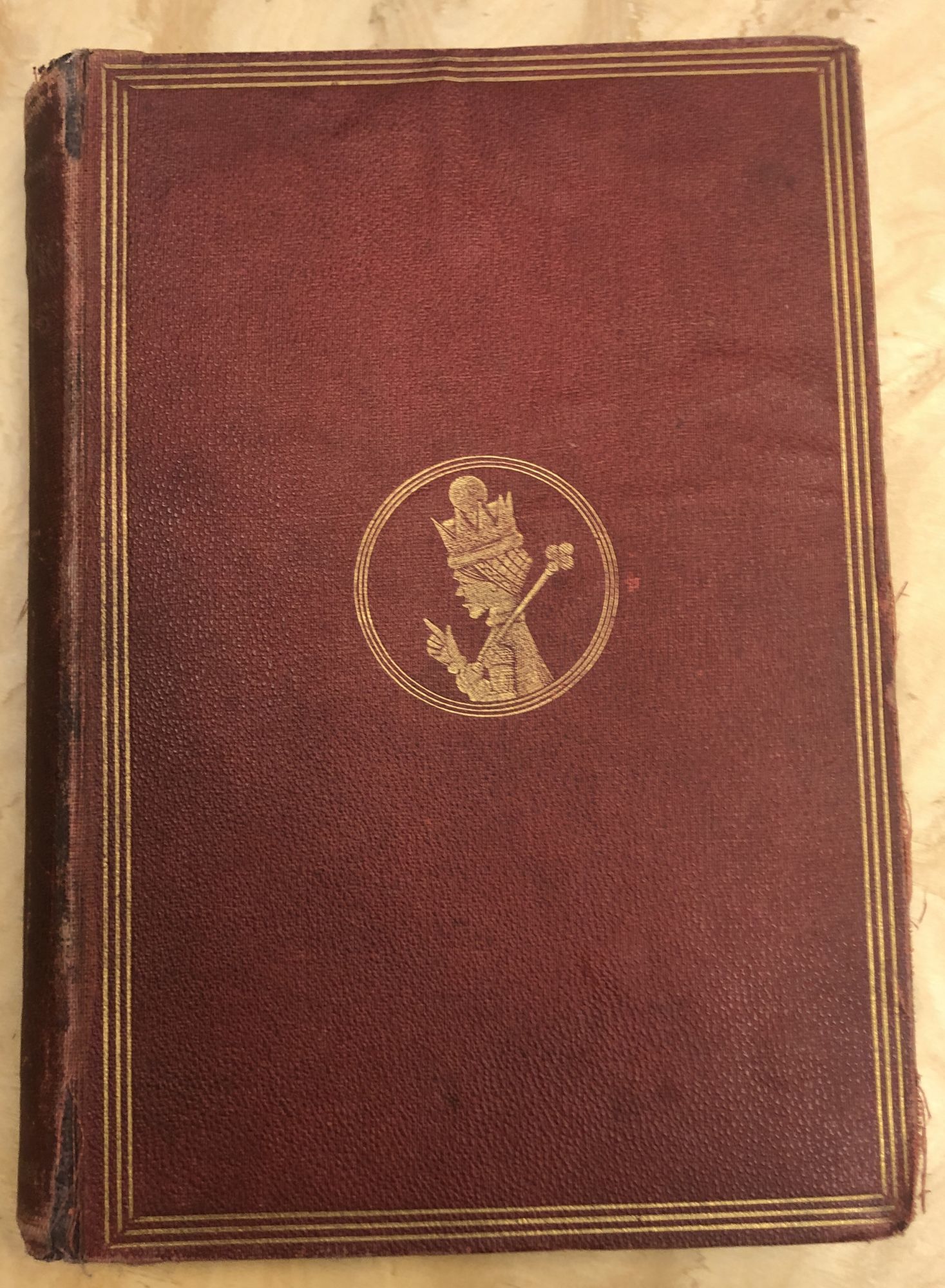
Through the Looking-Glass famously includes such verses as “Jabberwocky” and “The Walrus and the Carpenter“, and the episode involving Tweedledum and Tweedledee.
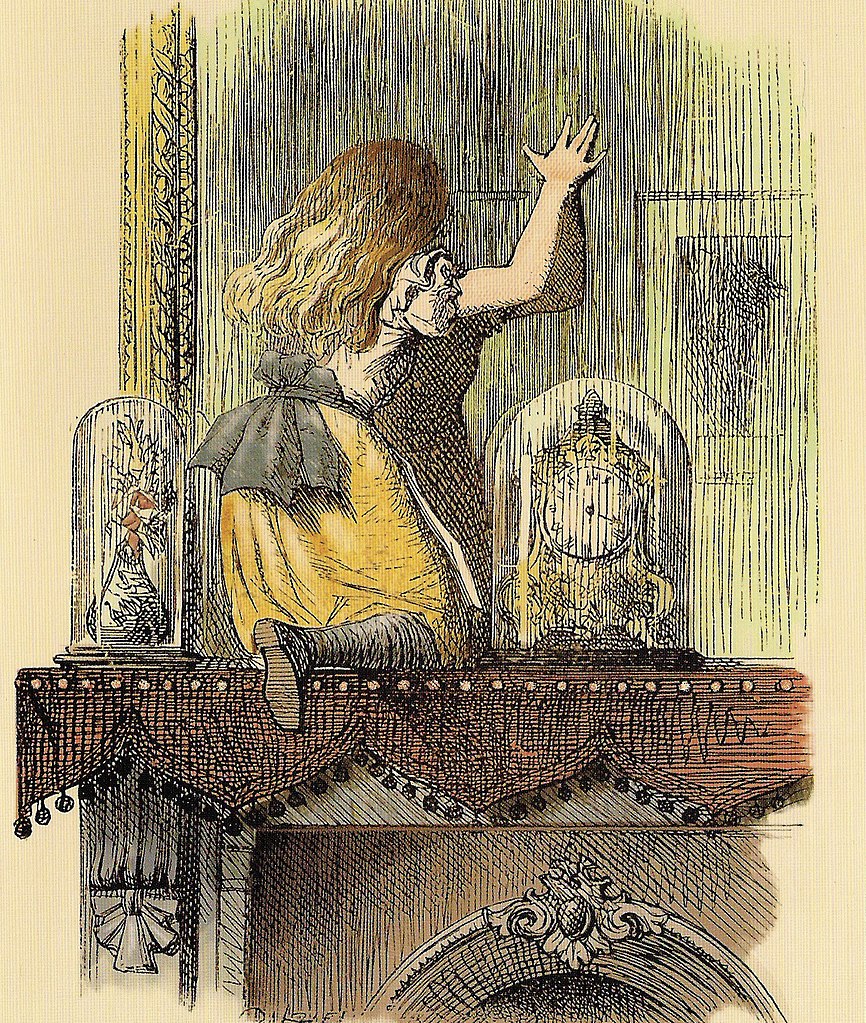
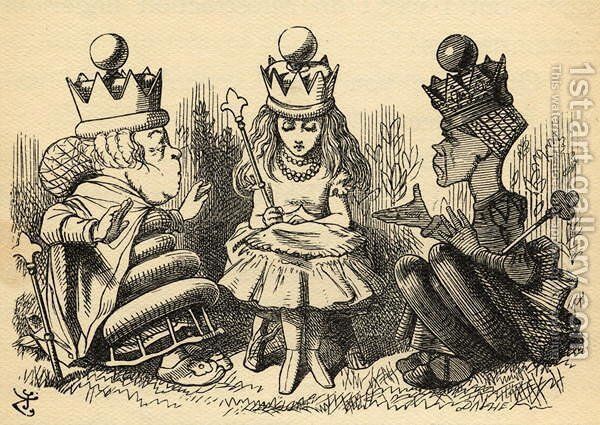
While the first Alice novel took playing cards as a theme, Through the Looking-Glass instead used chess; most of the main characters are represented by chess pieces, with Alice being a pawn. The looking-glass world consists of square fields divided by brooks or streams, and the crossing of each brook typically signifies a change in scene, with Alice advancing one square.
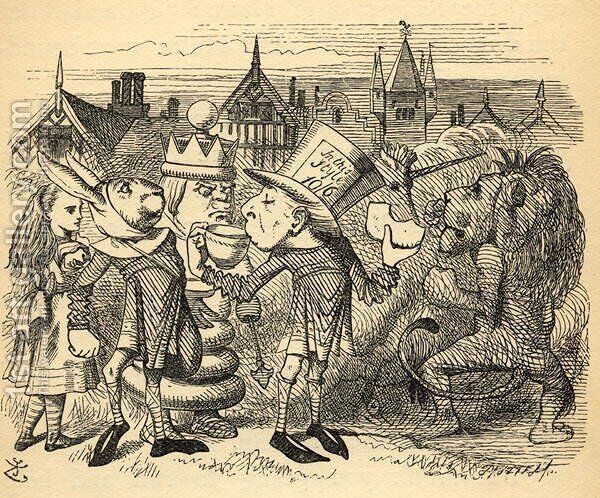
The First Edition of Through the Looking Glass was illustrated by Sir John Tenniel who was an English illustrator most famously known as a political cartoonist and the main illustrator for Alice’s Adventures in Wonderland. In total, Tenniel drew 92 drawings for both books in his signature style of pencil drawings which were then transferred to wood blocks. According to The Alice Companion by Jo Elwyn and J. Francis Gladstone, in 1981 the original wood blocks were found in a bank vault and are now at the British Library.
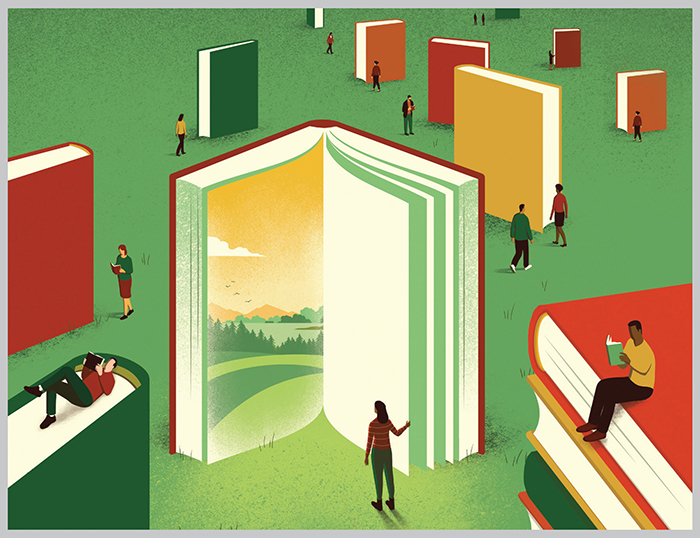
No doubt you have noticed the proliferation of Best Books of 2021 or Best Books of the Year lists that seem to be appearing all over the internet and in print periodicals. Every December, I take a deep dive into these lists to see which books i have missed over the past year and also to see how my opinions of the “best books” compares. As usual I have serious quibbles with many of the choices for the lists, but I’ll keep by notions to myself.
Here’s a far from comprehensive list with links to some of the “Best of 2021” compelations :
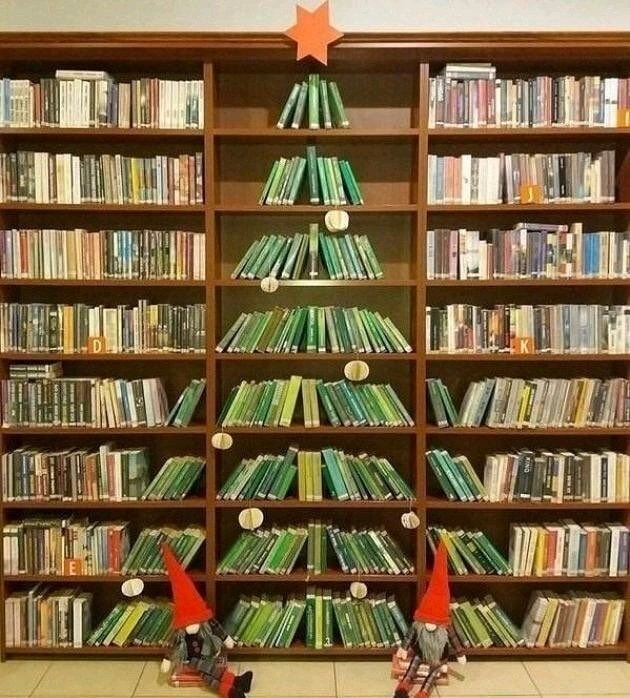
“A library is many things. It’s a place to go, to get in out of the rain. It’s a place to go if you want to sit and think. But particularly it is a place where books live, and where you can get in touch with other people, and other thoughts, through books. If you want to find out about something, the information is in the reference books – the dictionaries, the encyclopedias, the atlases. If you like to be told a story, the library is the place to go. Books hold most of the secrets of the world, most of the thoughts that men and women have had. And when you are reading a book, you and the author are alone together—just the two of you. A library is a good place to go when you feel unhappy, for there, in a book, you may find encouragement and comfort. A library is a good place to go when you feel bewildered or undecided, for there, in a book, you may have your question answered. Books are good company, in sad times and happy times, for books are people—people who have managed to stay alive by hiding between the covers of a book.”
—
E.B. White


