
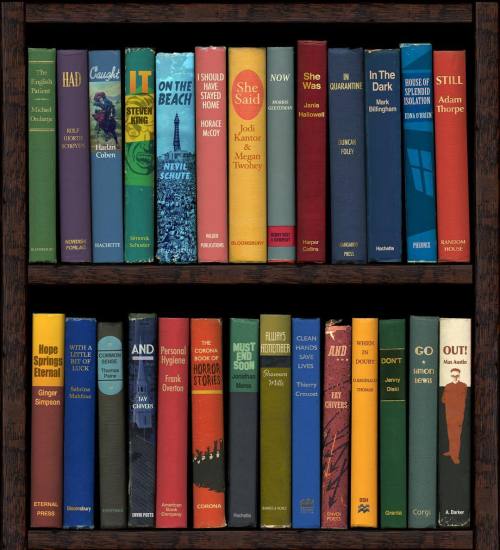
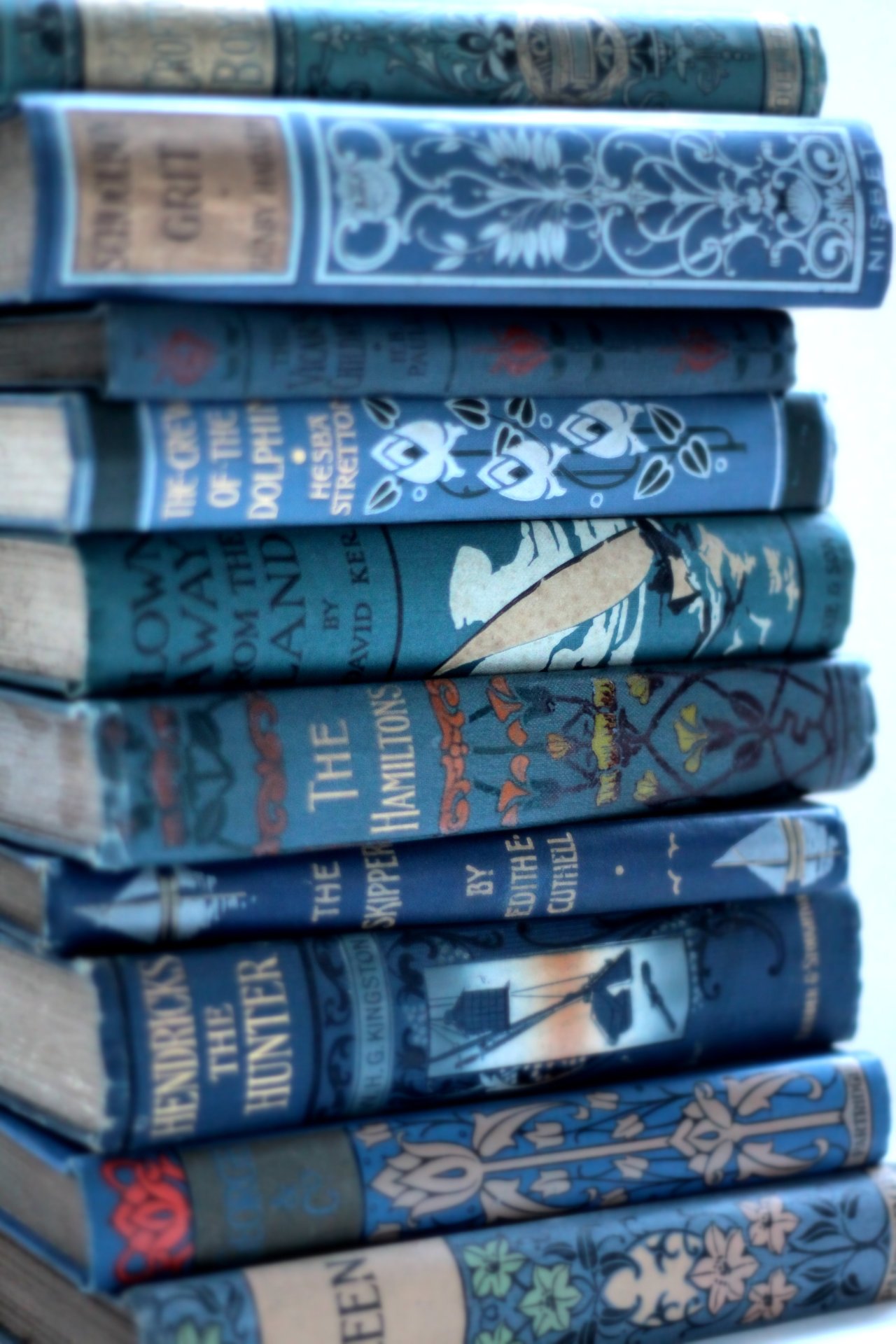
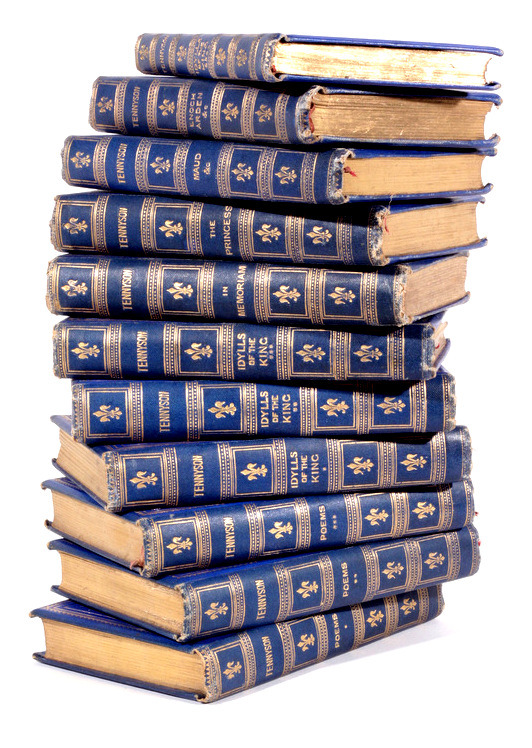
You may have seen this clever visual short story making the rounds on the interwebs this week. Take the time to read the spines to follow the theme created by Phil Shaw; it’s quite clever.
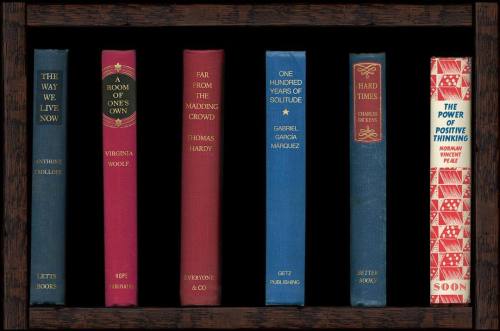
You may have seen this clever visual short story making the rounds on the interwebs this week. Take the time to read the spines to follow the theme created by Phil Shaw; it’s quite clever.
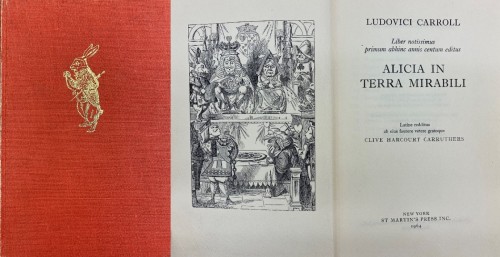
In my never-ending quest to bore everyone to tears with my fascination with the Lewis Carroll classic, here is yet another special edition of the classic children’s book. Alicia in Terra Mirabili, is the Latin translation of Alice in Wonderland. The first Latin version of this worldly renowned childhood’s book was translated by Canadian translator Clive Carruthers and published in 1964. My grasp of Latin is limited by the fact that I only studied the language for one semester in grade 7, but I still love the idea of this translation.
The book cover (above) features a beautiful illustration of the iconic figure in wonderland, the white rabbit embossed in golden. The inner artworks are equally impressive, for example, the picture adjacent to the title page depicts the courtroom in wonderland, with all sorts of creatures. The appearances of the king and queen of hearts resemble their classic designs in the playing.
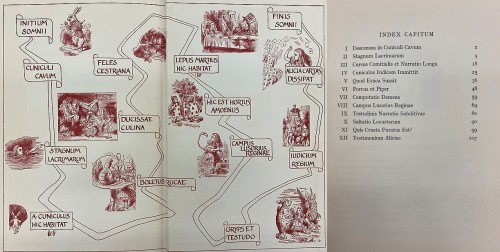
Another notable feature of this edition is the end papers, which are printed with a mind-map of Alice’s adventure. Following the thread and starting with the upper right corner, there are “initium somnii” (the beginning of the dream), “cuniculi cavum” (the rabbit hole), “stagum lacrimarum” (the pool of tears) and so forth. Although the “index capitum” (right), the table of contents (distinct from the mind-map), is provided by Carruthers, I personally enjoy the game-board-like one, which is more playful as well as enables its readers to easily connect the Latin title and the picture aside.
Carroll, Ludovici. Alicia in Terra Mirabili. Translated by Clive Harcourt Carruthers, St Martin’s Press, 1964.

The Human Hotel project was created last year by the folks behind WOOLOO.ORG — an online community for professional artists. The concept is an AirBnB-like service for artistic types who like to travel and meet like-minded people. Visiting creatives get to live in a real community with local hosts who work in the arts. Human Hotel acts as a matchmaker in cities from Amsterdam to Santiago.
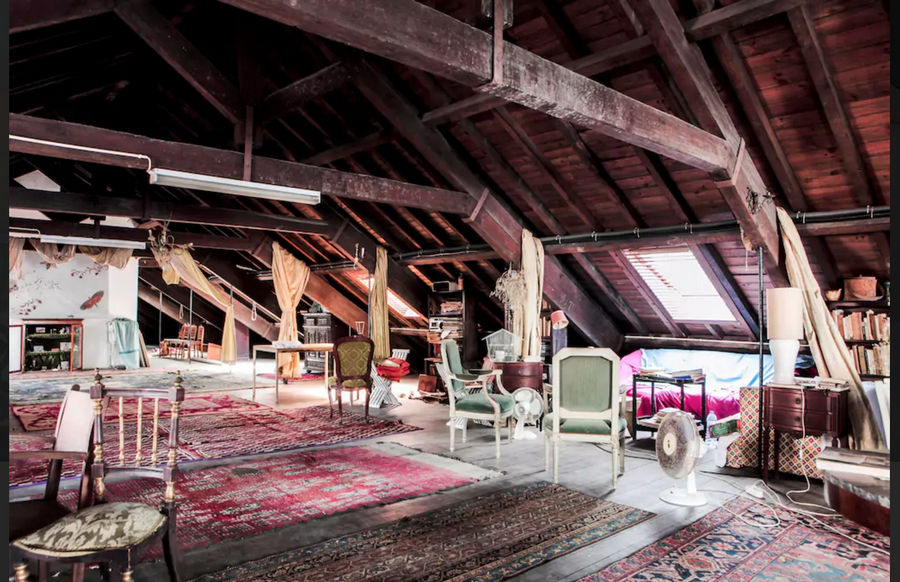
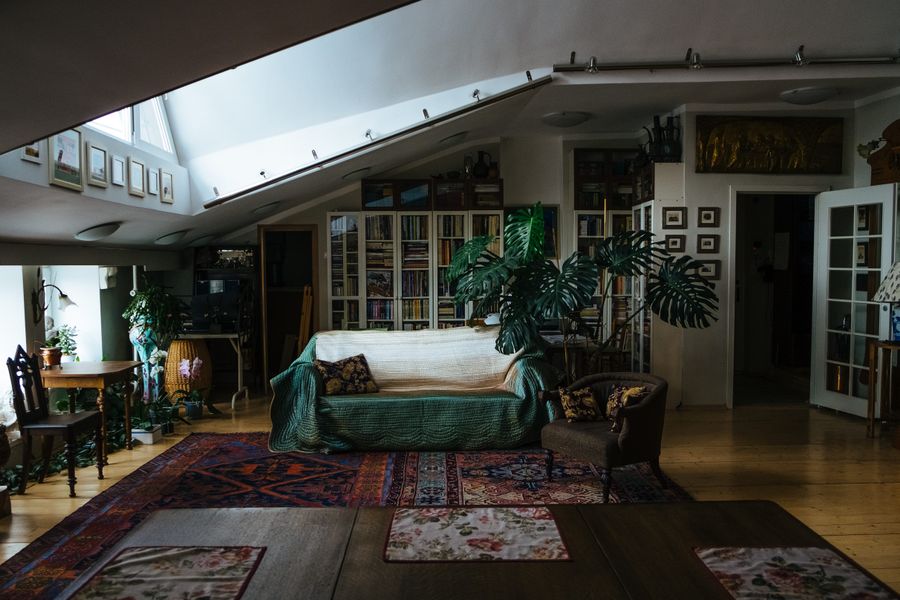
Although profit isn’t its goal, the hosts can share their space for free or charge a “reasonable” nightly fee. The guest also has to pay a one-time €25 connection fee to the Human Hotel organization. I haven’t used the service yet, but surfing through the website I discovered many places that I would happily choose over an AirBnB or hotel, including a houseboat in the heart of Amsterdam, an attic room in Lisbon, and a fantastic apartment in central Paris.

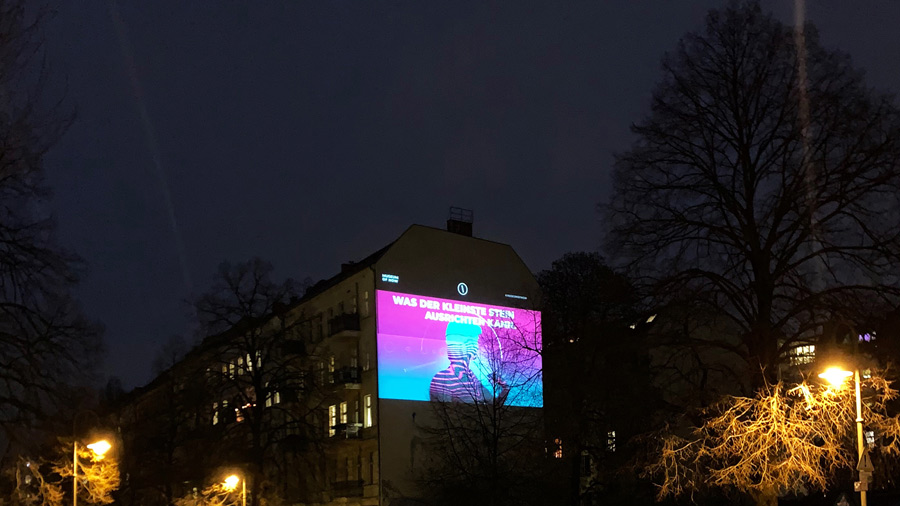
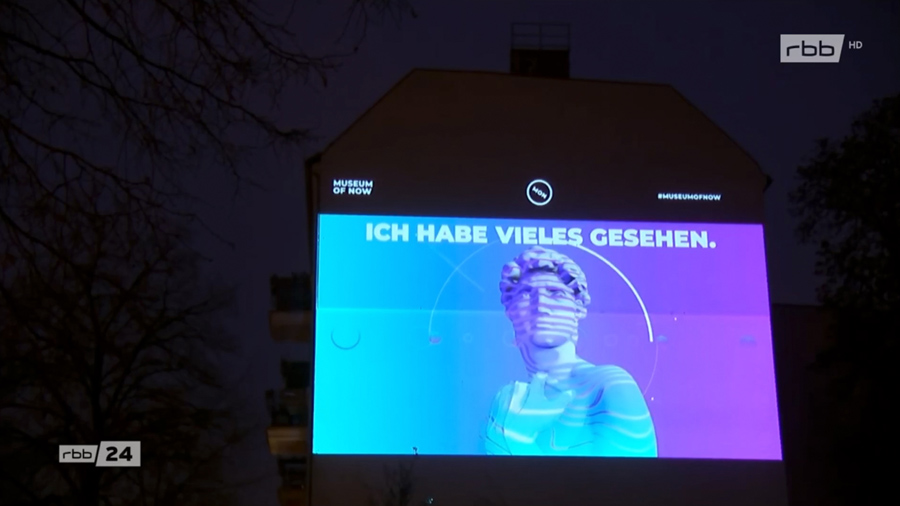
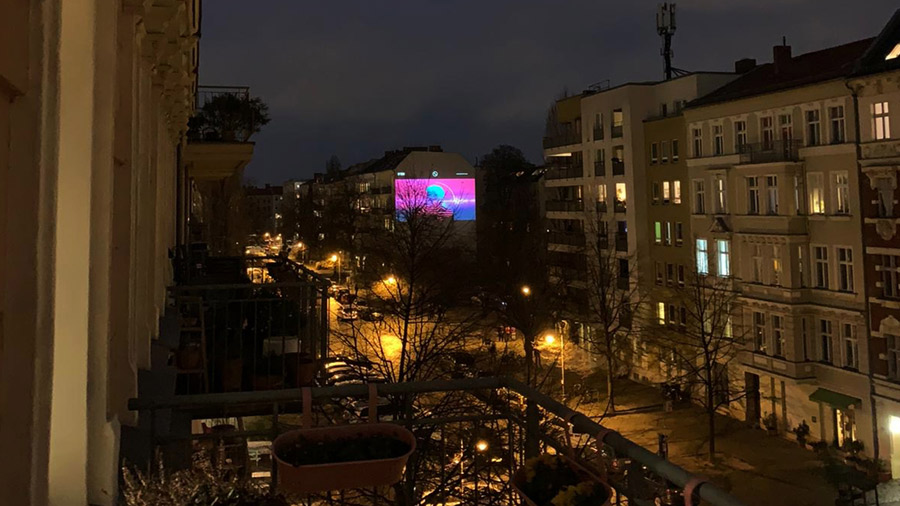
Berlin’s Museum of Now (MON) along with Yes,And…Productions(YAP) have come up with an ingenious way to bring art to city residents during the corona virus lockdown. Loading a projector and speakers onto a truck, they make nightly visits to neighborhoods bringing a sound and light show to people in their homes. Their first project is a collaboration with light artist Multiscalar and Michelangelo.

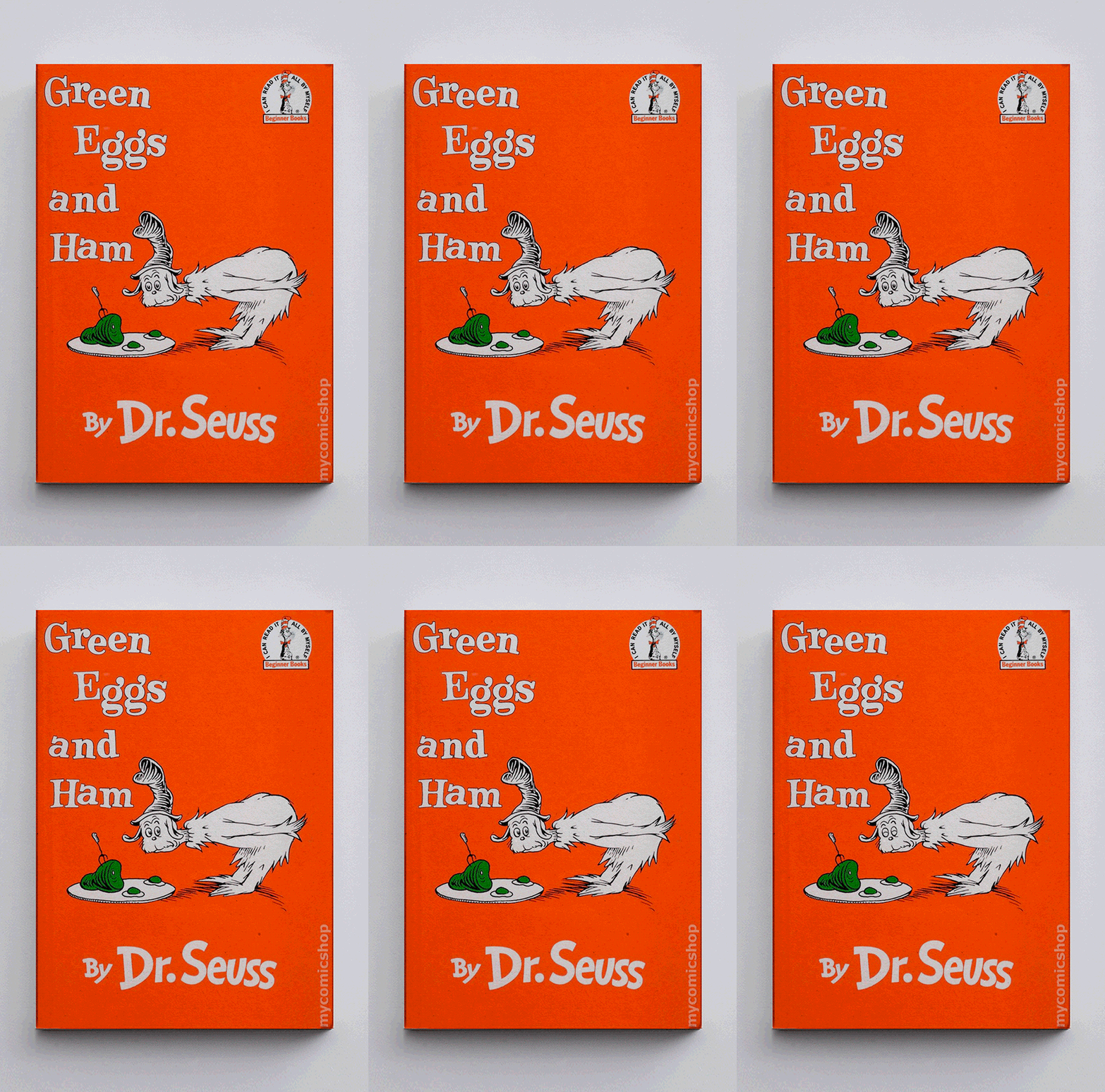
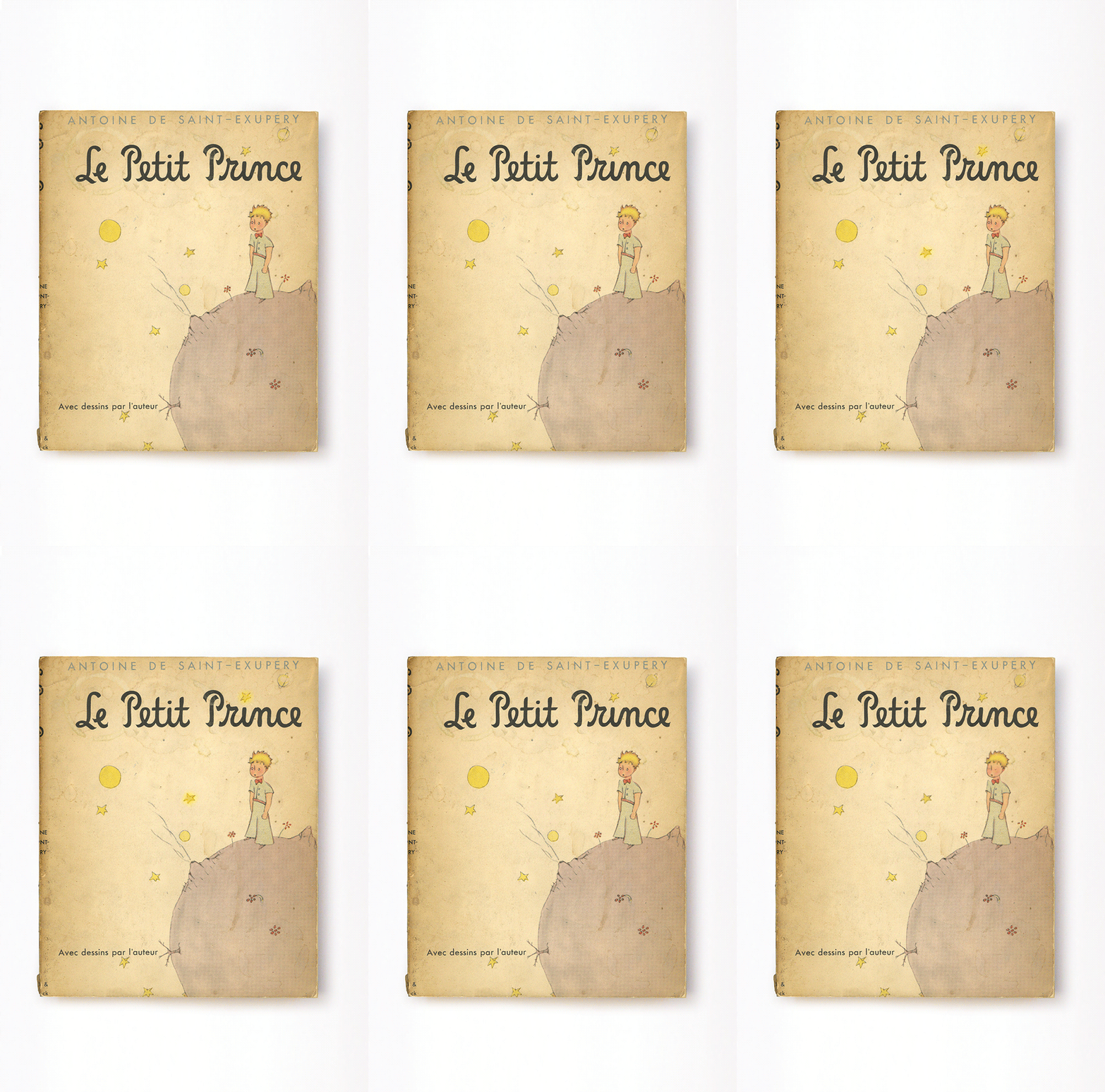
The artist Javier Jensen has reimagined some of the most iconic covers in literary history and added clever GIFs. The effect is subtle so you have to take your time with each image. But most of us have lots of time on our hands these days. From the sneaky whale flicking its tail across the cover of Moby Dick to the moving flowers on Le Petit Prince, the effect is subtle and soothing.



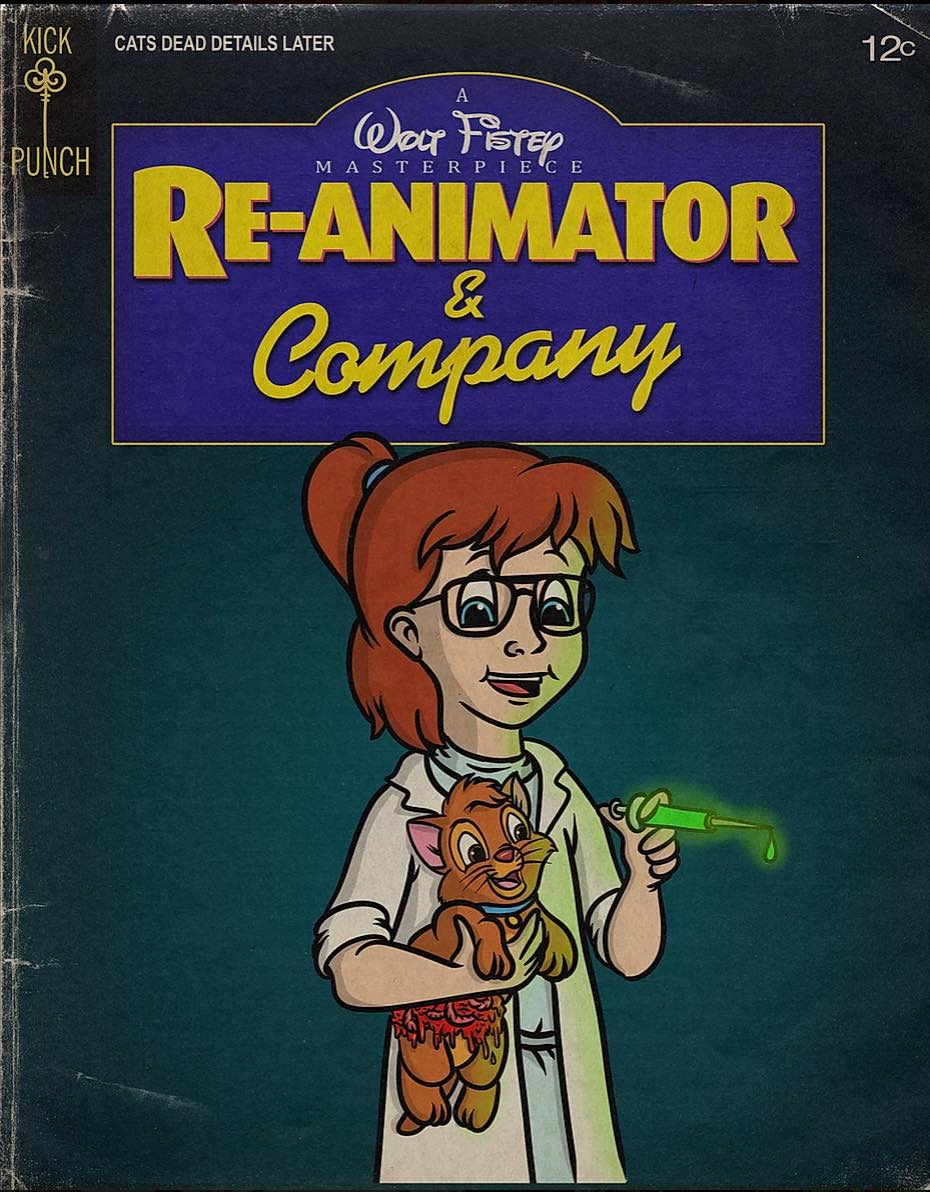
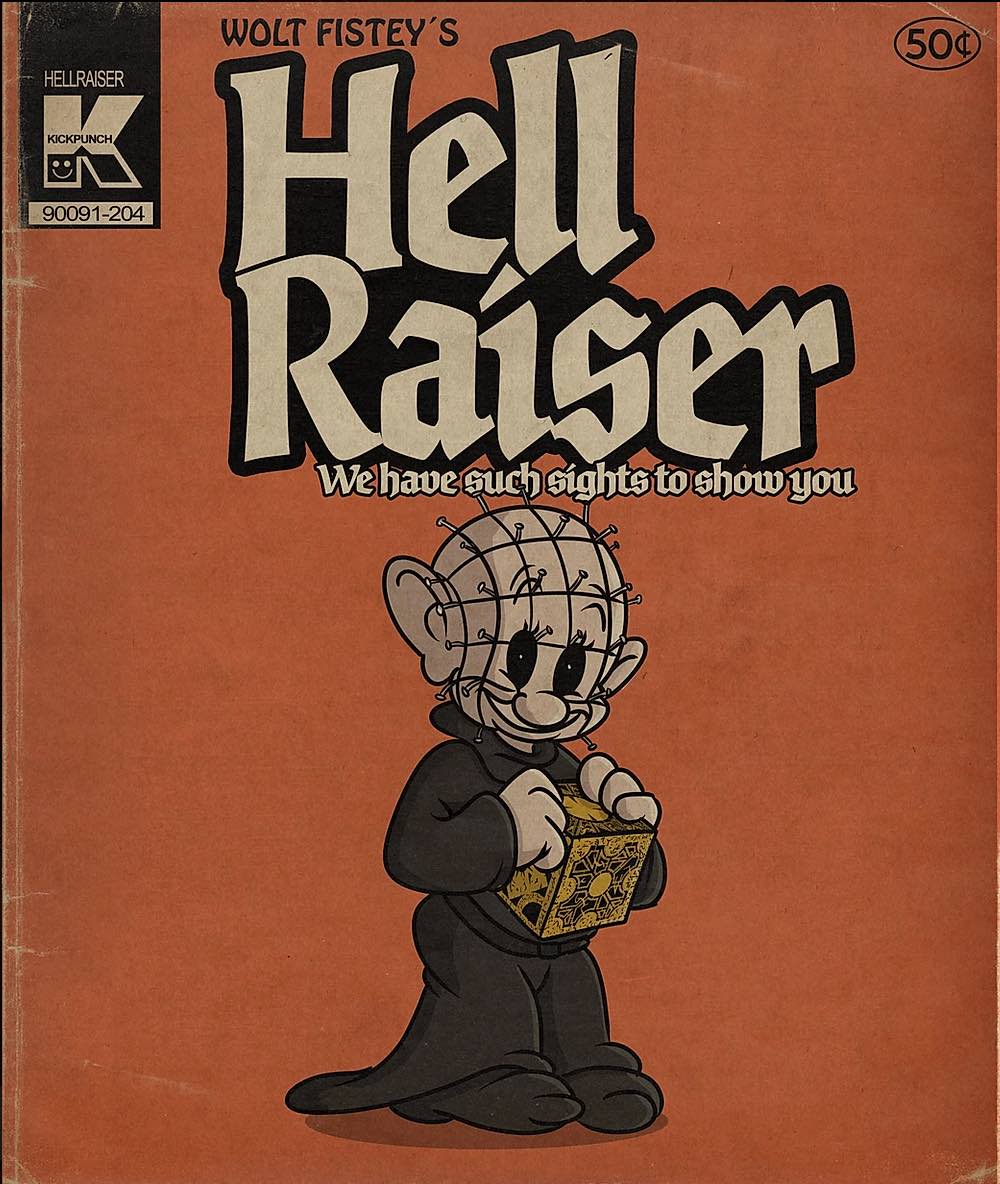
Swedish artist Daniel Björk is behind these horrifically funny visions of classic horror films reimagined as Disney’s Wonderful World of Reading vintage children’s books. Enjoy before the lawyers make them disappear.



In April
Rainer Maria Rilke
Again the woods are odorous, the lark
Lifts on upsoaring wings the heaven gray
That hung above the tree-tops, veiled and dark,
Where branches bare disclosed the empty day.
After long rainy afternoons an hour
Comes with its shafts of golden light and flings
Them at the windows in a radiant shower,
And rain drops beat the panes like timorous wings.
Then all is still. The stones are crooned to sleep
By the soft sound of rain that slowly dies;
And cradled in the branches, hidden deep
In each bright bud, a slumbering silence lies.
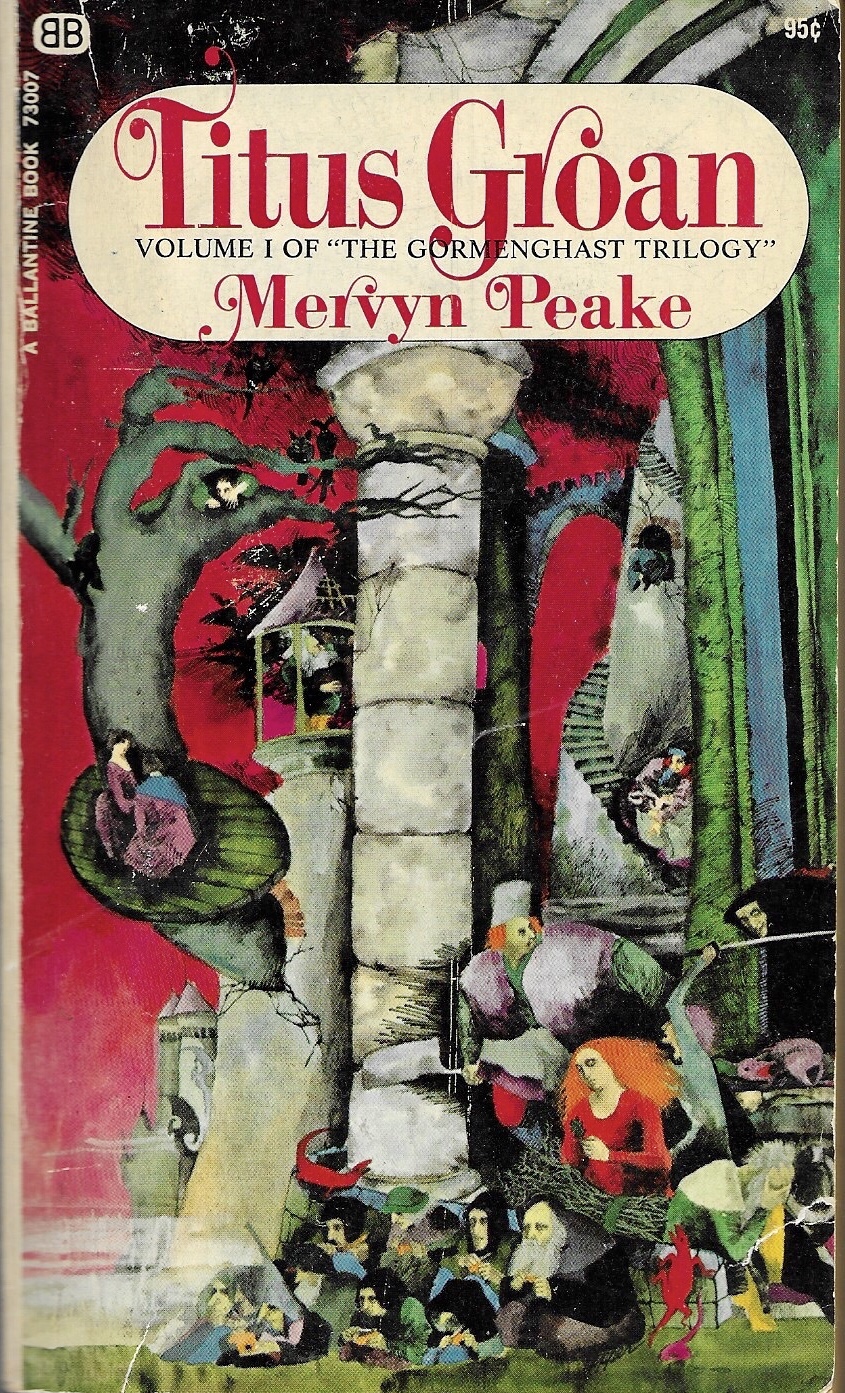
I generally avoid making many reading recommendations as people’s tastes and interests are so varied. However, in these strange days with some much time on our hands, many folks are clamoring for book suggestions. Fortuitously, I stumbled on an endorsement for a weird and wonderful trilogy that I first read decades ago at the insistence of my old friend Robb Huxley.
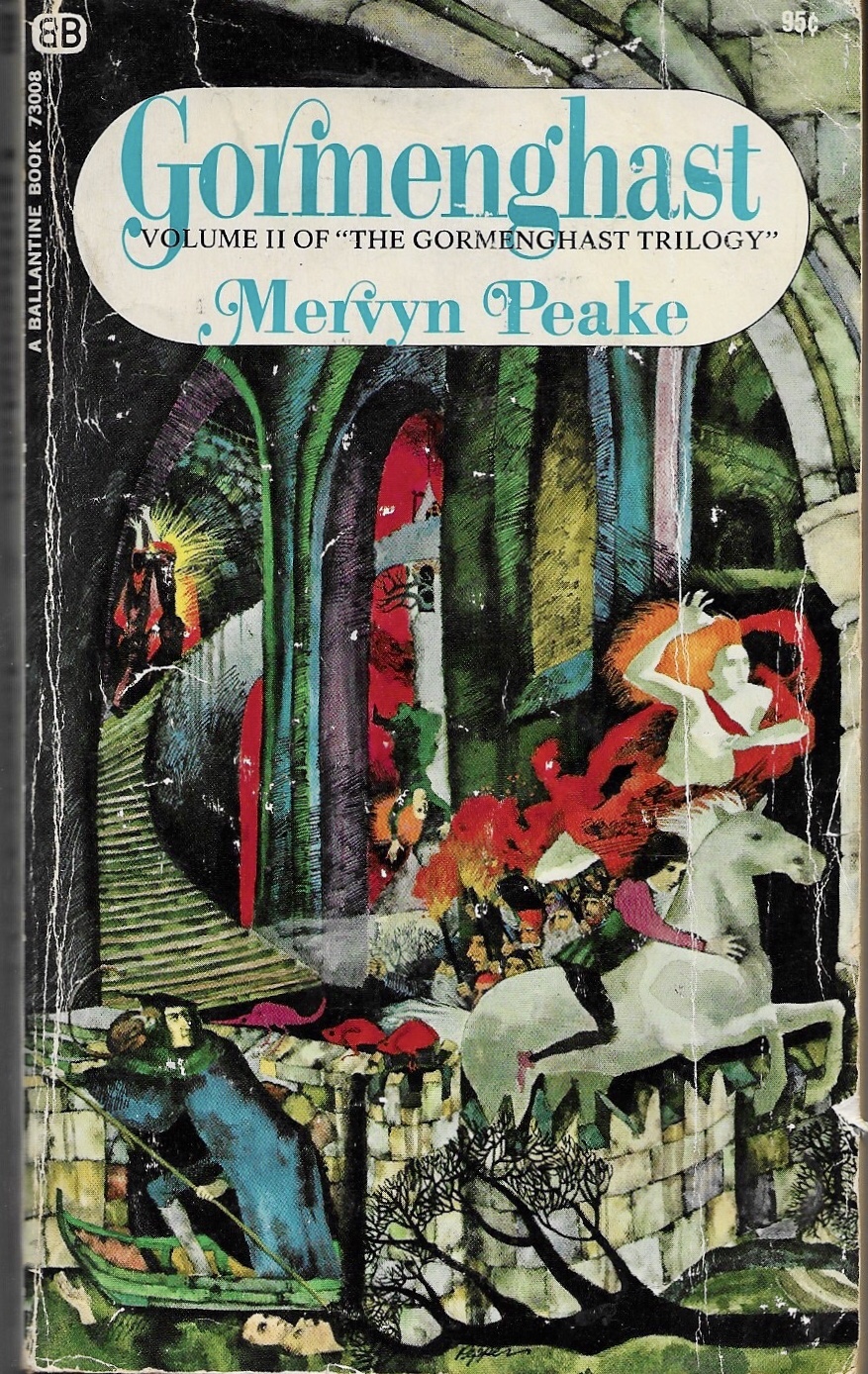
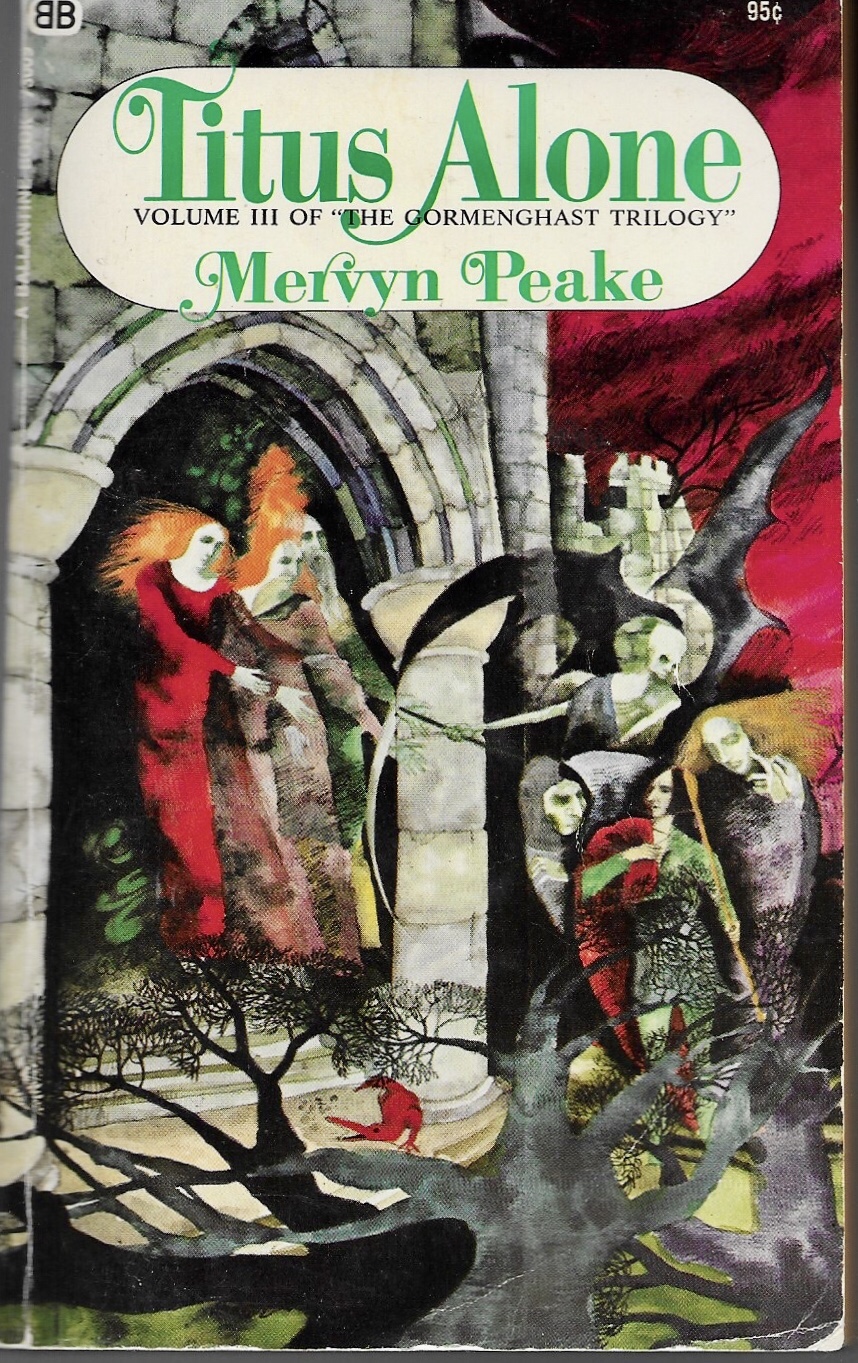
Mervyn Peake’s masterful Gormenghast books are a rollicking blend of Dickensian characters and George R.R. Martin plots. They are worth reading simply for Peake’s love of the English language. Packed with wit and intrigue, the trilogy will transport into a realm surreal, but coherent in its inventiveness.
The first book, Titus Groan is a bizarre but fun romp inspirited by the Machiavellian villain Steerpike, It can be read as a philosophical critique of the hierarchy and ritual, or read just for the sheer love of language.
In book two, Gormenghast, we get to really know poor Titus, who is just a babe in the first installment and join him in his struggles with Steerpike and the system. The volume is a surprising blend of fantasy, psychological drama, and surrealism.
Titus Alone completes the trilogy with our hero escaping the confines of his life for adventure and new challenges. I won’t spoil your chance to explore with Titus a whole world beyond Gormenghast.

In an example of the aphorism everything old is new again, the Pandemic has inspired a resurgence in the publication of local zines. It appears that a number of them have embraced the clever title “Quaranzine” . This one has been surfacing around Chicago on benches, utility poles, and dumpsters.



 Travel Between The Pages