The Trial

This year marks the 100th anniversary of the posthumous publication of Franz Kafka’s chilling novel of the nightmare world of authoritarian repression and merciless bureaucracy. I remember reading the book only after I saw Orson Welles’ chilling film production. Somehow I missed the release of a 4k re-issue of the film for its 60th anniversary. However, there’s a free version of the original on the Internet Archive here. And, here’s a trailer for the 60th anniversary release.

“When it comes to film adaptations of very famous works of literature, there’s always a lot of pressure on the artist to produce something worth its background. In this case, Welles created a technically grandiose movie loyal to Kafka’s story, but enhanced by the infusion of Welles’ own vision. The Trial stands as one of the most accomplished book-to-film adaptations, and in Welles’ rich career, it’s a film that ranks among the very best.”

It seems particularly appropriate to be looking back at The Trial at this time when many Americans are anticipating a knock on the door from the Musk/trump jackbooted thugs.

Posted in Books, Europe, Film, History, movies, Restaurants, Writing | Tagged , , | 1 Comment

First there is a mountain…

Mount Taranaki New Zealand

First there is a mountain, then there is no mountain, then there is

Taranaki Maunga, or Mount Taranaki, has peaked to sentience—at least in a legal sense. New Zealand’s Parliament has granted the sacred mountain legal personhood, recognizing its cultural and spiritual importance to the Taranaki Māori. This decision, finalized on January 31, 2025, means the mountain will be represented in legal matters, ensuring its formal protection. The move elevates the ancestral mountain from geographical feature to living entity in the eyes of the law.

The legislation establishes Te Kāhui Tupua, a legal entity that encompasses Taranaki Maunga and its surrounding peaks, reflecting both their physical presence and spiritual significance. A governance board, split between four representatives from local Māori iwi and four appointees from the Conservation Minister, will act as the mountain’s voice. Their role is to safeguard its health and well-being, ensuring that decisions align with Māori values and environmental conservation efforts.

This decision is part of a broader effort to address historical injustices. During the 19th century, the Crown confiscated Taranaki Maunga from Māori communities as part of British colonization. Recognizing the mountain as a legal entity is seen as a step toward reconciliation.

Alongside this recognition, the Crown has issued an official apology and financial redress to the Taranaki iwi. The law also formally retires the colonial-era name “Mount Egmont” to reinforce the mountain’s indigenous identity.

New Zealand has taken similar steps before, granting legal personhood to the Whanganui River in 2017 and Te Urewera forest in 2014. Such authorizations reaffirm the deep connection between land and cultural identity. Giving natural landmarks the right to stand up in court reflects a growing integration of Māori perspectives into legal and environmental policies, treating them not as commodities but as ancestors deserving of care and respect.

Before a man studies Zen, to him mountains are mountains and waters are waters; after he gets an insight into the truth of Zen through the instruction of a good master, mountains to him are not mountains and waters are not waters; but after this when he really attains to the abode of rest, mountains are once more mountains and waters are waters.

Posted in Asia, Tourism | Tagged , , | 1 Comment

Would You Pay to Stay in a Shipping Container

Researching hotel accommodations for an upcoming Japan trip has resulted in some unusual options. One of the oddest is Hotel R9 The Yard. This chain with the industrial-sounding name is notable for its unique lodgings, which are made out of storage containers.

This unusual style of accommodation first opened its doors to the public in December 2018, and when it was used to alleviate accommodation shortages at the time of the Tokyo Olympics, it became increasingly well-known. According to the chain’s official website, as of January 2025, 101 branches are being developed nationwide, and judging by the great reviews, it’s likely to become even more popular.

You can get great deals on stays when booking at online accommodation sites, with prices starting at 5,800 yen (US$37.37) a night. This gets you free Wi-Fi, amenities such as towels, robes, and toothbrushes, and even hot drinks and light food.

photos © SoraNews

Posted in Asia, Hotels, Tourism | Tagged , | Leave a comment

et cetera

It was W.H. Auden who said: ‘there are good books which are only for adults, because their comprehension presupposes adult experiences, but there are no good books which are only for children.’ The great discipline of children’s fiction is that it has to be written for everyone: because if it is not for everyone then it’s not for anyone at all. It offers us the specific joy of finding our commonality: we can all meet on the pages of A.A. Milne in a way that we cannot on the pages of Jacques Derrida.

“This is precisely the time when artists go to work. There is no time for despair, no place for self-pity, no need for silence, no room for fear. We speak, we write, we do language. That is how civilizations heal. I know the world is bruised and bleeding, and though it is important not to ignore its pain, it is also critical to refuse to succumb to its malevolence. Like failure, chaos contains information that can lead to knowledge — even wisdom. Like art.”

— Toni Morrison

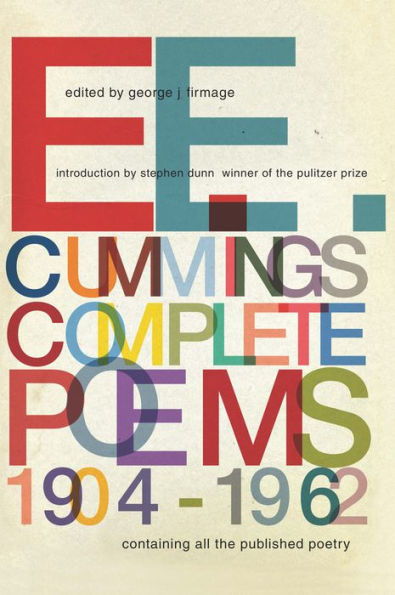
In 1955, the editor of a Michigan high school newspaper wrote to E.E. Cummings, asking his advice for students who wanted to follow in his footsteps. He sent this reply:

A Poet’s Advice to Students

A poet is somebody who feels, and who expresses his feeling through words.

This may sound easy. It isn’t.

A lot of people think or believe or know they feel — but that’s thinking or believing or knowing; not feeling. And poetry is feeling — not knowing or believing or thinking.

Almost anybody can learn to think or believe or know, but not a single human being can be taught to feel. Why? Because whenever you think or you believe or you know, you’re a lot of other people: but the moment you feel, you’re nobody-but-yourself.

To be nobody-but-yourself — in a world which is doing its best, night and day, to make you everybody else — means to fight the hardest battle which any human being can fight; and never stop fighting.

As for expressing nobody-but-yourself in words, that means working just a little harder than anybody who isn’t a poet can possibly imagine. Why? Because nothing is quite as easy as using words like somebody else. We all of us do exactly this nearly all of the time — and whenever we do it, we’re not poets.

If, at the end of your first ten or fifteen years of fighting and working and feeling, you find you’ve written one line of one poem, you’ll be very lucky indeed.

And so my advice to all young people who wish to become poets is: do something easy, like learning how to blow up the world — unless you’re not only willing, but glad, to feel and work and fight till you die.

Does this sound dismal? It isn’t.

It’s the most wonderful life on earth.

Or so I feel.

Posted in Art, Books, Freedom of Speech, History, Restaurants, USA, Writing | Tagged , , , , | 1 Comment

Your AI Travel Guide

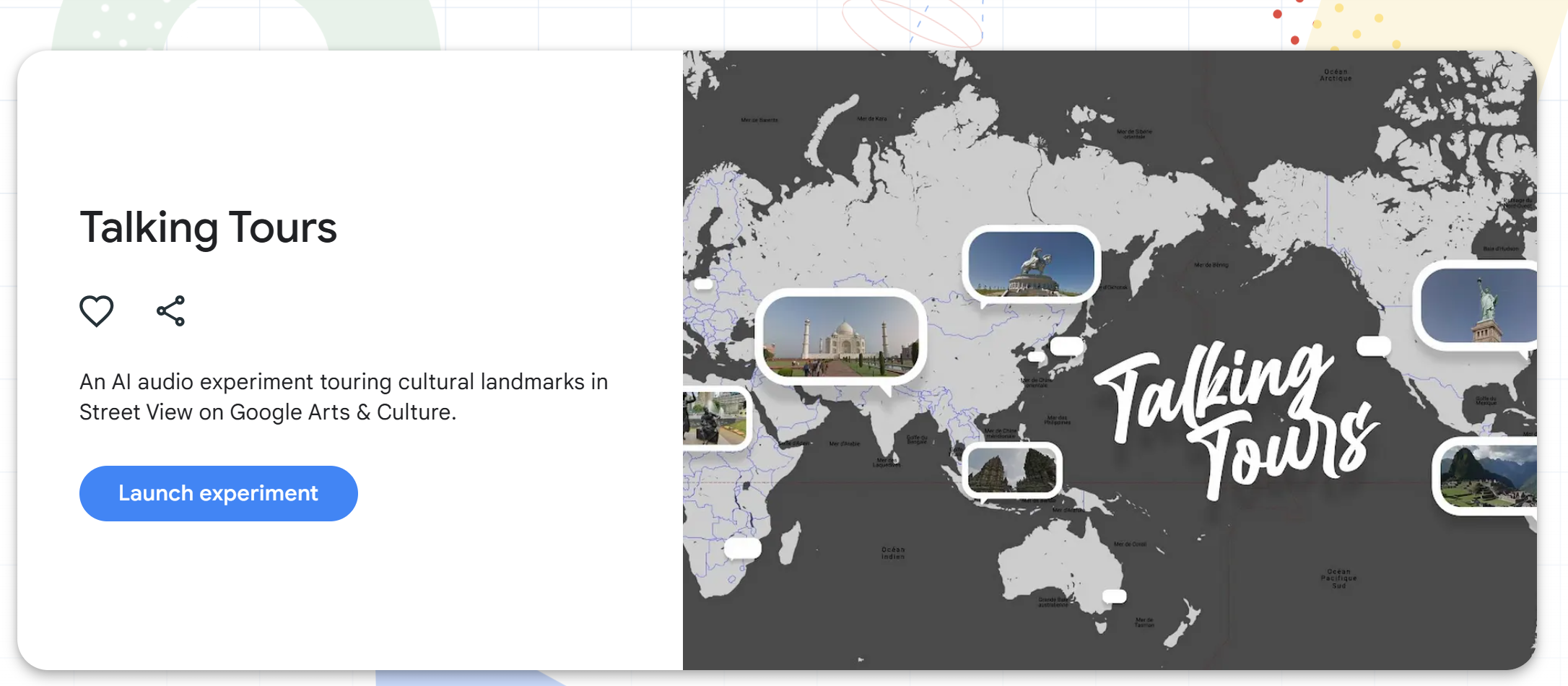
I am still dubious when it comes to AI travel tools. I’ve tried out some AI trip planning with disappointing results. But how about navigating tourist sites with your very own AI travel guide, ready to reveal the stories behind every landmark, monument, or hidden gem you encounter. With Google’s Talking Tours, this vision takes a significant step closer to becoming a reality.

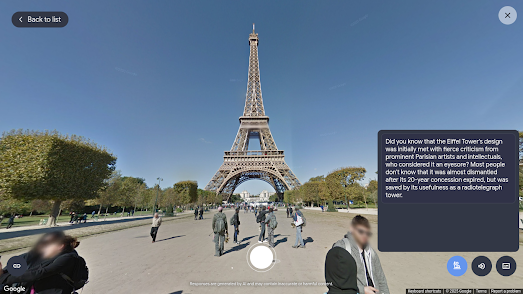
Google Talking Tours offers a fascinating glimpse into the future of AI-driven travel guidance. Developed as part of a collaboration between Google Arts & Culture Lab and artist-in-residence Gaël Hugo, this experiment leverages generative audio and Google’s cutting-edge Gemini AI to provide dynamic, location-specific insights about cultural landmarks captured in Street View.

Talking Tours currently covers 55 major landmarks around the world, offering an AI-generated audio guide that provides insights based on the visual content of Street View panoramas. Users can explore a 360-degree view of a site, take a snapshot, and receive detailed commentary from the AI. Additionally, users can click an “ask a question” button to generate three contextual questions about the location, enhancing interactivity and personalized learning.


Posted in apps, Architecture, Art, Asia, Europe, Maps, Museums, Public Transport, Tech, Tourism, USA | Tagged , | 1 Comment

Spain says: Ausentarse to tourists

Chronic overtourism has prompted Spain to implement significant restrictions on travelers as local resistance grows. Long a welcoming destination for global travelers, Spain now faces the challenge of balancing its thriving tourism economy with the well-being of its communities, which are increasingly strained by the pressures of overtourism.

In a bold move, the coastal city of Malaga, a key destination on the Costa del Sol, has introduced a three year ban on the registration of new holiday rentals in 43 districts. This policy doesn’t stop tourists from visiting but seeks to limit the growth of short-term rental properties in already overcrowded areas. The over 13,000 existing rentals will continue to operate. However, tourist apartments registered after February 22, 2025 lacking independent access or separate facilities from residential buildings, will lose their operating licenses. The goal is to curb the expansion of short-term rentals in districts where they make up over 8% of residential properties.

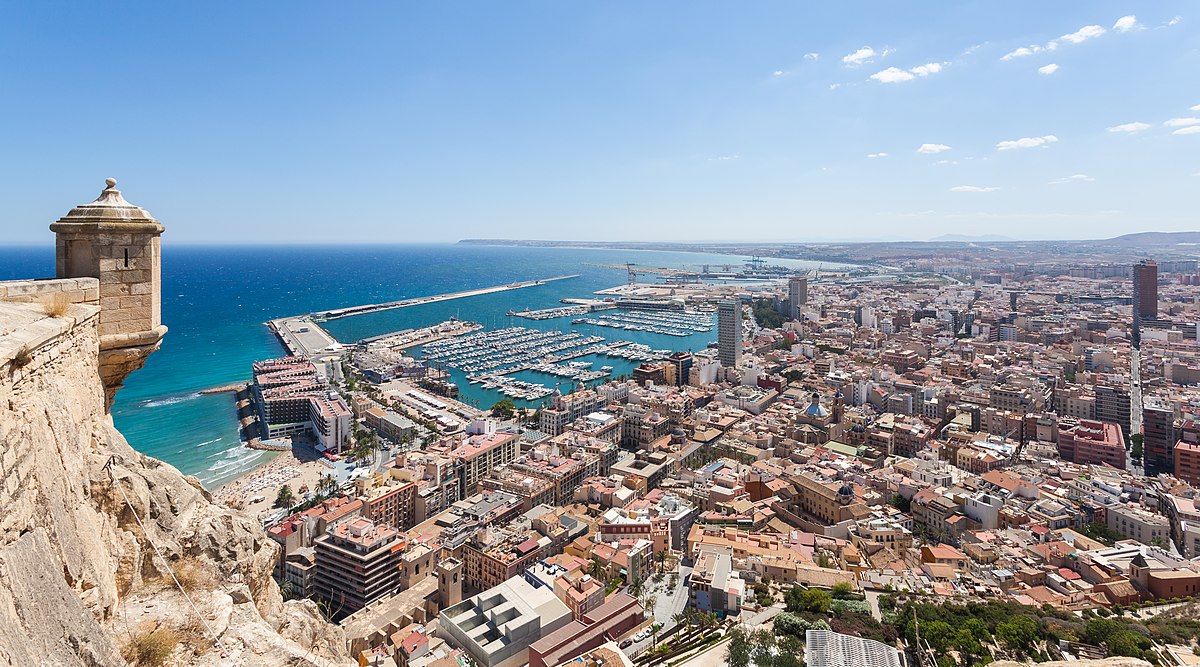
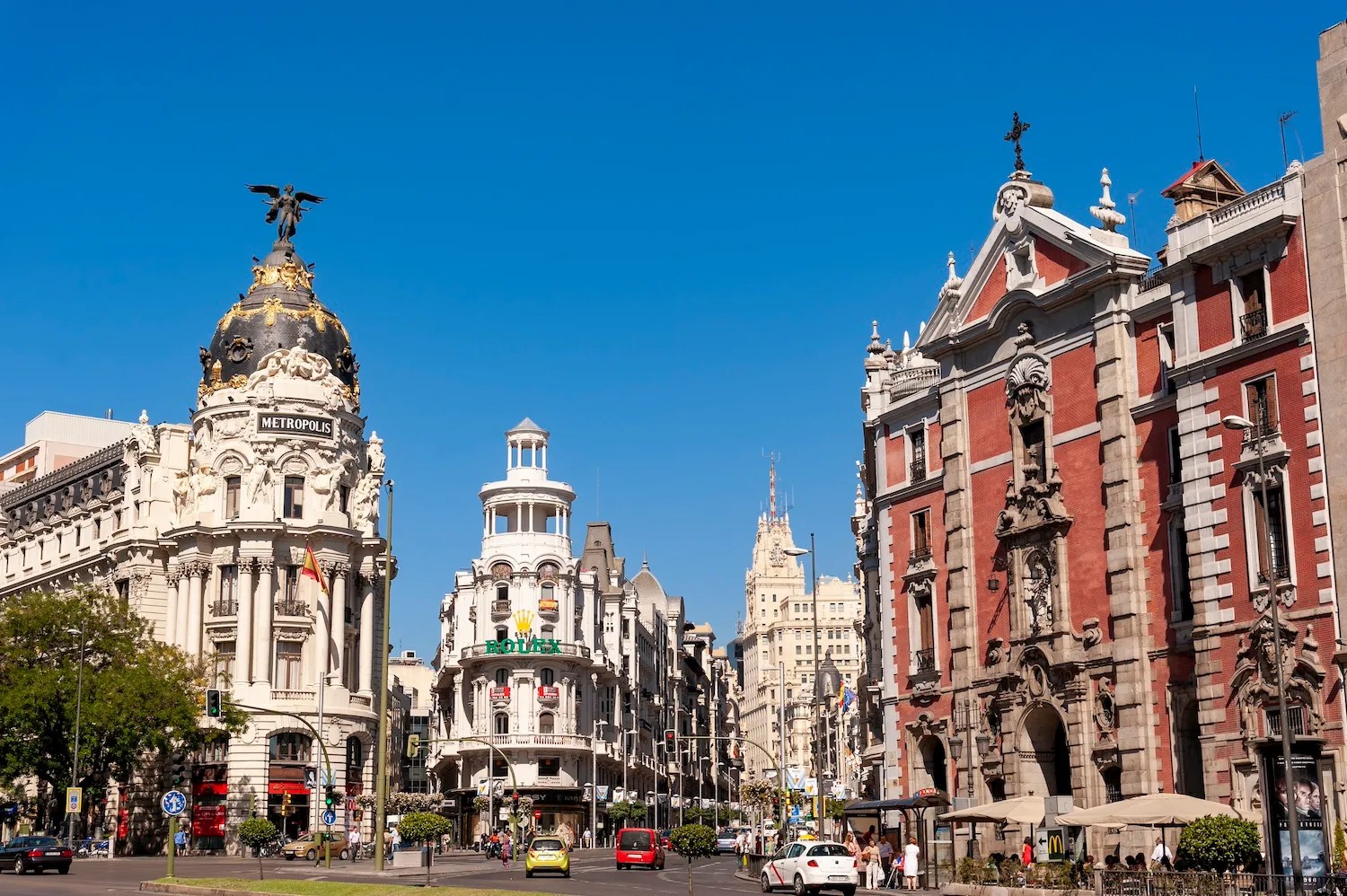
The impact of these new rules is being felt beyond Malaga. Cities such as Alicante and Madrid have already enacted similar restrictions, and Seville is expected to follow suit. Additionally, tourists will now need to provide more detailed personal information, including bank card details, home addresses, and family relationships, when renting cars or booking accommodations. These measures are part of a broader strategy by Spain’s government to enhance security and combat criminal activity.

These changes come amid ongoing protests in cities like Barcelona, Malaga, and the Canary Islands, where residents have voiced their frustrations with the influx of tourists and the strain it places on local infrastructure and quality of life. While many welcome the new restrictions as necessary to preserve their communities, others are concerned about the potential economic fallout, given that tourism is a significant revenue source for Spain.

Posted in Europe, Tourism | Tagged , , , | Leave a comment

Remember the Moments

Try to Praise the Mutilated World

By Adam Zagajewski

Translated By Clare Cavanagh
Try to praise the mutilated world.
Remember June’s long days,
and wild strawberries, drops of rosé wine.
The nettles that methodically overgrow
the abandoned homesteads of exiles.
You must praise the mutilated world.
You watched the stylish yachts and ships;
one of them had a long trip ahead of it,
while salty oblivion awaited others.
You’ve seen the refugees going nowhere,
you’ve heard the executioners sing joyfully.
You should praise the mutilated world.
Remember the moments when we were together
in a white room and the curtain fluttered.
Return in thought to the concert where music flared.
You gathered acorns in the park in autumn
and leaves eddied over the earth’s scars.
Praise the mutilated world
and the gray feather a thrush lost,
and the gentle light that strays and vanishes
and returns.
Posted in Books, Restaurants, Writing | Tagged | Leave a comment

The You You Are

Readers who are in thrall to the genius of Severance will not want to miss the opportunity to get their own copies of The You You Are. Available for free on Apple Books, in both text and audiobook versions. The audiobook is read by Michael Chernus. If you are not au fait with the Severance world, this may mean nothing to you, but if you are grab it while you can.

Here’s an excerpt from Ricken’s opus:

I’m the youngest son of renowned performance artists Bob and Grace Hale, known collectively as HumpDumpster, though I have sought for decades to distinguish myself from their intellectual shadow. […]

Readers of my previous books know that both my conception and birth took place in a small theatre behind a defunct perfumery in Western Oregon, as part of a nine-month performance art piece originated by my parents titled “Smells Like Afterbirth, F**ker.” It was noteworthy in that I was the first child sired exclusively for theatrical purposes, and critics at the time hailed it as “a baroque deconstruction of the increasingly perverse human urge to procreate.” My birth was witnessed by such cultural leaders as Jason Robards, Lina Wertmüller, Walt Frazier, and Oregon Governor Robert W. Straub, who called it “American theater at its most sublimely obscene.”

Though I cannot remember my birth performance, the knowledge of it has always brought me great joy. Knowing that a version of me, even one I don’t recall, brought meaning and profundity to so auspicious a coterie of persons, infused into my young life a deep sense of purpose. Yet, as I aged, irrational questions began to creep in. Was the piece truly as revelatory as the critics claimed? Was it not simply a retread of the Reeperbahn shows of Hamburg? Did my parents actually want a child?

The latter question especially took root as HumpDumpster moved on to new pieces, including 1992’s critically lauded “Cheers, F**kers,” in which they held a Boston bar at actual gunpoint for 36 hours, leading to a quasi-substantive prison term. This and other endeavors led to long stretches where I was alone, and it was in these silent periods that a grim and intrusive resentment – of my parents, my lineage, and even myself – began to take hold.

Posted in Books, ebooks, Restaurants, USA, Writing | Tagged , , | Leave a comment

Please turn down your volume

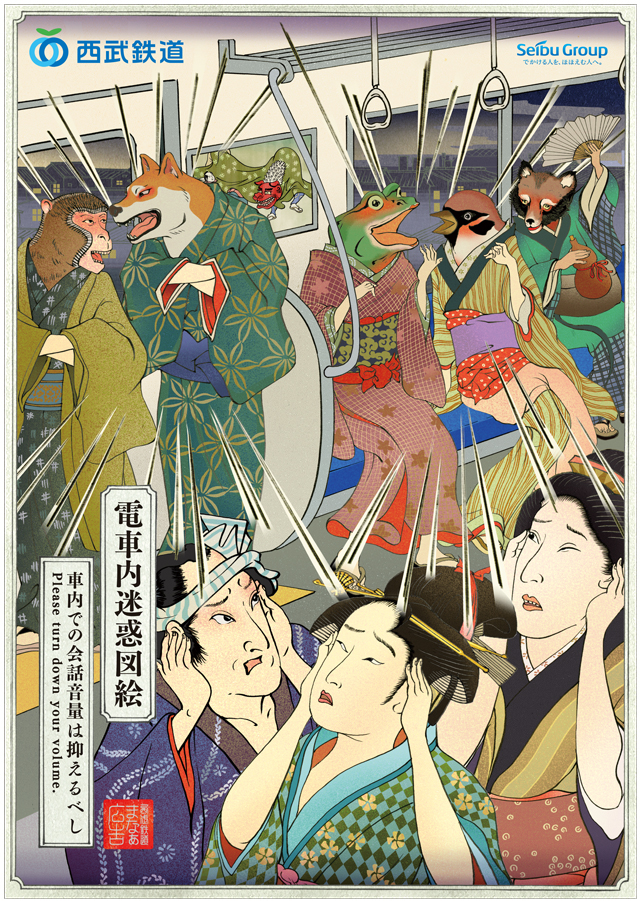
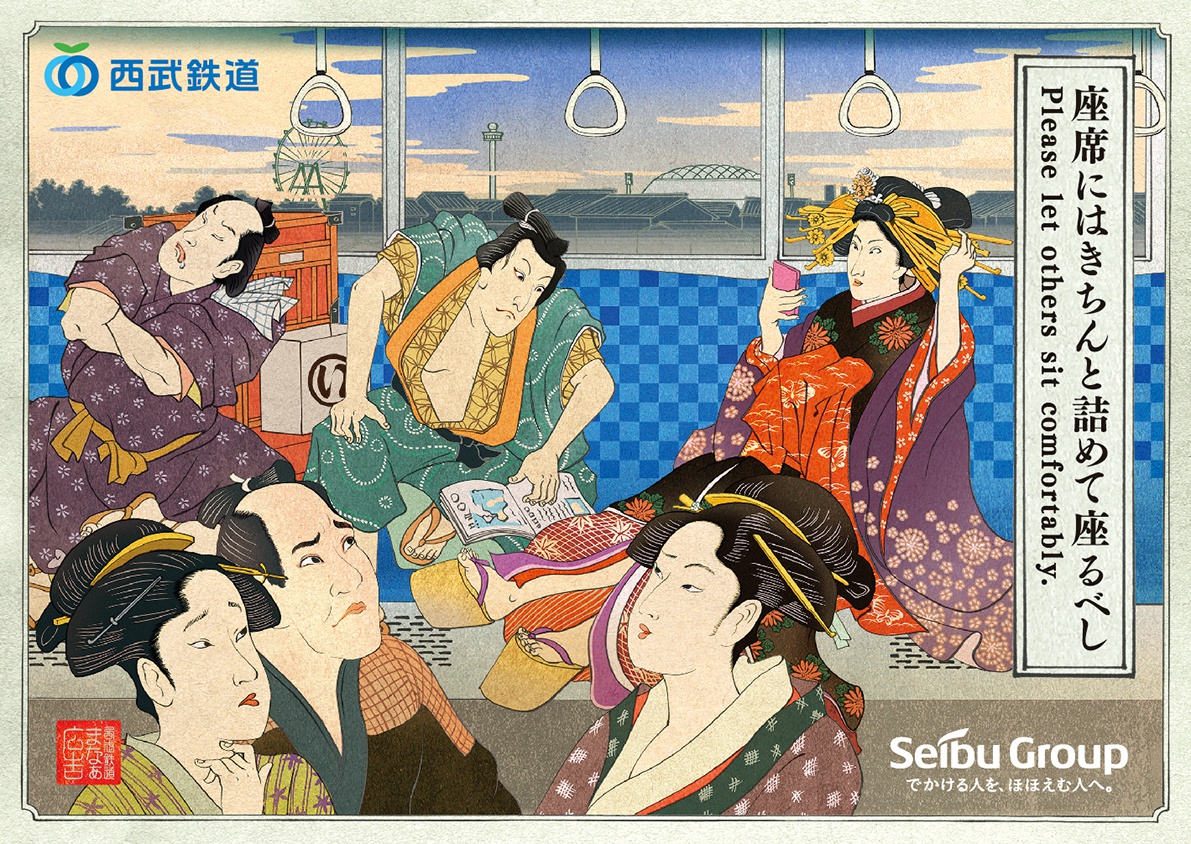
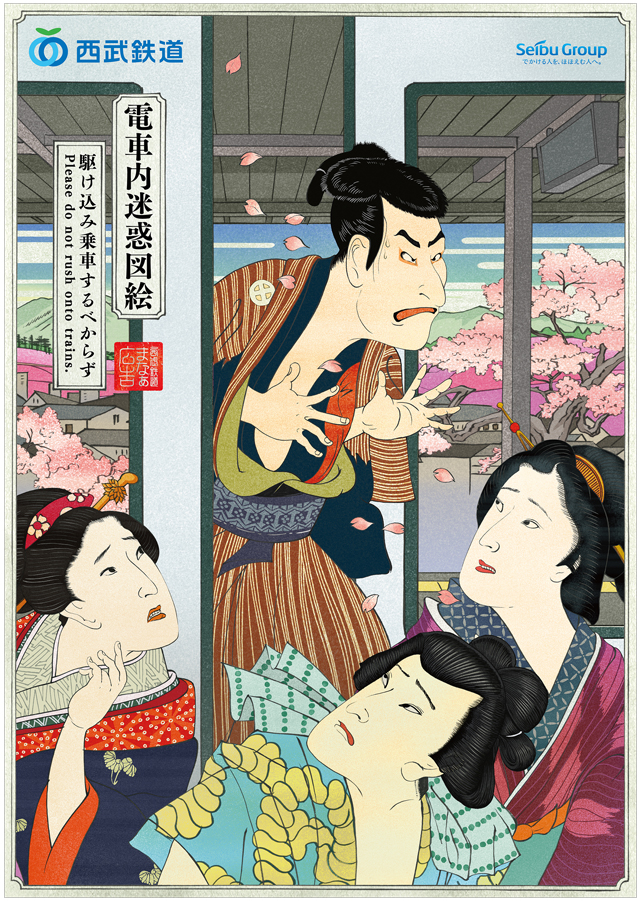
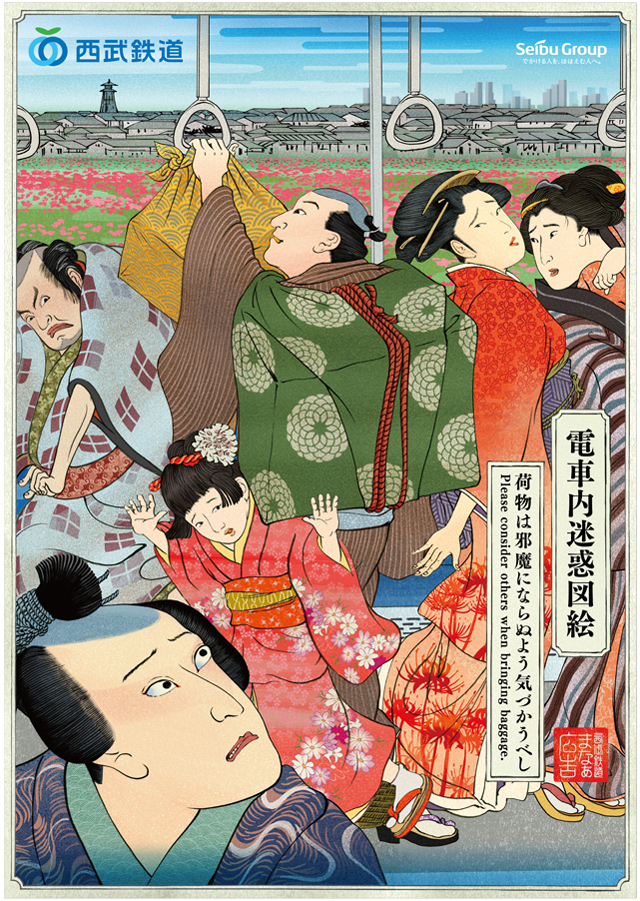
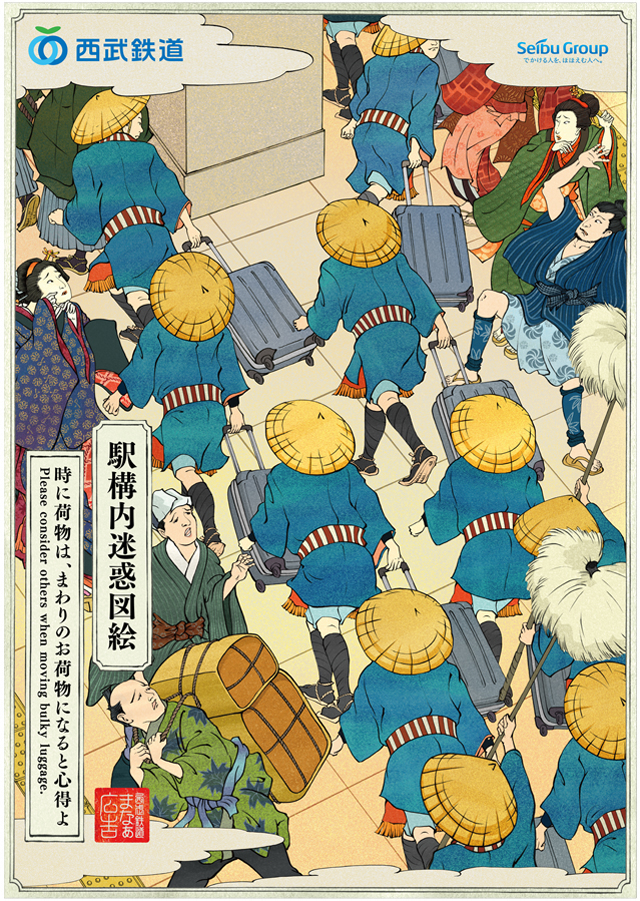
Those of you who visit regularly know that I am a fan of clever transit poster art and of Japanese ukiyo-e woodblock printing. I recently stumbled upon this series of posters from the Tokyo region Seibu Railways that I absolutely love.

“Please let others sit comfortably.”

The poster campaign is designed to educate their straphangers on proper train etiquette and manners. Given the surge in tourism in Japan recently, the train company decided to create their posters in an ukiyo-e inspired style.

Given the immense popularity of the traditional Japanese woodblock prints, the posters are meant to appeal to both locals and foreigners.

Seibu Railways has been releasing a new poster roughly every new season and so far three different posters have been released*. In Japanese they’re given the title denshanai meiwaku zue (電車内迷惑図絵) which is consistent with traditional ukiyo-e naming conventions and translates roughly to “picture of train car nuisance.”

You can find them in Seibu Railway stations, as well inside some of the trains. I’m looking forward to discovering the posters in the wild when I visit Tokyo this Spring.

Posted in Art, Asia, Public Transport, Tourism | Tagged , , | 2 Comments

Starring Great Britain

According to research conducted by VisitBritain in 20 overseas markets, nine out of ten people who are interested in visiting Britain would be keen to see film and TV locations as part of their trip. This learning has underpinned the tourism organization’s new campaign called Starring Great Britain, which taps into the popularity of screen tourism (tourism that uses filming locations, sets and experiences as the main selling point).

The campaign lets the entertainment do the talking. The central ad has been directed by Tom Hooper, the Oscar-winning filmmaker behind The King’s Speech and Les Misérables, who has dipped into the archive of entertainment shot in Britain to bring the idea to life. Clips from the likes of Succession, Bridget Jones and Spiderman have been spliced together with new shots of everyday people. There’s also a particularly enjoyable Mission Impossible and Paddington mash-up.


Posted in Europe, Film, movies, Tourism, Travel Writing | Tagged , , | Leave a comment