A Century of The New Yorker

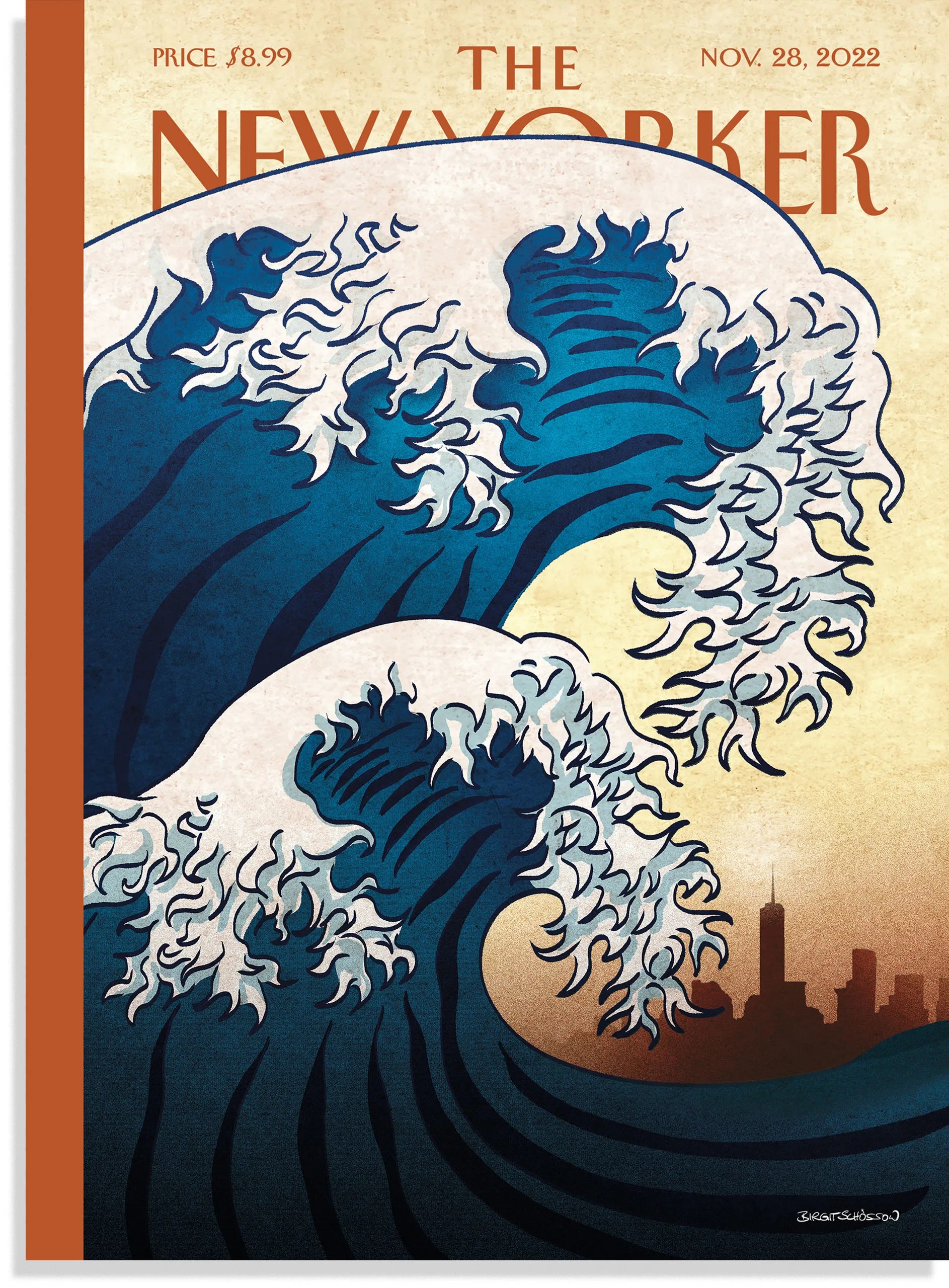
The New Yorker is 100 years old this year and part of the celebrations include an exhibition at the NYPL that showcases “founding documents, rare manuscripts, photographs, and timeless cover and cartoon art” from the magazine.
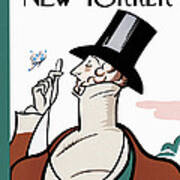
On February 22, 2025, A Century of The New Yorker will open at The New York Public Library, showcasing the history of The New Yorker from its launch in 1925 to present day and bringing to life the people, stories, and ideas that have defined the iconic magazine.
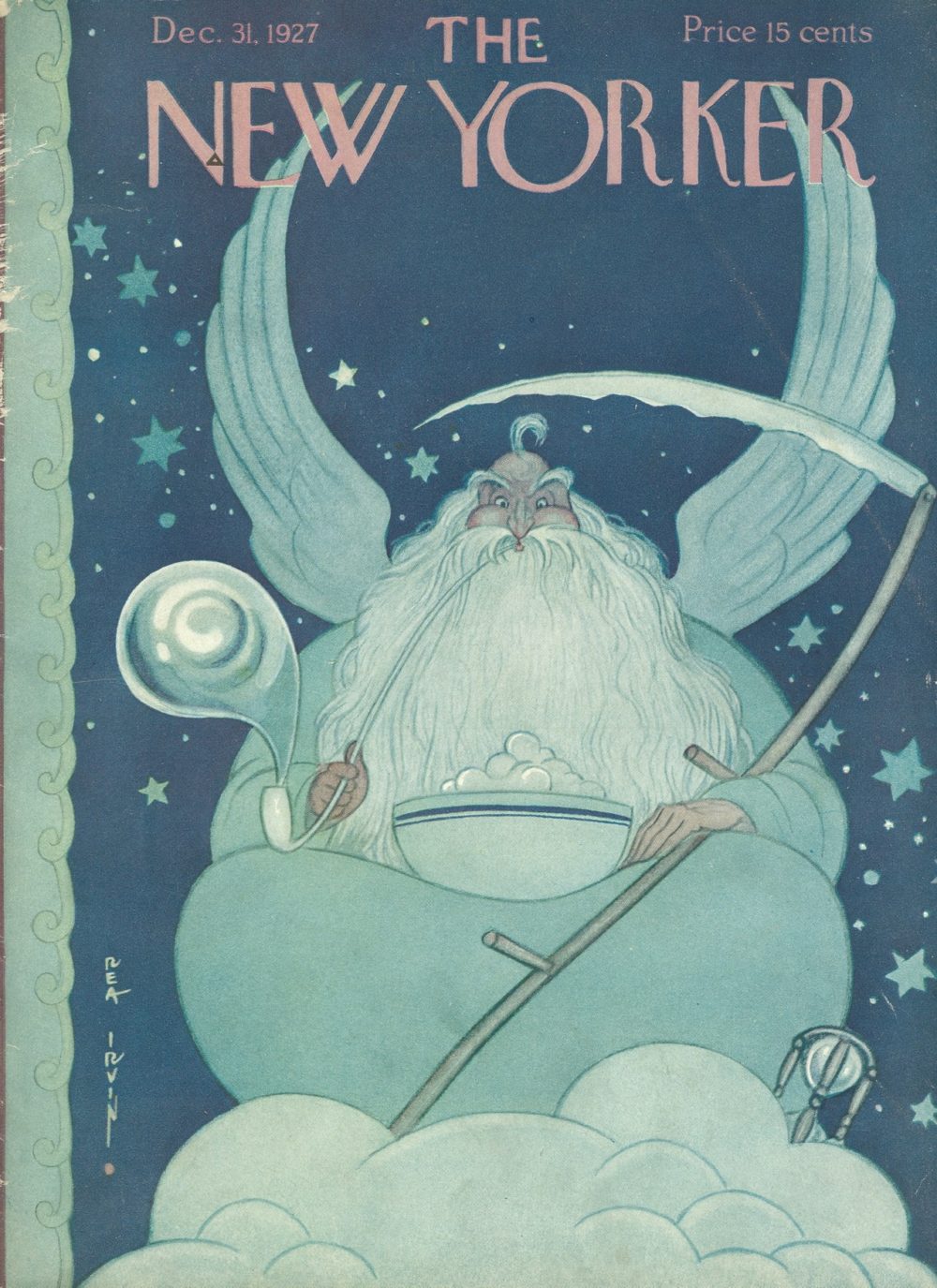
Founding documents, rare manuscripts, photographs, and timeless cover and cartoon art drawn from the Library’s rich holdings, along with artifacts from other renowned institutions, will feature in the dynamic exhibition, which will take visitors behind the scenes of the making of one of the United States’ most important magazines.

The exhibition will explore the literary cosmopolitanism The New Yorker forged throughout its one-hundred-year history, from the roaring twenties through the digital age, and highlight the role of both well-known creators such as E.B. White and Vladimir Nabokov as well as underrepresented and unsung contributors—from artists and copyeditors to typists and fact checkers.

A Century of The New Yorker will be a centerpiece of The New Yorker’s centenary, a year-long celebration that will begin February 2025 and will include “Tales From The New Yorker,” a film series at Film Forum, and the digitization of the magazine’s hundred-year archive, among other programming and events.

The New York Public Library is the home of the New Yorker records, which it acquired in 1991. The archive includes over 2,500 boxes, or 1,058 linear feet, and is one of the Library’s largest and most-used archival collections. The exhibition will draw on the Library’s rich archives related to the magazine and its writers and editors. Additionally, The New Yorker provided rare documents and artifacts from its own holdings to supplement the Library’s.

“In ways we see and don’t see, The New Yorker has shaped so many aspects of American culture, politics, and intellectual life over the past century,” said Julie Golia, Associate Director, Manuscripts, Archives, and Rare Books and Charles J. Liebman Curator of Manuscripts, the co-curator of the exhibition. “A Century of The New Yorker invites the Library’s visitors into the pages of the magazine, revealing the fascinating history of the country’s most important magazine through our rich collections.”

“Countless have been influenced by The New Yorker and delighted in its pages of groundbreaking journalism and irreverent cartoon art. As the home of the New Yorker records, The New York Public Library is the steward and preserver of the magazine’s one-hundred-year history,” said Anthony W. Marx, President of The New York Public Library. “I’m thrilled that visitors to the Library will be able to access the records through A Century of The New Yorker and see up-close how the renowned magazine has shaped intellectual life and cultural history in the United States.”

Highlights from the exhibition include:

  • The prospectus for The New Yorker (1924);
  • Original artwork for the first issue of The New Yorker by Rea Irvin (1925);
  • W.H. Auden’s handwritten draft of “Refugee Blues” (1939);
  • John Updike’s handwritten assignments for Talk of the Town (1940s);
  • Original signed art by Helen Hokinson (1941);
  • The New Yorker type identification and style guide (1981);
  • Correspondence between William Shawn and John Hersey related to “Hiroshima” (1946);
  • The typescript draft of “In Cold Blood” by Truman Capote, with revisions and deletions by William Shawn (1965);
  • Hannah Arendt’s original typescript manuscript of “Eichmann in Jerusalem” (1963);
  • Cynthia Ozick, “The Fallibility Rag,” poem dedicated to New Yorker grammarian Eleanor Gould (1987);
  • A mock-up of the first New Yorker website and other 21st-century artifacts; and
  • Original film featuring current and recent writers, editors, and staff exploring the history, legacy, and future of The New Yorker.

Additional highlights include:

  • Dorothy Parker’s manuscript list of “Unattractive Authors Whose Work I Admire”;
  • A memo from Katharine White to Harold Ross about discontent among administrative staff (1944);
  • Vladimir Nabokov’s copy of 55 Short Stories from The New Yorker (1949), with his handwritten grades for each story;
  • Twin typewriters used by Lillian Ross and William Shawn;
  • Reader responses to James Baldwin’s “Letter from a Region in my Mind” (1962);
  • Saul Steinberg’s caricature of Tina Brown (1990s);
  • Kara Walker’s preparatory drawings for “Quiet As It’s Kept,” the 2019 cover honoring Toni Morrison; and
  • Kadir Nelson’s “Say Their Names,” an interactive cover revealing the ongoing violence inflicted on Black Americans (2020).

Select objects will be accompanied by an audio experience featuring New Yorker writers and editors, including Kevin Young, Françoise Mouly, Henry Louis Gates, Jr., Mary Norris, and Deborah Treisman, among others.

In addition to the New Yorker records, The Library is home to over two dozen other archives of writers, editors, artists, and other contributors to the magazine—including Jhumpa Lahiri, Annie Proulx, Vladimir Nabokov, Charles Addams, and Joseph Mitchell.

A Century of The New Yorker draws on collections from all three of the Library’s research centers: the Schomburg Center for Research in Black Culture, the Library for the Performing Arts, and the Stephen A. Schwarzman Building. It will be open to the public for an entire year.

via nypl.org
Posted in Art, History, Libraries, USA | Tagged , , | Leave a comment

It’s a small world

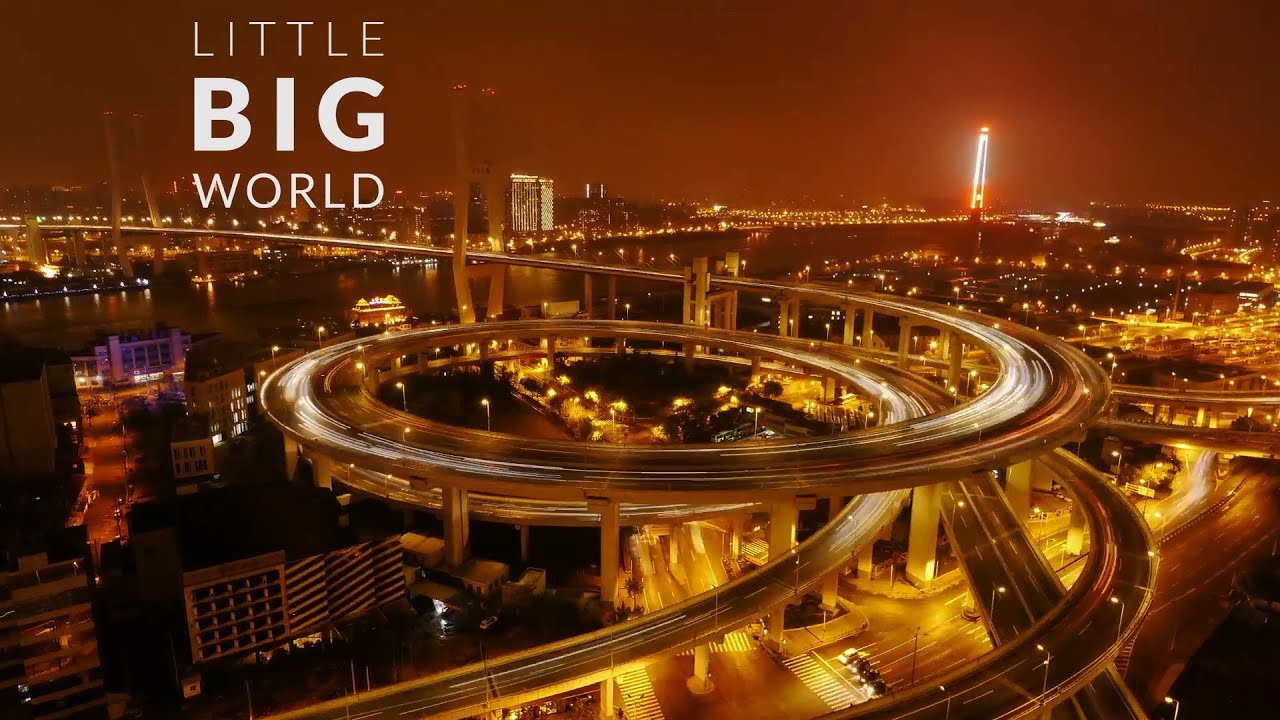
I’m a huge fan of tilt-shift and timelapse videos. Some of my favs are from Little Big World. Here is a compilation of some favorite clips from previous Little Big World episodes, including Sudan, Hallstatt, Ore Mountains, Melbourne, Doha, Dubai, Kyiv, Chernobyl, Bergen, Moldova, Venice, Garmisch Partenkirchen, Munich, Tampere, Pyongyang, Madeira, Alaska, Svedish Lapland, Georgia, Azerbaijan, Armenia, Rumania and Bulgaria in only 90 seconds… A time-lapse & tilt-shift & aerial video by Joerg Daiber


Posted in Africa, Asia, Europe, Film, Photography, Public Transport, USA, Writing | Tagged , , , , | Leave a comment

We’re dancing animals

It’s just Kurt Vonnegut talking to his wife about going out to get an envelope (we’re here on earth to fart around):


Posted in Books, Restaurants, USA, Writing | Tagged | Leave a comment

A Little London

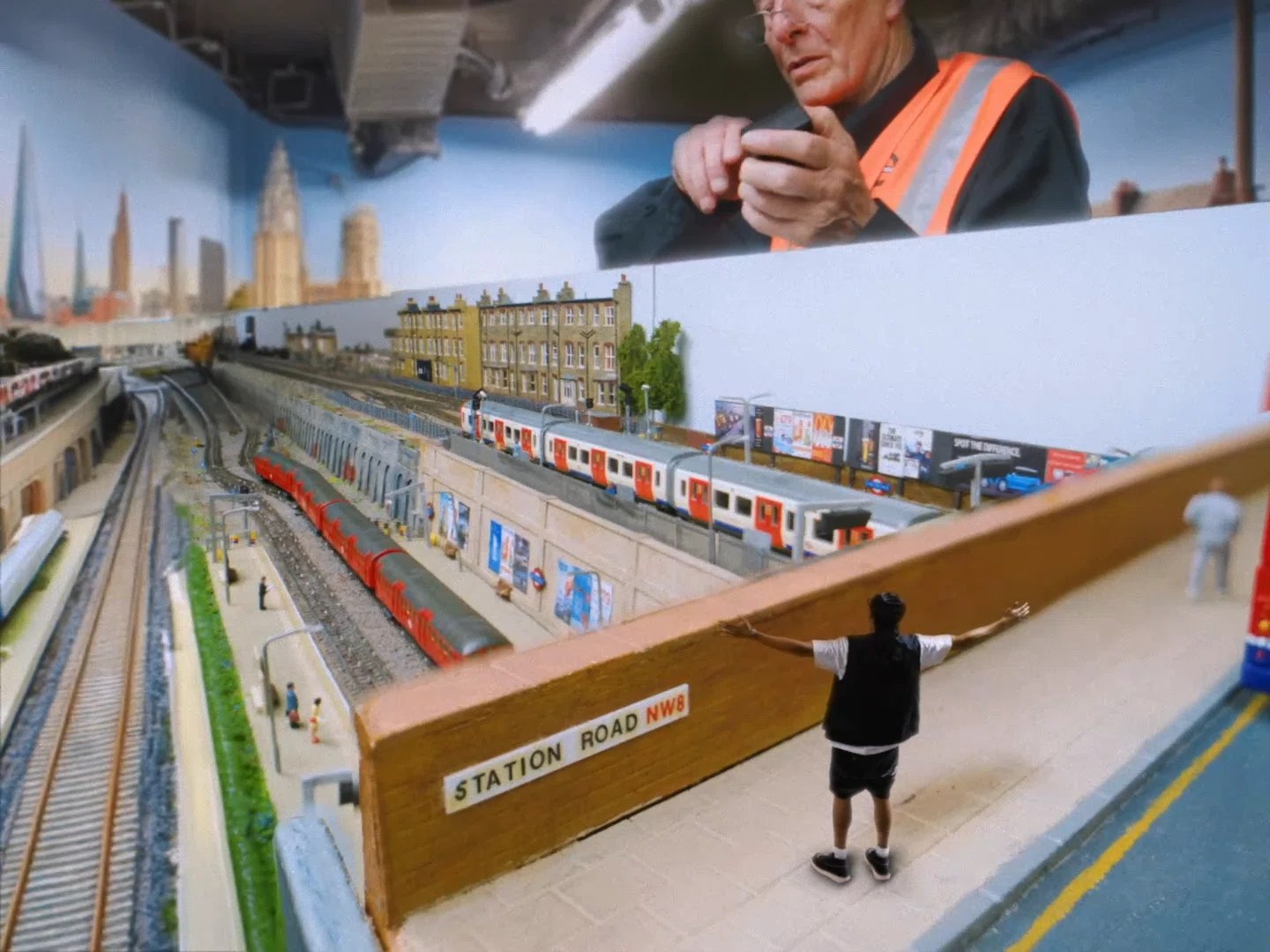
So, I know nothing about the Grime music scene in the UK, but I do know a bit about London and its trains. I love this video and catchy song which puts rappers Jme and 8syn into tiny London in this short film.

Miniature versions of the two rappers perform amongst a model version of a London underground station, which subverts the innocent charm of traditional model villages.

Embracing the charming aesthetic of Nineties kids TV, it’s a playful and self-referential promo with plenty of standout visual moments – including some rather unusual transformations.


Posted in Europe, Film, Music, Public Transport | Tagged , , | Leave a comment

Why don’t we do it in the road

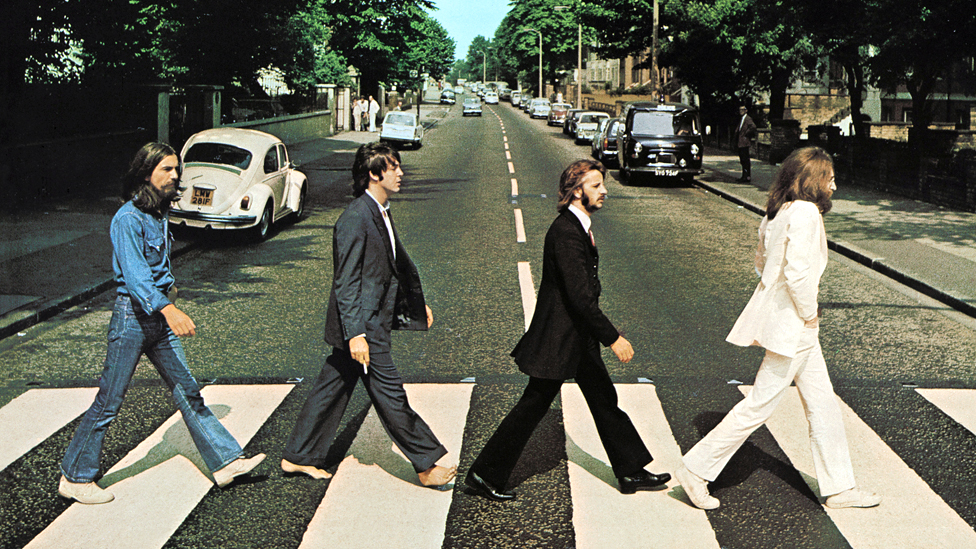
It’s one of the most famous images in pop culture: the four members of the Beatles — John Lennon, Ringo Starr, Paul McCartney and George Harrison — striding single-file over a zebra-stripe crossing on Abbey Road, near EMI Studios in St. John’s Wood, London.

The photograph was taken on the late morning of August 8, 1969 for the cover of the Beatles’ last-recorded album, Abbey Road. The idea was McCartney’s. He made a sketch and handed it to Iain Macmillan, a freelance photographer who was  chosen for the shoot by his friends Lennon and Yoko Ono.

Macmillan had only ten minutes to capture the image. A policeman stopped traffic while the photographer set up a ladder in the middle of the road and framed the image in a Hasselblad camera. The Beatles were all dressed in suits by Savile Row tailor Tommy Nutter — except Harrison, who wore denim. It was a hot summer day. Midway through the shoot, McCartney kicked off his sandals and walked barefoot. Macmillan took a total of only six photos as the musicians walked back and forth over the stripes. The fifth shot was the one.

Since then, the crossing on Abbey Road has become a pilgrimage site for music fans from all over the world. Every day, motorists idle their engines for a moment while tourists reenact the Beatles’ crossing. It’s a special place, and filmmaker Chris Purcell captures the sense of meaning it has for people in his thoughtful 2012 documentary, Why Don’t We Do It In the Road?  The five-minute film, narrated by poet Roger McGough, won the 2012 “Best Documentary“ award at the UK Film Festival and the “Best Super Short” award at the NYC Independent Film Festival. When you’ve finished watching the film, you can take a live look at the crosswalk on the 24-hour Abbey Road Crossing Webcam.


Posted in Europe, Film, History, Music | Tagged , , | Leave a comment

Underground Europe

Regular visitors to Travel Between The Pages are well aware of my public transit fandom. Although I grew up riding the New York City subways, I never appreciated how good an urban rail system could be until I spent four months riding the rails throughout Europe.  The Subways of Europe  website is a celebration of those cities that have “a picturesque as well as historically interesting underground transportation network to explore”. The images favor a very much architectural style – empty of people but beautifully-lit, and focusing on stonework and tiling and atria and all that sort of thing. Even if you are not the type to geek-out over public transit, the website is worth a browse.


Posted in Architecture, Art, Europe, Photography, Public Transport, Tourism | Tagged , , , | Leave a comment

A Book of Marvels

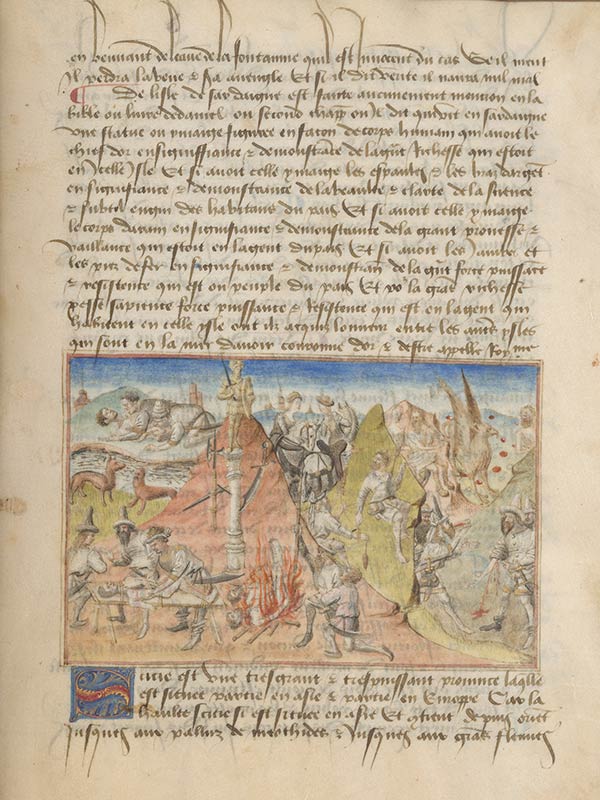
The Book of the Marvels of the World, an illustrated guide to the globe filled with oddities, curiosities, and wonders for the medieval armchair traveler exhibition opened this week at The Morgan Library & Museum in New York City.

Running January 24 through May 25, The Book of Marvels: Imagining the Medieval World is at the center of the exhibition which brings together two of the four surviving copies of this rare text – one from the Morgan’s collection, the other from the J. Paul Getty Museum – to examine medieval conceptions and misconceptions of a global world.

The related works on display bring to life the world of the Book of Marvels. Together, these objects demonstrate how foreign cultures were imagined in the Middle Ages and what the assumptions of medieval Europeans reveal about their own beliefs and biases. The exhibition also features Persian and Ottoman manuscripts that engage the theme from a non-European perspective.

Accounts of marvels were a primary way for pre-modern people across many cultures to learn about distant lands. Stretching the limits of imagination, these accounts often become increasingly fantastical the farther one travels from home. So in the description of Sri Lanka from the Book of Marvels, both text and image focus on the region’s massive snails which are said to be so large that locals live inside their shells and hunt them like wild game. Likewise, Arabia is depicted as a region rich in precious gems which are cut from the stomachs of dragons like pearls from oysters.

In Europe these accounts reinforced notions of cultural and religious superiority, often by characterizing other cultures as immoral or uncivilized.


“This exhibition is an opportunity to exhibit and study the Morgan’s copy of the Book of the Marvels of the World, the most complete extant copy, while also examining its perspective on the global medieval world,” said Colin B. Bailey, Katharine J. Rayner Director of the Morgan Library & Museum.”

Other highlights include:

  • rare illustrated manuscripts of Marco Polo and John Mandeville
  • a richly ornamented Ottoman Book of Wonders, made for a sultan’s daughter
  • a spectacular medieval map of the Holy Land, based on pilgrimage accounts; and one of the earliest European depictions of Native America
Posted in Art, Asia, Books, Europe, History, Libraries, Maps, Middle East, Museums, Travel Writing | Tagged , , , | 2 Comments

Good News for Bibliophiles

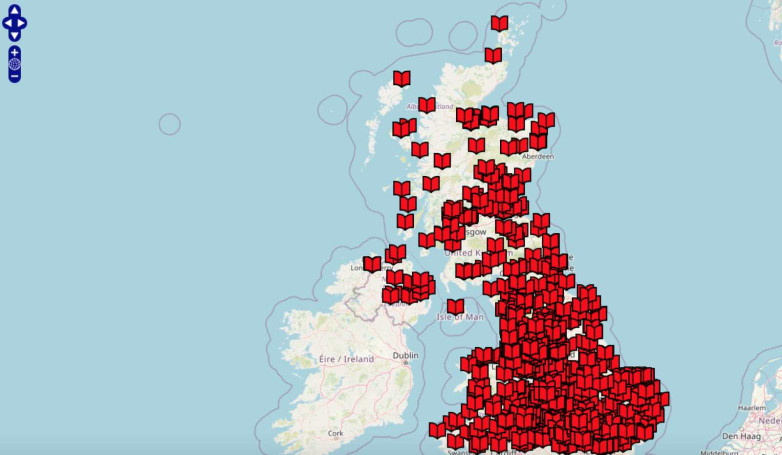
Latest figures from the online resource thebookguide which aims to list all the secondhand bookshops in the UK and the Republic of Ireland suggests secondhand bookselling has witnessed an impressive increase over the last 12 months.

According to its latest figures, at the end of 2024 there were 1,616 secondhand booksellers listed, compared to 1,380 in 2023, and 1,317 in 2022.

“This is a significant increase,” said Jon Morgan who is one of thebookguide’s co-ordinators, “and while it may be argued that some are charity type shops, they still meet the criteria  long since laid down by Mike Goodenough who launched the site in 2001 of physical outlets “wholly or mainly” having significant stocks of books. They are all grist to the mill and many of us have found gems in such places.

“The fact that so many shops are unearthed is, once again, down to the reviewers and while some of the additions have yet to be visited and reviewed, their inclusion makes sense precisely so that they can be visited.”

Graveyard figures i.e. those bookshops removed due to closure permanent or otherwise, indicate that 98 were removed last year compared to 42 the year before and 64 in 2022. Many of those removed are historic closures and may have been shut, but not recently visited by one of the volunteer reviewers who report on changes to hours, owners, locations.

Morgan commented that there has also been a continued rise in charity shops, perhaps filling the gap that used to be served by shops that have been priced out by rising overheads.

“We have several volunteers who have been responsible for identifying brand new outlets or shops previously uncovered and one in particular, “Booker T”,  who has worked tirelessly to help us towards the goal of listing all the secondhand bookshops wholly or substantially selling second hand books. Through him we’ve discovered more charity and other shops, which gives a slightly false picture for 2024.

“Over the last few years, we have had greater, closer and deeper engagement between the Guide and bookshops themselves. It is clear that they value the Guide as potentially and actually increasing footfall as well as raising profiles.”

More details and analysis of the openings and closures during 2024 is also available at the Wormwoodiana blog by Mark Valentine who suggests that these figures indicate there are now more secondhand bookshops open in the British Isles than during most of the 20th century.

Posted in Books, Bookstore Tourism, Europe | Tagged , | Leave a comment

Kafka is not buried here

“Frog in Prague”

by

Stephen Dixon


They stand still. “And Kafka?” Howard says.

“Kafka is not buried here.”

“No? Because I thought—what I mean is the lady at my hotel’s tourist information desk—the Intercontinental over there—and also the one who sold me the ticket now, both told me—”

The man’s shaking his head, looks at him straight-faced. It’s up to you, his look says, if you’re going to give me anything for this tour. I won’t ask. I won’t embarrass you if you don’t give me a crown. But I’m not going to stand here all day waiting for it.

“Here, I want to give you something for all this.” He looks in his wallet. Smallest is a fifty note. Even if he got three-to-one on the black market, it’s still too much. He feels the change in his pocket. Only small coins. This guy’s done this routine with plenty of people, that’s for sure, and he’d really like not to give him anything.

“Come, come,” the man said.

“You understand?” Howard said. “For Kafka’s grave. Just as I told the lady at the ticket window, I’m sure the other parts of this ticket for the Old Synagogue and the Jewish Museum are all very interesting—maybe I’ll take advantage of it some other time—but what I really came to see—”

“Yes, come, come. I work here too. I will show you.”

Howard followed him up a stone path past hundreds of gravestones on both sides, sometimes four or five or he didn’t know how many of them pressed up or leaning against one another. The man stopped, Howard did and looked around for Kafka’s grave, though he knew one of these couldn’t be it. “You see,” the man said, “the governor at the time—it was the fourteenth century and by now there were twelve thousand people buried here. He said no when the Jewish elders of Prague asked to expand the cemetery. So what did the Jews do? They built down and up, not outwards, not away. They kept inside the original lines of the cemetery permitted them. Twelve times they built down and up till they had twelve of what do you call them in English, plateaus? Places?” and he moved his hand up in levels.

“Levels?”

“Yes, that would be right. Twelve of them and then the ground stopped and they also couldn’t go any higher up without being the city’s highest cemetery hill, so they couldn’t make any levels anymore.”

“So that accounts for these gravestones being, well, the way they are. All on top of one another, pressed togetherlike. Below ground there’s actually twelve coffins or their equivalents, one on top of—”

“Yes, yes, that’s so.” He walked on about fifty feet, stopped. “Another governor wouldn’t let the Jews in this country take the names of son-of anymore. Son of Isaac, Son of Abraham. They had to take, perhaps out of punishment, but history is not clear on this, the names of animals or things from the earth and so on.” He pointed to the stone relief of a lion at the top of one gravestone. “Lion, you see.” To a bunch of grapes on another stone: “Wine, this one. And others, if we took the time to look, all around, but of that historical era.”

“So that’s why the name Kafka is that of a bird if I’m not mistaken. Jackdaw, I understand it means in Czech. The Kafka family, years back, must have taken it or were given it, right? Which?”

“Yes, Kafka. Kafka.” Howard didn’t think by the man’s expression he understood. “Come, please.” They moved on another hundred feet or so, stopped. “See these two hands on the monument? That is the stone of one who could give blessings—a Cohen. No animal there, but his sign. Next to it,” pointing to another gravestone, “is a jaw.”

“A jaw?” The stone relief of this one was of a pitcher. “Jar, do you mean?”

“Yes. Jaw, jaw. That is a Levi, one who brings the holy water to wash the hands of a Cohen. That they are side by side is only a coincidence. On the next monument you see more berries but of a different kind than wine. Fertility.”

“Does that mean a woman’s buried here? Or maybe a farmer?”

“Yes. Come, come.” They went past many stones and sarcophagi. All of them seemed to be hundreds of years old and were crumbling in places. Most of the names and dates on them couldn’t be read. The newer section of the cemetery, where Kafka had to be buried, had to be in an area one couldn’t see from here. He remembered the photograph of the gravestone of Kafka and his parents. Kafka’s name on top—he was the first to go—his father’s and mother’s below his. It was in a recent biography of him he’d read, or at least read the last half of, not really being interested in the genealogical and formative parts of an artist’s life, before he left for Europe. The stone was upright, though the photo could have been taken many years ago, and close to several upright stones but not touching them. The names and dates on it, and also the lines in Hebrew under Kafka’s name, could be read clearly. It looked no different from any gravestone in an ordinary relatively old crowded Jewish cemetery. The one a couple of miles past the Queens side of the Fifty-ninth Street Bridge where some of his own family were buried.

The man walked, Howard followed him. “Here is the monument of Mordecai Maisel. It is much larger than the others because he was a very rich important man. More money than even the king, he had. The king would borrow from him when he needed it for public matters. Later, after he paid it back, he would say to him ‘Mordecai, what can I give you in return for this great favor?’ Mordecai would always say ‘Give not to me but to my people,’ and that did help to make life better in Prague for the Jews of that time. He was a good wealthy man, Mordecai Maisel. Come, come.”

They stopped at another sarcophagus. Hundreds of little stones had been placed on the ledges and little folded-up pieces of paper pushed into the crevices of it. “Here is Rabbi Low. As you see, people still put notes inside his monument asking for special favors from him.”

“Why, he was a mystic?”

“You don’t know of the famous Rabbi Löw?”

“No. I mean, his name does sound familiar, but I’m afraid my interest is mostly literature. Kafka. I’ve seen several of his residences in this neighborhood. Where he worked for so many years near the railroad station, and also that very little house on Golden Lane, I think it’s translated as, across the river near the castle. A couple of places where Rilke lived too.”

“So, literature, what else am I talking of here? The Golem. A world famous play. Well? Rabbi Low. Of the sixteenth century. He started it. He’s known all over.”

“I’ve certainly heard of the play. It was performed in New York City—in a theater in Central Park—last summer. I didn’t know it was Rabbi Low who started the legend.”

“Yes, he, he. The originator. Others may say other rabbis might have, but it was only Rabbi Low, nobody else. Then he knocked the Golem to pieces when it went crazy on him. Come, come.”

They went on. The man showed him the grave of the only Jewish woman in medieval Prague who had been permitted to marry nobil
ity. “Her husband buried here too?” Howard said. “No, of course not. It was out-of-religion. The permission she got to marry was from our elders. He’s somewhere else.” The stone of one of the mayors of the Jewish ghetto in seventeenth-century Prague. The stone of a well-known iron craftsman whose name the man had to repeat several times before Howard gave up trying to make it out but nodded he had finally understood. Then they came to the entrance again. After the man said Kafka wasn’t buried here and Howard said he wanted to give him something for all this, he finally gives him the fifty note, the man pockets it and Howard asks if he might know where Kafka is buried.

“Oh, in Strašnice cemetery. The Jewish part of it, nothing separate anymore. It isn’t far from here. You take a tube. Fifteen minutes and you are there,” and he skims one hand off the other to show how a train goes straight out to it. “It’s in walking distance from the station. On a nice day unlike today the walk is a simple and pleasant one. And once you have reached it you ask at the gate to see Kafka’s grave and someone there will show you around.”

Posted in Books, Europe, History, Restaurants, Tourism, Writing | Tagged , , | Leave a comment

Information Wants To Be Free (some restrictions apply)

It’s a bit off topic, but I’ve been increasingly frustrated by the increasing number of paywalled sites that I seem to encounter daily. Obviously for-profit businesses need to raise revue to continue to function, but why tease online information and then extort subscription fees for access. It’s particularly frustration on websites that are already awash in ads.

Is access to information a universal right or a privilege? Depending on your answer to this question, you may have mixed feelings about removing paywalls. I am all for paying for services that I get a lot of value from. I rarely run into a pay-wall in the first place. But when I do run into one, it’s usually because some article from an outlet I don’t frequent caught my interest and is behind a very strict pay-wall. Sorry, but I’m not about to fork over $10+ for a single article I don’t even know the quality of.

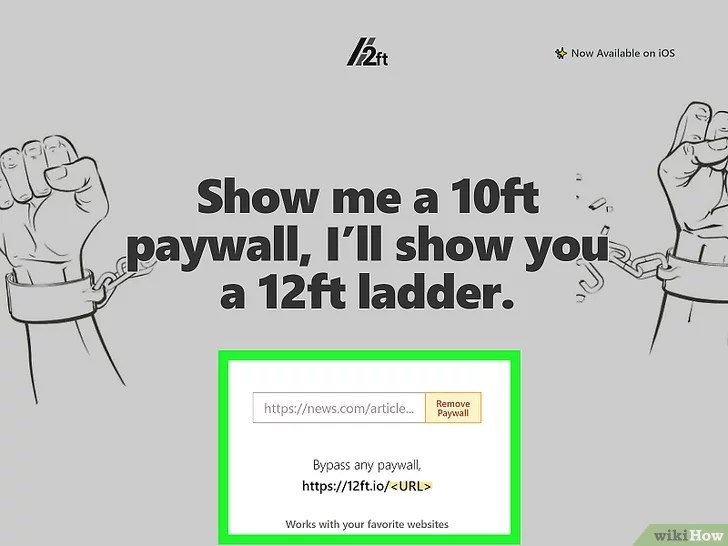
Some pay-walls are more technically sophisticated than others, so the things I am about to mention may not even work for you. I think they are worth bookmarking even if not 100% reliable. If you are lucky, the pay-wall is essentially a bit of JavaScript code layered on top of the article, in which case using a service that shows you the page without loading this JavaScript code will do the trick. If you paste the link to your article into 12ft.io, you may be able to read the article without any issues. If your browser has a “reader mode” this may also work. Should this trick not work for you don’t lose hope quite yet.

Some outlets will have impenetrable pay-walls – unless you are a robot, in which case they may grant you a free peek. This is because these outlets want their articles to be indexed by search engines so that they show up when people search for stuff. Search engines basically have bots “crawl” from web-page to web-page to make sense of the pages content and importance. If the article you want to read has been visited by the internet archive’s bot, you have a pretty solid chance of being able to read that article. Simply copy the link to the article and paste it into the search bar on archive.org. If the article is in the archive, you should now be able to see the full thing. If it’s not, you can request it to be archived or just try again later. Of course, very recent articles are unlikely to have been archived already. Sometimes even if the page is archived it will still show the pay wall.

Posted in apps, Tech | Leave a comment