A Work In Progress

Have you ever thought about the novelist’s process? Would you like a peek behind the scenes of the publishing biz? If you’re even just a little bit curious, check-out Work In Progress. Farrar, Straus and Giroux’s new monthly blog looks at the writing process and the arcane peculiarities of big time publishing.

In the first edition, Jeffrey Eugenides, author of The Virgin Suicides and Middlesex, ponders his next novel in an illuminating exchange with FSG President and Publisher, Jonathan Galassi. The interview begins with:

Galassi: Please tell us everything you can about your new book, starting with the title.

Jeffrey Eugenides: I hate to begin by withholding information, but I’d rather not divulge the title of the new book at the moment. I remember when my wife was pregnant and we were trying out different names for the baby. Anytime we told someone a prospective name, they would find something wrong with it. It rhymed with something not-nice. It was just begging to be deformed into a schoolyard epithet. The result was that we never named our child and refer to her now only by her SS#. So I’m not going to make that mistake again and tell you the title of my book.”


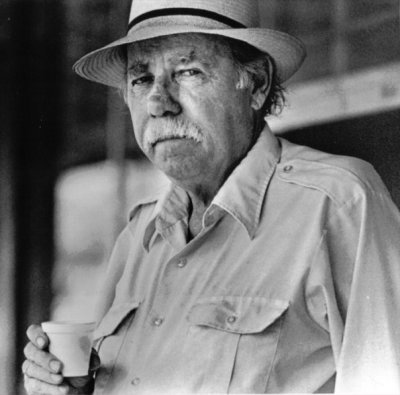
Jeffrey Eugenides

photo by Karen Yamuachi

Posted in Books, USA, Writing | Tagged , | Leave a comment

How Kafkaesque

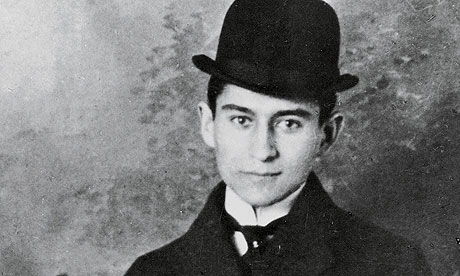
Franz Kafka instructed that all his manuscripts were to be burned after his death, but his friend Max Brod chose to disregarded the request, setting-up a complicated legal tussle over thousands of pages of manuscripts that has the literary world in a tizzy. That legal imbroglio took a new twist on July 19th  as four safety deposit boxes in a Zurich bank containing the manuscripts were opened.
The boxes are purported to hold thousands of manuscripts by Kafka and Brod, including letters, journals, sketches, stories and drawings, some of which have never been published and could offer literary detectives, academics and psychologists some insight into one of the 20th century’s greatest writers.

The action in Zurich follows similar moves at two Tel Aviv banks, which were ordered by an Israeli tribunal to open Kafka’s works in their vaults.

The documents form the core of a long-standing battle over ownership between the state of Israel and the Hoffe sisters who say they inherited Kafka’s estate from their mother Esther Hoffe – Max Brod’s secretary.  After Kafka’s death, Brod not only disregarded Kafka’s directives, but published his work and then bequeathed the manuscripts to his secretary.

The government of Israel, however, claims that Kafka’s papers are the property of the state since Max Brod migrated to Israel in 1939.

Esther Hoffe’s daughter, Eve , was expected to be present at the opening of the boxes, along with a panel of attorneys  appointed by the court. Assisted by German literary experts and a manuscript expert, they will report to the court an exact record of what the boxes contain.

The Israeli court will then decide whether to return the manuscripts to the safety deposit boxes or transfer them to a public archive, to be published for the benefit of future generations.

Meanwhile, the Israeli court is expected to rule on Hoffe’s petition calling for a gag order on the contents of the box. The Israeli paper, Haaretz, has asked the court to allow the documents to be published, citing their public and literary value.

Kafka died from tuberculosis in 1924, his will instructed  Brod: “Dearest Max, My last request: Everything I leave behind me [is] to be burned unread.” However, Brod instead published for the first time Kafka’s novels The Trial, The Castle and Amerika.

In 1939 Brod escaped his home in Prague as the Nazis approached and took a suitcase of Kafka papers to Tel Aviv, where he started a new life. He later donated manuscripts of The Castle and Amerika to Oxford University, but kept the original of The Trial for himself.

Following the death of his wife, Brod entered into a relationship with his secretary, Esther Hoffe. When Brod died in 1968, he left a will that is now disputed. Hoffe sold documents over several years and when she died in 2007 she left the remaining papers to her daughters Eve and Ruti.

 

Posted in Books, Europe, History, Middle East, Writing | Tagged , | 1 Comment

The Passage…Not Another Book Review

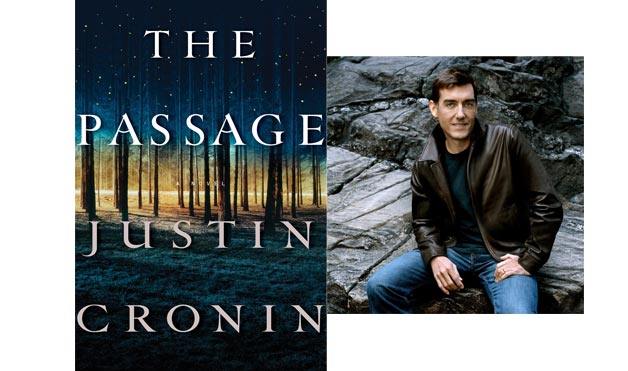
The Passage

With The Passage, novelist Justin Cronin has created both a bona fide literary thriller and an epic tale of human endurance in the face of unfathomable horror and loss. The massive book’s enthralling storytelling, vivid prose and essential empathy mark it as an exceptional work that manages to transcend the well-trodden territory of its genre.

The extraordinary hype ― and $3.75 million advance ― should not prevent the “serious” reader from embracing this tale where The Stand meets Night of the Living Dead along The Road. What elevates The Passage above the typical post-apocalyptic zombie/vampire/dystopian future/road trip novel is Cronin’s obvious writerly skills, seamless prose and moving psychological portraits of fully imagined and empathetic characters.

As I turned the final page (after a marathon late night read), I couldn’t help but think of that well used Kafka quote: A book must be the axe to break the frozen sea within us. Cronin has forged that axe with this elegant, if imperfect, novel that manages to rise above the clichés and even inspire some hope through this deeply humane work.

Posted in Books, Uncategorized, Writing | Leave a comment

Bookstore Tourism

The following post was written by Larry Portzline, author of Bookstore Tourism: The Book Addict’s Guide To Planning & Promoting Bookstore Road Trips for Bibliophiles & Other Bookshop Junkies.

My goal when I started the Bookstore Tourism “movement” was to support independent bookstores by promoting them as a group travel destination.  And although I haven’t been actively involved with it over the past few years (I’ve been working on other projects and living the fiscally-challenged life of a writer), I still think it has a lot of promise as a group travel niche and marketing tool for the bookselling and travel industries.  So I plan to get back into it again as time allows and as the economy continues to recover.  In fact, I’ll be leading a “Greenwich Village Bookstore Adventure” for a Pennsylvania college this October.

I first began leading “bookstore road trips” to New York City in 2003.  I’d load 50 people on a chartered bus in Harrisburg, PA, and we’d spend the day visiting the 20 or so indie bookshops in and around Greenwich Village.  Later, I also led literary jaunts to Washington, DC and the Brandywine Valley.  To say that these sold-out excursions were popular would be putting it lightly.  Everyone spent so much money and carried home so many books, it boggles the mind.

At first the Bookstore Tourism idea was merely for fun, but it gradually turned into a mission when I saw how many indie booksellers around the country were struggling to compete with large bookstore chains, online retailers, and more recently, the rise of the e-book.  I wanted to remind readers everywhere how important it is to support their local indies if they don’t want them fading into oblivion.  These bus trips seemed like a great way to do that, so I started encouraging other folks to plan bookstore tours of their own.  I promoted the concept with a website, a blog, podcasts, and even a how-to book called “Bookstore Tourism: The Book Addict’s Guide to Planning & Promoting Bookstore Road Trips for Bibliophiles & Other Bookshop Junkies.”

Bookstore Tourism eventually grew into a grassroots effort in pockets around the U.S.  It was never huge, but there was a nice ripple of interest and support.  A lot of folks recognized the concept’s potential as a group travel niche and marketing tool, especially the American Booksellers Assocation, various regional booksellers associations and a few other groups that considered ways to collaborate and capitalize on the trend.  In particular, the Southern California Independent Booksellers Association offered several bookstore tours in and around Los Angeles and San Diego.

Some folks continue to do literary road trips here and there, but the Recession has certainly taken a toll.  I think Bookstore Tourism will rise again, though.  It offers nothing but benefits: to the bookselling and travel industries, to other local retailers, to sponsoring organizations, to campaigns for reading and literacy, and on and on.

Like I told a reporter once: “If they can load people onto a bus and take them to outlet malls for the day, why can’t they do the same with indie bookstores?”

Larry Portzline

Williamsport, PA

www.larryportzline.com

Larry Portzline

Posted in Books, Bookstore Tourism, Tourism, Travel Writing, USA | Tagged , | 4 Comments

I Write Like…


The virally popular new website I Write Like analyzes your writing and matches its style with famous authors. Who’s your literary twin?

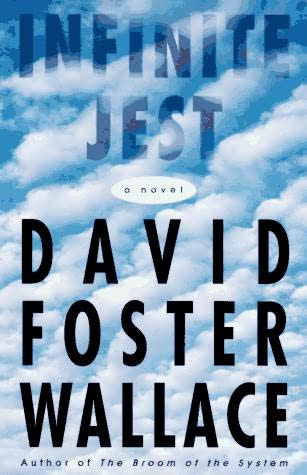
According to I Write Like, Saturday I was churning out prose like David Foster Wallace (I used my blog post as a sample), while the previous week my novel-in-progress was punching out the dialog like Chuck Palahniuk ( I wish ). But I’m not the only one spending my time with this clever website by software developers Coding Robots, more than 200,000 other people have taken it for a drive since its release on July 8th.

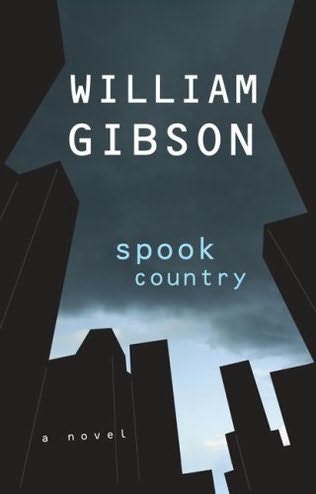
The website’s creator has said that it’s still a work in progress and that they’re in the process of “training the database” by adding more literary works; it’s only using a database of forty authors at the moment.  But that hasn’t stopped writers like William Gibson from finding out that he writes like Haruki Murakami. That’s actually not much of a surprise.

So give it a spin. Just enter any English text ― blog post, short story, unfinished novel ― at least three paragraphs in length and find your match.

Posted in Books, Writing | Tagged | Leave a comment

Best Thrillers, Ever ?


Smiley's People

Last summer, NPR readers voted on a list of Best Beach Books Ever. This summer it’s the Best Thriller Ever.

Last month NPR asked audience members to submit nominations for a list of the 100 most pulse-quickening, suspenseful novels ever written. They came through with some 600 titles. It was a fascinating, if unwieldy, collection.

Now, with audience input, a panel of critics*  has whittled that list down to a manageable 182 novels. That roster, which they now offer for final voting, draws from every known thriller sub-genre — techno, espionage, crime, medical, psychological, horror, legal, supernatural and more.

Which raises the question, what defines a thriller? Clearly it’s not setting or subject matter.

For the purposes of the contest, NPR sticks with the answer James Patterson once gave, which is that thrillers are defined by the “intensity of emotions they create … of apprehension and exhilaration, of excitement and breathlessness. … By definition, if a thriller doesn’t thrill, it’s not doing its job.” If the closely related mystery genre is about discovery, then thrillers are more oriented towards action and suspense. The villain may be known from the start; the fun comes from finding out how the hero will foil whatever evil plans are afoot.

In the end, the audience will decide what makes the top 100. Everyone gets 10 votes.  Lobby for your favorites on the NPR website. They will announce the winners on August 2.

*Maureen Corrigan, David Morrell, Patrick Anderson and Steve Berry

Posted in Books, USA, Writing | Tagged , | Leave a comment

The Chekhov of Cleveland, RIP

Harvey Pekar (2003)

In the brave new world of the 21st century comic books have been re-branded as graphic novels and their creators are the subject of graduate school seminars and regular coverage in the New York Times Book Review. But back in 1976  American Splendor was just the ironically titled autobiography of a regular working class Joe.

American Splendor

I have never set foot in Cleveland ― and don’t intend to in the near future ― but reading Harvey Pekar’s comics I felt that I shared the mundane struggles and the exasperating minutiae of everyday life that dogged the citizens of the Rust Belt capital. Harvey’s ongoing graphic autobiography turned his, and Cleveland’s, existential struggles into accessible art. For me, Harvey was a kindred spirit, another radical, working class heeb who understood that life was a war of attrition, and that if you expect the worst sometimes you would be surprised by the good in life.

Like most of my contemporaries, I was a big-time consumer of underground comics, but until Harvey came along the genre had become moribund and achingly self-referential. American Splendor managed to make the personal political and to become an aesthetic bridge between classes and generations.

Harvey was the unvarnished, unadorned, and certainly unfiltered, everyman who found real art everywhere from a trip to the bakery to battling cancer. The Chekhov of Cleveland was fond of repeating that “ordinary life is pretty complex stuff” and Harvey Pekar was one complex guy.

Posted in Art, Books, Freedom of Speech, USA, Writing | Tagged , , | Leave a comment

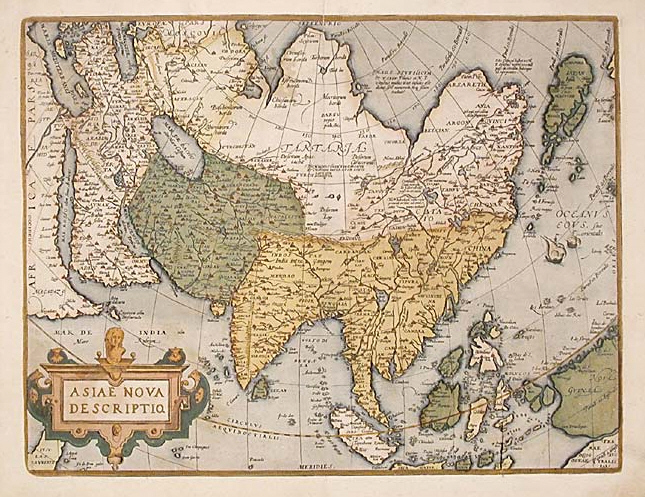
Envisioning The World

Mercator Septentrionalium 1623

“Envisioning The World” is a collection of early printed maps that offers snapshots of a world that was largely unknown at the time many of the maps were made. For most people, then, familiar territory encompassed not much more than a neighborhood. Travelers were few, and even sailors crept along the coastlines. Nevertheless, scholars and visionaries had long looked beyond the horizon in hope of grasping the measure of the Earth and its place in the universe.

The maps in this collection mark the European rediscovery of classical Greco-Roman culture— that enormous expansion of literacy and knowledge known as the Renaissance. The invention of printing in the 1450s made it possible to distribute new information more quickly. The first maps were printed from carved wooden blocks, a technique that developed to the point where elaborate woodcuts could be used to produce finely detailed work. Engraving on copperplate offered even more refinement, detail, and accuracy. Maps became, progressively, not only pictures of the mapmaker’s imagination, but also useful guides to the territory and works of art in their own right.

Abraham Ortelius 1595

This development of technique was parallel by the development of scientific knowledge: astrology became astronomy; mathematics led to physics, and maps pictured the progression. Three major strands of thought—classical Greek geography, medieval religious representations of the world, and the effects of new scientific concepts and information from the early voyages of discovery—appear alone or in combination on printed maps for more than two hundred years. As records, maps were not systematic; sometimes it took many years for a scientific discovery to be reflected in the maps and as long for outmoded notions to disappear from them.

By the end of the seventeenth century, however, the world had become more thoroughly explored and understood. The pioneering work of such seventeenth-century scientists as Copernicus, Kepler, and Halley had settled almost all the important questions in the fields of astronomy and mathematics. Many of the basic concepts and techniques that were so successfully developed and applied to maps and mapmaking by 1700 continue in practice to this day.

The complete exhibition of “Envisioning the World: The First Printed Maps, 1472-1700” is on view at the Princeton University Library until August 1, 2010.

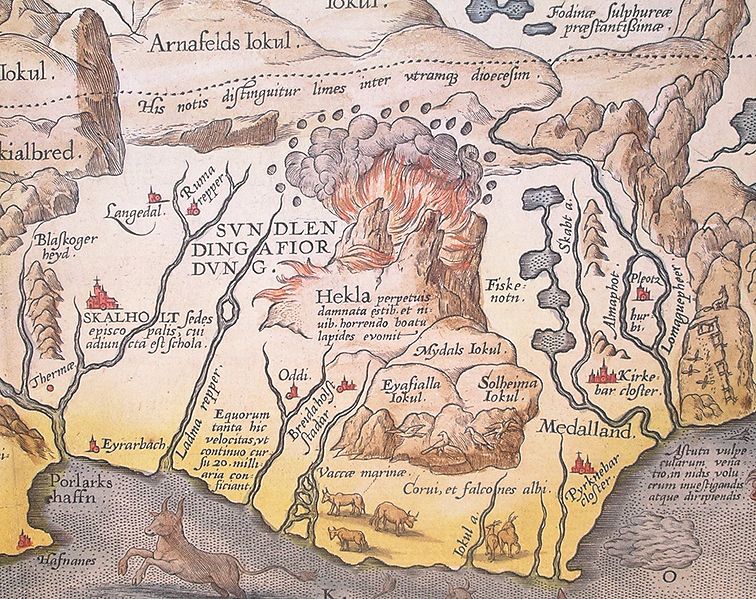
Ortelius Hekla, Iceland 1585

Posted in Books, Libraries, Maps, Museums, Tourism, USA | Tagged | Leave a comment

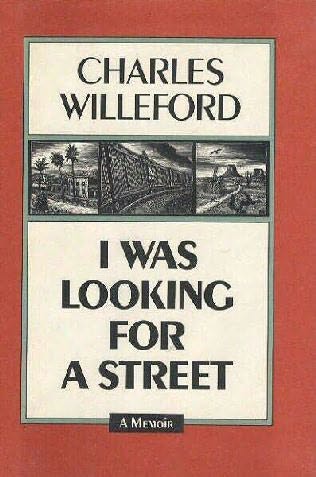
I Was Looking For A Street


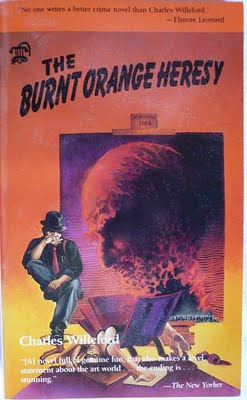
I first discovered Charles Willeford while living in Miami in the 70s; what better place to meet the master of pyscho-pulp fiction. Willeford’s darkly humorous novels were often deceptively simple meditations on being and nothingness packaged as police procedures or pulp revenge fantasies.

A natural existentialist, inspired to write by Dostoevsky, Willeford captured the tropical-urban metaphysics of Miami better than any 20th century author. He is rightly best known for his Hoke Mosley novels, set in South Florida, which transcend the police procedural genre, but his writing career stretches back to the 1940s and includes short story collections, poetry, memoirs, literary criticism, westerns and war stories. Whatever the genre, a penumbra of grief and a pervasive disappointment with the phoniness of American culture, imbue all of Willeford’s work.

I was dead chuffed to stumble upon Willeford’s recently re-published memoir, I Was Looking For a Street, in a new paperback edition by Picture Box with a forward by Luc Sante and a cover blurb from Jonathan Lethem. I wholly agree with Sante’s comparison of Willeford to Elmore Leonard and his belief that “A lot of people could do themselves a favor by reading him”.

Picture Box has indicated that they may have plans to re-release more of the Willeford canon. And there’s even a rumor that the never published Grimhaven, Willeford’s sequel to the successful Miami Blues, could finally see publication.

Charles Willeford’s star has never shined as brightly as cult luminaries such as Jim Thompson and David Goodis, but a new generation now has the opportunity to get to know the under-appreciated master of smart pulp fiction.


Posted in Books, USA | Tagged | Leave a comment

It’s Always 1984 Somewhere

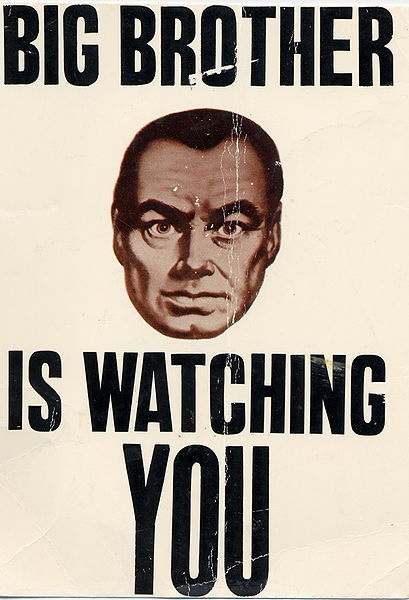
Shortly after the outbreak of the Spanish Civil War, George Orwell volunteered to fight for the Republicans against Franco’s fascist Nationalist rebellion. He joined the far-left POUM ( Workers’ Party of Marxist Unification), in which he fought as an infantryman. In his classic work, Homage to Catalonia (probably the greatest political travel book ever written), Orwell depicted the betrayal of the workers’ revolution by the Soviets and the Spanish Communist Party. After being shot in the neck in May of 1937, Orwell narrowly escaped arrest by he Stalinists after being labeled a Trotskyite. In June, he and his wife Eileen were forced to leave Spain for good and travel to Morocco to recuperate.


Since 9th August 2008, we’ve be able to gather our own impression of Orwell’s experience in Spain and disillusion with State Communism from reading his most strongly individual piece of writing: his diaries. The Orwell Prize marked the 70th anniversary of the diaries, by blogging each diary entry exactly seventy years after it was written, allowing readers to follow Orwell’s recovery in Morocco, his return to the UK, and his opinions on the descent of Europe into war in real time. The diaries end in 1942, three years into the conflict.

From his domestic diaries, a largely unknown Orwell, whose great curiosity is focused on plants, animals, woodwork, and – above all – how many eggs his chickens have laid is revealed. From his political diaries (from 7th September 1938), it may be the Orwell whose political observations and critical thinking have enthralled and inspired generations since his death in 1950. Whether writing about the Spanish Civil War or sloe gin, geraniums or Germany, Orwell’s perceptive eye and rebellion against the ‘gramophone mind’ he so despised are obvious.

For Orwell fans, the Orwell Diaries Blog ( winner of the prestigious Orwell Prize) provides a very personal and intimate glimpse of the author’s world.


Posted in Books, Europe, Freedom of Speech, History, Travel Writing, Writing | Tagged , , , | Leave a comment