
1 For All


1 For All

1 for All: Standing up for the First Amendment    

By Ken Paulson 

                                                                  Every July 4th, we celebrate the Founding Fathers who gave America the gift of liberty.Except that they didn’t.  Actually, the operative word is “fathers.” These gentlemen did a fine job of building a nation founded on freedom — unless you happened to be a woman, a slave or poor.For all the poetic flourish of the Declaration of Independence, the most powerful passage in America’s history can be found in the First Amendment to the Constitution. The five freedoms guaranteed there gave Americans the right to speak out against injustice, to report about inequality, to protest and petition, and to draw strength from freedom of faith.  In the centuries that followed this nation’s founding, the First Amendment was used to free the slaves, extend the vote to women and ensure equal protection under the laws.Yet despite its pivotal role in making America what it is today, there are no fireworks celebrating the First Amendment. The anniversary of its ratification on Dec. 15 goes largely unnoticed.  More tellingly, most Americans have no idea what the First Amendment says. Surveys indicate that only one American in 25 can name the freedoms of the First Amendment and that a majority — when pressed — can come up with only one, typically freedom of speech. It’s constitutional illiteracy of the highest order.The truth is that we don’t do a very good job of standing up for the First Amendment. Its freedoms are truly the cornerstone of democracy and make America the special nation it is.  It’s time we said that. Publicly. Passionately. Over and over again.  That’s the core concept behind 1 for All, a nationwide campaign to remind the public that there’s one amendment that we all use daily. And it’s the one that truly guarantees freedom for all.1 for All is the collaborative effort of educators, artists, journalists, lawyers, librarians and many more who believe that the American public would benefit from a greater understanding of the First Amendment and the need to protect all voices, views and faiths. Thousands of news media, arts and religious organizations from all 50 states have offered their help in support of these core freedoms.  The campaign features ads that celebrate freedom in America and the ways we exercise those freedoms in our daily lives. The First Amendment gives us freedom of speech, but it also provides freedom to tweet. It protects political speeches, but it also guarantees our right to sing, dance and perform.In fact, the First Amendment enriches our lives on a daily basis. That’s the essence of 1 for All. The campaign — which will launch on July 1 — is defined by these guiding principles:  

  • ·1 for All is nonpartisan. At a time of deep political polarization, we choose not to take sides. In fact, a shared commitment to freedom of speech, press and faith should unify this nation.
  • ·It’s all about education. America’s teachers would like to do a better job of teaching about the First Amendment, but they often lack the resources they need. 1 for All will provide educational materials, course content and study guides for teachers of grades 1 to12. In addition, 1 for All and its Liberty Tree Initiative will sponsor campus festivals celebrating the exploration of First Amendment freedoms.
  • ·1 for All is interactive. There’s no point in celebrating free expression without encouraging some of it. Students and others will be encouraged to submit photos, videos, songs and stories that reflect the value of freedom in America.
  • ·The focus is on all five freedoms. America’s news media are quick to defend freedom of the press, and churches embrace freedom of faith, but these freedoms are interdependent and deserve the full support of all Americans. We can’t pick and choose the freedoms we like. 

1 for All is a celebration of the freedoms that truly make America special. It’s not a coincidence that the strongest, most dynamic, most creative and most ambitious nation in the history of the planet is also the most free.           Ken Paulson is a founder of 1 for All, the president of the Newseum and First Amendment Center

Posted in Freedom of Speech, USA | Leave a comment

Celebrate A Philly Fourth

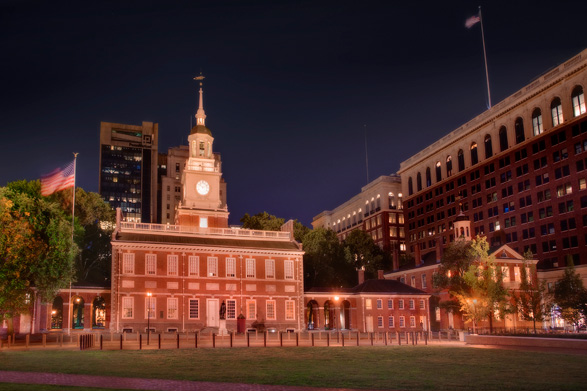
Independence Hall (photo:GPTMC)

During the sweltering summer of 1776, fifty-six unlikely revolutionaries defied the King of England and gathered at the Pennsylvania State House in Philadelphia to declare independence for the fledgling United States of America.

 “We hold these truths to be self-evident, that all men are created equal, that they are endowed by their Creator with certain unalienable Rights, that among these are Life, Liberty and the pursuit of Happiness.”   

Liberty Bell (photo: GPTMC)

The Liberty Bell has a new home on Independence Mall, but the symbol of American freedom was originally installed in the Pennsylvania State House in 1753. According to tradition, the 2,080 pound bell was rung on July 8, 1776 to summon Philadelphia citizens for a public reading of the Declaration of Independence.

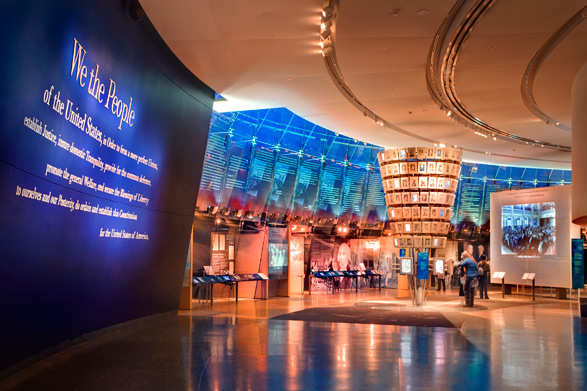
National Constitution Center (photo: GPTMC)

The U.S. Constitution is only four pages long, but it’s one of the most influential documents ever produced. Philadelphia’s new National Constitution Center explores and explains this amazing document through exciting interactive exhibits, high-tech displays, films and original artifacts. Rare copies of the Constitution are also on display.  


Posted in History, Tourism, USA | Tagged | 1 Comment

Someplace To Lay Your Head (Europe)

Here are a few European hotel suggestions from Travel Between The Pages readers.  

Hotel V

Amsterdam: Hotel V Frederiksplein, Weteringschan 136  

Brussels: Hotel Café Pacific, Rue Antoine Dansaert 57  

Budapest: Mamaison Hotel Andrassy, Andrassy út 111  

Lisbon: Living Lounge Hostel, Rua do Crucifixo 116  

London: Dean Street Townhouse, 69 Dean Street W1D 3SE  

Stockholm: Story Hotel, Riddargatan 6  

Warsaw: Westin Warsaw, Jana Pawla II 21 

Hotel Cafe Pacific

Posted in Europe, Hotels, Tourism | Leave a comment

Museo Galileo Reopens

Galileo

The Istituto e Museo di Storia della Scienza (Institute and Museum of the History of Science) has undergone a renovation involving a complete redesign of its exhibition areas and displays. On June 11th, it reopened under the new name of Museo Galileo, the Galileo Museum. The event coincides with the 400th anniversary of Sidereus Nuncius—“the Starry Messenger”—the work published in March 1610 in which Galileo announced the sensational observations made with his telescope. The reopening also marks a fitting conclusion to the celebrations of the International Astronomy Year (2009), a U.N./UNESCO initiative specifically intended to commemorate the celestial discoveries of the scientist from Pisa (1609).

The Museum’s subtitle will preserve its earlier name of “Istituto e Museo di Storia della Scienza” (Institute and Museum for the History of Science). But the new designation “Museo Galileo” emphasizes the central role of the Galilean heritage in the Florentine institution’s activities and cultural profile. The Museum is not only a showcase for an invaluable legacy of instruments and experimental apparatuses. It operates as an institute engaged in research and documentation, offering scholars from around the world the resources of its specialized library, also available online.

The new layout of the Museo Galileo offers on display more than 1,000 instruments and devices of major scientific importance and beauty. The central figure is Galileo, with the history of Florence and Tuscany as the background theme. Under the rule of the Medici and Lorraine, the city and the region were a center of excellence for scientific knowledge as well as a thriving cradle for the arts. The events and discoveries that took place there had a deep impact on the history of modern science.

The Museo Galileo features a series of structural and functional innovations. The restoration of the interior of the Palazzo Castellani (which dates from the twelfth century) has emphasized its monumental dimension and architectural distinction. The elegant, state-of-the-art display cases highlight the esthetic quality of the objects on view, while ensuring their perfect conservation. Portable interactive video-guides—used for the first time in a museum—make the most complex instruments fully understandable even to non-specialist visitors. The devices offer access to hypertext pages, 3D animations, and biographies. Visitors can use the video-guides to select an itinerary through the museum tailored to their specific interests.

For more information please visit the museum website.

Posted in Europe, History, Tourism | Tagged , , , , | Leave a comment

Of Giant Peaches, Fantastic Foxes & Chocolate Factories

This post was provided by UK correspondent Evan Smythe.

Museum and Story Centre

I found the captivating, absurdist fiction of Roald Dahl through James and the Giant Peach, Fantastic Mr. Fox and Charlie and the Chocolate Factory, but became a committed Dahl enthusiast through his Tales of the Unexpected, Ghost Stories and The Wonderful World of Henry Sugar. I recently made my own literary pilgrimage to the charming Roald Dahl Museum and Story Centre in the attractive Buckinghanshire village of Great Missenden.

The Museum and Story Centre is dedicated to telling the fabulous story of the world’s most popular children’s writer with interactive exhibits, manuscripts, photos, films and Dahl’s archives. With doors that look and smell like giant chocolate bars, the delightful museum is a must visit for Dahl readers of all ages.

For me, no other writer has offered that magical combination of absurd imagination, quirkyness, macabre
humor and mischief. Dahl was a modern fairy tale writer, who intuitively understood that children need to come to terms with the unfairness of the world, but still need to retain belief in their own ingenuity and hope for the future.

You can learn more about Roald Dahl and the Museum at their website. Great Missenden can be reached by train from Marylebone Station, London, in under forty minutes.

Posted in Books, Europe, Writing | Tagged , | Leave a comment

Readers’ Choice: Top Ten Train Trips

Glacier Express

Here’s an unofficial readers’ top ten European train trips and a few extra journeys too.

  1. Glacier Express—Switzerland
  2. Bernina Express—Switzerland-Italy
  3. Cinque Terre—Italy
  4. Swiss Cog railways: Rigi,Pilatus,Jungfrau,Rothorn,Lauterbrunnen
  5. Lucerne to Interlaken—Switzerland
  6. Myrdal-Flåm—Norway
  7. Vienna to Venice—Austria-Italy
  8. Munich to Innsbruck—Germany-Austria
  9. Scottish Highlands—UK
  10. Zurich to Vienna—Switzerland-Austria

Also mentioned: Le Petit Train Jaune, French Pyrenees; Zugspitzbahn, Germany; Semmering-Eisenbahn and the Mariazellerbahn, Austria


Cinque Terre

Posted in Europe, Tourism | Tagged | Leave a comment

Alone In Berlin…Again

Brandenburg Gate (photo:Thomas Wolf)

Topography of Terror Museum

Earlier this month, I posted a short review of Hans Fallada’s riveting saga Alone In Berlin (Every Man Dies Alone) which generated some interesting comments and emails. One of these led me back to my travel notes from my last trip to Berlin and my impressions of some of the war nostalgia tourist attractions that I visited. In particular, I was reminded of that unique site, the Topography of Terror, which is the only memorial or museum in Berlin which focuses on the perpetrators rather than the victims of Nazi atrocities.

The Topography of Terror Museum is built on the site that was the Gestapo headquarters from 1933 to 1945, as well as the SS High Command and Reichs Security Main Office from 1939 to 1945. The Prinz-Albrecht-Strasse complex was also the headquarters for concentration camp administration and the place that enemies of the Nazi regime were often brought for torture. Quite a few of Fallada’s characters ended up in the interrogation rooms or prison cells here.

When I visited the museum in late 2008, it was a disappointing site, with the overgrown ruins of a few Gestapo brick prison cells and a meager outdoor exhibition that consisted of a wall of posters. Most of the original buildings had been either destroyed during the war or pulled down during the 1950s.

Topography of Terror 2008

So, I was pleased to read that on May 7th, just days before the 65th anniversary of the end of World War II in Europe, a new museum was finally opened at the site to document Nazi state persecution and terror. The Topography of Terror website (which is still a bit sketchy) underscores the museum’s goal of educating future generations about mechanics of state-sponsored repression and the role of individuals in workings of state terror.

Posted in Books, Europe, History, Tourism, Writing | Tagged , , , | 2 Comments

Reader Rail Favorites

Readers have been weighing-in on their top European rail routes. Here are a few favorites:  

The Inlandsbanan is one of Scandinavia’s most scenic railways. Beginning at Kristinehamn in the south and terminating in Gällivare in the north, the route travels along the backbone of Sweden through lush Darlarna to rugged Lapland.

Running entirely above the Arctic Circle, the Ofotbanen (the Malmbanan on the Swedish side) connects Kiruna, Sweden to Narvik, Norway. The line winds its way through steep, rugged mountainous terrain, with a variety of fantastic scenery—from arctic tundra, pristine national parks and awesome fjords. 

Outside Narvik

The Rauma Railway runs between Andalsnes on the shores of the Romsdal Fjord and the charming mountain village of Dombås, Norway. The entire run offers spectacular Nordic scenery with views ranging from precipitous crags plunging vertically to valley floors to verdant, unspoiled wilderness. 

Rauma

Posted in Europe, Tourism | Tagged , , | Leave a comment

America’s Book Town

Photographer Valerie Jardin recently visited Stillwater, Minnesota, “The First Book Town in North America”, and sent us this marvelous photo essay. You can see more of Valerie’s fine work on her website or her blog. 

Historic Stillwater

Located less than 30 minutes from Minneapolis-St. Paul, on the banks of the St.Croix River, historic Stillwater, Minnesota was officially designated the “First Book Town in North America” by the notorious Richard Booth of Hay-on-Wye in August, 1994. Although the town has only five book stores remaining, there are more than 500,000 antiquarian and secondhand books available for sale. Loome Theological Booksellers (North America’s largest specialist in Theology, Philosophy and Religion) alone has 250,000 titles.

You can learn more about Stillwater Book Town at the website

Posted in Books, Bookstore Tourism, Photography, USA | Tagged , | Leave a comment

Europe: the Glories of the Rails

Bernina (photo by Marco Kluber)

Railway to Heaven 

New Berlin Hauptbahnhof

Next month’s issue of National Geographic Traveler has two charming, short articles on the joys of European rail travel that have me longing for the days when I could spend the Summer on the rails with a backpack and a three month Eurailpass.

Essayist Bruce Selcraig revels in the glories of the European rail services and extols the wonderful efficiency, civility and comfort of Continental trains. And, as Selcraig points out, “train stations are dramatically happier places than airports”, where we train nuts “worship the European train culture and think that its finest cathedrals, say Antwerpen Centraal or Milan’s massive Stazione Centrale to be just as spiritual as Notre Dame”.

Antwerp Central Station by Ad Meskens

The issue’s second paean to European train travel is Randall Duckett’s take on “The Top Ten Trains, Our Pick Of The Best Rail Experiences In Europe”. I was pleased to see that he included some of my favorite rail journeys, including the Chur, Switzerland to Tirano, Italy run through the Graübunden Alps on the Bernina Line. It brought back found memories of stops along the route to hike the Morterasch Glacier valley and a side trip up to the top of Piz Bernina, which at 13,284 feet is the highest peak in the Eastern Alps. I was dead chuffed that he neglected to mention the little villages of the Albula Pass, where I spent idyllic August days camping and hiking; too many travelers know about the area already. Please forget that I brought it up.

Kjosfossen Myrdal Line

Duckett also covered one of the best short train trips in the world, the little Myrdal to Flam excursion in Western Norway. This detour off of the main Oslo-Bergen rail line is de rigueur for any true railway aficionado. The Flam Railway covers just 12 miles, and descends nearly 3,000 feet, on a steeper route than any other non-cog, normal gauge railroad in the world. The spectacular trip takes about an hour to descend from the Myrdal Plateau to the jaw-dropping beauty of the tiny village of Flam on the shores of the Aurlandsfjord. Along the way, the train traverses twenty tunnels and passes plunging waterfalls.

I won’t quibble with his other eight choices, except possibly the Montreux to Broc, Switzerland run. Granted, it’s gorgeous (and there’s lovely medieval Gruyères along the route),but I would have chosen the Glacier Express run from Zermatt to St. Moritz, or maybe the Lucerne to Interlaken route though gorgeous Brienz, or maybe the stunning Samedan to Scoul-Tarasp route via Zernez, or maybe…Well in Switzerland they’re almost all top ten trips.

Brienz

So, what are your votes for top ten European rail trips? How about Edinburgh to Skye via the Highlands? Or, Pisa to Genoa by way of the heavenly Cinque Terre?

Posted in Europe, Tourism, Travel Writing | Tagged , , , , , | 4 Comments