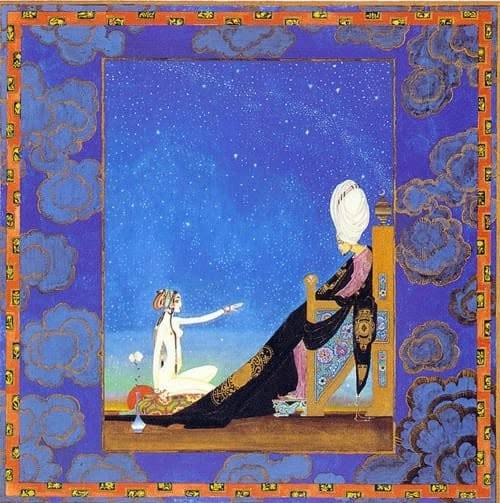
Kay Nielsen One Thousand and One Nights :: Scheherazade
“Consider Scheherazade, whose name meant “city-born” and who was without a doubt a big-city girl, crafty, wisecracking, by turns sentimental and cynical, as contemporary a metropolitan narrator as one could wish to meet. Scheherazade, who snared the prince in her never-ending story. Scheherazade, telling stories to save her life, setting fiction against death, a Statue of Liberty built not of metal but of words. Scheherazade, who insisted, against her father’s will, on taking her place in the procession into the king’s deadly boudoir. Scheherazade, who set herself the heroic task of saving her sisters by taming the king. Who had faith, who must have had faith, in the man beneath the murderous monster and in her own ability to restore him to his true humanity, by telling him stories.”
– Salman Rushdie, “Wonder Tales” in Languages of Truth: Essays 2003-2020
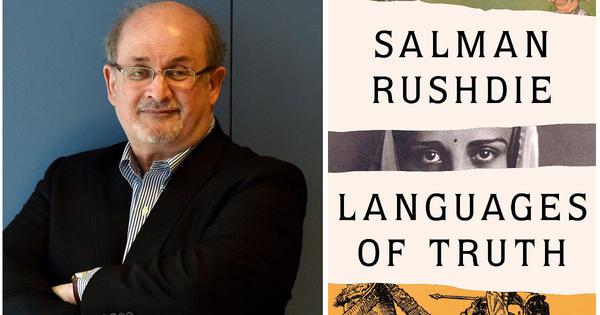
Wonder Tales” is the opening essay and first section of Salman Rushdie’s non-fiction collection, Languages of Truth: Essays 2003-2020, published in May 2021. The piece serves as a passionate defense of magical and imaginative storytelling, arguing that fantasy and folklore convey deep human truths.