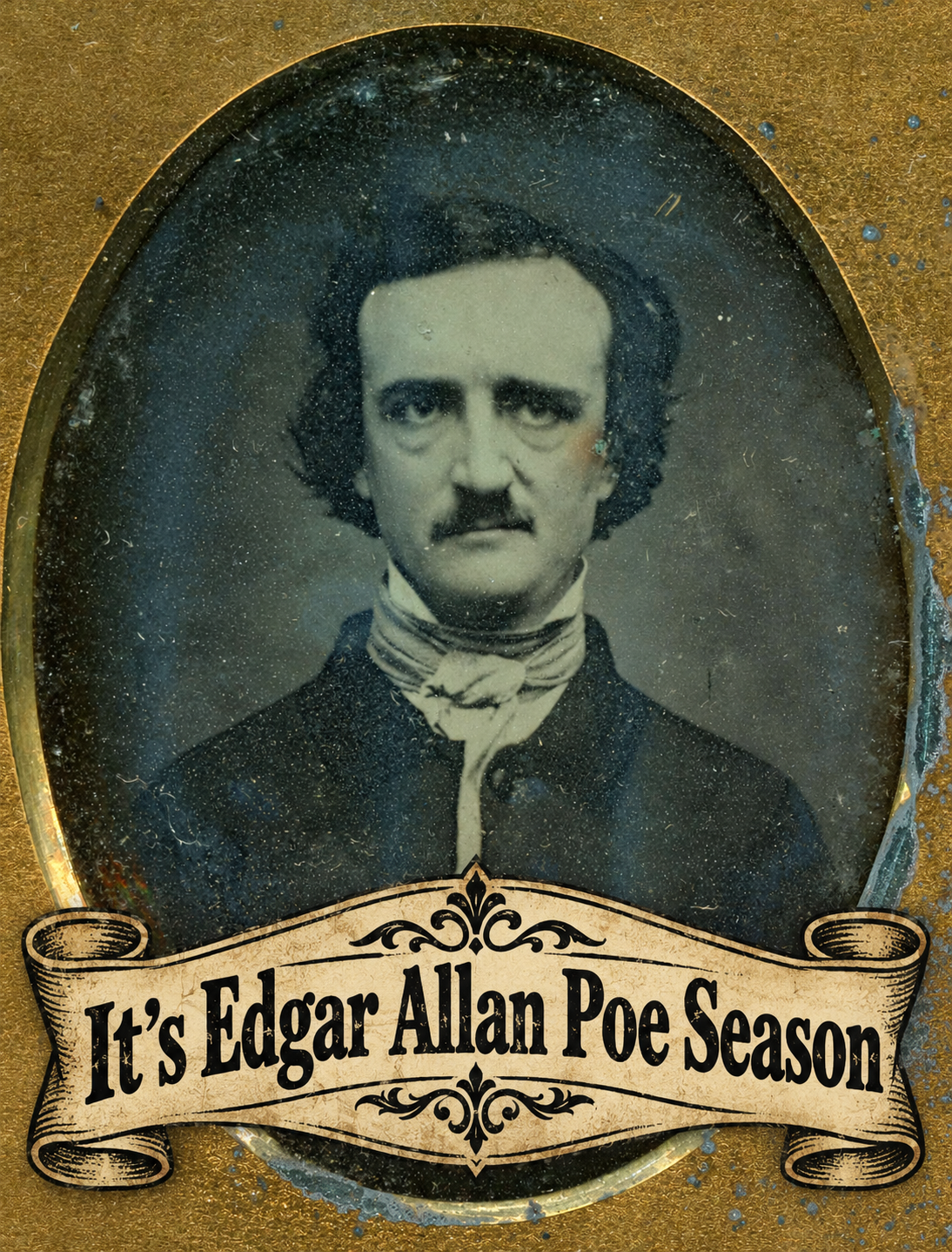
Here in North America we are all diving into the Halloween season with abandon this year in a vain effort to avoid the constant daily reminders of the slow motion demise of Democracy. Even without the the need to distract from Persimmon Pol Pot and his army of thugs, we spend enormous sums on Halloween decorations, costumes, candy, and parties. Although far from the household expenditures on the Christmas holidays, Halloween season means ridiculous outlays of cash for many. One constant during the Autumn for many years has been renewed interest in spooky tales, especially those of the tragic author Edgar Allan Poe.
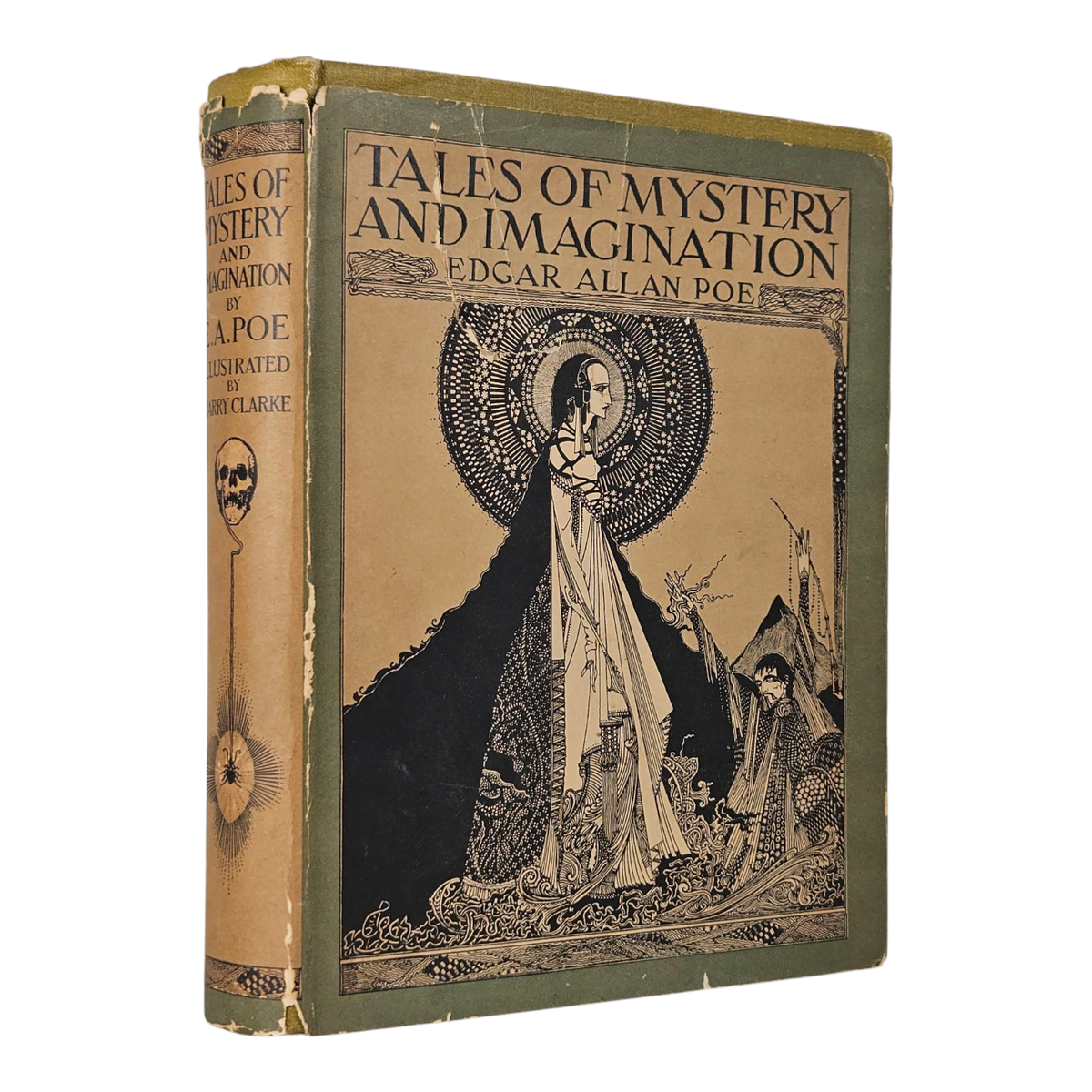
Poe’s outsized influence on the Spooky Season each year owes in large part to his famously macabre tales like “The Tell-Tale Heart,” “The Cask of Amontillado,” and “The Masque of the Red Death,” but it also has to do with the image of the writer himself. Or rather, it has to do with one image in particular: a daguerreotype photograph taken on November 9, 1848, at a Providence studio that has inspired practically every representation of Poe in popular culture since. (see above)
The much reproduced photograph was in fact just one of perhaps ten daguerreotypes for which Poe sat in his lifetime. Inventor Louis Daguerre’s early photographic process, which used silver-coated copper plates, fascinated Poe, who in an 1840 newspaper article called it “the most important, and perhaps the most extraordinary triumph of modern science.” He described its product as “infinitely more accurate in its representation than any painting by human hands,” though anyone sitting for a picture did have to sit still for minutes on end, resulting in not just the unsmiling visages we associate with nineteenth-century photography, but also in a combination of discomfort and slight blurring that can look vaguely otherworldly.
It has been said that Poe was taken to the studio by a friend with whom he’d spent the previous night binge-drinking. Just four days before the photo shoot, he had attempted suicide by laudanum overdose, an act taken after the rejection of his marriage proposal by Sarah Helen Whitman, a poet he hadn’t known long — and who would give her suitor’s immortal portrait its Latin name, borrowed from his poem “Dream-Land.”
Poe’s haunted image was later described by Walt Whitman as if “all the stormy grandeur of that via Dolorosa had left its sullen shadow on his brow.” For me, that’s the most fitting and sad interpretation ever made of the famous image.


