The Poetry of Coffee

As an amateur coffee roaster, I have been accused of being mildly obsessed with the magical elixir. So my antenna is always up for books about coffee. But I was not prepared to stumble upon a one-of-a-kind, single copy poetry book devoted to coffee.

“coffee is a language in itself [dixit jackie chan]” is the work of Belgian poet Akim A.J. Willems, who is well known in the Low Countries for his spoken word poetry. This unique volume was printed in a single copy, numbered and signed by the author. Along with the poems and pencil sketches, cups of coffee and cappuccino that have left their marks.

I managed to track the only copy of the book to an antiquarian and rare bookseller in Leiden, Netherlands. The one-off artbook is available for just €125 if you are interested.


Posted in Art, Books, Europe, Writing | Tagged , , , , , | Leave a comment

Der Kluge Reist Im Zuge (The wise travel in the train)

If you’ve been here before, you probably know by now that I am a sucker for a classic travel poster. I recently spotted the poster above titled Der Kluge Reist Im Zuge (The wise travel in the train) which was created by the great Swiss graphic artist Hans Thöni. After I tracked the poster’s provenance, I realized that I’ve seen dozens of the artist’s posters over the years without knowing the creator. I particularly enjoy the poster of the map of Switzerland (below) that he made for the National Railway sytem in 1937.

Thöni studied at Kunstgewerbeschule in Zürich and trained for four years in Paris before opening his studio in Bern. As a freelance graphic designer, he worked as an illustrator, stamp and exhibition designer and a member of the Schweizer Grafiker Verband. His major contribution to poster art is a series of posters for the Swiss railway, in which he experimented with photomontage and collage.

SONY DSC


Posted in Art, Europe, Maps, Public Transport, Tourism | Tagged , , , , , | 1 Comment

Commodified fantasy takes no risks


“All times are changing times, but ours is one of massive, rapid moral and mental transformation. Archetypes turn into millstones, large simplicities get complicated, chaos becomes elegant, and what everybody knows is true turns out to be what some people used to think.

It’s unsettling. For all our delight in the impermanent, the entrancing flicker of electronics, we also long for the unalterable.

We cherish the old stories for their changelessness. Arthur dreams eternally in Avalon. Bilbo can go “there and back again,” and there is always the beloved familiar Shire. Don Quixote sets out forever to kill a windmill… So people turn to the realms of fantasy for stability, ancient truths, immutable simplicities.

And the mills of capitalism provide them. Supply meets demand. Fantasy becomes a commodity, an industry.

Commodified fantasy takes no risks: it invents nothing, but imitates and trivializes. It proceeds by depriving the old stories of their intellectual and ethical complexity, turning their action to violence, their actors to dolls, and their truth- telling to sentimental platitude. Heroes brandish their swords, lasers, wands, as mechanically as combine harvesters, reaping profits. Profoundly disturbing moral choices are sanitized, made cute, made safe. The passionately conceived ideas of the great story-tellers are copied, stereotyped, reduced to toys, molded in bright-colored plastic, advertised, sold, broken, junked, replaceable, interchangeable.

What the commodifiers of fantasy count on and exploit is the insuperable imagination of the reader, child or adult, which gives even these dead things life—of a sort, for a while.

Imagination like all living things lives now, and it lives with, from, on true change. Like all we do and have, it can be co-opted and degraded; but it survives commercial and didactic exploitation. The land outlasts the empires. The conquerors may leave desert where there was forest and meadow, but the rain will fall, the rivers will run to the sea. The unstable, mutable, untruthful realms of Once-upon-a-time are as much a part of human history and thought as the nations in our kaleidoscopic atlases, and some are more enduring.

We have inhabited both the actual and the imaginary realms for a long time. But we don’t live in either place the way our parents or ancestors did. Enchantment alters with age, and with the age.

We know a dozen different Arthurs now, all of them true. The Shire changed irrevocably even in Bilbos lifetime. Don Quixote went riding out to Argentina and met Jorge Luis Borges there. Plus c’est la meme chose, plus fa change.”

From Ursula K. LeGuin’s foreword to her 2001 collection Tales from Earthsea.

Posted in Art, Books, USA, Writing | Tagged , , , | Leave a comment

How to act around books (according to the NYPL)

How to act around books.


Posted in Books, Libraries, USA | Tagged , | Leave a comment

Worth the price of admission

The City of Paris has offered residents and visitors alike free access to 435 public toilet facilities, but today it is officially opening a public lavatory that charges a 2€ admission fee. From what I have seen so far, the cost is well worth a visit.

The lavishly appointed facility closed in 2011 after more than a century of use. In recently years, it has been completely restored and renovated. Located under Place de la Madeleine, the ornate facility was built in 1905 and originally welcomed both men and women in its underground galleries. Decorated with mahogany woodwork, stained glass, ceramic tiles, and colorful mosaics, the facilty was inspired by 19th century public lavatories in London.

The restored gender-neutral toilets, which will be open from 10am to 6pm, are situated in what was the original “ladies” section. The 1905 “mens” space has been lost to  public transit. The lavatory, shut because of disuse and lack of maintenance, has taken 12 years to restore. The restoration of the woodwork, glass and tiles was finally completed last month but the toilets, sinks and taps have been replaced with similar modern models. An old shoe-shine chair, preserved on the site, adds to the impression of entering a grand “throne room”.


Posted in Architecture, Art, Europe, History, Public Transport, Tourism | Tagged , | 5 Comments

The Magazine That Never Dies

This week marks the centennial of the founding of Weird Tales magazine. On February 18, 1923, the first issue of Weird Tales appeared on American newsstands. Subtitled “The Unique Magazine,” it was the first English language magazine dedicated to science fiction, horror, supernatural, fantasy, and occult fiction. The periodical popularized the work H.P. Lovecraft, Robert E. Howard, Robert Bloch, and Frank Belknap Long, among others. Weird Tales also reprinted the works of an eclectic mix of earlier writers: Edgar Allan Poe, Mary and Percy Shelley, Nathanael Hawthorne, Bram Stoker, Charles Dickens, Oscar Wilde, H.G. Wells, John Keats, William Blake, Samuel Taylor Coleridge, Paul Verlaine, and Charles Baudelaire.

The magazine’s cover artwork by artists such as  Margaret Brundage helped boost its popularity. Colorful, lurid covers, sometime featuring female nudes, grabbed readers’ attention at the newstand.

Weird Tales was published until September 1954 when it ended due to bankruptcy. It was revived briefly during the early 1970s, shut down and was reborn in the 1988 as a quarterly publication, hence its unofficial subtitle is “The Magazine that Never Dies.”

I discovered Weird Tales as a kid during trips to the flea market to buy comic books. I managed to find issues from the 40s and 50s that featured sci-fi icons like Fritz Leiber, Ray Bradbury, Isaac Asimov, and Theodore Sturgeon. I’m sorry that I didn’t save some of those classic issues; they’re probably valuable now.

You can find most of Weird Tales online for free these days:

The Internet Archive has digitized copies from the 1920s and 1930s.

The Pulp Magazine Project hosts HTML, FlipBook, and PDF versions of Weird Tales issues from 1936 to 1939.


Posted in Art, History, USA, Writing | Tagged , , , | Leave a comment

The Earl of Cattenborough owns Caturday

THE EARL OF CATTENBOROUGH

ONCE upon a time there was a miller who had three sons, Charles, Sam, and John.

And every night when the servant went to bed he used to call out:

“Good-night, Missus; good-night, Master;

Good-night, Charles, Sam, John.”

Now after a time the miller’s wife died, and, soon after, the miller, leaving only the mill, the donkey, and the cat. And Charles, as the eldest, took the mill, and Sam took the donkey and went off with it, and John was left with only the cat.

Now how do you think the cat used to help John to live? She used to take a bag with a string around the top and place it with some cheese in the bushes, and when a hare or a partridge would come and try to get the piece of cheese—snap! Miss Puss would draw the string and there was the hare or partridge for Master Jack to eat. One day two hares happened to rush into the bag at the same time. So the cat, after giving one to Jack, took the other and went with it to the King’s palace. And when she came outside the palace gate she cried out, “Miaou.”

The sentry at the gate came to see what was the matter. Miss Puss gave him the hare with a bow and said: “Give this to the King with the compliments of the Earl of Cattenborough.”

The King liked jugged hare very much and was glad to get such a fine present.

Shortly after this Miss Puss found a gold coin rolling in the dirt. And she went up to the palace and asked the sentry if he would lend her a corn measure.

The sentry asked who wanted it. And Puss said: “My Master, the Earl of Cattenborough.”

So the sentry gave her the corn measure. And a little while afterwards she took it back with the gold coin, which she had found, fixed in a crack in the corn measure.

So the King was told that the Earl of Cattenborough measured his gold in a corn measure. When the King heard this he told the sentry that if such a thing happened again he was to deliver a message asking the Earl to come and stop at the palace.

Some time after the cat caught two partridges, and took one of them to the palace. And when she called out, “Miaou,” and presented it to the sentry, in the name of the Earl of Cattenborough, the sentry told her that the King wished to see the Earl at his palace.

So Puss went back to Jack and said to him: “The King desires to see the Earl of Cattenborough at his palace.”

“What is that to do with me?” said Jack.

“Oh, you can be the Earl of Cattenborough if you like. I’ll help you.”

“But I have no clothes, and they’ll soon find out what I am when I talk.”

“As for that,” said Miss Puss, “I’ll get you proper clothes if you do what I tell you; and when you come to the palace I will see that you do not make any mistakes.”

So next day she told Jack to take off his clothes and hide them under a big stone and dip himself into the river. And while he was doing this she went up to the palace gate and said: “Miaou, miaou, miaou!”

And when the sentry came to the gate she said: “My Master, the Earl of Cattenborough, has been robbed of all he possessed, even of his clothes, and he is hiding in the bramble bush by the side of the river. What is to be done? What is to be done?”

The sentry went and told the King. And the King gave orders that a suitable suit of clothes, worthy of an Earl, should be sent to Master Jack, who soon put them on and went to the King’s palace accompanied by Puss. When they got there they were introduced into the chamber of the King, who thanked Jack for his kind presents.

Miss Puss stood forward and said: “My Master, the Earl of Cattenborough, desires to state to your Majesty that there is no need of any thanks for such trifles.”

The King thought it was very grand of Jack not to speak directly to him, and summoned his lord chamberlain, and from that time onward only spoke through him. Thus, when they sat down to dinner with the Queen and the Princess, the King would say to his chamberlain, “Will the Earl of Cattenborough take a potato?”

Whereupon Miss Puss would bow and say: “The Earl of Cattenborough thanks his Majesty and would be glad to partake of a potato.”


The King was so much struck by Jack’s riches and grandeur, and the Princess was so pleased with his good looks and fine dress that it was determined that he should marry the Princess.

But the King thought he would try and see if he were really so nobly born and bred as he seemed. So he told his servants to put a mean truckle bed in the room in which Jack was to sleep, knowing that no noble would put up with such a thing.

When Miss Puss saw this bed she at once guessed what was up. And when Jack began to undress to get into bed, she made him stop, and called the attendants to say that he could not sleep in such a bed.

So they took him into another bedroom, where there was a fine four-poster with a dais, and everything worthy of a noble to sleep upon. Then the King became sure that Jack was a real noble, and married him soon to his daughter the Princess.

After the wedding feast was over the King told Jack that he and the Queen and the Princess would come with him to his castle of Cattenborough, and Jack did not know what to do. But Miss Puss told him it would be all right if he only didn’t speak much while on the journey. And that suited Jack very well.

So they all set out in a carriage with four horses, and with the King’s life-guards riding around it. But Miss Puss ran on in front of the carriage, and when she came to a field where men were mowing down the hay she pointed to the life-guards riding along, and said: “Men, if you do not say that this field belongs to the Earl of Cattenborough those soldiers will cut you to pieces with their swords.”

So when the carriage came along the King called one of the men to the side of it and said, “Whose is this field?”

And the man said, “It belongs to the Earl of Cattenborough.”

And the King turned to his son-in-law and said, “I did not know that you had estates so near us.”

And Jack said, “I had forgotten it myself.”

And this only confirmed the King in his idea about Jack’s great wealth.

A little farther on there was another great field in which men were raking hay. And Miss Puss spoke to them as before. So, when the carriage came up, they also declared that this field belonged to the Earl of Cattenborough. And so it went on through the whole drive. Then the King said, “Let us now go to your castle.”

Then Jack looked at Miss Puss, and she said: “If your Majesty will but wait an hour I will go on before and order the castle to be made ready for you.”

With that she jumped away and went to the castle of a great ogre and asked to see him. When she came into his presence she said:

“I have come to give you warning. The King with all his army is coming to the castle and will batter its walls down and kill you if he finds you here.”

“What shall I do? What shall I do?” said the ogre.

“Is there no place where you can hide yourself?”

“I am too big to hide,” said the ogre, but my mother gave me a powder, and when I take that I can make myself as small as I like.”

‘Well, why not take it now?” said the cat.

And with that he took the powder and shrunk into a little body no bigger than a mouse. And thereupon Miss Puss jumped upon him and ate

him all up, and then went down into the great yard of the castle and told the guards that it now belonged to her Master the Earl of Cattenborough. Then she ordered them to open the gates and let in the King’s carriage, which came along just then.

The King was delighted to find what a fine castle his son-in-law possessed, and left his daughter the Princess with him at the castle while he drove back to his own palace. And Jack and the Princess lived happily in the castle.

But one day Miss Puss felt very ill and lay down as if dead, and the chamberlain of the castle went to Jack and said:

“My lord, your cat is dead.”

And Jack said: ‘Well, throw her out on the dunghill.”

But Miss Puss, when she heard it, called out: “Had you not better throw me into the mill stream?”

And Jack remembered where he had come from and was frightened that the cat would say. So he ordered the physician of the castle to attend to her, and ever after gave her whatever she wanted.

And when the King died he succeeded him, and that was the end of the Earl of Cattenborough.


Posted in Art, Books, Europe | Tagged , , , , | Leave a comment

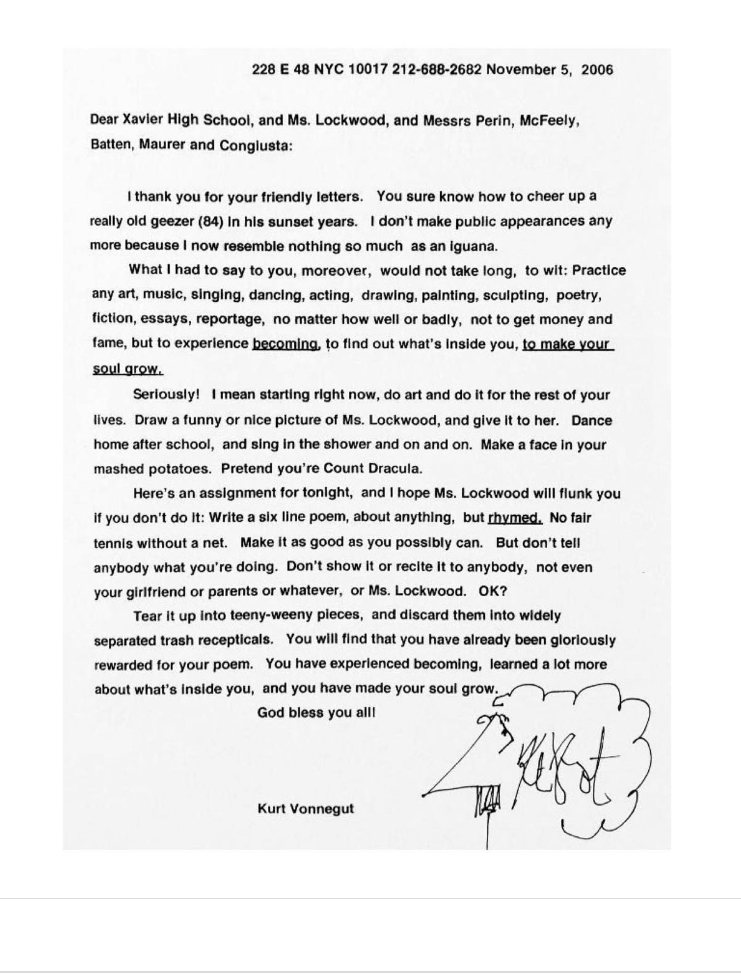
So You Wanna Be A Writer

-The narrator of the powerful video below is Tom Bedlam -The music  is Alice In Winter – Hold This Place.

if it doesn’t come bursting out of you
in spite of everything,
don’t do it.
unless it comes unasked out of your
heart and your mind and your mouth
and your gut,
don’t do it.
if you have to sit for hours
staring at your computer screen
or hunched over your
typewriter
searching for words,
don’t do it.
if you’re doing it for money or
fame,
don’t do it.
if you’re doing it because you want
women in your bed,
don’t do it.
if you have to sit there and
rewrite it again and again,
don’t do it.
if it’s hard work just thinking about doing it,
don’t do it.
if you’re trying to write like somebody
else,
forget about it.

if you have to wait for it to roar out of
you,
then wait patiently.
if it never does roar out of you,
do something else.

if you first have to read it to your wife
or your girlfriend or your boyfriend
or your parents or to anybody at all,
you’re not ready.

don’t be like so many writers,
don’t be like so many thousands of
people who call themselves writers,
don’t be dull and boring and
pretentious, don’t be consumed with self-
love.
the libraries of the world have
yawned themselves to
sleep
over your kind.
don’t add to that.
don’t do it.
unless it comes out of
your soul like a rocket,
unless being still would
drive you to madness or
suicide or murder,
don’t do it.
unless the sun inside you is
burning your gut,
don’t do it.

when it is truly time,
and if you have been chosen,
it will do it by
itself and it will keep on doing it
until you die or it dies in you.

there is no other way.

and there never was.

NB: If the video fails to play, please visit our home page here

Posted in Books, USA, Writing | Tagged , , | 3 Comments

Translate can save the day

When I was preparing for a trip to Russia a few years ago, I made a serious effort to learn the Russian alphabet and some basic vocabulary. But from the moment we arrived at Pulkovo Airport in St. Petersburg it became obvious that I was woefully unprepared. So, I turned to the trusty Google Translate app and life became much more manageable.


Now Google is adding more AI-powered features to Translate. The app will be getting serious enhancements, with a new interface design for Android users, and the iOS version coming out in several weeks. The main changes include a larger canvas for words, voice input capabilities, and Lens camera translation for images.

The AI integration will allow Translate to give users more context when providing  definitions. Rather than one description per word, there will now be more contextual options with multiple examples for terms that are vague.

According to Google, this new function will first be rolled out in English, French, German, Japanese, and Spanish, but it will take a short while before it’s made available to everyone.

Google explained in a blog post that it would be enabling users to translate not only text, but images as well. The advanced algorithm allows users to search what they see using their devices’ cameras, and can even blend translated text into more complex pictures.

The Translate app will also be adding 33 new languages, ranging from Basque to Corsican, Hawaiian, Hmong, Latin, Sundanese, Yiddish, Zulu, and more—so users can stay more connected via minority-speaking languages around the world.


Posted in apps, Tech, Tourism | Tagged , , , | 3 Comments

Bookseller’s Regret

Regular visitors to Travel Between The Pages may know that I have been a bookseller for most of the 21st century and an avid book collector for many decades. Like many booksellers, I sometimes have pangs of regret over books that I have sold that I would have happily kept in my personal library. While perusing book blogs this past weekend, I chanced on a copy of Constantinople by Alexander Van Millingen, illustrated by Warwick Goble, published by A & C Black, London, 1906.

For many years, I had a book customer who was only interested in edtions solely devoted to the city of Constantinople. Since the city’s name officially changed to Istanbul in 1930, that meant he would only buy books printed before 1929. After I sold him a number of 19th and early 20th century travel guides, I managed to find a very good copy of the A & C Black Constantinople. The only problem was that I wanted it for my own collection. But since he was an excellent customer, I gave in and sold the book. Looking at this beautiful example online I think that I may have made the wrong decision.


Posted in Art, Asia, Books, Europe, Middle East, Travel Writing | Tagged , , , , | 4 Comments