A Brief History of Vampires

What could be more romantic on Valentine’s Day than the debonair modern vampire who was born with the publication of the gothic horror novel Dracula (1897) by the Irish author Bram Stoker. In the video below from the Victoria and Albert Museum in London, two curators comb through the museum’s collection of materials – including books, photographs, paintings and even a curious take on Victorian taxidermy – to trace the development of the vampire idea since Stoker’s landmark work captured the public imagination.

Video by the Victoria and Albert Museum

Directors: Hannah Kingwell, Holly Hyams

NB: If the video fails to open, please visit our home page .


Posted in Art, Books, Europe, Film, History, Libraries, movies, Museums, Writing | Tagged , , , , , | Leave a comment

The Unimaginable Future

“Alicia Eggert sculpts neon, steel, and time to make art that inspires reflection and wonder at the finite nature of human life within a seemingly infinite universe. In September 02022, Alicia brought “This Present Moment,” a sculpture adapting the words of Stewart Brand, the co-founder of The Long Now Foundation and creator of the Whole Earth Catalog, to Mount Washington. The neon sign was re-assembled among the mountain’s bristlecone pine trees (pinus longaeva), some of the longest-lived trees in the world. This documentary traces the sign’s journey to the mountaintop and explores the power art has in shaping the way we think about time.”

Edited and directed by Justin Oliphant.

Posted in Art, Film, Tech, USA | Tagged , | 1 Comment

Just Another Sundry Sunday

Old internet hands may recollect the early days of the web when it all seemed so clever and exciting. One of those interesting 1990s projects has just been relaunched and is worth a look on a lazy Sunday afternoon. The site 253 was an online novel published between 1996-8 with an intriguing structural and thematic premise — the book is a collection of short vignettes. It follows some very specific technical guiderules: “There are seven carriages on a Bakerloo Line train, each with 36 seats. A train in which every passenger has a seat will carry 252 people. With the driver, that makes 253. This novel describes an epic journey from Embankment station, to the Elephant and Castle, named after the Infanta de Castile who stayed there, once… So that the illusion of an orderly universe can be maintained, all text in this novel, less headings, will number 253 words. Each passenger is described in three ways: Outward appearance: does this seem to be someone you would like to read about? Inside information : sadly, people are not always what they seem. What they are doing or thinking : many passengers are doing or thinking interesting things. Many are not.”

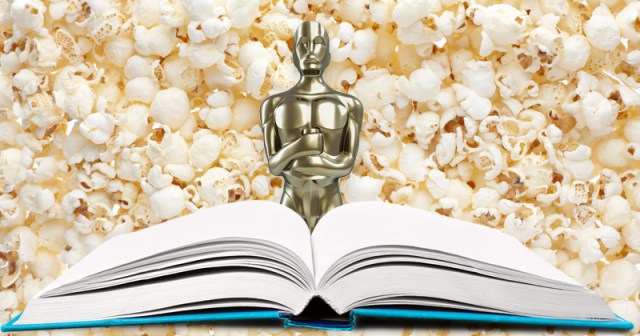
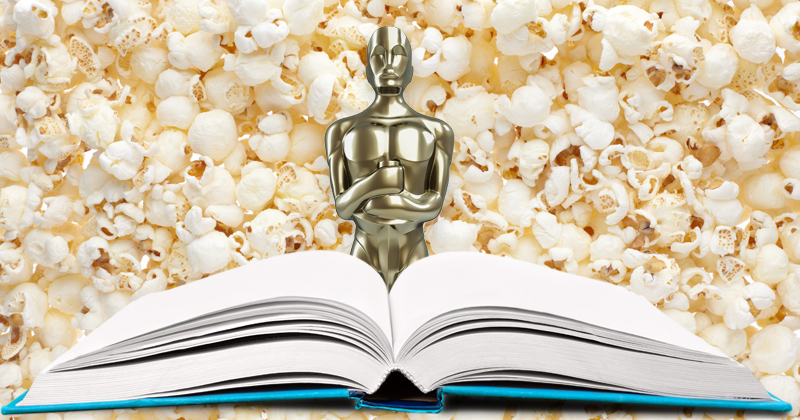
What if they gave the Oscars to books instead of movies ? What would the categories look like if they applied to books and not films? And which books would win under said invented circumstances? Read what the Literary Hub had to say.

Spoutible launched fully this week and is a Twitter alternative that aims to stop the spread of misinformation and hate. Seems like a good idea in the Musk melony era of Twitter.
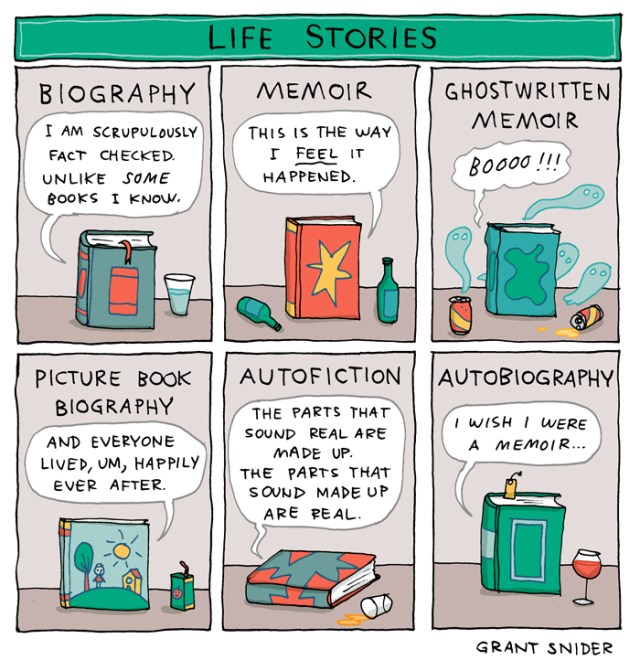
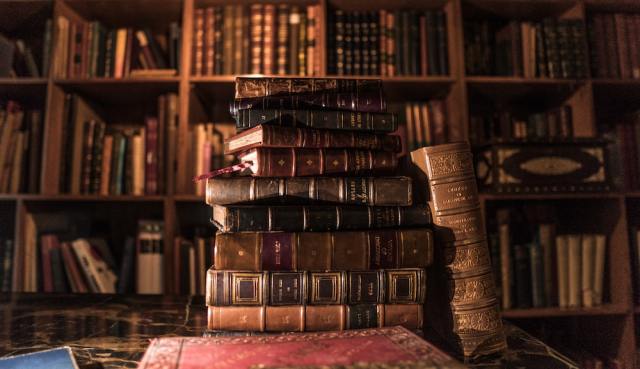
You don’t have to be a book collector or antiquarian to want to protect your personal library. Rare book expert and bookseller Rebecca Romney recently update her article

13 Tips From a Rare Books Expert to Keep Your Books Looking Great

at Mental Floss. If you care about your books, you will want to check it out.

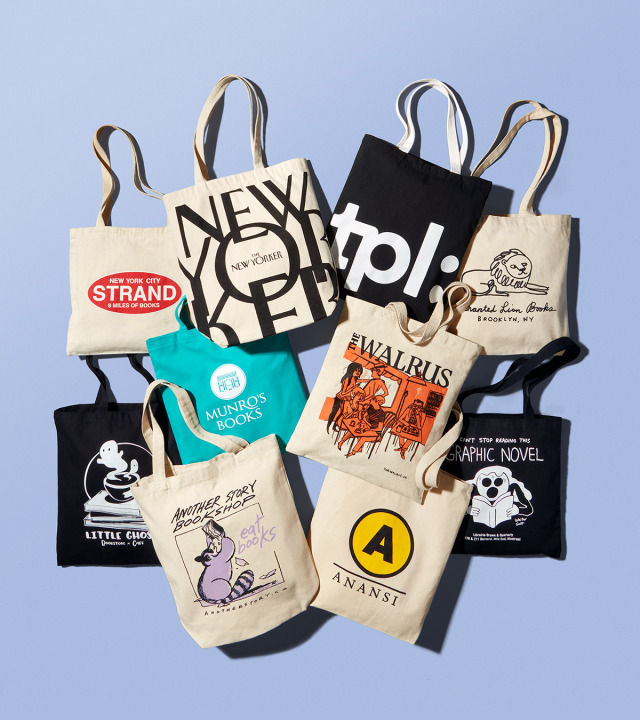
What’s the deal with all those bookstore tote bags ? If you’re like me, it’s likely that you have at least a few canvas or cloth bookshop branded tote bags stuffed in a closet or on top of a bookself. How did the ubiquitous book carry-all become so popular?

In the 1880s, a newspaper owner named Jasper Meek was looking out the window of his print shop in Coshocton, Ohio, when he saw a young girl drop her school books. As the story now goes, the sight inspired him to fashion a burlap bag in which people could carry books. But Meek also had an entrepreneurial mind, and he figured out a way to maximize his profit: he’d charge local businesses to print their names on the bags, which then served as tiny billboards as they were carried across town.

Canvas as a textile wasn’t unusual among labourers. But the tote’s commercial popularity began in 1944, when L. L. Bean launched what was then called the “ice bag,” because it was originally used to literally carry ice. The bag was relaunched in the ’60s and hasn’t changed in any meaningful way since: wide, made of structured canvas, with a flat bottom, reinforced handles, a trim available in several colours, and the option of a custom monogram. The company now offers a variety of shapes and sizes, but the classic tote is still one of its bestsellers.

In the decades that followed, totes have grown from a journeyman staple to a ubiquitous literary trophy on the streets of many major cities as well as on Instagram and TikTok. Concerns about single-use plastics over the past few years have undoubtedly fuelled the demand. But there’s also a mystique to the tote. It has gone on to inspire high-end designers: you can now own leather or cowhide versions by Prada, Hermès, or the Row. “The tote bag fits a larger trend of the democratization of fashion,” Dicky Yangzom, a cultural and economic sociologist at New York University, told Vox in 2022. “Similarly to utility wear in fashion with the rise of the jumpsuit, this wasn’t designed for mass fashion. It was more geared toward people who do more manual work, right? So all of these categories are shifting.” Read the rest of the story here.

Early Sunday Morning

I used to mock my father and his chums
for getting up early on Sunday morning
and drinking coffee at a local spot
but now I’m one of those chumps.
No one cares about my old humiliations
but they go on dragging through my sleep
like a string of empty tin cans rattling
behind an abandoned car.
It’s like this: just when you think
you have forgotten that red-haired girl
who left you stranded in a parking lot
forty years ago, you wake up
early enough to see her disappearing
around the corner of your dream
on someone else’s motorcycle
roaring onto the highway at sunrise.
And so now I’m sitting in a dimly lit
café full of early morning risers
where the windows are covered with soot
and the coffee is warm and bitter.
Posted in Art, Books, Libraries, Tech, USA, Writing | Tagged , , , , | Leave a comment

Only in the Netherlands

Utrecht is one of my favorite cities in the Netherlands. Fortunately it is over looked by the hordes of tourist who mob Amsterdam. Like most folks in the country, the residents of the beautiful city love bikes and books. Now the library in Utrecht has added bicycle desks. Users can charge phones, laptops and other devices by bicycle at such a desk. And this you can do it all while reading a book or studying. In the video below you can see how it works.


Posted in Books, Europe, Libraries | Tagged , , , , | Leave a comment

Cover to Cover

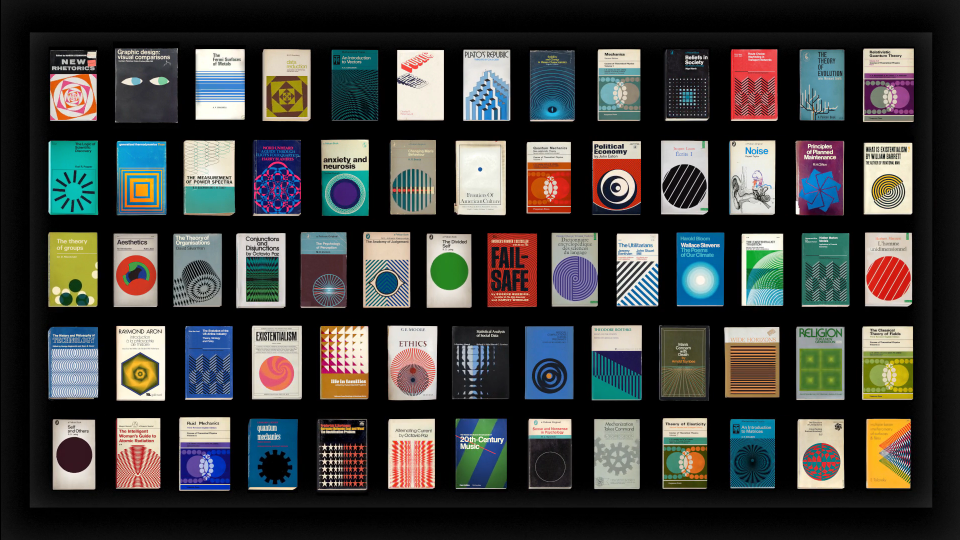
Over the years, I have featured posts on the clever work by German graphic designer and animator Henning M. Lederer. He recently released a mesmerizing video for his ongoing “Books & Sleeves” project where he manipulates abstract geometric patterns featured on vintage book and record covers, into captivating moving images. Check out the latest installment below:

Posted in Animation, Art, Books, Europe, Film | Tagged , , , | 2 Comments

Going Underground in NYC

Both sides of my family emigrated to New York City shortly before the city’s subway system was inaugurated in 1904. So, I literally rode New York’s underground trains before I was born. Like most residents of the world’s greatest city we have had a long love/hate relationship with the subway. It has always been noisy, crowded, smelly, and dirty, but it’s the fastest and most convenient way to travel around New York.

Architect Michael Wyetzner of Michielli + Wyetzner Architects  made this excellent video about the long and colorful history of the New York City subway system. He specifically noted how each station was built, the type of material that was used, how the different tunneling techniques used evolved over time, and the design of the stations and signs.

NB: If the video does not launch, please visit our home page here.


Posted in Architecture, History, Public Transport, Tourism, USA | Tagged , , | Leave a comment

Tourisme Bouquiniste: Rabat

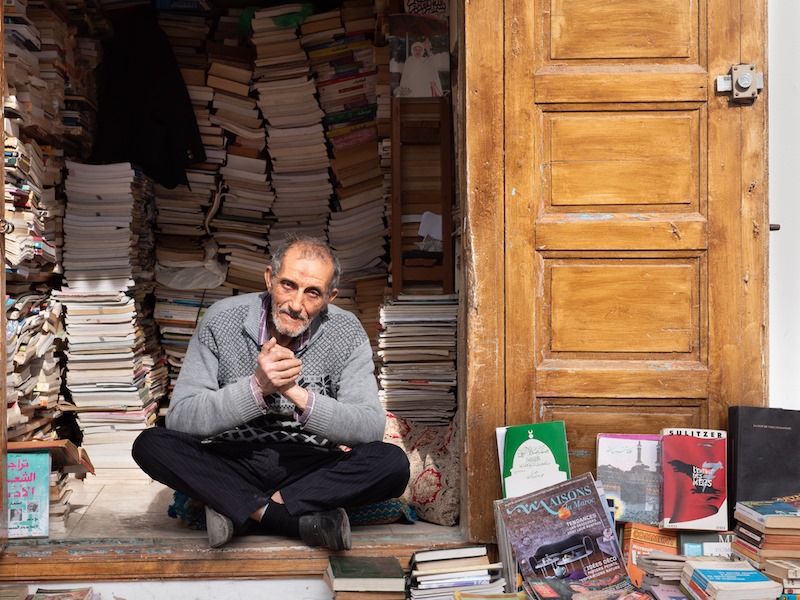
I have been seeing photographs of this tiny bookshop for years, but they never identified the bookstore or the bookseller. Recently, I finally found a story that provided a narrative to go with the images.

The shop is called Bouquiniste El Azizi and it is located in the old Medina of Morocco’s capital city Rabat. On most days, 75 year-old Mohammed Aziz can be found reading on the doorstep of the little bookshop, as he has been doing for the past 46 years. Although he only had an elementary school education, Aziz taught himself to read French, Spanish, Italian, and German.

Bouquiniste El Azizi may be tiny, but on any given day it offers readers selections in at least 7 different languages. Aziz proudly keeps the shop open 12 hours a day and offers students bargain prices on school books.


Posted in Africa, Books, Bookstore Tourism, Tourism | Tagged , , | 2 Comments

Amor librorum nos unit

I was non plussed to stumble upon this fantastic poster this week. The title, “Amor librorum nos unit,” which translates as “the love of books unites us,” is the longtime motto of the International League of Antiquarian Booksellers.

The color lithographed poster was designed by Jim Blashfield, with lithography by Neal Stratford. The 1967 psychedelic poster surprisingly was created for a conference of the International League of Antiquarian Booksellers and  printed during the height of the counterculture movement in the San Francisco Bay Area for one of the leading local booksellers at the time, William P. Wreden. The artist, Jim Blashfield, is mostly know for posters advertising concerts by cutting-edge rock bands such as the Jefferson Airplane, Moby Grape, Credence Clearwater, and Big Brother and the Holding Company.

According to an explanatory note accompanying the poster: “The Renascence of poster art in San Francisco has received wide attention. With this in mind we present to you the enclosed poster which was designed for us on the occasion of the 19th Congress of the International League of Antiquarian Booksellers, San Francisco and Los Angeles, 15-20 September 1967. Art work is by Jim Blashfield; lithography by Neal, Stratford and Kerr.–William P. Wreden.”


Posted in Art, Books, Music, USA | Tagged , , , | 1 Comment

Time keeps on slipping into the future

The very clever website Literature Clock will tell you the time via a literary passage. literature-clock.jenevoldsen.com.


Posted in apps, Books, Tech, Writing | Tagged , , | 1 Comment

Spoiler Alert

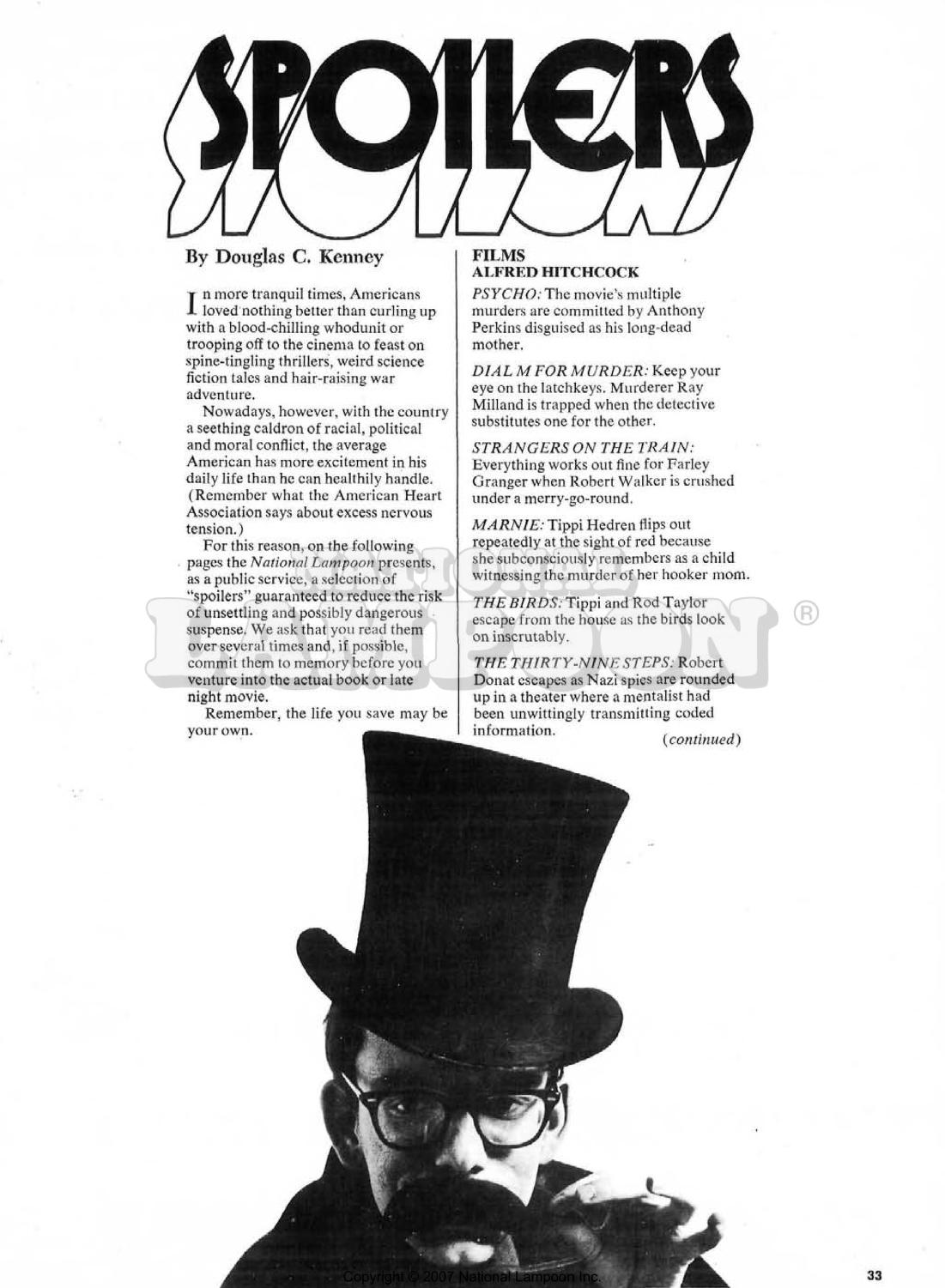
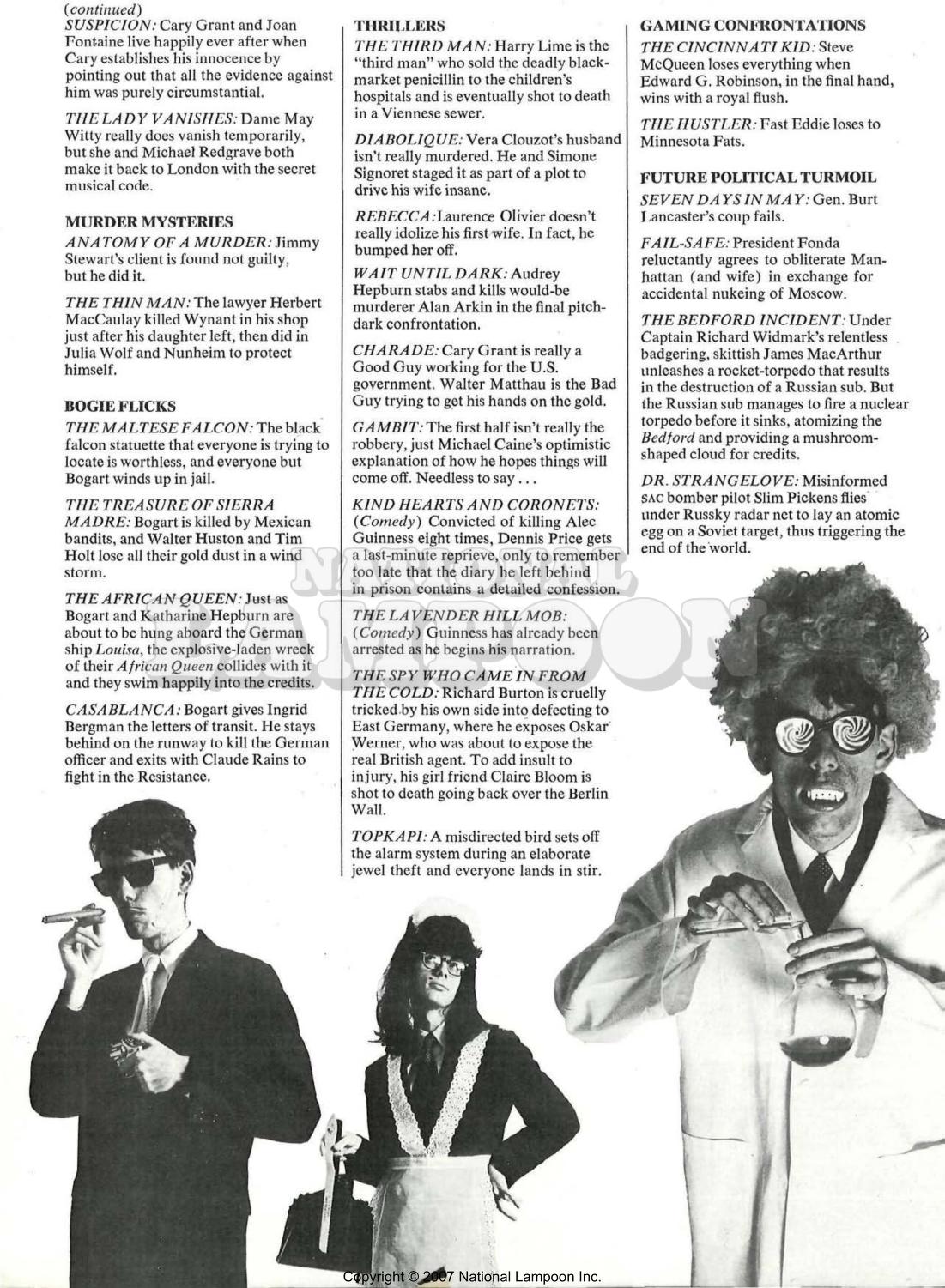
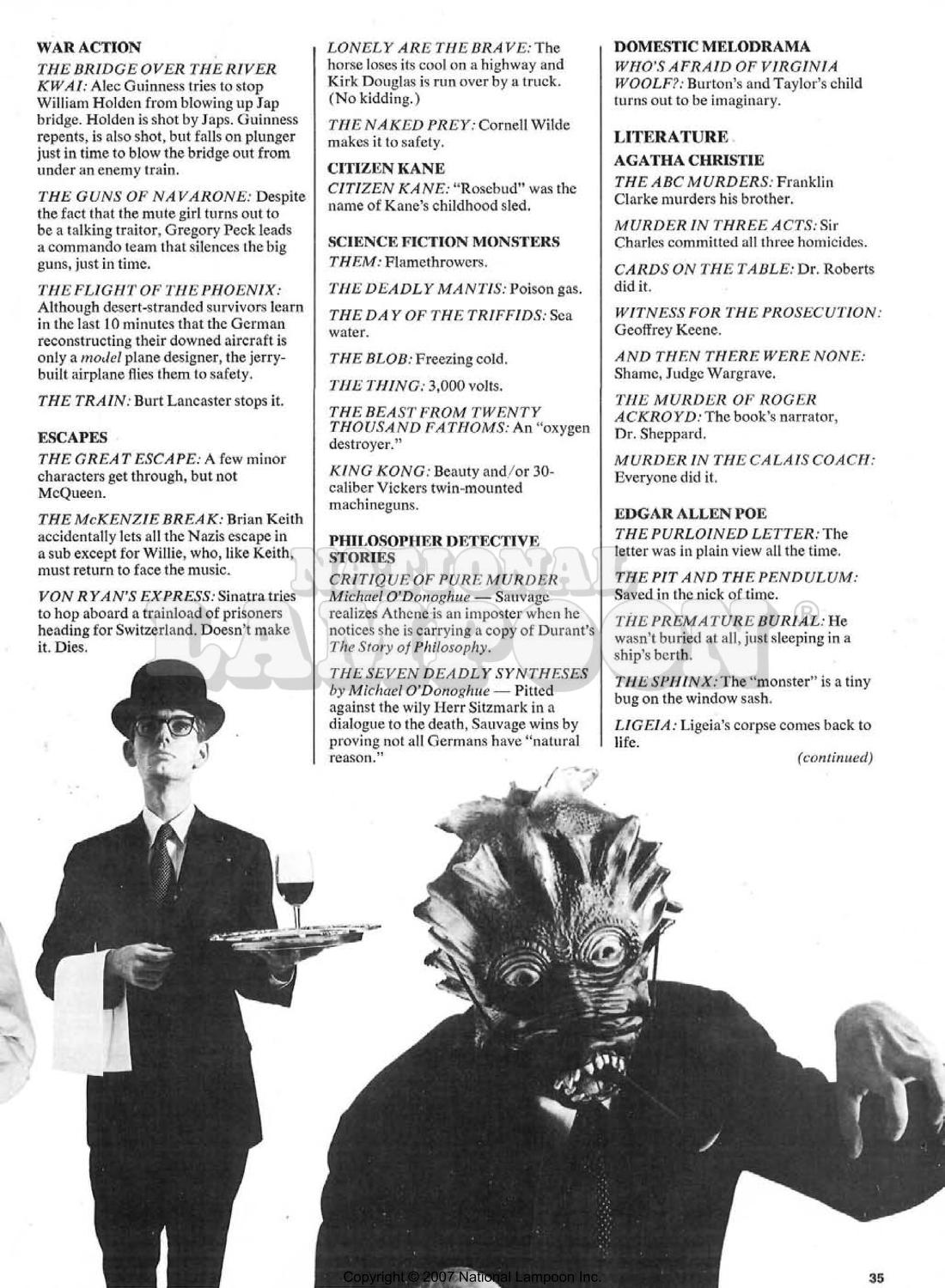
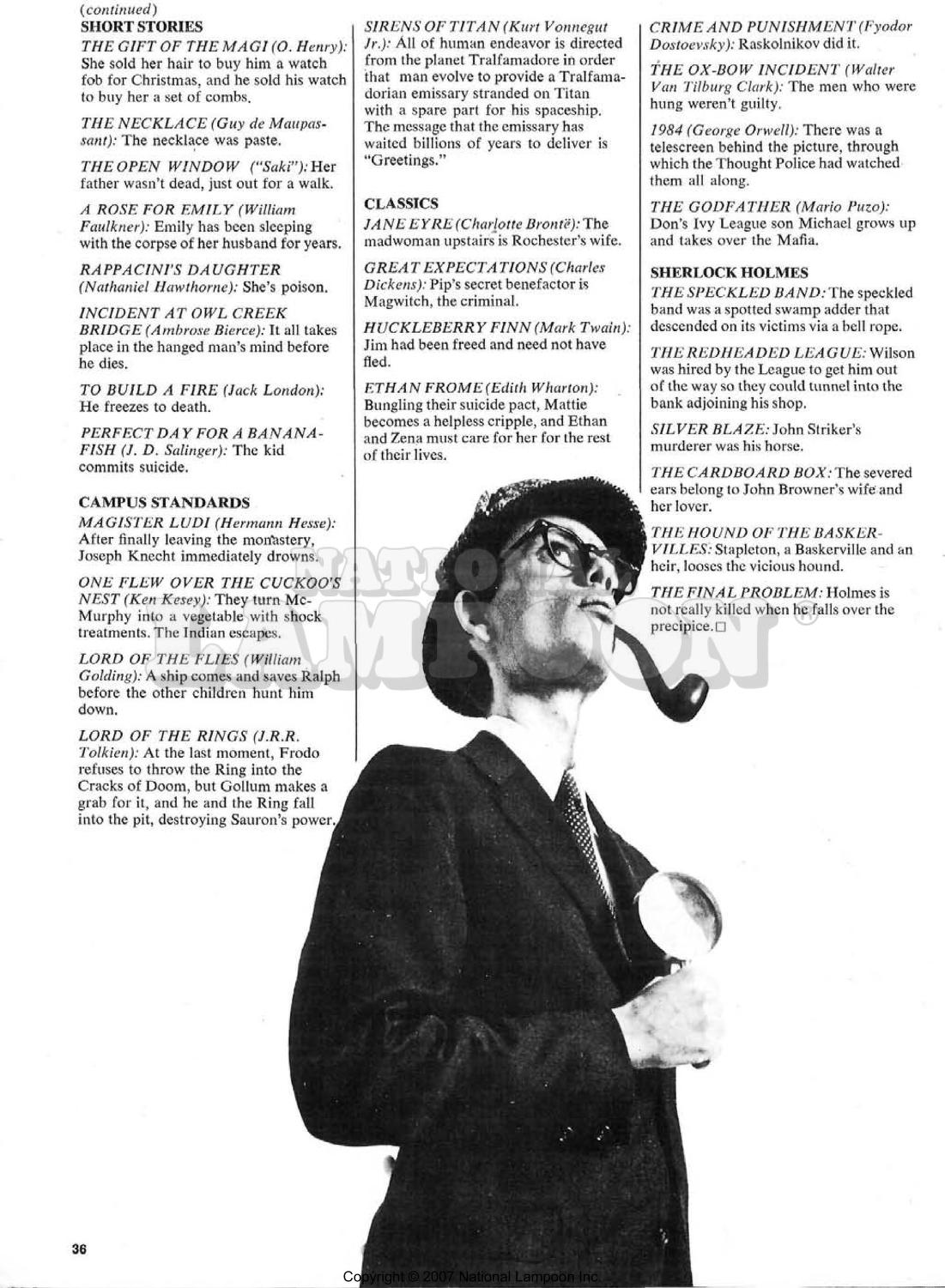
These days it’s nearly impossible to avoid spoilers for films, television shows, or books. Fortunately, some folks have the good graces to warn us with a “spoiler alert.” But have you ever wondered where the term “spoilers” came from ? It appears that the first published use may have been in “Spoilersby Douglas C. Kenney, appearing in the April 1971 issue of National Lampoon. The article explains that in the then contemporary “seething cauldron of racial, political and moral conflict,” suspenseful plots could be dangerous to our health. It then goes on to reveal the plot twists of over fifty classic novels and movies. Spoiler alert, the original article follows below.


Posted in Books, Film, movies, USA, Writing | Tagged , , | Leave a comment