John Steinbeck took the title of his 1937 novel “Of Mice and Men” from a line contained in the penultimate stanza of ” To a Mouse”, On Turning her up in her Nest, with the Plough, November 1785. by Robert Burns .
To a Mouse
BY ROBERT BURNS
On Turning her up in her Nest, with the Plough, November 1785.
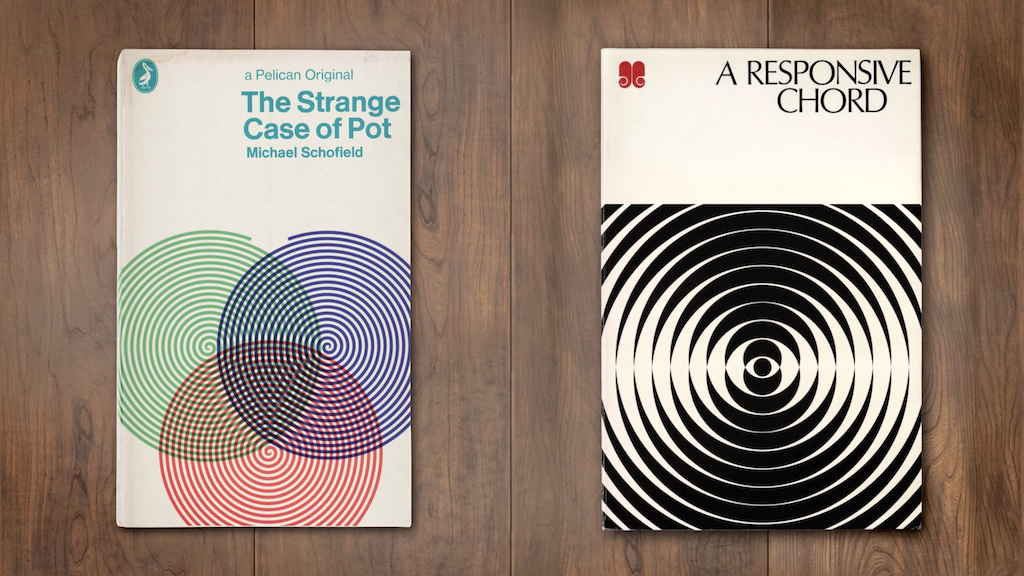
Over the years, I have shared some posts about the mesmerizing animations from German graphic designer Henning M. Lederer. I recently stumbled upon this fabulous video of his work titled “Books & Sleeves.” The intriguing film is a compilation of mainly academic bookcovers from vintage titles and album covers that have been set in motion through clever animation.
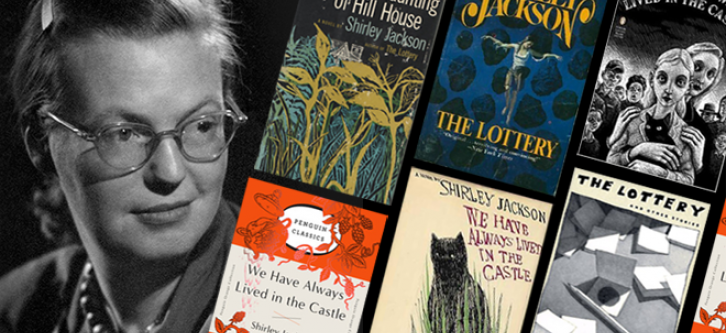
I recently discovered a terrific Audiobooks on YouTube playlist of free audiobook readings with more than 130 different titles, each of which is a full book or short story, read in its entirety and available to listen for free at your leisure. This is YouTube and so the quality is inevitably…variable, but the person who’s pulled this together seems to have done a reasonable job of ensuring that the base standard is reasonably high, and there’s a really wide-ranging selection including Christie, Conan-Doyle, Chekhov, Wells, Jackson, and the like.
I always enjoy a good Mark Twain anecdote and this one tickled my fancy. In 1908 burglars surreptiously entered his Hartford mansion and stole a set of silverware from the sideboard. In response, he posted this notice on the front door:
Aa a child I was fascinated by the old European Jewish tales of the Golem. When I visited Prague just after the Velvet Revolution, I had the opportunity to walk the streets of the ancient Ghetto and see the places where the creature in human form and made from clay stalked the enemies of city’s Jews.
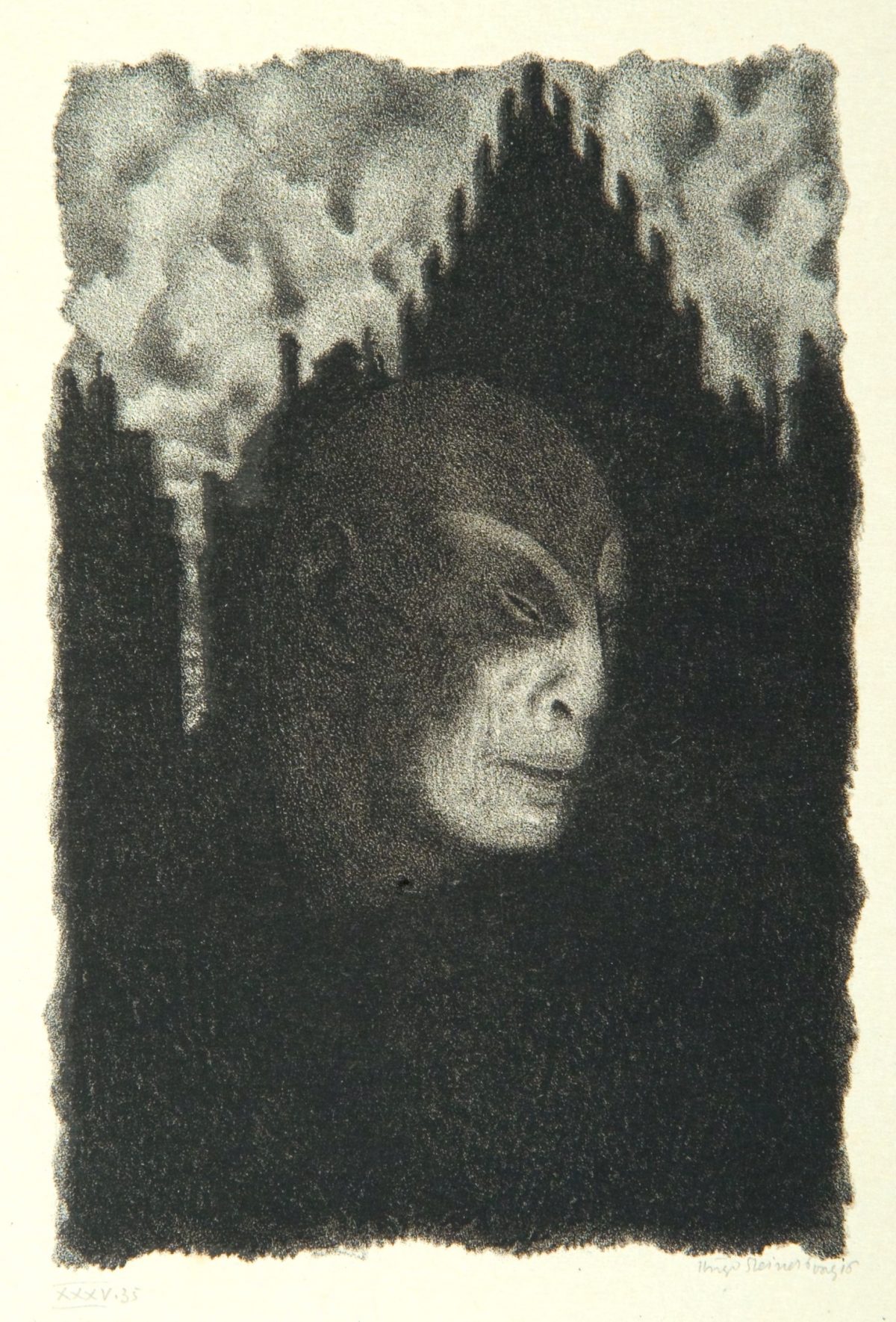
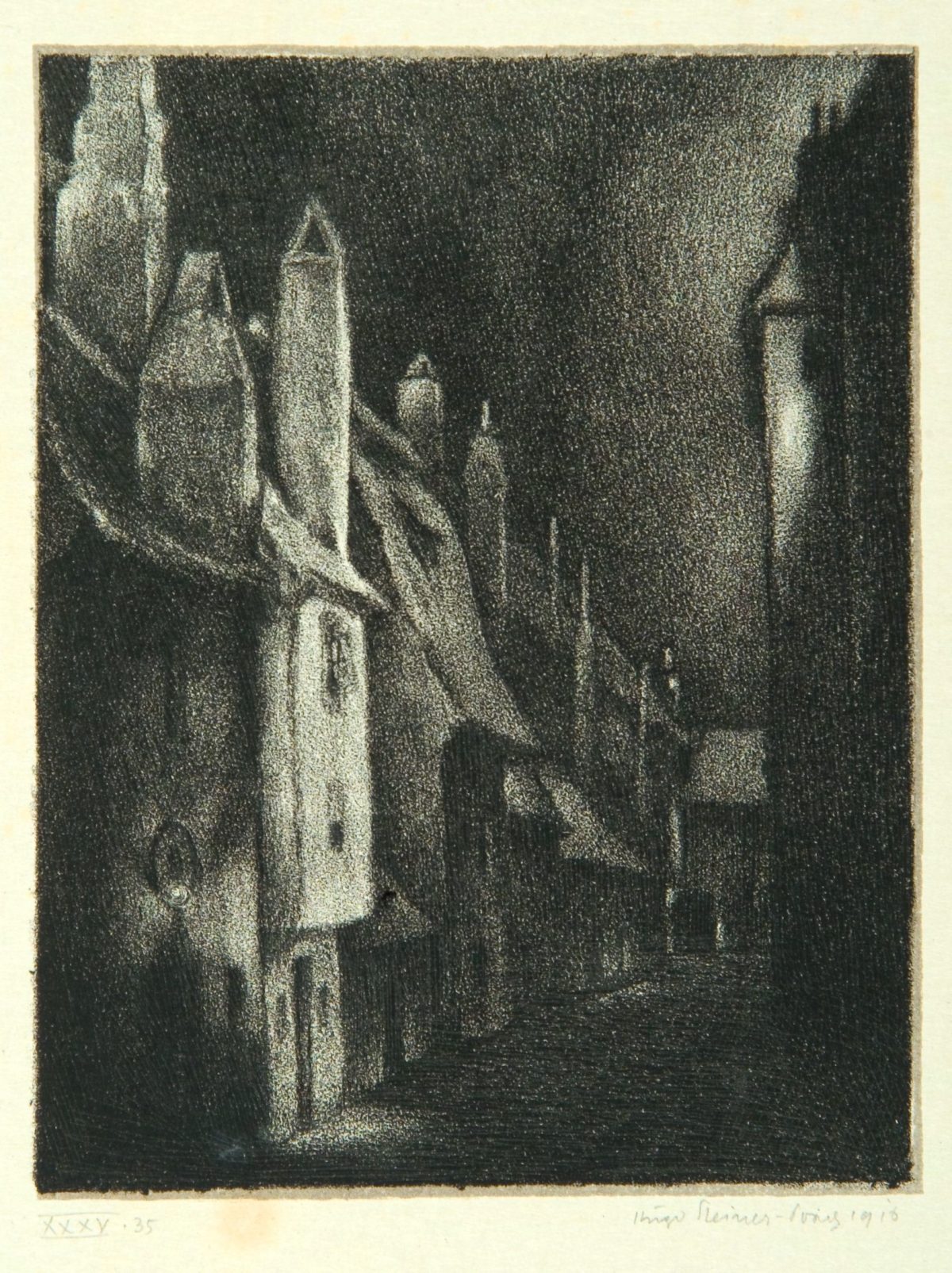
I recently ran across Gustav Meyrink’s bestselling 1915 novel Der Golem with fantastic Expressionist illustrations by Hugo Steiner-Prag. The golem character, typically an unformed animated creature made from mud or clay, stems from Jewish folklore: legend says Rabbi Judah Loew ben Bezalel of Prague created a golem (גולם) to protect Jews in medieval Prague from danger. Meyrink’s story detailed a golem that is the personification of the inhabitants of Jews in a Prague ghetto, and Steiner-Prag brought the golem to life on paper with twenty-five lithographs, considered perhaps his career masterpieces.
Meyrink’s novel originally was published as a serial during 1914 in German periodical Die Weißen Blätter. When Der Golem was then published in book form it was a huge success, selling over 200,000 copies in its first year alone. Before writing Der Golem, Meyerink was a banker, but he was also an occultist, student of Asia philosophies, yoga practioner, and a dabbler in the Kabbala and Jewish mysticism.
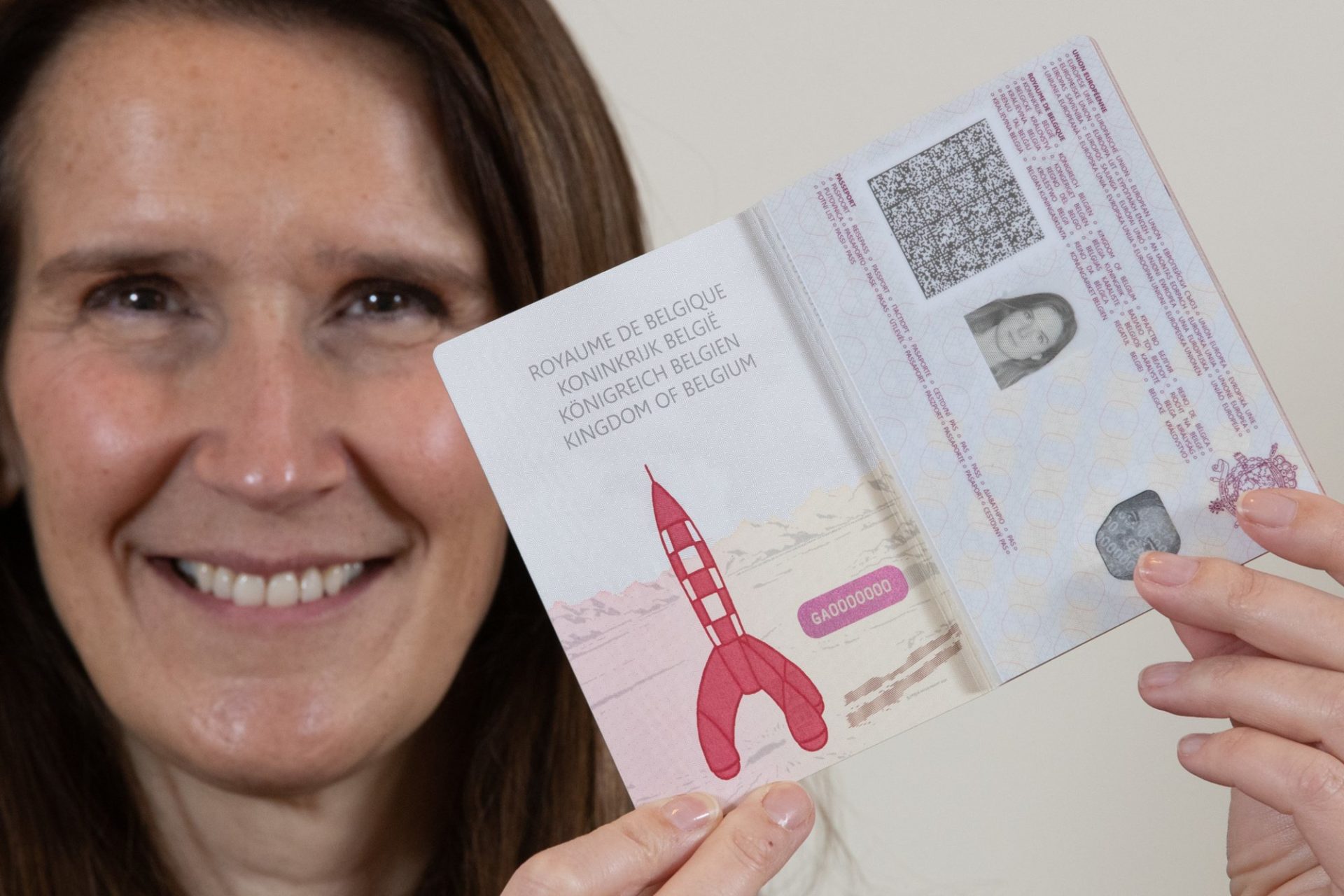
Yesterday, Deputy Prime Minister and Minister of Foreign Affairs Sophie Wilmès launched the new Belgian passport. A document that is even more secure thanks to new security and personalization techniques. The new Belgian passport will also be recognizable thanks to its original design, which honors one of the jewels of pop culture: the heroines and heroes of comic strips. Why can’t the U.S. passport look like this ?
All authors face rejection at some point in their writing careers. Some of us throw in the towel and are content with publishing blogs, but the greats always seem to persevere. Here are some suggestions from writers who knew how to deal with rejection:
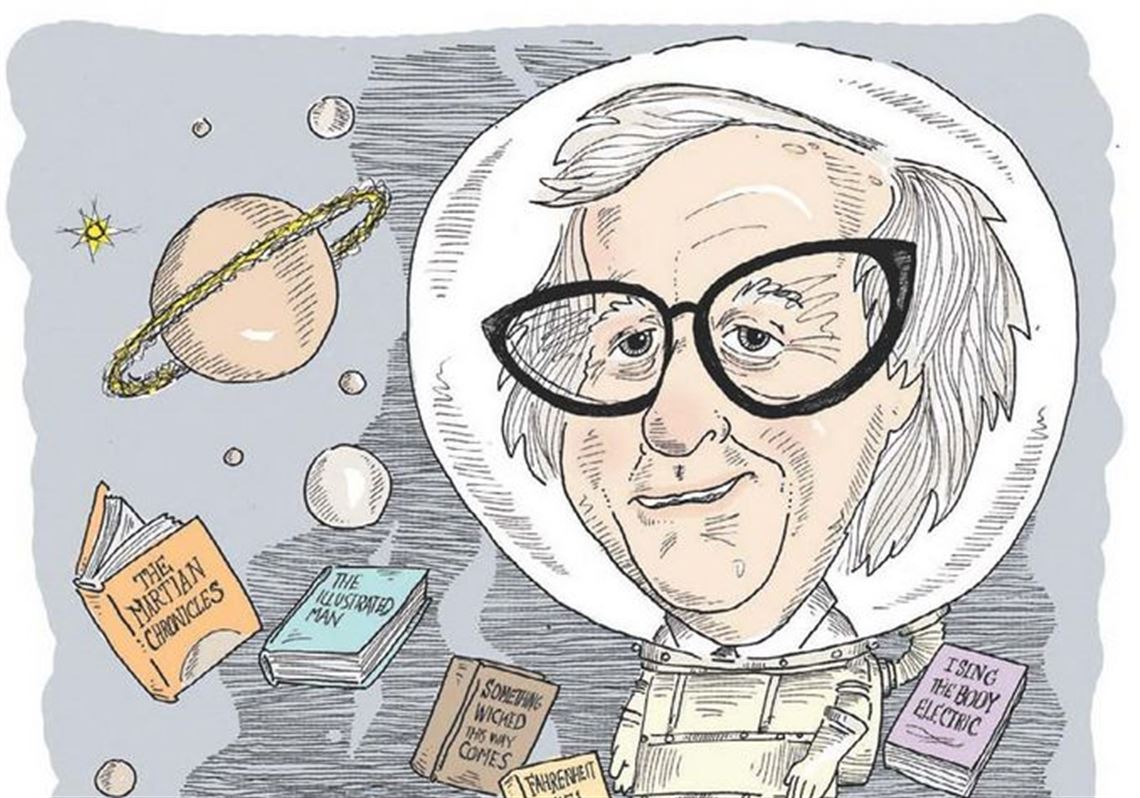
[S]tarting when I was fifteen I began to send short stories to magazines like Esquire, and they, very promptly, sent them back two days before they got them! I have several walls in several rooms of my house covered with the snowstorm of rejections, but they didn’t realize what a strong person I was; I persevered and wrote a thousand more dreadful short stories, which were rejected in turn. Then, during the late forties, I actually began to sell short stories and accomplished some sort of deliverance from snowstorms in my fourth decade. But even today, my latest books of short stories contain at least seven stories that were rejected by every magazine in the United States and also in Sweden! So, dear Snoopy, take heart from this. The blizzard doesn’t last forever; it just seems so.
–Ray Bradbury, in Snoopy’s Guide to the Writing Life
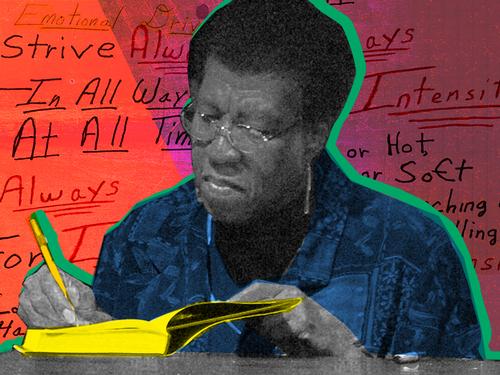
When I was older, I decided that getting a rejection slip was like being told your child was ugly. You got mad and didn’t believe a word of it. Besides, look at all the really ugly literary children out there in the world being published and doing fine!
–Octavia Bulter, in “Positive Obsession”
Winning or losing an argument, receiving an acceptance or rejection, is no proof of the validity or value of personal identity. One may be wrong, mistaken, or a poor craftsman, or just ignorant—but this is no indication of the true worth of one’s total human identity: past, present & future!
–Sylvia Plath, in The Unabridged Journals, 1956
I think being rejected can be very beneficial, especially if the work really isn’t good. If it gets published, you are almost certain to find yourself looking back with great embarrassment!
You must keep sending work out; you must never let a manuscript do nothing but eat its head off in a drawer. You send that work out again and again, while you’re working on another one. If you have talent, you will receive some measure of success—but only if you persist.
I was deeply moved by the wonderful animated video below of “The Mushroom Hunters” by Neil Gaiman, read by Amanda Palmer with music by Jherek Bischoof.
Science, as you know, my little one, is the study
of the nature and behaviour of the universe.
It’s based on observation, on experiment, and measurement,
and the formulation of laws to describe the facts revealed.
In the old times, they say, the men came already fitted with brains
designed to follow flesh-beasts at a run,
to hurdle blindly into the unknown,
and then to find their way back home when lost
with a slain antelope to carry between them.
Or, on bad hunting days, nothing.
The women, who did not need to run down prey,
had brains that spotted landmarks and made paths between them
left at the thorn bush and across the scree
and look down in the bole of the half-fallen tree,
because sometimes there are mushrooms.
Before the flint club, or flint butcher’s tools,
The first tool of all was a sling for the baby
to keep our hands free
and something to put the berries and the mushrooms in,
the roots and the good leaves, the seeds and the crawlers.
Then a flint pestle to smash, to crush, to grind or break.
And sometimes men chased the beasts
into the deep woods,
and never came back.
Some mushrooms will kill you,
while some will show you gods
and some will feed the hunger in our bellies. Identify.
Others will kill us if we eat them raw,
and kill us again if we cook them once,
but if we boil them up in spring water, and pour the water away,
and then boil them once more, and pour the water away,
only then can we eat them safely. Observe.
Observe childbirth, measure the swell of bellies and the shape of breasts,
and through experience discover how to bring babies safely into the world.
Observe everything.
And the mushroom hunters walk the ways they walk
and watch the world, and see what they observe.
And some of them would thrive and lick their lips,
While others clutched their stomachs and expired.
So laws are made and handed down on what is safe. Formulate.
The tools we make to build our lives:
our clothes, our food, our path home…
all these things we base on observation,
on experiment, on measurement, on truth.
And science, you remember, is the study
of the nature and behaviour of the universe,
based on observation, experiment, and measurement,
and the formulation of laws to describe these facts.
The race continues. An early scientist
drew beasts upon the walls of caves
to show her children, now all fat on mushrooms
and on berries, what would be safe to hunt.
The men go running on after beasts.
The scientists walk more slowly, over to the brow of the hill
and down to the water’s edge and past the place where the red clay runs.
They are carrying their babies in the slings they made,
freeing their hands to pick the mushrooms.
The 24-Hour Room is a growing community of writers that launched on January 20, 2021. The 24-Hour Room is a free virtual writers space offering fellowship, structure, solutions, motivation and intellectual sustenance. Author Elizabeth Gaffney created it to offer support, community, virtual companionship, and practical help for writers.
The completely free 24-Hour Room “is a place writers can come together without masks, whether to write silently in the Studio or talk about books and writing in the Lounge, our our-loud space. It offers fellowship, structure, solutions, motivation, and intellectual sustenance to writers at all levels. You might use it as an accountability group, but there are no external obligations, only opportunities. Show up when you want. Feel free to join gathering in the Lounge and share on the bulletin boards —or not to.”
Even if you are weary of Zoom meet-ups, it’s worth joining for the extensive tools for writers of all levels of experience. The links pages alone are worth checking out. And it’s all free. Click here to explore The 24-Hour Room.