Who remembers that famous day and year

On this day in 1807, the poet Henry Wadsworth Longfellow was born in Portland, Maine. During his lifetime, Longfellow’s poetry enjoyed extraordinary popularity at home and abroad. Many of his poems served as standard recitation pieces in American schools well into the twentieth century. Longfellow’s longer narrative poems include EvangelineExternal (1847), The Song of Hiawatha External (1855), and The Courtship of Miles Standish External (1858). During my elementary school years, I was forced to memorize Longfellow’s 1863 poem Paul Revere’s Ride (see below) which follows the famous patriot as he rides through the Massachusetts countryside warning of an impending British attack. Even today, the first lines of this poem are familiar to most Americans.

Interior, Wadsworth-Longfellow House, Portland, Me. Writing Desk of Henry Wadsworth Longfellow

One of few nineteenth-century American poets acclaimed in Europe, Longfellow received honorary degrees from both Oxford and Cambridge. Following his death in 1882, he became the only American commemorated in Westminster Abbey‘s Poet’s Corner.

Although Longfellow’s verse seems conventional now, especially when contrasted with his contemporary Walt Whitman, he was considered a “new poet” in his day. One of the first Americans to use native themes in his poetry, Longfellow holds an important place in American memory.

Paul Revere’s Ride

Listen, my children, and you shall hear
Of the midnight ride of Paul Revere,
On the eighteenth of April, in Seventy-Five:
Hardly a man is now alive
Who remembers that famous day and year.

He said to his friend, “If the British march
By land or sea from the town to-night,
Hang a lantern aloft in the belfry-arch
Of the North-Church-tower, as a signal-light,—
One if by land, and two if by sea;
And I on the opposite shore will be,
Ready to ride and spread the alarm
Through every Middlesex village and farm,
For the country-folk to be up and to arm.”

Then he said “Good night!” and with muffled oar
Silently rowed to the Charlestown shore,
Just as the moon rose over the bay,
Where swinging wide at her moorings lay
The Somerset, British man-of-war:
A phantom ship, with each mast and spar
Across the moon, like a prison-bar,
And a huge black hulk, that was magnified
By its own reflection in the tide.

Meanwhile, his friend, through alley and street
Wanders and watches with eager ears,
Till in the silence around him he hears
The muster of men at the barrack door,
The sound of arms, and the tramp of feet,
And the measured tread of the grenadiers
Marching down to their boats on the shore.

Then he climbed to the tower of the church,
Up the wooden stairs, with stealthy tread,
To the belfry-chamber overhead,
And startled the pigeons from their perch
On the sombre rafters, that round him made
Masses and moving shapes of shade,—
By the trembling ladder, steep and tall,
To the highest window in the wall,
Where he paused to listen and look down
A moment on the roofs of the town,
And the moonlight flowing over all.

Beneath, in the churchyard, lay the dead,
In their night-encampment on the hill,
Wrapped in silence so deep and still
That he could hear, like a sentinel’s tread,
The watchful night-wind, as it went
Creeping along from tent to tent,
And seeming to whisper, “All is well!”
A moment only he feels the spell
Of the place and the hour, and the secret dread
Of the lonely belfry and the dead;
For suddenly all his thoughts are bent
On a shadowy something far away,
Where the river widens to meet the bay,—
A line of black, that bends and floats
On the rising tide, like a bridge of boats.

Meanwhile, impatient to mount and ride,
Booted and spurred, with a heavy stride,
On the opposite shore walked Paul Revere.
Now he patted his horse’s side,
Now gazed on the landscape far and near,
Then impetuous stamped the earth,
And turned and tightened his saddle-girth;
But mostly he watched with eager search
The belfry-tower of the old North Church,
As it rose above the graves on the hill,
Lonely and spectral and sombre and still.
And lo! as he looks, on the belfry’s height,
A glimmer, and then a gleam of light!
He springs to the saddle, the bridle he turns,
But lingers and gazes, till full on his sight
A second lamp in the belfry burns!

A hurry of hoofs in a village-street,
A shape in the moonlight, a bulk in the dark,
And beneath from the pebbles, in passing, a spark
Struck out by a steed that flies fearless and fleet:
That was all! And yet, through the gloom and the light,
The fate of a nation was riding that night;
And the spark struck out by that steed, in his flight,
Kindled the land into flame with its heat.

He has left the village and mounted the steep,
And beneath him, tranquil and broad and deep,
Is the Mystic, meeting the ocean tides;
And under the alders, that skirt its edge,
Now soft on the sand, now loud on the ledge,
Is heard the tramp of his steed as he rides.

It was twelve by the village clock
When he crossed the bridge into Medford town.
He heard the crowing of the cock,
And the barking of the farmer’s dog,
And felt the damp of the river-fog,
That rises when the sun goes down.

It was one by the village clock,
When he galloped into Lexington.
He saw the gilded weathercock
Swim in the moonlight as he passed,
And the meeting-house windows, blank and bare,
Gaze at him with a spectral glare,
As if they already stood aghast
At the bloody work they would look upon.

It was two by the village clock,
When he came to the bridge in Concord town.
He heard the bleating of the flock,
And the twitter of birds among the trees,
And felt the breath of the morning breeze
Blowing over the meadows brown.
And one was safe and asleep in his bed
Who at the bridge would be first to fall,
Who that day would be lying dead,
Pierced by a British musket-ball.

You know the rest. In the books you have read,
How the British Regulars fired and fled,—
How the farmers gave them ball for ball,
From behind each fence and farmyard-wall,
Chasing the red-coats down the lane,
Then crossing the fields to emerge again
Under the trees at the turn of the road,
And only pausing to fire and load.

So through the night rode Paul Revere;
And so through the night went his cry of alarm
To every Middlesex village and farm,—
A cry of defiance, and not of fear,
A voice in the darkness, a knock at the door,
And a word that shall echo forevermore!
For, borne on the night-wind of the Past,
Through all our history, to the last,
In the hour of darkness and peril and need,
The people will waken and listen to hear
The hurrying hoof-beats of that steed,
And the midnight message of Paul Revere

Posted in Books, History, USA, Writing | Tagged , | 1 Comment

All the Frequent Troubles of Our Days

I have been an avid student of World War II history all of my life. Over the years, I have read dozens of books on the period, but I only recently learned of the amazing story of the American citizen Mildred Harnack and her anti-Nazi resistance group which she called The Circle and the German government labeled the Rote Kapelle (Red Orchestra). Harnack’s heroic true story is documented in the award-winning, New York Times bestseller All The Frequent Troubles Of Our Days, which was written by her great-great niece Rebecca Donner.

Born in Milwaukee, Harnack was 26 when she moved to Germany to pursue a PhD. As an American grad student in Berlin, she saw the rise of Nazism and the persecution of Germany’s Jews and other minorities. Eventually, Mildred Harnack and her husband Arvid began holding secret meetings in their apartment. She recruited working-class Germans into the resistance, helped Jews escape, plotted acts of sabotage, and collaborated in writing leaflets that denounced Hitler and called for revolution.

The Circle group was diverse: its members were Jewish, Catholic, Protestant, atheist. They were factory workers and office workers, students and professors, journalists and artists. Over 40% were women.

The Gestapo arrested Mildred Harnack on Sept 7, 1942. Postwar testimonies and notes smuggled out of a Berlin women’s prison describe the daily interrogations and torture that Mildred and others in the group endured.Harnack and 75 of her German co-conspirators underwent a mass trial at a military court in Berlin. A panel of 5 judges sentenced her to 6 years at a prison camp but Hitler overruled the decision and personally ordered her execution.

On February 16, 1943 at Plötzensee Prison in Berlin, Mildred Harnack was strapped to a guillotine and beheaded. According to records, she was the only American in the leadership of the German resistance to the Nazis.

The title of Donner’s book, All The Frequent Troubles of Our Days, is a line from a Goethe poem that Harnack translated while in prison awaiting execution . A prison chaplain smuggled out the book of poems under the folds of his robe.

Posted in Europe, History | Tagged , , , | Leave a comment

Teleport me to Barcelona

I have only been to Barcelona one time—actually twice on the same three week trip to Spain—and I fell deeply in love with the capital of Catalonia. You will see why after viewing this gorgeous hyperlapse video below by Kirill Neiezhmakov.

https://vimeo.com/211506679

NB: If the video does not appear in you email, please click on the short url at the bottom to launch.


Posted in Architecture, Art, Europe, Film, Tourism | Tagged , , | Leave a comment

Poetic Visions

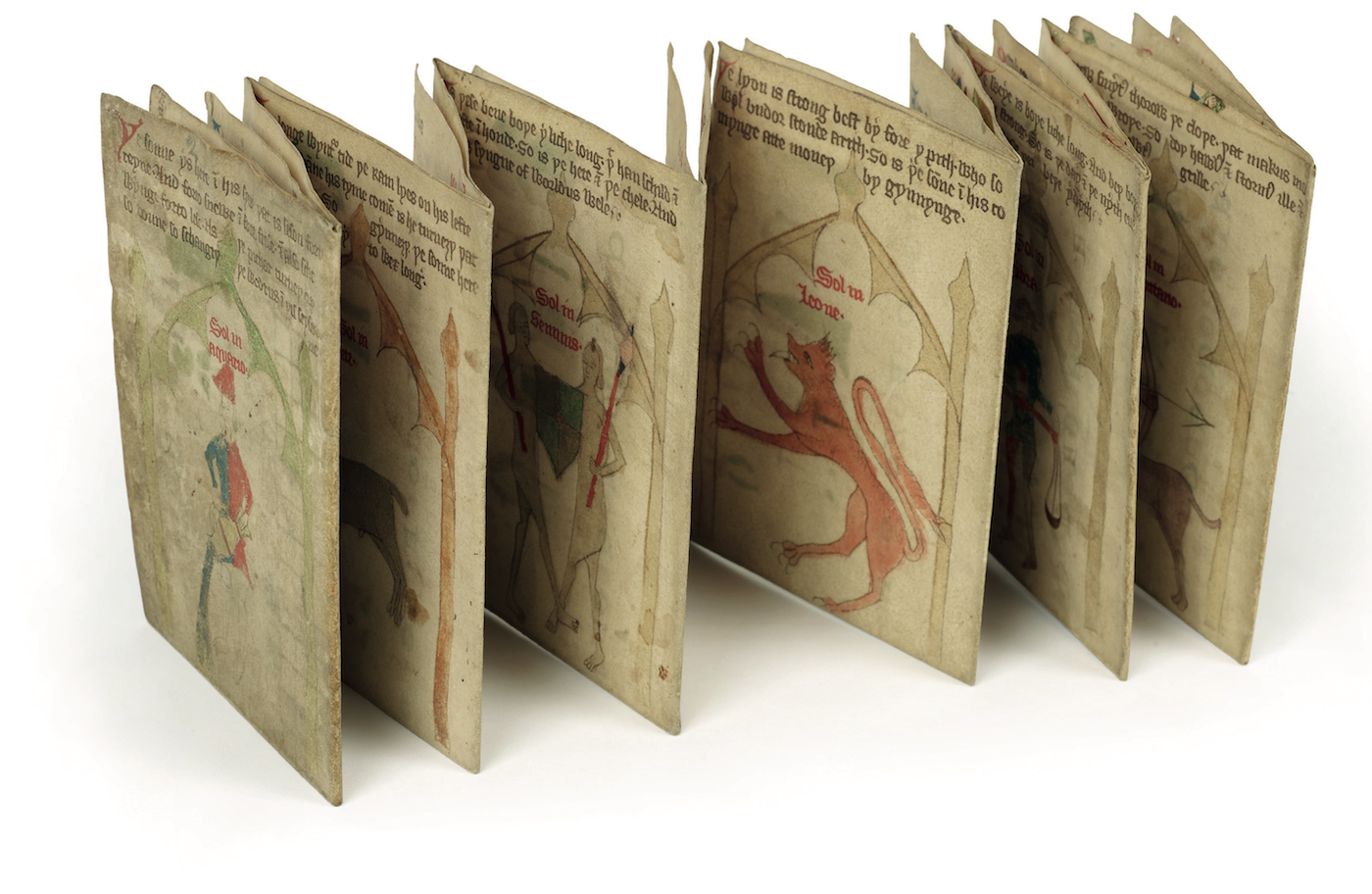
Dutch poet Monique Hendriks recently published her latest work in a completely unique way —as a Viewmaster reel. When you purchase her book you also receive a Viewmaster to read it. Hendriks is known for her impressive spoken word poetry presentations, but this is next level cool.


Posted in Art, Books, Europe, Writing | Tagged , , | Leave a comment

Get Ready To Waiver

U.S. citizens have enjoyed the ability to take spontaneous trips to Europe for decades, but soon there will be an extra step to take before leaving for Europe. Currently, a U.S. passport is suffient documentation to enter European Union  countries for periods of less than 90 days. But that is changing next year. Beginning in spring 2023, U.S. citizens, as well as travelers from 58 other countries, will require an European Travel Information and Authorisation System (ETIAS) visa waiver to travel to any of the Schengen-zone countries for short stays.

Back in 2016, the European Commission approved developing ETIAS as a screening tool to help prevent terrorism and illegal immigration. The automated electronic screening measure is “created to identify security, irregular migration or high epidemic risks posed by visa-exempt visitors,” according to the ETIAS website.

ETIAS Eligibility

  The United States of America will be a launch member of the ETIAS
  American citizens will be eligible to apply for ETIAS in 2023
  American citizens will benefit from a using an online application system to apply for ETIAS

Other ETIAS Requirements

  American citizens can apply for ETIAS online
  ETIAS is valid for arrival to Europe by air, sea or overland
  Travellers must have an e-passport that is machine readable
  ETIAS is for short tourist, business, transit and medical visits
  Applicants under the age of 18 or over the age of 70 will receive their ETIAS free of charge

Although U.S. travelers will still not need a Schengen visa, they will be prescreened before arrival into European Union countries. No biometric data will be collected; Americans will need to provide their passport information and answer “a series of security questions in regards the traveler’s health, and whether they have been to conflict zones in the past,” per ETIAS.com.

The new travel authorization will be required for every to every member country in Europe’s Schengen Zone. Right now, that includes 22 EU member countries, four non-EU countries and four European microstates.

ETIAS registration will be necessary to enter Austria, Belgium, Czech Republic, Denmark, Estonia, Finland, France, Germany, Greece, Hungary, Iceland, Italy, Latvia, Liechtenstein, Lithuania, Luxembourg, Malta, the Netherlands, Norway, Poland, Portugal, Slovakia, Slovenia, Spain, Sweden and Switzerland. The same goes for trips to the microstates of Andorra, Monaco, San Marino and Vatican City.

An ETIAS travel authorization will be good for three years and will cover multiple trips to EU countries. Travelers between the ages of 18 and 70 will need a valid passport, an email address, and a debit or credit card to pay the nonrefundable €7  application fee. Children and teens under age 18 and seniors over age 70 will need to fill out an ETIAS application but will not be charged the fee.

Once the ETIAS program launches, Europe-bound airlines will be required by law to check passengers’ ETIAS authorizations before allowing them to board.

Posted in Europe, Tourism, USA | Tagged , , , , | Leave a comment

Art Bar

I love this animated video (below) from Whitehouse Animation. The brilliant short features works by Edvard Munch, Henri Matisse, Yves Tanguy, Salvador Dali, Marc Chagall, Paul Klee, Jackson Pollock, Vincent Van Gogh, Norval Morriseau, Pablo Picasso, Hieronymus Bosch and George Grosz.

Posted in Animation, Art, Europe, Film | Tagged , | 1 Comment

Monday with Murakami

Regular visitors to TBTP are well aware of my admiration for the Japanese author Haruki Murakami. I recently discovered this list of his five favorite books. Unsurprisingly, they are on my favorites list as well.

F. Scott Fitzgerald, The Great Gatsby

“If I were forced to select only one [book that has meant the most to me], I would unhesitatingly choose Gatsby. Had it not been for Fitzgerald’s novel, I would not be writing the kind of literature I am today (indeed, it is possible that I would not be writing at all, although that is neither here or there).”

*

Raymond Chandler, The Long Goodbye

“Philip Marlow is Chandler’s fantasy, but he’s real to me.”
“I translate what I like to read. I have translated all the novels of Raymond Chandler. I like his style so much. I have read The Long Goodbye five or six times.”

*

Franz Kafka, The Castle

“I encountered Kafka’s work when I was 15 years old, the book was The Castle. It was a great big incredible book. It gave me a tremendous shock. The world Kafka described in that book was so real and so unreal at the same time that my heart and soul seemed torn into two pieces.”

Fyodor Dostoevsky, The Brothers Karamazov

“Most writers get weaker and weaker as they age. But Dostoevsky didn’t. He kept getting bigger and greater. He wrote The Brothers Karamazov in his late fifties. That’s a great novel.”

 *

J.D. Salinger, The Catcher in the Rye

“It’s a dark story, very disturbing. I enjoyed it when I was seventeen, so I decided to translate it. I remembered it as being funny, but it’s dark and strong. I must have been disturbed when I was young.”


You can discover more about his reading tastes on his website, Murakami lists his main influences as Raymond Chandler, Kurt Vonnegut, and Richard Brautigan. We have the same influences, but that’s not a surprise. to me.


Posted in Asia, Books, Writing | Tagged , , , , | Leave a comment

Censorship is as American as apple pie

Although there is much ballyhoo and bluster in the United States about free speech, in reality censorship and book banning have been endemic since first European colonists arrived. The act of censorship, while theoretically limited by the First Amendment to the U.S. Constitution, has nonetheless been upheld by school boards, legislatures and courts—the very institutions that are empowered to uphold freedom of speech. Censorship is as American as apple pie, racism, and White Christian Nationalism.

For centuries, the most common graphic tool of every censor has been the use of black bars in text and on graphics. Even in this supposedly enlightened age, black bars can be found in print publications and online. Black bars block out banned  or censored parts of books, articles, photos, films, paintings any thing visual and textual.

In 1926, author and poet Kendall Banning (real name) dedicated a self-published book of Censored Mother Goose Rhymes to “The Censors [of America] who have taught us how to read naughty meanings into harmless words.

Banning wrote over a dozen books, and was an editor at mainstream periodicals like Cosmopolitan, Popular Radio and Hearst Magazine, He was incensed over a 1929 congressional debate on revising tariff legislation that allowed United States Customs inspectors to ban and seize imported books they deemed “obscene.” So, Banning reprinted a 1926 version of Mother Goose with words blacked out to imply obscene words. He then sent copies to members of the U.S. Congress.

Its easy to decipher Banning’s banned words (or just check Mother Goose.


Posted in Books, Freedom of Speech, USA, Writing | Tagged , | 1 Comment

Stages of the Reader


Posted in Art, Books, USA | Tagged , | 1 Comment

Resign yourself to the lifelong sadness that comes from never ­being satisfied.

I recently stumbled upon an interesting take on the “rules for writers” list from the great British author Zadie Smith. Her list offers an excellent balance of the practical, the philosophical, and the emotional.

  1. When still a child, make sure you read a lot of books. Spend more time doing this than anything else.
  2. When an adult, try to read your own work as a stranger would read it, or even better, as an enemy would.
  3. Don’t romanticise your ‘vocation.’ You can either write good sentences or you can’t. There is no ‘writer’s lifestyle.’ All that matters is what you leave on the page.
  4. Avoid your weaknesses. But do this without telling yourself that the things you can’t do aren’t worth doing. Don’t mask self-doubt with contempt.
  5. Leave a decent space of time between writing something and editing it.
  6. Avoid cliques, gangs, groups. The presence of a crowd won’t make your writing any better than it is.
  7. Work on a computer that is disconnected from the ­internet.
  8. Protect the time and space in which you write. Keep everybody away from it, even the people who are most important to you.
  9. Don’t confuse honours with achievement.
  10. Tell the truth through whichever veil comes to hand — but tell it. Resign yourself to the lifelong sadness that comes from never ­being satisfied.
Posted in Books, Writing | Tagged , , , | Leave a comment