Who doesn’t love the Wizard of Oz

Here we are at the final day of the annual Banned Books Week and I just discovered that the beloved American children’s classic The Wonderful Wizard of Oz was a banned book. In fact, for decades it was one of the most frequently censored books in the United States.

Although the fantasy novel is beloved by children and adults, the book has faced serious criticism and censorship since its publication in 1900. The series of Oz novels have been frequently accused of portraying unwholesome and un-Christian concepts. In 1928 numerous public libraries banned the book arguing that the story was unseemly for “depicting women in strong leadership roles”. This notion remained the common attack against the novels from Protestant ministers and educators though the 1960s. In 1957 the Detroit Public Library banned Baum’s novels by claiming that the books had “no value for children of today”, arguing the stories and characters supported “negativism and brought children’s minds to a cowardly level”.

One of the most notorious banning cases against The Wizard of Oz took place in 1986 when a group of  Fundamentalist Christians from Tennessee pushed for the book’s removal from the public school syllabus. They filed a lawsuit against their school district arguing that “the novel’s depiction of benevolent witches and promoting the belief that essential human attributes were ‘individually developed rather than God given’”. They argued that all witches are bad, therefore it is “theologically impossible” for good witches to exist. They were particularly upset by the character Glinda the Good Witch. They argued that the Oz novels promoted self-reliance rather than dependency on God to provide salvation. The judge presiding over the case ruled that the children, whose families opposed the works, should be excused from lesson plans centered on the novel. The families then appealed the decision to the United States Supreme Court, but the Court refused to hear the case.

Over the years there’s been a notable shift in the subject matter of books being challenged in the U.S. When the American Library Association released its list of the Top Ten Most Challenged Books of 2020 in April, the books that received the most challenges to libraries and schools dealt with “racism, Black American history and diversity in the United States,” says Deborah Caldwell-Stone, director of the ALA’s Office for Intellectual Freedom. But Caldwell-Stone says in 2018 and 2019, the Banned Books list was made up “almost exclusively” of books dealing with LGBTQ concerns.

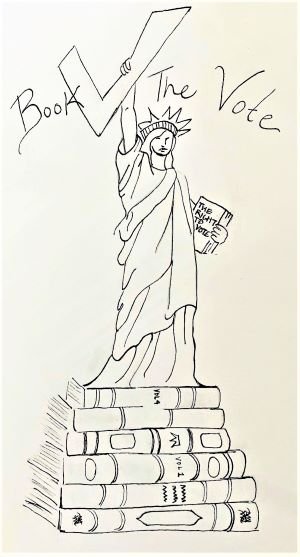
The theme of this year’s Banned Books Week is “Books Unite Us. Censorship Divides Us.” Public events include a Dear Banned Author Letter-Writing Campaign and Stand For The Banned Read-out, an opportunity for people to submit videos of themselves reading books from the list.

Top Ten Most Challenged Books of 2020

George by Alex Gino Reasons: Challenged, banned, and restricted for LGBTQIA+ content, conflicting with a religious viewpoint, and not reflecting “the values of our community”

Stamped: Racism, Antiracism, and You by Ibram X. Kendi and Jason Reynolds Reasons: Banned and challenged because of author’s public statements, and because of claims that the book contains “selective storytelling incidents” and does not encompass racism against all people

All American Boys by Jason Reynolds and Brendan Kiely Reasons: Banned and challenged for profanity, drug use, and alcoholism, and because it was thought to promote anti-police views, contain divisive topics, and be “too much of a sensitive matter right now”

Speak by Laurie Halse Anderson Reasons: Banned, challenged, and restricted because it was thought to contain a political viewpoint and it was claimed to be biased against male students, and for the novel’s inclusion of rape and profanity

The Absolutely True Diary of a Part-Time Indian by Sherman Alexie Reasons: Banned and challenged for profanity, sexual references, and allegations of sexual misconduct by the author

Something Happened in Our Town: A Child’s Story About Racial Injustice by Marianne Celano, Marietta Collins, and Ann Hazzard, illustrated by Jennifer Zivoin Reasons: Challenged for “divisive language” and because it was thought to promote anti-police views

To Kill a Mockingbird by Harper Lee Reasons: Banned and challenged for racial slurs and their negative effect on students, featuring a “white savior” character, and its perception of the Black experience

Of Mice and Men by John Steinbeck Reasons: Banned and challenged for racial slurs and racist stereotypes, and their negative effect on students

The Bluest Eye by Toni Morrison Reasons: Banned and challenged because it was considered sexually explicit and depicts child sexual abuse

The Hate U Give by Angie Thomas Reasons: Challenged for profanity, and it was thought to promote an anti-police message


Posted in Art, Books, Freedom of Speech, History, Libraries, USA, Writing | Tagged , , , | 1 Comment

Bookstore Tourism: NYC

I was recently asked by a TBTP reader who is planning a brief visit to New York City to suggest some independent bookstores that are located in Manhattan and are not the much touted Strand.

My first pick is located in the West Village offering an intimate and personal indie bookshop experience. Three Lives & Company is basically a one room bookstore, but what it lacks in choice it makes up for in the helpful recommendation of the well-read staff.


Another small, but well-stocked indie shop in Greenwich Village worth a browse is Codex  located at the corner Bleecker Street and Bowery. Specializing in quality secondhand books, Codex is a good choice for literary fiction and art.

Alabaster Bookshop is another good choice in Manhattan and it’s located a short hop from the famous Strand, if you feel the need to make a pilgrimage. Alabaster is packed with reasonable priced secondhand books and it’s handy if you’re in Union Square .


Posted in Books, Bookstore Tourism, USA | Tagged , , | Leave a comment

Encyclopedia of a world that does not exist

Over the years, I have run across a number of versions of the weird and wonderful Codex Seraphinianus. Along with English and French edtions, I have also seen an original Italian version from 1981. It’s difficult to catagorize this fascinating surreal fictionalized encyclopedia for an alternate reality.

Recently, I learned that there is a 40th anniversary limited edition being released next month in the United States, although it may be out already in Europe. As the  video below explains, the Codex was meant to look like a medieval encyclopedia of flora and fauna,  language and culture.The short video does an excellent job of explaining the organization of the book, its origins, and how to begin to dive into it’s brilliant weirdness.

Posted in Art, Books, Europe, Film, Writing | Tagged , , | 2 Comments

House of Dreams

Over the years, I have visited dozens of museums in and around London, but I haven’t found my way to the wonderful House of Dreams yet. The next time that I’m in London I will certainly make time to see artist Stephen Wright’s personal museum. After you see the video below, I’m sure that you will want to make an appointment for a tour too.


Posted in Architecture, Art, Europe, Museums, Tourism | Tagged , | 1 Comment

There is no telling where time is

This piece is from former British Poet Laureate Ted Hughes’s collection of poems Earth Dances, with original linocuts by British artist R. J. Lloyd and printed in 1994 in an edition of 250 copies signed by the poet and artist in 18 point Bembo and Bodoni on Rivoli paper by Nicolas McDowall at The Old Stile Press in Llandogo, Monmouthshire, Wales. The main images were printed on papers handmade by Frances McDowall  which incorporate iris, nettle, onion, Japanese knotweed, pampas grass, and alkanet fibers. The binding was designed at The Old Stile Press and executed at The Fine Bindery in Wellingborough, England.


Posted in Art, Books, Writing | Tagged , , | Leave a comment

Foundation

I first read Isaac Asimov’s seminal science fiction Foundation trilogy as an adolescent. It was challenging and sometimes confusing, but worth the effort. So, I was excited to discover the new television series based on the iconic books that premiered last Friday. Apple TV+ released the first two episodes of the adaptation. It was created by David S. Goyer (Batman BeginsMan of Steel), with Jared Harris starring as Hari Sheldon. Other cast members include Lee Pace, Lou Llobell, Leah Harvey, Laura Birn, Terrence Mann, Cassian Bilton and Alfred Enoch. The season’s remaining eight episodes will show every Friday.

The Foundation series is a must-read for anyone interested in the science-fiction genre. It explores the story of a distant future in which a Galactic Empire spans the Milky Way, scientist Hari Seldon has created a discipline called psychohistory that can predict the actions of large populations. Using psychohistory, Seldon discovers that the Galactic Empire is on the verge of collapse and the galaxy will experience 30,000 years of chaos before a second empire can emerge. Seldon creates a plan to reduce the coming dark age to a single millennium by safeguarding all human knowledge with an organization of scientists and engineers called the Foundation. Asmiov’s series was originally a trilogy consisting of Foundation (1951), Foundation and Empire (1952) and Second Foundation (1953). He later wrote two sequels–Foundation’s Edge (1982) and Foundation and Earth (1986)–and two prequels, Prelude to Foundation (1988) and Forward the Foundation (1993).

If you happen to own the set of first editions pictured above, it’s worth more than $7,000.


Posted in Books, USA, Writing | Tagged , , , | Leave a comment

Alice, Aldous, and Walt

I recently discovered that Walt Disney commissioned Aldous Huxley of all people to write a script for a Disney film of Alice in Wonderland. Although this may seem surprising, it turns out that Huxley wrote a number of screenplays for Hollywood films and just happened to be in Los Angeles during 1945 after Disney acquired the fim rights to the iconic Lewis Carroll story.

Huxley created a a working script for an animated/live action mash-up Alice. There is a record of the author meeting with Disney to discuss the project in early December of 1945. Sadly, the screenplay for the never produced version was destroyed in a fire, but a synopsis exists. (see below) Certainly a film that I would have like to have seen.

Here is a brief summary of Huxley’s synopsis for Alice and the Mysterious Mr. Carroll from November 1945.

The synopsis begins with a letter stating that the Queen wants to know and meet the author of Alice in Wonderland. She has been told he is an Oxford don and that she wishes the vice chancellor of the University, Langham, to discover his identity.

Langham tosses aside the request since he has other concerns, including the Rev. Charles Dodgson lobbying to become the new librarian. Dodgson loves books and wants to be relived of his duties lecturing since he stutters badly when nervous. (In real life, the Dodo in Wonderland was named after Dodgson who sometimes because of his stutter would introduce himself as Do-Do-Dodgson.) Langham is not inclined to endorse Dodgson for the new job because he feels it is inappropriate for the good reverend to be interested in the theater and in photography. Langham’s assistant, Grove, who knows Dodgson quite well and just considers him a little eccentric tries to plead Dodgson’s case to no avail.

Grove is the weak-willed guardian of a little girl named Alice, whose parents are temporarily off in India. Grove has hired Miss Beale to take care of Alice. Miss Beale is a no-nonsense person who is very strict and dislikes Dodgson because he fills Alice’s mind with nonsense. Huxley points out that it is important to establish that Alice is “temporarily an orphan at the mercy of a governess and an old man who do not truly understand her or love her.”

Dodgson has invited Alice to join him for a theatrical performance of Romeo and Juliet featuring one of his former students now grown up into an attractive and talented young woman, Ellen Terry. Miss Beale is outraged and orders Alice to write a letter to Dodgson informing him she can not attend because of her “religious principles”.

Dodgson visits Terry in the theater and she immediately guesses that he is the author Carroll because he used to tell her stories of the Cheshire Cat when she was younger. Dodgson begs her to keep his secret since he is up for the job of librarian and that if it were revealed he was the one who wrote the children’s book it would go badly for him. He also talks about bringing Alice to the play the following day.

Mrs. Beale discovers that Alice has not posted the letter to Dodgson but hidden it so she could sneak out and attend the theater with him. Enraged, Beale locks Alice in the garden house. When “Grove expresses concern about the severity of Alice’s punishment, Miss Beale assures him that this is how it was always done in the best and most pious families. Grove ends by agreeing, as he always does when confronted by a personality stronger than his own.”

Miss Beale raises the question of her pension that must be submitted to the Bishop within days (or wait another two years for the next opportunity) and Grove advises her that the Bishop was good friends with Dodgson’s father and perhaps the reverend could write a recommendation. Miss Beale’s appears visibly concerned.

Alice is terrified at being locked in the garden house, but Miss Beale informs her that if she does not stop her screaming and pounding she will remain locked in there both day and night. To escape her terrors, Alice starts to imagine that a hanging rope is the caterpillar from the book and that a stuffed tiger’s head is the Cheshire Cat. Eventually, by remembering that in Wonderland there “is a garden at the bottom of every rabbit hole,” she finds a small shuttered window and is able to escape.

She rushes down the street towards the theater but has some horrendous adventures including being robbed by street urchins and trying to escape from a policeman remembering “Miss Beale’s blood curdling accounts of what happens to children who fall into the clutches of the Law.”

Alice eventually finds her way to the theater and rushes tearfully to Ellen Terry and the surrounding performers who are taking a break on stage. She incoherently blurts out her tale. Terry sends for Dodgson and is indignant about the way Alice has been treated. Alice confesses her “system of overcoming fear is pretending to be in Wonderland.”

Ellen Terry says that is the purpose of theater to “take people out of Dull Land and Worry Land and carry them into Wonderland.”

She, eventually joined by the other actors, recounts the story of the Red Queen’s croquet game and the film transitions into animation. Dodgson arrives to take Alice home but Terry insists that Alice stay until she’s had an opportunity to talk “with that old dragon” who has been persecuting Alice. Dodgson agrees and joins in on the storytelling that transforms into another animated segment.

At the point in the animated story where the Red Queen yells “Off With Her Head!” it returns to live-action and the appearance of Miss Beale followed by Grove and two policemen. Grove is persuaded to dismiss the policemen and Terry eloquently convinces Beale of the need to be kinder to Alice. During the discussion, Alice blurts out that Dodgson is really Lewis Carroll. A disgusted and frustrated Grove proclaims that this is the final straw why Dodgson is unfit for the job of librarian and leaves to confront Langham with the news.

Langham has no time for Grove, because he has been informed that the Queen is arriving that very afternoon to meet the author of Alice in Wonderland and he fears what her reaction will be for his inaction in finding the author. Grove announces he can produce the author and returns to the theater. There, without telling them the reason other than Langham needs to see them immediately, he gathers Beale, Alice and Dodgson and takes them in a cab back to the University.

Langham and the other dignitaries are paying their respects to the Queen and, just as Langham is about to admit he does not know who Carroll is, Grove arrives and shoves Dodgson forward. Alice is terrified the Queen will cut off his head, but the Queen is quite pleased. When she leaves, Dodgson finds himself lionized by those who had previously looked at him askance.

Even Miss Beale apologizes and shyly asks for Dodgson’s recommendation to the bishop about her pension. Once assured that this means Miss Beale will not teach anymore children in the future, Dodgson warmly agrees.

As all the new found flatterers cluster around Dodgson they all appear in Alice’s eyes to transform into residents of Wonderland with only Dodgson himself remaining human.

A brief epilogue shows a gothic doorway with the word “Librarian” painted on the door and Dodgson seated comfortably at a table, writing, and surrounded by walls of books. A scout comes in and announces the carriage is ready and Dodgson leaves and goes to a nearby park where children are having a party including a Punch and Judy show. Alice runs up to Dodgson to introduce her new governess who is a “young and charming girl” who seems to be enjoying the party as much as Alice herself.

A stout middle aged woman approaches Dodgson to tell him how much she loves his wonderful book. Dodgson bows, smiles and hands her a printed card from his pocket and walks away. The card states: “The Rev. Charles L. Dodgson takes no responsibility for any publication not issued under his own name”. The woman looks back up to see Dodgson walking away with Alice and other characters.


Posted in Animation, Europe, Film, movies, USA, Writing | Tagged , , , | Leave a comment

Publication Day


Posted in Art, Books | Tagged , , | Leave a comment

Always Return Your Library Books On Time

Conan the Librarian has zero tolerance for tardy returns.


Posted in Books, Libraries | Tagged , | 1 Comment

Murakami and Me

Perspicacious visitors to Travel Between The Pages have likely noted that I am a fan of Japanese author Haruki Murakami. As it turns out, we both share a passion for collecting T-shirts during our travels. In fact, we even have some of the same shirts. For example, we both own a Reykjavik University Tee. Awhile back I posted a story about Murakami’s partnership with a well known clothing store designing shirts. Now, the writer is releasing a new book about his T-shirt collecting habit, which is due for release in November in the U.S..

While we await the publication of Murakami T: The T-Shirts That I Love, Murakami has shared a teaser exerpt in the upcoming issue of The New Yorker magazine. Murakami discusses one of his favorite shirts, red with a Heinz ketchup label that says “I PUT KETCHUP ON MY KETCHUP.”  You can read the entire article at the New Yorker: and here’s a sample:

This T-shirt has a straightforward message: “I PUT KETCHUP ON MY KETCHUP.” Now, that’s the statement of somebody who is seriously in love with ketchup. It kind of teases those Americans who put ketchup on everything, but I find it interesting that one of the companies that distribute these shirts is none other than Heinz. A little self-deprecatory humor going on here, but you can’t help feeling the American spirit in it, the optimistic, cheerful lack of introspection that says, “Who cares about being sophisticated! I’m gonna do what I want!”

When I walk around town in this shirt, Americans sometimes call out, “Love the shirt!” The ones who do this usually have that “I love ketchup” look about them. Sometimes I feel like coming back with a “Hey, don’t lump me in with you guys,” but usually I just give a cheerful “Yeah, pretty nice, huh? Ha-ha.” This kind of T-shirt communication does a lot to liven things up. You’d never find that happening in Europe. For one thing, Europeans by and large hardly ever eat ketchup.

Posted in Art, Asia, Books, Tourism, Writing | Tagged , , , | 3 Comments