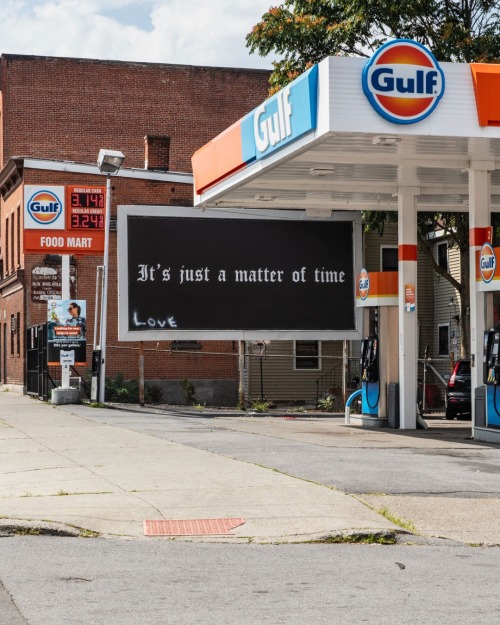
“What Kind of Times Are These”

“What Kind of Times Are These”

by

Adrienne Rich


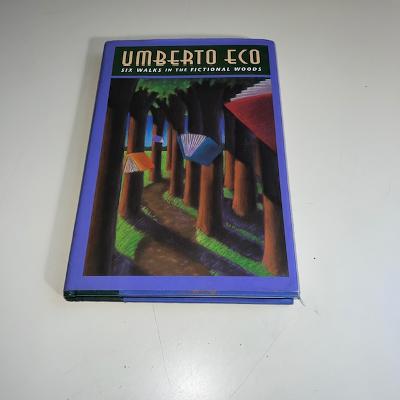
There’s a place between two stands of trees where the grass grows uphill

and the old revolutionary road breaks off into shadows

near a meeting-house abandoned by the persecuted

who disappeared into those shadows.


I’ve walked there picking mushrooms at the edge of dread, but don’t be fooled

this isn’t a Russian poem, this is not somewhere else but here,

our country moving closer to its own truth and dread,

its own ways of making people disappear.


I won’t tell you where the place is, the dark mesh of the woods

meeting the unmarked strip of light—

ghost-ridden crossroads, leafmold paradise:

I know already who wants to buy it, sell it, make it disappear.


And I won’t tell you where it is, so why do I tell you

anything? Because you still listen, because in times like these

to have you listen at all, it’s necessary

to talk about trees.


Posted in Uncategorized | Tagged , | Leave a comment

Reading the Air

Following my recent visit to Japan, I continue to process the experience and try and better understand Japanese culture. As I have previously mentioned, I was overwhelmed by the complexities of Japanese aesthetics and design that permeate Japanese life. The excellent video below about the designer Masayuki Kurokawa, describes his take on eight aesthetics concepts to better understand the Japanese sensibility.

The eight concepts are: The Aesthetics of Subtlety, The Beauty of Coexistence, Sensing the Invisible, The Space between Things, Seeing without Seeing, The Essence of the Unadorned, Beauty in the Made, and Breaking to Become.

微 (Bi) The Aesthetic of Subtlety 00:37 並 (Hei) The Beauty of Coexistence 02:06 気 (Ki) Sensing the Invisible 03:33 間 (Ma) The Space Between Things 05:18 秘 (Hi) Seeing Without Seeing 07:11 素 (So) The Essence of the Unadorned 09:02 仮 (Ka) Beauty in the Made 11:41 破 (Ha) Breaking to Become 13:56

You can also read a more in depth exploration of the eight concepts here.


Posted in Uncategorized | Tagged , , | Leave a comment

“I don’t know why I’m writing all this”

Author Raymond Chandler was born in Chicago in 1888, and  remains one of the most influential writers in the world of crime fiction thanks to his creation of Philip Marlowe, the hardboiled detective who stars in many of his stories: The Big Sleep (1939), Farewell, My Lovely (1940), The High Window (1942), The Lady in the Lake (1943), The Little Sister (1949), The Long Goodbye (1953) and Playback (1958). Even if you have never read one of his novels, you likely have seen one of the many films and television shows based on his noir fiction.  In March of 1945 Chandler wrote the enigmatic letter below to the associate editor of The Atlantic Monthly, Charles Morton.

Paramount Pictures Inc.
5451 Marathon Street
Hollywood 38, Calif.
March 19, 1945

Dear Charles:

A man named Inkstead took some pictures of me for Harper’s Bazaar a while ago (I never quite found out why) and one of me holding my secretary in my lap came out very well indeed. When I get the dozen I have ordered I’ll send you one. The secretary, I should perhaps add, is a black Persian cat, 14 years old, and I call her that because she has been around me ever since I began to write, usually sitting on the paper I wanted to use or the copy I wanted to revise, sometimes leaning up against the typewriter and sometimes just quietly gazing out of the window from a corner of the desk, as much as to say, “The stuff you’re doing’s a waste of my time, bud.” Her name is Taki (it was originally Take, but we got tired of explaining that this was a Japanese word meaning bamboo and should be pronounced in two syllables), and she has a memory like no elephant ever even tried to have. She is usually politely remote, but once in a while will get an argumentative spell and talk back for ten minutes at a time. I wish I knew what she is trying to say then, but I suspect it all adds up to a very sarcastic version of “You can do better.” I’ve been a cat lover all my life (have nothing against dogs except that they need such a lot of entertaining) and have never quite been able to understand them. Taki is a completely poised animal and always knows who likes cats, never goes near anybody that doesn’t, always walks straight up to anyone, however lately arrived and completely unknown to her, who really does. She doesn’t spend a great deal of time with them, however, just takes a moderate amount of petting and strolls off. She has another curious trick (which may or may not be rare) of never killing anything. She brings em back alive and lets you take them away from her. She has brought into the house at various times such things as a dove, a blue parakeet, and a large butterfly. The butterfly and the parakeet were entirely unharmed and carried on just as though nothing had happened. The dove gave her a little trouble, apparently not wanting to be carried around, and had a small spot of blood on its breast. But we took it to a bird man and it was all right very soon. Just a bit humiliated. Mice bore her, but she catches them if they insist and then I have to kill them. She has a sort of tired interest in gophers, and will watch a gopher hole with some attention, but gophers bite and after all who the hell wants a gopher anyway? So she just pretends she might catch one, if she felt like it.

She goes with us wherever we go journeying, remembers all the places she has been to before and is usually quite at home anywhere. One or two places have got her–I don’t know why. She just wouldn’t settle down in them. After a while we know enough to take the hint. Chances are there was an axe murder there once and we’re much better somewhere else. The guy might come back. Sometimes she looks at me with a rather peculiar expression (she is the only cat I know who will look you straight straight in the eye) and I have a suspicion that she is keeping a diary, because the expression seems to be saying: “Brother, you think you’re pretty good most of the time, don’t you? I wonder how you’d feel if I decided to publish some of the stuff I’ve been putting down at odd moments.” At certain times she has a trick of holding one paw up loosely and looking at it in a speculative manner. My wife thinks she is suggesting we get her a wrist watch; she doesn’t need it for any practical reason–she can tell the time better than I can–but after all you gotta have some jewelry.

I don’t know why I’m writing all this. It must be I couldn’t think of anything else, or–this is where it gets creepy–am I really writing it at all? Could it be that–no, it must be me. Say it’s me. I’m scared.

Ray

Posted in Uncategorized | Tagged , , , | Leave a comment

Not Black Books, but close

The TV comedy pilot for Broadway Books will have its world premiere tomorrow during the 2025 Dances With Films fest at the historic TCL Chinese Theatre in Los Angeles, Calif. Written and directed by Carianne King, Broadway Books was  inspired by King’s experiences as a bookseller on Manhattan’s Upper West Side. Check out the trailer here.

Broadway Books takes place in “an aggressively gentrifying Manhattan, where a group of over-educated, under-employed bookstore workers struggle to keep their independent bookstore in business using increasingly desperate measures.”

Synopsis for the pilot episode (“The Tipping Point”): “It’s another day at Broadway Books when the team is confronted with a problem: the RSVPs for the evening’s Malcolm Gladwell reading are really low. And Gladwell, it turns out, is known for ruining the livelihoods of indie businesses that don’t meet his demands. ‘Frenemies’ Laurel and Anya take to the streets to hand out fliers, where they clash over differing work ethics while consistently being passed over for an energy drink giveaway nearby. Meanwhile, Nick and Pierre parse Gladwell’s epic rider and argue about whether Nick’s actually read his Staff Picks, which include some of literature’s longest and most challenging works like Ulysses and Anna Karenina. Just in time, the team leverages wisdom from The Tipping Point to quickly find last-minute attendees–with the help of a clowncore influencer named Lord Giggles, thinking on their feet to keep their bookstore open.”

Broadway Books stars comedians Ruby McCollister and Lauren Servideo; Carlos Dengler, founding member of the band Interpol; Eric Yates, Nick Naney, Joe Apollonio, and Rew Starr. The pilot was produced by Abbie Jones, along with Miranda Kahn of Mirmade Productions.

Posted in Uncategorized | Tagged , , , | Leave a comment

Library Spy

You don’t have to be a certified library geek to grok the fun little website called Library Spy. “This is a live, unfiltered look at what books are being checked out of the Seward Park library, a branch of the New York Public Library in Manhattan. Every disappearing book reveals a moment of curiosity, interest, or intrigue happening right now in the neighborhood. I am continuously scraping book availability from the library’s website. Each time the number of available copies decreases — from 3 copies to 2, or 1 to none — we know someone has just checked it out. The quiet pulse of readers making their next pick.”


Posted in Books, Libraries, Uncategorized, USA | Tagged , , | 2 Comments

Coffee with a bullet

Regular visitors to TBTP know that I am an annoying coffee geek. When I combine my coffee fascination with my love of travel, I can be insufferable. When I found myself up early for a trip to Nagoya from Tokyo Station on the Shinkansen recently, I was thrilled to see a vending machine that sold the legendary Shinkansen brand coffee that is no longer available on the actual bullet trains.

The vending machine offers an extensive range of choices including both hot and cold options. There are three blends, each one named after one of the three Shinkansen that stop at platform 15 of Tokyo Station.

The Shinkansen Kodama Blend is said to have a soft acidity, while the Hikari has a moderate bitterness with a round mouthfeel, and the Nozomi, the fastest train of the three, features a rich nutty body. Since I was traveling on the Hikari, I went with that blend.

After making a selection and pressing the button for his coffee, the brewing process was displayed on the screen at the top of the machine, giving it a nice, live feel. After 90 seconds, the machine delivered a surprisingly good cup of Joe.


Posted in Uncategorized | Tagged , , , | 3 Comments

Waving not drowning

One of the few disappointments during my recent trip to Japan was the unexpected closure of the Sumida Hokusai Museum in Tokyo for renovation. I did, however, get to visit the wonderful, but tiny Ota Memorial Museum that features historic woodblock prints. Sadly, the Ota didn’t have any of their Hokusai prints on display due to a special show.

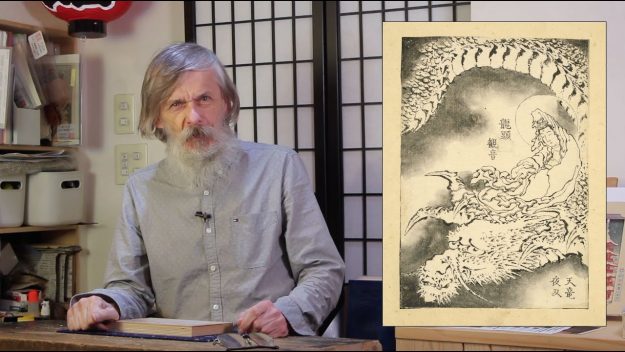
When I returned home, I did a deep dive into Japanese art and found the excellent video below on the making of probably the most famous work of woodblock printing ever created: “The Great Wave Off Kanagawa”.


Posted in Uncategorized | Tagged , , , | Leave a comment

“Don’t touch my bags if you please, mister customs man”

I recently experienced the whole Customs and Immigration thing for the first time in a year. In the past, I rarely gave it much thought, but now that we’ve had an authoritarian coup, it gives one pause.

On that note, I just read about the strange bureaucratic Customs saga of the Apollo 11 astronauts on their return from the Moon.

From Space.com: “Before the ticker tape parades and the inevitable world tour, the triumphant Apollo 11 astronauts were greeted with a more mundane aspect of life on Earth when they splashed down 50 years ago — going through customs. Just what did Apollo 11 astronauts Neil Armstrong, Buzz Aldrin and Michael Collins have to declare? Moon rocks, moon dust and other lunar samples, according to the customs form filed at the Honolulu Airport in Hawaii on July 24, 1969 — the day the Apollo 11 crew splashed down in the Pacific Ocean to end their historic moon landing mission. The customs form is signed by all three Apollo 11 astronauts. They declared their cargo and listed their flight route as starting Cape Kennedy (now Cape Canaveral) in Florida with a stopover on the moon.”

How about you, any weird Customs and Immigration stories ?


Posted in Uncategorized | Tagged , , , | 1 Comment

I draw the line at canal water coffee

I’ve been to Venice a few times, but never once considered consuming the murky canal water in any form. So, I was shocked to read that the design studio Diller Scofidio + Renfro is celebrating the Venice Biennale Architecture 2025 by using the canal water to brew coffee.

They created a fascinating filtration system, as Matthew Burgos writes in designboom:

“The hybrid eco-machine filters the sludge from the canals and removes toxins from the water before using it to make espressos.

After the filtration process, the machine divides the water into two separate but connected streams. In the first path, the water goes through an artificial wetland with salt-tolerant plants and good bacteria. These work their science to clean the water naturally, all the while keeping the minerals in them. As for the second path, it’s where reverse osmosis and UV light treatment take place. The former filters the canal water to remove salt and tiny particles from it. The latter uses UV rays to kill germs in the water. Once the process is over, the water is purified. It is ready then to be turned into coffee made from the city’s canals, served only at the Venice Biennale Architecture 2025.”


Posted in Uncategorized | Tagged , | 1 Comment

Read the Room

Den Wolsack with the associated Hofkamer in the garden is a monumental building at Oude Beurs 27 in Antwerp . The street was renamed Wolstraat in the 14th century, and the term Den Wolsack also dates from that period when the wool industry flourished. The current mansion Den Wolsack largely dates from the 18th and 19th centuries and was built in (neo)classical style. At the back of the garden of den Wolsack is the Hofkamer, a prestigious state room from 1772 where important guests were received. The Hofkamer put the wealth of the owner in the spotlight. The showpiece of De Hofkamer is without a doubt the majestic ceiling painting ‘gods on Mount Olympus’ ( Flemish Masters in Situ ) , the largest ceiling painting on canvas in Western Europe. De Hofkamer was restored between 2013 and 2017 . The first floor of the Hofkamer was given a new purpose thanks to a work of art by Koen van den Broek. On the first floor of Den Wolsack is the book toilet, a luxurious toilet room with old books. Den Wolsack is the headquarters of Herita (the former Flemish Heritage Foundation). Since 2002, Den Wolsack has been protected as a monument . (via Wikipedia)

In 1772, wool merchant François Adrien Van den Bogaert commissioned a garden pavilion for Den Wolsack, his house in Antwerp. On the first floor is a bibliophile’s lavatory, in which the bowl is concealed in a fancifully rendered stack of books.

The volumes on the surrounding shelves aren’t real; they’re made of wood covered with leather.

Posted in Uncategorized | Tagged , | Leave a comment