Isn’t all of Britain fictional

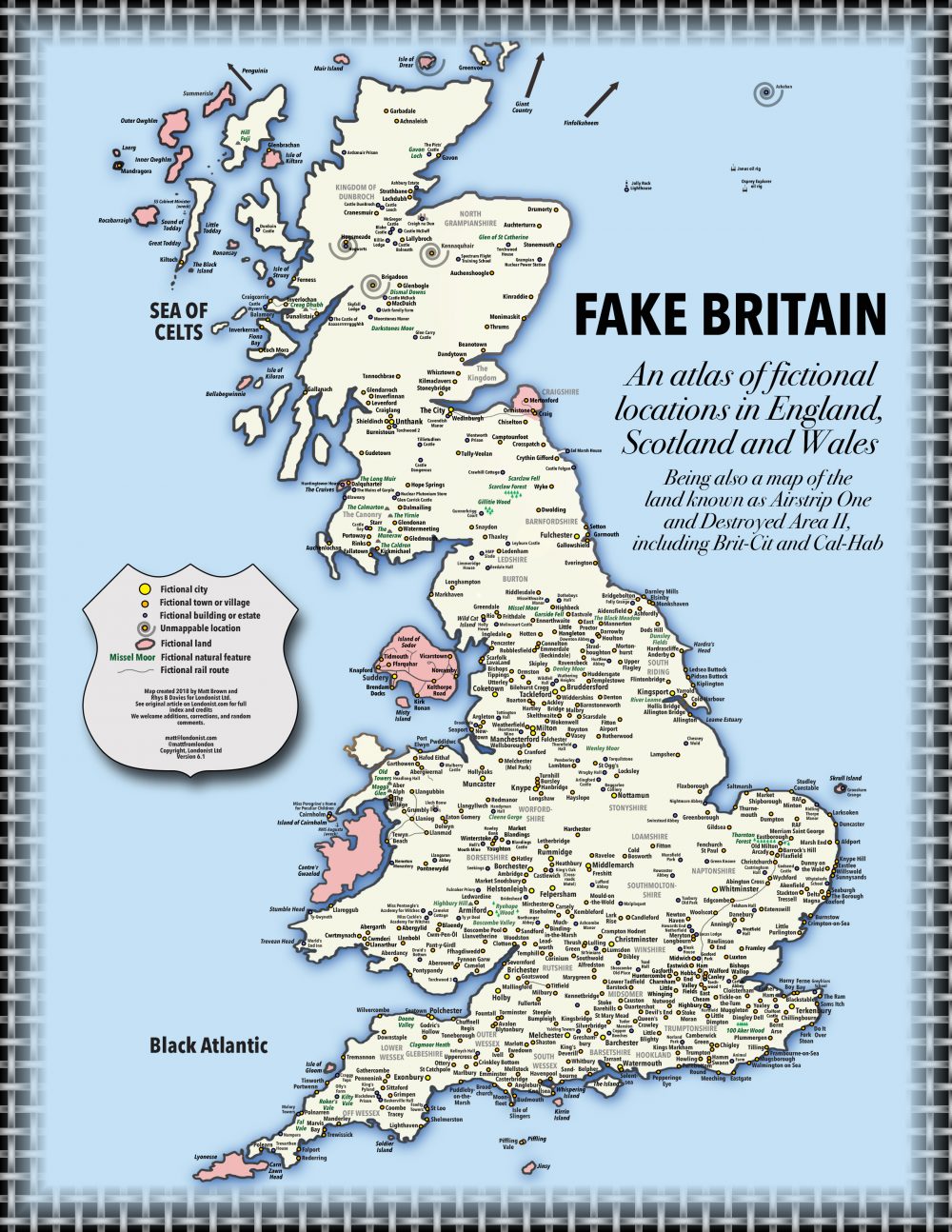
Fake Britain is a marvelous map to more than 400 fictional locations in England, Scotland and Wales featuring made-up towns, villages, castles, islands, and more. Created by Matt Brown and Rhys B. Davis, the map draws from films, television and books. I could have sworn that I spent a wet weekend in Little Tadfield.


Posted in Architecture, Books, Film, Maps, movies, Uncategorized | Tagged , , | Leave a comment

In Case You Were Wondering


Posted in Europe, Maps, Tourism, USA | Tagged , , , | 1 Comment

Am I A Book Snob


Posted in Art, Books | Tagged | Leave a comment

Bookstore Tourism: Austin

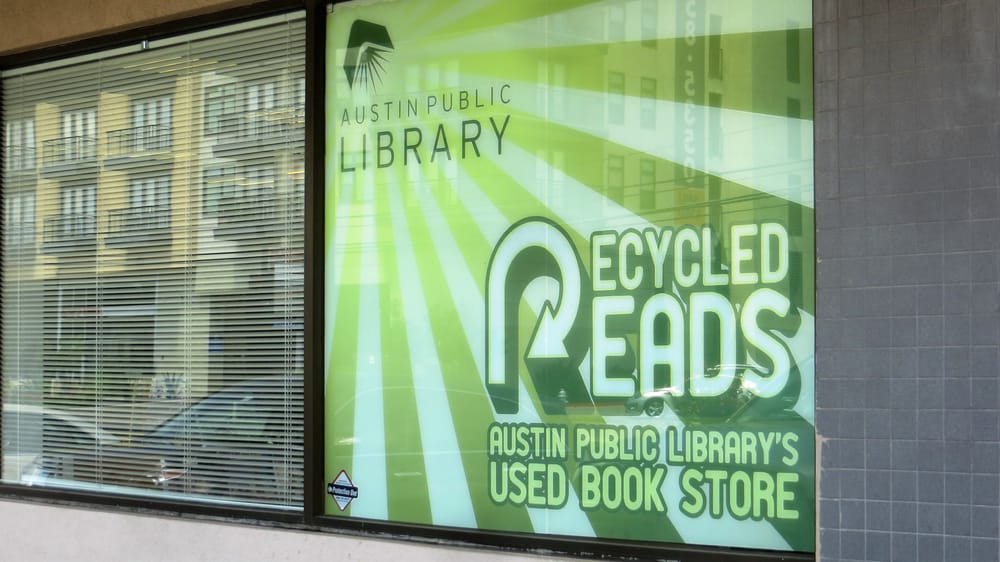
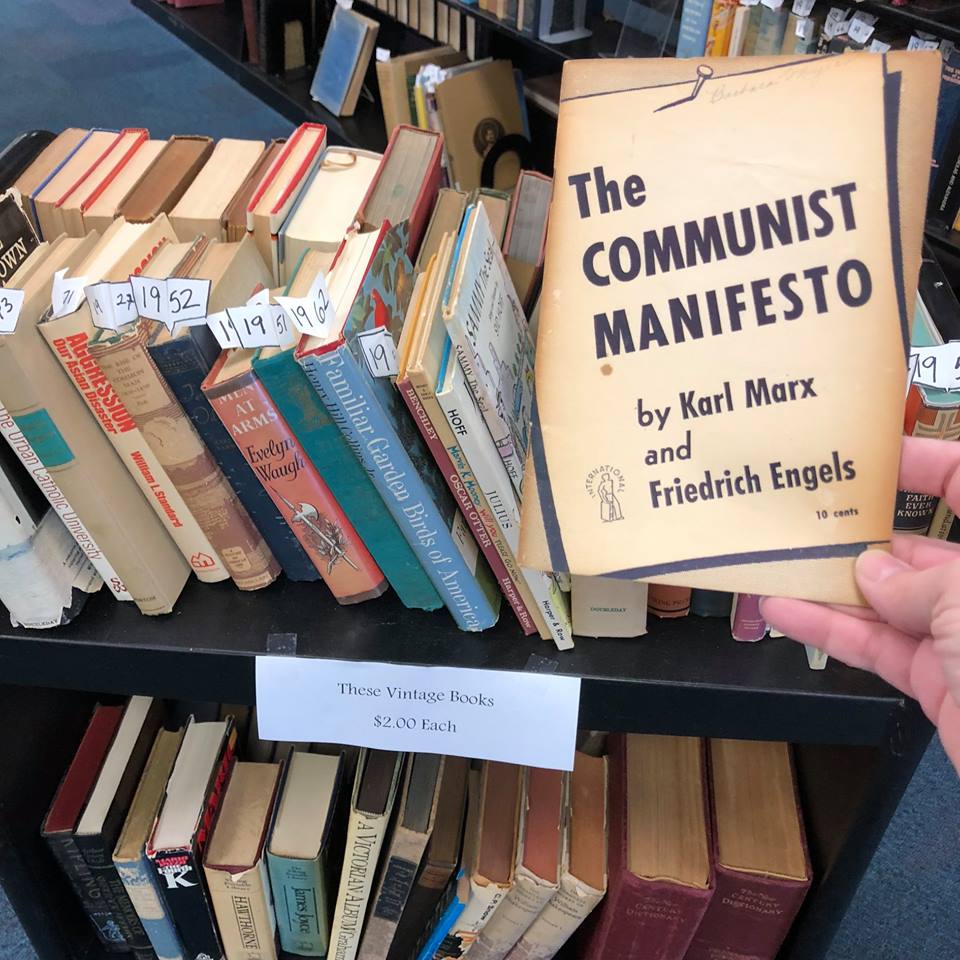
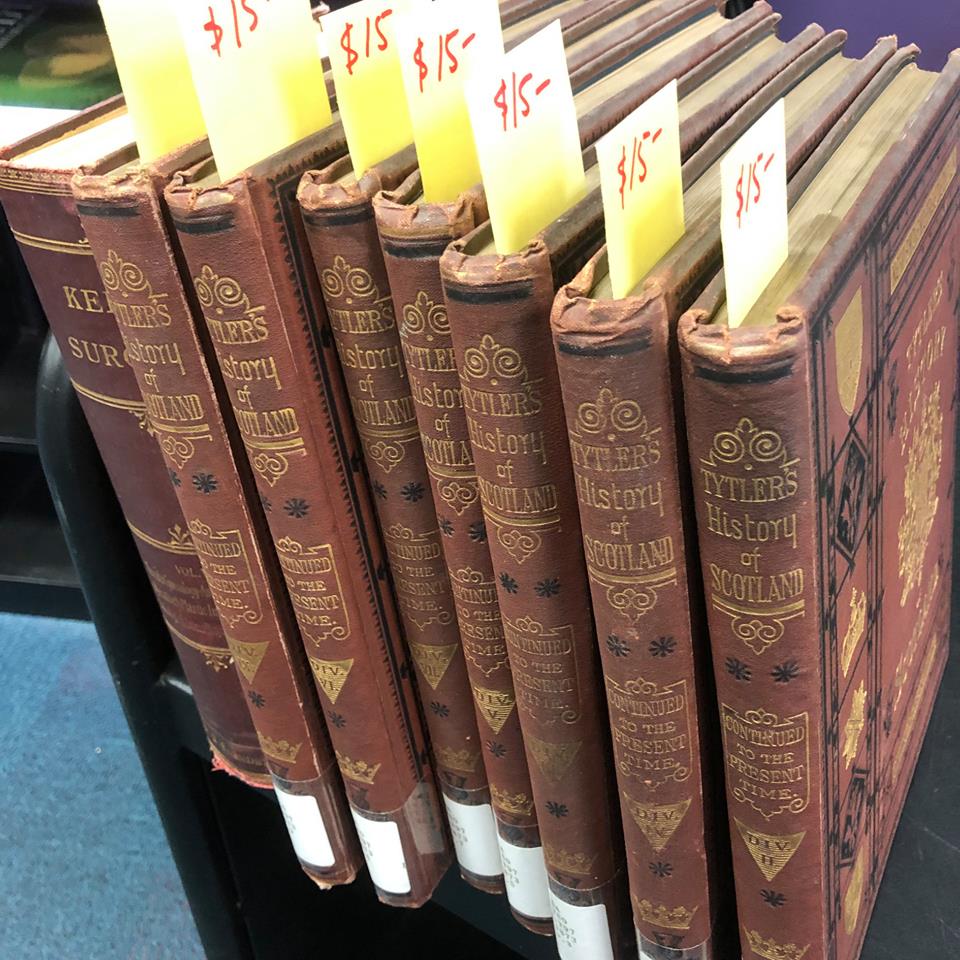
Over the years I’ve visit dozens of library book sales and used book outlets, but I think that Austin, Texas has to have the biggest bookstore. Situated in an unappealing stripmall. Recycled Reads is a surprising find. The city of Austin has fully committed to increasing sustainability and has supported the idea that all books should be recycled. It’s too bad that every community doesn’t embrace this simple way to keep books out of the waste stream

Posted in Books, Bookstore Tourism, Libraries, USA | Tagged , , , | Leave a comment

There and back again

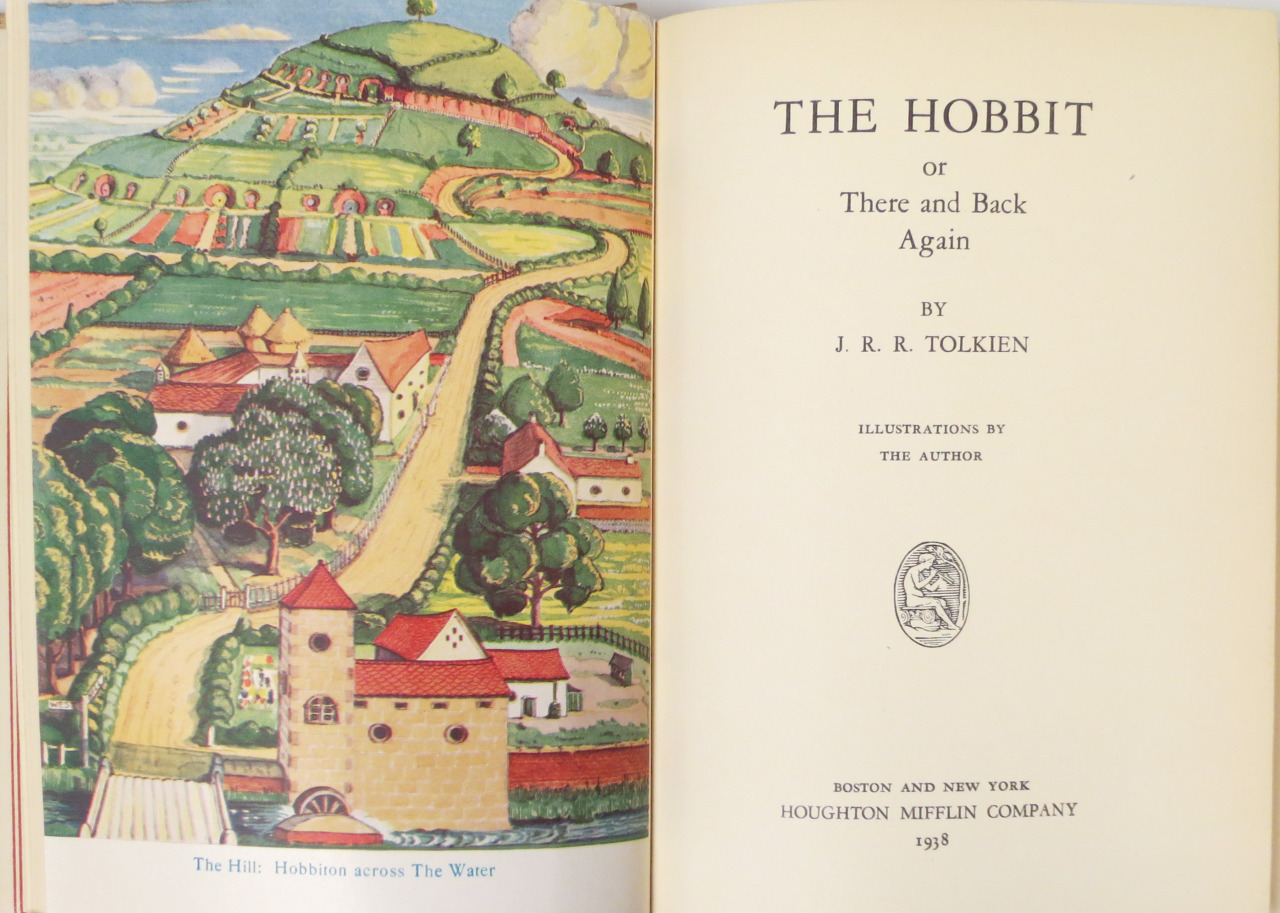
A buyer recently contacted me to help him find an American first edition of JRR Tolkien’s The Hobbit.  Since the amount that he was willing to pay was ridiculously below the usual prices that the title brings, I didn’t even bother to search. But it did get me thinking about the early editions of the beloved book and how they varied by publication date.

The first edition of The Hobbit differs in some substantial ways from the second edition. By 1937, Tolkien had  begun work on The Lord of the Rings trilogy with the sinister One Ring as its centerpiece and realized he needed to revise the chapter about Bilbo’s encounter with Gollum to be more in line with events in his new books. In the first version of “Riddles in the Dark,” Gollum is a far less devious character, who cheerfully bets his “precious” in the game of riddles that he plays with Bilbo. When Gollum goes searching for the Ring and can’t find it, Bilbo having already cleverly pocketed it, he is only sorry that he can’t give it to Bilbo for winning the game. He then willingly leads Bilbo out of the cave where they’ve met. In the revised version, of course, Bilbo forfeits his life if he loses the game (Gollum’s suggestion) and despite winning it, is pursued out of the cave by a murderous Gollum, anyway.

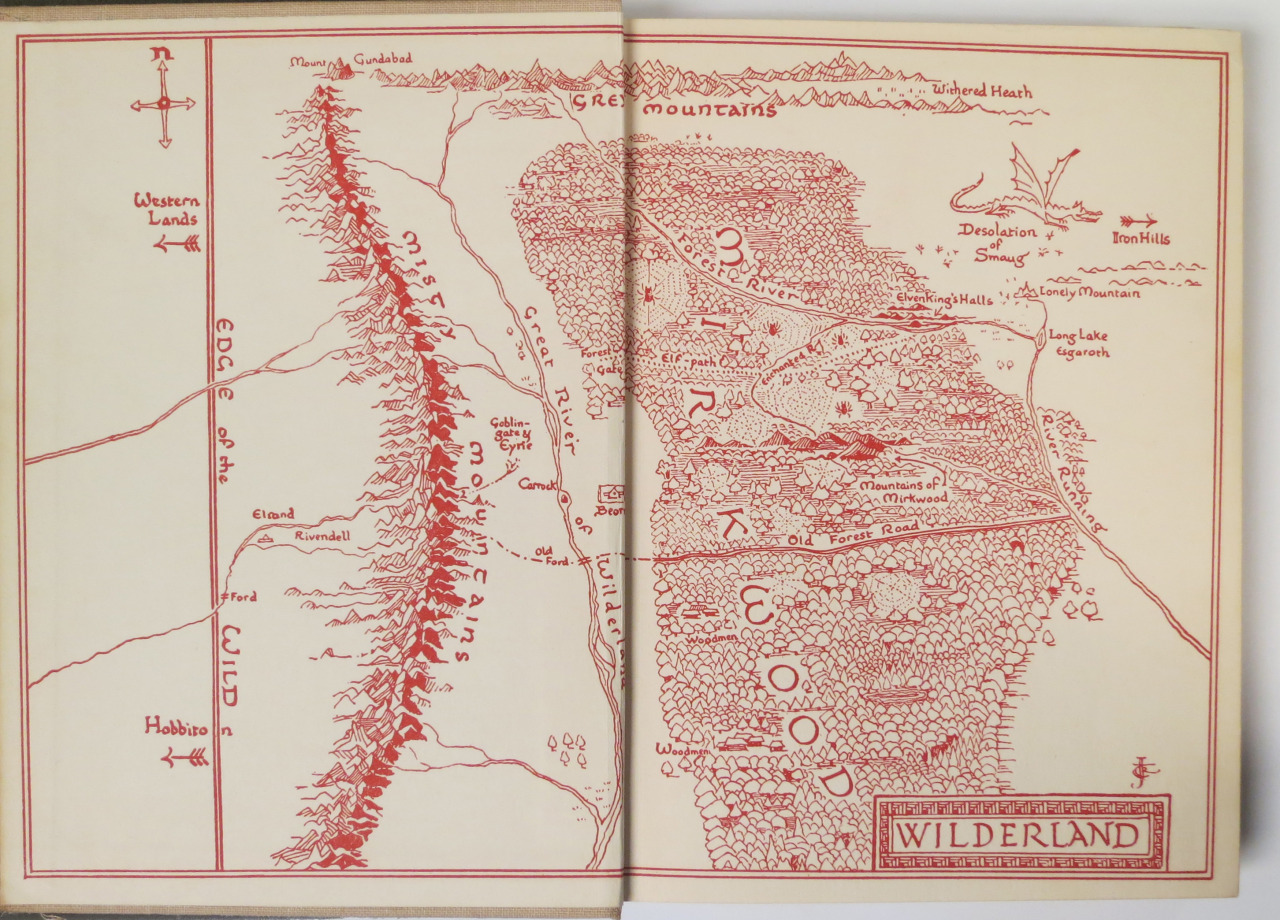
Pictured here is the first American edition, published by Houghton Mifflin in 1938. Along with the original version of “Riddles in the Dark,” it contains four color plates of Tolkien’s illustrations and red maps on the end-papers. The Hobbit has not been out of print since its publication.

Posted in Art, Books, Maps, Writing | Tagged , , | 1 Comment

Bookstore Tourism : Tokyo (with a twist)

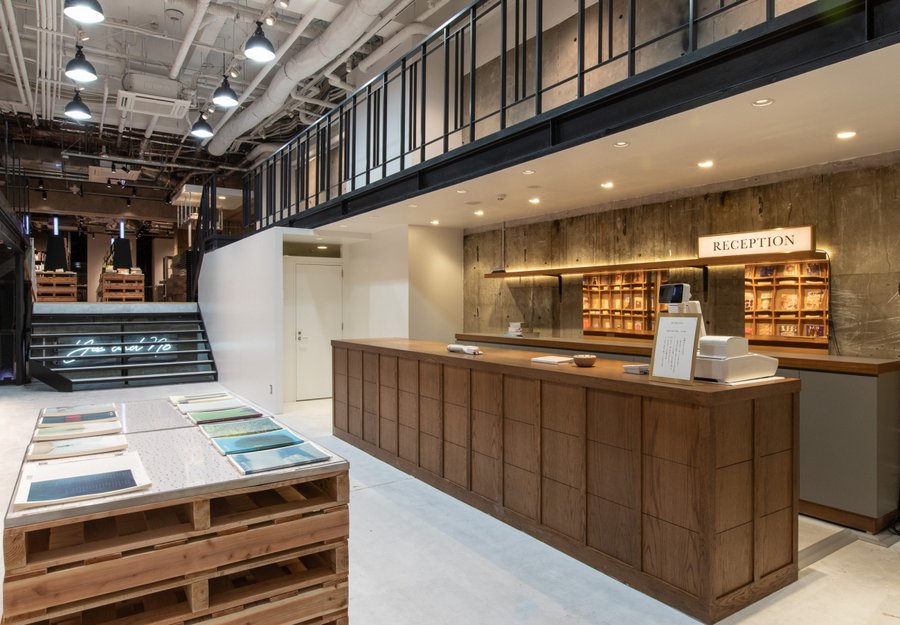
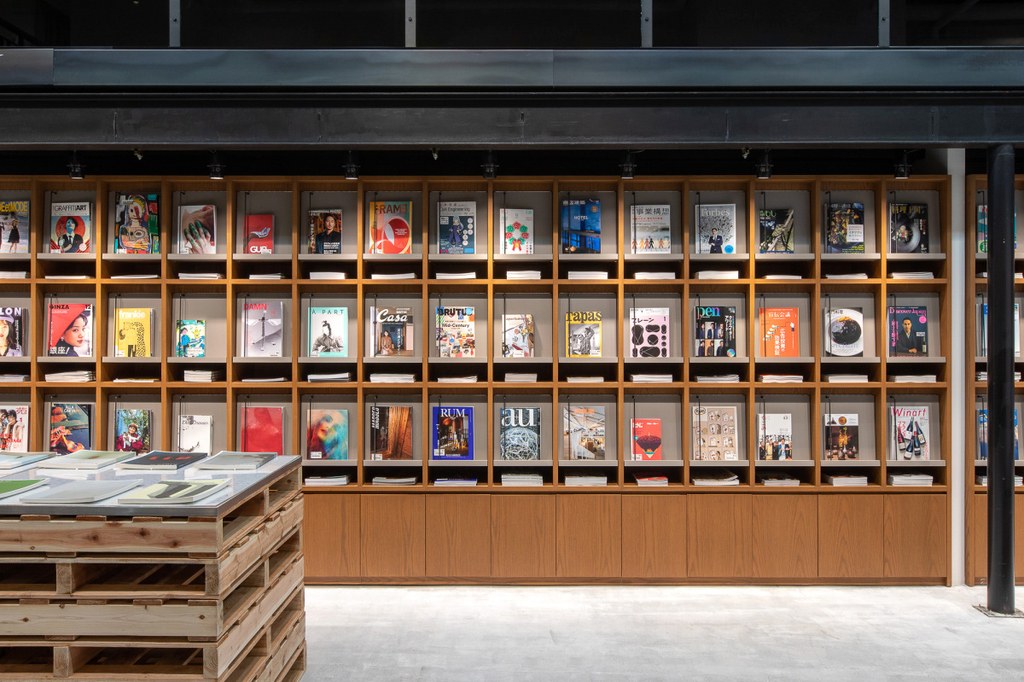
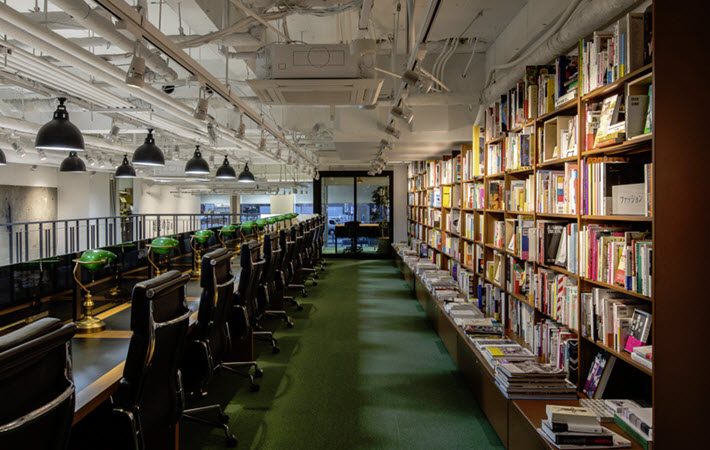
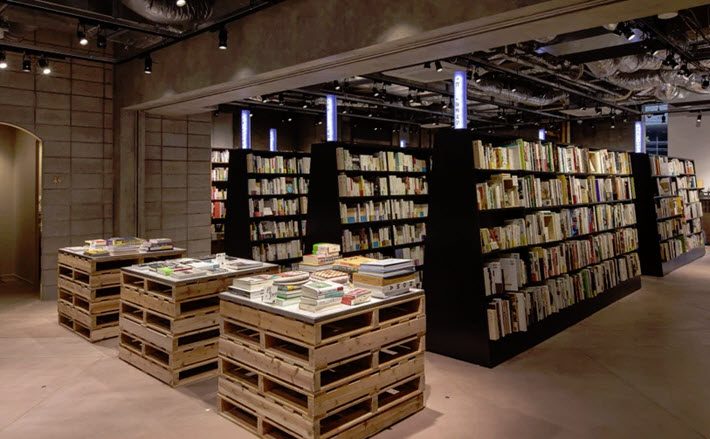
Conceived by a group of book loving entrepreneurs that includes Smiles and Morioka Shoten (the booksellers behind the “single room, single book, bookshop), Bunkitsu opened on December 11, 2018 in a sprawling space that was previously occupied by Aoyama Book Center in central Tokyo’s Minato-ku district. As much a concept store as bookshop, you’ll have to pay the 1,500 yen (roughly $13) cover charge to enter. But once inside, you’ll find yourself immersed in a minimal space of concrete and wood, and a beautifully curated collection of 30,000 books and magazines.

The owners want visitors to think of the entrance fee like a  cinema or museum ticket. Once you’ve checked in, you get a free cup of coffee or tea and wander endlessly through the collection of books on culture,humanities, nature, art and design, all of which have been thoughtfully curated by the staff of Yours Book Store. Every book is for sale, but you can also spend an hour or the whole day and not buy a thing. There’s reading room, a lounge, and a café.  The shop will also be featuring changing exhibitions on books, printing, and publishing.

If you plan ahead, you can contact the staff and they will arrange to curate a special selection of books for you to peruse at your leisure.

Bunkitsu (written 文喫) is a combination of the word 文 meaning text but also culture, and 喫 which means to consume but in the sense of a beverage. It’s used in the word 喫茶店 (kissaten), which means café.

Posted in Asia, Books, Bookstore Tourism, Tourism | Tagged , , , | 2 Comments

Word on the Street : Treason

Posted in Art, History, USA | Tagged , | Leave a comment

It’s Always Sunny In South Philadelphia

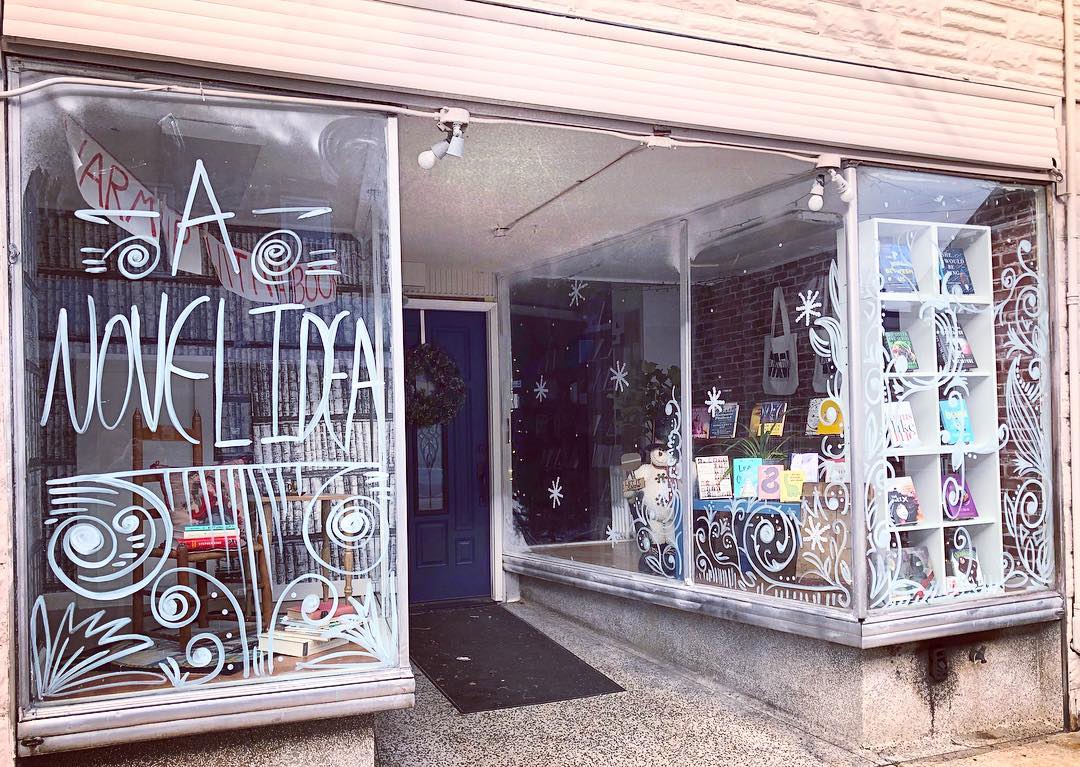
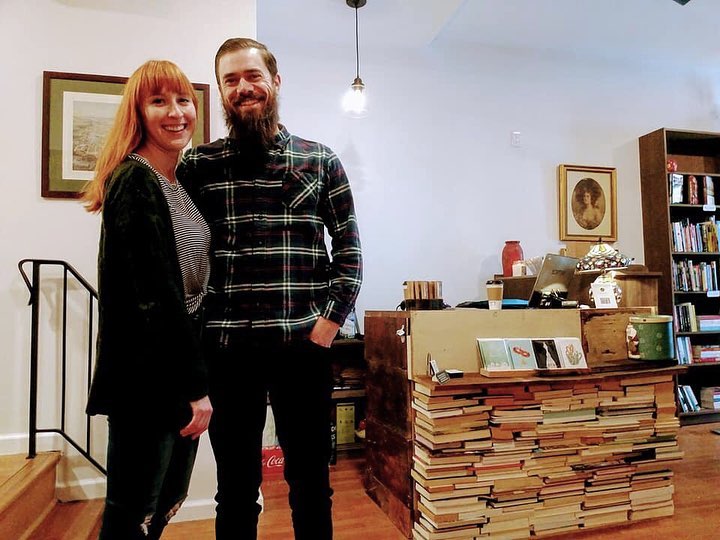
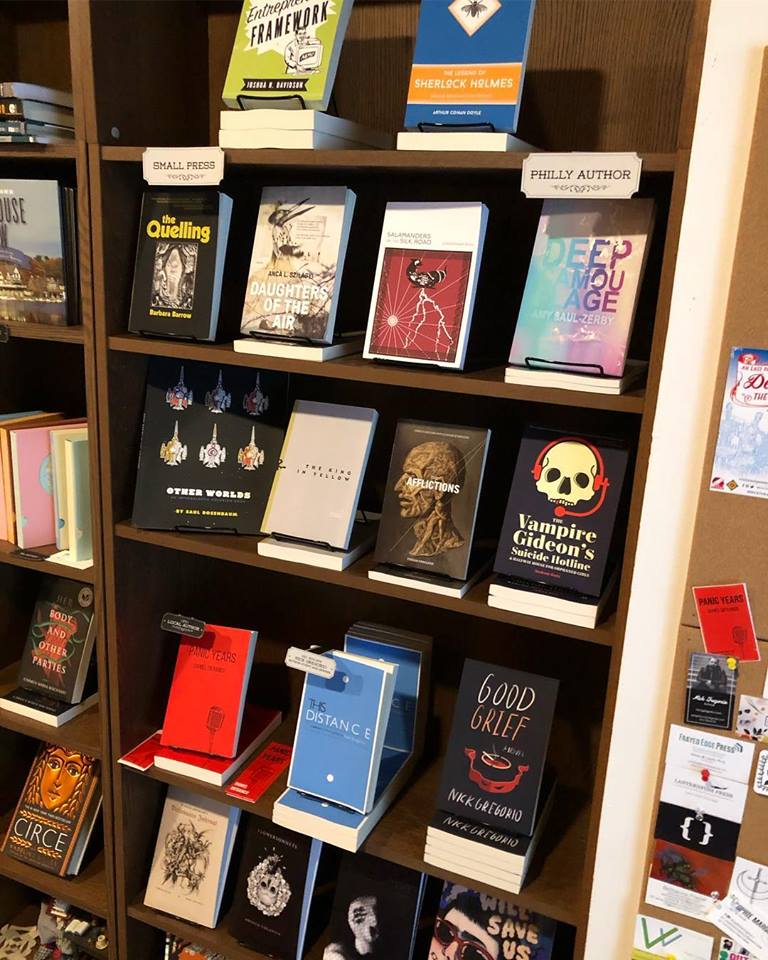
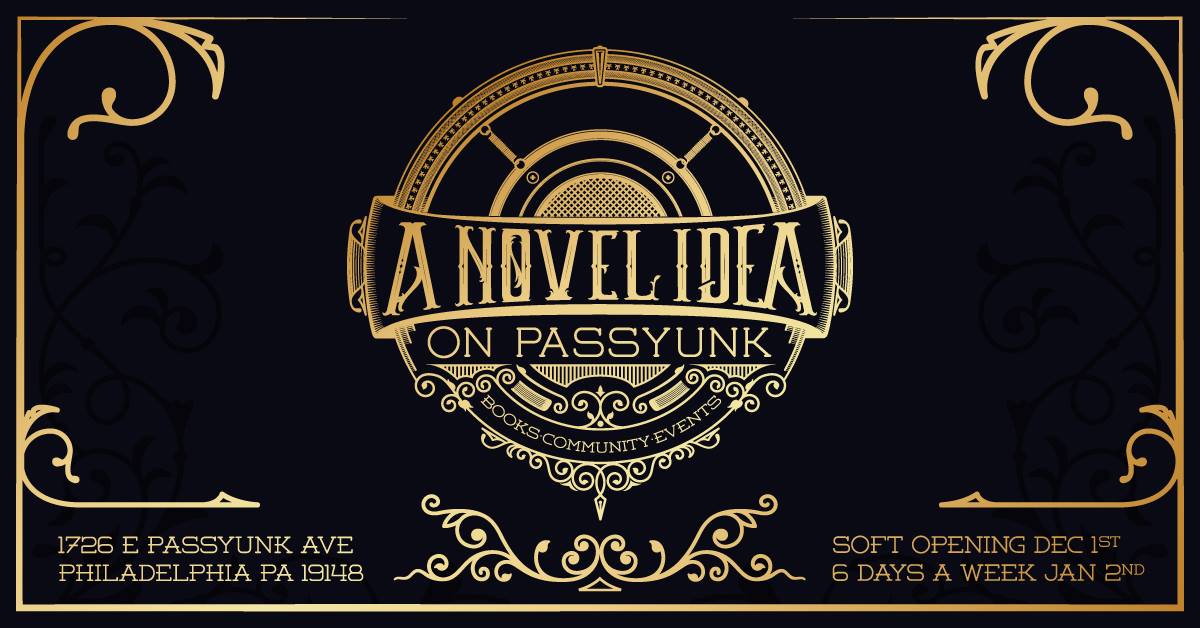
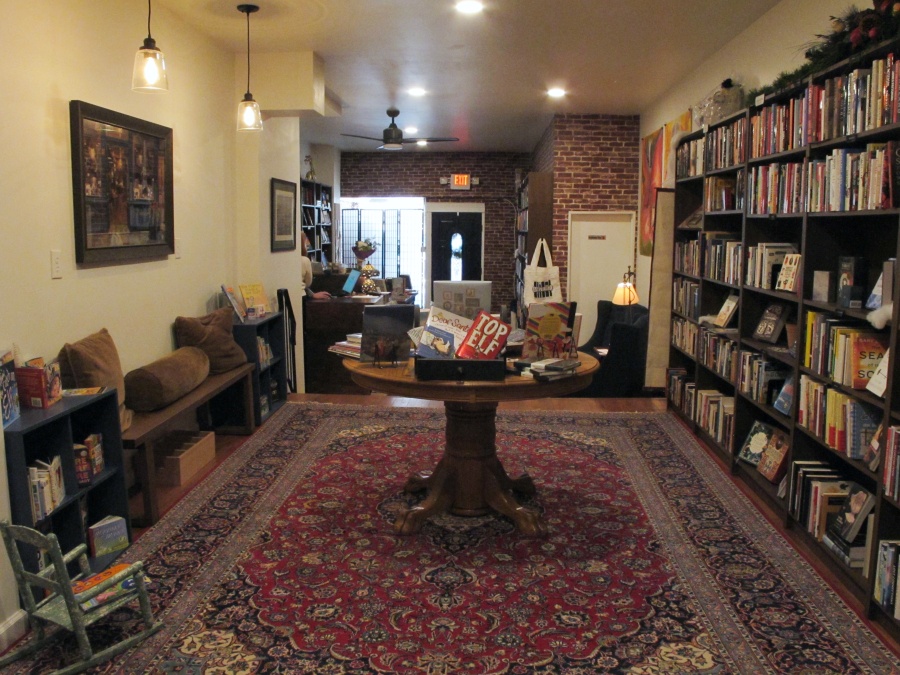
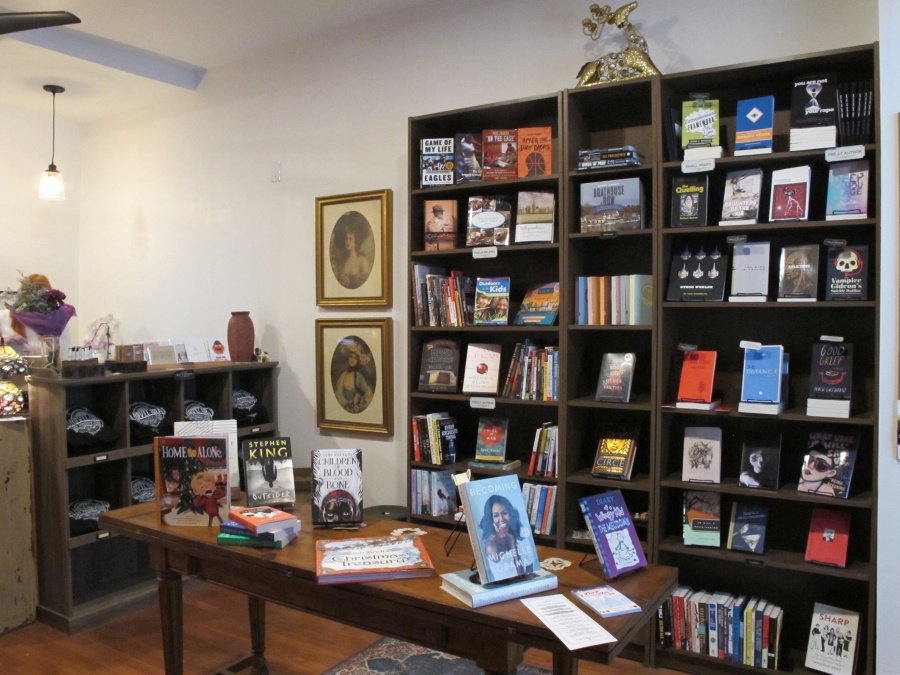
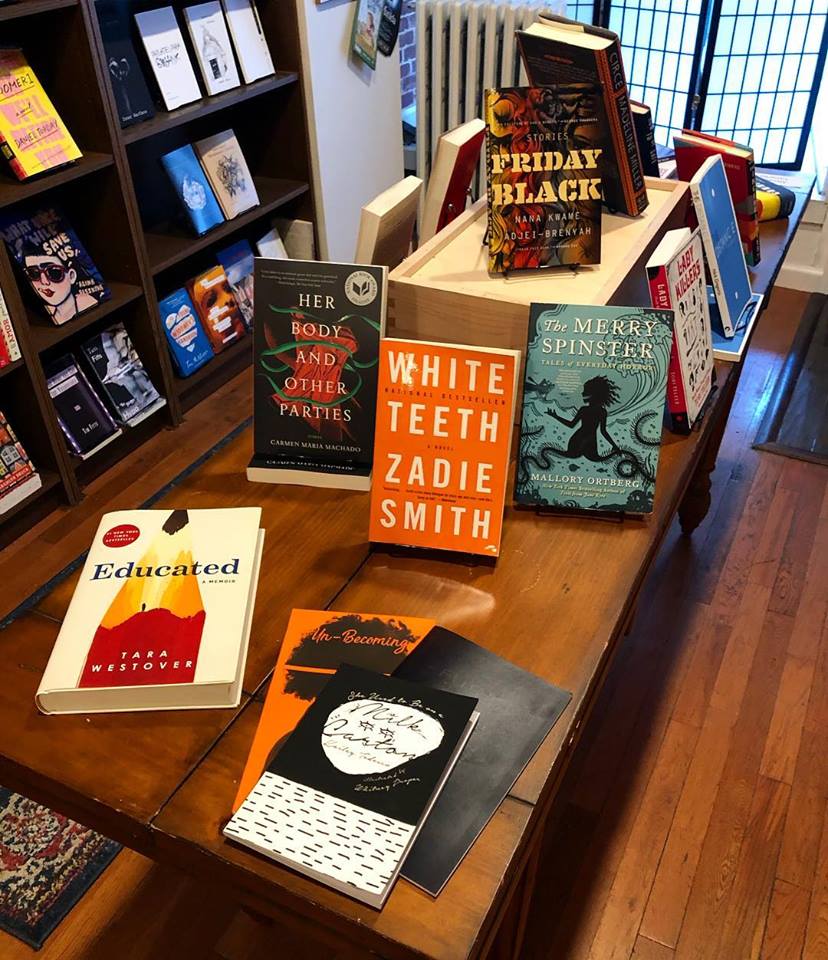
Tomorrow a new indie bookstore is having its official grand opening in south Philly. A Novel Idea, which has had a gradual soft roll-out over the past few weeks, is owned and managed by writer Christina Rosso-Schneider and her artist husband Alexander Schneider. The cozy shop promises to focus on local authors, small press books, and independent publishers. So far, they’ve met that commitment with a well curated collection of about 3,000 new and used titles, with an emphasis on fiction, art, young adult, children’s, and gender issues. Starting tomorrow, the East Passyunk Avenue shop will be open six days a week from Tuesday through Sunday. So if you’re in town, stop by and support them by purchasing a book or two. Follow their progress on their Facebook page.

Posted in Books, Bookstore Tourism, USA | Tagged , , | Leave a comment

Yes! We Have No Bananas

Unlike most civilized nations the United States does not deem a work to be in the public domain according to who created it (i.e. established by the death date of its creator), but rather when it was published. As you may know, in previous years the Unites States has seen precisely nothing enter the public domain due to copyright expiration (apart from some unpublished works). However, this is now changing. For the first time in more than two decades, as of January 1, 2019, published works will enter the US public domain. This will be all creative works —including books, films, artworks, or musical scores — published in the year 1923. Why this is happening now is complicated, but basically revolves around a series of laws – essentially the fault of the Disney Corp. and Sonny Bono – which saw extensions to previous copyright regulations. Now these extensions are expiring and so each coming year will see the works of 95 years ago added to the US public domain — so on January 1, 2019 the works from 1923, in 2020 those from 1924, in 2021 those from 1925 and so on and so on. Below are some highlights that entered on  January 1,2019.

Literature

  • Men Like Gods by H. G. Wells
  • “In the Orchard” ad “”Mrs Dalloway in Bond Street” by Virginia Woolf
  • The Prophet by Kahlil Gibran
  • The Ego and the Id by Sigmund Freud (original German version)
  • Towards a New Architecture by Le Corbusier (original French version)
  • The Murder of Roger Ackroyd and The Murder on the Links by Agatha Christie
  • The play Saint Joan by George Bernard Shaw
  • “Hypnos”, “What the Moon Brings”, “The Lurking Fear”, and “Memory” by H.P. Lovecraft
  • Duino Elegies by Rainer Maria Rilke (original German version)
  • New Hampshire by Robert Frost
  • Spring and All and also the novel The Great American Novel by William Carlos Williams
  • Harmonium by Wallace Stevens
  • Tulips and Chimneys by E.E. Cummings
  • Poems by Edna St. Vincent Millay
  • Antic Hay by Aldous Huxley
  • A Son at the Front by Edith Wharton
  • Kangaroo by D. H. Lawrence.

Films

  • The Ten Commandments by Cecil B. DeMille (not his 1956 version, but rather the earlier silent first attempt)
  • Safety Last! and Why Worry? by Harold Lloyd
  • The Pilgrim by Charlie Chaplin
  • Our Hospitality by Buster Keaton
  • The Little Napoleon by Georg Jacoby (which features debut of Marlene Dietrich)
  • The White Rose directed by D.W. Griffith

Artworks

  • Robert Delaunay – Portrait of Tristan Tzara
  • Marcel Duchamp – The Bride Stripped Bare By Her Bachelors, Even (The Large Glass)
  • Max Ernst – Pietà or Revolution by Night
  • M. C. Escher – Dolphins
  • George Grosz – Ecce Homo (portfolio of lithographs)
  • Wassily Kandinsky – On White II
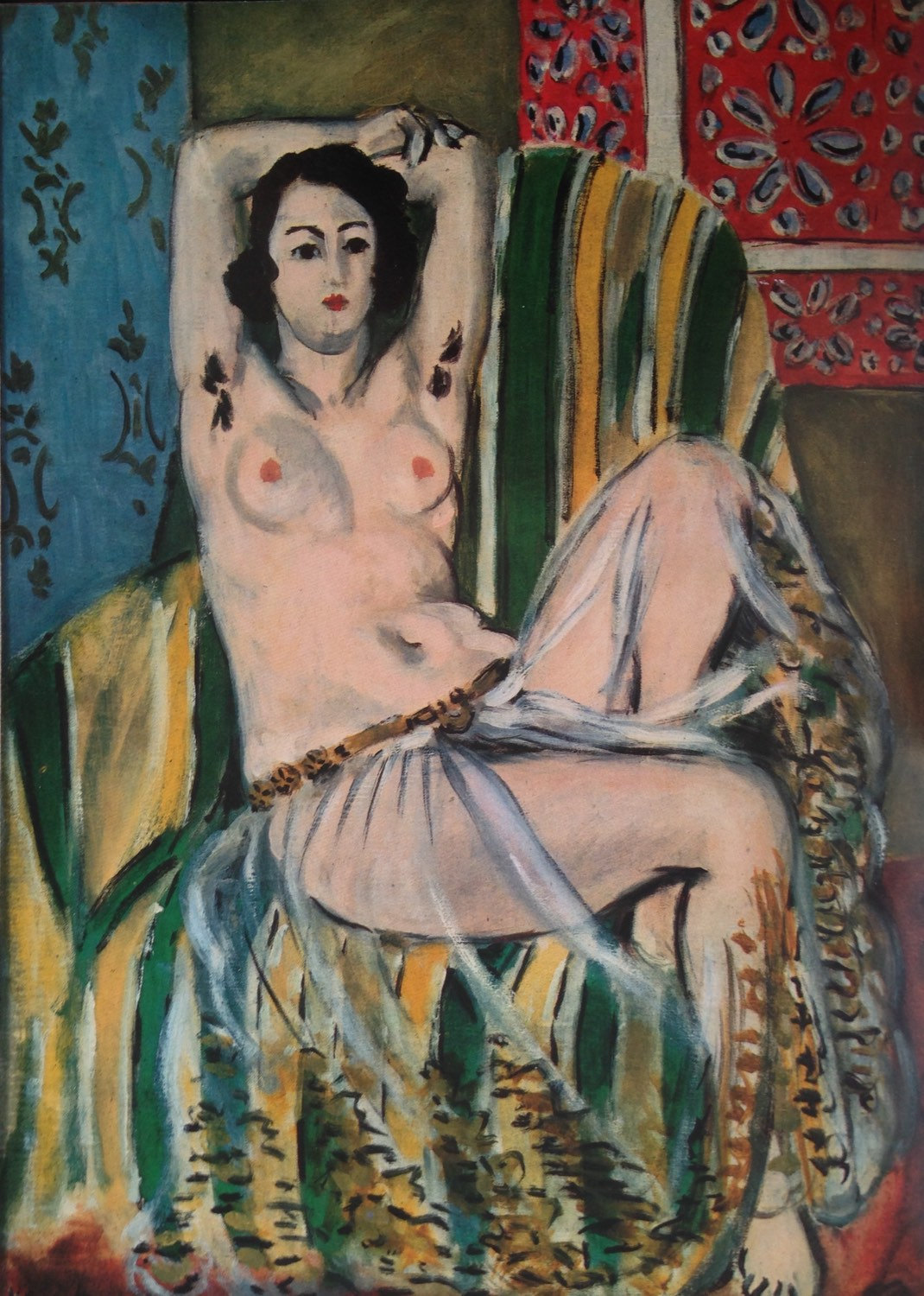
  • Henri Matisse – Odalisque with Raised Arms and Window at Tangier
  • Pablo Picasso – The Pipes of Pan and Paulo on a Donkey
  • Man Ray – Object to Be Destroyed (destroyed 1957)
  • Paul Klee – ArchitectureTightrope Walker, and Masks

Music

  • “King Porter Stomp”
  • “Who’s Sorry Now?”
  • “Tin Roof Blues”
  • “That Old Gang of Mine”
  • “Yes! We Have No Bananas”
  • “I Cried for You”
  • “The Charleston”—written to accompany, and a big factor in the popularity of, the Charleston dance
  • Igor Stravinsky’s “Octet for Wind Instruments”

See these Wikipedia pages for more literaturemusicfilm and artworks published in 1923.


Posted in Art, Books, Europe, Film, Freedom of Speech, History, movies, Museums, Music, Photography, Theater, USA, Writing | Tagged , | Leave a comment

Setting Up Signals Across Vast Distances

POEM

Muriel Rukeyser

I lived in the first century of world wars.
Most mornings I would be more or less insane,
The newspapers would arrive with their careless stories,
The news would pour out of various devices
Interrupted by attempts to sell products to the unseen.
I would call my friends on other devices;
They would be more or less mad for similar reasons.
Slowly I would get to pen and paper,
Make my poems for others unseen and unborn.
In the day I would be reminded of those men and women,
Brave, setting up signals across vast distances,
Considering a nameless way of living, of almost unimagined values.
As the lights darkened, as the lights of night brightened,
We would try to imagine them, try to find each other,
To construct peace, to make love, to reconcile
Waking with sleeping, ourselves with each other,
Ourselves with ourselves. We would try by any means
To reach the limits of ourselves, to reach beyond ourselves,
To let go the means, to wake.


I lived in the first century of these wars.
Posted in Writing | Tagged | 1 Comment