Tales of Good and Evil

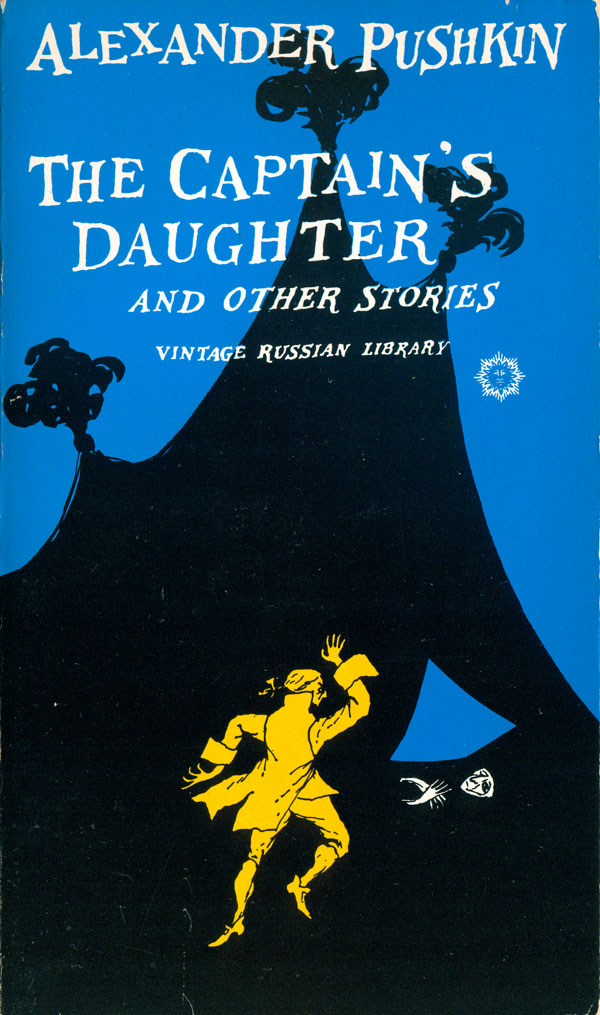
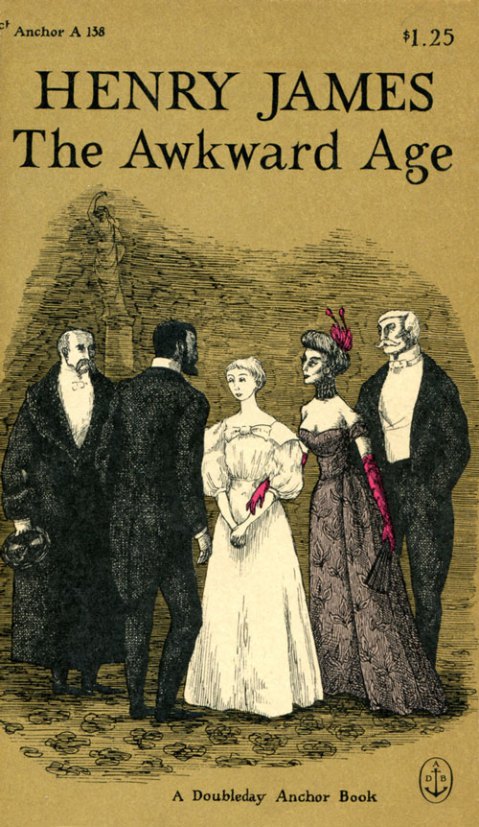
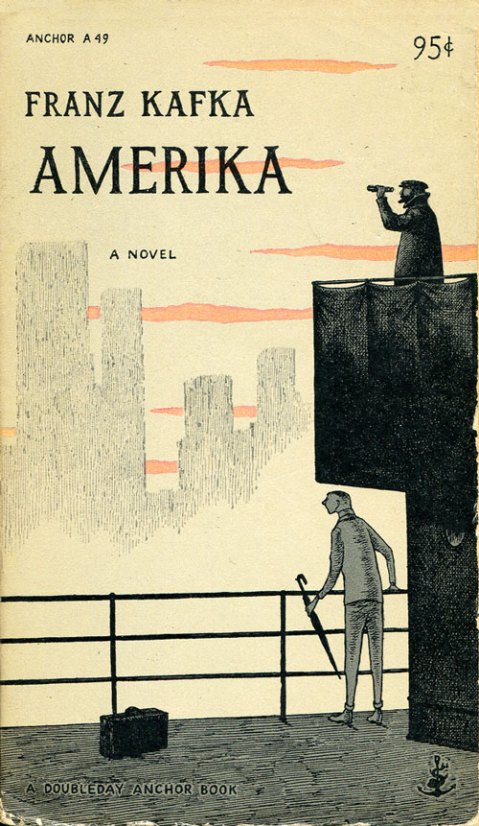
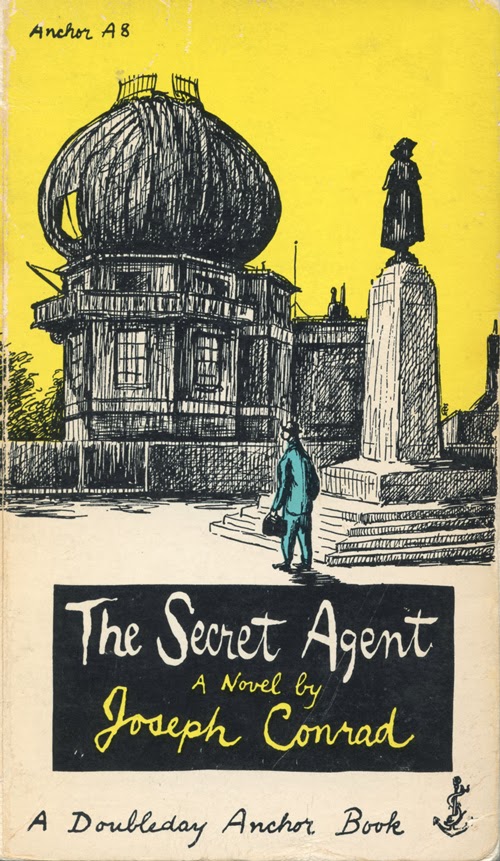
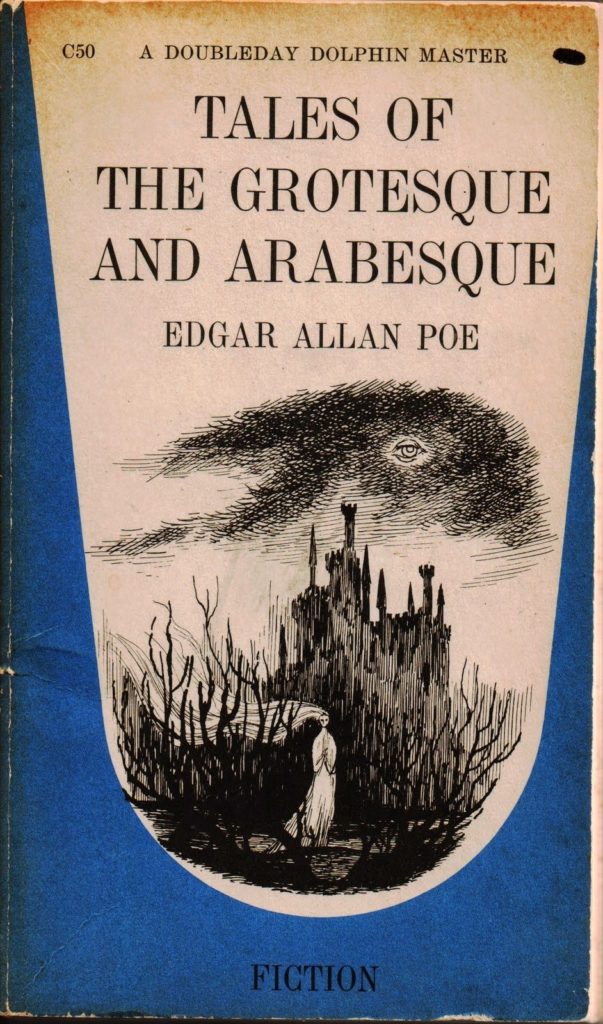
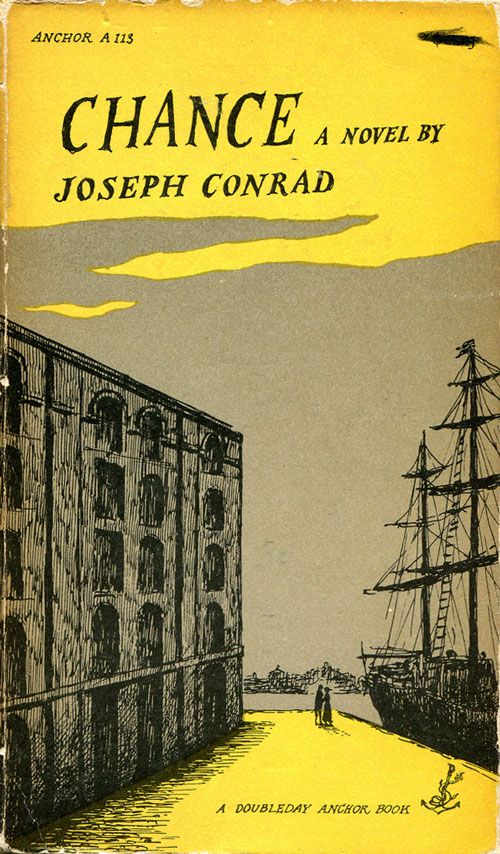
I have long been aware that Edward Gorey designed and illustrated his own books, but I was surprised to discover that he worked as a book designer for Doubleday Publishing throughout the 1950s. While employed by Doubleday, Gorey created more than fifty original book covers for the publisher’s paperback imprints. The master of sinister whimsy left his mark on each of the editions below:

Posted in Art, Books, USA, Writing | Tagged , , , , , | Leave a comment

Difficult Times

Posted in Art, Books, Writing | Tagged | Leave a comment

Back to Back

The antiquarian book above is actually two volumes in one. This rare style of binding is usually referred to as dos-a-dos, from the French “back to back”. As the term suggests, these books share the same back cover. Books bound in this style were briefly popular in Europe during the 17th century, but were not common by the late 18th century.

This volume is bound in leather, with gold-tooled patterns, and gauffered decorative effects achieved by placing a heated tool on the page fore-edges.

Just don’t confuse it with do-si-do; that’s for square dancing.

Posted in Art, Books, Europe | Tagged , , | Leave a comment

Freedom to Read

During National Library Week, the American Library Association released its annual Top Ten List of Frequently Challenged Books . American libraries continue to face challenges—including the potential for censorship—to a variety of books, programs and periodicals. The ALA Office for Intellectual Freedom tracked 354 challenges to library, school and university materials and services in 2017. Some individual challenges resulted in requests to restrict or remove multiple titles or collections. It’s estimated that 82%-97% of challenges remain unreported. In 2017, 416 books were targeted–direct attacks on the fundamental freedom to read. The most frequently challenged titles last year were:

  1. Thirteen Reasons Whyby Jay Asher
  2. The Absolutely True Diary of a Part-Time Indianby Sherman Alexie
  3. Dramaby Raina Telgemeier
  4. The Kite Runnerby Khaled Hosseini
  5. Georgeby Alex Gino
  6. Sex Is a Funny Wordby Cory Silverberg, illustrated by Fiona Smyth
  7. To Kill a Mockingbirdby Harper Lee
  8. The Hate U Giveby Angie Thomas
  9. And Tango Makes Threeby Peter Parnell and Justin Richardson, illustrated by Henry Cole
  10. I Am Jazzby Jessica Herthel and Jazz Jennings, illustrated by Shelagh McNicholas
Posted in Books, Freedom of Speech, Libraries, USA, Writing | Tagged , , , | Leave a comment

My First Memory of Librarians

A last tribute to libraries and librarians for National Library Week from the brilliant Nikki Giovanni.

MY FIRST MEMORY (OF LIBRARIANS)

This is my first memory:
A big room with heavy wooden tables that sat on a creaky
wood floor
A line of green shades—bankers’ lights—down the center
Heavy oak chairs that were too low or maybe I was simply
too short
For me to sit in and read
So my first book was always big

In the foyer up four steps a semi-circle desk presided
To the left side the card catalogue
On the right newspapers draped over what looked like
a quilt rack
Magazines face out from the wall

The welcoming smile of my librarian
The anticipation in my heart
All those books — another world — just waiting
At my fingertips.

Posted in Books, Libraries, USA, Writing | Tagged , , , | 1 Comment

Back to Middle Earth

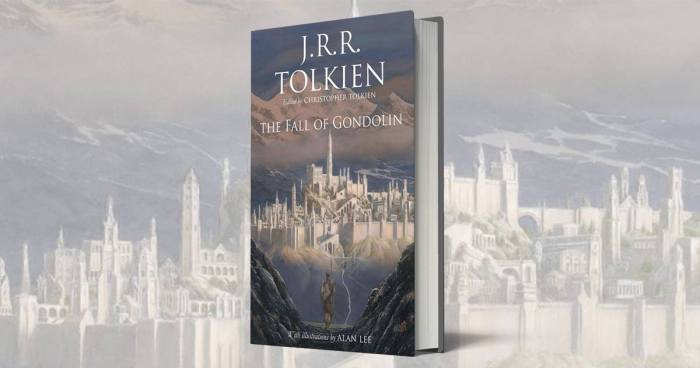
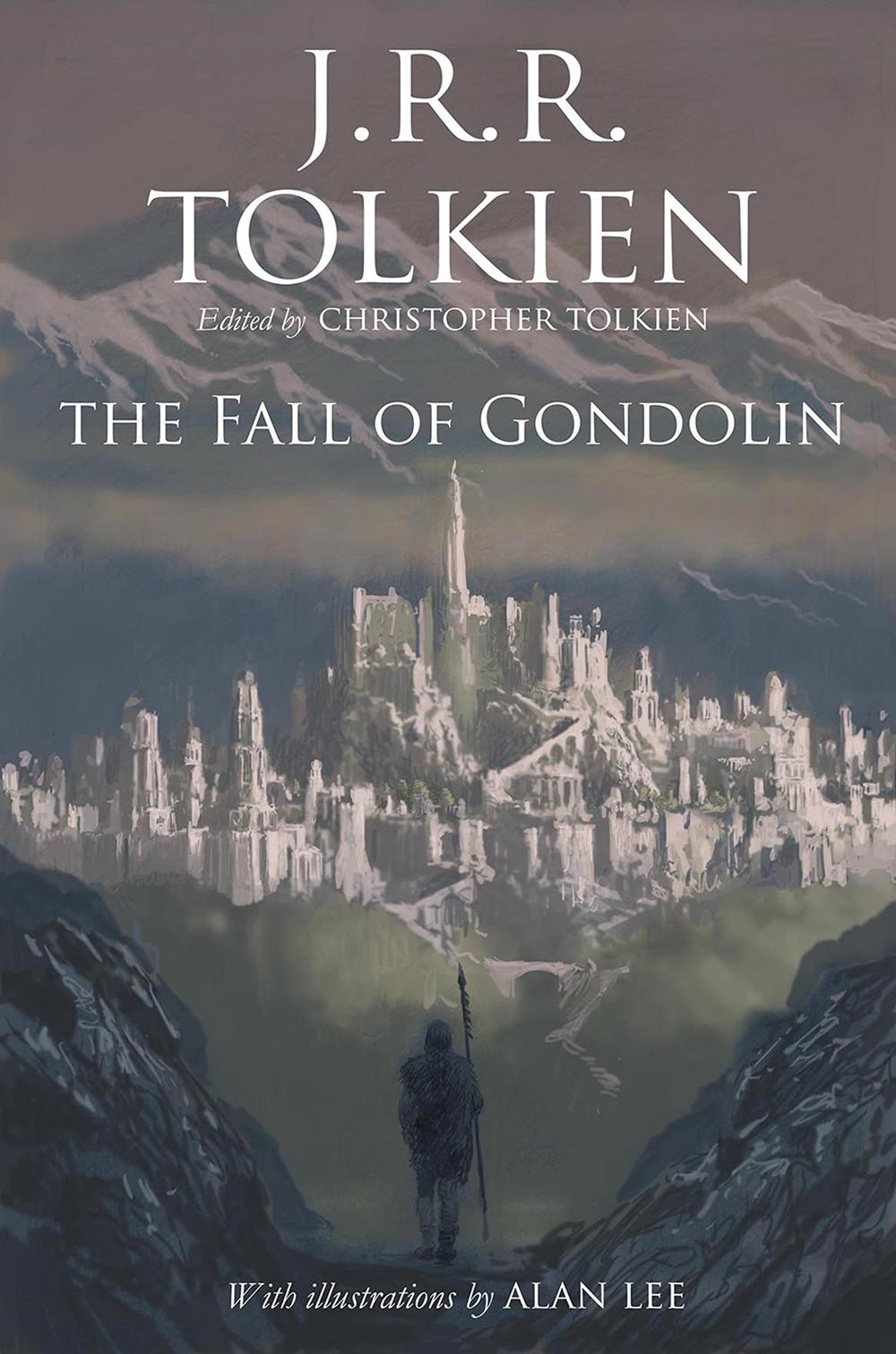
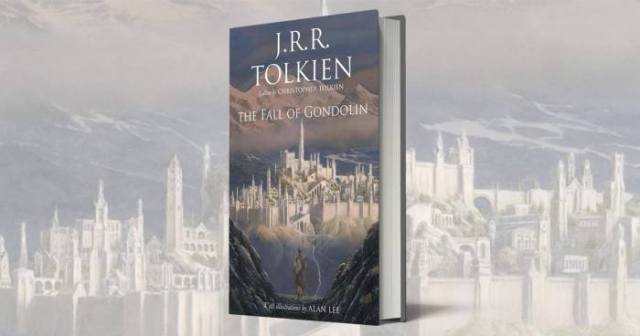
For readers like me, there is very exciting news about the upcoming publication of a “new” J.R.R. Tolkien book this August. Harper Collins has announced the publication of “The Fall of Gondolin”, a story of a hidden city of elves, which takes place thousands of years prior to the events of “The Lord of the Rings” .
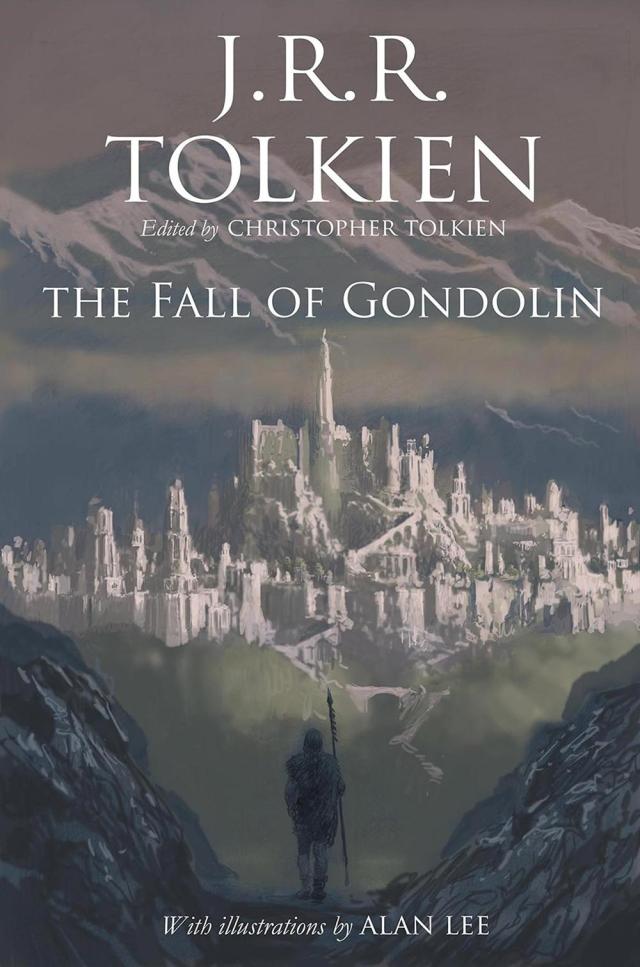
The new book, which was recently completed by the author’s 93-year-old son Christopher Tolkien, was written while J.R.R. Tolkien was convalescing from “trench fever” contracted during World War I.
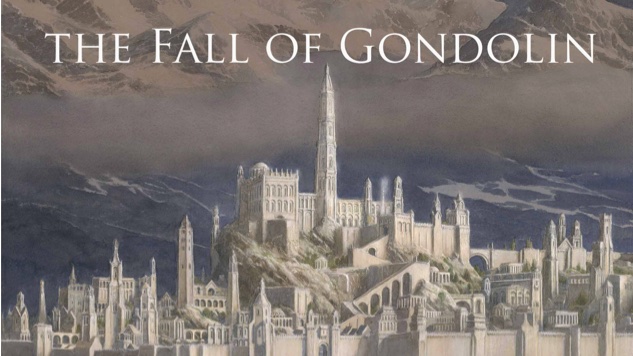
Harper Collins has released a description of the book (see below), but beware Spoiler Alert:

In the Tale of The Fall of Gondolin are two of the greatest powers in the world. There is Morgoth of the uttermost evil, unseen in this story but ruling over a vast military power from his fortress of Angband. Deeply opposed to Morgoth is Ulmo, second in might only to Manwë, chief of the Valar.

Central to this enmity of the gods is the city of Gondolin, beautiful but undiscoverable. It was built and peopled by Noldorin Elves who, when they dwelt in Valinor, the land of the gods, rebelled against their rule and fled to Middle-earth. Turgon King of Gondolin is hated and feared above all his enemies by Morgoth, who seeks in vain to discover the marvellously hidden city, while the gods in Valinor in heated debate largely refuse to intervene in support of Ulmo’s desires and designs.

Into this world comes Tuor, cousin of Trin, the instrument of Ulmo’s designs. Guided unseen by him Tuor sets out from the land of his birth on the fearful journey to Gondolin, and in one of the most arresting moments in the history of Middle-earth the sea-god himself appears to him, rising out of the ocean in the midst of a storm. In Gondolin he becomes great; he is wedded to Idril, Turgon’s daughter, and their son is Erendel, whose birth and profound importance in days to come is foreseen by Ulmo.

At last comes the terrible ending. Morgoth learns through an act of supreme treachery all that he needs to mount a devastating attack on the city, with Balrogs and dragons and numberless Orcs. After a minutely observed account of the fall of Gondolin, the tale ends with the escape of Trin and Idril, with the child Erendel, looking back from a cleft in the mountains as they flee southward, at the blazing wreckage of their city. They were journeying into a new story, the Tale of Erendel, which Tolkien never wrote, but which is sketched out in this book from other sources.

Following his presentation of Beren and Lthien Christopher Tolkien has used the same ‘history in sequence’ mode in the writing of this edition of The Fall of Gondolin. In the words of J.R.R. Tolkien, it was the first real story of this imaginary world’ and, together with Beren and Lthien and The Children of Hrin, he regarded it as one of the three ‘Great Tales’ of the Elder Days.
Posted in Books, Writing | Tagged , , , | Leave a comment

Pity the Nation

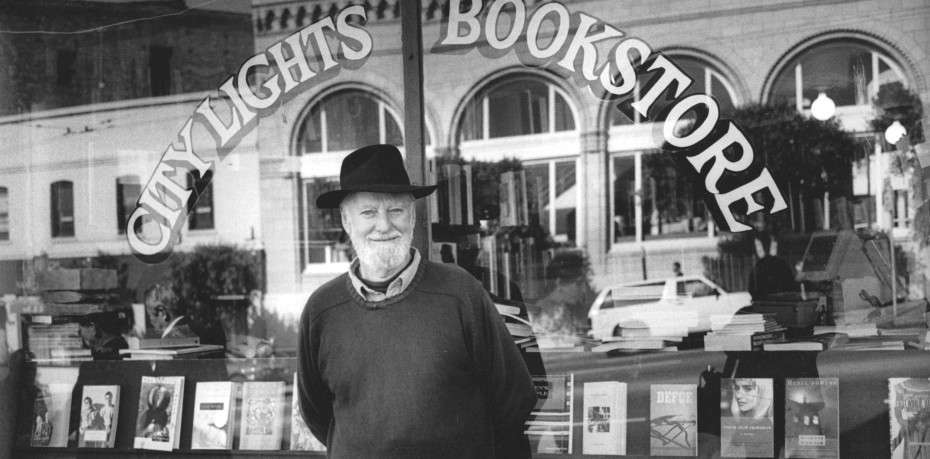
April is National Poetry Month in the United States. I can think of no one better than America’s greatest living poet Lawrence Ferlinghetti to mark the occasion. “Pity the Nation”, which was written in 2007, is especially appropriate in the era of Tangerine Mussolini and his criminal enterprise.

Pity The Nation

Pity the nation whose people are sheep,
and whose shepherds mislead them.
Pity the nation whose leaders are liars, whose sages are silenced,
and whose bigots haunt the airwaves.
Pity the nation that raises not its voice,
except to praise conquerors and acclaim the bully as hero
and aims to rule the world with force and by torture.
Pity the nation that knows no other language but its own
and no other culture but its own.
Pity the nation whose breath is money
and sleeps the sleep of the too well fed.
Pity the nation — oh, pity the people who allow their rights to erode
and their freedoms to be washed away.
My country, tears of thee, sweet land of liberty.

Posted in USA, Writing | Tagged , | Leave a comment

Maps Telling Stories

I have always believed that every map tells a story. When it come to exploring a geographic narrative, there are no better vehicles than 20th century illustrated maps. In the second of our series of guest posts from Dutch author Arjan den Boer, here are the introduction and link to his fascinating article on pictorial rail maps. Be sure to click on the link for access to the entire story and other equally absorbing and erudite articles on European rail travel and cartography.

Pictorial railway maps: Mid-century maps telling stories

by Arjan den Boer

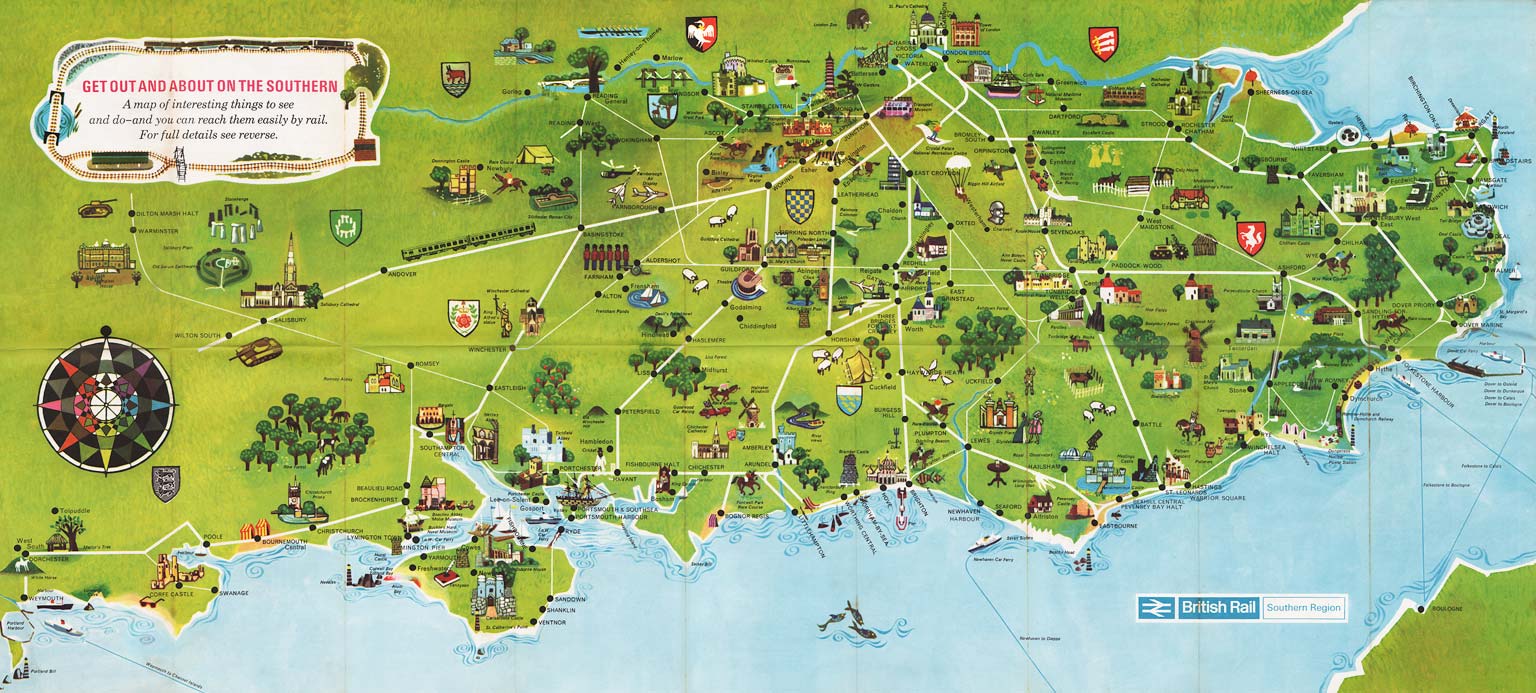
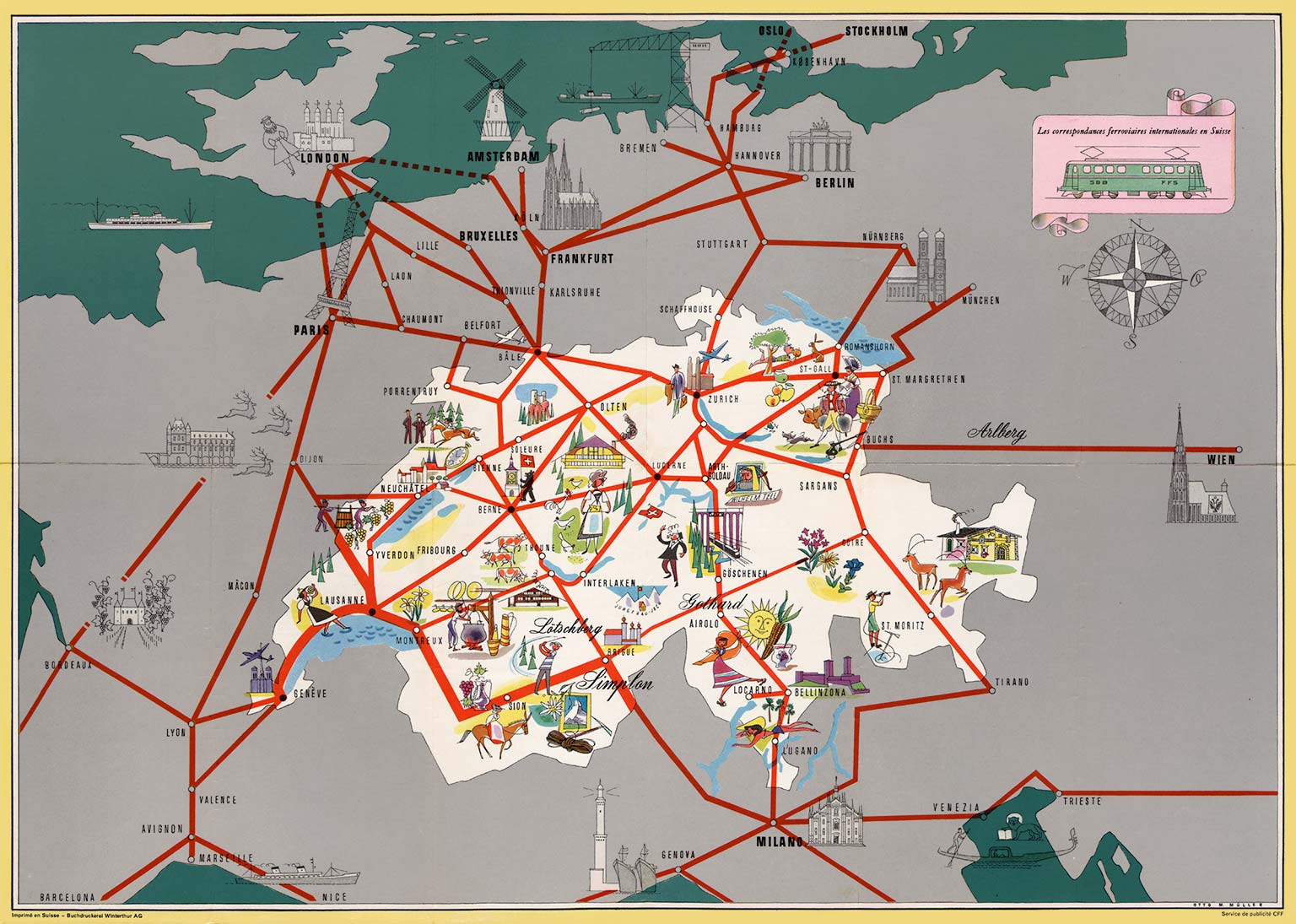
In the mid-20th century pictorial maps in cartoonish styles were a popular way of promoting travel and tourism. In contrast to objective, realistic maps they appeal to emotions such as romance, fantasy and humor. They are used to tell anecdotes about a region’s history, culture and landscape in a way attractive to old and young. These illustrated maps are meant to inspire, not to provide travel information.Pictorial maps or Bildkarten seem to be the opposite of the schematic metro-like maps of railway networks from the same period, composed of straight lines and without any details. Schematic and pictorial maps share one thing though: they are only loosely bound to geographic reality. Their common goal is to convey a message — either the straightforwardness of a journey or the attractiveness of a region.

Whole story: http://retours.eu/en/46-pictorial-railway-maps/

Image 1: Map of Southern England, BR 1966 (coll. Arjan den Boer) above

Image 2: Correspondences internationales, SBB 1956 (Otto M. Müller, coll. Arjan den Boer) below

Posted in Animation, Art, Europe, History, Maps, Public Transport, Tourism, Travel Writing | Tagged , , , , | Leave a comment

National Bookmobile Day

Almost missed it.

Posted in Books, Libraries, USA | Tagged , , | Leave a comment

Along Straight Lines

Those of you who are regular visitors to Travel Between The Pages are well aware of my fascination with railway travel and with maps. While I am a mere dilettante, I recently had the good fortune to connect with someone who has extensive expertise in these subjects and who was willing to offer links to TBTP on some of his engaging web posts. Arjan den Boer is a Utrecht-based Dutch author, travel guide, app developer, and railway historian. Today, we have an brief introduction to his story on schematic railway maps and a link to an in-depth article on his website.

Along straight lines: Schematic railway maps in advertising

by Arjan den Boer

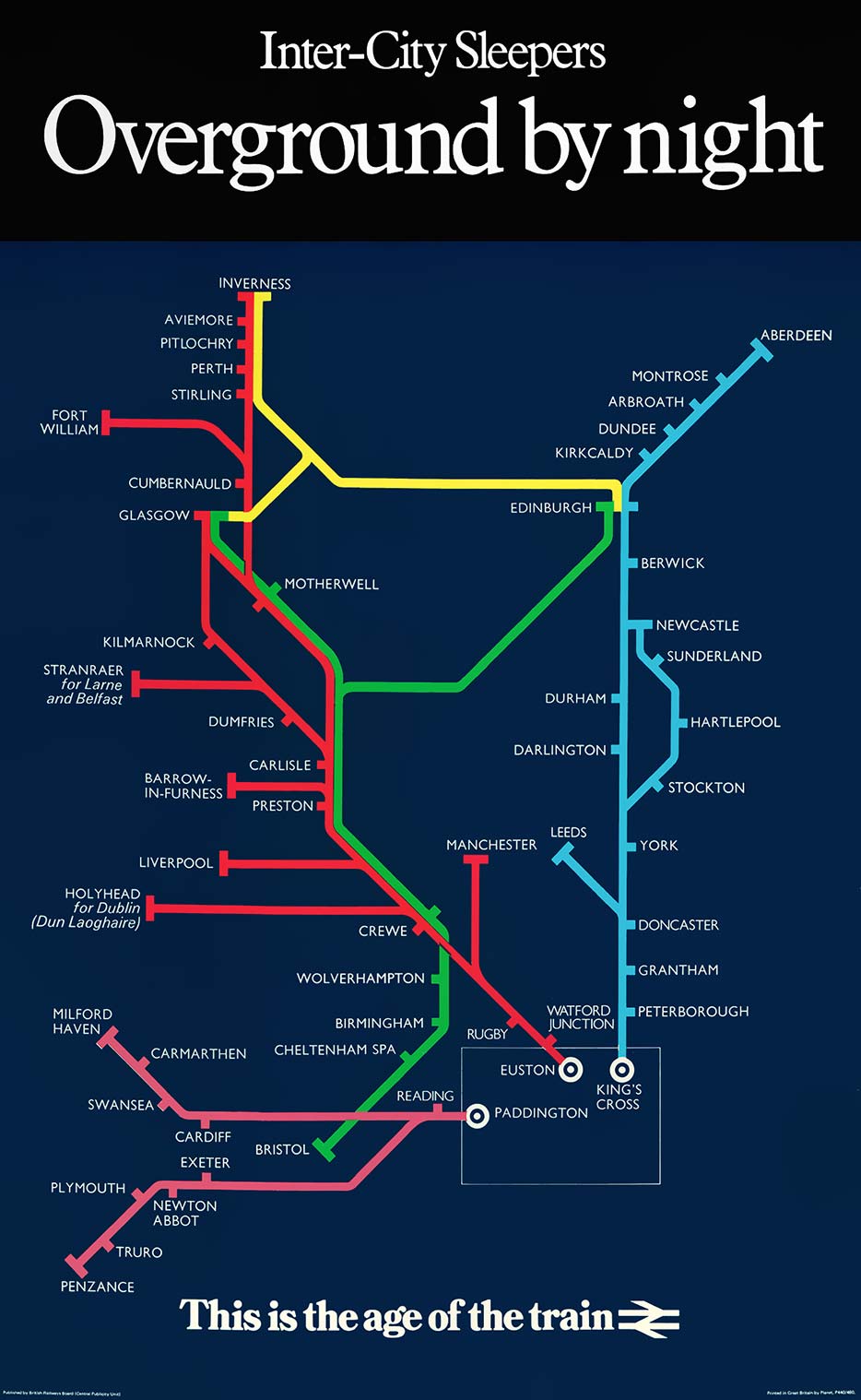
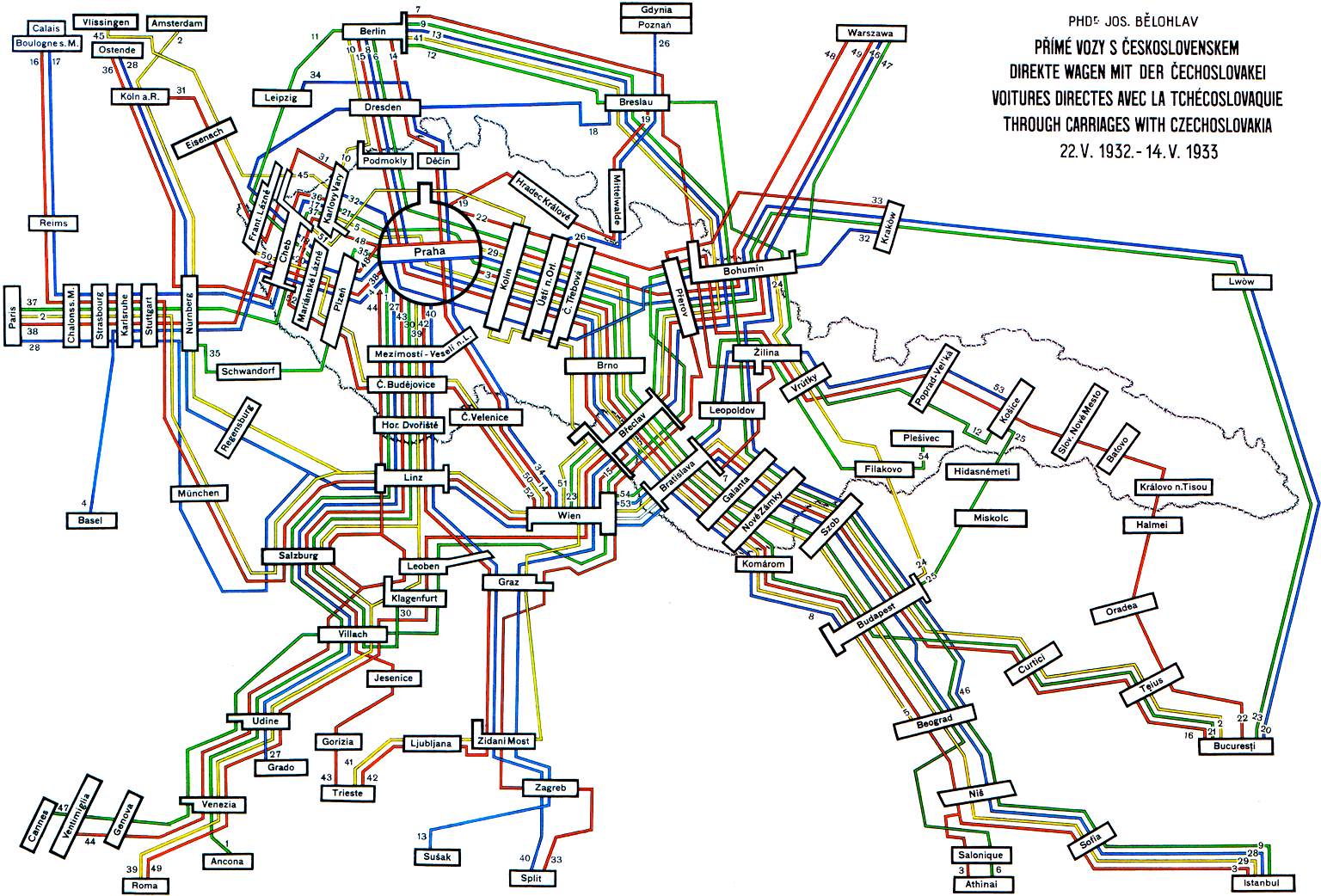
Every map is an abstraction, but some maps willingly distort reality. The best-known example is the London Underground Map: distances are unrealistic, geographical features absent, lines are straight and angles either right or diagonal. Such imaginary maps help travelers to find their way easier, in contrast to the spaghetti-like mash that is hidden behind.Using simplification to provide insight into the network was just as important for (inter)national rail connections as it was in metropolitan areas. Schematic railway maps, as designed during the course of the twentieth century, sometimes resembled metro maps, but could take other shapes as well. They always had the same goal though: making complicated journeys look easy.

Whole story: http://retours.eu/en/45-schematic-railway-maps/

Image 1: Inter-city Night poster, BR, 1976 (coll. Arjan den Boer) above

Image 2: ‘Through carriages with Czechoslovakia’, 1932 (Jos. Bělohlav, coll. Arjan den Boer) below

Posted in Europe, History, Maps, Public Transport, Tourism, Travel Writing | Tagged , , , | 1 Comment