Unbound is a new way of connecting with writers. Most of the writers on the UK site will be well known, others will appear here for the first time.
What’s different is that instead of waiting for them to publish their work, Unbound allows you to listen to their ideas for what they’d like to write before they even start. If you like their idea, you can pledge to support it. If they hit the target number of supporters, the author can go ahead and start writing (if the target isn’t met you can either get your pledge refunded in full or switch your pledge to another Unbound project).
There are several levels of support, each with different rewards. The higher your pledge, the greater the rewards you’ll receive, from your name in the back of the book to lunch with the author. Plus you can alert your friends and earn Unbound credits on the site when they support a project too.
But that’s not all. As soon as you make a pledge to support an Unbound project you gain access to the author’s private area or ‘shed’. Here you can get updates on the book’s progress, watch exclusive interviews, read draft chapters, find out information about the author’s backlist and join discussions with the author and other supporters. It’s a portal into a new community of writers and readers: a place to comment on and contribute to a work in progress.
Then comes the exciting bit. The book is written, designed, edited and printed and Unbound sends it to you, either as an e-book or a beautifully bound, limited edition hardback (or both). For the first time, you will be able to hold in your hands a book that wouldn’t have existed without you.
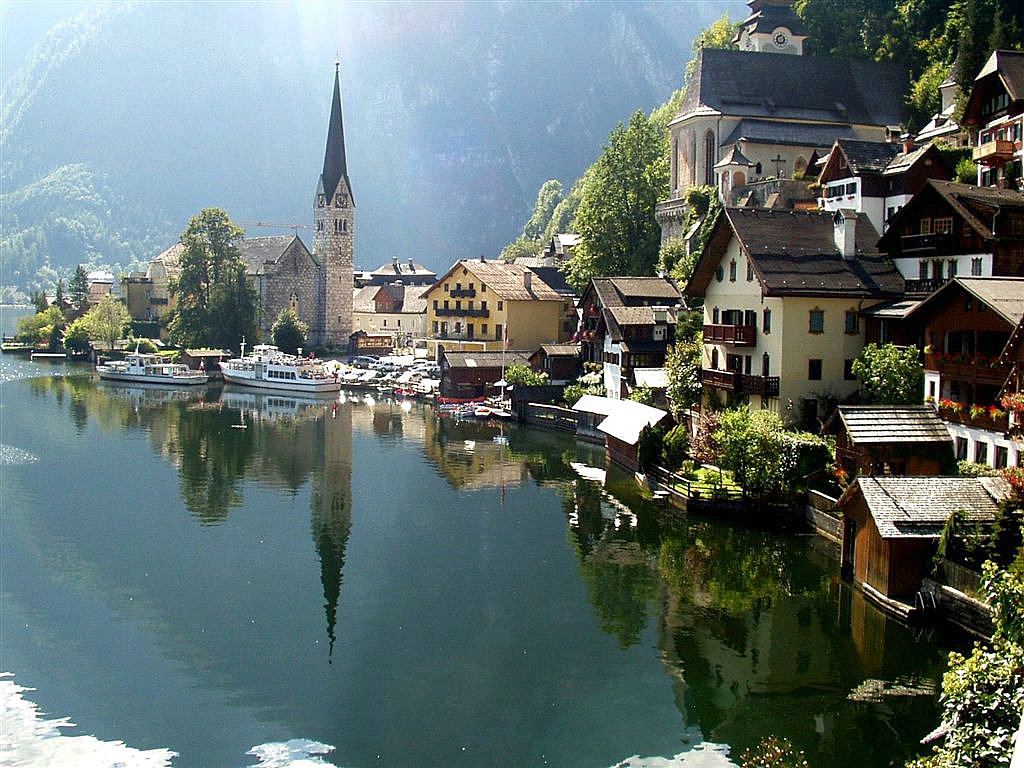
The serenely beautiful Austrian village of Hallstatt attracts hundreds of thousands of visitors each year. And deservedly so, with its idyllic lakeside setting at the foot of Mt. Docstein in the Salzkammergut, the traffic-free town of less than a thousand residents is a touristic gem.
So, it’s not entirely shocking to find that a Chinese development company has begun building an exact replica of the village in Huizhou, Guandong Province.
While many Hallstatters are nonplussed by the project, most villagers are sanguine about the duplication of their little town of Gothic and baroque buildings.
Filmmaker Paul Trillo shot this endearing mini-documentary during the Cannes Film Festival this year. Béla the Cat Man is originally from Hungary, but now travels the south of France “performing” on the street.
What would you do if you missed your connecting flight and were stranded in an airport terminal over night? Well, photographers Joe Ayala and Larry Chen were marooned in Dallas/Fort Worth Airport and decided to have some fun. Surprisingly, airport security was well aware of their antics, but decided to look the other way.
Are you searching for a reasonably priced place to stay in New York City? How about camping ? No, not in a cardboard box on the sidewalk. New York may be the last place that comes to mind for sleeping under the stars, but the US Interior Department believes that Brooklyn’s defunct Floyd Bennett Field is the perfect spot for the country’s biggest urban campground.
According to Interior Secretary Ken Salazar, the national park service plans to convert the airfield once used by Amelia Earhart, Wiley Post, Howard Hughes and Douglas “Wrong Way” Corrigan into a 600-site camping oasis.
“You don’t even realize you’re in the middle of the city…We want to make New York the leading example of what we can do around the country with urban parks.” Salazar said.
If all goes well, campers will soon be lulled to sleep by the waters of nearby Jamaica Bay and the soothing sounds of the jets taking off and landing at JFK Airport. But intrepid campers will be able to hike up to Flatbush Avenue for an authentic bagel breakfast.
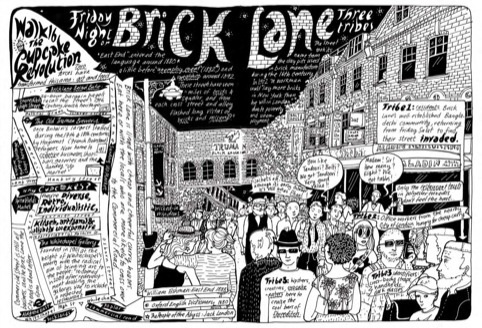
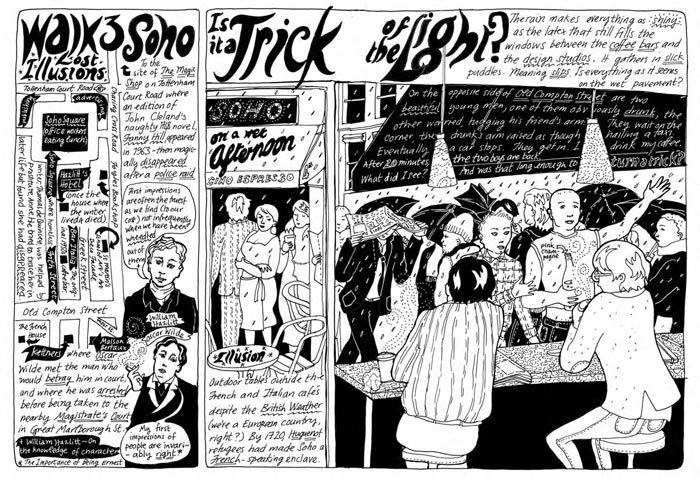
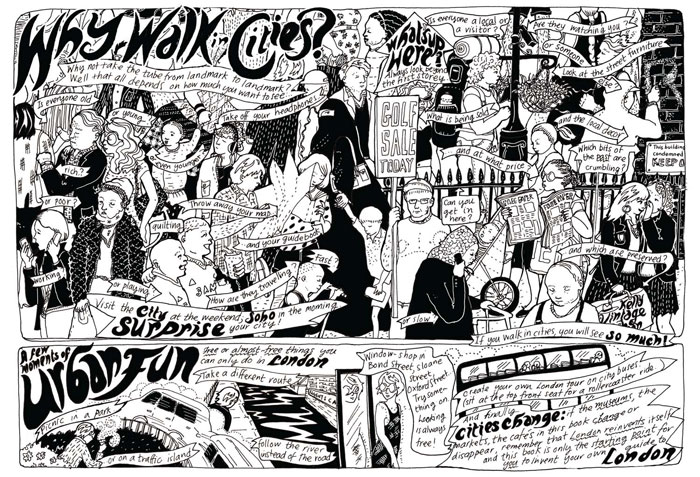
“London Walks!” by illustrator/writer Joanna Walsh – aka Badaude– offers a fresh angle on 22 city walks, 3 bus rides and a boat trip, reframing the capital’s streets into a set of kooky cartoons and providing the London-weary with an anti-guidebook. Opening with the message “Surprise your city!”,Walsh makes the case for walking instead of taking the Tube, bagging free stuff instead of paying for big shows and indulging in drifting on a derivé over following strict itineraries like a braindead tourist-cum-commuter. As well as Soho, Notting Hill and other standard prettified parts, Badaude’s bubblesome graphic walks also explore London Fields, Fitzrovia and Waterloo.
Joanna Walsh: I’m not a Londoner born and bred. When I first moved here, I’d just finished a degree in English Literature. I’d spent all my life building up a mental map of the city through books but, although I’d visited a few times, I’d never experienced the city day-in, day-out. It was interesting to draw a map of personal experiences on top of the map of everything I’d read. And, after living in different parts of the city for several years, I found parts of my experience crossed other parts, like lines drawn on a map, some hard and some faint, each erasing and distorting others I’d made. I wanted to draw attention to and replicate this multilayered, four dimensional experience of being in a city.
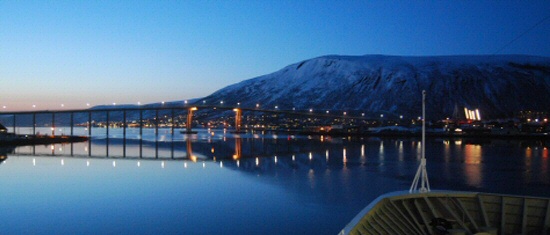
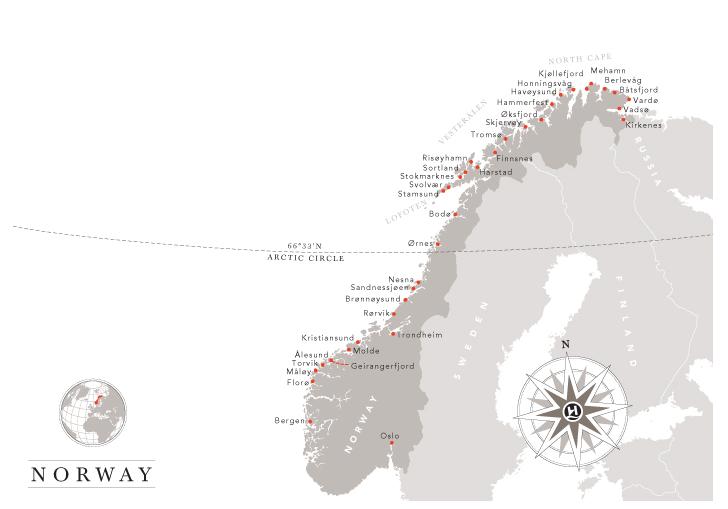
Lucky travelers have been taking the “world’s most beautiful voyage” along Norway’s coast on the Hurtigruten line since 1893. Now, we can all travel along with the world’s longest continuous live TV program. Beginning on June 16th and running until June 23 non-stop, the Norwegian public broadcaster NRK is streaming the entire 134 hour trip live online and on NRK2 in Norway.
The trip began in beautiful Bergen and will end on the 23rd in arctic Kirkenes. There’s occasional live commentary (mostly in Norwegian), as well as audio and video from the captain on the bridge.
The Hurtigruten fleet of 14 ships carries passengers, cars, cargo and mail to 34 posts of call along the coast. The ships also travel up some of Norway’s most spectacular fjords. Here’s a brief video from the Hurtigruten company, but check out the live feed. But be wary; it’s hypnotic.
The world’s first living wall replica of a painting masterpiece, Van Gogh’s A Wheatfield, with Cyrpresses, is now “hanging” in Trafalgar Square, London at the National Gallery. Working with GE and ANS Group, the museum designed, grew and installed the living wall painting, which incorporates 8,000 plants in 26 different varieties to replicate Van Gogh’s masterpiece.
The original painting (which is in room 45 of the National gallery) was completed in 1889 while Van Gogh was a patient at the St-Rémy asylum in France.
To create the living wall, 640 modules were grown vertically at an English nursery.
The wall will remain at the museum until the end of October this year. Given the varieties of plants, it will change and grow with the seasons.















 Travel Between The Pages