
Happy Solstice to all. Stay chill . And please ditch the socks and sandals look.
Happy Solstice to all. Stay chill . And please ditch the socks and sandals look.

57 Sandwiches That Define New York City. I challenge you to read this New York Times article all the way through and not crave one of these amazing sandwiches. NYC is home to ~23,000 restaurants, so choosing where to eat out can be a pretty overwhelming decision. Even if you narrow your culinary choices down to the humble sandwich, you could eat at a new restaurant for years in NYC without repeating yourself.

Growing up in and around the city I never stopped to appreciate the amazing range of food options available. Still, in my day the choices were much less elaborate than in the 21st century New York. Buon appetito !

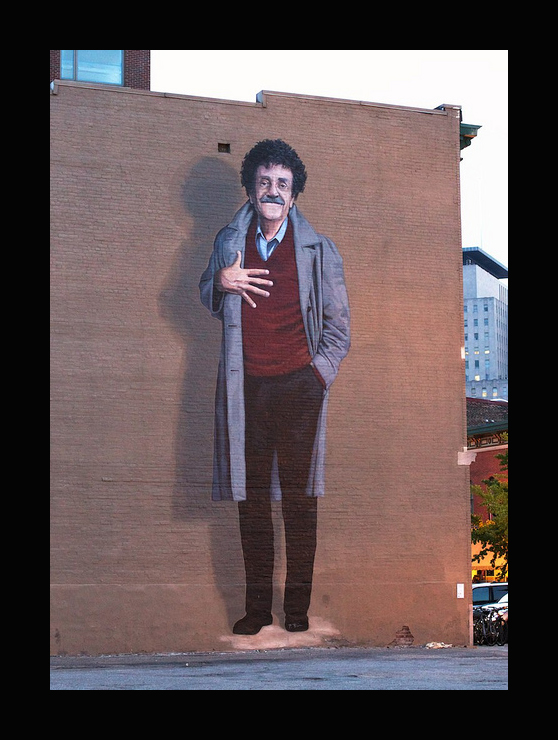
Kurt Vonnegut’s eight rules of writing:

I am continually amazed by the seemingly endless variations and spinoffs of Lewis Carroll’s classic Alice in Wonderland. But even I was surprised to discover that beginning in the 1930s, Guinness beer began using Alice in Wonderland and the cast of characters from Carroll’s books in their advertising. These campaigns continued until 1959, and in addition to many ads, Guinness also published five booklets, beginning with “The Guinness Alice” in 1933, and ending with “Alice Versary: The Guinness Birthday Book,” which was published to coincide with the brewer’s 200th anniversary in 1959. All of the booklets and advertising were created by their advertising agency, S.H. Benson Ltd., with illustrations by John Gilroy and later Ronald Ferns.


It’s surprising to learn that London wasn’t well mapped until the 1500s, but the cartographers, topographers, and historians of the Historical Towns Trust have the decided to remedy the problem by looking back in time to create period maps.. Their detailed atlases of 13th-century and Tudor London drill down to individual dwellings, parish boundaries and walls.


The team have put together two exceptionally detailed maps of the capital. The first, Tudor London, zooms in on the year 1520, showing the city shortly before the Reformation swept away the religious houses. The second map goes back as far as the late 13th century, more than 250 years before the dawn of London cartography.
“It’s about the earliest date we can really map the city in detail,” explains Professor Vanessa Harding, who contributed to the research and is the Chair of HTT. “From the mid-13th century we have a proliferation of written sources for houses, streets and landmarks; all the parish churches were in place, and most of the religious houses, though the guilds had yet to make their mark physically.”
You can buy paper maps here—also those of various other places including Oxford and Canterbury—or explore the digital ones online (e.g. medieval London, Tudor London, but there are all sorts of overlays to view).


NO LONGER VERY CLEAR
John Ashbery
It is true that I can no longer remember very well
the time when we first began to know each other.
However, I do remember very well
the time we first met. You walked in sunlight,
holding a daisy. You said, “Children make unreliable witnesses.”
Now, so long after that time,
I keep the spirit of it throbbing still.
The ideas are still the same, and they expand
to fill vast, antique cubes.
My daughter was reading one just the other day.
She said, “How like the pellucid statues, Daddy. Or like a…
an engine”
In this house of blues the cold creeps stealthily upon us.
I do not do what I fantasize doing.
With time the blue congeals into roomlike purple
that takes the shape of alcoves, landings…
Everything is like something else.
I should have waited before I learned this.

Harvard University Library has reported that it has removed a volume bound in human skin from its collection. A copy of the 19th-century book Des Destinées de l’Ame — or Destinies of the Soul, a meditation on life after death — was found in 2014 to be bound in the skin of a deceased woman. The book apparently was in the library for 90 years without being questioned.
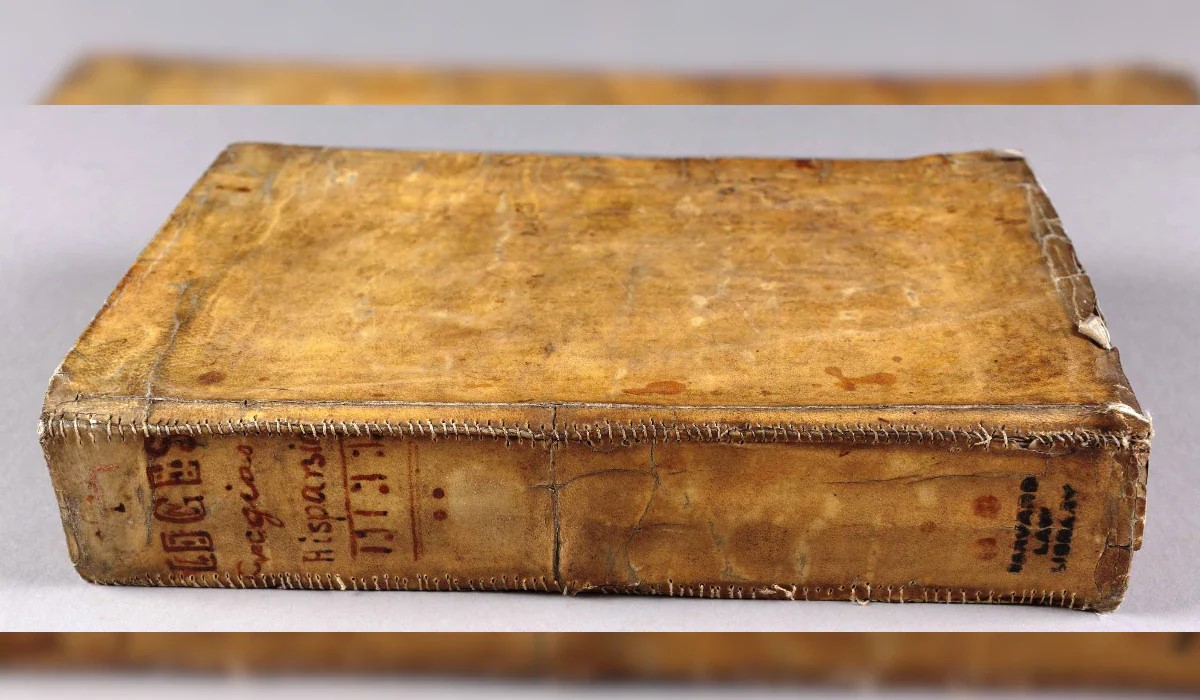
The University said it had removed the book and noted “past failures in its stewardship of the book that further objectified and compromised the dignity of the human being whose remains were used for its binding”. Harvard also reported that it was consulting with French authorities “to determine a final respectful disposition of these human remains”.
Previously, Harvard seemed to relish the notoriety garnered by the wide interest in the morbid story of the book, calling the 2014 discovery “good news for fans of anthropodermic bibliopegy, bibliomaniacs and cannibals alike”.
The university said at the time that Ludovic Bouland, the first owner of the book written by French author Arsene Houssaye, had taken skin from the body of a mentally ill woman, who died of a heart attack, at a hospital where he worked. Dr Bouland was said to have told Mr Houssaye in a note: “A book about the human soul deserved to have a human covering.”
Anthropodermic bibliopegy, the practice of binding books in human skin, was once a relatively common practice.

The Codex Gigas (or Devil’s Bible) is a large 13th-century manuscript from Bohemia, one of the historical Czech lands. Renowned for its size and its striking full-page rendition of the devil (found on page 577), it contains a number of parts: the Old and New Testaments, two works of Josephus Flavius, Isidore of Seville’s Etymologies, the standard textbook for teaching medicine in the Middle Ages known as Ars medicinae (The art of medicine), the 12th-century Chronica Boëmorum (Chronicle of the Bohemians) of Cosmas of Prague, and a calendar. Of special interest are the sections that testify to the Bohemian origin of the manuscript and its eventful history. At the end of the 16th century, the Codex was incorporated into the collections of Habsburg ruler Rudolph II. During the Swedish siege of Prague at the end of the Thirty Years’ War (1648), the manuscript was taken as war booty and transferred to Stockholm.
The video below offers an over-the-top description of the creation and history of the Devil’s Bible, but it’s quite amusing and entertaining.

Who could have imagined that an award winning children’s book titled Ban This Book would actually be banned and in the state of Florida of all places.
The Indian River County School Board voted to remove “Ban This Book” by Alan Gratz from its shelves in a meeting last month, overruling its own district book-review committee’s decision to keep it. The children’s novel follows a fictional fourth grader who creates a secret banned books locker library after her school board pulled a multitude of titles off the shelves. Indian River County School Board members said they disliked how it referenced other books that had been removed from schools and accused it of “teaching rebellion of school board authority,” as described in the formal motion to oust it.
From the author’s website:
It all started the day Amy Anne Ollinger tried to check out her favorite book in the whole world, From the Mixed-Up Files of Mrs. Basil E. Frankweiler, from the school library. That’s when Mrs. Jones, the librarian, told her the bad news: her favorite book was banned! All because a classmate’s mom thought the book wasn’t appropriate for kids to read.
Amy Anne decides to fight back by starting a secret banned book library out of her locker. But soon things get out of hand, and Amy Anne finds herself on the front line of an unexpected battle over book banning, censorship, and who has the right to decide what she and her fellow students can read. In the end, her only recourse might be to try to beat the book banners at their own game. Because after all, once you ban one book, you can ban them all…


Traditional rooftops
slope like the backs of resting camels.
Forests play fortresses;
secrets held in whistling pine needles.
Serene valleys echo
a painter’s lost blues and greens.
Mountains order the sky, no less,
wearing casts of gray ruggedness.
Although I am a frequent critic of AI projects, like all good hypocrites, I’m also fascinated by the subject. The poem above was generated by an experimental program based on the photo above of Bergun, Switzerland, and a brief prompt from me.
The Data Poets: is an intriguing project by Gaston Welisch. The website offers users the opportunity to upload an image of a place that’s important to them, along with some text prompts about where it is and why it’s special to them; the site will then generated a brief poem to accompany the image. This is all done by AI (image recognition and then LLM-ing the verse).
Give it a spin.


 Travel Between The Pages