An Evening With Edgar Allan Poe

In keeping with the festive holiday season, I thought I would share this classic offering from the great thespian Vincent Price. Although he had a storied careen in theater and in cinema, Price has mainly been remembered for his work in horror films. He was ideally suited for this performance of four enduring tale by Poe : “The Tell-Tale Heart,” “The Sphinx,” “The Cask of Amontillado,” and “The Pit and the Pendulum.”


Posted in Books, Film, Theater, USA, Writing | Tagged , , | 1 Comment

Día de Muertos

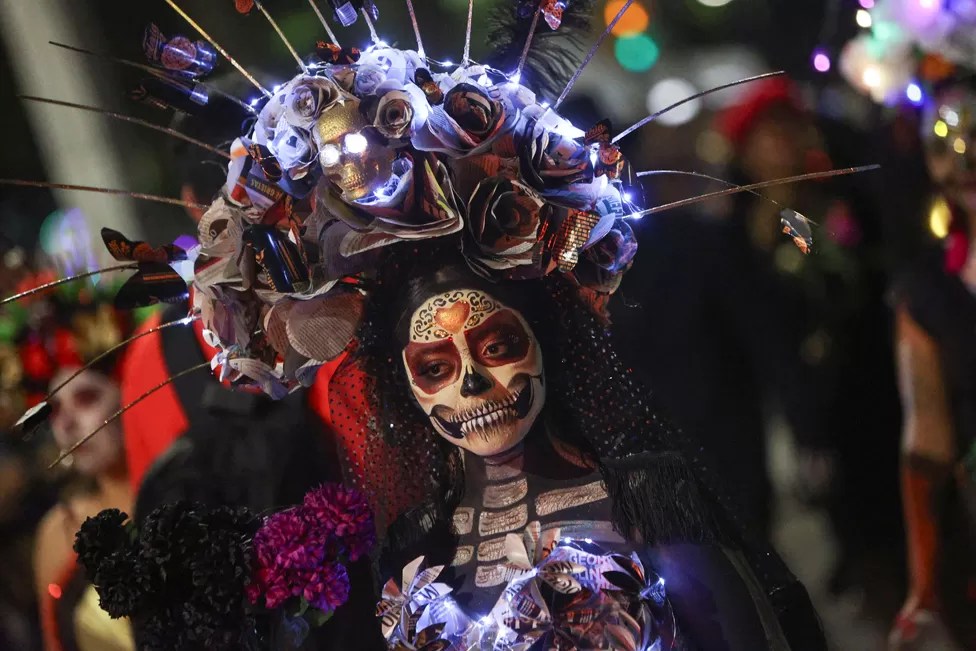
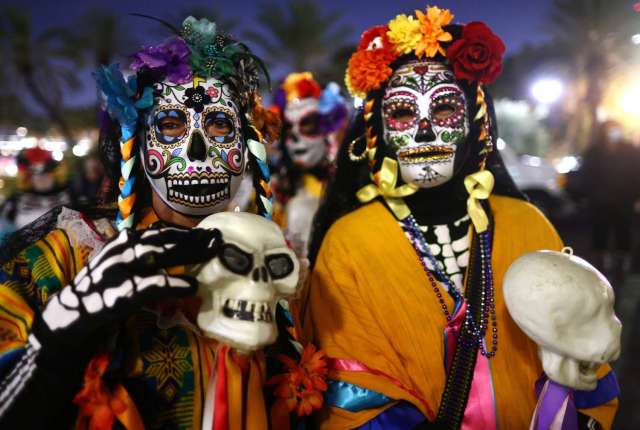
Here in the Americas we are in the midst of a two-fer holiday season. We can take a short break from the horrors of real life and celebrate the festive spookiness of Halloween and the Day of the Dead (Día de Muertos). While most people around the world have become well acquainted with Halloween traditions, Dia de Muertos celebrations have only recently  been recognized outside of North and South America.
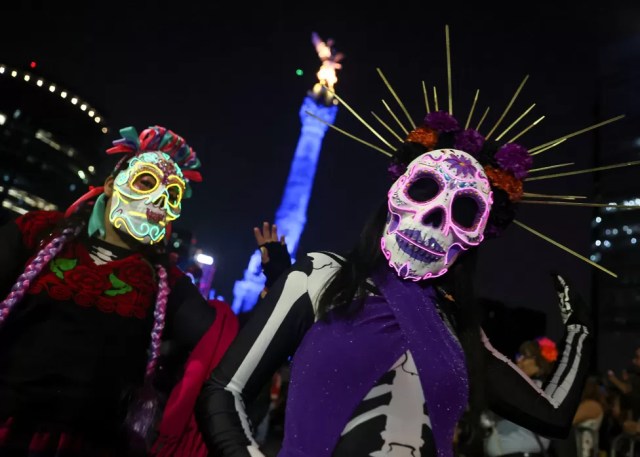
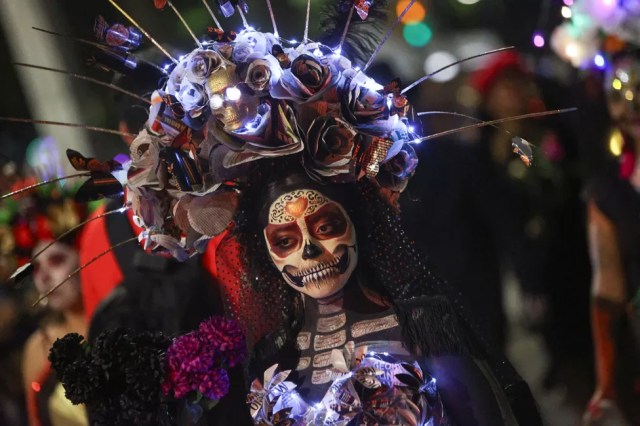
Day of the Dead or Día de Muertos has been celebrated for centuries in Mexico. The Mexica or Aztecs had memorialized their dead during the summer: Miccailhuitontli (for children) and Hueymicailhuitl (for adults). During Spanish colonial occupation the European Catholic calendar was imposed in Mexico and the celebrations honoring the dead were moved to All Souls Day, celebrated on November 1st.
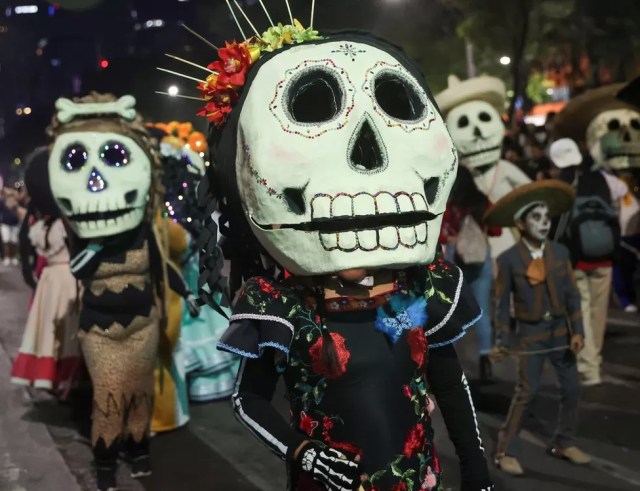
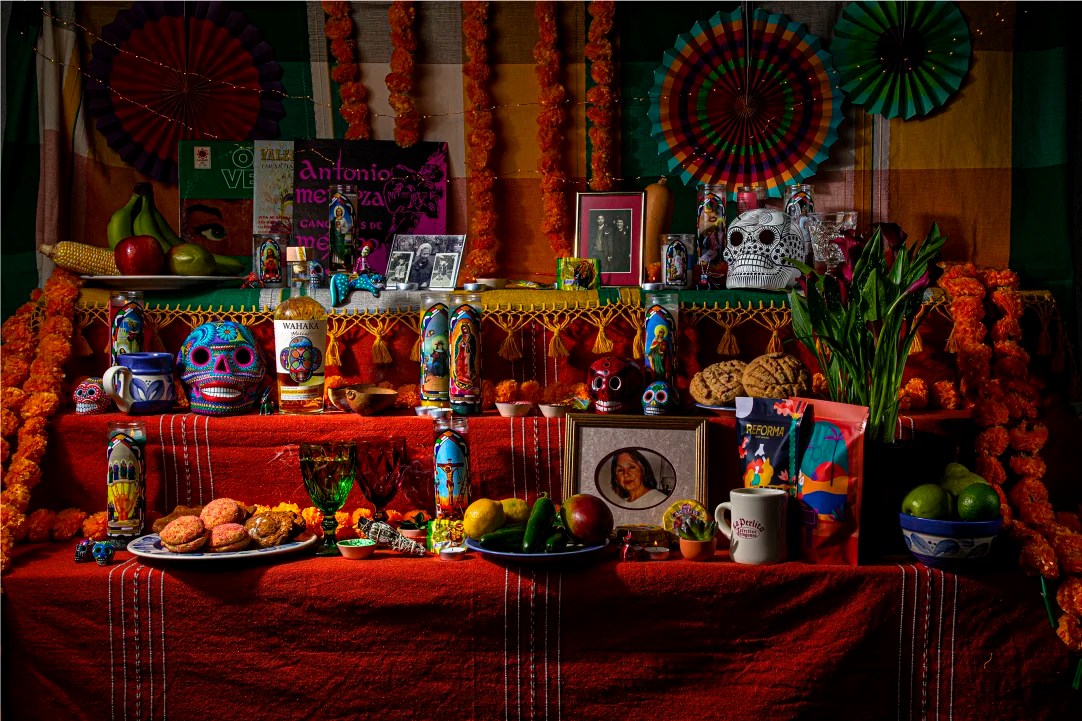
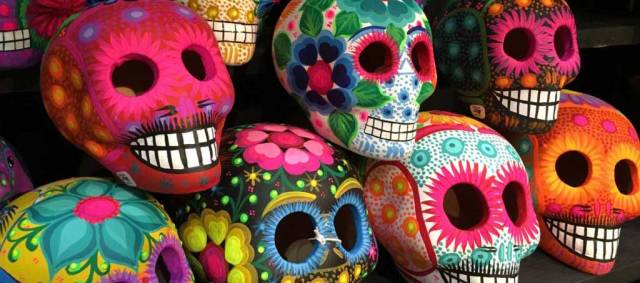
Traditionally, the indigenous people of Mexico held the belief that life on earth is just preparation for the next world and that it was essential to maintain a personal relationship with the dead. Historically,families have gathered in the cemetery during this celebration to welcome the souls on their annual visit home. People also create altars known as ofrendas with traditional elements of the season, such as cempasúchil (marigold) flowers, copal incense, fresh pan de muerto bread, candles, papel picado, and calaveras (sugar skulls). Photographs, mementos, and favorite items used by the departed are included.
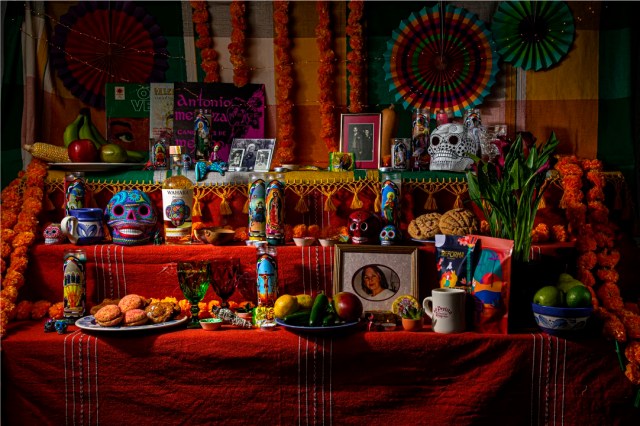
The pre-Colonial people of Mexico believed that when a person died, their teyolia, or inner force, went to one of several afterworlds, depending on how they died, their social position, and their profession. Interestingly, how people behaved during their lives didn’t matter. There were special afterlifes for children, warriors, women in labor, people who died by drowning, and all others. This belief still endures today, with special altars built on October 28 for people who have died in accidental deaths, November 1 for deceased children, and November 2 for adults who have died a natural death. 
In Mexico, the festival is traditionally called Día de Muertos. However, in the U.S. and other English-speaking countries, it is usually referred to as Día de los Muertos, a back-translation of the Day of the Dead into Spanish.
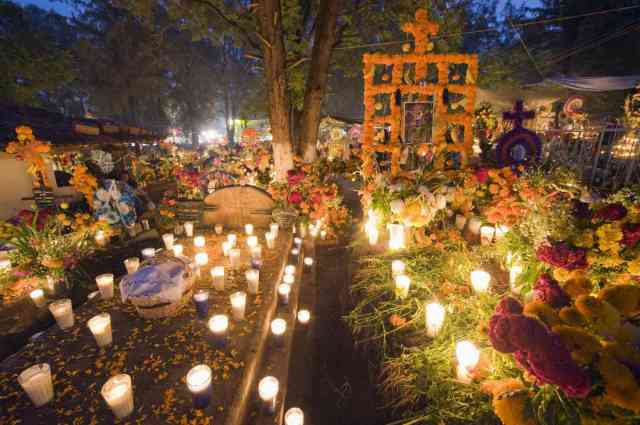
In Mexico, folks prepare for the Day of the Dead well in advance. Farmers grow flowers, and artisans craft decorations, sugar skulls, folk art, and other items for the festivities. The Día de Muerto is observed from October 28 to November 2. In many rural areas, the celebrations begin on October 28. However, the festivities mostly occur in larger cities and metropolitan areas on November 1 and 2.
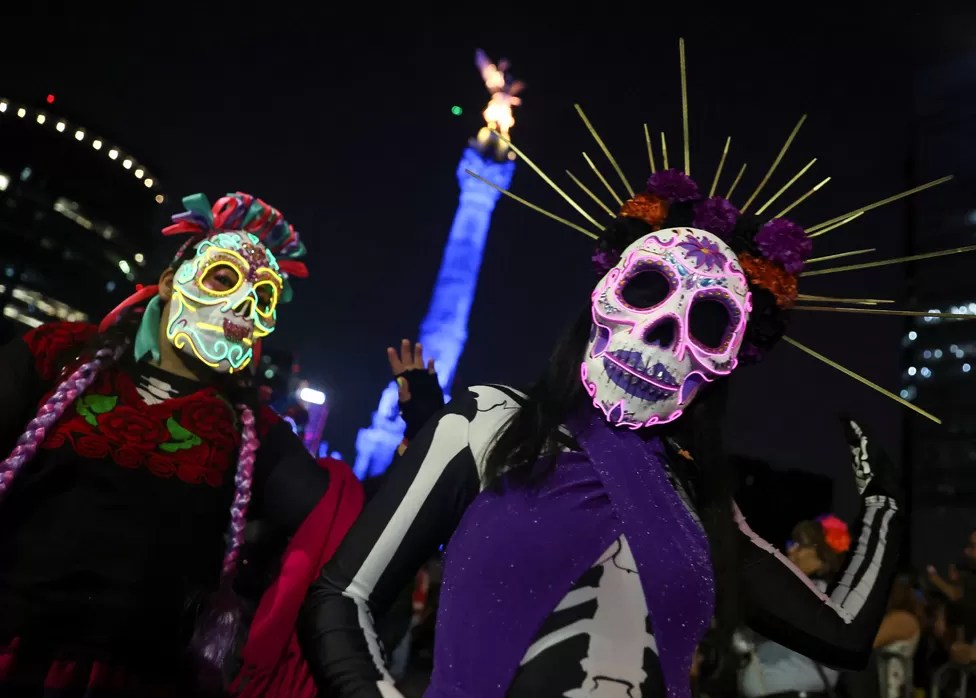
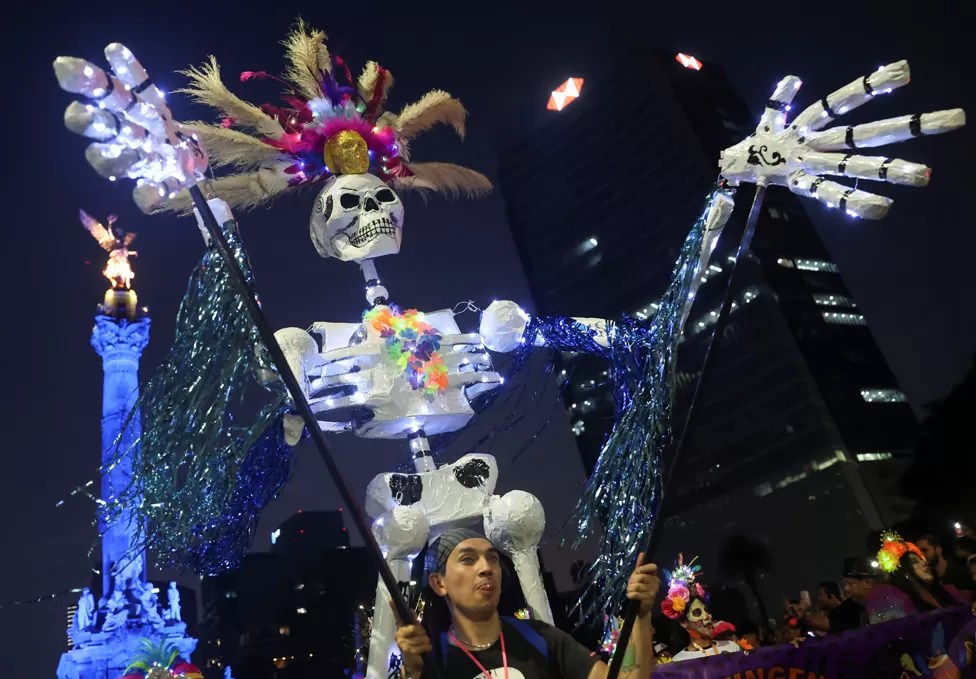
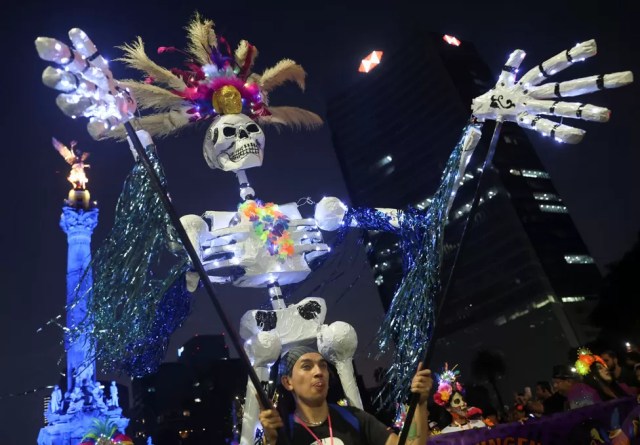
Since the festival has spread to the U.S., people on both sides of the border have begun to wear costumes for the holiday. In some areas there are even elaborate costumed parades. Since the Day of the Dead and Halloween overlap on the calendar there has been a blending of the festivites especially in the U.S., with a blurring of the lines between the Mexican and European traditions.

 

Posted in Art, History, South America, USA | Tagged , , , | Leave a comment

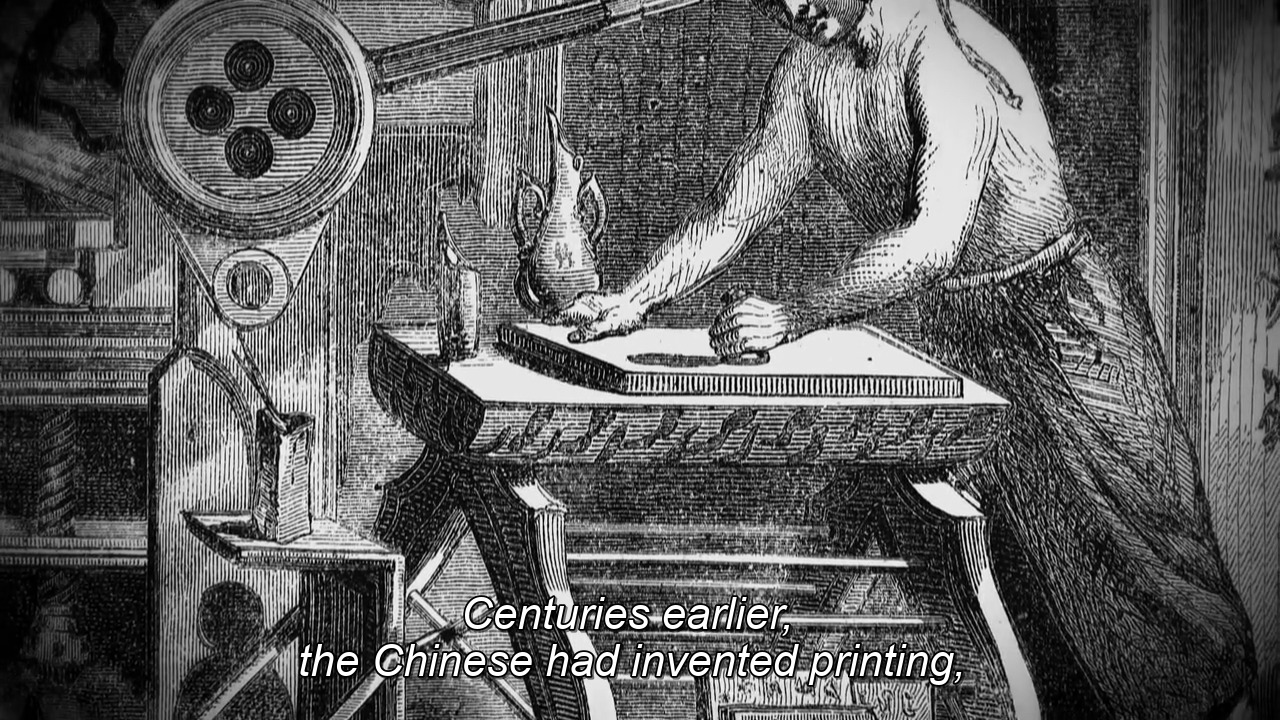
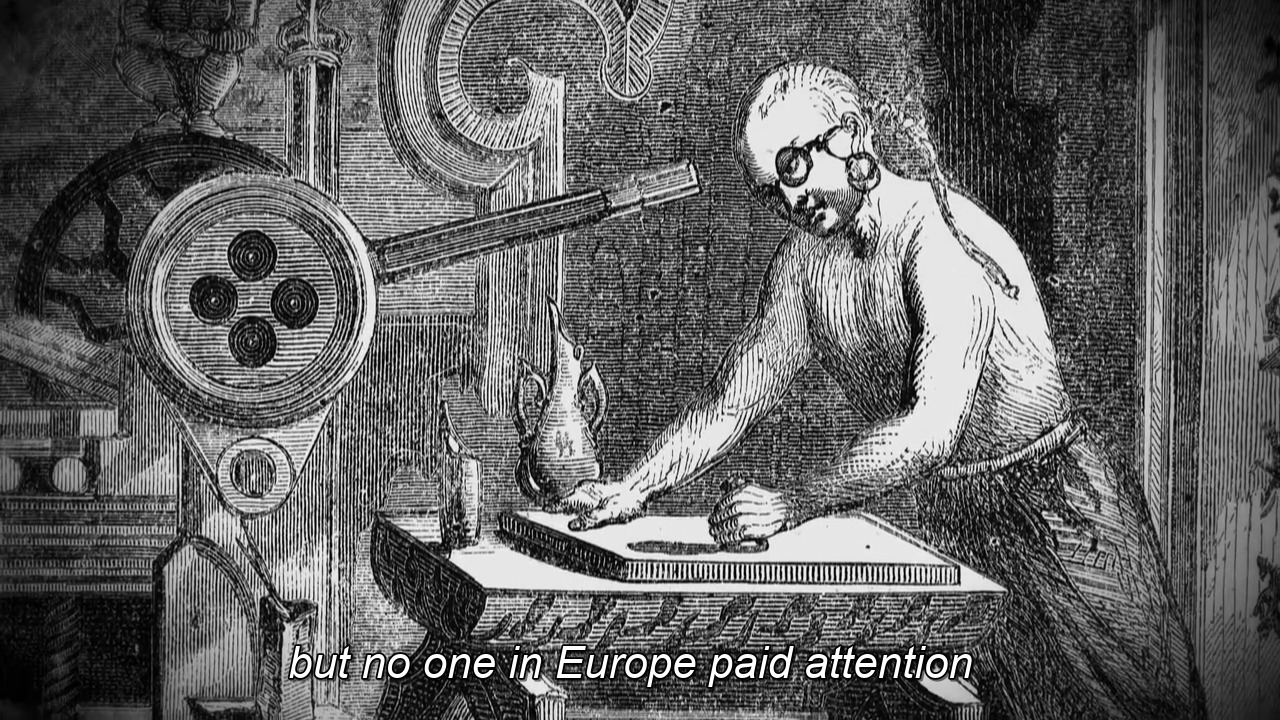
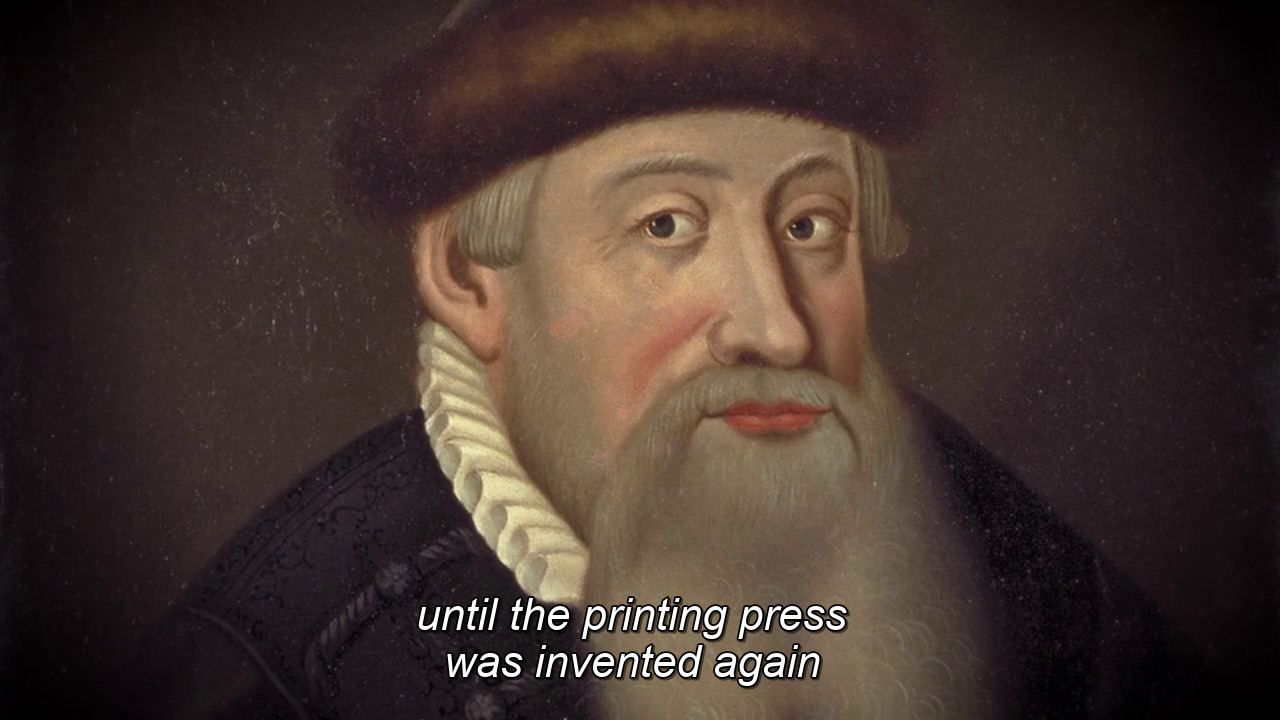
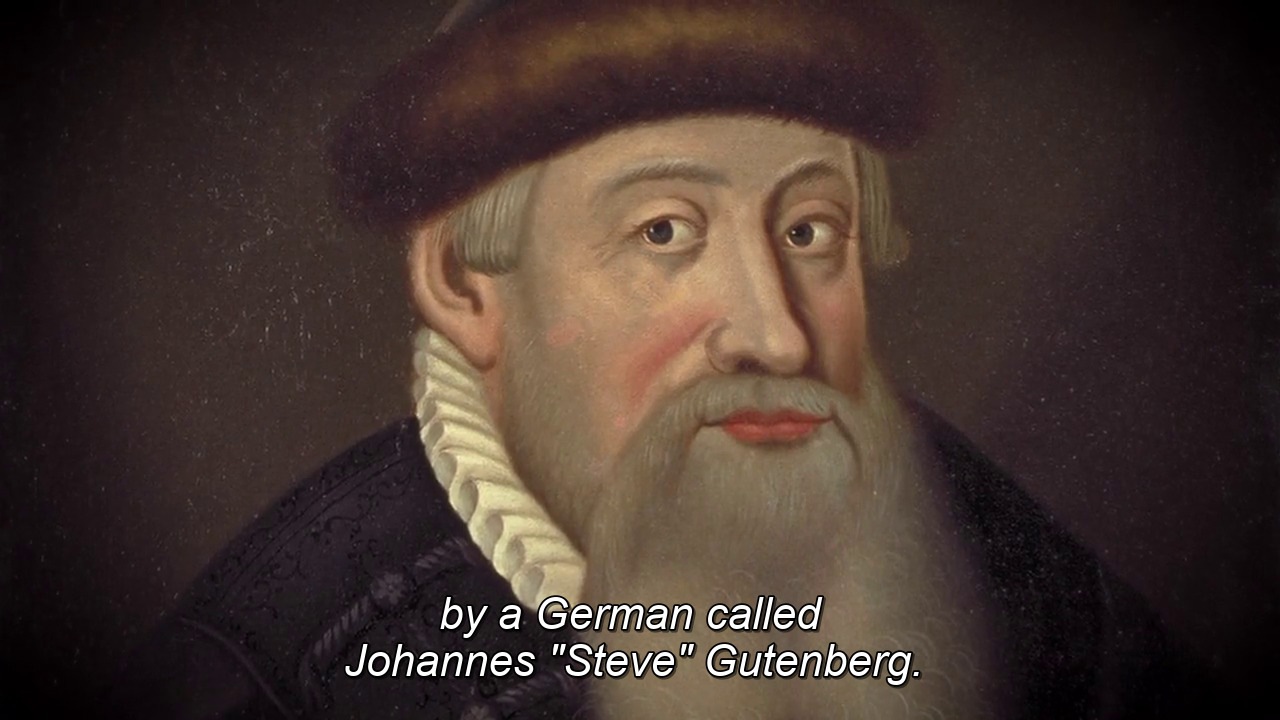
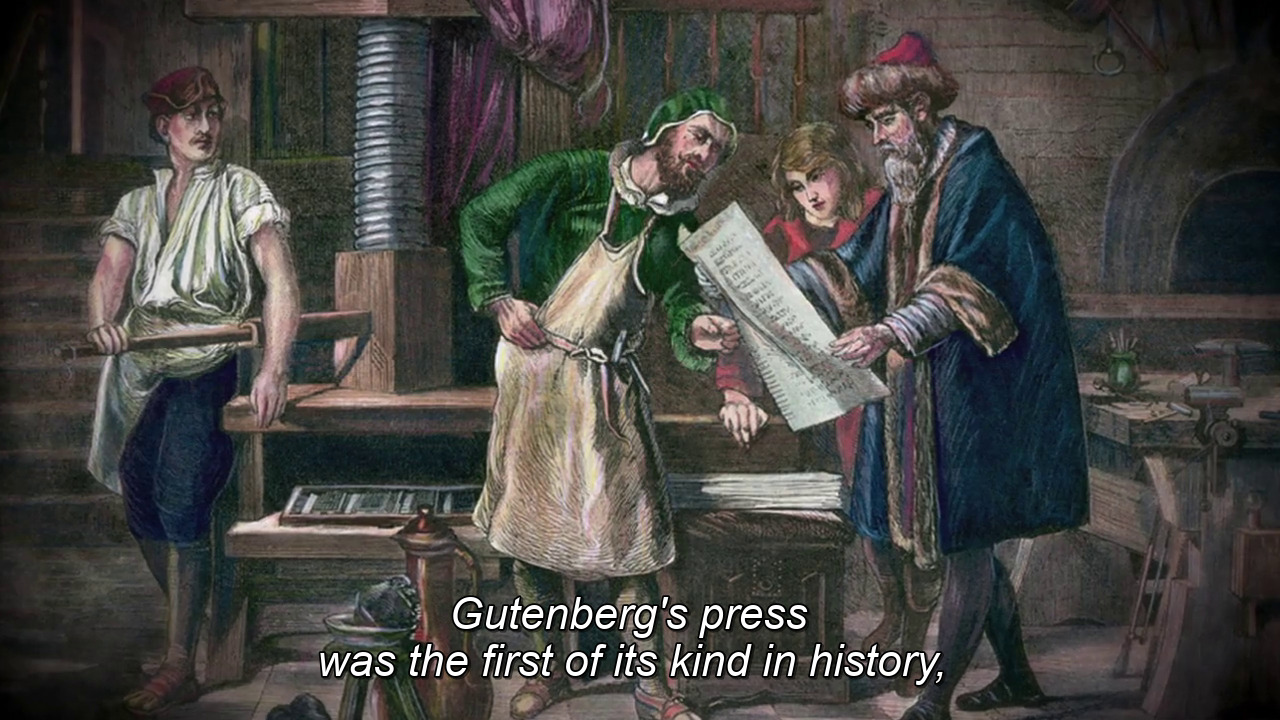
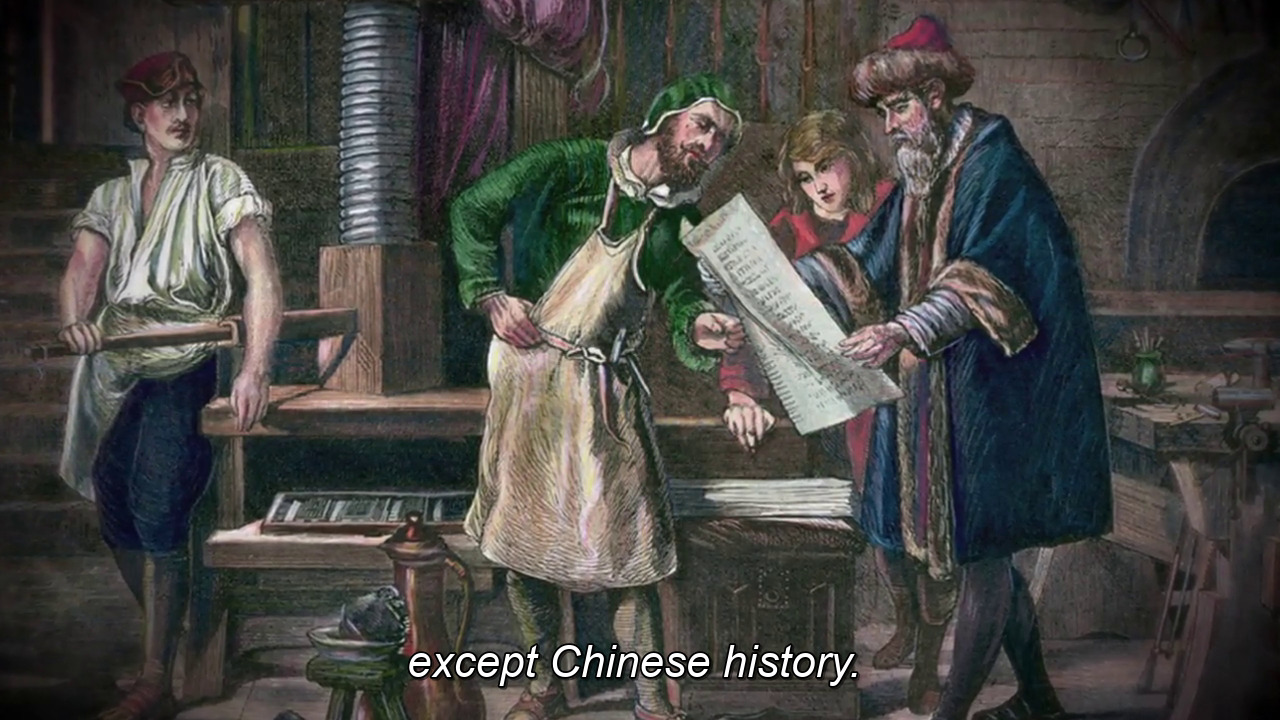
History of Printing


Posted in Asia, Books, Europe, History | Tagged , , | Leave a comment

Hearts not averse to being beguiled

October by Robert Frost

O hushed October morning mild,
Thy leaves have ripened to the fall;
Tomorrow’s wind, if it be wild,
Should waste them all.
The crows above the forest call;
Tomorrow they may form and go.
O hushed October morning mild,
Begin the hours of this day slow.
Make the day seem to us less brief.
Hearts not averse to being beguiled,
Beguile us in the way you know.
Release one leaf at break of day;
At noon release another leaf;
One from our trees, one far away.
Retard the sun with gentle mist;
Enchant the land with amethyst.
Slow, slow!
For the grapes’ sake, if they were all,
Whose leaves already are burnt with frost,
Whose clustered fruit must else be lost—
For the grapes’ sake along the wall.
Posted in Books, USA, Writing | Tagged , , | Leave a comment

Have you ever had a literary agent


Posted in Art, Books | Tagged , , , | Leave a comment

Eagerly I wished the morrow

“Ah, distinctly I remember it was in the bleak December;
And each separate dying ember wrought its ghost upon the floor.
Eagerly I wished the morrow;—vainly I had sought to borrow
From my books surcease of sorrow—sorrow for the lost Lenore—
For the rare and radiant maiden whom the angels name Lenore—
Nameless here for evermore.”

Well, here we are back in what I like to call the Edgar Allan Poe season. Invariably blogs and websites trot out stories about the tragic author of so many classic 19th century poems and novels. I suppose that this post falls naturally in that catagory as well.

The other day I ran across an interesting story referencing the wonderful 1884 edition of Poe’s heartbreaking tale The Raven (New York: Harper & Brothers, 1884) illustrated by Gustave Doré . The post reminded me of an account that I read many years ago about the very same edition. Oddly, the blog post failed to mention that Doré died before he had completed the engravings for the book and that many, if not most, were actually the work of other artists. This fact was likely hidden by the publisher at the time since the book was quite expensive in 1884— $10 —equivalent to about $250 today.

This was Doré’s last project before his death on January 23, 1883. His drawings were turned over to Harper & Brothers in New York City, where fourteen master engravers were hired to complete his work and rush the volume to press. The plates had to be cut in steel rather than copper because of the size of the edition: 10,000 copies with 26 engravings each, requiring at least 260,000 full-page sheets to be printed, collated, and bound.

Project Gutenberg has digital editions of the complete Doré edition of “The Raven,” as does the Library of Congress.


Posted in Art, Books, History, USA, Writing | Tagged , , , , | Leave a comment

What do you call a book nerd ?

Book lovers the world over have their own special nicknames. In English speaking countries, folks who are especially fond of reading are of often called “bookworms”.  The term bookworm comes from the holes in printed materials caused by larvae of various types of insects. This includes a huge variety of species of beetles, moths and, cockroaches.  The term appeared in the Oxford English Dictionary in 1580 for the first time. While first recorded use of the word “bookworm” referring to a person was in 1580, in a correspondence between the English poet Edmund Spenser and his friend Gabriel Harvey.

In France, the word for “bookworm” is “rat de bibliothèque” (library rat). In German, it’s “Bücherwurm” (bookworm). In Italy, the most common way to describe a book lover is “topo di biblioteca,”  which is a library mouse. The same in Spain – “ratón de biblioteca” is nothing else but a library mouse.

Personally, I’m partial to the Scandinavians who lean towards “booknerd”  rather than “bookworm”. In Swedish, it’s “boknörd,” in Danish – “bognørd,” and in Norwegian – “boknørd”.Whatever your favorite terminology is for bibliophiles, the excellent infographic map above from Mapologies shows what bookworms are called in almost any language spoken in Europe.


Posted in Books, Europe, Maps, Writing | Tagged , | 4 Comments

Secret Philadelphia

A regular follower of Travel Between The Pages recently asked for a recommendation on a “non-touristy” place to visit in Philadelphia. Without hesitation, I suggested the wonderful Rosenbach Museum and Library in the city’s charming Rittenhouse Square neighborhood.

It’s not really a secret that I think the Rosenbach is an overlooked gem in a city that’s jam packed with great museums and historic sites. Over the years, i’ve shared stories about some of the museum’s superb special exhibitions.

Located in a pair of elegant 19th-century townhomes near the leafy Rittenhouse Square, The Rosenbach of the Free Library of Philadelphia houses one of the North America’s best collections of rare books,manuscripts, literary memorabilia, and antiques. The collection is divided into two libraries, which are regionally and chronologically organized, with the East library showcasing such works as the second folio of William Shakespeare’s plays, Bram Stoker’s handwritten notes for Dracula,  and a handwritten manuscript of James Joyce’s Ulysses. Lewis Carroll’s own copy of Alice in Wonderland, a first edition of Don Quixote, and much more.

The West library focuses on the literary contributions of the United States, showcasing the only surviving copy of Benjamin Franklin’s Poor Richard’s Almanac, as well as the first book ever printed in America, some 20 years after the Pilgrims’ arrival. The museum’s collection, one of the largest of early American books, rivals only the Library of Congress in size and scope. You can also spot items like rings worn by Robert Louis Stevenson and Lord Byron’s card case among the countless first editions.

In 1954, after the deaths of the Rosenbach brothers – Dr. A.S.W., a dealer in rare books and manuscripts, and Philip, a dealer of fine arts and antiques – their individual libraries and collections were organized in the doctor’s townhouse. In 2002, The Rosenbach expanded into the historic house next door for more research and display space. In recent years, The Rosenbach has limited visitors to timed tickets and guided tours, so it’s important to plan ahead. The hours are Thu–Sat 10:30 AM–6:00 PM; Sun 10:30 AM–4:30 PM.


Posted in Architecture, Art, Books, History, Libraries, Museums, Tourism, USA, Writing | Tagged , , , , | 1 Comment

Neighborly

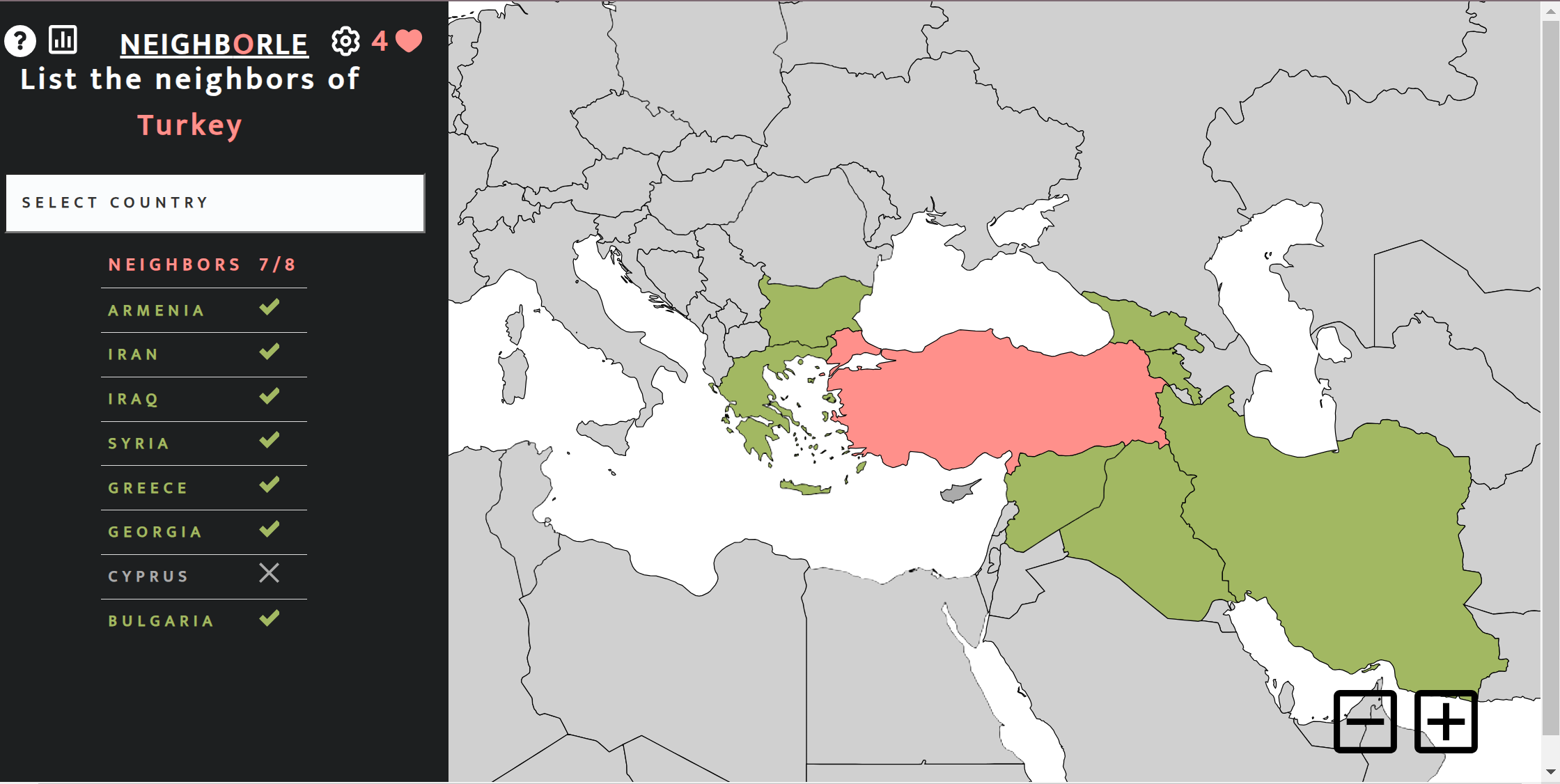
Can you name the eight countries which border Turkey ? If you can then you should head straight over to Neighborle.

Each day on Neighborle you are shown a different country on an interactive map. Your daily challenge is to name all the countries which border that day’s highlighted country. Every time you name a correct bordering country it will be shown in green on the map. If you enter an incorrect country then that country will be colored grey on the map. You are allowed to make five incorrect answers every day. Once you have made five incorrect answers you aren’t allowed any more guesses.
 

Posted in apps, Maps, Tech | Tagged , | 1 Comment

decisions, decisions


Posted in Art, Books | Tagged , | 1 Comment