Funnier than a dangling participle

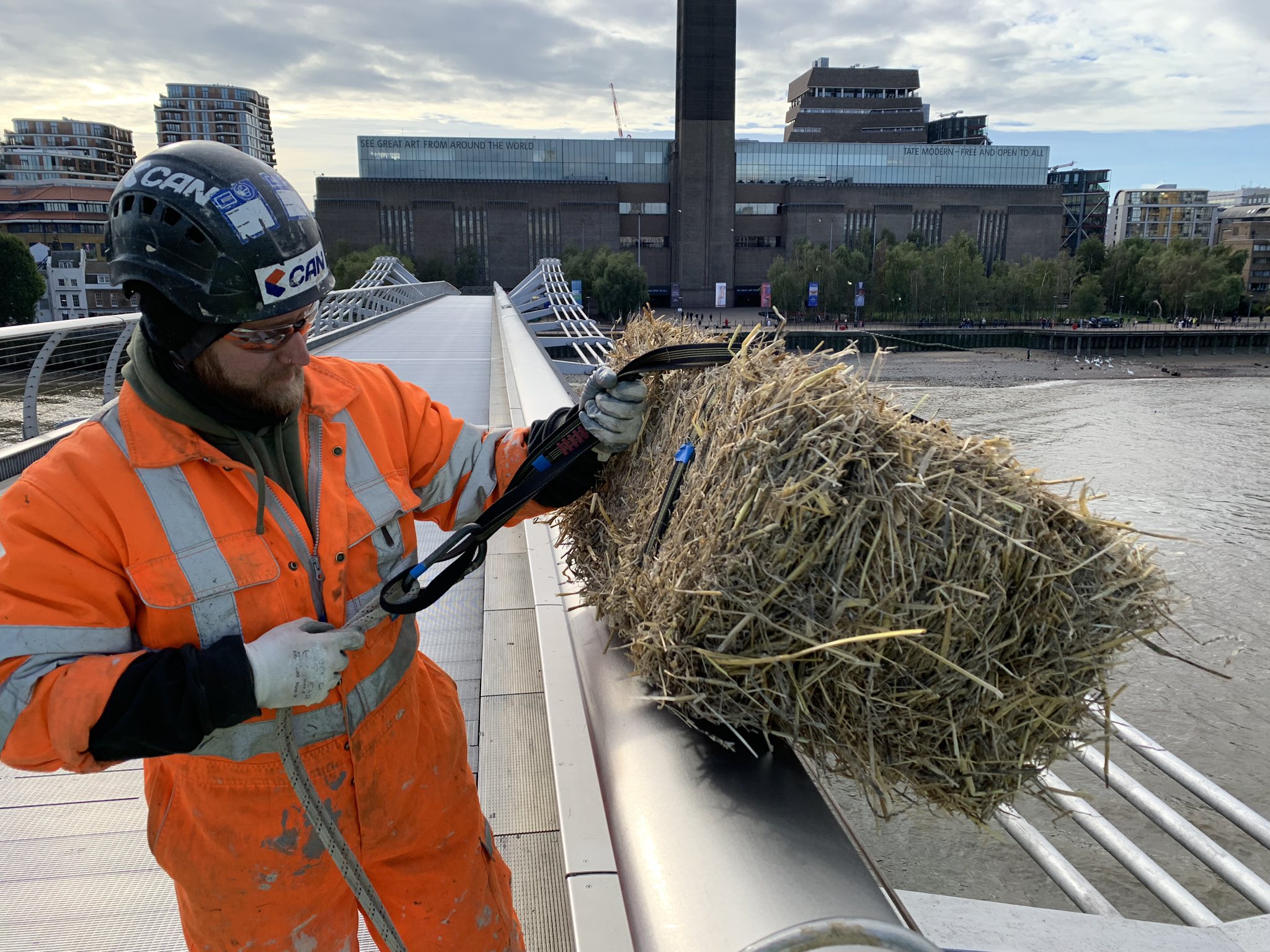
Regular readers of TBTP know that I am a hopeless Londonphile. I love the city and its wonderfully quirky traditions. So I was tickled to see a story about workers on London’s Millennium Bridge hanging a bale of straw under the structure due to the triggering of an ancient bylaw. Repair works to the footbridge mean straw must be dangled to warn oncoming boats of the work going on beneath it. The bale, which these days is lowered on climbing rope by workers, is intended to alert river traffic of the reduced headroom.

Due to necessary repair and cleaning work the bridge has been closed for three weeks, until November 5th. According to the Port of London Thames Byelaws, clause 36.2: “When the headroom of an arch or span of a bridge is reduced from its usual limits, but that arch or span is not closed to navigation, the person in control of the bridge must suspend from the centre of that arch or span by day a bundle of straw large enough to be conspicuous and by night a white light.”


Posted in Europe, History, Public Transport | Tagged , , , | Leave a comment

How to Help

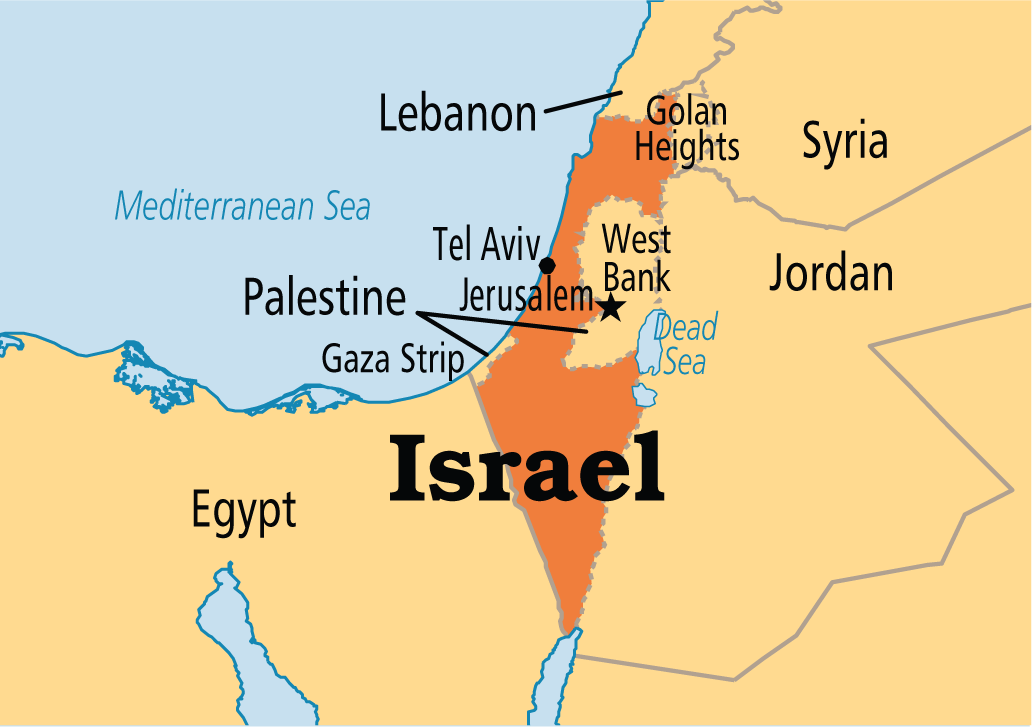
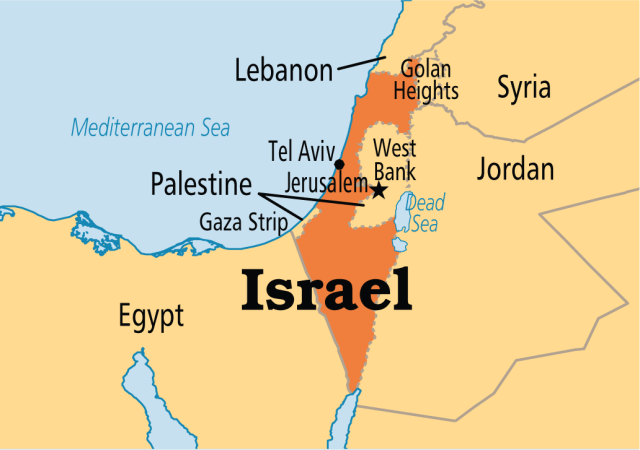
Like many folks observing the latest conflict in the Middle East I have been feeling a sense of helplessness. At times like this often the only option is to identify organizations that are actually providing aid and support to people caught up in the nightmare situation. So here’s a brief list of international and regional groups who are actively helping. Please consider supporting them in their efforts.

Doctors without Borders/Médecins Sans Frontières (MSF) describes itself as an “independent and impartial humanitarian organization” that delivers emergency medical care in places that need it. It does not currently run medical programs in Israel — citing its strong emergency and health systems — but says it has offered support to Israeli hospitals treating a high number of casualties. It does provide medical care in Gaza and is focused on meeting immediate emergency needs there, including donating medical supplies.

Magen David Adom is Israel’s national emergency medical, disaster, ambulance and blood bank service — the equivalent of a Red Cross. It says donations will be used to make sure responders and volunteers have all the training, equipment and medical supplies (including blood) to treat injured people. Former New York City Mayor Michael Bloomberg announced that Bloomberg Philanthropies will match all donations to Magen David Adom.

Middle East Children’s Alliance is a nonprofit dedicated to children’s rights in the Middle East, and supports dozens of community projects for Palestinian children.It says its team and partners are preparing to procure medical supplies for hospitals as well as provide emergency assistance to families who have fled their homes. Donations will go to provide medical aid, clean water, food and psychological support, it says.

United Nations Children’s Fund (UNICEF) works in over 190 countries and territories to protect children’s lives and rights. Spokesperson James Elder said 1.1 million children were already in need of humanitarian aid in the Gaza Strip and the West Bank before the current escalation of violence. UNICEF and its partners are on the ground in Gaza delivering medical supplies and fuel, as well as mental health and psychosocial support, he added.

The Jewish Agency for Israel is a global nonprofit, while its Fund for Victims of Terror provides immediate financial assistance to victims and their families.The group says it has disbursed hundreds of grants since the violence started, with representatives delivering checks of more than $1,000 within 48 hours of an event. It anticipates distributing more, as well as following up with long-term recovery and rehabilitative support.

The Jewish Federations of North America represents nearly 400 Jewish communities in the U.S. and Canada, and raises money to support the Jewish community on the continent and around the world.It says it’s working with core partners to support victims of terror, help rebuild infrastructure and address “the unprecedented levels of trauma” caused by the attack.It launched a $500 million campaign to support Israelis, with funding to be divided between urgent humanitarian needs and long-term rebuilding and rehabilitation. The group said Thursday it’s already allocated $10 million to 20 organizations providing emergency relief and support in Israel.

Anera addresses the development and relief needs of refugees and others hurt by conflicts in Gaza, the West Bank, Lebanon and Jordan. It’s working to provide humanitarian relief to Palestinians and residents of East Jerusalem.

According to its website, $30 can provide the Central Blood Bank Society in Gaza with 16 bags, $80 will provide a hygiene kit for two displaced families, $100 can provide a displaced family with enough food for seven to 10 days, and $200 will provide food to two families.

IsraAID is the largest humanitarian aid organization in Israel, and has responded to global disasters in over 50 countries. It’s collecting donations through its Emergency Response Fund, and says its plans will develop as needs on the ground evolve.

So far, it’s working local partners to: coordinate humanitarian activities in shelters housing evacuees from the Gaza border region, operate child-friendly spaces where kids can play and process, distribute resilience kits with stress relief activities for kids and families, train local teams on self-care and stress relief and train local mental health specialists on emergency-specific psychosocial support.

Palestine Children’s Relief Fund provides medical and humanitarian relief to Arab children, regardless of nationality or religion, and has had a presence in Gaza for some 30 years. It says donations mean access to medical care, mental health support and essential supplies for kids in Gaza.

Save the Children says it’s disbursed $1 million from its emergency fund to help its teams respond to lifesaving needs in both Israel and Gaza “when it is safe to do so.”

The NGO says its teams and their families are bracing for what’s next, knowing that children have “never emerged unscathed” — both in terms of their physical and mental health. Donations to its Children’s Emergency Fund will go towards warm blankets, nutritious food, health care and other supports.



Posted in Middle East | Tagged , | 6 Comments

Everyday Life

This time of the year most folks who visit the U.S. state of Vermont are on a leaf-peeping mission. However, there’s a little museum housed in an old barn that also deserves a detour.  The Museum of Everyday Life is a unique institution which offers “a heroic, slow-motion cataloguing of the quotidian–a detailed, theatrical expression of gratitude and love for the minuscule and unglamorous experience of daily life in all its forms. We celebrate mundanity, and the mysterious delight embedded in the banal but beloved objects we touch everyday. In pursuit of this mission, some of the questions we ask ourselves are: What would it be like to imagine a museum filled, not with exotic objects, but with perfectly familiar ones? What would it look like to defy the commodity-based model of collection and display? And how might it be possible to create massive participatory collections of objects in a way that illuminates the back and forth dance, the essential, vibrant relationship between objects and people?”

“The Museum has three components: 1) The Museum of Everyday Life Philosophy Department, involving the production and publication of theoretical writing about people and their relationship to objects, curatorial methodologies, and encylcopedism, 2) The Museum of Everyday Life Performance Company, which creates puppet shows and performances in an ongoing effort to examine and everyday life via the life of objects, and lastly, but most important 3) The Museum of Everyday Life Exhibitions and Collections, comprised of actual exhibits which make the theoretical work tangible and concrete.”

“The museum is located on Rt 16 about 5.5 miles south of Glover village in Northeastern Vermont, which we acknowledge is the traditional and unceded territory of the Abenaki and the Shawnee people.”


Posted in Art, Books, History, Museums, Tourism, USA | Tagged , , | Leave a comment

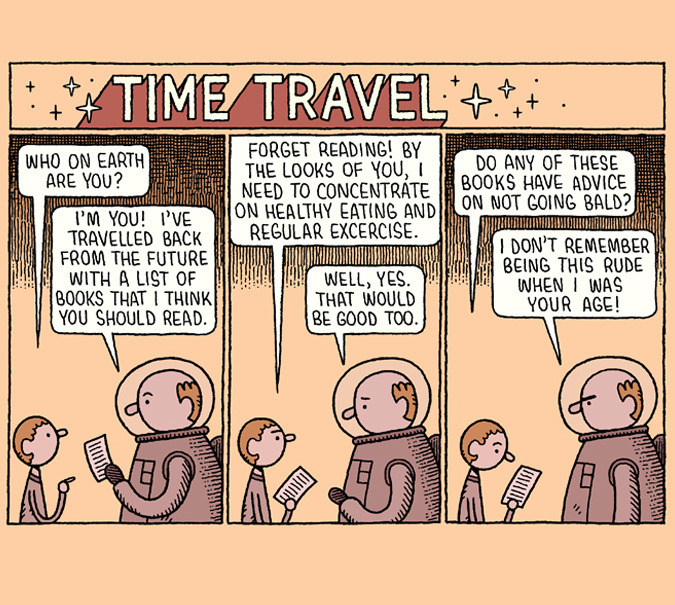
Time Travel


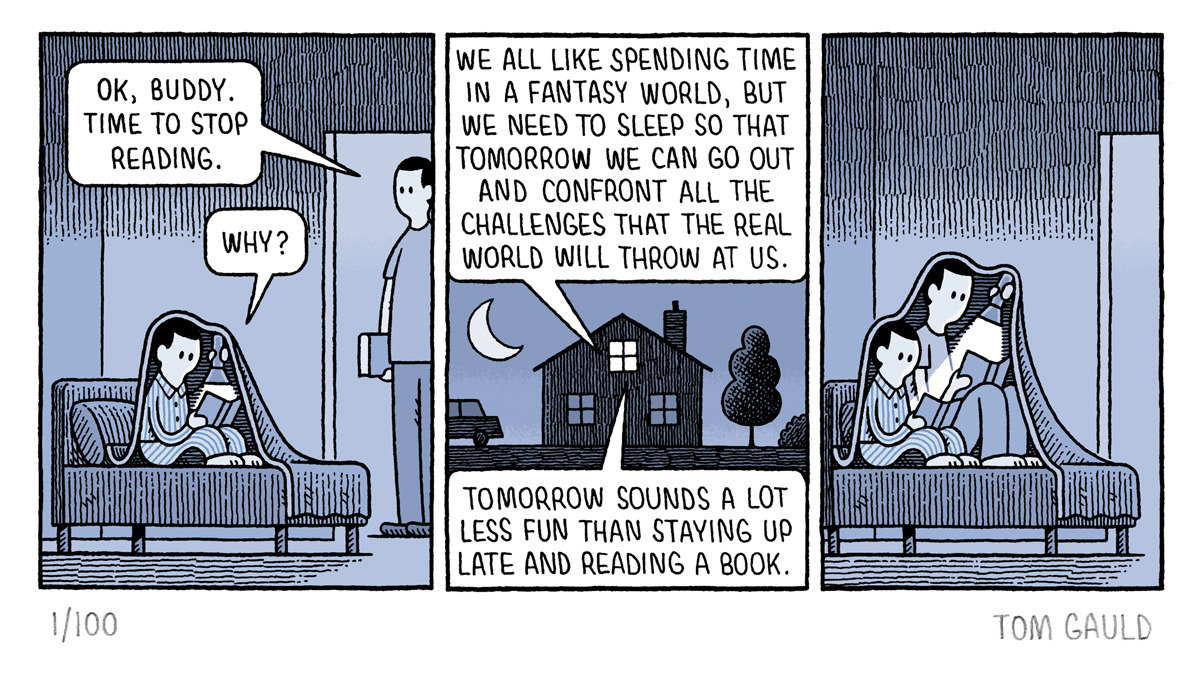
Posted in Books, Writing | Tagged , | Leave a comment

The (almost) Whole Whole Earth Catalog

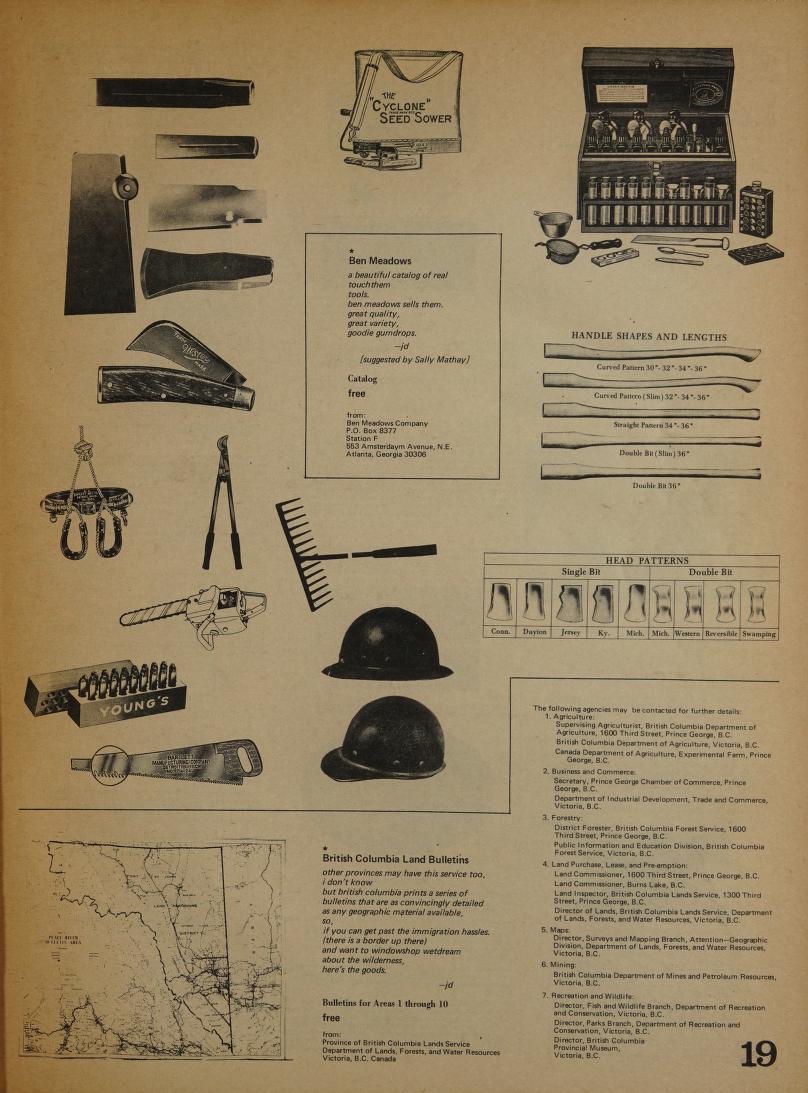
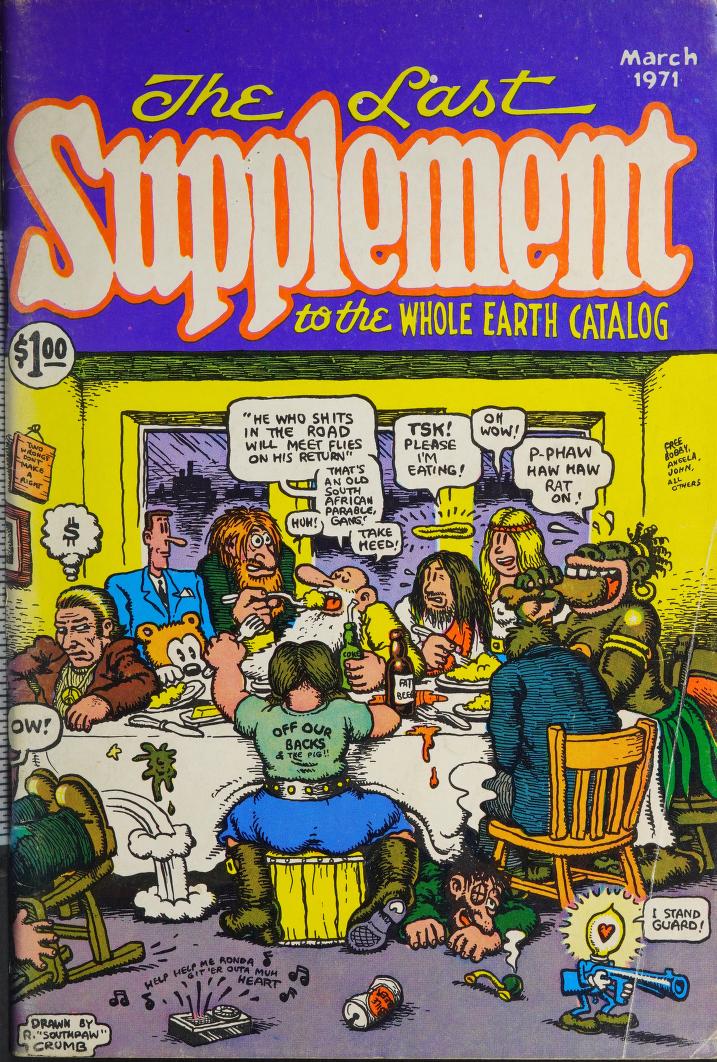
It’s likely that most Americans of the so-called Baby Boomer generation at one time or another spent some quality time perusing the Whole Earth Catalog. Now “nearly” complete copies of early editions are online at wholeearth.info.

Founded 55 years ago by counterculture icon Stewart Brand the eclectic resource that appealed to everybody from anarchists to back-to-the-land libertarians has been made available online for the first time. Readers can now flip through all the old catalogs, magazines, and journals right in their web browser, or download entire issues to their computer free of charge. The Whole Earth Catalog was the proto-blog—a collection of reviews, how-to guides, and primers on anarchic libertarianism printed onto densely packed pages. It carried the tagline “Access to Tools” and offered know-how, product reviews, cultural analysis, and gobs of snark, long before you could get all that on the internet.

Published several times a year between 1968 and 1972, and occasionally thereafter, until 1998. The magazine featured essays and articles, as well as product reviews. The editorial focus was on self-sufficiency, ecology, alternative education, “do it yourself,” and holism, featuring the slogan “access to tools.” The Whole eart Catalog was the pre-internet place to get information on everything from growing your own organic food to building your own geodesic dome home.

It’s well worth a nostalgic visit for the older folks, but also an enlightening look at the practical side of North America’s counterculture movement.


Posted in Architecture, Art, History, Tech, USA, Writing | Tagged , , , | 2 Comments

Saturday Sundries

Every festive season needs a traditional story. Autumn is no exception to this rule, so here’s the annual retelling of It’s Decorative Gourd Season, Motherfuckers. “I don’t know about you, but I can’t wait to get my hands on some fucking gourds and arrange them in a horn-shaped basket…”

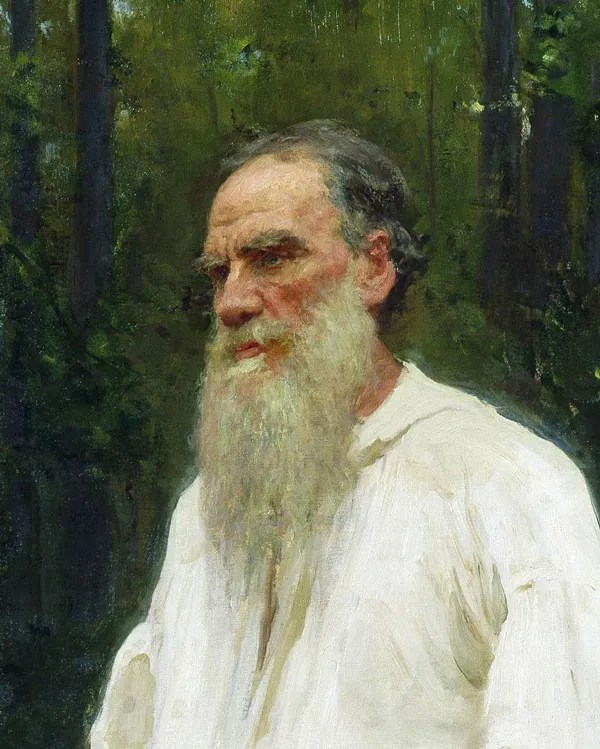
“Love is real only when a person can sacrifice himself for another person. Only when a person forgets himself for the sake of another, and lives for another creature, only this kind of love can be called true love, and only in this love do we see the blessing and reward of life. This is the foundation of the world.

Nothing can make our life, or the lives of other people, more beautiful than perpetual kindness.”

50 Short Rules for a Better Life (From the Stoics)

Focus on what you can control.
You control how you respond to things.
Ask yourself, “Is this essential?”
Meditate on your mortality every day.
Value time more than money/possessions.
You are the product of your habits.
Remember you have the power to have no opinion.
Own the morning.
Put yourself up for review (Interrogate yourself).
Don’t suffer imagined troubles.
Try to see the good in people.
Never be overheard complaining…even to yourself.
Two ears, one mouth…for a reason (Zeno)
There is always something you can do.
Don’t compare yourself to others.
Live as if you’ve died and come back (every minute is bonus time).
“The best revenge is not to be like that.” Marcus Aurelius
Be strict with yourself and tolerant with others.
Put every impression, emotion, to the test before acting on it.
Learn something from everyone.
Focus on process, not outcomes.
Define what success means to you.
Find a way to love everything that happens (Amor fati).
Seek out challenges.
Don’t follow the mob.
Grab the “smooth handle.”
Every person is an opportunity for kindness (Seneca)
Say no (a lot).
Don’t be afraid to ask for help.
Find one thing that makes you wiser every day.
What’s bad for the hive is bad for the bee (Marcus Aurelius)
Don’t judge other people.
Study the lives of the greats.
Forgive, forgive, forgive.
Make a little progress each day.
Journal.
Prepare for life’s inevitable setbacks (premeditatio malorum)
Look for the poetry in ordinary things.
To do wrong to one, is to do wrong to yourself. (sympatheia)
Always choose “Alive Time.”
Associate only with people that make you better.
If someone offends you, realize you are complicit in taking offense.
Fate behaves as she pleases…do not forget this.
Possessions are yours only in trust.
Don’t make your problems worse by bemoaning them.
Accept success without arrogance, handle failure with indifference.
Courage. Temperance. Justice. Wisdom. (Always).
The obstacle is the way.
Ego is the enemy.
Stillness is the key.

Found here.


Posted in Art, Books, Writing | Tagged , , | Leave a comment

” I wish the world were ending tomorrow. “

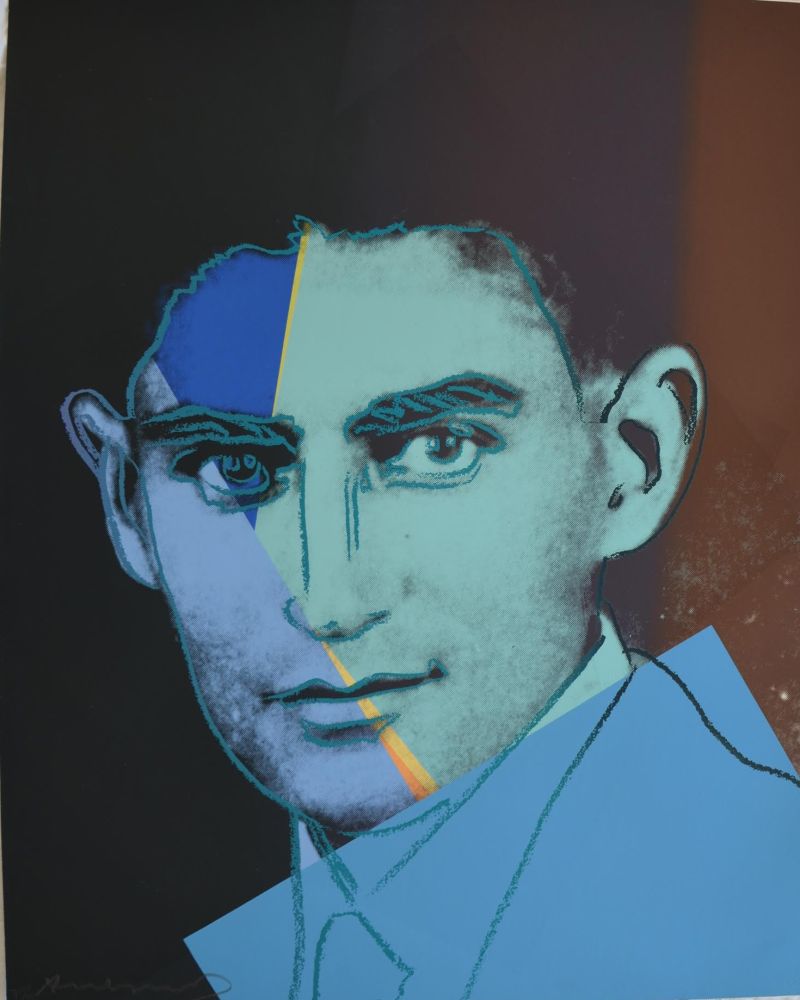
Franz Kafka // I wish the world were ending tomorrow. Then I could take the next train, arrive at your doorstep…and say: ‘Come with me…we are going to love each other without scruples or fear or restraint. Because the world is ending tomorrow.’ Perhaps we don’t love unreasonably because we think we have time, or have to reckon with time. But what if we don’t have time? Or what if time, as we know it, is irrelevant? Ah, if only the world were ending tomorrow. We could help each other very much.”

“Lo que de veras fue, no se pierde; la intensidad es una forma de eternidad.”

“What really was, is not lost; intensity is a form of eternity.”

Jorge Luis Borges, Ensayo dedicado a Las Coplas de Jorge Manrique.

Frida Kahlo // “Nothing is absolute. Everything changes, everything moves, everything revolves, everything flies and goes away.”

Gilles Deleuze // “The problem is no longer getting people to express themselves, but providing little gaps of solitude and silence in which they might eventually find something to say… What a relief to have nothing to say, the right to say nothing, because only then is there a chance of framing…the thing that might be worth saying.”

Arundhati Roy

Arundhati Roy // “The system will collapse if we refuse to buy what they are selling…their ideas, their version of history, their wars…their notion of inevitability. Remember this: We may be many and they be few… Another world is not only possible, she is on her way. On a quiet day, I can hear her breathing.”

Albert Camus // “The only way to deal with an unfree world is to become so absolutely free that your very existence is an act of rebellion.”


Posted in Art, Books, Writing | Tagged , , , | Leave a comment

A library implies an act of faith

Opened in 1897 as the Chicago Public Library, the Chicago Cultural Center is housed in a beautiful Beaux-Arts building designed by George Foster Shepley, and opened in 1897. While the center is famous for its stunning Tiffany stained-glass domes, it also features a series of wonderful mosaic murals.

The mosaics are located in the staircase that leads from the Preston Bradley Hall – the site of the world’s largest Tiffany stained-glass dome. This historic hall was originally the place where people picked up the books they had requested from the Chicago Public Library.


Posted in Architecture, Art, Books, Libraries, Tourism, USA | Tagged , , | Leave a comment

I don’t need anything from here.

“I Don’t Need Anything from Here”

by

László Krasznahorkai

translated by Ottilie Mulzet


I would leave everything here: the valleys, the hills, the paths, and the jaybirds from the gardens, I would leave here the petcocks and the padres, heaven and earth, spring and fall, I would leave here the exit routes, the evenings in the kitchen, the last amorous gaze, and all of the city-bound directions that make you shudder, I would leave here the thick twilight falling upon the land, gravity, hope, enchantment, and tranquillity, I would leave here those beloved and those close to me, everything that touched me, everything that shocked me, fascinated and uplifted me, I would leave here the noble, the benevolent, the pleasant, and the demonically beautiful, I would leave here the budding sprout, every birth and existence, I would leave here incantation, enigma, distances, inexhaustibility, and the intoxication of eternity; for here I would leave this earth and these stars, because I would take nothing with me from here, because I’ve looked into what’s coming, and I don’t need anything from here.

via

Posted in Books, Europe, Writing | Tagged , | Leave a comment

The Invention of Fantasy

The Man Who Invented Fantasy

All those wizards, ogres, and barely-clad elf queens in the bookstore? You have Lester del Rey to thank.

by Dan Sinykin

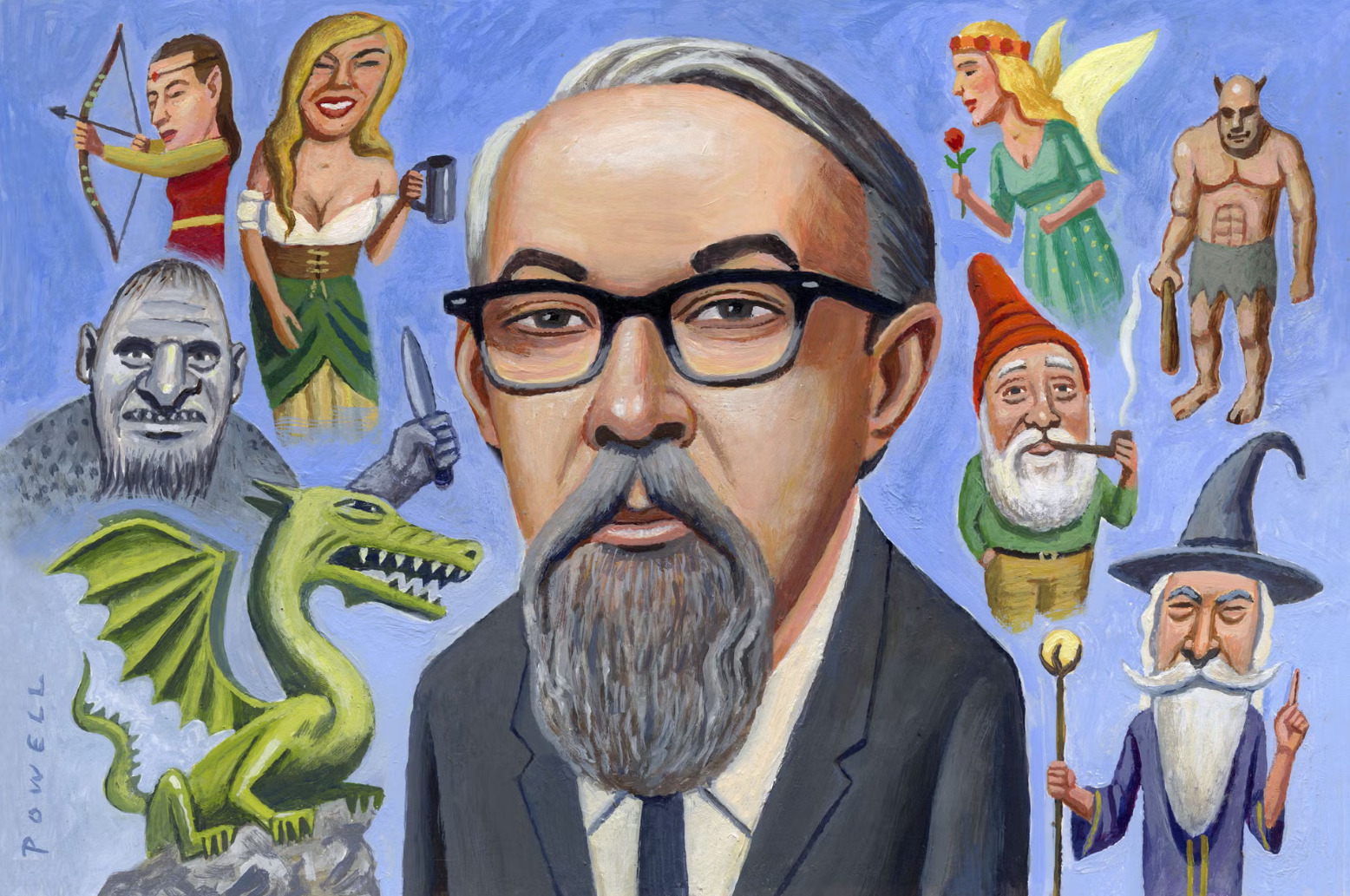
Lester del Rey wore 1950s-style horn-rimmed glasses, an unruly billy-goat beard, and his silver hair brushed back above a big forehead. He liberally dispensed cards that said: Lester del Rey, Expert. He sometimes said his full name was Ramón Felipe San Juan Mario Silvio Enrico Smith Heathcourt-Brace Sierra y Alvarez-del Rey y de los Verdes. He was in fact born Leonard Knapp, son of Wright Knapp, in 1915 in rural southeastern Minnesota, subject to the Minnesotan fever—Jay Gatz, Prince Rogers Nelson, Robert Zimmerman—for reinventing oneself. In 1977, del Rey, then in his 60s, turned his proclivity for fabulism to profit: He invented fantasy fiction as we know it.

I always thought fantasy had existed forever. Elves and wizards were old. Stories about them must have been, too, drawn from deep history, passed from generation to generation, just as my dad read J.R.R. Tolkien’s The Lord of the Rings to me when I was 6. Part of the magic of these tales is the sense that they have always been this way; it’s thanks to that continuity with the past that we’re able to touch the enchanted premodern world, a place that hasn’t yet been rationalized by capitalism and science. With C.S. Lewis’s Lucy, I, too, walked through the wardrobe to Narnia. By middle school in the mid-1990s, I was ripping through the books of Piers Anthony’s Xanth series, with its basilisks and ogres, which were by then regularly landing on the New York Times bestseller list.

But it turns out that fantasy, as an enduring publishing genre, is hardly older than I am. All sorts of things had to go right—and wrong—to make it happen.

Source: Slate
Posted in Books, USA, Writing | Tagged , , | Leave a comment