“A Society of Scoundrels”

“A Society of Scoundrels”

by

Franz Kafka

Translated by Michael Hofmann


There was once a society of scoundrels, or rather not scoundrels per se, just ordinary, average people. They always stuck together. When one of them had perpetrated some rascally act, or rather, nothing really rascally, just averagely bad, he would confess it to the others, and they investigated it, condemned it, imposed penalties, forgave him, etc. This wasn’t corrupt — the interests of the individual and the society were kept in balance and the confessor received the punishment he asked for. So they always stuck together, and even after their death they didn’t abandon their society, but ascended to heaven in a troop. It was a sight of childlike innocence to see them flying. But since everything at heaven’s gate is broken up into its component parts, they plunged down like so many rocks.


Posted in Books, Writing | Tagged , | Leave a comment

Banned Book Club

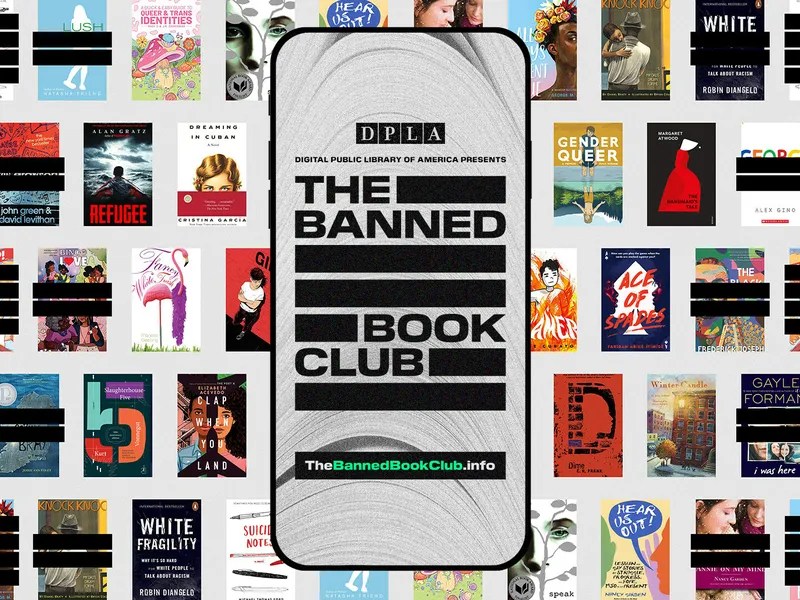
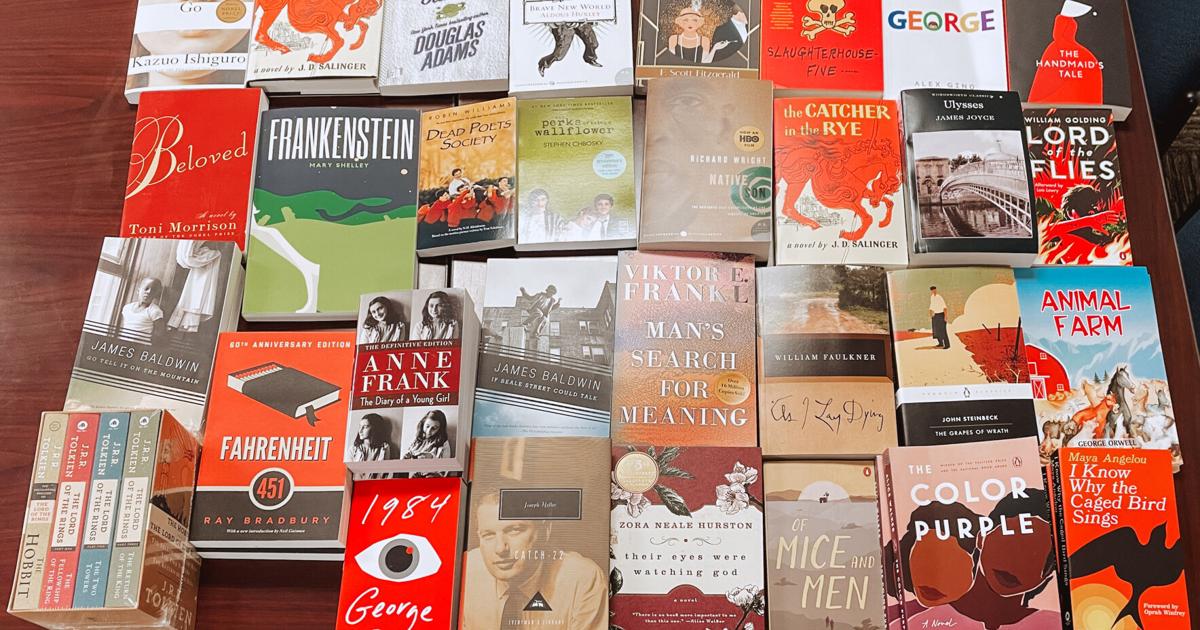
The Digital Public Library of America (DPLA) launched a new program earlier this month called the Banned Book Club. The program gives users access to books that have been banned in their local libraries by using “GPS-based geo-targeting.” To use the service, readers can go to TheBannedBookClub.info and share their location to view the banned books in their area. The books can then be downloaded for free with the Palace e-reader app.

Executive director of the DPLA John S. Bracken said, “At DPLA, our mission is to ensure access to knowledge for all and we believe in the power of technology to further that access.” He continued, “Today book bans are one of the greatest threats to our freedom. We have created the Banned Book Club to leverage the dual powers of libraries and digital technology to ensure that every American can access the books they want to read.”


Posted in Books, Freedom of Speech, Libraries | Tagged | Leave a comment

For some reason, the word ‘Sunday’ makes his head ache

Vampire

by Robert Coover

He sets off one day on an arduous journey to a remote kingdom, wondering, as the weeks pass, about the wisdom of it. Even the purpose. When he launched forth, he was sure he had a purpose, but by the time he reaches the primitive mountain village at the edge of the wilderness, he can no longer remember it. In fact, he is not certain this was his original destination. Wasn’t he going to the barber shop? It was summertime when he left, but now it is winter and the dead of night and he is alone and dressed only in his golf shirt and orange-and-green checked Bermuda shorts. He is met by villagers, huddled in heavy furs, who stare at him with expressions of dread and horror. He’s a friendly guy, even among strangers, always ready to buy the first round, and he puts his hand out and flashes them his best smile, but they shriek and shrink back, crossing themselves theatrically. A horse-drawn sleigh stands waiting in the middle of the snowy road, apparently meant for him, the driver’s face hidden in his upturned collar and large fur hat, the horses impatiently snorting plumes of white fog. There are thick fur wraps laid out for him on the seat, so he crawls into the sleigh and pulls them around him and they’re off, whipping over the snowswept mountains with alarming speed, the sleigh’s bells tolling funereally. The icy wind pushes his eyelashes back, but he can see nothing except the snow thudding against his naked eyeballs. The sleigh stops abruptly in a neighbourhood of ancient stone castles. He is dropped off unceremoniously in front of one of them, and the sleigh flies off into the distance, rear lanterns wagging frantically in the black night. Overhead, the bitter wind whistles around the louring towers, and wolves howl menacingly in the surrounding hills. As he approaches the heavy doors, they open of their own accord, the hinges grinding, and he enters the castle’s great hall. It is starkly inhospitable, unkempt and cold and smelling vaguely of unwashed laundry, yet, for all that, it looks suspiciously like his own living room. The television is on so he goes in and, exhausted by his travels, collapses in front of it, ready to accept whatever might appear there. Seems to be a sitcom with comic monsters playing a ball game of some sort with human heads. He laughs along with the canned laughter on the TV and about as sincerely. His wife comes in, baring, with a wink, her incisors, and offers him a Bloody Mary. She has a drained and haggard look, not at all like the plump little country club souse he left behind. Well, keeping house in a place like this can’t be easy. The children are swinging from the fixtures overhead, squealing, squabbling, pissing drollishly upside down, the big ones biting the little ones and making them cry; like children everywhere, he supposes, though in truth he’s never paid much attention to the noisome little pests. The wolves are still howling ravenously out there, and he can empathize with them, feeling more than a bit wolfish himself. The Bloody Mary, downed in a single long swallow, has picked him up, but he’s famished, can’t remember when last he ate, his stomach growling like dogs fighting over a bone. He has an appalling urge to set upon his daughter, who has appeared succulently in the doorway, pig-tailed and rosy-cheeked, but his wife comes in and sweeps the child away. Which, feeling slighted, he resents, while understanding his resentment as instinctive, and so forgivable. As are, surely, all his crimes, which are not really crimes at all, but merely attributes of his immutable character, like his domestic failings or his golf handicap. He should lift himself out of the torture instrument that is his chair and go see what’s available in the meat locker, but he is overwhelmed by a terrible weariness, which he associates with the breaking of dawn. His other children come in to say goodnight, gnashing their fangs as they crawl over him. He manages to fend them off, but he is growing weaker. He should be making his way to the cellar for a little shut-eye amid the cobwebs. If he could only move. But the heavy front doors creak open again and there’s his neighbour, the doctor, who has a nasty habit of turning up just when his strength is waning. Always a damned nuisance with his loathsome crosses and garlicky breath and his unbearable platitudes. Now, he’s talking about getting up a round of golf on Sunday. For some reason, the word ‘Sunday’ makes his head ache just behind his eyes and his hemorrhoids flare up, and he knows the doctor said it on purpose. He should try to stay awake, but somewhere there’s the somnolent whirring of little wings and, though he’s pretty sure the doctor is going to stake his heart when he drops off, his eyelids close like iron shutters. Outside, the wind is howling and branches scrape against the castle walls. Really, I’m a decent fellow and I deserve something better, he thinks as his mind irises out.
Posted in USA, Writing | Tagged | 1 Comment

Pity the Nation

Pity the nation that wears a cloth it does not weave
and eats a bread it does not harvest.

Pity the nation that acclaims the bully as hero,
and that deems the glittering conqueror bountiful.

Pity a nation that despises a passion in its dream,
yet submits in its awakening.

Pity the nation that raises not its voice
save when it walks in a funeral,
boasts not except among its ruins,
and will rebel not save when its neck is laid
between the sword and the block.

Pity the nation whose statesman is a fox,
whose philosopher is a juggler,
and whose art is the art of patching and mimicking

Pity the nation that welcomes its new ruler with trumpeting,
and farewells him with hooting,
only to welcome another with trumpeting again.

Pity the nation whose sages are dumb with years
and whose strongmen are yet in the cradle.

Pity the nation divided into fragments,
each fragment deeming itself a nation.

~Kahlil Gibran


Posted in Books, Middle East, Writing | Tagged , | Leave a comment

To be hopeful in bad times is not just foolishly romantic

To be hopeful in bad times is not just foolishly romantic. It is based on the fact that human history is a history not only of cruelty, but also of compassion, sacrifice, courage, kindness.
What we choose to emphasize in this complex history will determine our lives. If we see only the worst, it destroys our capacity to do something. If we remember those times and places—and there are so many—where people have behaved magnificently, this gives us the energy to act, and at least the possibility of sending this spinning top of a world in a different direction.
And if we do act, in however small a way, we don’t have to wait for some grand utopian future. The future is an infinite succession of presents, and to live now as we think human beings should live, in defiance of all that is bad around us, is itself a marvelous victory.

~Howard Zinn

(Book: You Can’t Be Neutral on a Moving Train)

Posted in Books, History, USA, Writing | Tagged , | Leave a comment

Rock & Roll Bibliophile

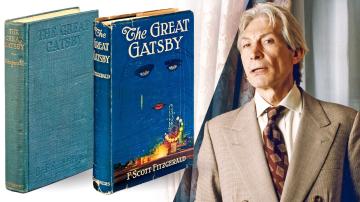
I was today years old when I learned that the late Rolling Stones drummer Charlie Watts was a longtime bibliophile and rare book collector. This September, hundreds of books owned by Watts will go up for auction at  London auction house Christie’s. Watts, who died in 2021 at the age of 80, was a devoted bibliophile and collector; Christie’s describes the cache, which includes rare editions of books by George Orwell, James Joyce, Virginia Woolf, Graham Greene, Arthur Conan Doyle, Agatha Christie, among others, as “an unparalleled library of modern first edition books, the finest and highest value collection of its kind to come to auction in over twenty years.”

The marquee item is a first edition of F. Scott Fitzgerald’s The Great Gatsby, which was inscribed by the author to screenwriter Harold Goldman, as the “original ‘Gatsby’ of this story, with thanks for letting me reveal these secrets of his past.”

The auction will also include an inscribed first edition of Arthur Conan Doyle’s The Hound of the Baskervilles, as well as Dylan Thomas’s own copy of his first book, 18 Poems, Mark Wiltshire, a books and manuscripts specialist at Christie’s, told The Guardian. The volume is inscribed three times—once as Thomas’s own, “once when he’s presenting it to his first serious girlfriend, and he crosses that out and then he presents it another time to a next girlfriend,” Wiltshire explained. The collection as a whole, he added, reveals Watts’s “incredibly sensitive curiosity about the very best of literature.”

The auction will take place in London on September 28; an online sale will run from September 15-29.

[via Reuters]

Posted in Uncategorized | Tagged , , , | 3 Comments

When is a travel book not a travel guide

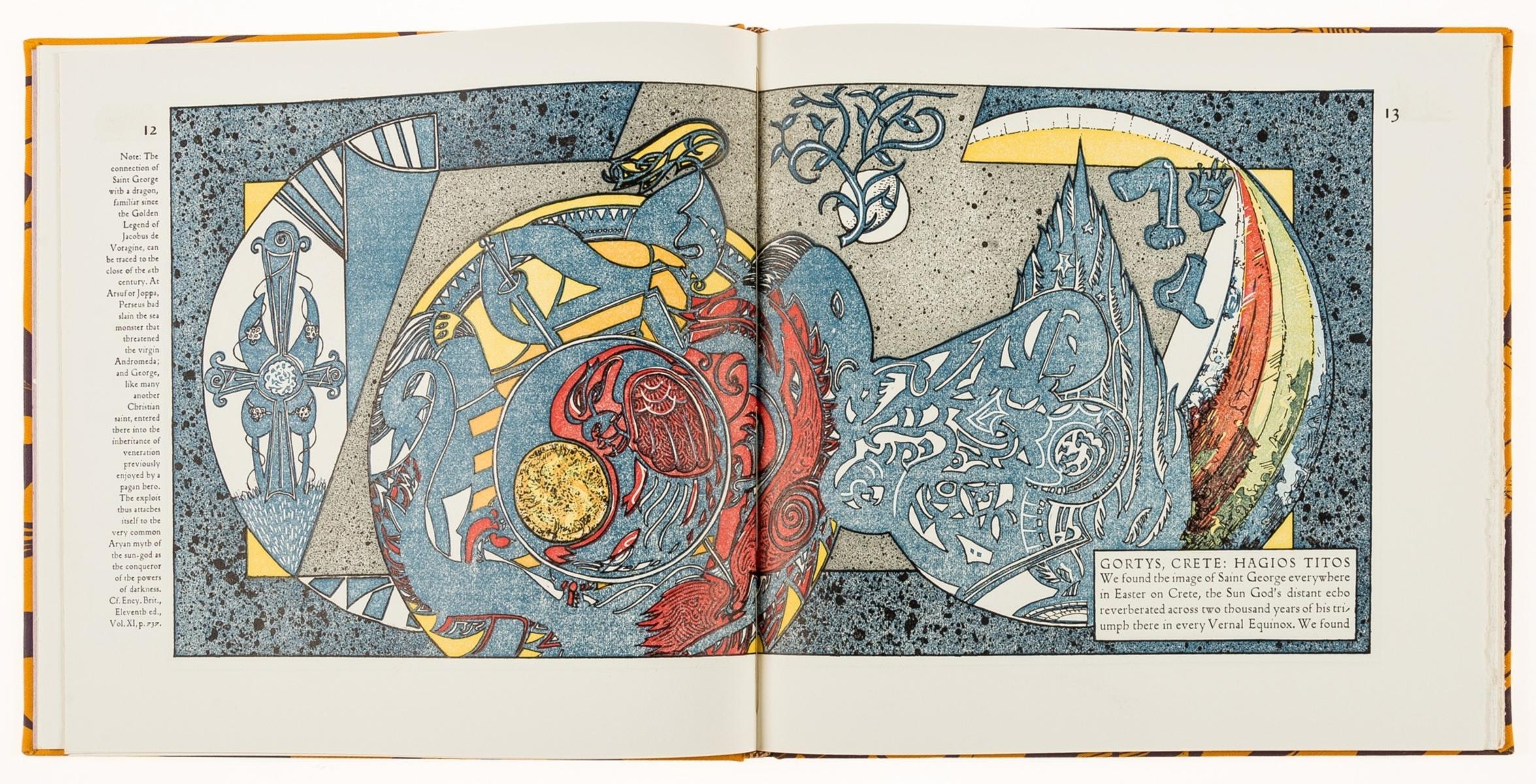
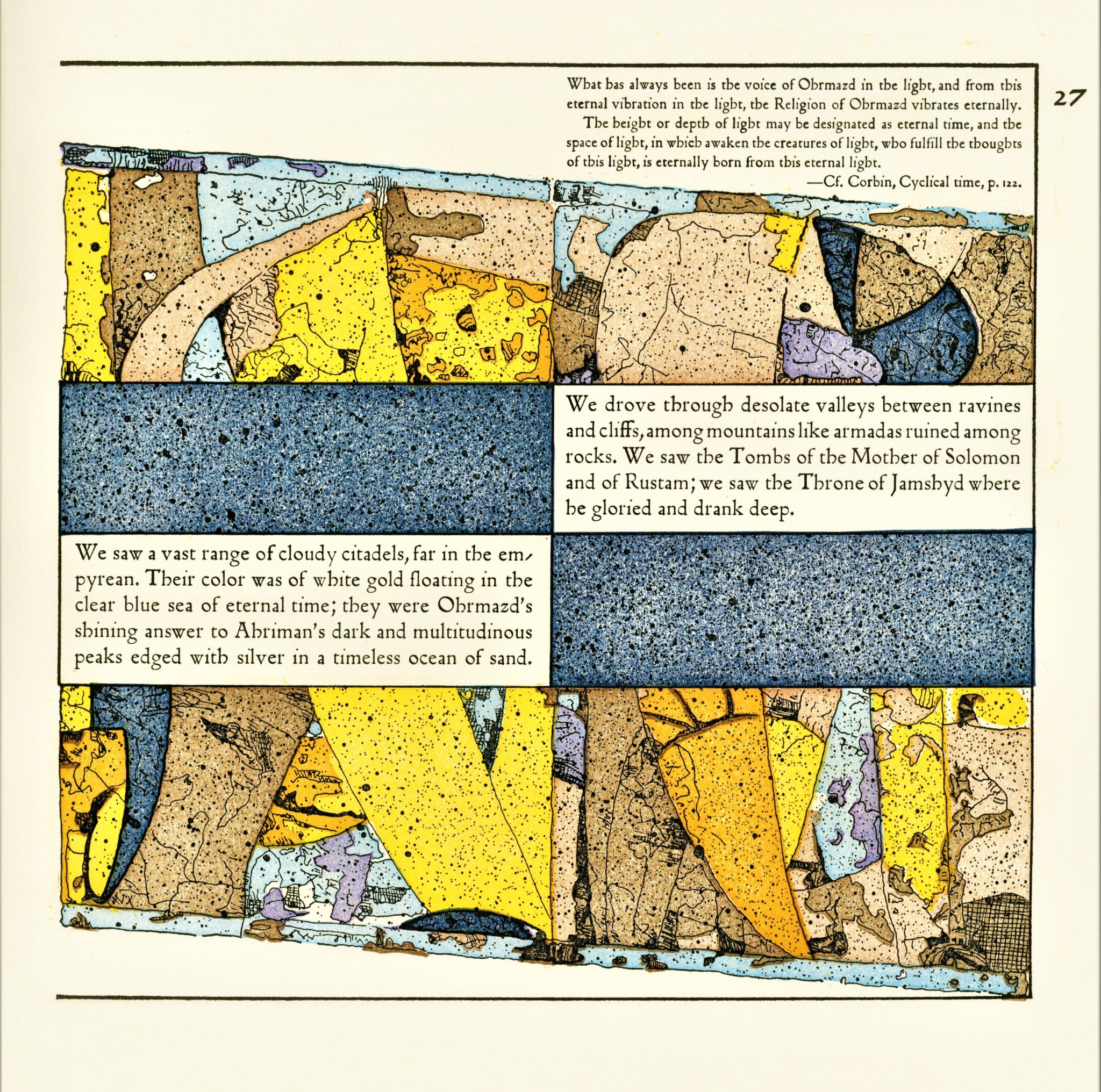
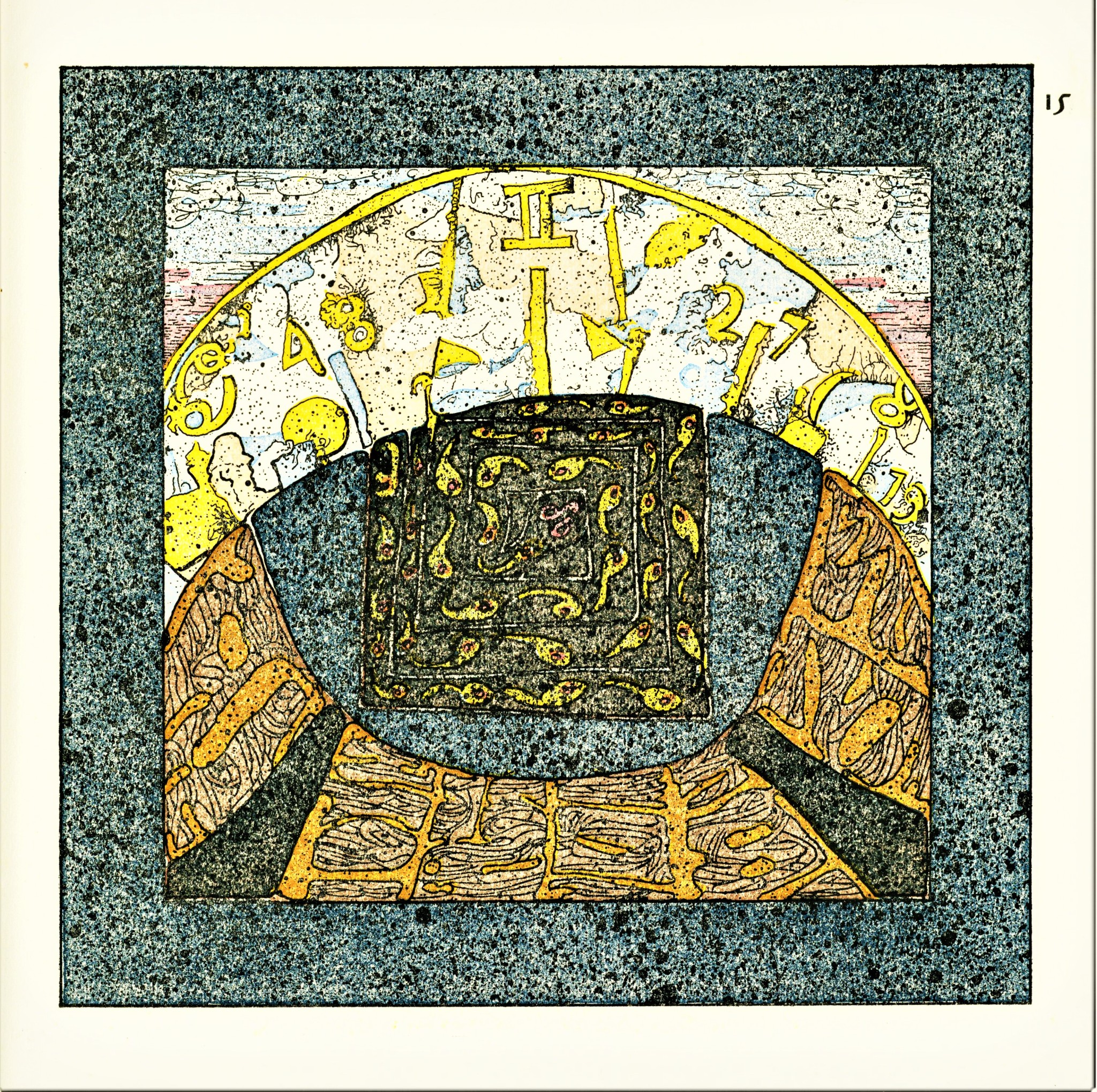
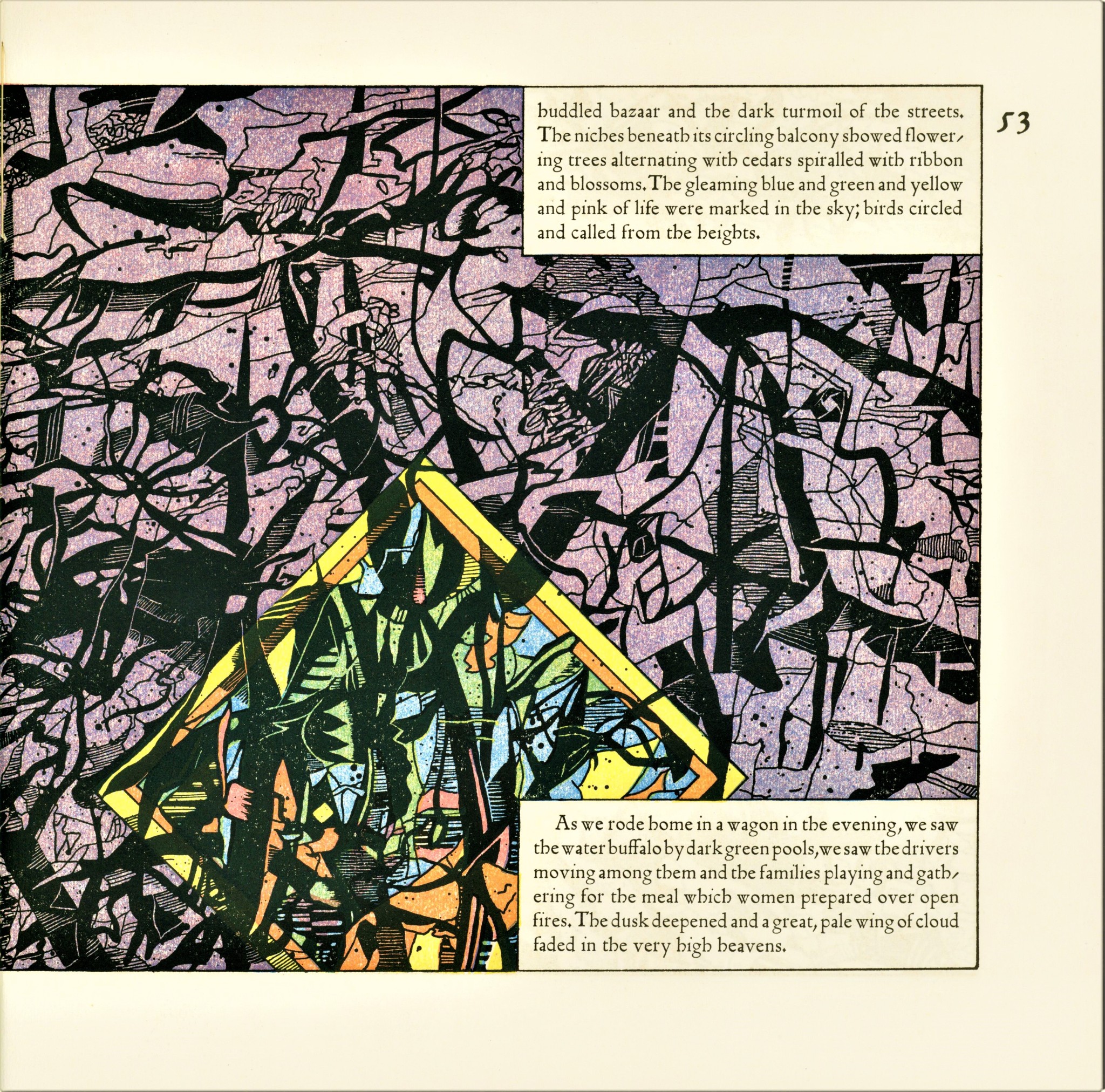
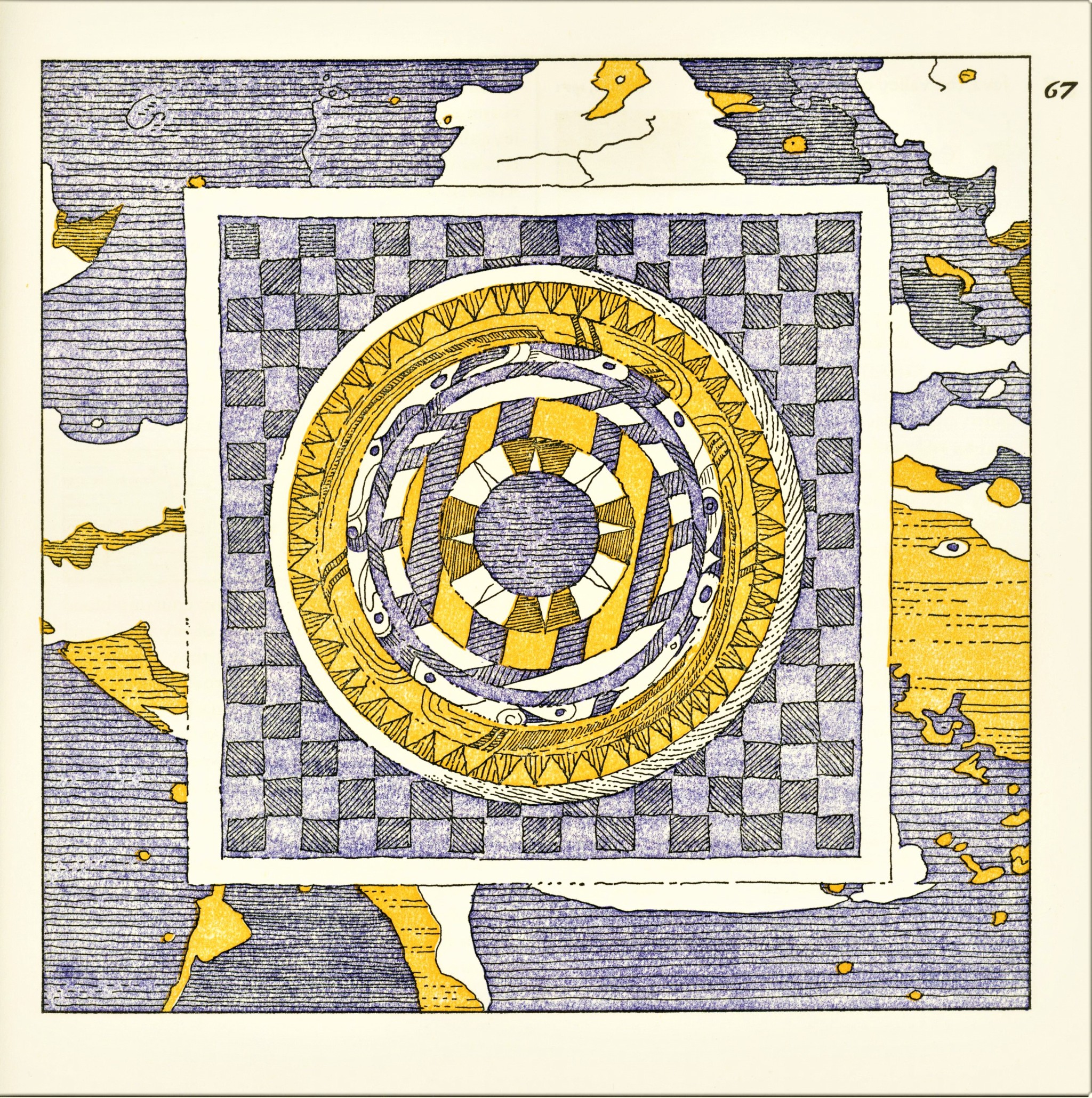
As a collector of, and dealer in, the niche market of travel books, I’m always on the lookout for rare and unusual travel books. Many years ago, I read about a special travel book that was not in any way a travel guide.  A Travel Book, written and illustrated by American artist, educator, and arts administrator Fred Martin and printed in 1976 under the direction of Andrew Hoyem at his Arion Press in San Francisco, was issued  in an edition of just 200. My search for the book only turned up copies in museum collections, so I basically forgot about it. This week, I ran across a reference to the book and also found a copy for sale, but didn’t make the purchase after all as it was over priced.

Nevertheless, I still find A Travel Book to have an intriguing backstory. The author and illustrator Fred Martin, who was retiring after a long career at the San Francisco Art Institute, rewrote the notes he had made during a 1971 round-the-world trip and created 42 color linocuts based on his watercolor designs for this publication that was printed in handset Inkunabula type, designed by Raffaello Bertieri in 1921 for the Nebiolo type foundry, on specially-made cotton paper by the Curtis Paper Company. The binding is by Susan Spring Wilson with a silkscreened-printed cloth design by Martin.

Martin wrote in the exhibition catalog Four Decades that he “thought it would be great to take the 1971 text, revise it into an almost mythological story and to develop illustrations to fit.” For the project, he studied medieval and Islamic illuminated manuscripts and drew inspiration from “everything from Jung to Avicenna, from my mystical geometry to Byzantine art to Islamic calligraphy.”


Posted in Art, Books, Travel Writing, USA, Writing | Tagged , , | Leave a comment

A mesmerizing journey

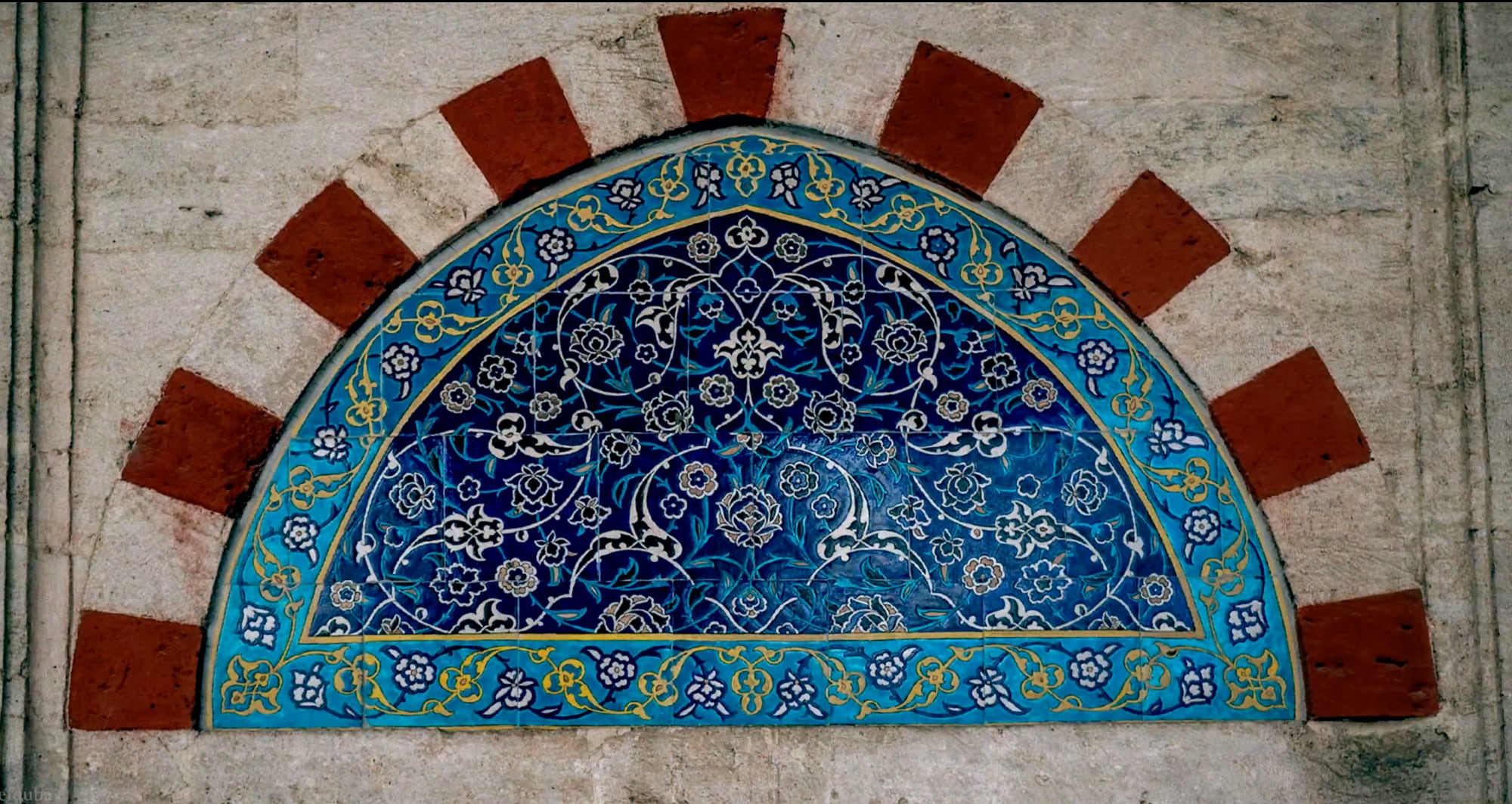
I ran across the stunning stop-motion video Takrar on a number of websites over the past week and watched each time. Takrar or Repetition is an experimental film that celebrates the timeless and intricate beauty of ancient craftsmanship. Filmed in Istanbul, the film takes us on a mesmerizing journey into the past, paying homage to Islamic, Ottoman, Greek, and Byzantine art forms.

Syrian-German filmmaker and animator Waref Abu Quba takes viewers on a hypnotic tour through the ornate art and architecture of Istanbul. Comprised of 270 shots culled from about 2,900 photos taken over a two year period, the stop-motion animation focuses  on the elaborate motifs and craftsmanship spotted throughout the Turkish capital. “When I first visited Istanbul in 2021, I was captivated by its timeless beauty and decided to capture it through my lens,” Quba says. “Creating each frame of this film was an utter joy, and every new scene brought unexpected and beautiful surprises.”

nb: if the video fails to launch, please click here.


Posted in Animation, Architecture, Art, Asia, Europe, Film, Tourism | Tagged , , | 1 Comment

Summer reads and more

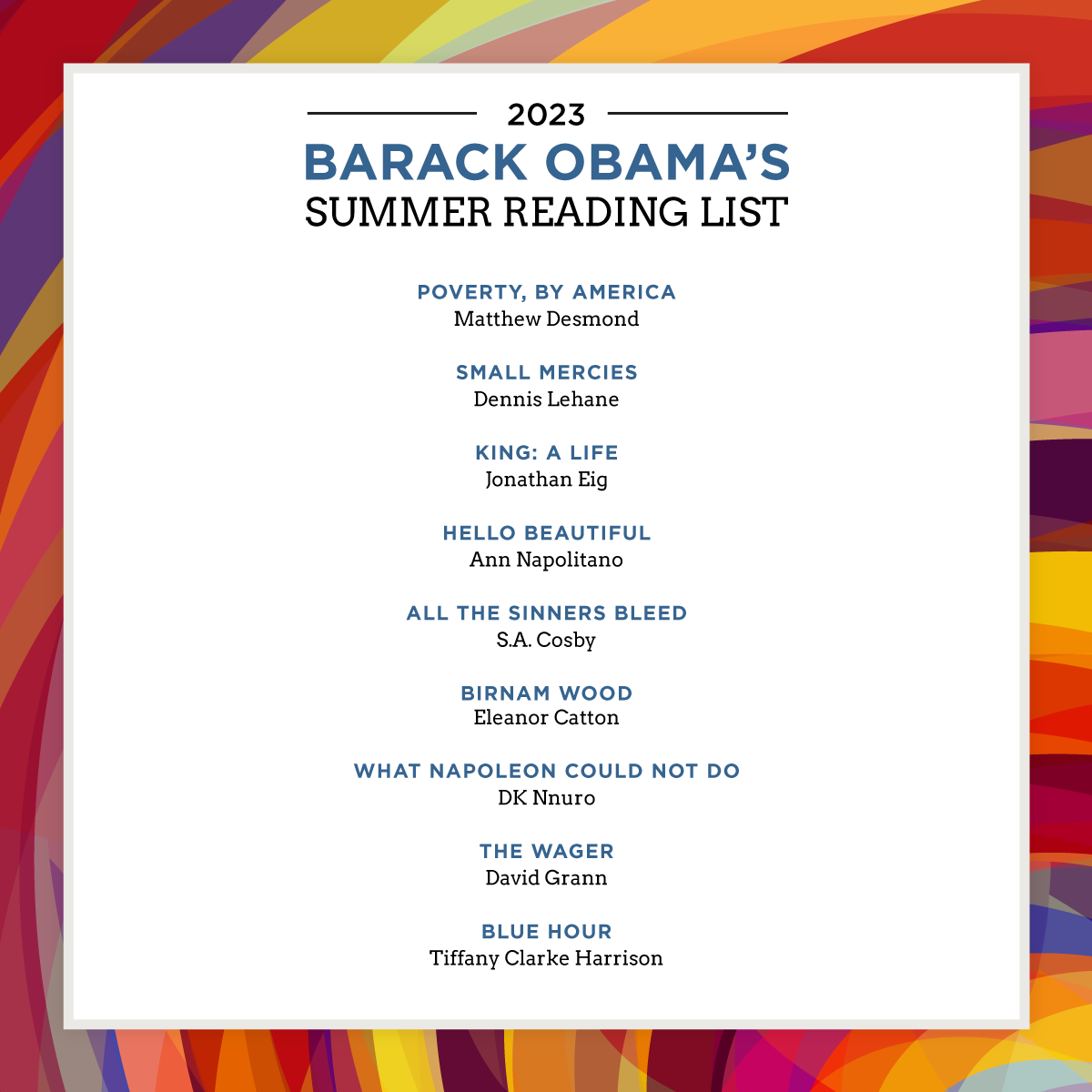
It’s that time of the year when former President Barack Obama releases his summer reading list. Since he has such impeccable and varied tastes, those of us who care about books take notice. While I usually have read at least a few of the titles on his annual list, this year I have only read one of the novels. To be honest, I mainly chose Birnam Wood by Eleanor Catton because it was set in New Zealand. On Instagram, he wrote, “Here’s some books that I’m reading this summer. Check them out and let me know what I should be reading next.” Obama’s list:

Poverty, by America by Matthew Desmond
Small Mercies by Dennis Lehane
King: A Life by Jonathan Eig
Hello Beautiful by Anne Napolitano
All the Sinners Bleed by S.A. Crosby
Birnam Wood by Eleanor Catton
What Napoleon Could Not Do by DK Nnuro
The Wager by David Grann
Blue Hour by Tiffany Clarke Harrison

Obama also shared his Summer playlist as well:


Posted in Books, ebooks, Music | Tagged , | Leave a comment

Pushing back against AI

The Authors Guild has submitted an open letter to the CEOs of prominent AI companies, including OpenAI, Alphabet, Meta, Stability AI, IBM, and Microsoft, calling their attention “to the inherent injustice in exploiting our works as part of your AI systems without our consent, credit, or compensation.”

More than 8,000 writers and their supporters signed the letter, including Dan Brown, James Patterson, Jennifer Egan, David Baldacci, Michael Chabon, Nora Roberts, Jesmyn Ward, Jodi Picoult, Ron Chernow, Michael Pollan, Suzanne Collins, Margaret Atwood, Jonathan Franzen, Roxane Gay, Celeste Ng, Louise Erdrich, Viet Nguyen, George Saunders, Min Jin Lee, Andrew Solomon, Rebecca Makkai, and Tobias Wolff.

The letter requests that the AI leaders “mitigate the damage to our profession by taking the following steps:

  1. Obtain permission for use of our copyrighted material in your generative AI programs.
  2. Compensate writers fairly for the past and ongoing use of our works in your generative AI programs.
  3. Compensate writers fairly for the use of our works in AI output, whether or not the outputs are infringing under current law.”

Maya Shanbhag Lang, president of the Authors Guild, said, “The output of AI will always be derivative in nature. AI regurgitates what it takes in, which is the work of human writers. It’s only fair that authors be compensated for having ‘fed’ AI and continuing to inform its evolution. Our work cannot be used without consent, credit, and compensation. All three are a must.”

Nora Roberts commented: “If creators aren’t compensated fairly, they can’t afford to create. If writers aren’t paid to write, they can’t afford to write. Human beings create and write stories human beings read. We’re not robots to be programmed, and AI can’t create human stories without taking from human stories already written.”

Jonathan Franzen added: “The Authors Guild is taking an important step to advance the rights of all Americans whose data and words and images are being exploited, for immense profit, without their consent–in other words, pretty much all Americans over the age of six.”

Posted in apps, Books, ebooks, Tech, USA, Writing | Tagged , , | 1 Comment