They Had No Choice

On the annual anniverary of the D-Day invasion of France by the Allies, it’s customary to focus on the sacrifices of the human members of the military. This year, I thought that it was also time to acknowlege the contributions of animals who also sacrificed for the war effort.

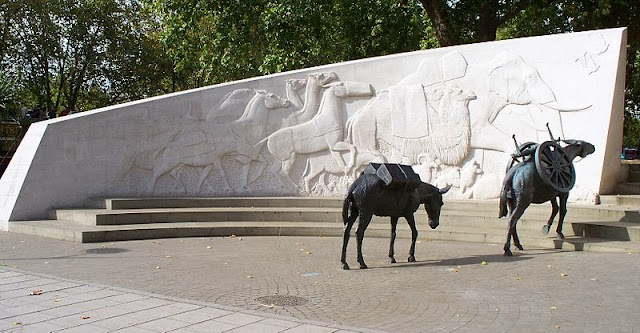
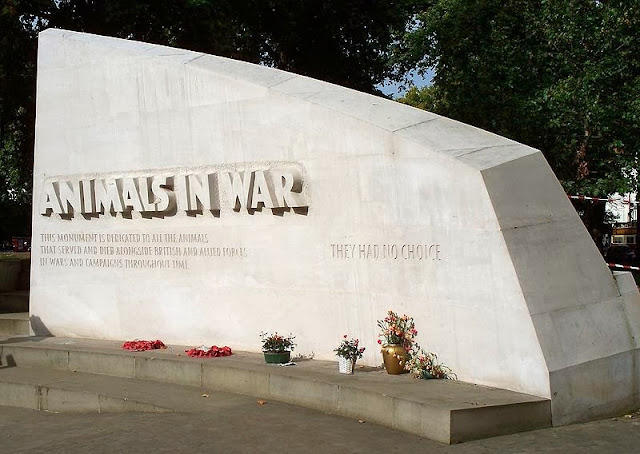
The sculpture in the photo above is the Animals in War Memorial in Hyde Park, London.

The memorial was inspired by Jilly Cooper’s book Animals in War, and was made possible by a specially created fund of £1.4 million from public donations of which Cooper was a co-trustee. The memorial consists of a 55 ft by 58 ft (16.8 m by 17.7 m) curved Portland stone wall: the symbolic arena of war, emblazoned with images of various struggling animals, along with two heavily-laden bronze mules progressing up the stairs of the monument, and a bronze horse and bronze dog beyond it looking into the distance.

The memorial focuses on service animals, but wartime also takes a substantial toll on pets:

The government sent out MI5 agents to watch animal rights activists, considered the mass euthanasia of all ‘non-essential animals,’ sponsored a clandestine anti-dog hate campaign and sanctioned the criminal prosecutions of cat owners for giving their pets saucers of milk.

The day Hitler invaded Poland, a BBC broadcast confirmed it was official policy that pets would not be given shelter. Panic-stricken people flocked to their vets’ offices seeking euthanization for their pets. That night, distressed animals cast out by their owners roamed the blacked-out streets, and five days of mass destruction followed.

London Zoo was also decimated. The black widow spiders and poisonous snakes were killed, as were a manatee, six Indian fruit bats, seven Nile crocodiles, a muntjac and two American alligators. Two lion cubs were put down, too.

The Animals in War Memorial has two separate inscriptions.  The large one reads:

This monument is dedicated to all the animals
that served and died alongside British and allied forces
in wars and campaigns throughout time

A second, smaller inscription notes:

They had no choice


Posted in Europe, History, Museums | Tagged , , , | Leave a comment

Freedom of the Press

Every day I seem to be reading another story about the erosion of press freedoms here in the United States and around the world. The insidious takeover of print and online news outlets by rightwing corporate capitalist enterprises is just one factor in the loss of press freedoms in North America. And then we have blantant attempts by state governments to legislate limits on presss freedom.

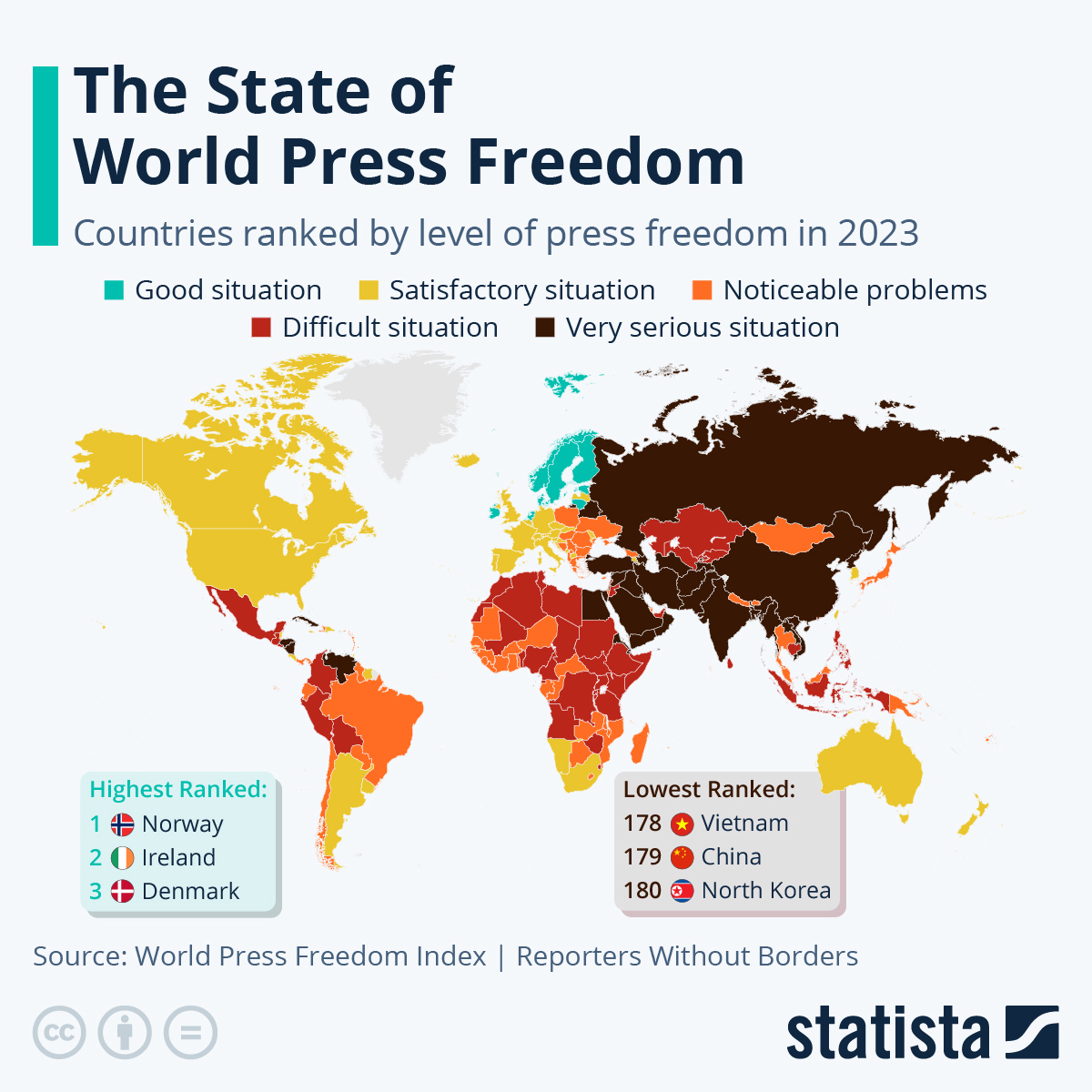
Reporters Without Borders has recently released the 2023 World Press Freedom Index. 180 countries and territories were analyzed. The top 3 highest-ranked countries are Norway, Ireland, and Denmark. 52 countries in the ranking have either a “satisfactory” or “good” situation of the press.

The lowest level of press freedom is observed in North Korea, China, and Vietnam. In 31 countries, there is a “very serious” situation of the press, while 42 fall under the “difficult” category. The United States is 45th in the ranking, three positions down, compared to 2022.

Statista took the data from the 2023 World Press Freedom Index and created a map that ranks countries by the level of press freedom, shown above.

It’s worth highlighting that the report notes the rapid advancement of artificial intelligence, which may be used to undermine trustworthy journalism and weaken the field of journalism as a whole.

The World Press Freedom Index has been published annually by Reporters Without Borders (RSF) since 2002. It’s based on a variety of criteria, including the legal environment, the independence of journalists, transparency, censorship, and the safety of journalists.

Posted in USA, Writing | Tagged , , | Leave a comment

A Weighty Issue For Flyers

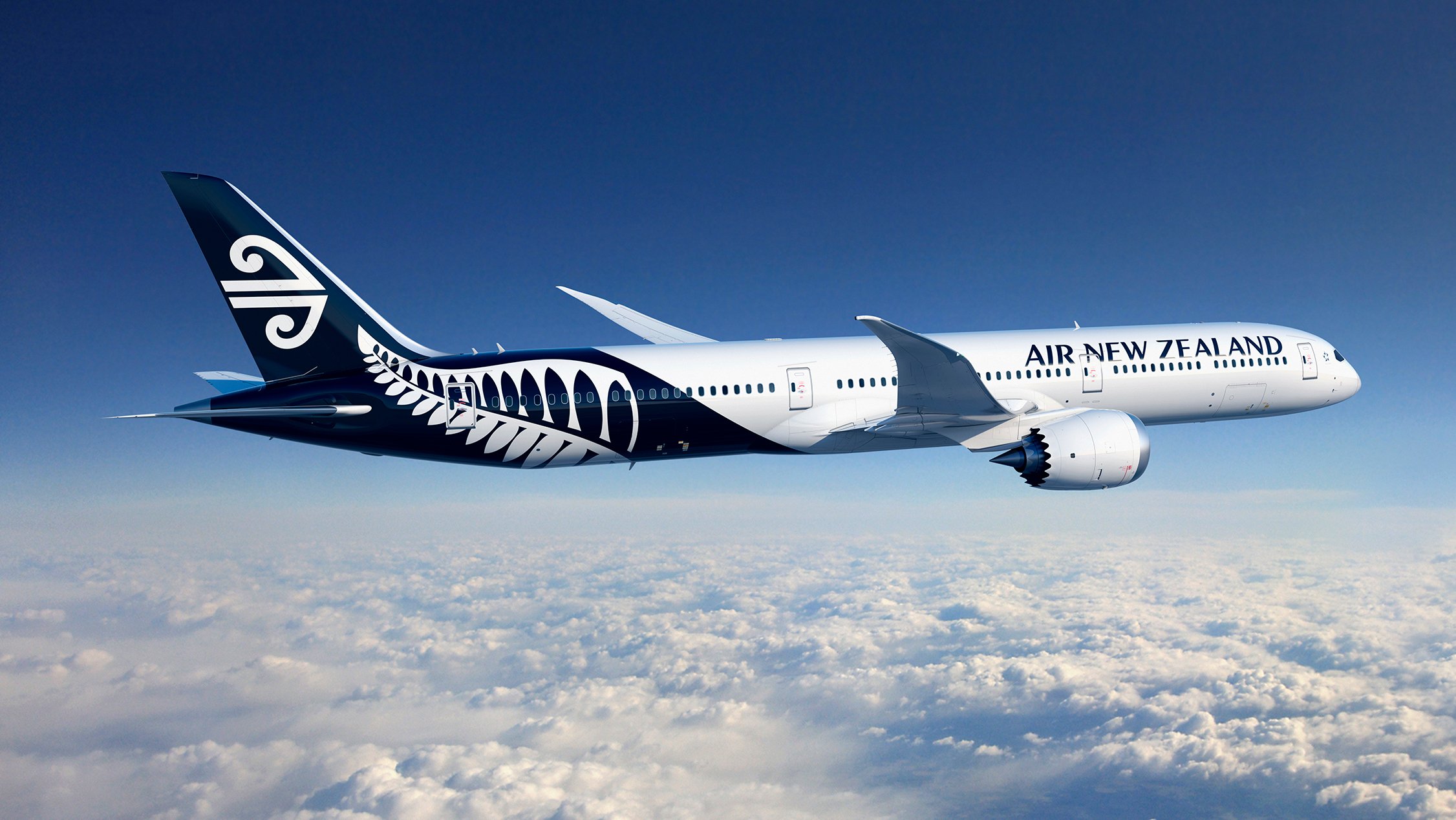
Air travelers have become accustomed to a variety of intrusive scans and searches, but one airline has added a whole new level of screening for international passengers. Air New Zealand has begun “surveying” their international flyers by having them step on a scale before boarding their aircraft.

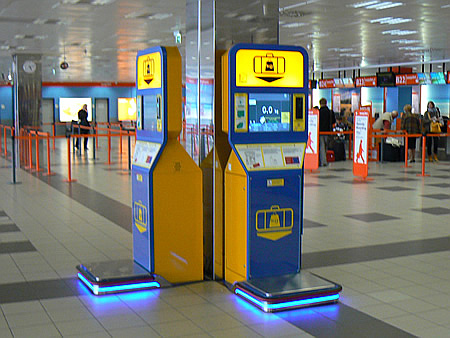
New Zealand’s largest airline will weigh passengers flying internationally from Auckland International Airport to many destinations, including New York City’s JFK, on a digital scale as part of the checking-in process. Passengers’ luggage will be weighed separately. The carrier is assuaging concerns by noting that their weight will not appear on the gate agent’s screen or anywhere visible to passengers or airline workers, and that the data will remain anonymous.

The program, which Air New Zealand calls a passenger weight survey, is a way to gather data on the weight load and distribution for planes, the airline said.

“We weigh everything that goes on the aircraft – from the cargo to the meals onboard, to the luggage in the hold,” Alastair James, the airline’s load control improvement specialist said in a statement. “For customers, crew and cabin bags, we use average weights, which we get from doing this survey.”

Still, weight is a personal thing that not everyone wishes to disclose. In order to protect individuals’ privacy, the airline says it has made the data anonymous. …

“We know stepping on the scales can be daunting. We want to reassure our customers there is no visible display anywhere. No one can see your weight, not even us,” James said.

It’s not surprising to learn that Air New Zealand has taken this supposedly temporary step considering that they have experienced serious issues with overweight planes. I have read a number of stories about their ultra longhaul flights from New York-Auckland and Auckland-New York departing without passenger luggage due to weight issues. Hopefully they will use this survey process to work it out.


Posted in Air Travel, Tourism | Tagged , , | 1 Comment

Wet

“Wet”

by

Joy Williams

from 99 Stories of God


The Lord was drinking some water out of a glass. There was nothing wrong with the glass, but the water tasted terrible.

This was in a white building on a vast wasteland. The engineers within wore white uniforms and booties on their shoes and gloves on their hands. The water had traveled many hundreds of miles through wide pipes to be here.

What have you done to my water? the Lord asked. My living water…

Oh, they said, we thought that was just a metaphor.


Posted in Books, Writing | Tagged , , | Leave a comment

Whole lotta shaking going on

I don’t have a lot of personal experience with earthquakes. My area of North America is in a low to moderate risk zone. Although we did have a 2.30 quake in my town about 14 years ago. At the time, I didn’t recognize the tremor as an earthquake, in fact I thought it was just a large truck passing by. During my travels, I have experienced multiple tremors. The most significant was around a 4.2 while I was having lunch in the southern Iceland port town of Grindavik. But earthquakes are a daily occurence in Iceland, with 70 to 100 happening daily. So nobody seems to pay much attention to them.

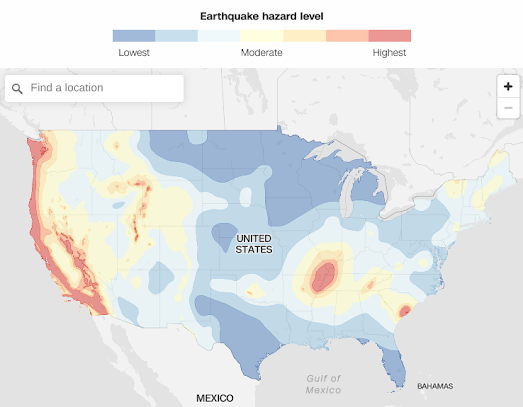
The so-called news network CNN has created an interactive map which shows local risks from earthquake activity. Enter an address into the What’s your earthquake risk interactive map and you can discover the earthquake hazard level based on data from the US Geological Survey.

CNN’s map colors the United States based on seven different levels of earthquake risk. You can also click on a location on the map to reveal the hazard level at that location. The hazards are calculated based on the USGS’s 2018 Long-term National Seismic Hazard Map. The USGS says that the hazard levels are “based on seismicity and fault-slip rates, and take into account the frequency of earthquakes of various magnitudes”.

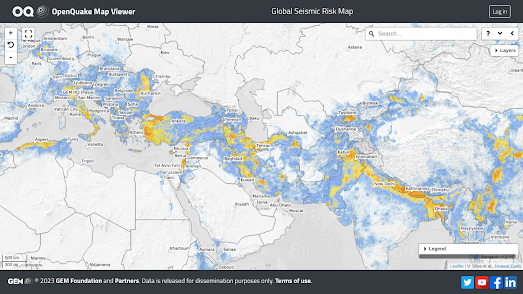
Folks living outside of North America can use the Global Earthquake Model Foundation’s earthquake hazard maps to assess their potential risk from seismic activity. The Global Earthquake Model Foundation is a non-profit organization working to assess and help manage the risk from earthquakes and seismic activity around the globe. Part of its mission is to assess and share open data on earthquake risks and hazards.

The Global Earthquake Model Foundation has released two interactive maps, the Global Seismic Risk Map and the Global Seismic Hazard Map, which can be used to explore the risk from earthquakes at locations around the world. The estimated hazards are based on the foundation’s own OpenQuake engine, an open-source seismic hazard and risk model.


Posted in Maps, Tech, Tourism, USA | Tagged , , , | 2 Comments

Around Sounds

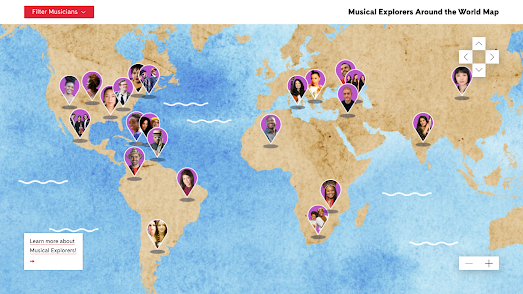
If you stop by TBTP regularly, you are likely aware that I am a sucker for clever interactive map projects. Musical Explorers Around the World Map from Carnegie Hall lets you discover and listen to folk music from around the globe. Click on the map and listen to bluegrass music from the Appalachians, mbira music from Zimbabwe, calypso from Trinidad & Tabago, folk from Sicily and lots of other great traditional folk music from countries around the world.

Posted in Maps, Music | Tagged , , | 1 Comment

Adaptation


Posted in Books, Film, movies | Tagged , | 1 Comment

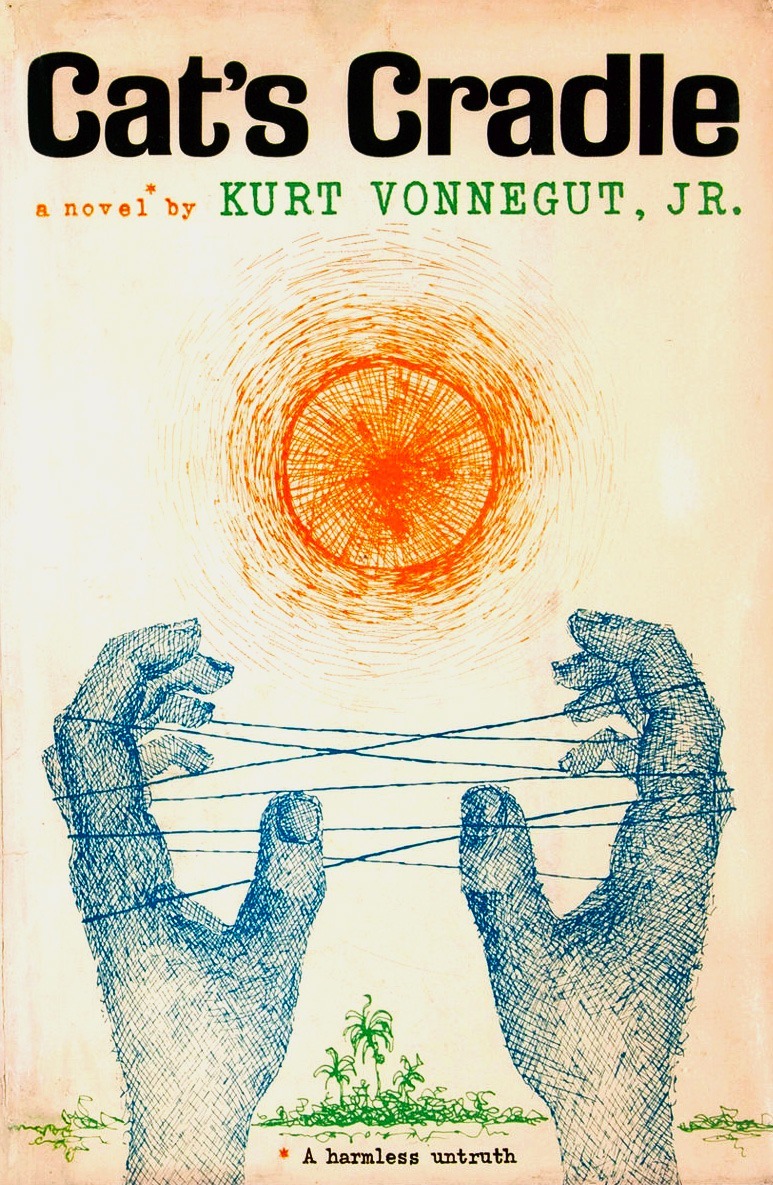
“What is the purpose of all this?”

In the beginning, God created the earth, and he looked upon it in His cosmic loneliness.

And God said, “Let Us make living creatures out of mud, so the mud can see what We have done.” And God created every living creature that now moveth, and one was man. Mud as man alone could speak. God leaned close to mud as man sat up, looked around, and spoke.

Man blinked. “What is the purpose of all this?” he asked politely.“Everything must have a purpose?” asked God.“Certainly,” said man.“Then I leave it to you to think of one for all this,” said God.

And He went away.

― Kurt Vonnegut, Cat’s Cradle (1963)


Posted in Books, USA, Writing | Tagged , , | 1 Comment

Dead Stars

DEAD STARS
by Ada Limón

Out here, there’s a bowing even the trees are doing.
Winter’s icy hand at the back of all of us.
Black bark, slick yellow leaves, a kind of stillness that feels
so mute it’s almost in another year.

I am a hearth of spiders these days: a nest of trying.

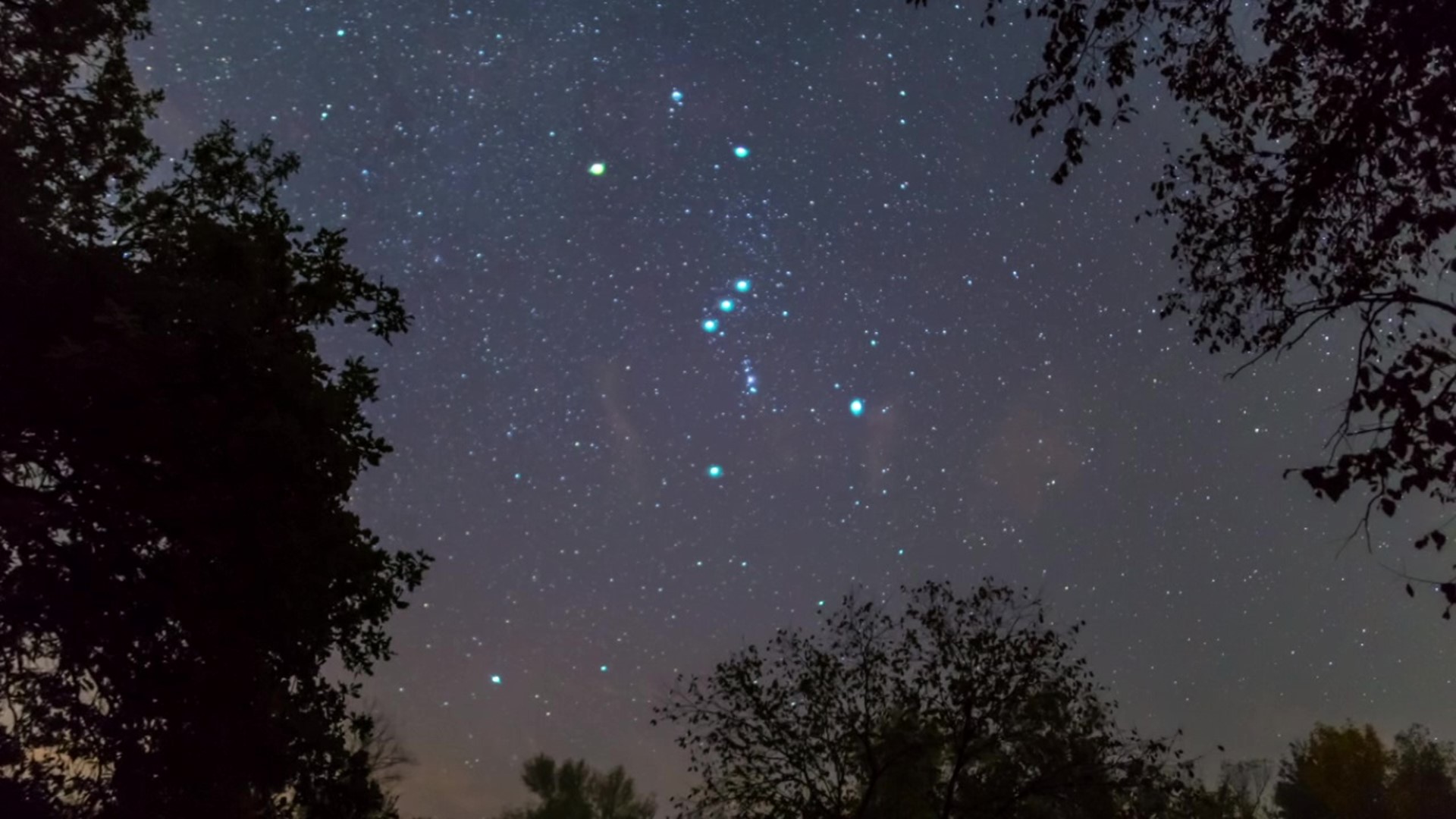
We point out the stars that make Orion as we take out
the trash, the rolling containers a song of suburban thunder.

It’s almost romantic as we adjust the waxy blue
recycling bin until you say, Man, we should really learn
some new constellations.

And it’s true. We keep forgetting about Antlia, Centaurus,
Draco, Lacerta, Hydra, Lyra, Lynx.

But mostly we’re forgetting we’re dead stars too, my mouth is full
of dust and I wish to reclaim the rising —

to lean in the spotlight of streetlight with you, toward
what’s larger within us, toward how we were born.

Look, we are not unspectacular things.
We’ve come this far, survived this much. What

would happen if we decided to survive more? To love harder?

What if we stood up with our synapses and flesh and said, No.
No, to the rising tides.

Stood for the many mute mouths of the sea, of the land?

What would happen if we used our bodies to bargain

for the safety of others, for earth,
if we declared a clean night, if we stopped being terrified,

if we launched our demands into the sky, made ourselves so big
people could point to us with the arrows they make in their minds,

rolling their trash bins out, after all of this is over?

U.S Poet Laureate Ada Limón channels cosmic destiny in her moving poem “Dead Stars,” found in her collection The Carrying .


Posted in Books, USA, Writing | Tagged , , , | Leave a comment

Pocket Money

Even with the widespread acceptance of the Euro, these days there are still about thirty currencies in use among the fifty countries of Europe. In the 17th century, things were much more complicated for travelers. This Dutch book offered a catalog of woodcuts of 1,685 coins (many scaled to actual size). European cities, principalities, kingdoms, dioceses, and other localized governing bodies issued their own unique sets of coinage.

This handy pocket-sized book was printed in 1633 by Hieronymus Verdussen of the Verdussen publishing dynasty in Antwerp. At this time, the Netherlands dominated international trade. During the “Dutch Golden Age,” the Netherlands was enriched by the establishment of the Dutch East Trading Company in 1602 and the Dutch West Trading Company in 1621. A pocket book such as would have been popular with Dutch merchants needing a handy reference work to distinguish the hundreds of different coins in circulation and travelers, as well.

This volume would have been a “pocket” book . The unusual dimensions of this volume (31 x 10.5 cm) fit very well in the pockets of the early 17th century (abt. 40 x 30 cm).

Images from: Ordonnancie ende instructie naer de welcke voort-aen hen moeten reguleren die ghesworen wisselaers ofte collecteurs vande goude ende silver penningen. Antwerp: Hieronymous Verdussen, 1633.


Posted in Books, Europe, History, Tourism, Travel Writing | Tagged , , | 1 Comment