Make Your Drive Fun

No one enjoys a boring road trip and we all love an excuse to make unscheduled stops along the way. Make My Drive Fun will make those drives a bit more spontaneous and fun. It’s a simple as inputting your place of departure and destination, and voila lots of attractions to visit on your route. If I only knew about the website when I was in New Zealand, I could have visited the Ondo Giant Noodle.
 

Posted in apps, Maps, Tech, Tourism | Tagged | 1 Comment

A Unique B & B Pop-Up

This charming adult pop-up book by Jan Pieńkowski’s was published in 1996 by Simon & Schuster. The book opens up into a house, decorated and inhabited by over fifty artistic works. A small guidebook tucked in over the staircase opens with “Dear Art Lover, Welcome to our historic home. Thank you for choosing Botticelli’s and have a nice stay. – Botticelli.”

Jan Pieńkowski was born in Warsaw, Poland, on August 8, 1936. He was first exposed to paper art in an air raid shelter, where his family had taken refuge from Nazi firebombing during the Invasion of Poland; a Polish soldier entertained the children by cutting newspapers into fanciful shapes. Displaced by the war, he and his parents were refugees in several countries, eventually settling in England. Pieńkowski’s childhood hardships would go on to influence his art. He has said in interviews that his illustration work allowed him to channel the frightening monsters of his youth into innocent playthings. Pieńkowski has often used his paper cut technique to illustrate traditional stories. The detailed silhouettes over brightly coloured backgrounds are enjoyed by children and adults alike.


Posted in Art, Books, Europe | Tagged , , | 2 Comments

Welcome to the AI Generation

It seems that each day we are introduced to yet another form of AI-generated art, literature, news, or advertising. This series of AI-generated travel posters, commissioned from research lab Midjourney for the luggage storage company Stasher, is the inevitable blend of travel advertising and poster art. Like most travel posters, Midjourney has evoked a idealized sense of place punctuated by recognizable landmarks or cultural cues.

While some of the posters in the series have a vague, washed-out sensibility, others are surprisingly evocative of the places that they represent. Still, I think that I will always prefer human-generated travel art.


Posted in Animation, Art, Europe, Tech, Tourism | Tagged , , , | Leave a comment

The Parable of the Blind

“The Parable of the Blind”

by

William Carlos Williams


This horrible but superb painting
the parable of the blind
without a red

in the composition shows a group
of beggars leading
each other diagonally downward

across the canvas
from one side
to stumble finally into a bog

where the picture
and the composition ends back
of which no seeing man

is represented the unshaven
features of the des-
titute with their few

pitiful possessions a basin
to wash in a peasant
cottage is seen and a church spire

the faces are raised
as toward the light
there is no detail extraneous

to the composition one
follows the others stick in
hand triumphant to disaster

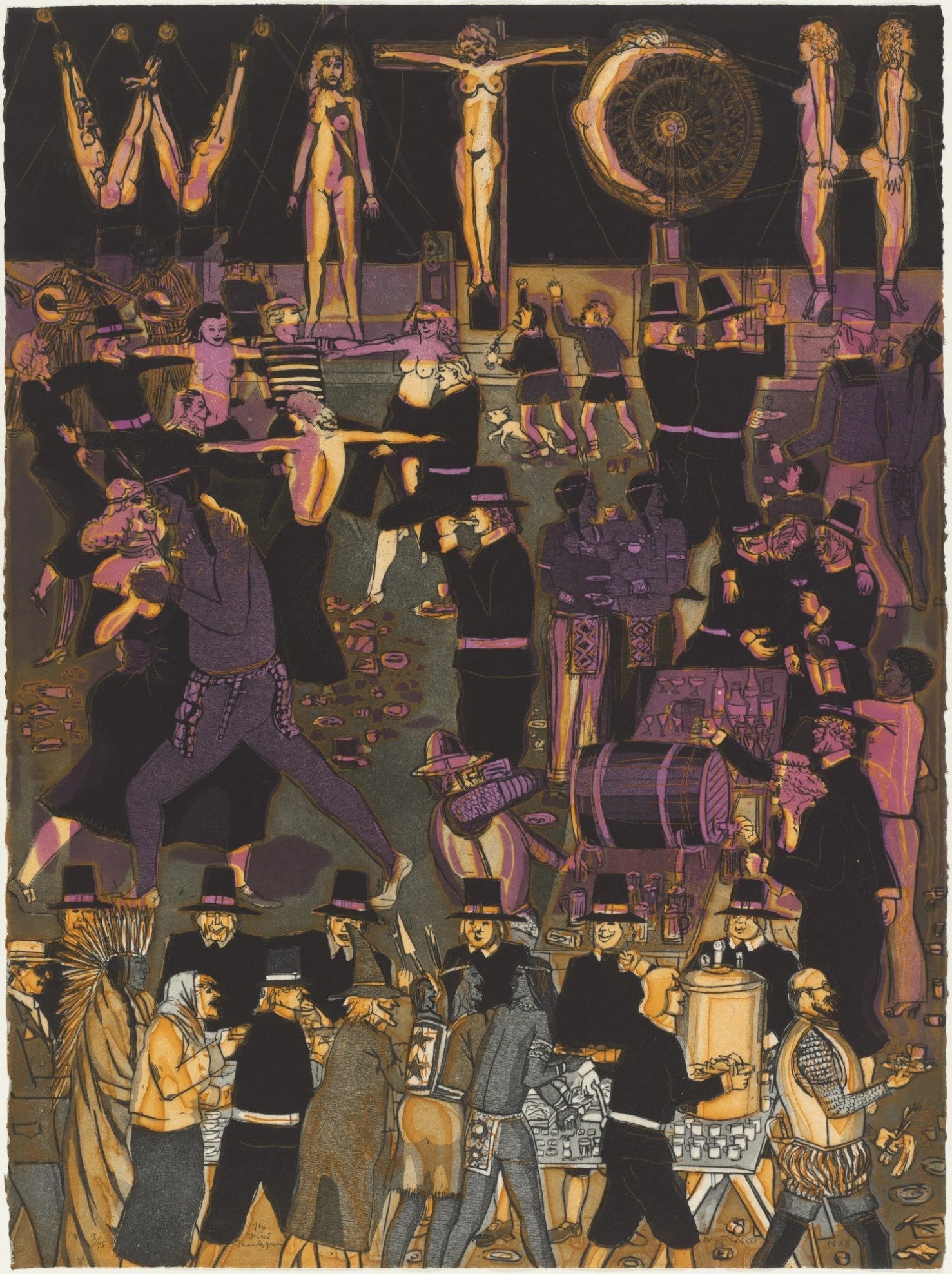
“The Parable of the Blind” or The Blind Leading the Blind’ by Pieter Bruegel the Elder 1568


Posted in Art, USA, Writing | Tagged , , , | 1 Comment

Whence the Manicule

I have long been fascinated by medieval manuscripts, incunabula, and early books in general. Recently I stumbled upon a number of images that included manicules within text margins and thought —whence the manicule.

The manicule, , is a typographic mark with the appearance of a hand with its index finger extending in a pointing gesture. Originally used for handwritten marginal notes, it later came to be used in printed works to draw the reader’s attention to important text. 

The term manicule comes from Latin (maiculum) and means as much as small hand or pointing hand. The symbol is first used in the Domesday Book of 1086, which contained a comprehensive overview of all possessions and owners in England before and after 1066. It was commissioned by William the Conqueror for tax purposes. From then on, the symbol was used in the margins, margins of manuscripts, to indicate corrections or notes. This manicule was a popular symbol and they became more and more beautiful. Sometimes it was an ordinary bare index finger, sometimes with a beautiful cuff, sometimes with a crooked index finger.

After the printing press was introduced in the 15th century, the hand-drawn manicule continued to be used to indicate improvements to be made, or to point out an error in the text. Later, the pointing hand became more popular in publications, advertisements and signage. Even the U.S. Postal Service used the manipulative symbol when the letter was misdelivered and had to be returned to Sender .

In the 19th century the manicule became a popular typographic symbol . Today, the manicule is a standard typographic symbol intended to draw the reader’s attention to important text.


Posted in Art, Books, Europe | Tagged , , | 1 Comment

A Hieroglyphic Travel Guide

Regular visitors to Travel Between The Pages may recall that my niche market as a bookseller has long been travel guides and travel literature. I recently discovered this unique 1815 travel guide to Madeira and the Caribbean that is illustrated with a series of supplemental plates that contain sort of a first-mate’s log and the account of parallel trade voyage pictographically—with hieroglyphs, as the author states. These small drawings capture the sailor’s daily events during an 1814 voyage with a rather unusual story-telling device for the era and prefigure the concept of scripting in emojis.

The volume is titled The Traveller’s Guide to Madeira and the West Indies. Being a hieroglyphic representation of appearances and incidents during a voyage out and homewards. … With a treatise explanatory of the various figures, etc; 1815; Haddington, G. Miller and sons. The clever book employs a series of “hieroglyphic” plates to frame an account of a trade voyage. The illustrated pages display a calendar-like grid, for each day either a dot, to connote nothing of importance happened, or a little illustration summing up that day’s events. For a further explanation of these “emblematic figures” the author offers an “Explanatory Key”, which reads ostensibly as a regular journal recounting highlights from the course of days, except rather than under the headings of dates, they relate directly to the pictures and are so numbered. According to its anonymous author, referred to only as “a young traveller”, the plates came first, the motive for which was a “deficiency of time to note down my observances as they occurred”.

Posted in Art, Books, History, Maps, Writing | Tagged , , , | Leave a comment

Where do you find book recommendations

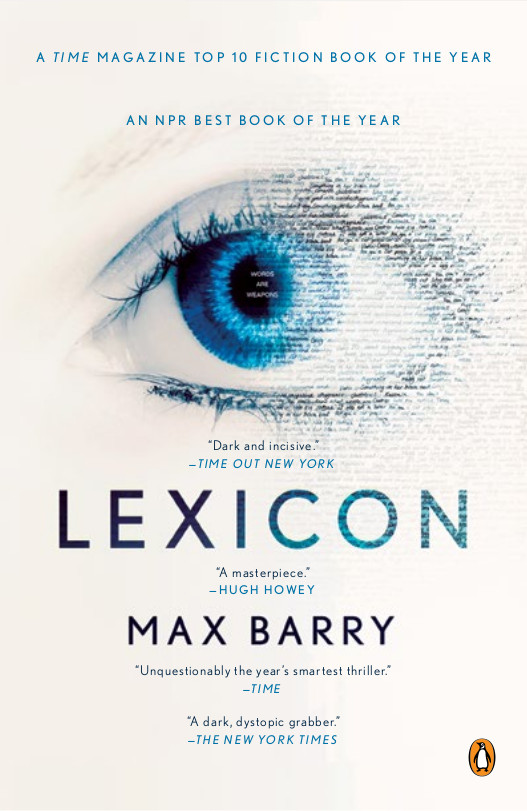
I don’t know about you, but I’m picky when it comes to book recommendations. It’s certainly helpful to have friends with highly developed reading tastes who make book suggestions. And of course there are the book review sections of trustworthy periodicals. But sometimes it’s nice to get random book picks. Enter the website Recommend Me A Book . It’s based on a simple premise – a series of first pages of novels, presented with no information about the title or author, so you can simply see whether the prose grabs you enough to want to read more.

So the first time that I took it for a spin, this was the initial result:

“A squat grey building of only thirty-four stories. Over the main entrance the words, central London hatchery and conditioning centre, and, in a shield, the World State’s motto, community, identity, stability.

The enormous room on the ground floor faced towards the north. Cold for all the summer beyond the panes, for all the tropical heat of the room itself, a harsh thin light glared through the windows, hungrily seeking some draped lay figure, some pallid shape of academic goose-flesh, but finding only the glass and nickel and bleakly shining porcelain of a laboratory. Wintriness responded to wintriness. The overalls of the workers were white, their hands gloved with a pale corpse-coloured rubber. The light was frozen, dead, a ghost. Only from the yellow barrels of the microscopes did it borrow a certain rich and living substance, lying along the polished tubes like butter, streak after luscious streak in long recession down the work tables.”

It took a hot second for me to recognize the iconic opening to Brave New World. Obviously any book recommendation website that randomly suggests Aldous Huxley’s classic on the first outing is A-OK with me.

The only catch to Recommend Me A Book is that the site provides a link to puchase the suggested books through the indie selling webportal Bookshop, if you are so inclined.


Posted in apps, Books, Uncategorized, Writing | Tagged , , , | Leave a comment

Illustration Chronicles

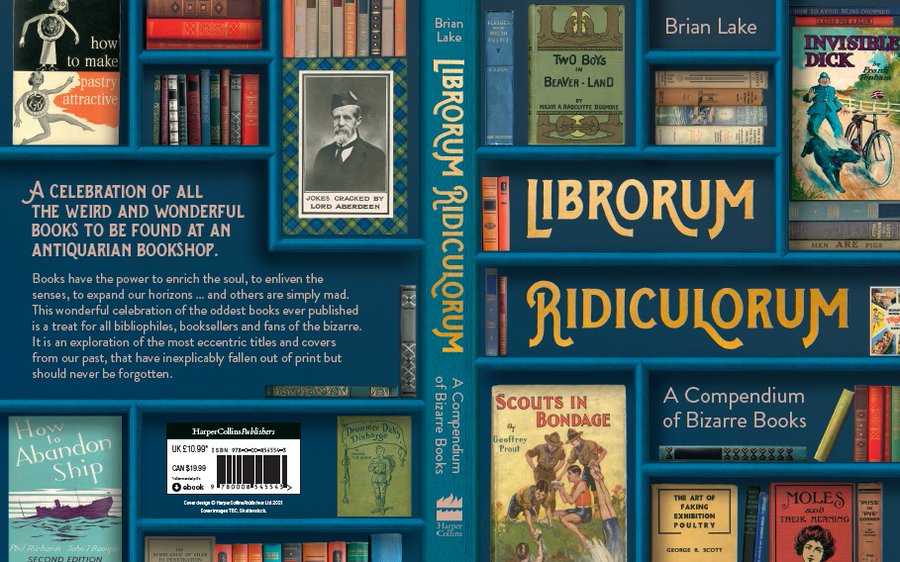
I recently discovered the amazing website Illustration Chronicles: which explores a history of illustration through the images, illustrators and events of the past 175 years. Periodically the editors select a topic to explore. These concepts, such as music, satire, war, and animals, inspire the examples of illustrations that get selected. The project aims to champion the medium and bring some inspiration, insight and knowledge to readers everywhere.

Even if you have just a passing interest in illustration, I think that you will find that Illustration Chronicles is worth a visit. I intend to bookmark the site and return on a regular basis.

Posted in Art, Asia, Books, Maps, Music, Writing | Tagged , , | 3 Comments

Sunday Funnies


Posted in Animation, Art, Books, Tourism, USA | Tagged , , | Leave a comment

“Ten percent of what I write is immortal”

You Never Had It – An Evening with Bukowski is a documentary from director Matteo Borgardt that transports you back to January 1981 for an intimate evening conversation with legendary writer and poet Charles Bukowski at his San Pedro home. The documentary features never-before-seen footage from the writer rediscovered by producer/journalist Silvia Bizio in her garage 20 years after Bukowski’s death. Bukowski, Bizio and friends smoke cigarettes and drink wine over a languorous evening that provokes intimate discussions of sex, literature, childhood, and humanity from the irreverent writer and poet himself.

NB: If for some reason the video does not play in your email version of TBTP, please link to the home page.

Posted in Books, Film, USA, Writing | Tagged , , , | 1 Comment