Lessons from the 20th Century

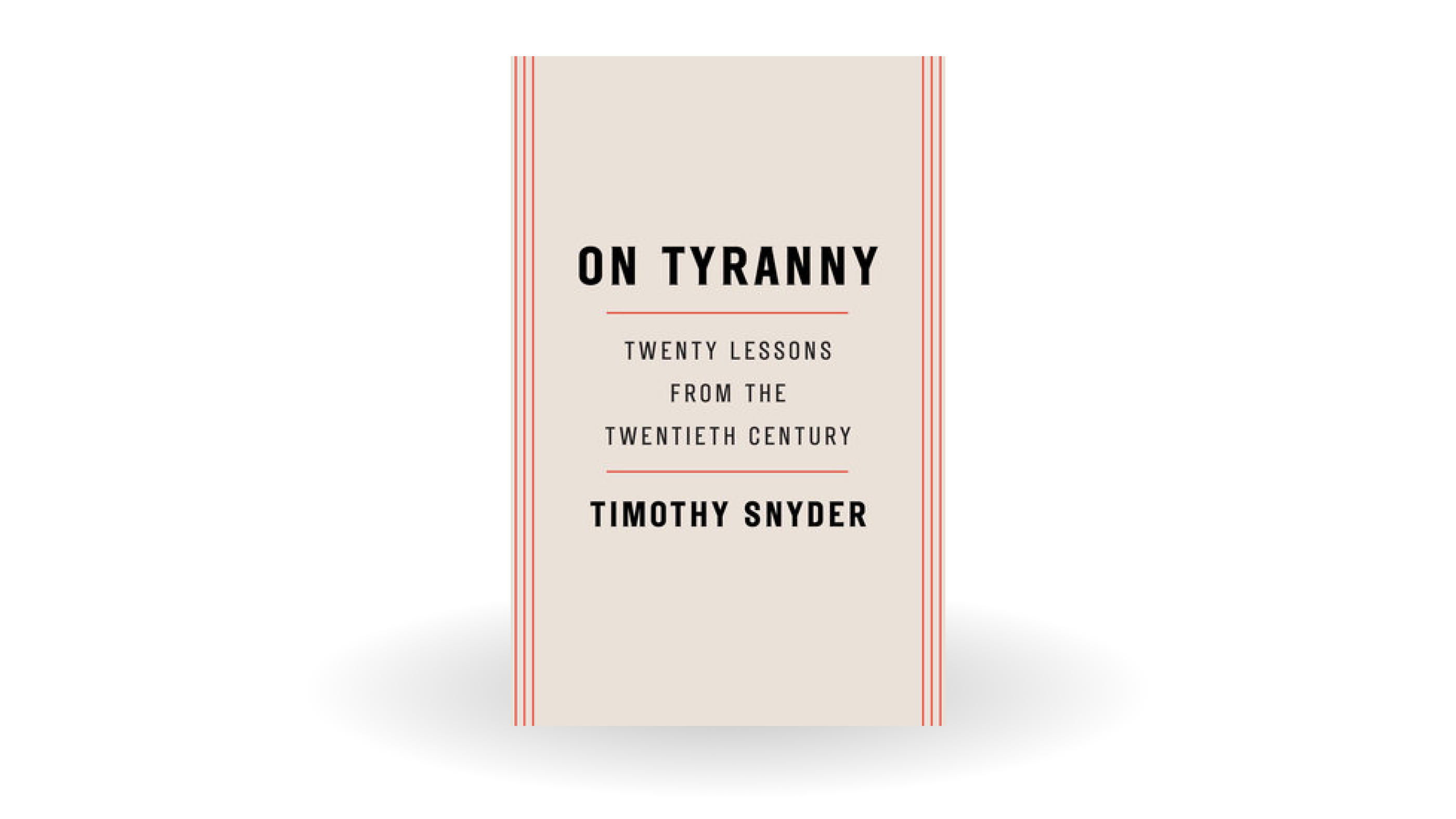
Following the horrific events of last week, I am not alone in reflecting back on the cautionary warnings of Yale historian Timothy Snyder. His short, but powerful book On Tyranny: Twenty Lessons from the Twentieth Century published just days after the Trump inauguration, succinctly presented a roadmap for addressing the threats to democracy inherent in the malignant regime.

1. Do not obey in advance. Much of the power of authoritarianism is freely given. In times like these, individuals think ahead about what a more repressive government will want, and then start to do it without being asked. You’ve already done this, haven’t you? Stop. Anticipatory obedience teaches authorities what is possible and accelerates unfreedom.

2. Defend an institution. Follow the courts or the media, or a court or a newspaper. Do not speak of “our institutions” unless you are making them yours by acting on their behalf. Institutions don’t protect themselves. They go down like dominoes unless each is defended from the beginning.

3. Recall professional ethics. When the leaders of state set a negative example, professional commitments to just practice become much more important. It is hard to break a rule-of-law state without lawyers, and it is hard to have show trials without judges.

4. When listening to politicians, distinguish certain words. Look out for the expansive use of “terrorism” and “extremism.” Be alive to the fatal notions of “exception” and “emergency.” Be angry about the treacherous use of patriotic vocabulary.

5. Be calm when the unthinkable arrives. When the terrorist attack comes, remember that all authoritarians at all times either await or plan such events in order to consolidate power. Think of the Reichstag fire. The sudden disaster that requires the end of the balance of power, the end of opposition parties, and so on, is the oldest trick in the Hitlerian book. Don’t fall for it.

6. Be kind to our language. Avoid pronouncing the phrases everyone else does. Think up your own way of speaking, even if only to convey that thing you think everyone is saying. (Don’t use the internet before bed. Charge your gadgets away from your bedroom, and read.) What to read? Perhaps “The Power of the Powerless” by Václav Havel, 1984 by George Orwell, The Captive Mind by Czesław Milosz, The Rebel by Albert Camus, The Origins of Totalitarianism by Hannah Arendt, or Nothing is True and Everything is Possible by Peter Pomerantsev.

7. Stand out. Someone has to. It is easy, in words and deeds, to follow along. It can feel strange to do or say something different. But without that unease, there is no freedom. And the moment you set an example, the spell of the status quo is broken, and others will follow.

8. Believe in truth. To abandon facts is to abandon freedom. If nothing is true, then no one can criticize power, because there is no basis upon which to do so. If nothing is true, then all is spectacle. The biggest wallet pays for the most blinding lights.

9. Investigate. Figure things out for yourself. Spend more time with long articles. Subsidize investigative journalism by subscribing to print media. Realize that some of what is on your screen is there to harm you. Learn about sites that investigate foreign propaganda pushes.

10. Practice corporeal politics. Power wants your body softening in your chair and your emotions dissipating on the screen. Get outside. Put your body in unfamiliar places with unfamiliar people. Make new friends and march with them.

11. Make eye contact and small talk. This is not just polite. It is a way to stay in touch with your surroundings, break down unnecessary social barriers, and come to understand whom you should and should not trust. If we enter a culture of denunciation, you will want to know the psychological landscape of your daily life.

12. Take responsibility for the face of the world. Notice the swastikas and the other signs of hate. Do not look away and do not get used to them. Remove them yourself and set an example for others to do so.

13. Hinder the one-party state. The parties that took over states were once something else. They exploited a historical moment to make political life impossible for their rivals. Vote in local and state elections while you can.

14. Give regularly to good causes, if you can. Pick a charity and set up autopay. Then you will know that you have made a free choice that is supporting civil society helping others doing something good.

15. Establish a private life. Nastier rulers will use what they know about you to push you around. Scrub your computer of malware. Remember that email is skywriting. Consider using alternative forms of the internet, or simply using it less. Have personal exchanges in person. For the same reason, resolve any legal trouble. Authoritarianism works as a blackmail state, looking for the hook on which to hang you. Try not to have too many hooks.

16. Learn from others in other countries. Keep up your friendships abroad, or make new friends abroad. The present difficulties here are an element of a general trend. And no country is going to find a solution by itself. Make sure you and your family have passports.

17. Watch out for the paramilitaries. When the men with guns who have always claimed to be against the system start wearing uniforms and marching around with torches and pictures of a Leader, the end is nigh. When the pro-Leader paramilitary and the official police and military intermingle, the game is over.

18. Be reflective if you must be armed. If you carry a weapon in public service, God bless you and keep you. But know that evils of the past involved policemen and soldiers finding themselves, one day, doing irregular things. Be ready to say no. (If you do not know what this means, contact the United States Holocaust Memorial Museum and ask about training in professional ethics.)

19. Be as courageous as you can. If none of us is prepared to die for freedom, then all of us will die in unfreedom.

20. Be a patriot. The incoming president is not. Set a good example of what America means for the generations to come. They will need it.
Posted in Books, Freedom of Speech, History, USA, Writing | Tagged , , , | Leave a comment

A Year of Good Reading

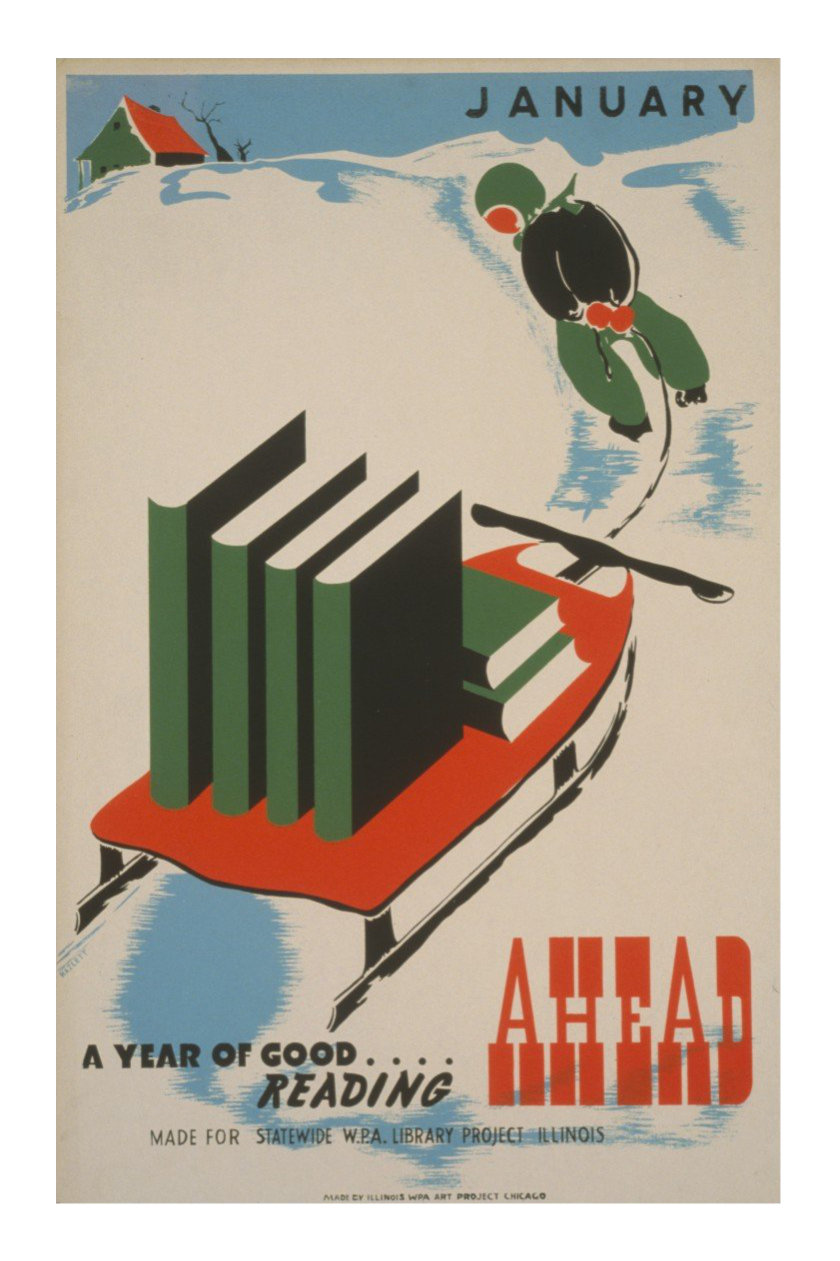
January. A year of good reading ahead is a wonderful book poster from a large WPA collection from the Library of Congress. The series of posters was created by the Federal WPA during the 1930s.


Posted in Books, History, Libraries, USA | Tagged , , | 1 Comment

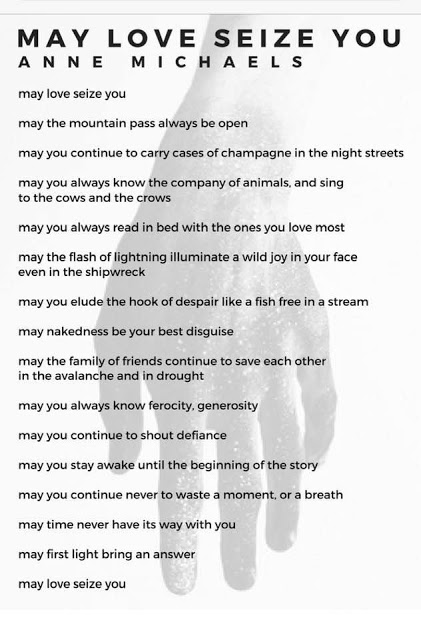
may you elude the hook of despair


Posted in Canada, Writing | Tagged | Leave a comment

Gatsby For Free

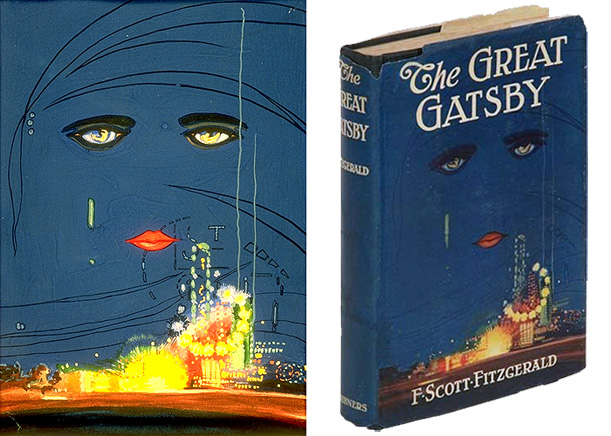
If you have been following TBTP, you are aware that an enormous tranche of  American cultural works entered the public domain on January 1, 2021. One of the real treasures that is now freely available is The Great Gatsby . Most survivors of the U.S. educational system have been exposed to F.Scott Fitzgerald’s iconic novel, but if you haven’t read the book now is the time to get a digital copy for free. The Standard Ebooks edition is the first public domain edition I know of online.

The novel is a colorful study of America’s Jazz Age—a term said to be coined by Fitzgerald himself—complete with wealthy socialites living in hedonistic abandon, libertine flappers, jazz bands, roaring roadsters, and greasy speakeasies populated with shady grifters. Contrasted against the glamorous lives of wealthy socialites is the entrenched lower class, who live in gray, dingy squalor among smoldering ash-heaps. Fitzgerald uses the setting to examine the American Dream: the idea that anyone in America can achieve success through hard work and dedication. Gatsby has spent his life reaching for his dream. Some say he’s already achieved it. But has he? Is the dream even real for the hard-working poor that Gatsby and Tom race past in their glittering cars on the way to the decadent city?Fitzgerald wrote much of his real life into the novel. Like Carraway, he was a Midwesterner educated at an Ivy-league school who went to live on Long Island. Despite his meager finances he hobnobbed with socialites, and spent his career struggling for money to maintain the grand style his romantic interests were accustomed to.The cover art, titled Celestial Eyes, was commissioned from Francis Cugat, who completed it before the novel was finished. The huge eyes gazing down on the blazing city so moved Fitzgerald that he wrote them into the story.

Fitzgerald saw the novel as a purely artistic work, free of the pulp pandering required by his shorter commissions—but despite that, contemporary reviews were mixed, and it sold poorly. Fitzgerald thought it a failure, and died believing the novel to be fatally obscure. Only during World War II did it come back to the public consciousness, buoyed by the support of a ring of writers and critics and printed as an Armed Service Edition to be sent to soldiers on the front. Now it is an American classic.

READ FREE

This ebook is only thought to be free of copyright restrictions in the United States. It may still be under copyright in other countries. If you’re not located in the United States, you must check your local laws to verify that the contents of this ebook are free of copyright restrictions in the country you’re located in before downloading or using this ebook.

You also also see Fitzgerald’s own hand-corrected copy of the book at the Princeton University website https://findingaids.princeton.edu/collections/C0187/c00020

Posted in Uncategorized | Leave a comment

Trees and books, books and trees

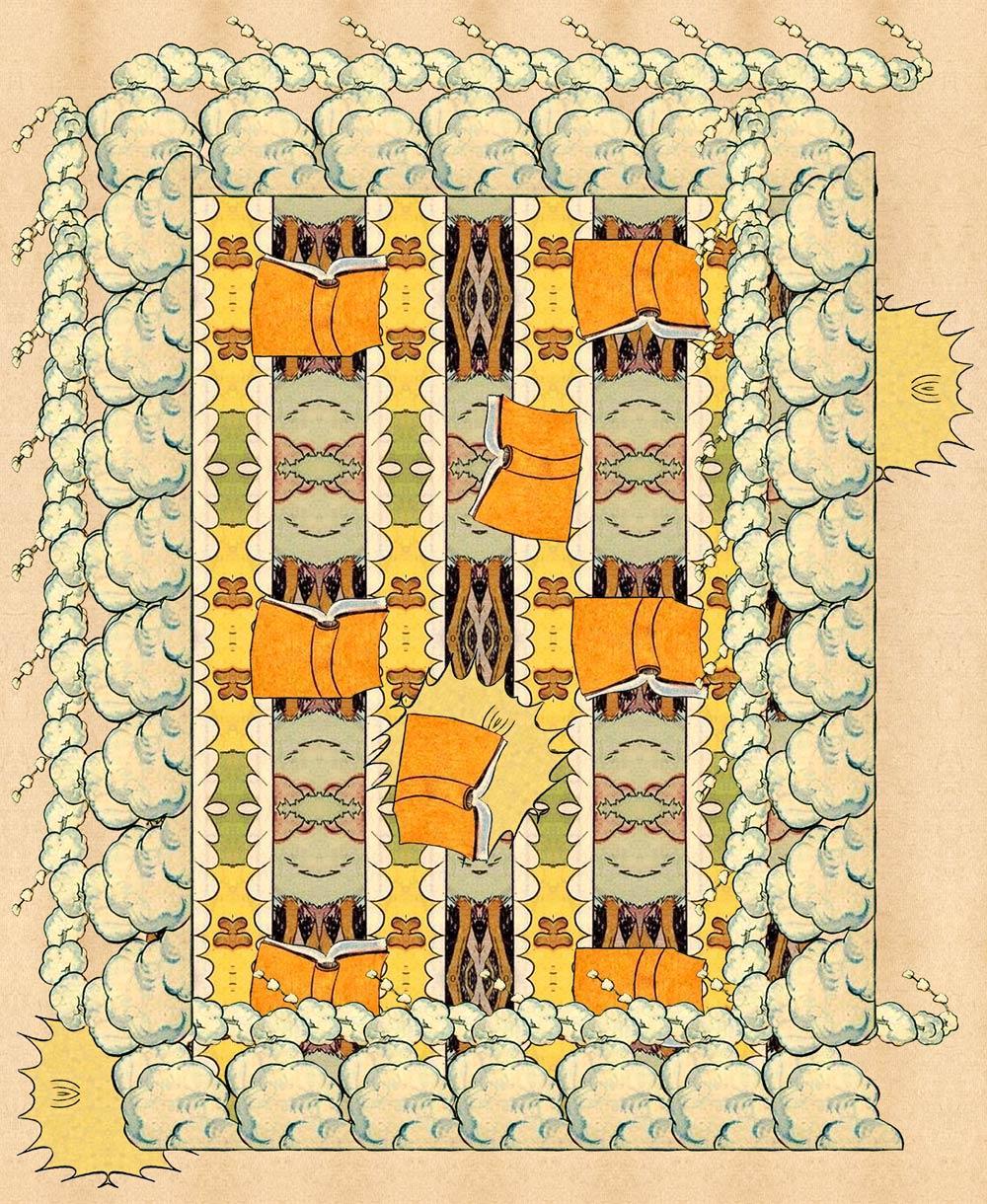
Yvan Guillo, aka Samplerman, aka Yvang, is a French cartoonist and artist. He started publishing comics in the early nineties and has never stopped. He recently created some children’s comic books at the éditions “Le Moule à Gaufres”. Guillo also runs a shared Tumblr  (with Léo Quievreux), “zdnd”, la zone de non-droit (the no-go zone) where he posts experiments, side projects and often unfinished works. The digital collages of golden age American comics labelled “Samplerman” appear there.


Posted in Animation, Art, Books, Europe | Tagged , , | Leave a comment

Pandemic Art

The New York City-based Brazilian-born Japanese artist Oscar Oiwa found himself in similar circumstances as many folks when the pandemic began last year. His projects and travels were all postponed, and he found himself locked down in his NYC apartment. So  began a series of drawing that capture the mood of the times and imagine the places he would have gone.

You can see all of them on his website.


Posted in Art, Asia, South America, USA | Tagged , , , , | 1 Comment

Three and the Moon

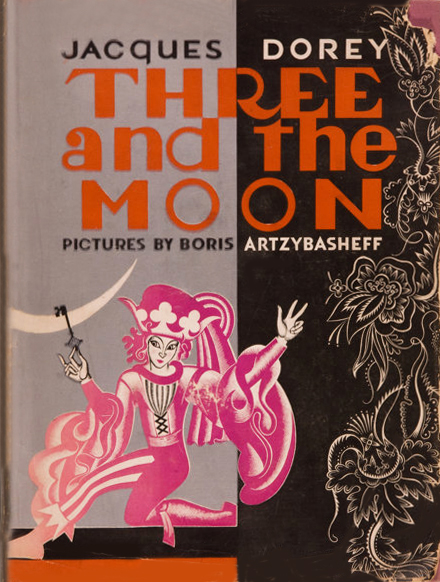
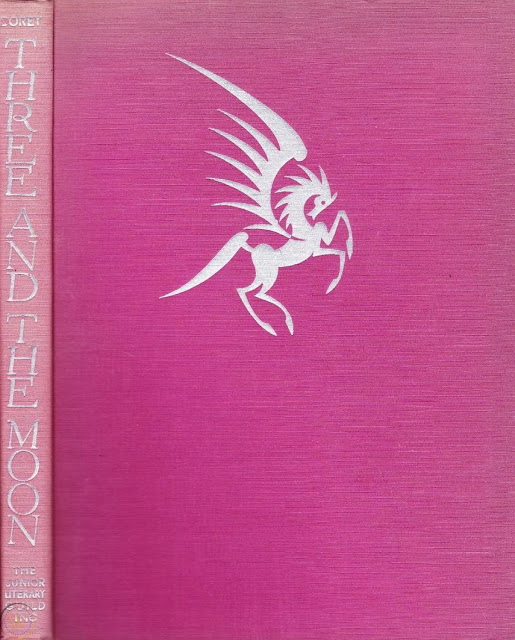
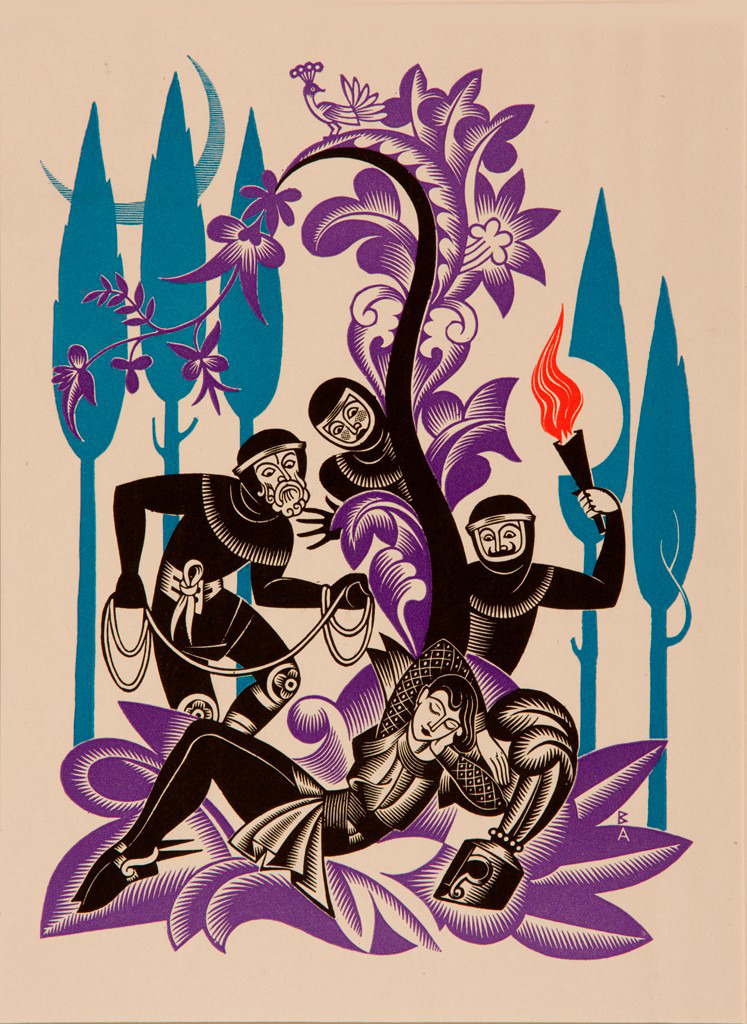
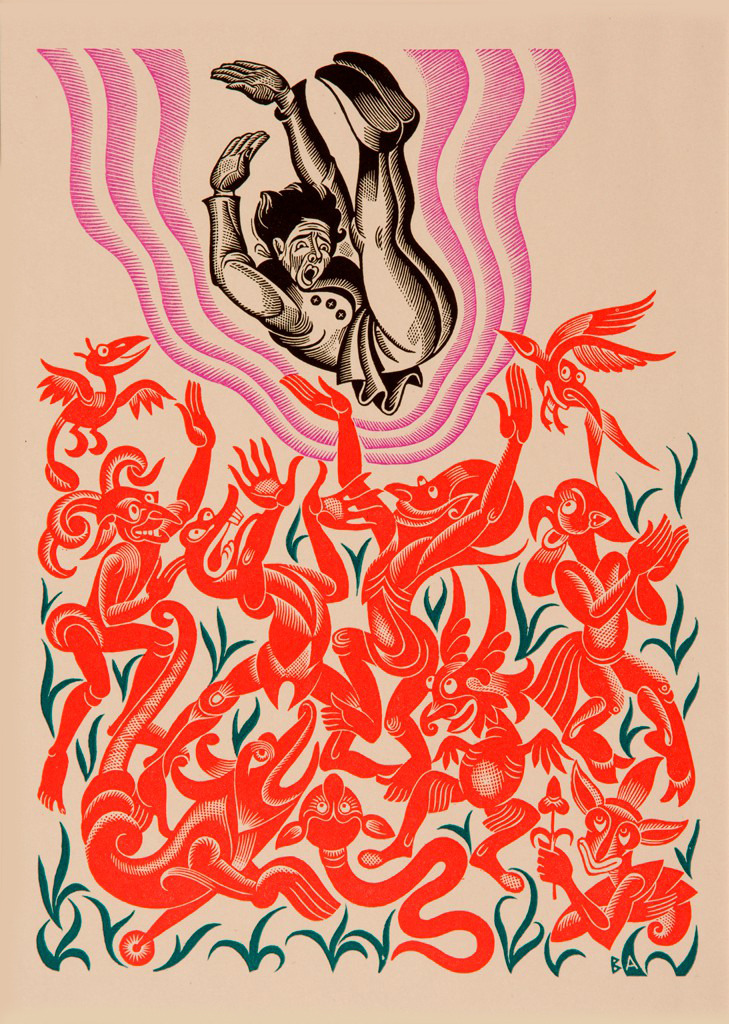
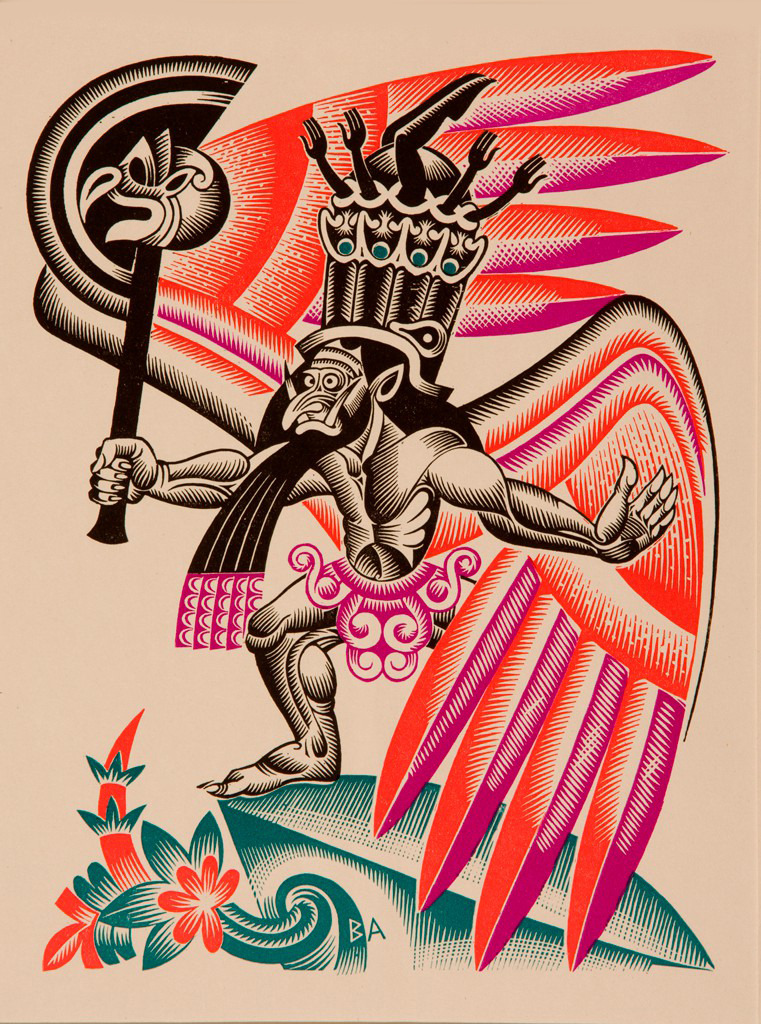
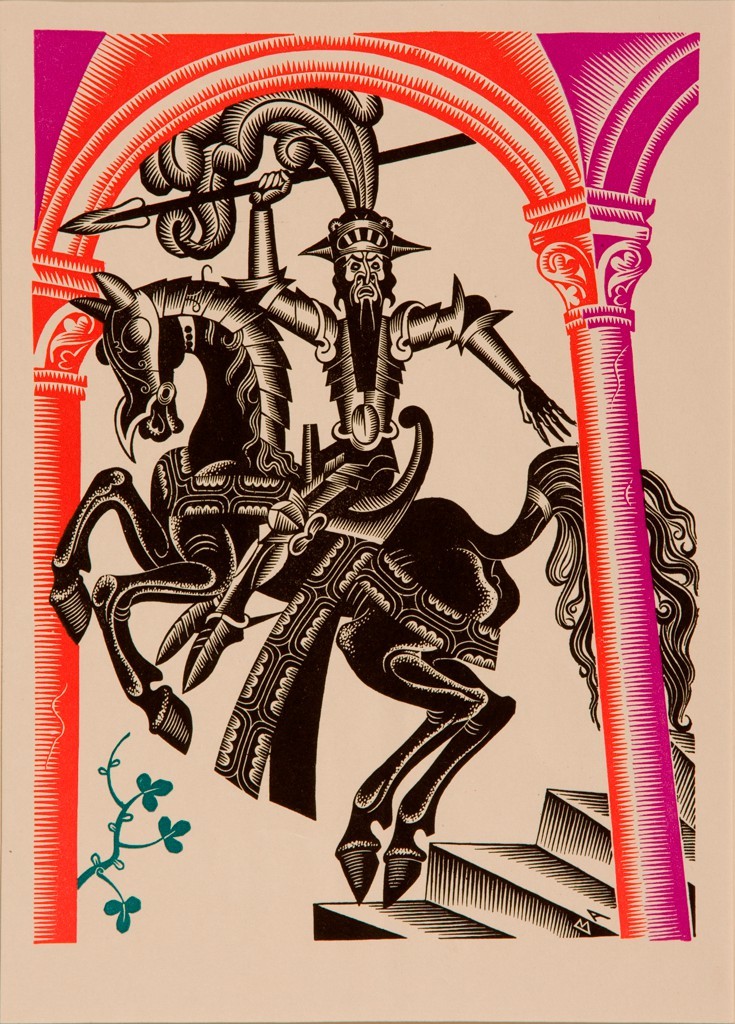
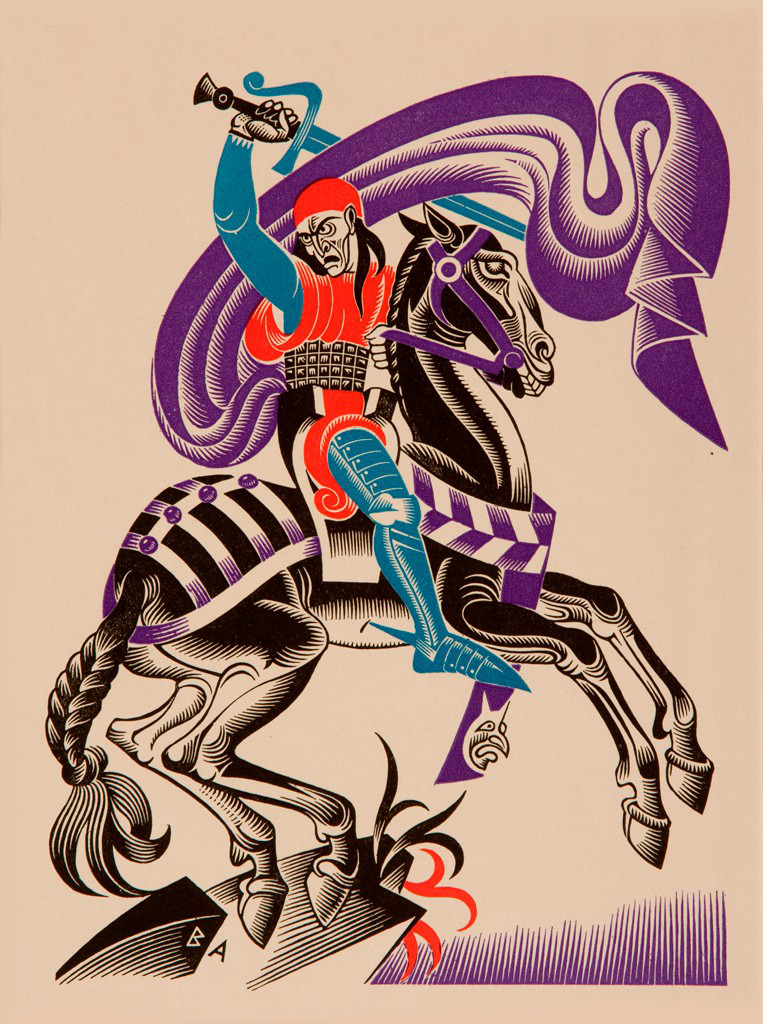
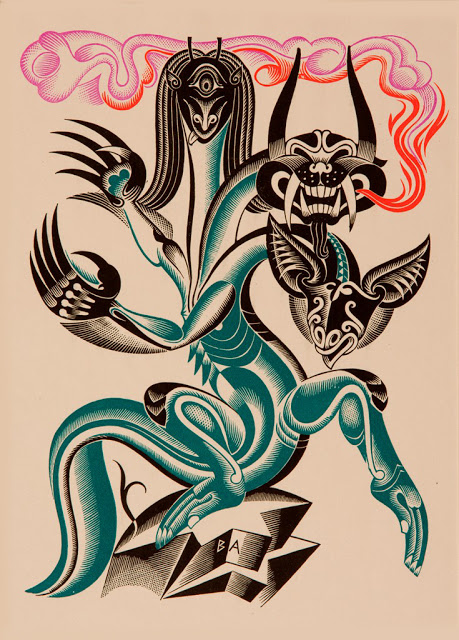
I recently stumbled upon this amazing title with mind-blowing illustrations by Boris Artzybasheff . The artist was a Russian refugee who arrived penniless in the U.S. after the Russian Revolution. He spent the next four decades creating illustrations for popular magazines, advertisers, corporations, and books.

Three and the Moon; Legendary Stories of Old Brittany, Normandy & Provence by Jacques Dorey: 1929


Posted in Art, Books, Europe, Writing | Tagged , , | Leave a comment

Wild in Scotland

Way back around the turn of the century I had the opportunity to spend quite a bit of time in Scotland. While I have great affection for Edinburgh and Glasgow, the true treasure of the country is to be found in the wild, undeveloped parts of Scotland. The wonderful video below offers a glimpse of what awaits the traveler who eschews the urban centers for the unspoiled countryside. In Wild Scotland, videographers Kim and Del Hogg, document their month-long trip around the most beautiful areas of the nation.

In September 2019 they borrowed a car and took off for a month of exploring the Scottish Highlands & Islands. Their route was loosely based on the North Coast 500, with side trips and detours along the way. They started on the west coast around Arisaig and the Isle of Rum, then headed east to the Orkney Isles, along the very north coast to Cape Wrath, then back down the west all the way to Skye. If you enjoy the video, checkout their website Going the Whole Hogg .

Posted in Europe, Film, Tourism, Travel Writing | Tagged , , | 6 Comments

Hide the Microfilm

Posted in Animation, Books, Writing | Tagged , , | Leave a comment

I’ll show you a saint

The Stand: Stephen King
“Show me a man or a woman alone and I’ll show you a saint. Give me two and they’ll fall in love. Give me three and they’ll invent the charming thing we call ‘society’. Give me four and they’ll build a pyramid. Give me five and they’ll make one an outcast. Give me six and they’ll reinvent prejudice. Give me seven and in seven years they’ll reinvent warfare. Man may have been made in the image of God, but human society was made in the image of His opposite number, and is always trying to get back home.”

image © Christian Layfield


Posted in Art, Books, USA, Writing | Tagged , | Leave a comment