Please Come to Boston…

From May 3rd until June 19th visitors to Boston’s sublime Isabella Stewart Gardner Museum will get a chance to see seven rare Venetian manuscripts from the museum’s extensive rare books collection.

The exhibition , called Illuminating the Serenissima: Books of the Republic of Venice , is being presented in the museum’s Long Gallery where Gardner kept her most prized books.
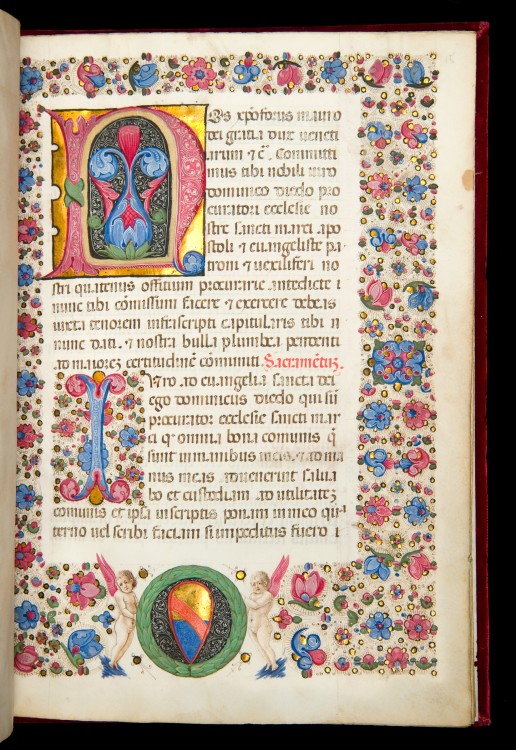
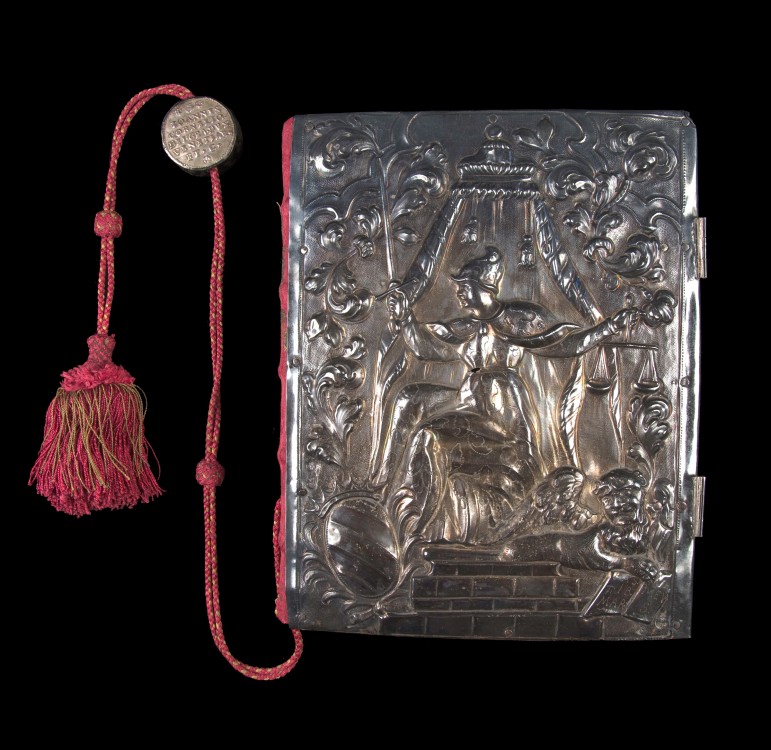
The seven Commissioni are presentation copies of contracts for Venetian aristocrats selected to be provincial governors, or to be elected administrators of the city of Venice for life. From the mid-14th century until the fall of La Serenissima, the office holders traditionally had had their Commissioni elaborately illuminated and artfully bound.

The museum’s rare collection of Commissioni reflects Isabella Stewart Gardner’s passion for Venice—as also evidenced by the Venetian-style palazzo that was her home.

Gardner’s actually began collecting rare books, incunabula and manuscripts before she began buying art.
Posted in Art, Books, History, Libraries, Museums | Tagged , | Leave a comment

Scotland Turns Green or Whisky a Go Go

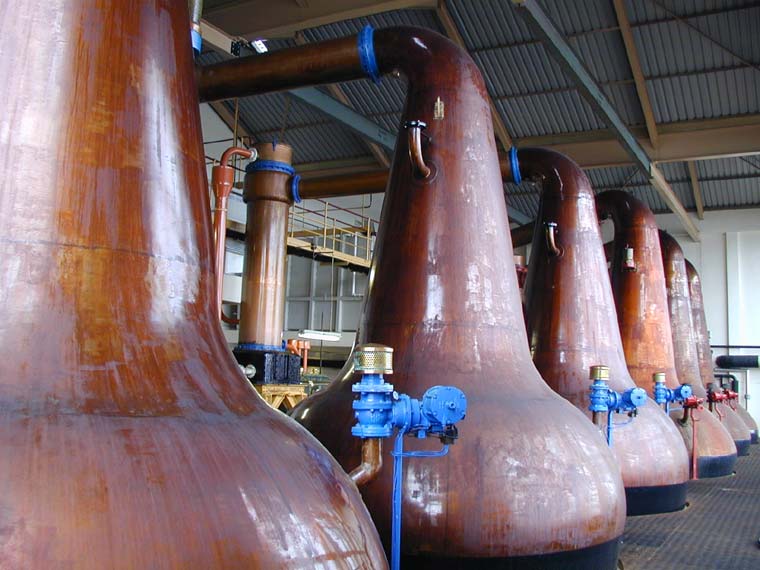
Some of my friends in Scotland (and elsewhere too) seem to think that whisky solves all problems. Now Scotland’s power needs are being met by Scottish whisky distilleries.

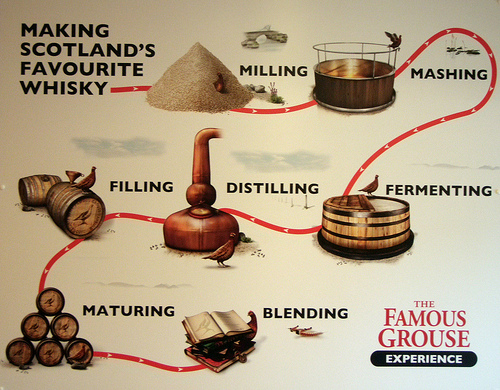
So far 16 of Speyside’s 50 distillers, including Macallan, Glenlivet, Famous Gouse and Chivas Regal have signed on to a biomass and powerplant project at Rothes that will use whisky making by-products to produce energy for public use.

Huge amounts of “draff”, the spent grains from the distilling process, are produced by the whisky industry. The Rothes Project will burn the draff to generate enough electricity for more than 9,000 homes and businesses.

Another bioenergy project at Scotland’s largest distillery, Cameronbridge in Fife, is almost complete. It will provide more than 90% of the distillery’s power needs.

As yet, my favorite single malt distiller, Blair Athol, has opted out.

Posted in Europe | Tagged , , , | Leave a comment

The Art of the Car

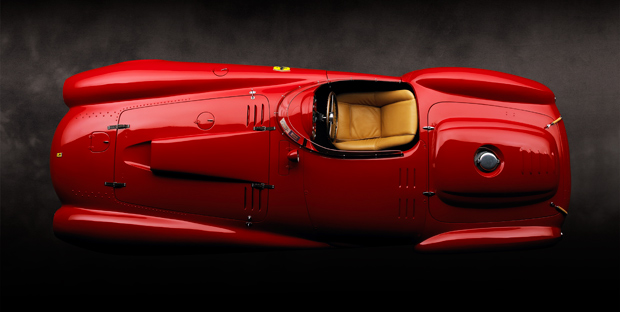
The Musée des Arts Paris is now presenting “The Art of the Automobile” , which features 17 fabulous cars from Ralph Lauren’s amazing car collection.

The cars on display—among them Bentley, Mercedes, Jaguar, Ferrari and Bugatti—provide a visual timeline for the evolution of the European automobile through the 20th century from the 1930s to the 1990s. The show runs through August 28, 2011.

Posted in Art, Europe, Museums, Photography | 1 Comment

Somedays The News Is Good


Posted in History | 1 Comment

Free Ai Weiwei

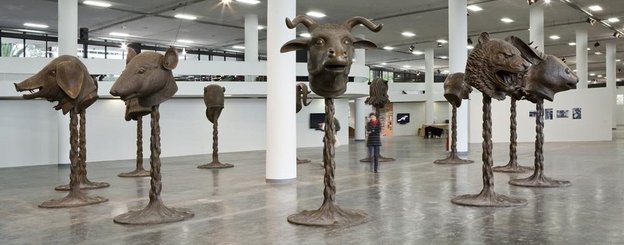
Internationally acclaimed Chinese dissident artist Ai Weiwei has re-interpreted the twelve bronze animal heads representing the traditional Chinese zodiac that once adorned the famed fountain-clock of the Yuanming Yuan, an imperial retreat in Beijing. Circle of Animals/Zodiac Heads is the artist’s first major public sculpture project.Unfortunately, Ai Weiwei is still being detained by Chinese authorities on unnamed charges at an undisclosed location after his arrest on April 3rd at the Beijing Airport.

Circle of Animals/Zodiac Heads is the centerpiece of a global, multi-year touring exhibition that will be presented in the United States, Europe, and Asia. The set of twelve zodiac heads was recently on display at the São Paolo Biennale in Brazil (September – December 2010). The official world tour for Circle of Animals/Zodiac Heads will launch in New York City at the historic Pulitzer Fountain at Grand Army Plaza near Central Park and the Plaza Hotel despite Ai Weiwei’s absence. The heads will be on display there today through July 2011, with additional international and domestic venues to follow.

Designed in the 18th century by two European Jesuits serving in the court of the Qing dynasty Emperor Qianlong, the twelve zodiac animal heads originally functioned as a water clock-fountain, which was sited in the magnificent European-style gardens of the Yuanming Yuan. In 1860, the Yuanming Yuan was ransacked by French and British troops, and the heads were pillaged. In re-interpreting these objects on an oversized scale, Ai Weiwei focuses attention on questions of looting and repatriation, while extending his ongoing exploration of the “fake” and the copy in relation to the original.

For more information on Ai Weiwei’s situation contact Free Aiweiwei.


Posted in Art, Asia, Freedom of Speech, USA | Tagged , , | 1 Comment

Seville the Beautiful

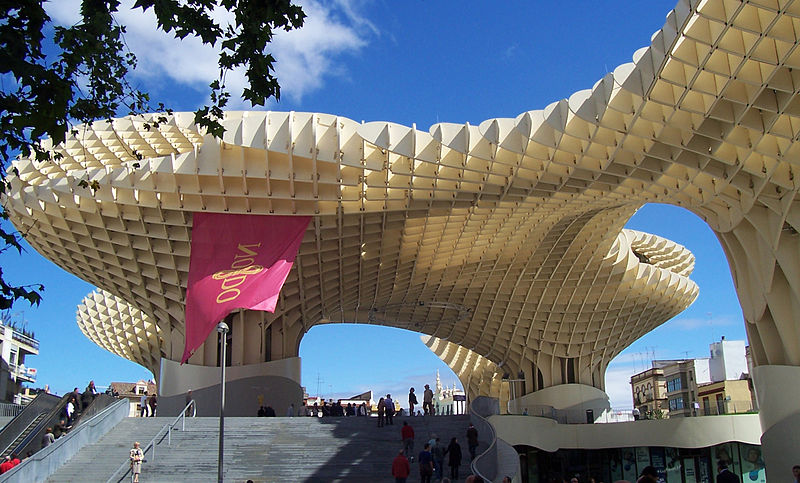
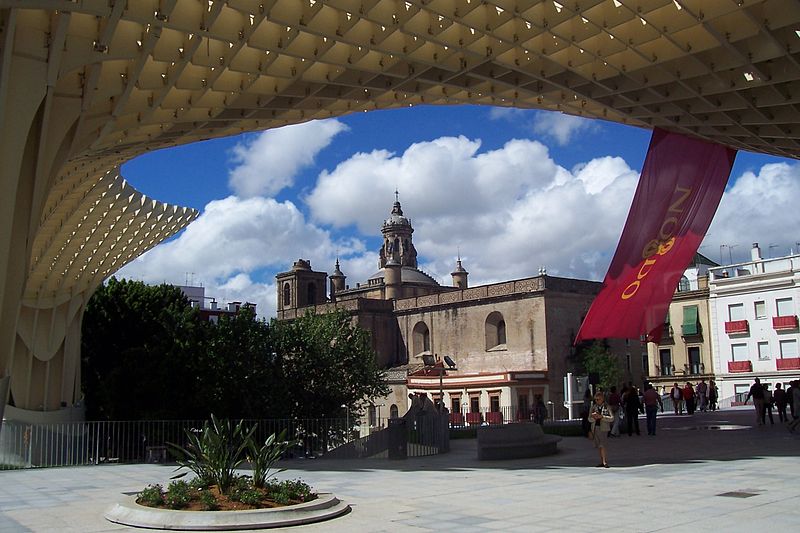
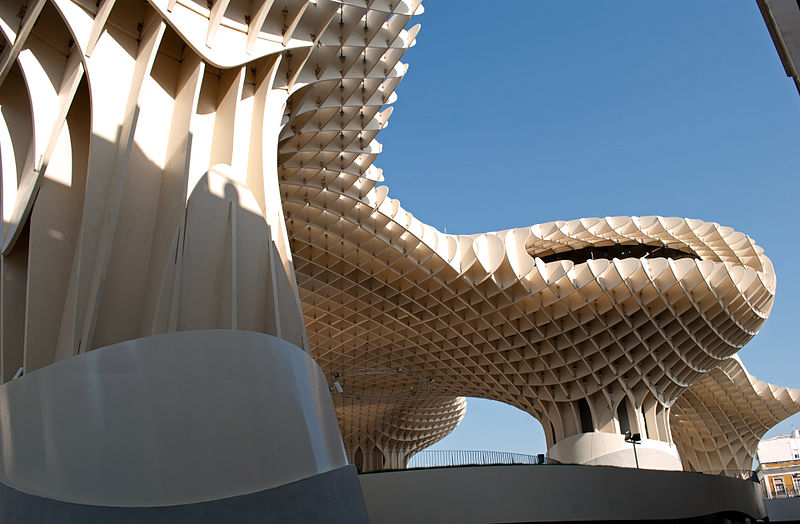
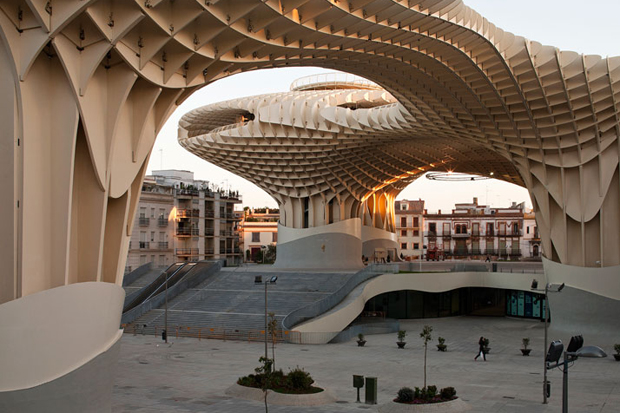
I have not been to Seville for a few years, but I’m anxious to get back to see the newly completed Metropol Parosol project. One of the world’s largest wooden buildings, this beautiful series of undulating umbrellas of interlocking wooden honeycombs rises from concrete and steel bases.


The ultra-modern structure, set within medieval Seville, houses an archeological museum, restaurant, market, community center and an elevated plaza on five levels. The site of the building was originally slated to become a parking garage, but after excavations revealed Roman ruins the city changed plans.

Posted in Architecture, Europe | Tagged , | 2 Comments

Freedom of The Press

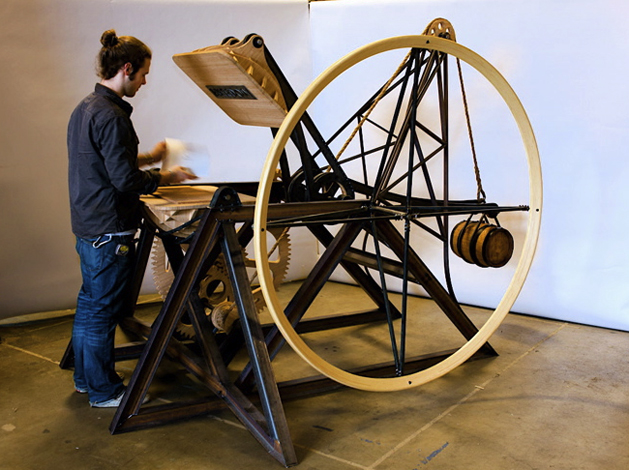
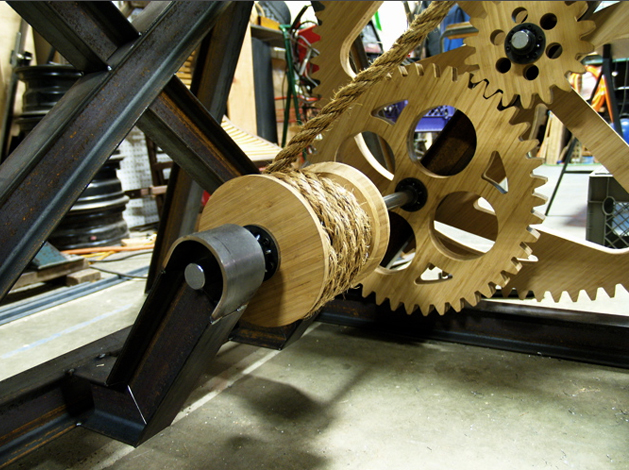
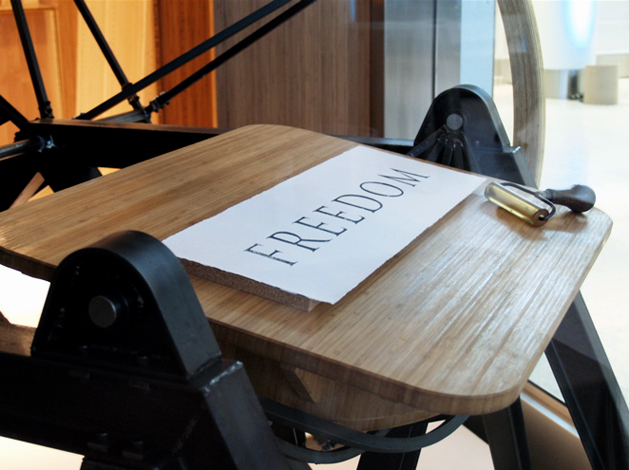
Compass Books of San Francisco commissioned Oakland, CA sculptor Shaun Hibma Cronan to create The Press. Handcrafted from bamboo, oak, cork, rope and steel, The Press will be on display at the Compass Book store in San Francisco International Airport.

The Press represents the impact of the written word and printing on freedom and civilization.

Posted in Art, Books, Freedom of Speech, Uncategorized, USA | Tagged | 1 Comment

Mapping Cities – by nose


Artist Sissel Tolaas is half-Icelandic, half-Norwegian and lives in Berlin. Her artwork explores the sense of smell by examining how people detect and describe odors. She’s particularly interested in how smell impacts the experience of the world around us. Her fascination with the spatial effects of smell led her to scrutinize the olfactory smellscape of diverse cities, from Vienna and Paris to Kansas City.

In her Talking Nose project, Tolaas investigated Mexico City’s infamous smellscape. Starting in 2001, she began to examine Mexico City by visiting 200 different neighborhoods in order to identify the important smells in each. using technology that she developed, Tolaas presented the  odors in a Scratch and Sniff map of Mexico City. She also videotaped 2,100 city residents as they described the city’s smells in extreme close-ups.

Tolaas has also used her technology to create smells for entities as diverse as museums, Ikea, Dresden’s Military History Museum and Adidas.

Posted in Art, Maps, South America | Tagged | Leave a comment

It’s A Small World After All

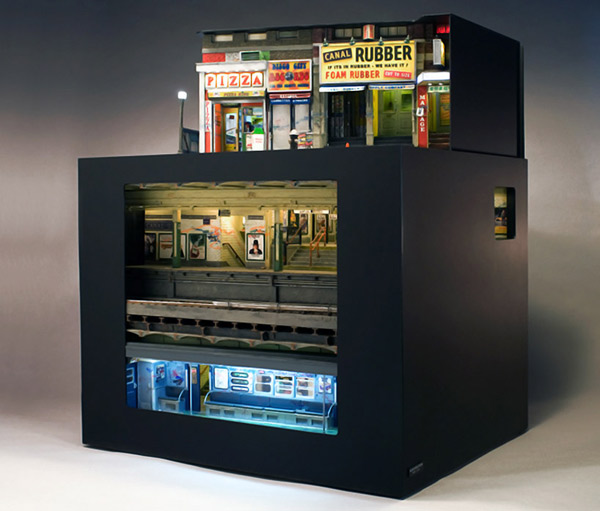
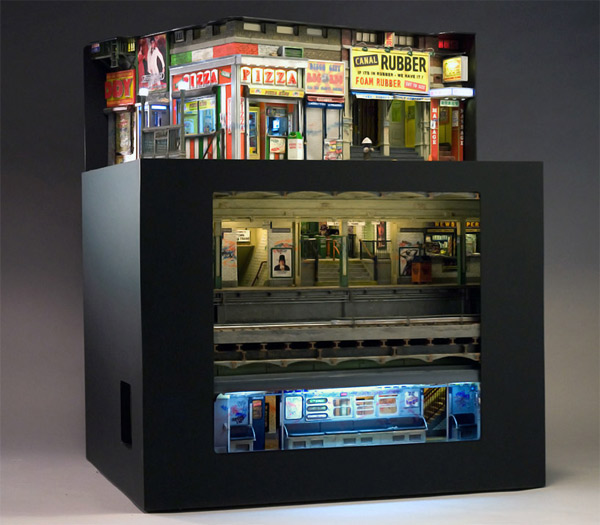
"Canal Street Station Cross Section"

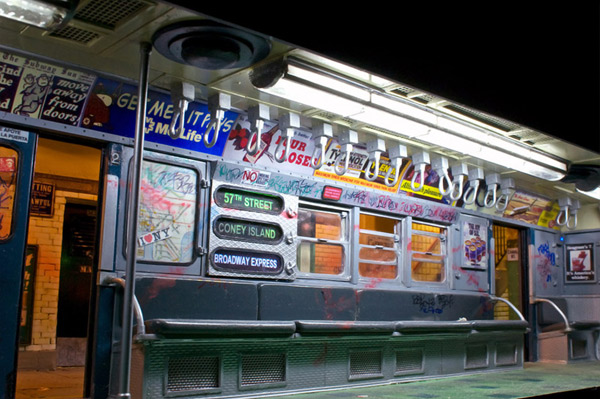
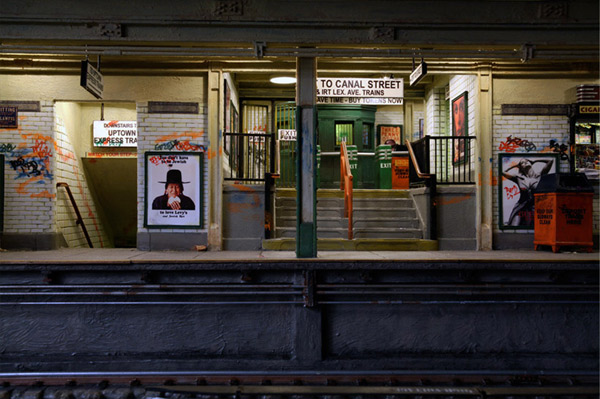
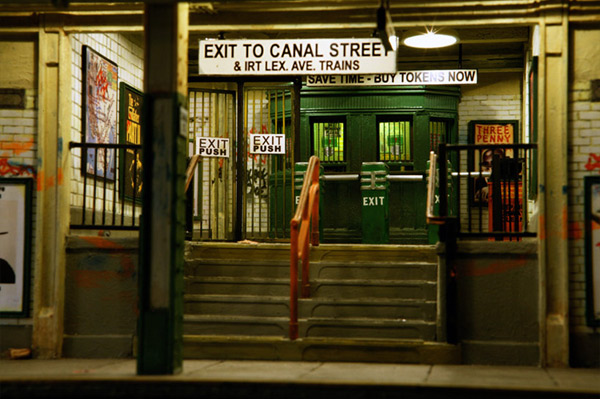
Alan Wolfson, a Brooklyn-born artist, creates mindblowing minature dioramas that reimagine urban environments. The handmade sculptures, complete with lighting systems, take months to complete.

The pieces are not precise replicas of specific locales, but rather a combination of details from numerous spots, along with details from Wolfson’s imagination.

There are never people present in the pieces, only the things they have left behind: trash, graffiti or a tip on a diner table.

Posted in Uncategorized | 1 Comment

Not All Progress Is Good


It revolutionized the way people worked and communicated, becoming an essential piece of office equipment for more than a century. But after decades of service, the humble typewriter has reached the end of the line.

Mumbai, India-based Godrej and Boyce, the last company in the world that still manufactured typewriters has shut down its factory and only has a few hundred machines left in stock.

Although they were phased-out decades ago in western nations, typewriters are still commonly used in India. Even so, the demand has decreased dramatically as Indians shift to computers.

And so it goes.

UPDATE: It seems that there is still one surviving typewriter manufacturer in business. Swintec of Moonachie, NJ ( yes Moonachie) continues to build typewriters for governments and institutions. My bad.

Posted in Asia, History, Writing | Tagged , , | 1 Comment